
The complete guide to AI photo generation covering how artificial intelligence creates, edits, and enhances images. Explore platforms, techniques, applications, and the future of AI-powered visual content creation.
What Is an AI Photo Generator
An AI photo generator is a sophisticated artificial intelligence system that creates, modifies, or enhances images based on textual descriptions, reference images, or both. These powerful tools leverage deep learning models trained on vast datasets of millions of images to understand the relationship between language and visual content. The result is the ability to generate entirely new photographs, artwork, and designs that never existed before.
The technology behind AI photo generation has advanced at a remarkable pace. What seemed like science fiction just a few years ago is now accessible to anyone with an internet connection. Modern AI photo generators can produce photorealistic images of people, places, and objects that are increasingly difficult to distinguish from actual photographs. These tools have democratised visual content creation, enabling individuals without artistic training to produce professional-quality imagery.
AI photo generators are built on foundation models trained using self-supervised learning on internet-scale datasets. These models learn statistical patterns in visual data, understanding concepts like composition, lighting, texture, perspective, and style. When given a prompt, the model generates new images by sampling from the probability distribution it has learned, producing outputs that match the description while maintaining visual coherence and quality.
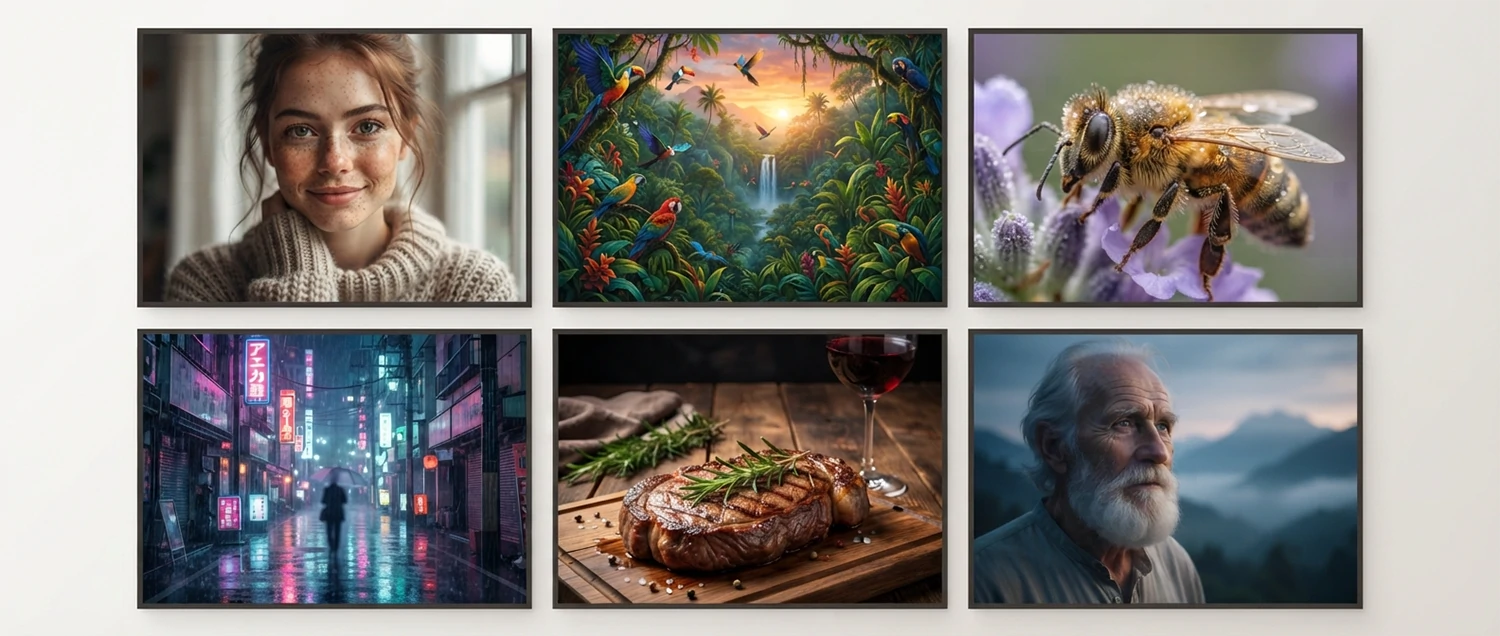
The applications of AI photo generation span virtually every industry that uses visual content. Marketers create campaign imagery, designers prototype concepts, architects visualise spaces, educators illustrate lessons, and creators produce original artwork. As the technology continues to evolve, AI photo generators are becoming essential tools in the creative workflow, augmenting human creativity rather than replacing it. For a prompt-focused companion, see our AI picture generator guide with 200+ prompts and our overview of AI generated images.
How AI Photo Generators Work
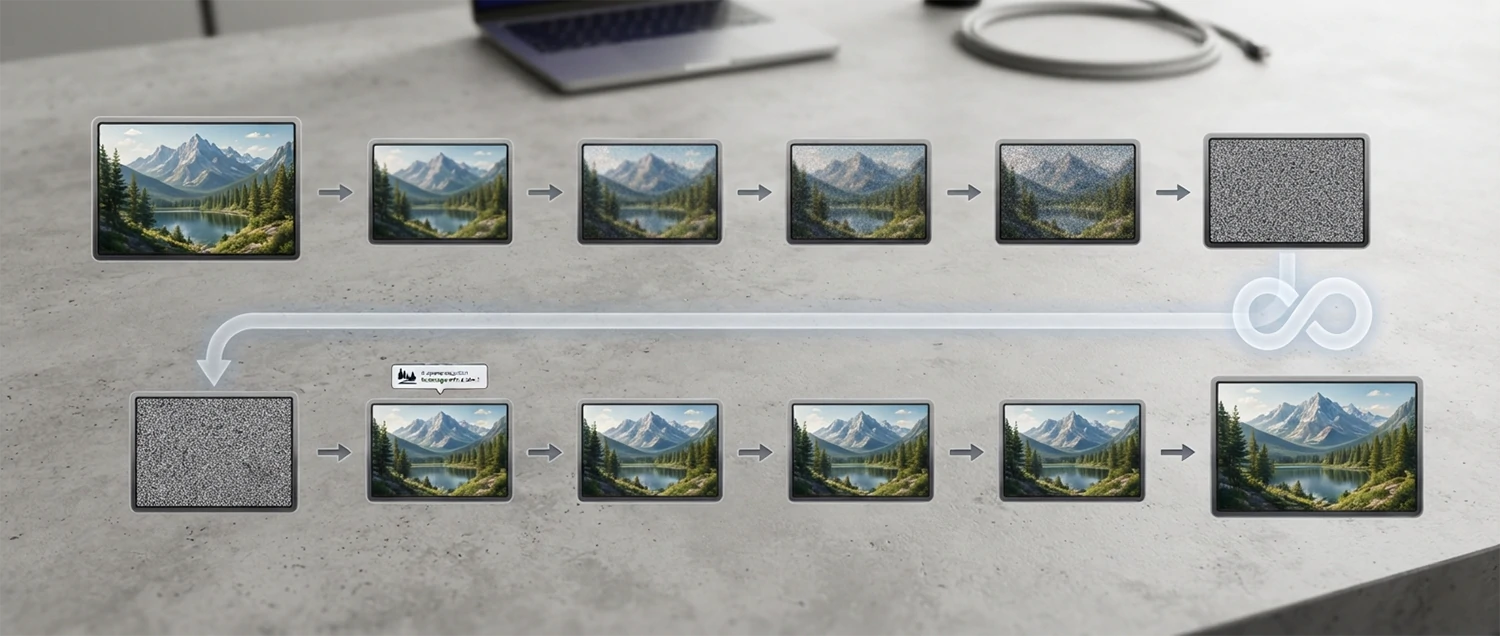
AI photo generators are powered by deep neural networks, specifically a class of models called diffusion models. These models work by gradually adding noise to training images until they become unrecognisable, then learning how to reverse this process. The trained model can start with pure random noise and iteratively remove it to produce a coherent image that matches a given text prompt. This denoising process is what creates the final generated image. To turn descriptions into art, explore our text to image AI techniques.
The text prompt is processed by a language model that converts words into numerical representations called embeddings. These embeddings guide the diffusion process, telling the model what content to generate. The model attends to the text embeddings at each denoising step, ensuring the final image aligns with the description. Advanced models use cross-attention mechanisms that connect textual concepts to specific spatial regions in the image.
Training these models requires enormous computing resources and datasets containing millions or billions of image-text pairs. The models learn to associate visual features with textual descriptions, developing an understanding of concepts ranging from simple objects to complex scenes, artistic styles, and abstract concepts. The scale of training data and compute directly impacts the quality and versatility of the resulting model.
Modern AI photo generators incorporate additional techniques to improve output quality and control. Classifier-free guidance adjusts how strongly the model follows the text prompt. Latent diffusion compresses images into a lower-dimensional space for efficient processing. Upscaling models enhance resolution after initial generation. These refinements work together to produce high-quality, high-resolution images that accurately reflect user intent.
Evolution of AI Photo Generation
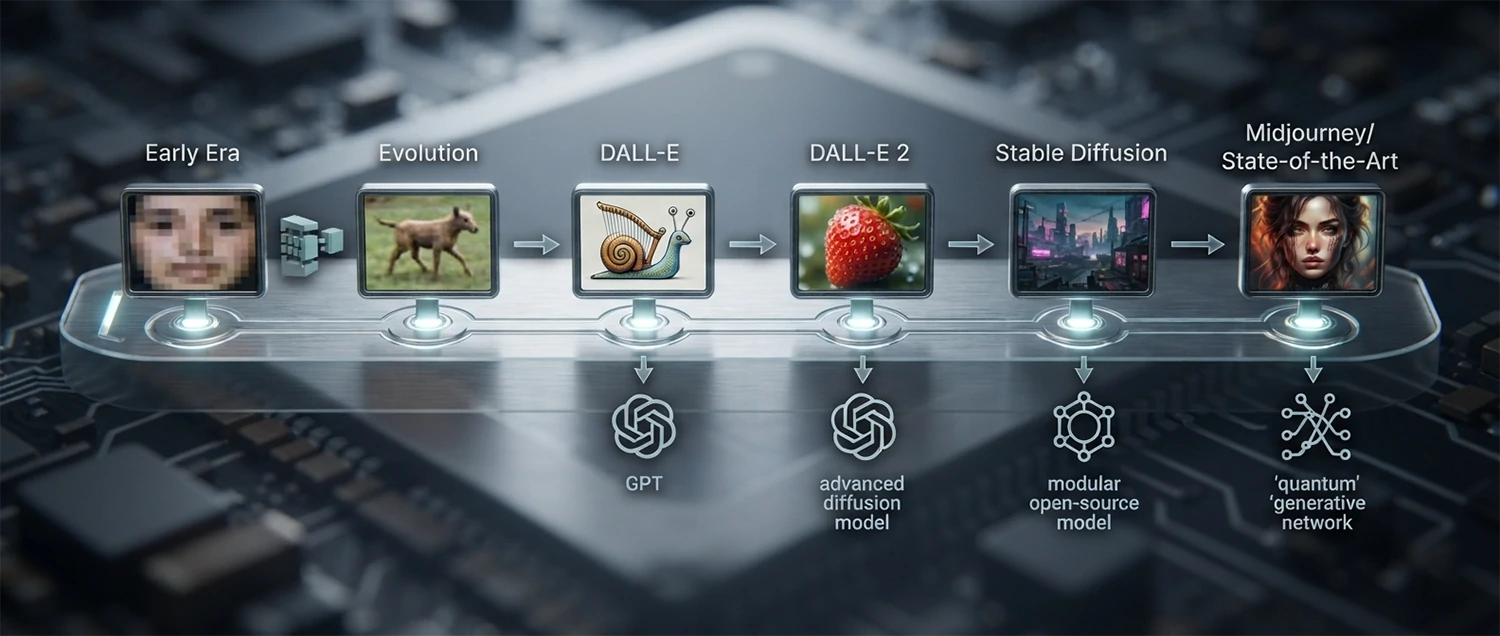
The journey of AI photo generation began with Generative Adversarial Networks in 2014. GANs pitted two neural networks against each other, a generator creating images and a discriminator evaluating their authenticity. This adversarial training produced surprisingly realistic images for the time but had limitations in diversity and control. Early GANs could generate faces and simple objects but struggled with complex scenes and accurate text following.
OpenAI introduced DALL-E in January 2021, marking a breakthrough in text-to-image generation. DALL-E used a transformer architecture similar to GPT models, trained on image-text pairs to generate images from textual descriptions. While impressive, DALL-E produced relatively low-resolution outputs and had limited availability to the public. It demonstrated that large-scale language models could be adapted for image generation.
The diffusion model revolution began in 2022 with the release of DALL-E 2, Stable Diffusion, and Midjourney. These platforms brought AI photo generation to mainstream attention with dramatically improved quality, resolution, and accessibility. Stable Diffusion's open-source release enabled developers worldwide to build upon the technology, leading to rapid innovation and customisation. The quality leap from GANs to diffusion models was transformative.
Current generation models continue to improve with each iteration. DALL-E 3 offers exceptional prompt following and image quality. Midjourney has evolved through multiple versions with refinements in aesthetics and composition. Stable Diffusion has spawned countless fine-tuned variants specialised for different styles and applications. The pace of advancement shows no signs of slowing, with video generation and real-time editing emerging as the next frontiers.
Text-to-Image Generation
Text-to-image generation is the most widely used capability of AI photo generators, allowing users to create images by simply describing what they want to see. This technology has transformed content creation by removing the technical barriers of traditional photography and digital art. Users can generate professional-quality visuals for any purpose with nothing more than a well-crafted text prompt and a few seconds of processing time.
The quality of text-to-image results depends heavily on prompt construction. Effective prompts include subject description, environment or background details, lighting conditions, camera perspective, artistic style, and mood or atmosphere. Advanced users leverage prompt engineering techniques including specifying aspect ratios, colour palettes, material properties, and compositional elements to achieve precise results.
Different AI photo generators excel in different aspects of text-to-image generation. DALL-E 3 leads in accurate prompt following and text rendering within images. Midjourney produces exceptionally aesthetic and artistic results with a distinctive visual style. Stable Diffusion offers maximum flexibility through open-source customisation and fine-tuning. Understanding the strengths of each platform helps users choose the right tool for their specific needs.
Text-to-image generation continues to improve with advances in model architecture and training methodology. Modern models better understand spatial relationships, object counts, and complex compositions. The ability to render legible text within images has improved dramatically. Negative prompts allow users to specify what should not appear in the image, providing greater control over the output.
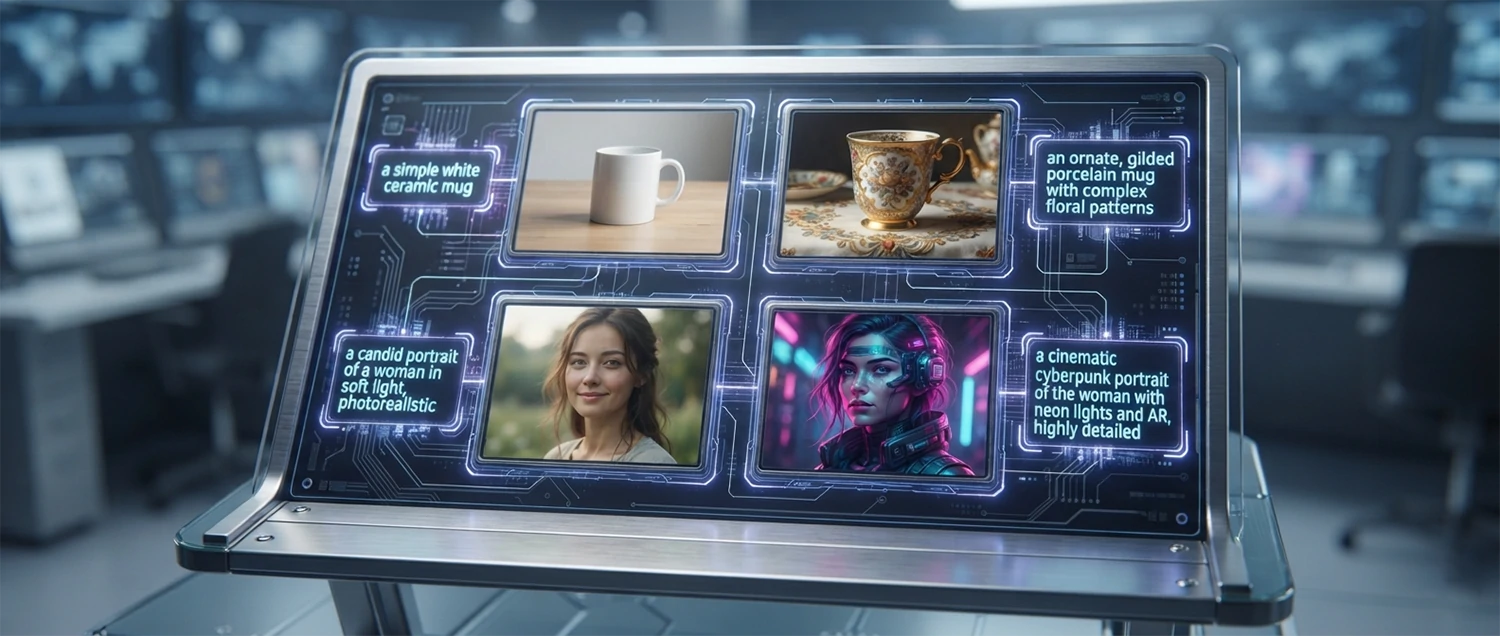
Image-to-Image Translation
Image-to-image translation allows users to transform an existing image into a new version based on additional instructions or reference images. This capability is incredibly versatile, enabling users to change the style of a photo, alter its content, or adapt it for different purposes. The process uses the original image as a starting point and applies guided modifications based on user input.
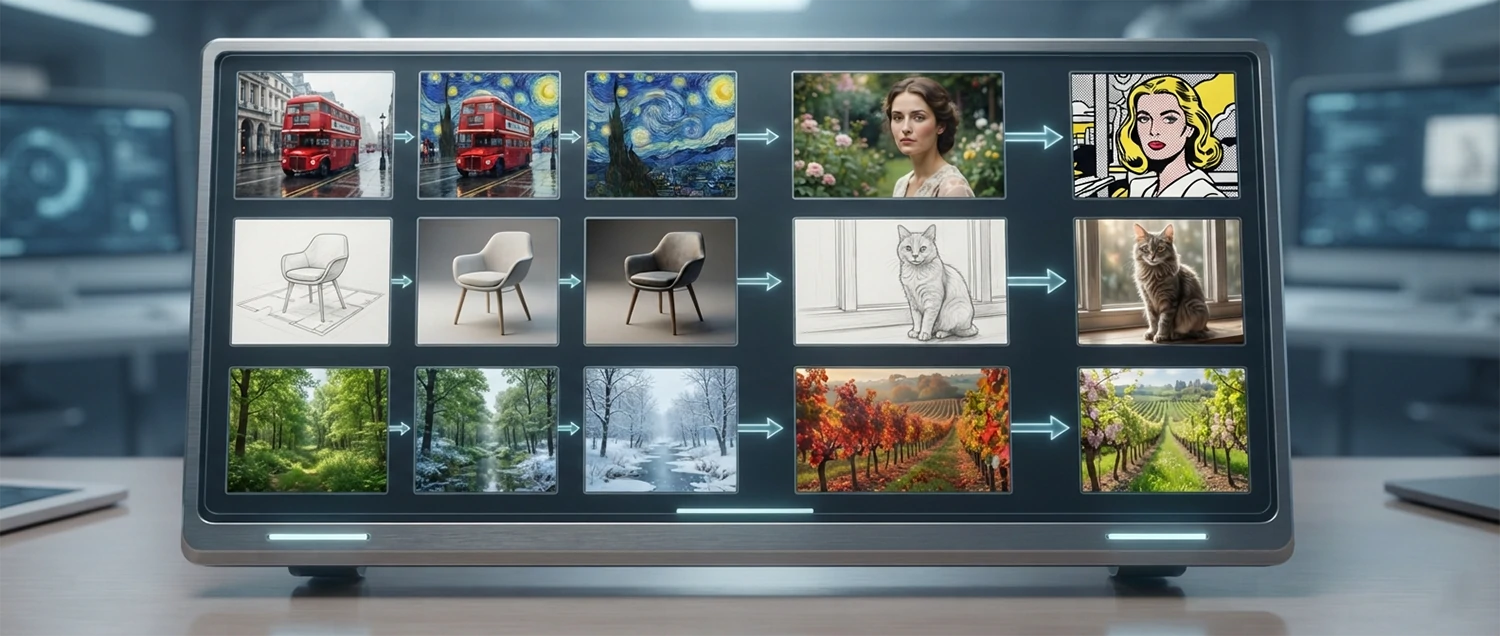
Style transfer is one of the most popular applications of image-to-image translation. Users can take a photograph and apply the visual style of a famous artist, a specific design aesthetic, or a completely different medium such as oil painting, watercolour, or sketch. The AI preserves the content and composition of the original image while transforming its visual appearance to match the target style.
Image-to-image translation extends to practical applications including converting sketches to photorealistic renderings, changing seasons in landscape photos, transforming day to night, and altering architectural materials. Designers use this capability to quickly visualise design alternatives without creating everything from scratch. The ability to iterate on existing content dramatically accelerates creative workflows.
Control over the strength of image-to-image transformation allows users to balance between preserving the original and applying changes. Low strength settings make subtle adjustments while high strength settings can completely transform the image. This control is essential for practical applications where specific elements must be preserved while others are modified.
AI Photo Editing and Enhancement
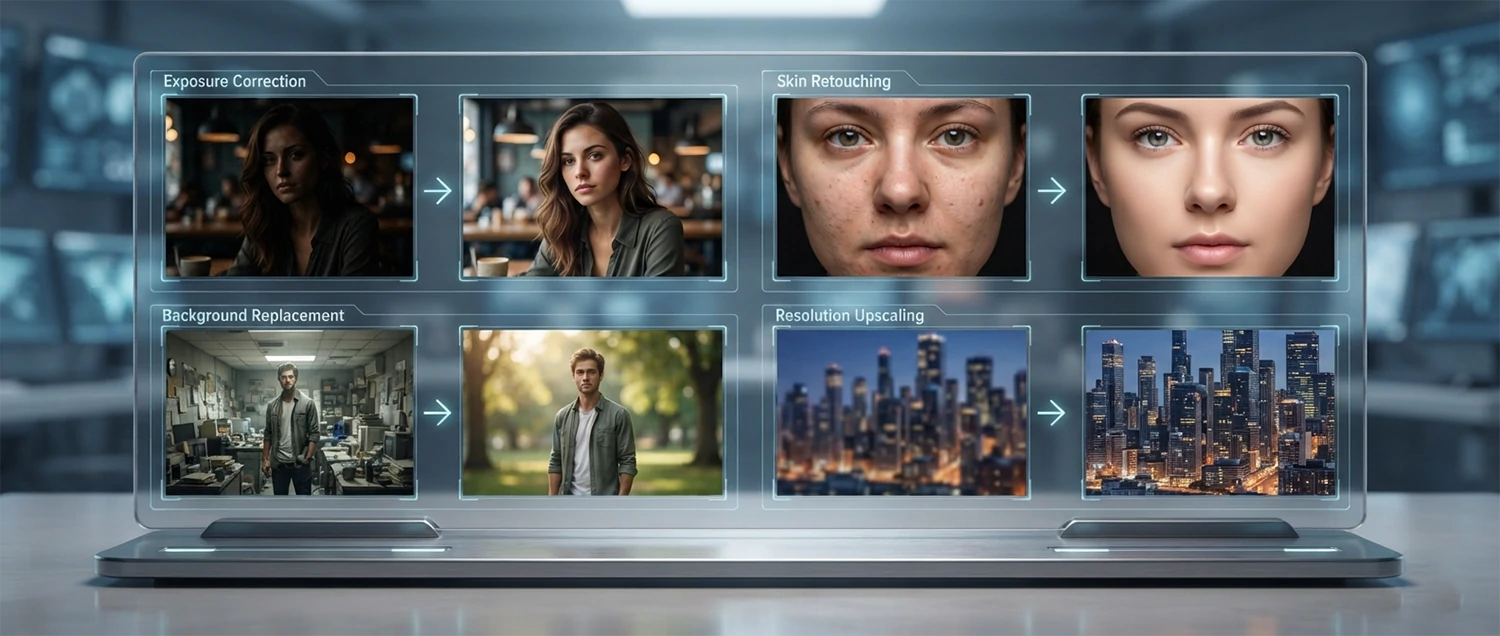
AI photo editing tools have revolutionised how we enhance and retouch images. Unlike traditional editing that requires manual adjustments to exposure, colour balance, and sharpness, AI-powered editing can analyse an image and make intelligent improvements automatically. These tools understand what makes a good photograph and can enhance images to approach professional quality with minimal user input.
Automatic enhancement features include exposure correction, colour grading, skin smoothing, background removal, and noise reduction. AI models trained on millions of professionally edited photos can apply adjustments that would take an experienced editor significant time to achieve manually. The results are often indistinguishable from professional manual editing while taking seconds instead of hours.
AI photo enhancement extends to resolution upscaling, where models can increase image resolution while adding detail that was not present in the original. AI upscalers analyse low-resolution images and intelligently generate plausible high-resolution detail, making old or low-quality photos usable for larger formats. This technology is valuable for restoring historical photographs and improving the quality of compressed images.
Advanced AI editing tools offer object removal, background replacement, and subject relocation. Users can select unwanted objects and the AI fills the area with contextually appropriate content. Backgrounds can be replaced entirely while maintaining realistic lighting and perspective. These capabilities that once required hours of meticulous Photoshop work are now accessible with simple text prompts or clicks.
Style Transfer and Artistic Generation
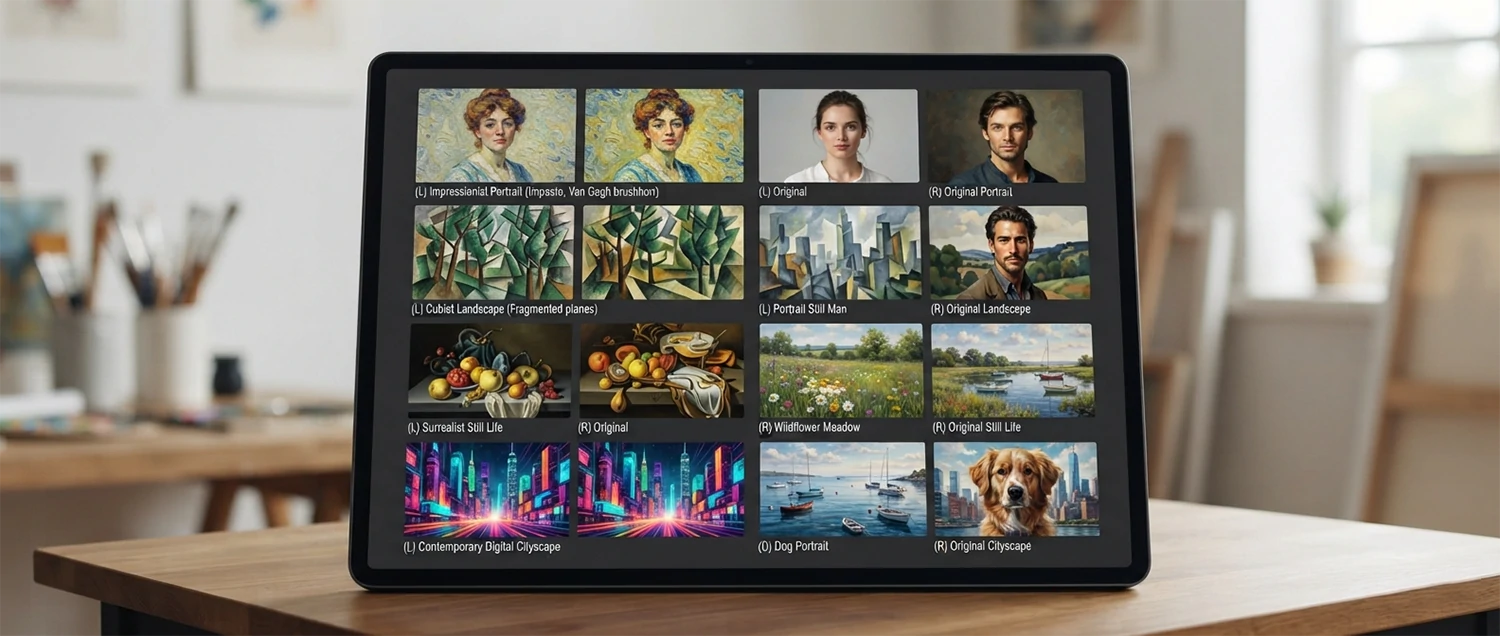
Style transfer technology allows AI photo generators to separate the content of an image from its artistic style and recombine them in novel ways. This capability enables users to apply the visual characteristics of one image to the content of another, creating unique artistic hybrids. The neural network learns to recognise style features including brushstroke patterns, colour palettes, texture treatments, and compositional approaches.
Artistic style transfer has become a popular creative tool for both professionals and enthusiasts. Photographers transform portraits into Impressionist paintings, architects visualise buildings in different architectural styles, and content creators generate unique artwork for their projects. The ability to apply the style of Van Gogh, Picasso, or contemporary artists to original content opens new creative possibilities.
Modern AI photo generators can generate images in virtually any artistic style directly from text prompts without requiring a reference image. Users can specify art movements, specific artists, illustration styles, or completely original aesthetic directions. The models have learned to reproduce the visual characteristics of countless artistic traditions through their training on diverse image datasets.
Style blending is an advanced technique where multiple artistic influences are combined in a single generation. Users can request images that merge the colour palette of one artist with the composition approach of another, or combine cultural artistic traditions in unique ways. This creative flexibility makes AI photo generators powerful tools for artistic exploration and inspiration.
Inpainting and Outpainting
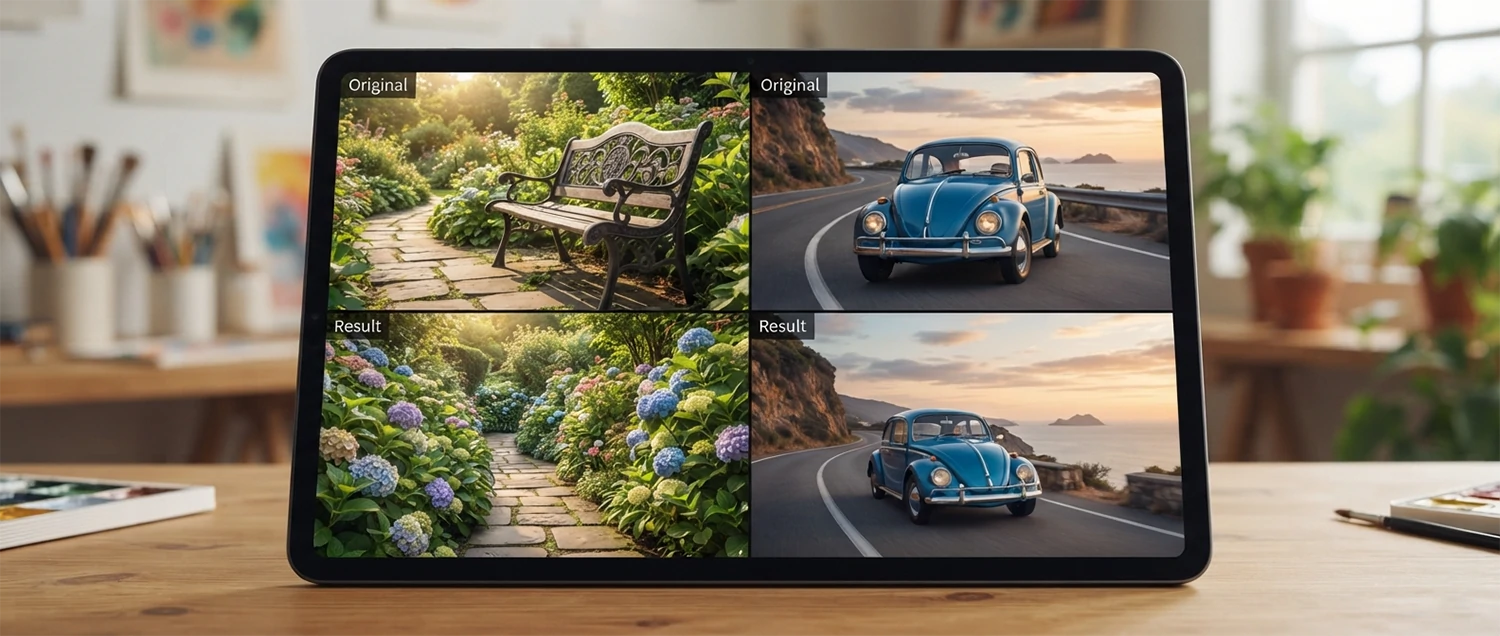
Inpainting is an AI technique that fills in missing or selected regions of an image with contextually appropriate content. Users can remove unwanted objects, repair damaged areas of photographs, or replace specific elements within an image. The AI analyses the surrounding pixels and generates content that seamlessly blends with the existing image, considering lighting, texture, perspective, and colour.
Practical applications of inpainting are extensive. Photographers remove photobombers, power lines, or distracting elements from otherwise perfect shots. Restorers repair cracks, stains, and missing sections in historical photographs. Designers replace product colours or remove branding from stock images. The ability to modify specific image regions without affecting the rest of the image provides precise editing control.
Outpainting extends an image beyond its original boundaries, generating new content that continues the scene in any direction. This capability allows users to change the aspect ratio of images, expand cramped compositions, or add context to tightly cropped photographs. The AI generates plausible extensions that match the original image style, perspective, and content, effectively creating a larger scene than was originally captured.
Both inpainting and outpainting rely on the model understanding of visual coherence and context. The AI must generate content that is not only visually plausible but also consistent with the existing image in terms of lighting direction, depth of field, and spatial relationships. Modern models handle these challenges effectively, producing results that are often indistinguishable from the original image content.
AI Photo Restoration
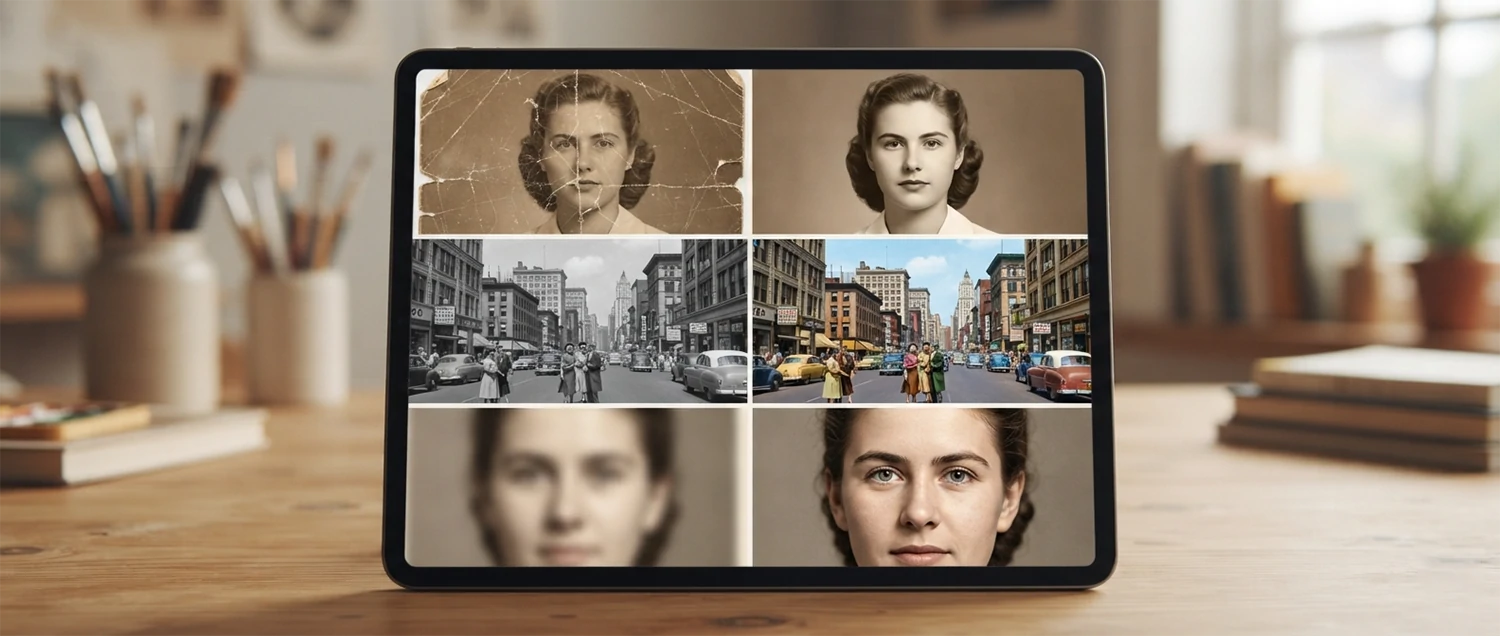
AI photo restoration has emerged as one of the most meaningful applications of artificial intelligence in visual media. Old, damaged, or degraded photographs can be restored to near-original condition using AI models trained specifically for restoration tasks. These models understand what undamaged photographs should look like and can intelligently repair a wide range of defects.
Common restoration capabilities include scratch and crease removal, colour correction for faded photographs, dust spot elimination, and repairing torn or missing sections. AI restoration models can also colourise black and white photographs by intelligently determining appropriate colours for different elements based on context. The colourisation process considers the subject matter, era, and visual cues to produce historically plausible colour.
Face restoration is a specialised capability that enhances and repairs facial details in old or low-quality photographs. AI models trained on facial features can reconstruct missing details, sharpen blurry faces, and correct distortions. This technology has profound emotional value for families restoring ancestral photographs and historians working with archival images.
The restoration process typically involves multiple AI models working together. One model detects and repairs physical damage, another enhances resolution, a third adds colour, and a final model refines facial details. The combined pipeline can transform a faded, torn, black and white photograph into a clear, vibrant, colour image that preserves the original content while dramatically improving its visual quality.
Popular AI Photo Generator Platforms
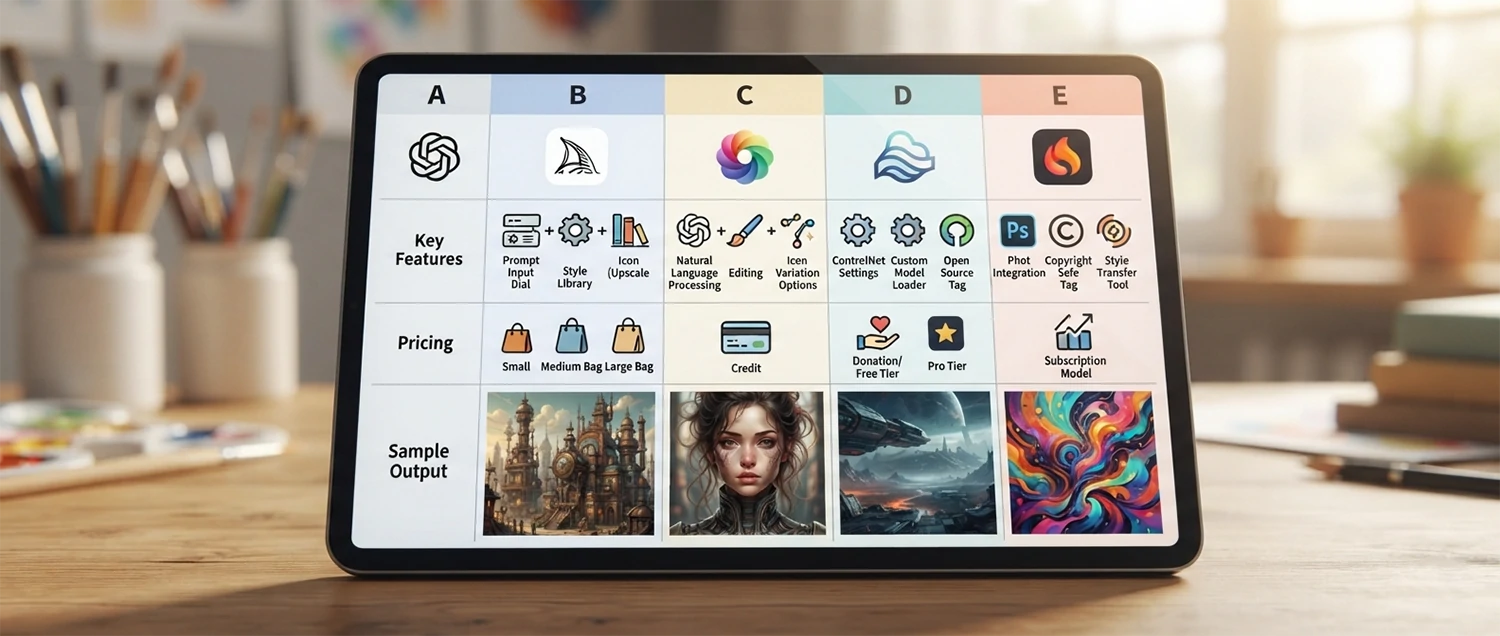
The AI photo generator landscape features several major platforms, each with distinct strengths, features, and target audiences. Understanding the differences between these platforms helps users select the right tool for their specific requirements. The competitive landscape drives rapid innovation, with each platform pushing the boundaries of what AI-generated imagery can achieve.
Platform selection depends on factors including output quality, ease of use, pricing, customisation options, and specific capabilities. Some platforms excel at photorealistic output while others prioritise artistic creativity. Open-source options offer maximum flexibility for technical users while commercial platforms provide polished user experiences. The diversity of options ensures that there is an appropriate tool for every use case.
Most platforms operate on a credit or subscription model where users purchase generation capacity. Pricing varies significantly based on output resolution, generation speed, commercial usage rights, and additional features. Free tiers typically offer limited generations per month with lower resolution and watermarked outputs, while paid plans provide full capabilities for professional use.
Integration with existing workflows is an important consideration for professional users. Many platforms offer APIs that allow integration with design software, content management systems, and automated workflows. Browser-based interfaces provide accessibility for casual users, while API access enables developers to build custom applications powered by AI image generation.
OpenAI DALL-E
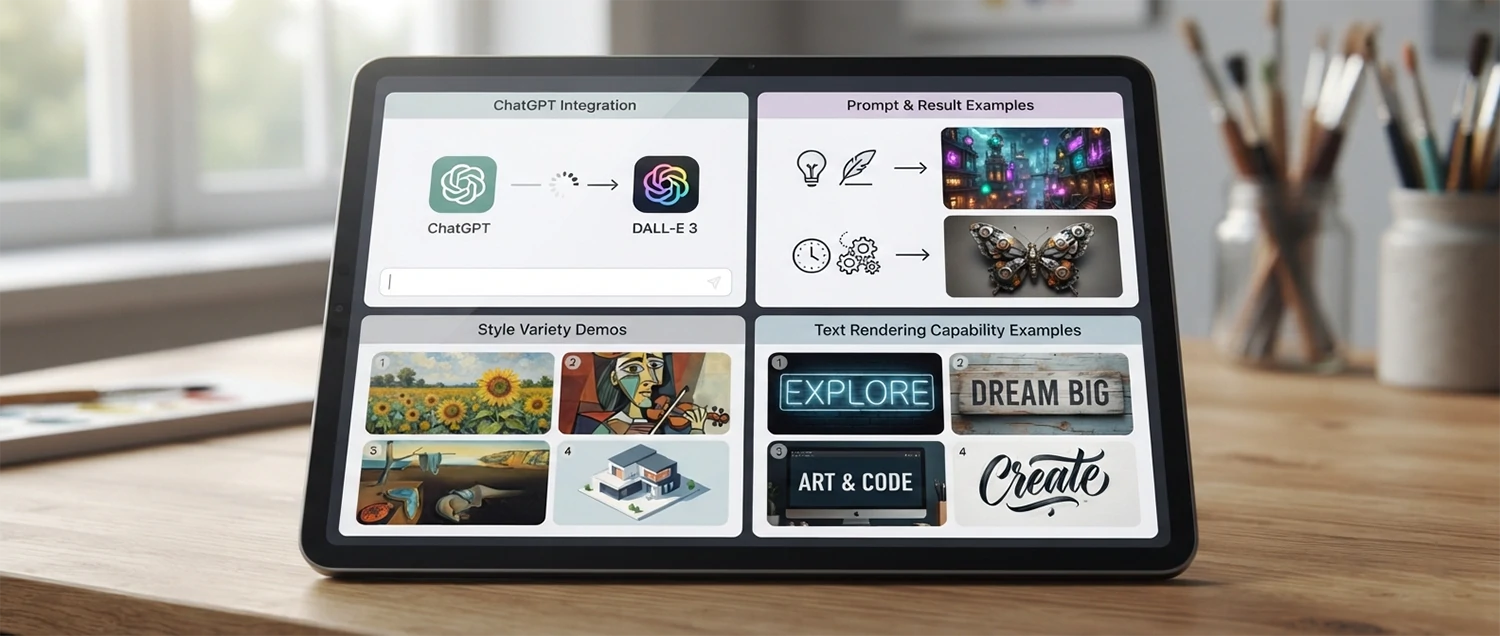
DALL-E, developed by OpenAI, is one of the most recognisable names in AI photo generation. The latest version, DALL-E 3, represents a significant leap forward in image quality, prompt understanding, and text rendering capabilities. DALL-E 3 is natively integrated with ChatGPT, allowing users to generate and refine images through natural conversation rather than complex prompt engineering.
DALL-E 3 excels at accurately following complex prompts with multiple elements, specific spatial relationships, and detailed descriptions. The model demonstrates exceptional ability to render legible text within images, a challenge that earlier AI generators struggled with. It produces high-resolution outputs with consistent quality across diverse subject matter and styles.
The ChatGPT integration transforms the user experience by enabling iterative refinement through conversation. Users can describe what they want, see results, and request changes in natural language. ChatGPT handles the prompt engineering behind the scenes, translating user requests into effective DALL-E prompts. This makes advanced AI image generation accessible to users without technical expertise.
DALL-E 3 includes robust content safety mechanisms that prevent the generation of harmful, violent, or deceptive content. OpenAI has implemented watermarking and provenance tracking to help identify AI-generated images. These safety features reflect growing concerns about the ethical implications of AI-generated imagery and the need for responsible deployment of the technology.
Midjourney
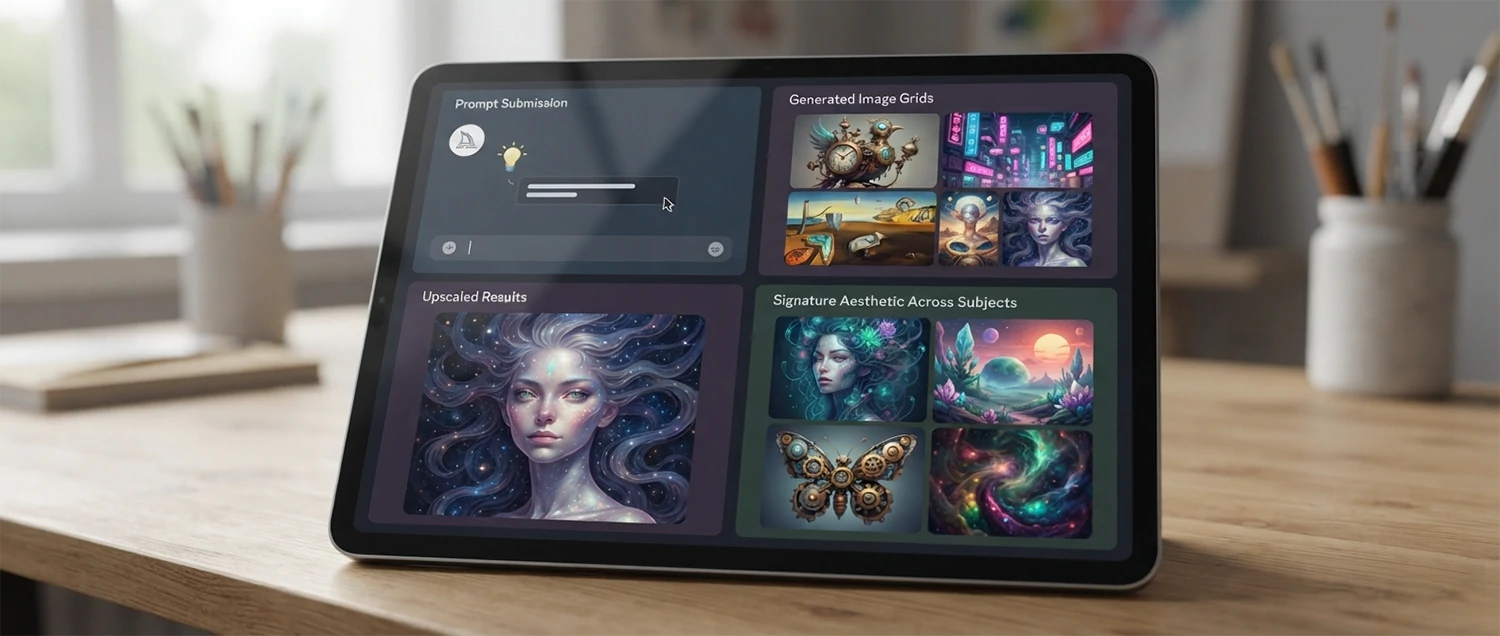
Midjourney has established itself as the premier AI photo generation platform for artistic and creative output. Developed by Midjourney Inc., the platform is known for producing images with exceptional aesthetic quality, distinctive visual style, and artistic sophistication. Midjourney images are often described as beautiful, atmospheric, and compositionally refined, making them popular among artists, designers, and creative professionals.
Midjourney operates exclusively through Discord, using a bot-based interaction model where users submit prompts in dedicated channels. This community-oriented approach has fostered a vibrant ecosystem where users share prompts, techniques, and results. The Discord platform enables real-time community learning and inspiration, with users building upon each other's discoveries.
The platform has evolved through multiple versions, each bringing improvements in image quality, prompt understanding, and creative control. Midjourney allows users to specify aspect ratios, stylisation levels, and weirdness parameters that influence the creative direction of generated images. The ability to use image references and blend multiple prompts provides sophisticated creative control.
Midjourney has developed a distinctive aesthetic that is immediately recognisable. The platform tends to produce images with rich colour palettes, dramatic lighting, and artistic composition. While this aesthetic is widely appreciated, it also means Midjourney output has a characteristic look that may not suit all applications. Users seeking completely neutral photorealistic output may prefer other platforms, but for creative and artistic work, Midjourney remains a top choice.
Stable Diffusion
Stable Diffusion, developed by Stability AI, is an open-source AI image generation model that has democratised access to AI photo generation technology. Unlike proprietary platforms, Stable Diffusion can be downloaded and run locally on personal computers, offering complete privacy, unlimited generations, and full customisation. Its open-source nature has spawned an extensive ecosystem of tools, extensions, and community innovations.
The ability to run Stable Diffusion locally provides significant advantages for privacy-sensitive applications. Images are generated on the user's own hardware without being sent to external servers, making it suitable for confidential projects and commercial work where data privacy is critical. Local operation also eliminates ongoing subscription costs, with only the initial hardware investment required.
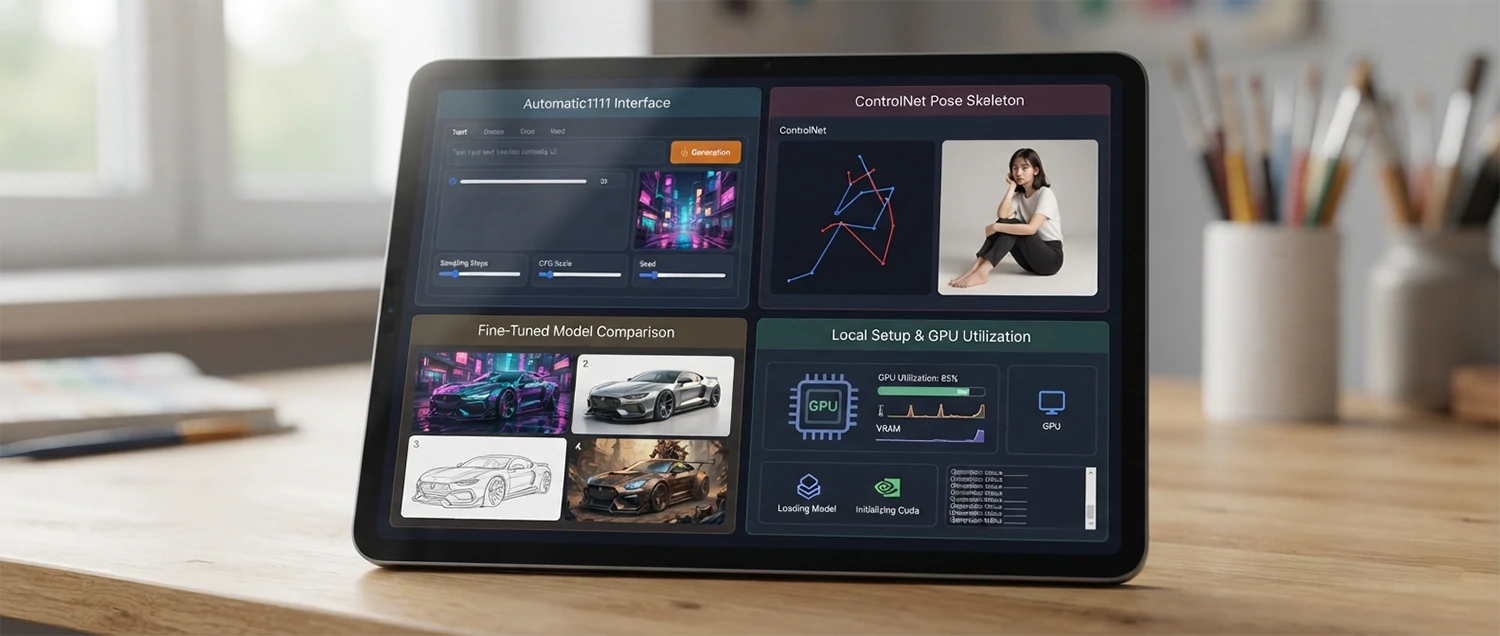
Stable Diffusion's open-source nature has led to extensive community innovation including fine-tuned models specialised for specific styles, subjects, and applications. Users can train custom models on their own image datasets, creating personalised generators that produce consistent output in a specific style or domain. The Automatic1111 web UI and ComfyUI node-based interface provide powerful tools for controlling the generation process.
ControlNet extensions add precisely controllable generation by incorporating additional input conditions including pose skeletons, depth maps, edge detection, and segmentation maps. This technology enables unprecedented control over image composition and structure, allowing users to specify exact poses, spatial layouts, and structural elements. ControlNet has become essential for professional applications requiring precise output control.
Adobe Firefly
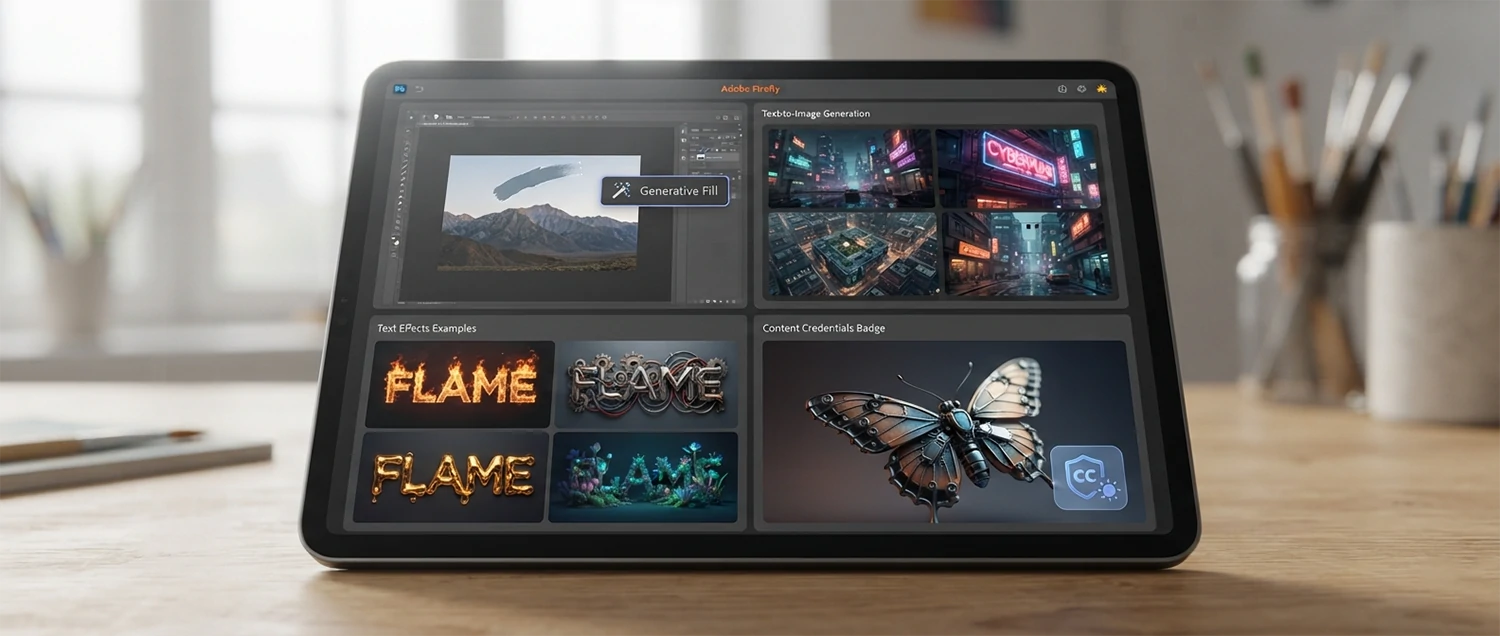
Adobe Firefly represents Adobe's entry into the AI photo generation space, integrated directly into the Creative Cloud ecosystem. Firefly is designed as a creative assistant that enhances existing Adobe workflows rather than a standalone generation tool. Its deep integration with Photoshop, Illustrator, and Express makes it accessible to millions of creative professionals already using Adobe products.
Firefly offers several core capabilities including text-to-image generation, generative fill, text effects, and generative recolor. Generative fill in Photoshop allows users to select areas of an image and replace them with AI-generated content based on text prompts, streamlining the editing workflow. Text effects enable stunning typography treatments created through AI.
Adobe has positioned Firefly as a commercially safe AI tool, training its models on licensed content and public domain images where copyright is not a concern. This approach addresses one of the major legal uncertainties surrounding AI-generated content. Adobe offers indemnification for commercial use, providing legal protection for businesses using Firefly-generated images in their work.
Firefly integration with Adobe's broader ecosystem enables seamless incorporation of AI-generated elements into professional design workflows. Generated images can be edited, combined, and refined using the full suite of Adobe tools. Content credentials automatically attach provenance information to Firefly-generated images, supporting transparency about AI involvement in content creation.
Other Notable AI Photo Generators
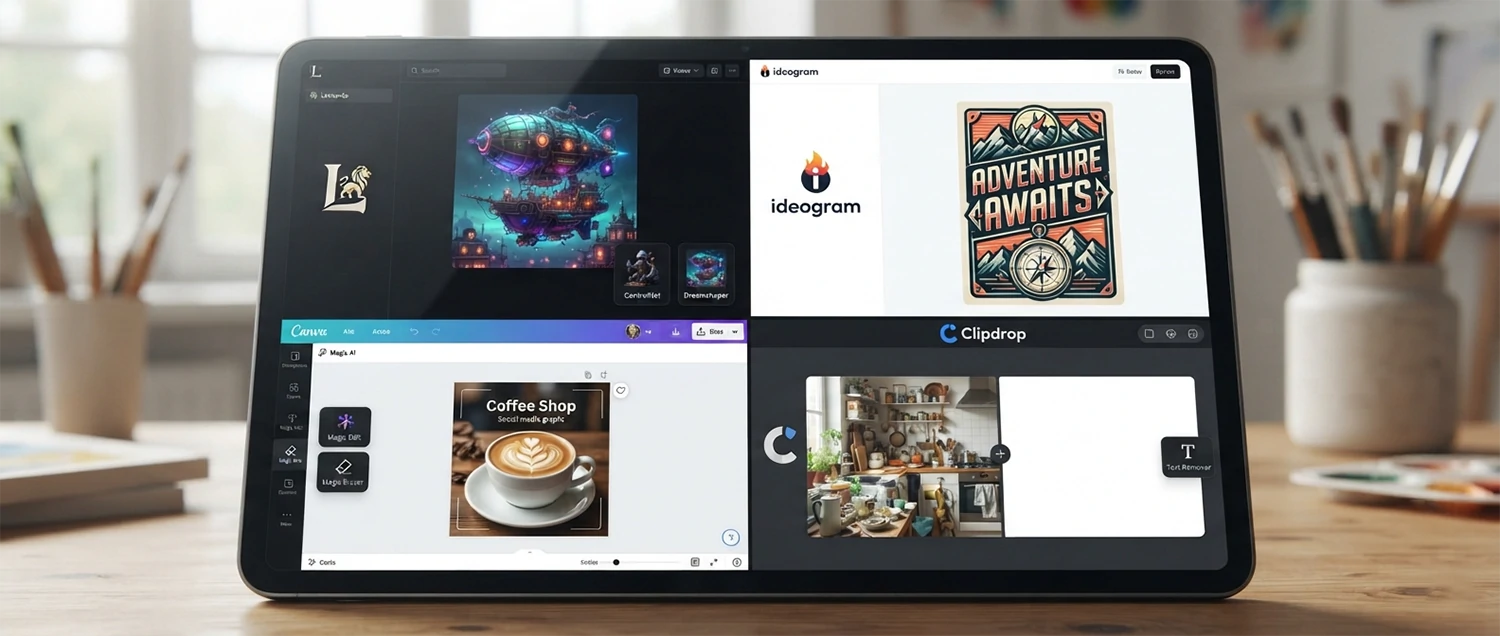
Beyond the major platforms, numerous other AI photo generators offer specialised capabilities and unique approaches. Leonardo AI provides a comprehensive platform with model training, real-time generation, and game asset creation tools. Its focus on game development and creative production makes it popular among indie developers and content creators seeking versatile generation capabilities.
Ideogram has distinguished itself with exceptional text rendering within images, solving one of the persistent challenges in AI generation. The platform excels at generating logos, posters, and designs where text legibility is critical. Its typography capabilities have made it a go-to tool for graphic designers and marketers who need AI-generated images with readable text.
Canva AI integrates image generation directly into Canva's design platform, making AI creation accessible to millions of non-technical users. The integration allows users to generate images and incorporate them into designs within a single workflow. Canva's approach prioritises accessibility and simplicity, targeting users who need quick visual content without specialised knowledge.
Clipdrop by Stability AI offers a suite of AI image tools including background removal, relighting, and upscaling alongside generation capabilities. Its API-first approach makes it popular for developers building AI-powered applications. RunwayML provides advanced video generation and editing capabilities alongside image generation, pushing toward multi-modal creative AI tools.
Applications in Marketing and Advertising
AI photo generators have transformed marketing and advertising by enabling rapid, cost-effective visual content production. Marketing teams can generate custom imagery for campaigns, social media, websites, and advertising without the time and expense of traditional photoshoots. A single marketer can now produce visual content that previously required a full creative team and production budget.
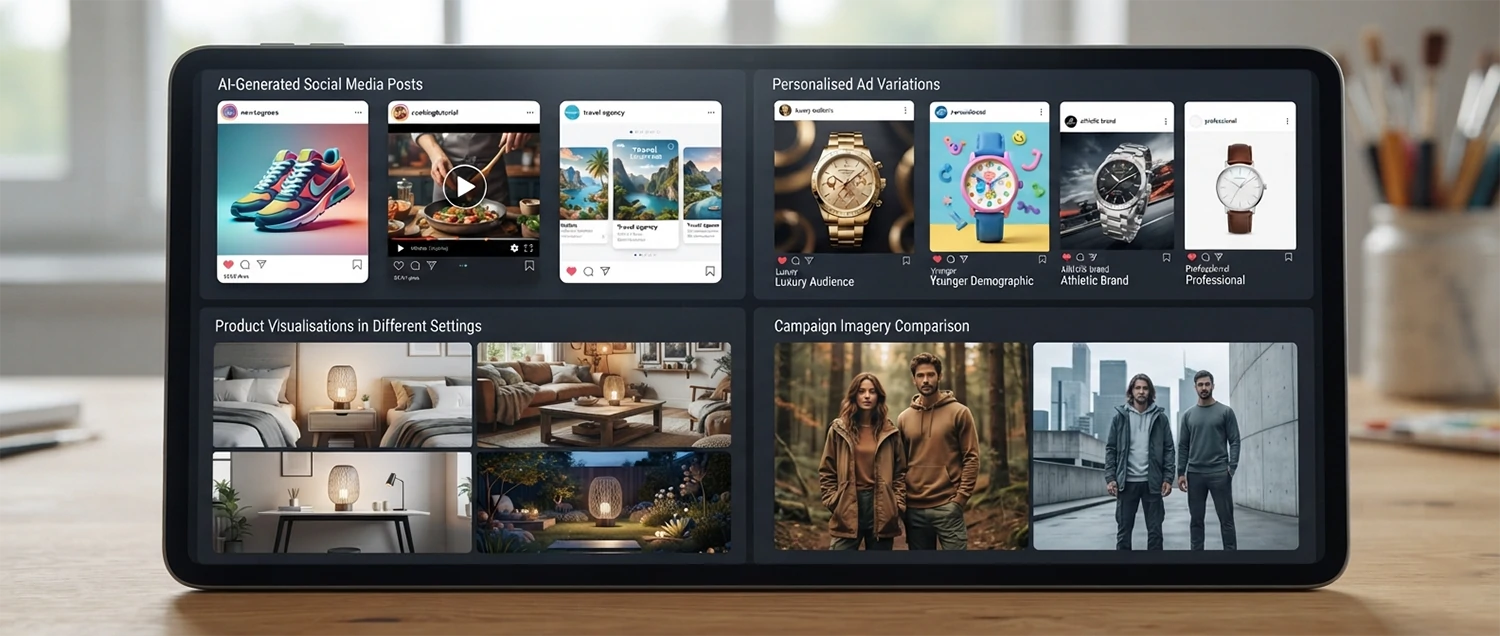
Social media content creation has been particularly impacted by AI photo generation. Brands can maintain consistent, high-quality visual output across multiple platforms without the logistical challenges of organising photoshoots for every campaign. AI enables rapid A/B testing of different visual approaches, with multiple creative directions generated and evaluated in hours rather than weeks.
Personalisation at scale becomes possible with AI-generated imagery. Brands can create unique visuals tailored to different audience segments, geographic regions, or individual customer preferences. A campaign can feature dozens or hundreds of visual variations optimised for different contexts, dramatically improving relevance and engagement compared to one-size-fits-all imagery.
Product visualisation benefits from AI generation by enabling the creation of product images in any setting, lighting condition, or configuration without physical prototypes or studio photography. E-commerce businesses can show products in multiple colours, environments, or use cases with generated imagery that looks professional and consistent. This capability reduces time-to-market for new products and enables more comprehensive visual merchandising.
Applications in E-commerce
E-commerce businesses have embraced AI photo generation as a transformative tool for product photography and visual merchandising. Traditional product photography requires professional studios, equipment, photographers, and post-processing. AI generation dramatically reduces these costs while increasing flexibility and speed. Products can be visualised in any setting without physical staging.
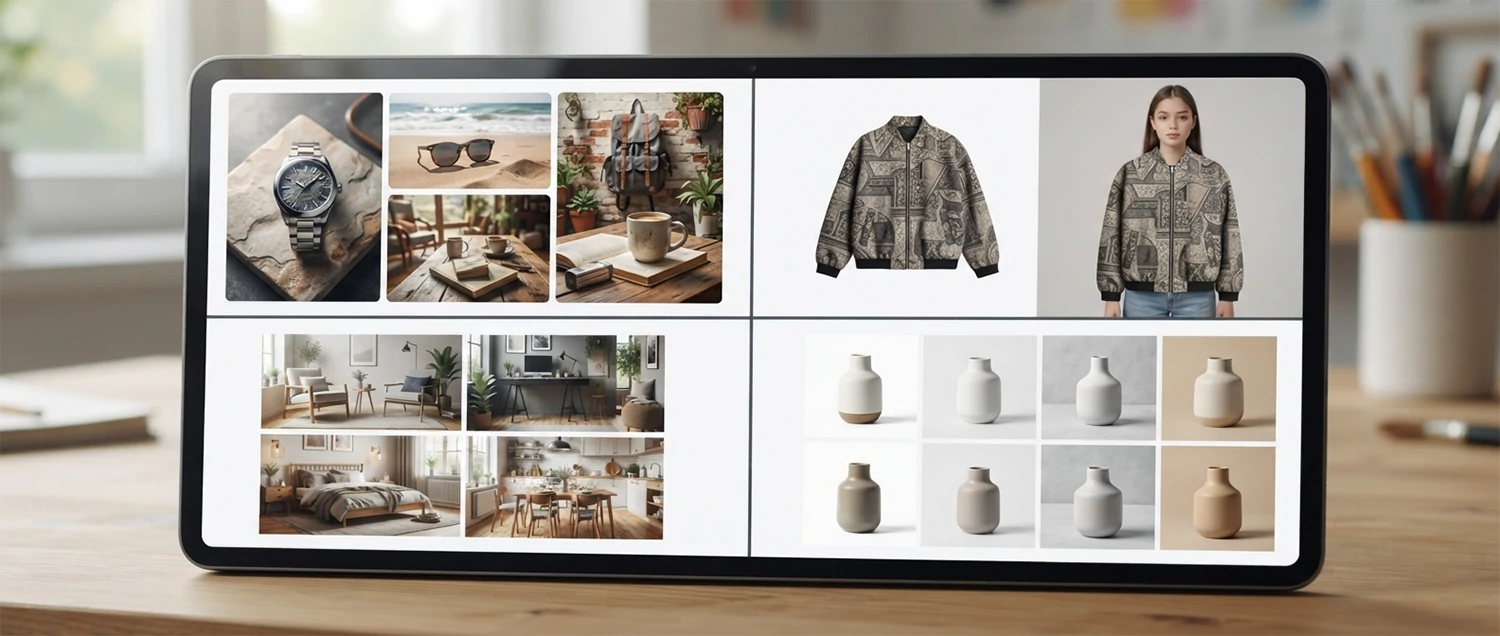
Virtual try-on technology powered by AI generation allows customers to see how products would look in their own environment or on their own bodies. Fashion retailers use AI to show clothing on diverse models without organising multiple photoshoots. Home decor retailers generate images of furniture in different room settings, helping customers visualise products in their own homes.
AI-generated lifestyle imagery places products in realistic contexts that show how they fit into customers lives. Rather than isolated product shots on white backgrounds, e-commerce sites can feature products in beautifully styled environments that inspire purchase intent. These contextual images drive higher conversion rates by helping customers imagine owning and using the product.
Consistency across product catalogues is automatically maintained when using AI generation for product imagery. Every product can be shown with the same lighting, perspective, and background style, creating a cohesive brand presentation. This consistency would be extremely difficult and expensive to achieve with traditional photography across hundreds or thousands of products.
Applications in Architecture and Design
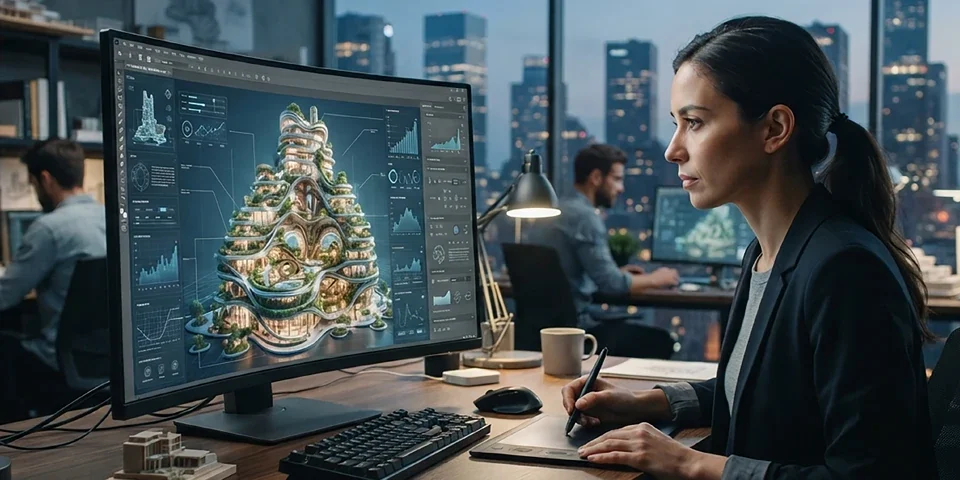
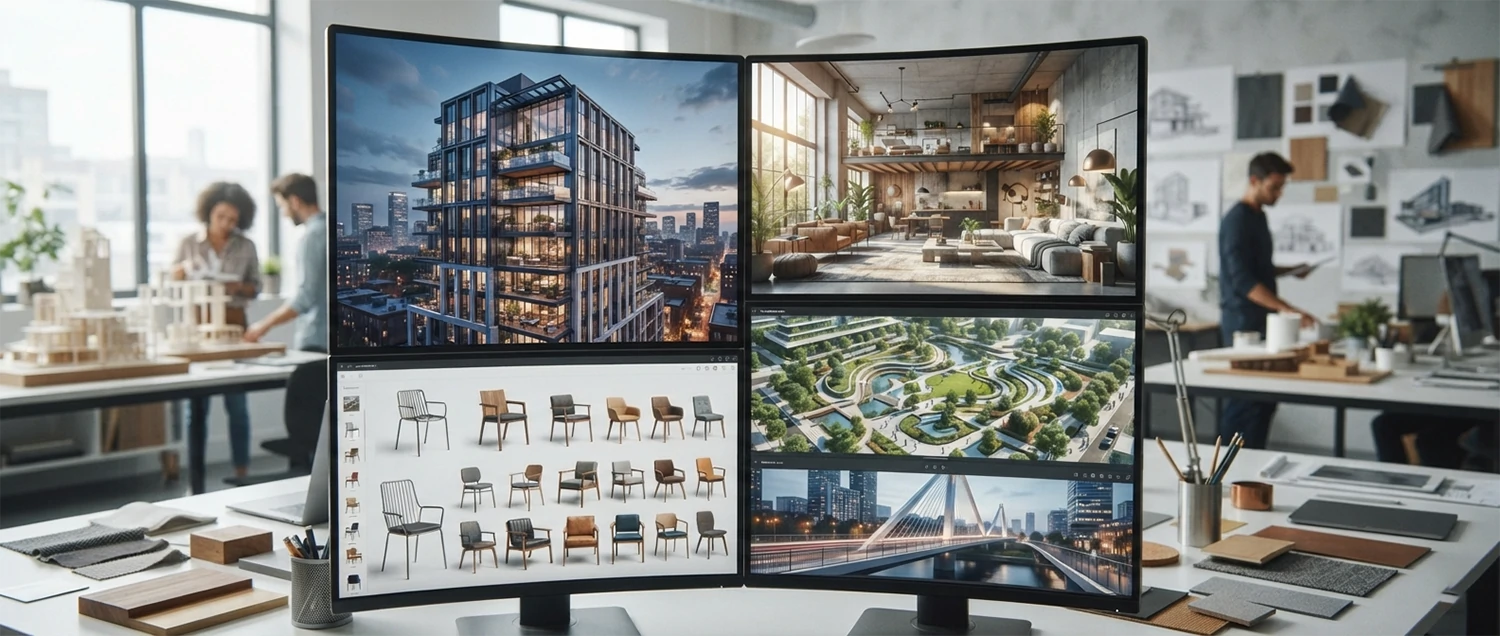
Architects and interior designers have found AI photo generation to be a powerful tool for conceptual visualisation and client communication. Early design concepts can be visualised quickly, allowing architects to explore multiple design directions before committing significant resources to detailed modelling. AI-generated imagery helps clients understand design proposals more intuitively than technical drawings.
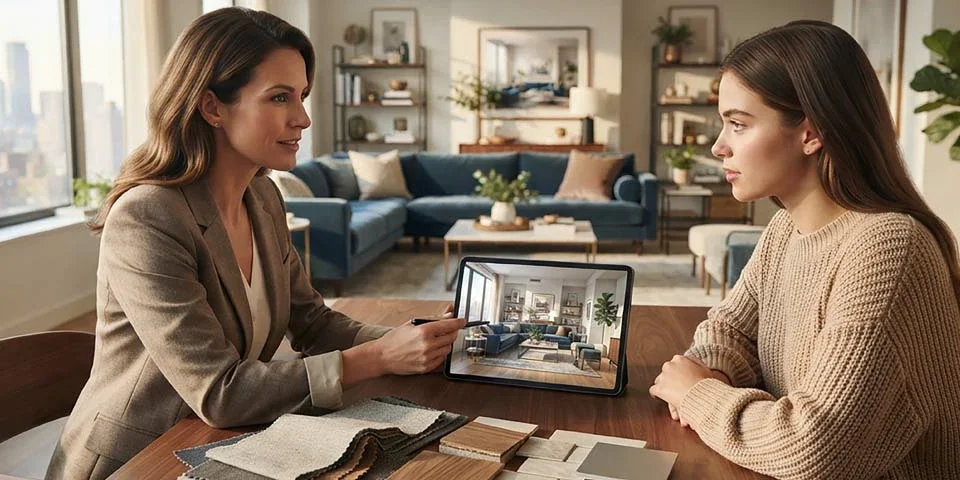
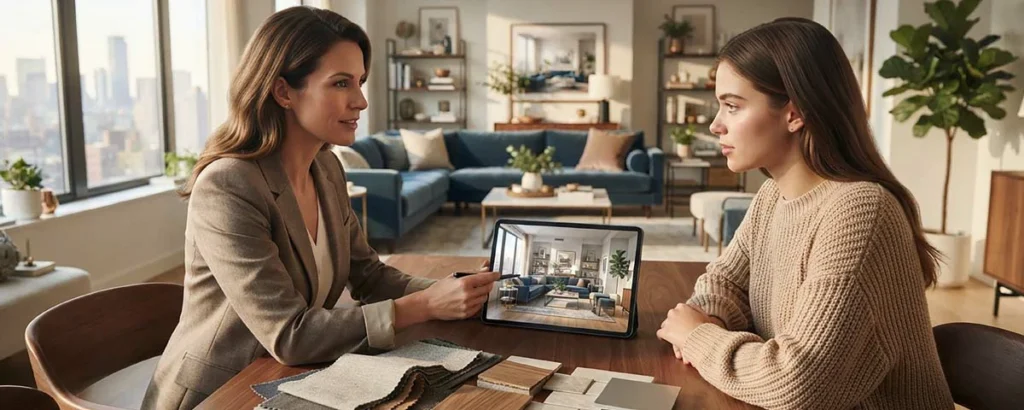
Interior design visualisation benefits from AI generation by enabling rapid exploration of different furniture arrangements, colour schemes, material selections, and lighting conditions. Designers can generate photorealistic images of spaces with different design treatments, helping clients make confident decisions about finishes and furnishings. The ability to iterate quickly accelerates the design decision process.
Landscape architecture and urban design applications include generating visualisations of parks, streetscapes, and public spaces. AI can populate scenes with appropriate vegetation, people, and contextual elements that bring design proposals to life. Seasonal variations can be visualised to show how spaces will look throughout the year.
Product designers use AI photo generation to visualise new product concepts, explore form variations, and create marketing imagery before physical prototypes exist. The ability to generate photorealistic product images from descriptions accelerates the design review process and supports market research. AI-generated imagery helps secure stakeholder buy-in before committing to production tooling.
Applications in Entertainment and Media
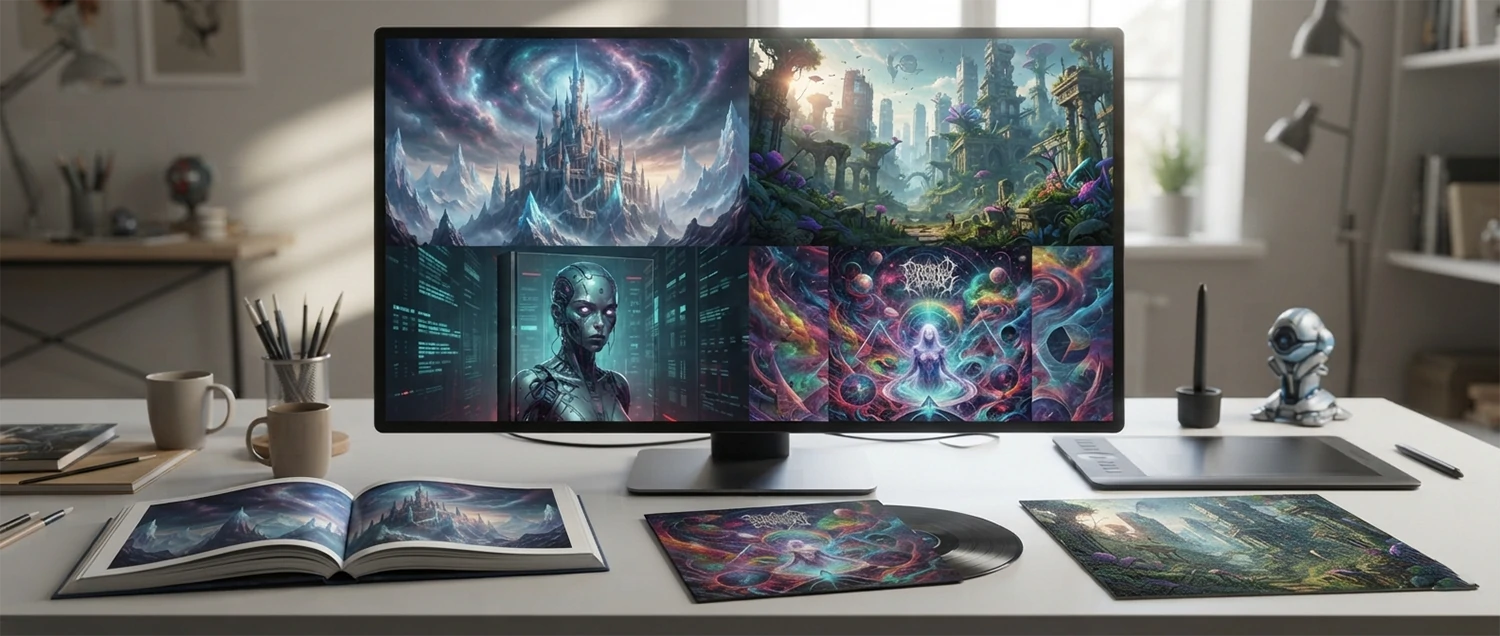
The entertainment and media industries have embraced AI photo generation for concept art, storyboarding, and visual development. Film and television productions use AI to quickly visualise scenes, characters, and environments during pre-production. Concept artists leverage AI to explore creative directions rapidly, generating hundreds of visual ideas that can be refined and combined into final concepts.
Video game development benefits from AI-generated concept art, texture creation, and environment design. Game artists use AI to explore visual styles, generate reference imagery, and create promotional materials. AI-generated textures and sprites can accelerate asset production, particularly for indie developers with limited resources. The technology is increasingly integrated into game development pipelines.
Publishing and editorial content creators use AI photo generation for book covers, article illustrations, and editorial photography. AI enables the creation of custom imagery that perfectly matches editorial content without the expense of commissioned photography or illustration. Independent authors and small publishers particularly benefit from access to professional-quality cover art at minimal cost.
Music and album artwork has seen significant AI adoption, with musicians generating distinctive, surreal, and visually striking album covers that would be difficult or impossible to create through traditional photography. AI enables visual concepts that directly respond to musical themes and moods, creating cohesive artistic statements that span audio and visual domains.
Ethical Considerations
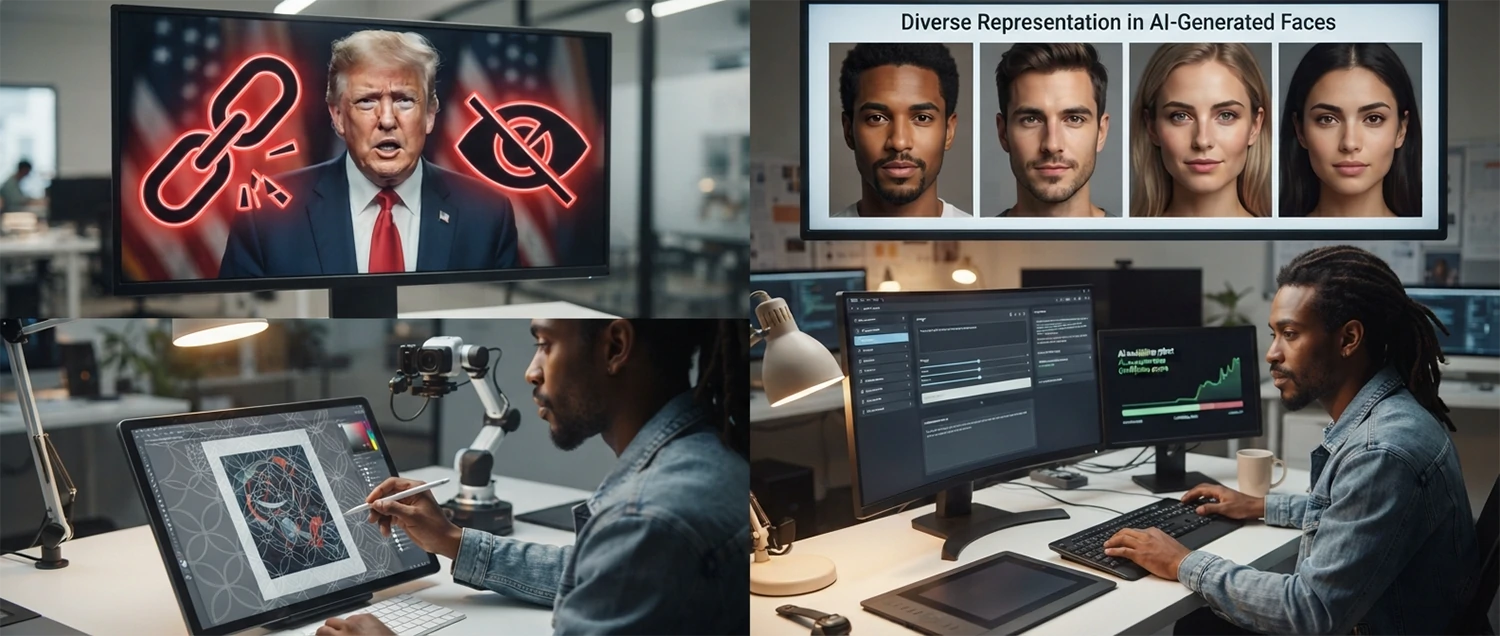
The rise of AI photo generation has raised significant ethical questions that society is still working to address. Deepfakes and misleading imagery created with AI technology pose risks to personal privacy, political discourse, and social trust. The ability to generate photorealistic images of events that never happened challenges our collective understanding of truth and authenticity in visual media.
Bias in AI training data is a critical concern. AI photo generators trained on internet data inherit and potentially amplify existing biases related to race, gender, age, and culture. Generated images may perpetuate stereotypes or exclude certain groups if training data is not carefully curated. Ongoing research aims to develop techniques for reducing bias in AI-generated content.
The impact on creative professionals is a subject of intense debate. AI photo generators can produce images that would take human artists hours or days in seconds, raising questions about the future of creative careers. Many argue that AI will augment rather than replace human creativity, with artists using AI tools to enhance their productivity and explore new creative directions.
Transparency about AI-generated content is increasingly important. Many platforms now include watermarking and metadata that identify images as AI-generated. Legislation in various jurisdictions is exploring requirements for labeling AI-generated content. Responsible use of AI photo generators requires clear disclosure when images are created or significantly modified by artificial intelligence.
Copyright and Ownership Issues
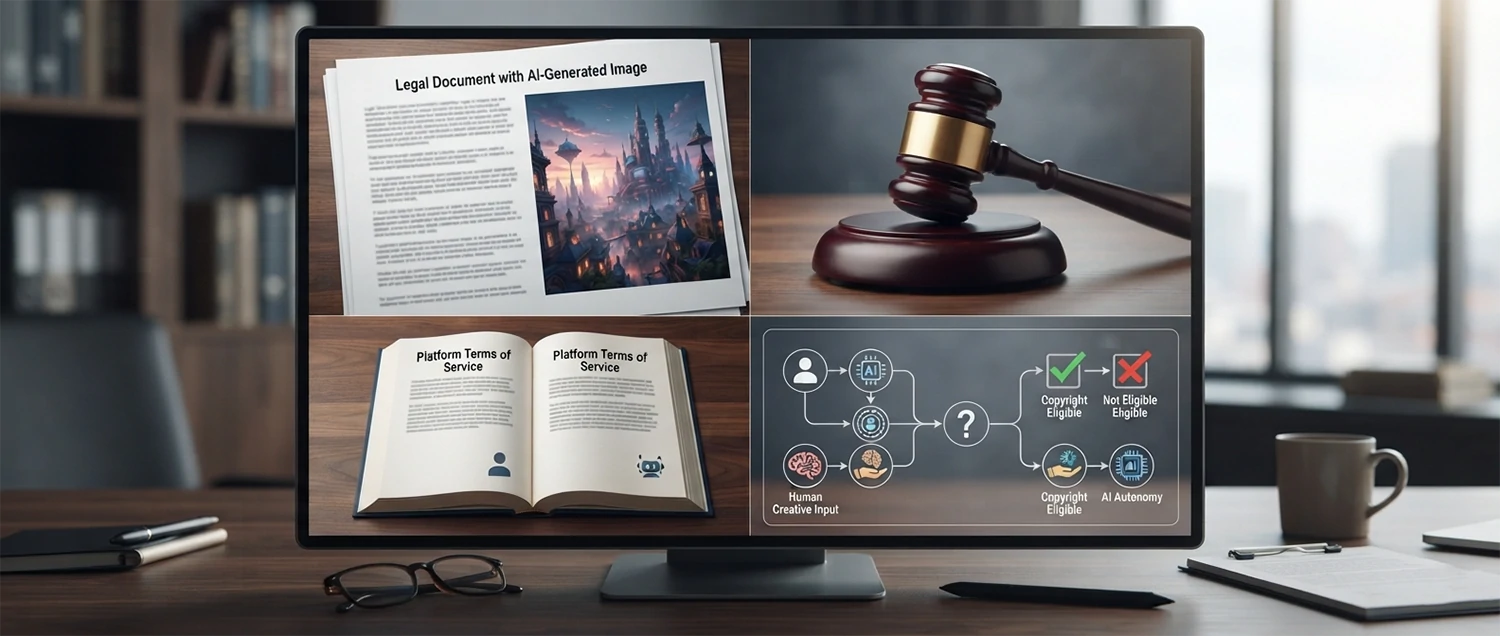
Copyright ownership of AI-generated images remains a legally complex and evolving area. Current legal frameworks were designed for human-created works and do not clearly address content generated by artificial intelligence. Different jurisdictions have taken different approaches, creating uncertainty for creators and businesses using AI photo generators commercially.
In the United States, the Copyright Office has ruled that works created entirely by AI without human creative input are not eligible for copyright protection. However, works that incorporate AI-generated elements with substantial human creative contribution may qualify for copyright. The distinction between AI-generated and AI-assisted creation is critical for determining copyright eligibility.
Training data copyright is another contentious issue. AI models are trained on vast datasets scraped from the internet, including copyrighted images. Multiple lawsuits have been filed by artists and copyright holders alleging that AI companies used their work without permission for training. The legal resolution of these cases will significantly impact the future of AI photo generation.
Platform terms of service vary regarding ownership of generated images. Some platforms grant users full commercial rights to generated content, while others retain certain rights or restrict commercial use. Users should carefully review terms of service before using AI-generated images in commercial projects. Adobe Firefly stands out by offering legal indemnification for commercial use of its generated content.
AI Photo Generation Best Practices
Creating high-quality AI-generated images requires more than just typing a description. Successful generation involves understanding how models interpret language, knowing the capabilities and limitations of specific platforms, and developing effective prompt engineering skills. Following best practices dramatically improves output quality and consistency.
Start with a clear vision of what you want to create. Define the subject, setting, lighting, composition, style, and mood before writing your prompt. Reference existing images that capture elements of your desired result. The more clearly you can visualise the output, the more effectively you can craft prompts to achieve it.
Iterate systematically rather than expecting perfect results on the first attempt. Generate multiple variations of each prompt, identify what works and what does not, and refine accordingly. Small adjustments to wording, parameter settings, or style references can produce dramatically different results. Keep track of successful prompts for future reference.
Combine AI generation with traditional tools for the best results. Use AI for initial concept development and asset creation, then refine outputs in image editing software. Composite AI-generated elements with photography, adjust colours and contrast, and add finishing touches that elevate the final result beyond raw AI output. The best work often combines AI and human creativity.
Prompt Engineering Guide
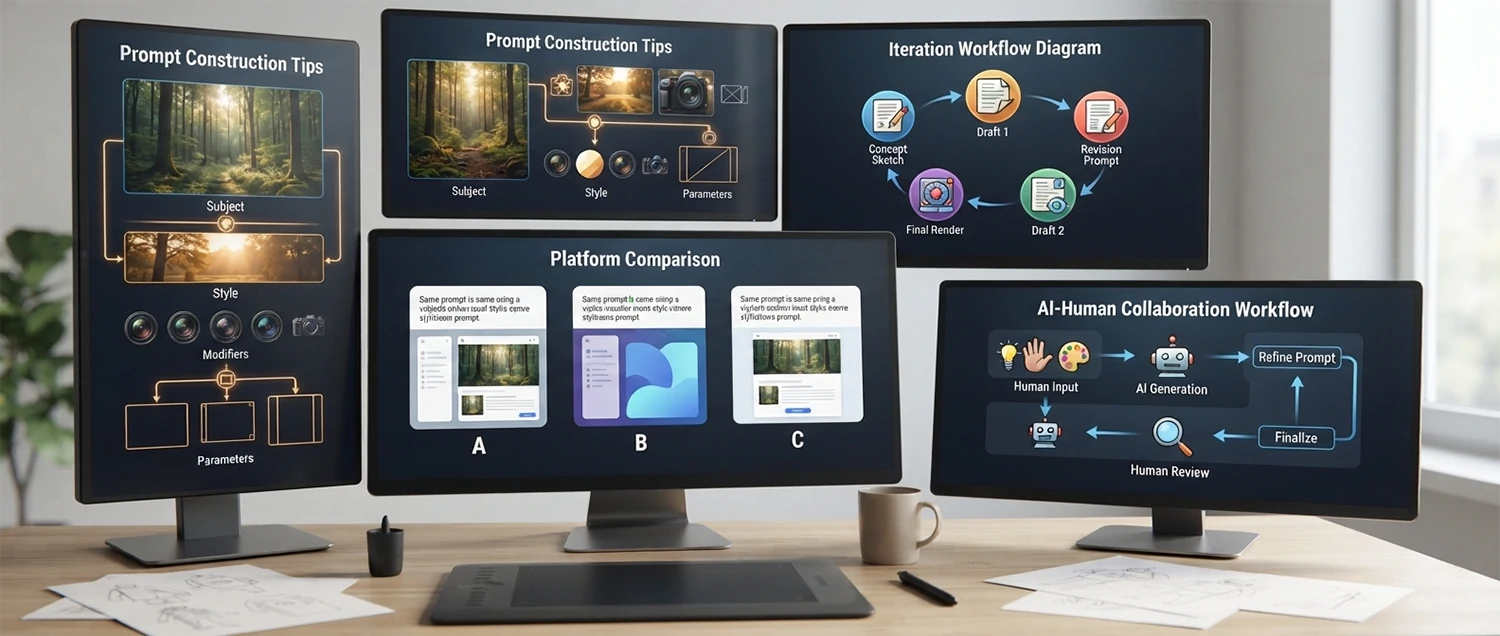
Prompt engineering is the practice of crafting text inputs that effectively guide AI photo generators toward desired outputs. Skilled prompt engineers can consistently produce high-quality images by understanding how different prompt elements influence the generation process. This skill has become increasingly valuable as AI-generated imagery becomes more prevalent in professional workflows.
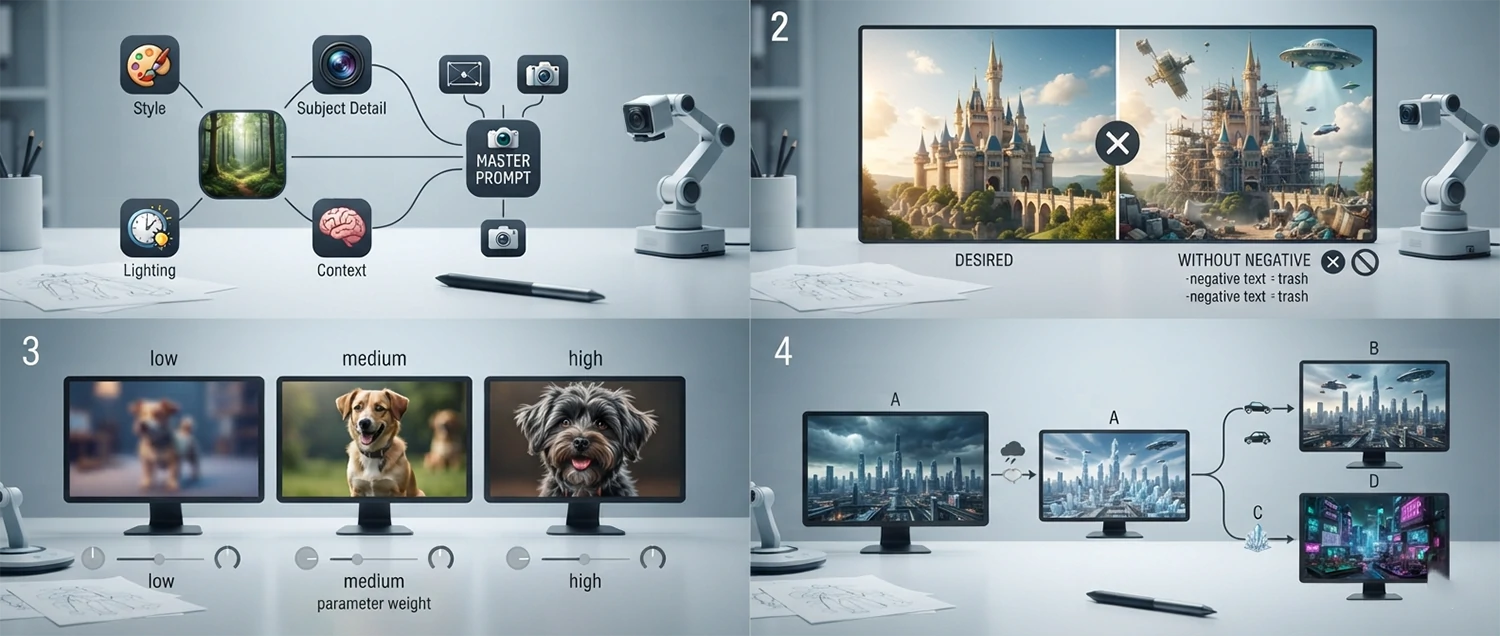
Effective prompts typically include several key components. The subject describes what or who the image is about. The medium specifies whether the image should look like a photograph, painting, sketch, or other artistic form. The style defines the visual aesthetic. Lighting describes illumination conditions. Colour indicates the palette. Composition specifies arrangement and perspective.
Negative prompts tell the model what to avoid in the generated image, providing powerful control over output quality. Common negative prompts include terms for common AI artifacts such as distorted hands, extra fingers, blurry areas, or undesirable stylistic elements. Different platforms implement negative prompting differently, and understanding platform-specific syntax is essential for effective use.
Parameter tuning fine-tunes generation behaviour. Key parameters include guidance scale that controls prompt adherence strength, sampling steps that determine generation quality and speed, seed values that enable reproducible results, and resolution settings that affect output dimensions. Understanding these parameters and their interactions enables precise control over the generation process.
Limitations of AI Photo Generators
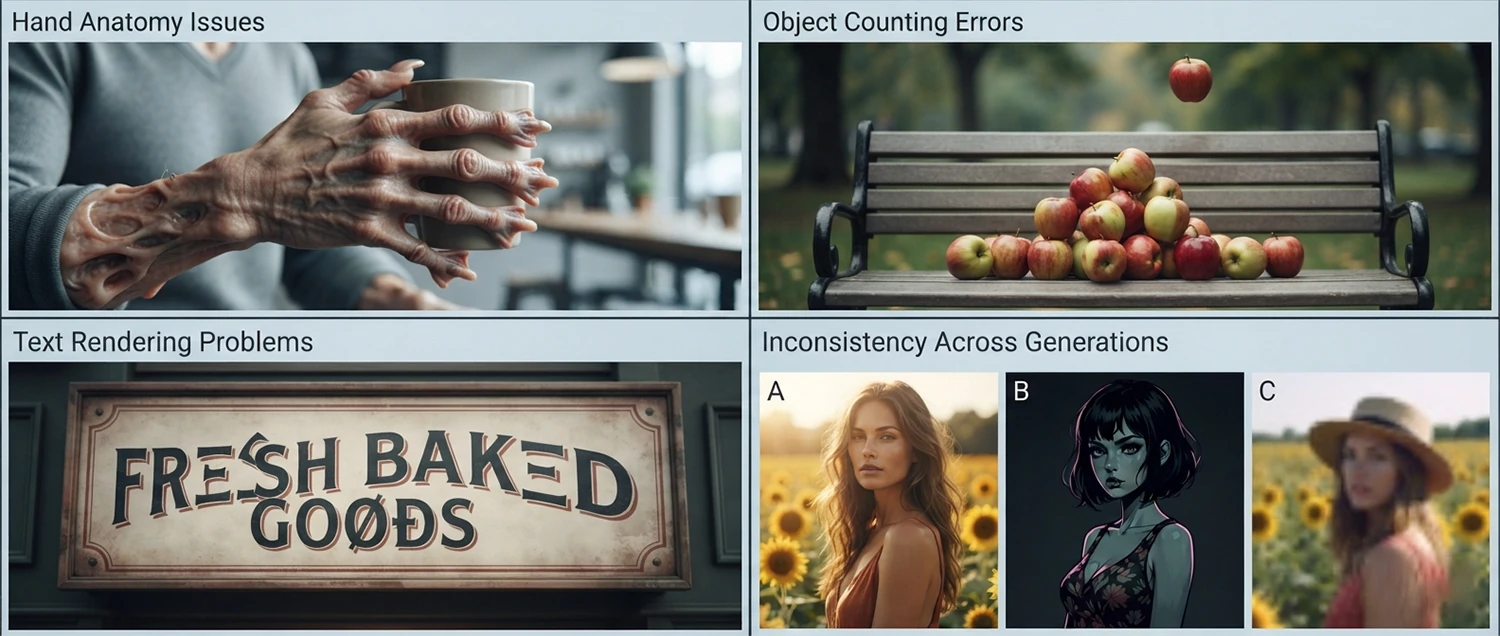
Despite their impressive capabilities, AI photo generators have significant limitations that users must understand. Anatomical accuracy remains a challenge, particularly with hands, fingers, and complex body positions. While newer models have improved dramatically, generating correct hand anatomy with the right number of fingers in natural positions still requires multiple attempts and careful prompt engineering.
Spatial reasoning and object counting can be unreliable. AI models may struggle to place objects in specific relationships to each other or generate a requested number of objects accurately. A prompt for three birds on a branch might produce two or four, positioned incorrectly. Complex scenes with multiple interacting elements remain challenging for current generation technology.
Text rendering within images has historically been a weak point, though newer models have made significant progress. Short text may be rendered legibly, but longer text passages, specific fonts, and precise typography remain difficult. Platforms like Ideogram have specialised in text rendering, but for most generators, text should be added in post-processing for reliable results.
Consistency across multiple generations is limited. Generating a character or scene consistently across different prompts requires specialised techniques or fine-tuned models. This makes AI generation less suitable for projects requiring visual consistency, such as illustrated books or branded content series, without additional workflow steps to ensure uniformity.
Future of AI Photo Generation
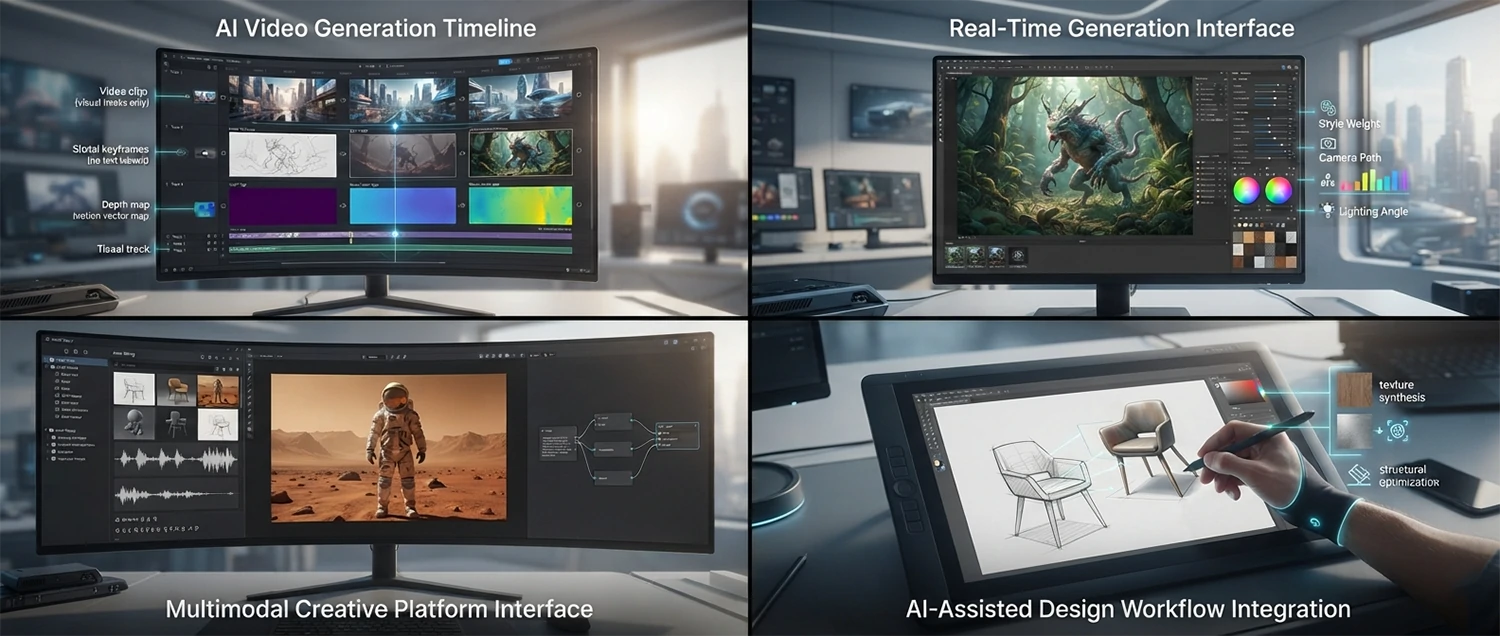
The future of AI photo generation promises continued rapid advancement across multiple dimensions. Video generation is emerging as the next frontier, with models capable of creating realistic moving images from text descriptions. Platforms including Runway, Pika, and Stable Video Diffusion are already demonstrating impressive results, and full-resolution video generation will likely become mainstream within the next few years.
Real-time generation will transform interactive applications. As model optimisation and hardware acceleration improve, AI image generation will happen instantly, enabling real-time creative tools where users see results as they type. This will fundamentally change the creative workflow, making AI generation as immediate and responsive as traditional digital art tools.
Multimodal models that seamlessly combine text, image, video, audio, and 3D generation will create unified creative platforms. Users will describe a scene and receive photorealistic images, matching video footage, appropriate sound design, and 3D models that all share consistent content and style. This convergence will streamline creative production across multiple media types.
Improved control and precision will address current limitations. Future models will offer precise spatial control, reliable anatomical accuracy, consistent character generation, and editable outputs. Integration with CAD, BIM, and 3D modelling tools will enable AI-assisted design workflows where generated content seamlessly integrates with professional design software.
AI Photo Generator for Social Media
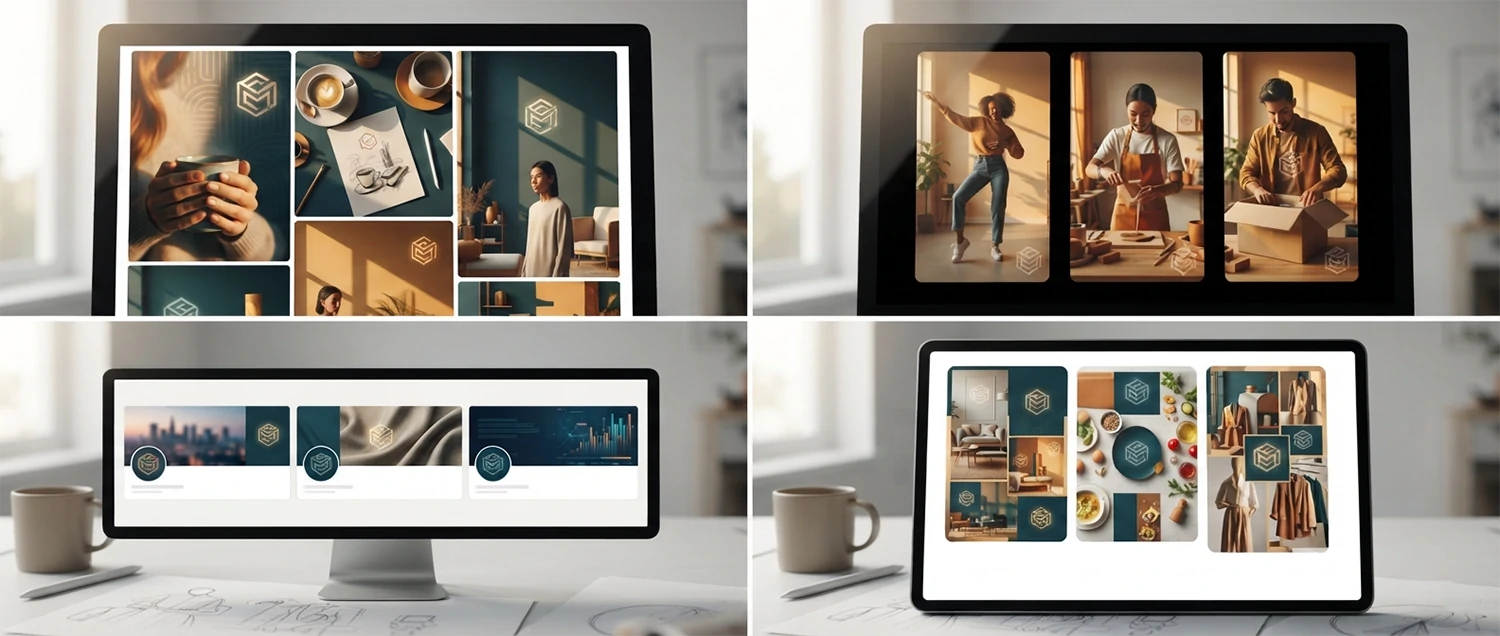
Social media content creators have embraced AI photo generators as essential tools for maintaining consistent, high-quality visual output across platforms. The demand for fresh, engaging visual content on social media is insatiable, and AI generation enables creators to produce custom imagery for every post without the time and expense of traditional content production. This capability has transformed social media marketing strategies.
Instagram, TikTok, Pinterest, and LinkedIn each require different visual approaches, and AI generators can create platform-optimised content quickly. Creators can generate images tailored to specific aspect ratios, aesthetic trends, and content themes for each platform. The ability to produce consistent branded visuals across multiple channels maintains professional presentation without requiring a full creative team.
AI-generated profile pictures, cover images, and branded templates help individuals and businesses establish professional social media presence. Content creators use AI to generate eye-catching thumbnails for videos, quote cards with custom backgrounds, and promotional graphics for product launches. The speed of AI generation enables real-time content creation in response to trending topics and current events.
Influencer marketing has been particularly transformed by AI photo generation. Influencers can generate custom backdrops, product placement images, and lifestyle content without organising photoshoots. AI enables the creation of diverse visual content that maintains personal brand identity while reducing production costs. The technology has lowered the barrier to entry for aspiring content creators.
AI Photo Generator for Real Estate
The real estate industry has found powerful applications for AI photo generation in property marketing and visualisation. Real estate agents and property developers use AI to enhance property photos, create virtual staging, and generate marketing imagery that showcases properties in their best light. These tools dramatically reduce the cost and complexity of professional real estate photography.
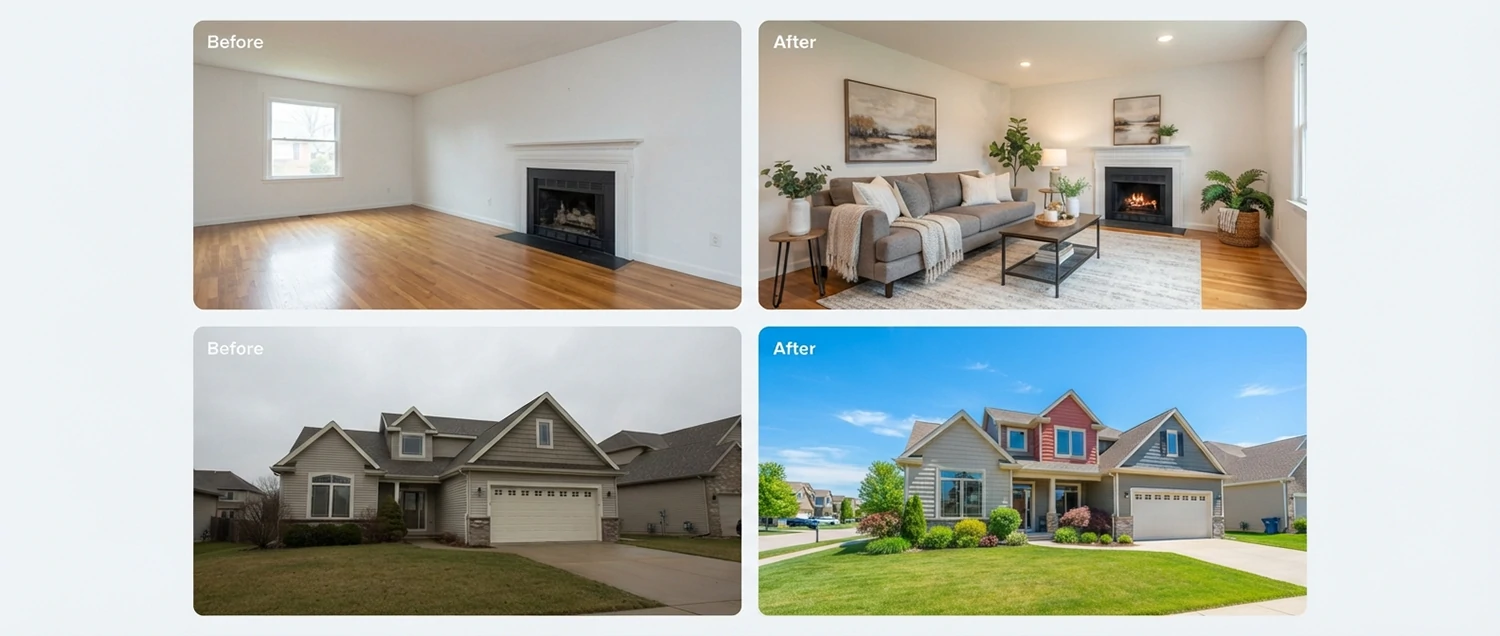
Virtual staging is one of the most valuable real estate applications of AI photo generation. Empty rooms can be furnished with AI-generated furniture, decor, and accessories that help potential buyers envision living in the space. Unlike traditional virtual staging that requires 3D modelling expertise, AI staging generates realistic furnishings from simple text descriptions, making it accessible to any real estate professional.
Property photo enhancement improves the visual appeal of listings by automatically correcting exposure, removing distracting elements, and enhancing colours and lighting. AI can transform poorly lit interior photos into bright, inviting spaces. External photos can be enhanced with improved skies, greener landscaping, and more flattering lighting conditions that make properties more attractive to online viewers.
AI-generated lifestyle imagery helps real estate marketers create compelling marketing materials that show properties in context. Neighbourhood scenes, local attractions, and lifestyle photography can be generated to complement property listings. These contextual images help buyers imagine the lifestyle associated with a property, increasing emotional engagement and driving interest.
AI Photo Generator for Education
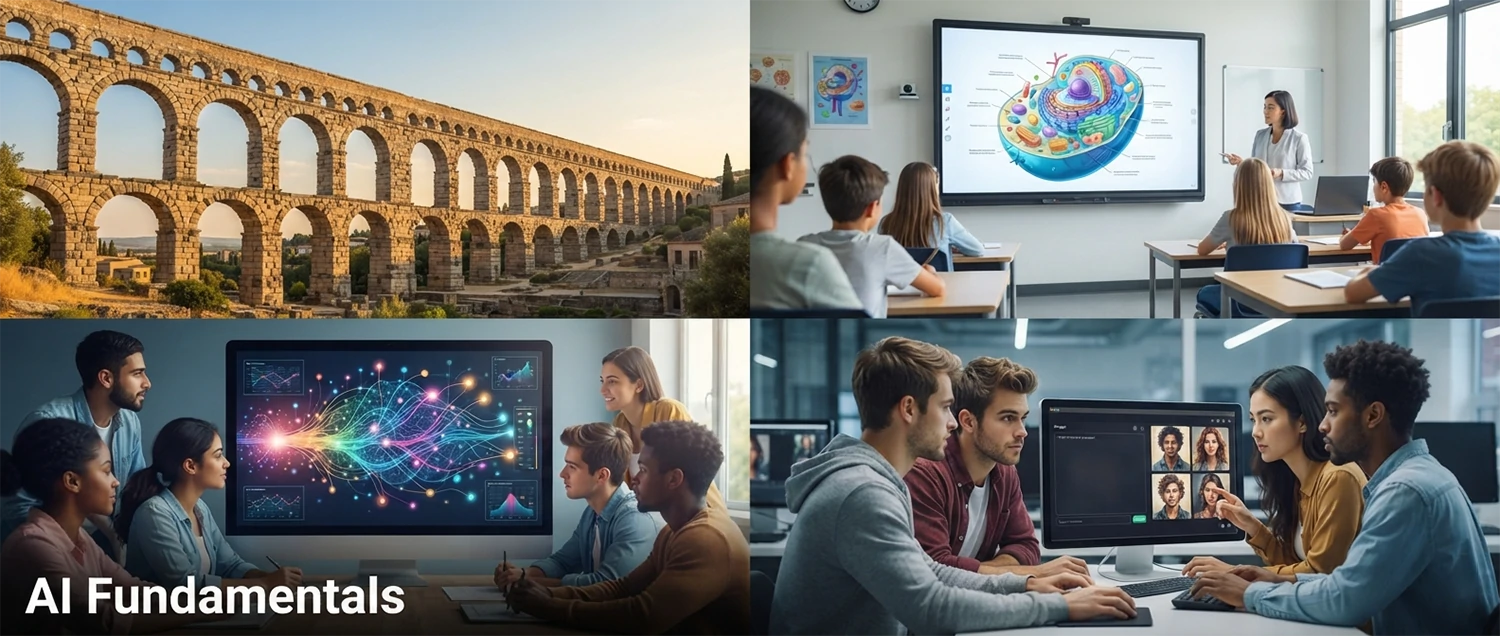
Educators and educational content creators have discovered powerful applications for AI photo generation in teaching and learning materials. AI-generated imagery can illustrate complex concepts, create engaging visual aids, and produce custom educational content that captures student attention. The technology enables educators to create professional-quality visual materials without graphic design expertise.
Textbook and worksheet illustrations can be generated to precisely match curriculum content. Rather than relying on generic stock images or spending hours searching for appropriate visuals, educators can generate custom illustrations for specific lessons, topics, and age groups. AI-generated diagrams, historical scene reconstructions, and scientific visualisations bring educational content to life.
Online course creators use AI photo generation to produce course thumbnails, lecture slide backgrounds, and promotional images that maintain professional visual standards. The ability to generate consistent branded visuals across an entire course library enhances the perceived quality of educational offerings. AI enables solo course creators to compete with large educational publishers in visual presentation quality.
AI photo generation also serves as a teaching tool itself, helping students understand concepts in artificial intelligence, computer vision, and creative technology. Students can experiment with prompt engineering, explore the capabilities and limitations of AI models, and develop critical thinking about the ethical implications of AI-generated content. This hands-on engagement with AI technology prepares students for a future where AI literacy is increasingly important.
Frequently Asked Questions
What is the best AI photo generator for beginners? DALL-E 3 integrated with ChatGPT offers the most beginner-friendly experience as it handles prompt engineering naturally through conversation. Canva AI is also excellent for users already familiar with Canva's design platform.
Are AI-generated images copyright free? Copyright status varies by jurisdiction and platform. In the US, purely AI-generated images may not be eligible for copyright. Check individual platform terms for commercial usage rights. Adobe Firefly offers the clearest commercial protection with its indemnification policy.
Can I use AI-generated images for commercial purposes? Most platforms allow commercial use of generated images, but terms vary. DALL-E, Midjourney, and Adobe Firefly permit commercial use. Always verify the specific terms of your chosen platform before using images in commercial projects.
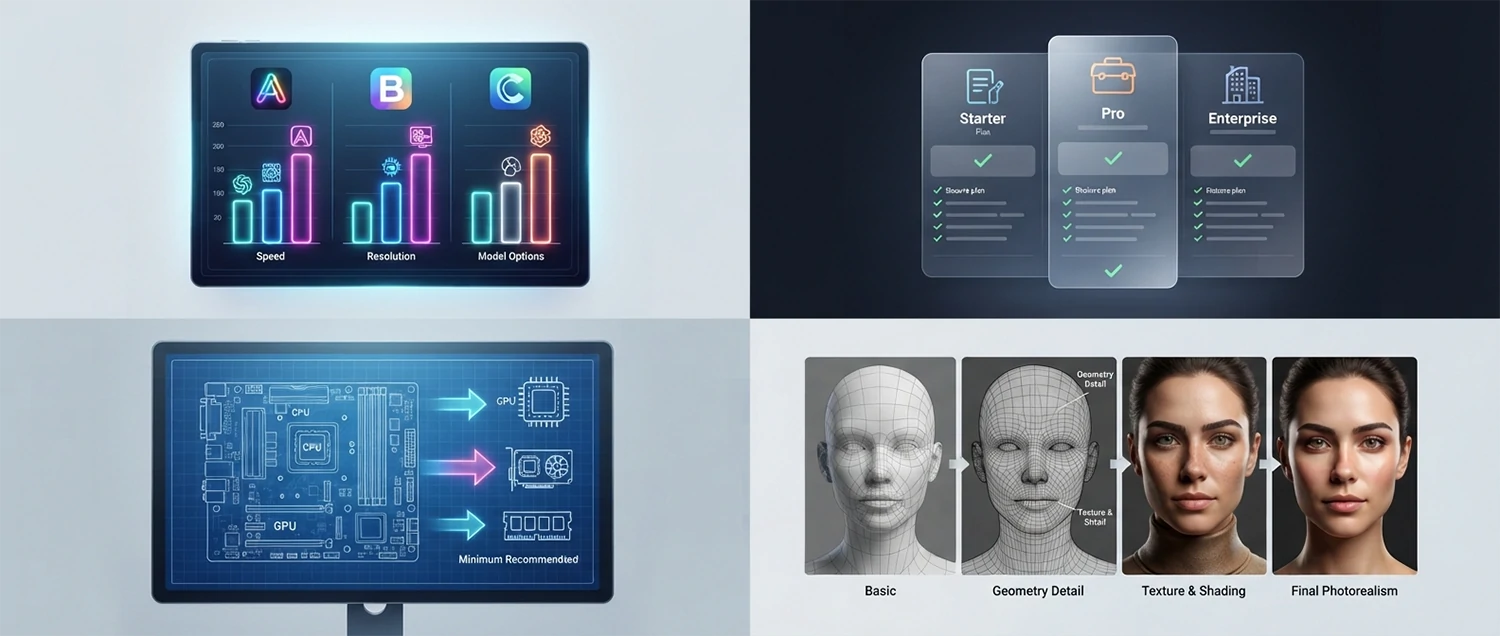
How much do AI photo generators cost? Pricing ranges from free tiers with limited generations to professional subscriptions around $10-$60 per month. DALL-E 3 is included with ChatGPT Plus at $20 per month. Midjourney starts at $10 per month. Stable Diffusion can be run for free on personal hardware.
What hardware do I need for local AI generation? Local generation with Stable Diffusion requires a GPU with at least 6GB VRAM for basic operation, with 8GB or more recommended for higher resolutions and faster generation. NVIDIA GPUs are preferred due to CUDA support and optimised libraries.
How can I make AI-generated images look more realistic? Use detailed prompts specifying lighting, camera settings, materials, and environmental details. Include terms like photorealistic, highly detailed, 8K, and specific camera equipment. Post-process generated images to adjust colour, contrast, and sharpness for maximum realism.
Conclusion: The AI Photo Generation Revolution
AI photo generation represents one of the most significant technological advances in visual media since the invention of photography. The ability to create photorealistic images from text descriptions has democratised visual content creation, enabling anyone with an idea to bring it to life visually. This technology is not merely a new tool but a fundamental shift in how we create and interact with visual media.
The rapid pace of advancement shows no signs of slowing. Each new model generation brings improvements in quality, control, and capabilities that would have seemed impossible just months earlier. Video generation, real-time creation, and multimodal platforms point toward a future where AI-generated visual content is indistinguishable from captured reality and integrated seamlessly into creative workflows.
Responsible adoption of AI photo generation requires understanding both its capabilities and its limitations, its ethical implications, and its legal framework. Users who approach the technology thoughtfully, following best practices and maintaining transparency about AI involvement, will be best positioned to leverage its benefits while mitigating its risks.
The future of visual content creation lies not in choosing between AI and human creativity, but in combining them effectively. AI photo generators are powerful tools that augment human creative capability, enabling faster iteration, broader exploration, and greater accessibility. By mastering these tools while preserving the uniquely human elements of creativity, intent, and artistic vision, creators can achieve results that neither human nor machine could produce alone. Ready to try it for free? Start with our free AI image generator guide.