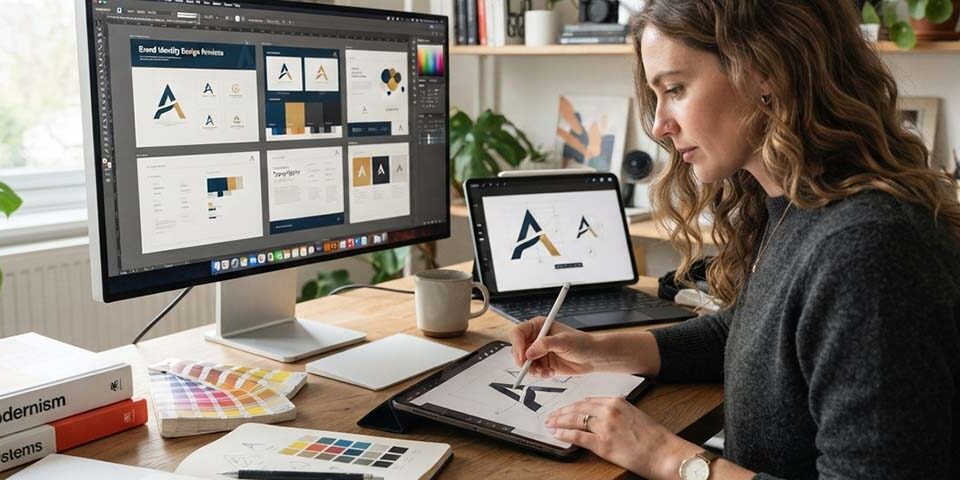

What AI logo tools are genuinely great for, where they fall short, and how to use them wisely to help create a logo that truly works for the long term.
The quick answer
AI logo design uses artificial intelligence to generate logo ideas from a description of your business, style, and preferences—producing options in seconds. It's genuinely excellent for exploring directions fast, sparking inspiration, and getting a rough starting point cheaply. Its limits are just as important: AI doesn't truly understand your business, market, or meaning, so it can miss the strategy and uniqueness a great logo needs, and may produce generic results.
This guide explains, in plain language, what AI logo design is genuinely good for, where its limits lie, and how to use it wisely. The best approach usually blends AI's speed with human judgment—using AI to explore and inspire, then refining the best idea with a designer's eye. Treated that way, AI becomes a helpful starting point for a logo that truly works, not a shortcut around the thinking a lasting logo needs.
What this guide covers
Table of contents
- The quick answer
- What this guide covers
- What AI logo design actually is
- Why a logo matters so much
- What AI logo design is genuinely great for
- Using AI to explore and clarify
- The real limits of AI logos
- The "everyone gets the same" problem
- Uniqueness and staying safe
- A logo has to work everywhere
- Why human judgment still matters
- The best way to use AI for logos
- The best logos are usually simple
- Colour and type still need thought
- Get the right files and versions
- Test a logo before you commit
- AI logo mistakes to avoid
- How we can help with your logo and brand
- Frequently asked questions
- How to approach getting a logo
- Bringing it all together
- Helpful official resources
What AI logo design actually is
AI logo design uses artificial intelligence to generate logo ideas from a short description of your business, your style, and what you like. You describe what you're after, and the tool produces a range of logo options in seconds. It's a fast, cheap way to see lots of directions and get the ball rolling—turning a blank page into a wall of possibilities almost instantly.
It's helpful to think of an AI logo tool as a brilliant, tireless idea-generator that has no understanding of what any of the ideas mean. It can produce endless options that look like logos, remarkably quickly, but it doesn't know your business, your customers, or why one direction matters more than another. It generates; it doesn't truly design in the thoughtful, strategic sense.
That distinction—between generating options and designing something meaningful—is the key to using AI logo tools well. They're superb for the early, exploratory part of the process and weaker at the judgment-heavy part that follows. Understanding AI logo design as a fast idea-generator, not a full designer, sets you up to get real value from it, especially alongside a proper logo generator.
Describe it
Get options fast
Many directions in seconds.
Idea-generator
No understanding
It generates, doesn't judge.
Great early
Weaker later
Explore now, judge next.

Why a logo matters so much
A logo is one of the most important and long-lived things a business owns. It's the face of your brand—on your website, products, packaging, and everywhere you appear—and it quietly shapes how people perceive you. A strong, distinctive logo builds recognition and trust over years; a weak or generic one undersells you. Because it's so central and so lasting, a logo genuinely deserves care.
Treat the logo as a lasting asset. Recognize a logo is the face of your brand. Understand it appears almost everywhere you do. See that it shapes how people perceive you. Realize a strong logo builds recognition over years. Know a weak one quietly undersells you. Appreciate a logo is long-lived, not disposable. Treat it as a serious, important asset. Recognize it deserves real care. A logo matters so much because it's one of the most important and long-lived things a business owns—the face of your brand on your website, products, and everywhere you appear—so it quietly shapes how people perceive you, with a strong, distinctive logo building recognition and trust over years while a weak one undersells you, which is exactly why it deserves the care a strong brand identity gives it.
What AI logo design is genuinely great for
Used for the right things, AI logo tools are genuinely valuable. They're brilliant for exploring lots of directions fast, sparking inspiration, seeing styles you might not have considered, and getting a rough starting point cheaply. Early on, when you're still working out what your brand should feel like, that rapid, low-cost exploration is a real gift—it helps you discover what you like and don't like quickly.
Use it for what it does best. Explore many directions in minutes. Spark inspiration and fresh ideas. See styles you hadn't considered. Discover what you like and dislike fast. Get a rough starting point cheaply. Test the water before committing. Move quickly in the early stages. Recognize fast exploration is genuinely valuable. AI logo design is genuinely great for exploring lots of directions fast, sparking inspiration, seeing styles you might not have considered, and getting a rough starting point cheaply—so early on, when you're still working out what your brand should feel like, that rapid, low-cost exploration helps you discover what you like and don't like quickly, the same exploratory value that an AI design generator offers.
Explore fast
Many directions
See lots of options quickly.
Inspiration
Fresh ideas
Styles you hadn't considered.
Starting point
Cheap and quick
Discover what you like.
Using AI to explore and clarify
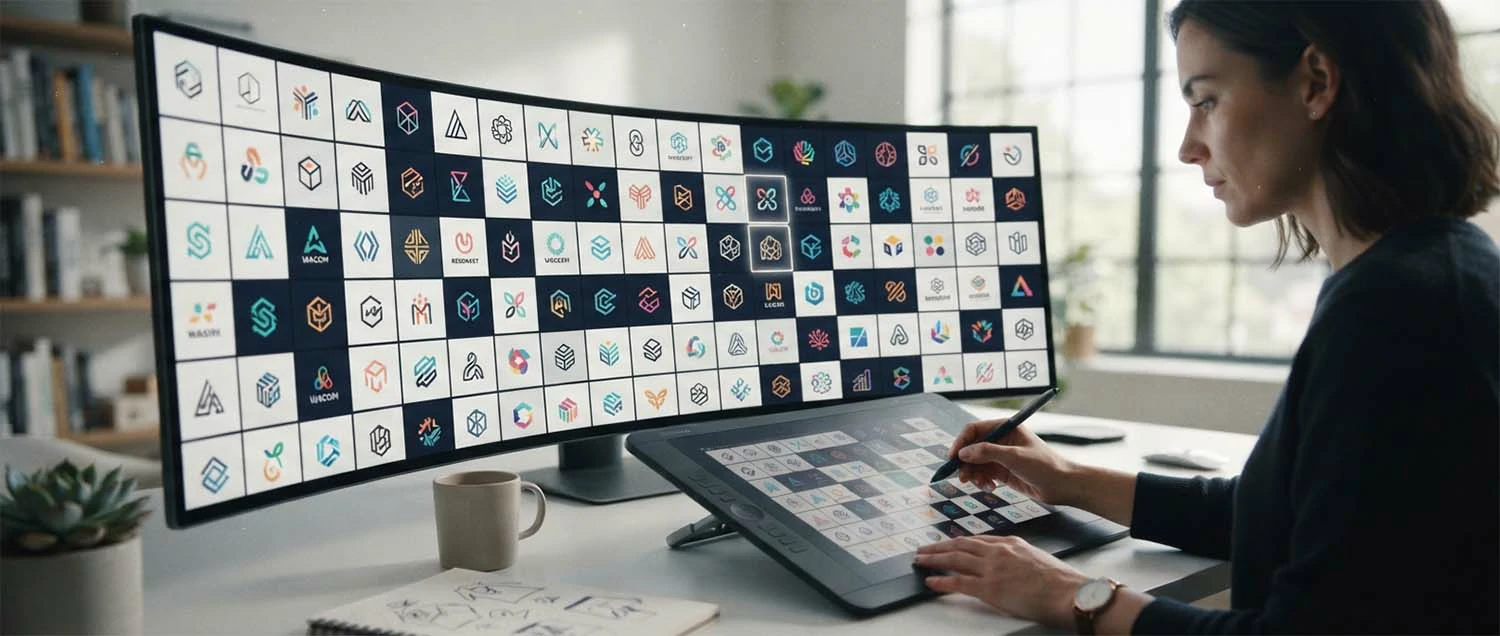
One of the most useful things AI logo tools do is help you clarify what you actually want. By generating many options quickly, they let you react—"I like this shape," "that colour feels wrong," "this style is too playful"—and those reactions teach you about your own taste and your brand. Even if you don't use any AI logo directly, this clarity is enormously valuable for the next step.
Learn what you want by reacting. Generate many options to react to. Notice what you're drawn to and why. Spot what feels wrong for your brand. Clarify your taste and preferences. Build a clearer brief for a designer. Use reactions to guide the direction. Value the clarity even if you use no AI logo. Recognize exploring sharpens your thinking. Using AI to explore and clarify is one of the most useful things these tools do, because generating many options quickly lets you react—liking a shape, disliking a colour, finding a style too playful—and those reactions teach you about your own taste and your brand, so even if you use no AI logo directly, this clarity is enormously valuable for the next step, exactly the kind of insight that sharpens any creative direction.
The real limits of AI logos
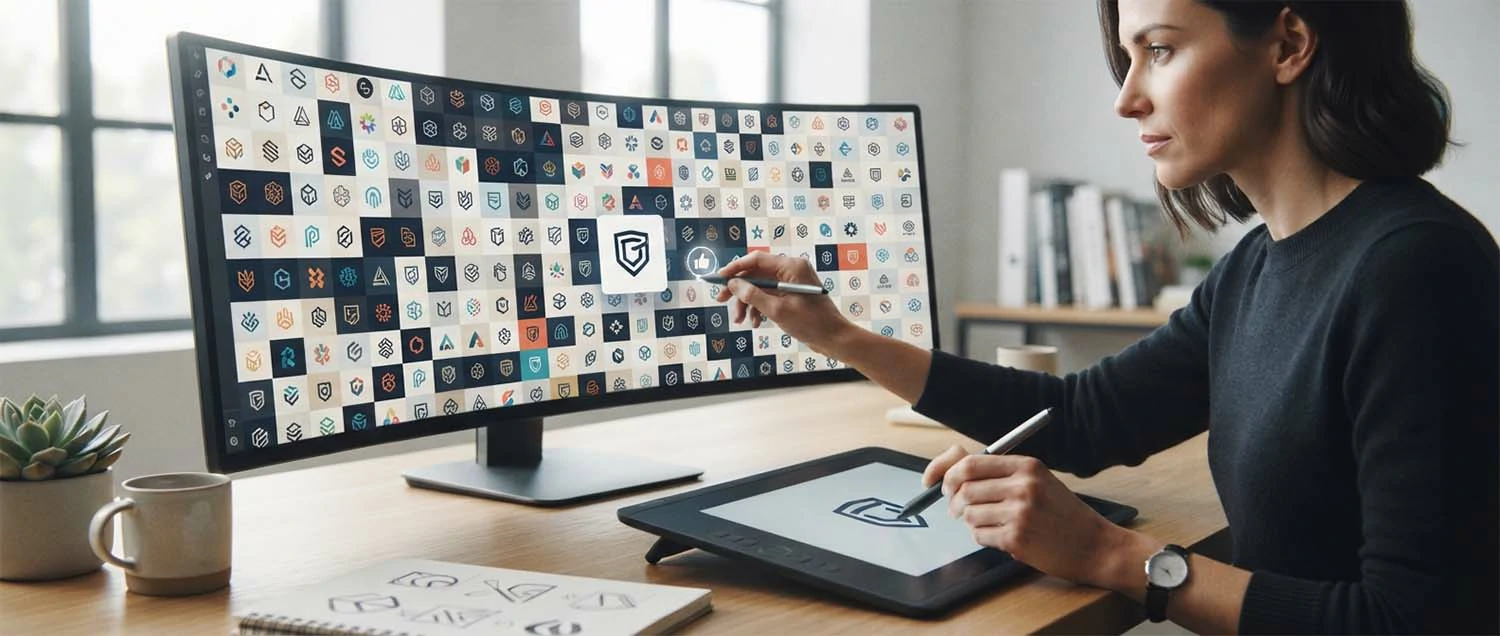
Being honest about the limits is what lets you use AI wisely. AI doesn't truly understand your business, your market, or what you want your logo to mean. It can't weigh strategy, judge what will last, or grasp the story behind your brand. It works from patterns, so it tends toward the average and familiar rather than the truly original. These aren't small gaps—they're exactly what a great logo needs.
Know where AI falls short. Understand AI doesn't grasp your business or market. Recognize it can't weigh strategy or meaning. See it can't judge what will last. Note it works from patterns, tending to the average. Realize it struggles with true originality. Know it can't understand your brand's story. Accept these gaps are exactly what logos need. Use human insight to fill them. The real limits of AI logos are what let you use it wisely, because AI doesn't truly understand your business, market, or what you want your logo to mean—it can't weigh strategy, judge what will last, or grasp your brand's story, and working from patterns it tends toward the average rather than the truly original—so these aren't small gaps but exactly what a great logo needs, which is why human insight and a strong brand identity matter so much.
No understanding
Of your business
Can't weigh strategy.
Works from patterns
Tends to average
Struggles with originality.
Can't judge
What will last
Needs human insight.
The "everyone gets the same" problem
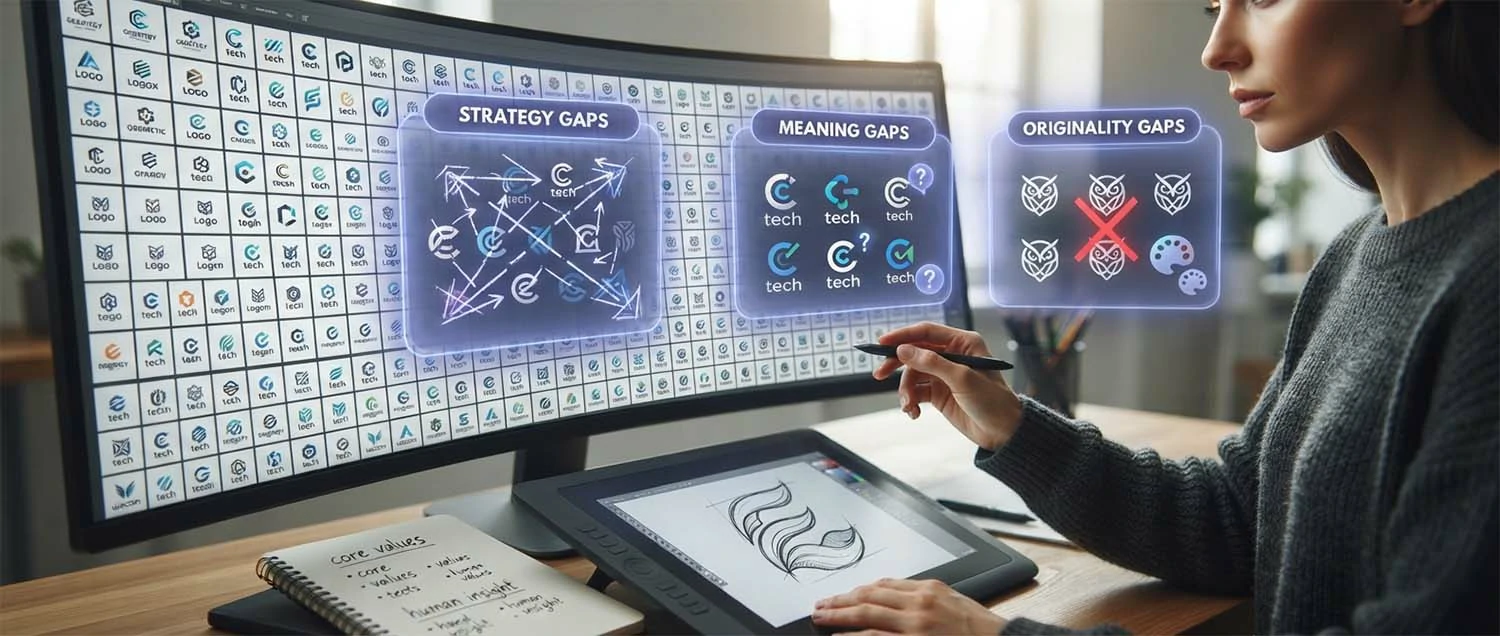
Because AI works from common patterns, it often produces logos that feel generic or look like many others—and different businesses feeding it similar descriptions can get strikingly similar results. A logo's whole job is to make you distinctive, so a generic one undercuts its own purpose. Watching for this, and pushing past the obvious, is essential if you want an AI-assisted logo to actually stand out.
Avoid the generic trap. Recognize AI leans on common patterns. Understand results can feel generic. Know similar briefs get similar logos. See that generic undercuts a logo's purpose. Push past the first, obvious options. Look for what makes yours distinctive. Refine away from the average. Recognize standing out needs deliberate effort. The "everyone gets the same" problem arises because AI works from common patterns, so it often produces logos that feel generic or resemble many others, and different businesses feeding similar descriptions can get strikingly similar results—but a logo's whole job is to make you distinctive, so a generic one undercuts its own purpose, which means watching for this and pushing past the obvious is essential, the same distinctiveness that avoids the sameness that quietly costs businesses.
Uniqueness and staying safe
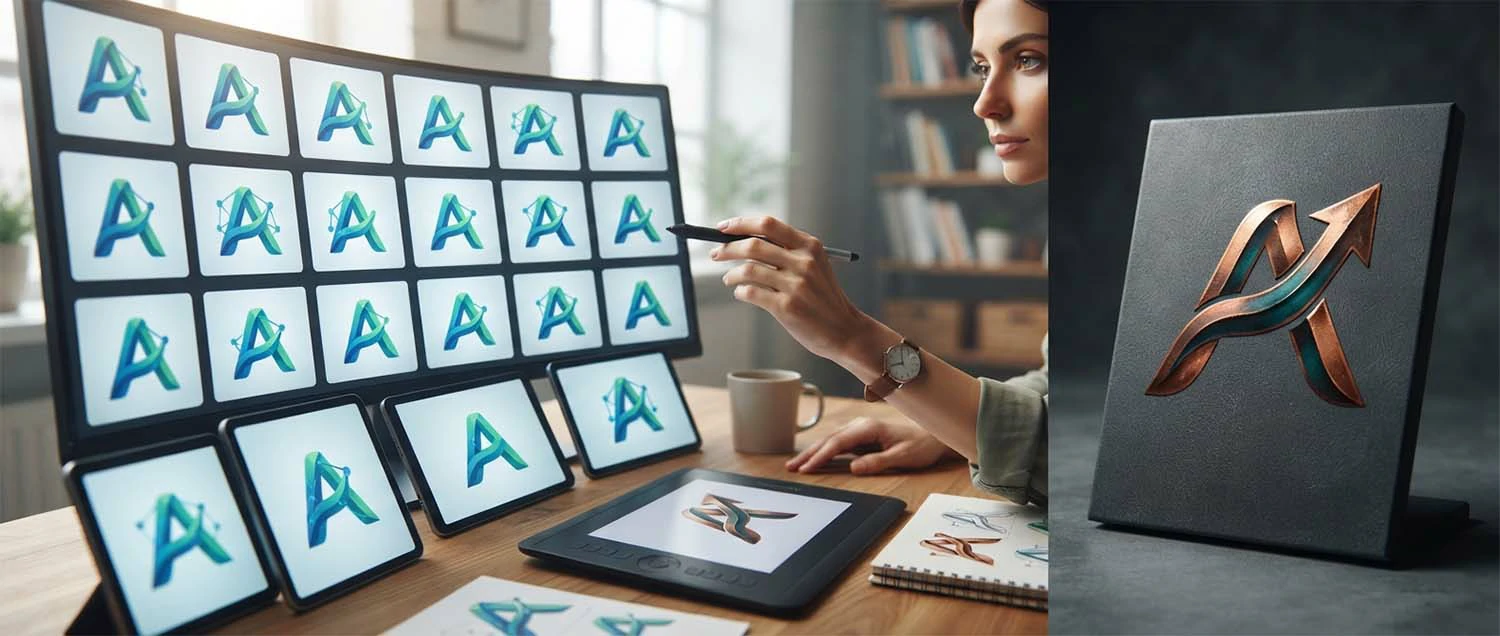
A logo needs to be genuinely yours—distinctive, and safe to use without clashing with someone else's mark. AI can't guarantee either: it can't check that a design is truly original or that nothing too similar already exists. That's why an AI-generated logo should always be reviewed with a human eye, and ideally checked properly, before you commit to it as your brand's lasting identity.
Make sure it's truly yours. Recognize a logo must be distinctive and safe. Understand AI can't guarantee originality. Know it can't check for similar existing marks. Review any AI logo with a human eye. Check properly before committing. Avoid a logo too close to another's. Treat uniqueness as essential, not optional. Get professional help to be sure. Uniqueness and staying safe matter because a logo needs to be genuinely yours—distinctive and safe to use without clashing with someone else's mark—yet AI can't guarantee either, as it can't check a design is truly original or that nothing too similar exists, which is why an AI-generated logo should always be reviewed with a human eye and ideally checked properly before you commit, the same diligence that protecting a real brand requires.
Truly yours
Distinctive
Not a lookalike.
AI can't guarantee
Originality
Or check for clashes.
Review it
Before committing
Check properly first.

A logo has to work everywhere
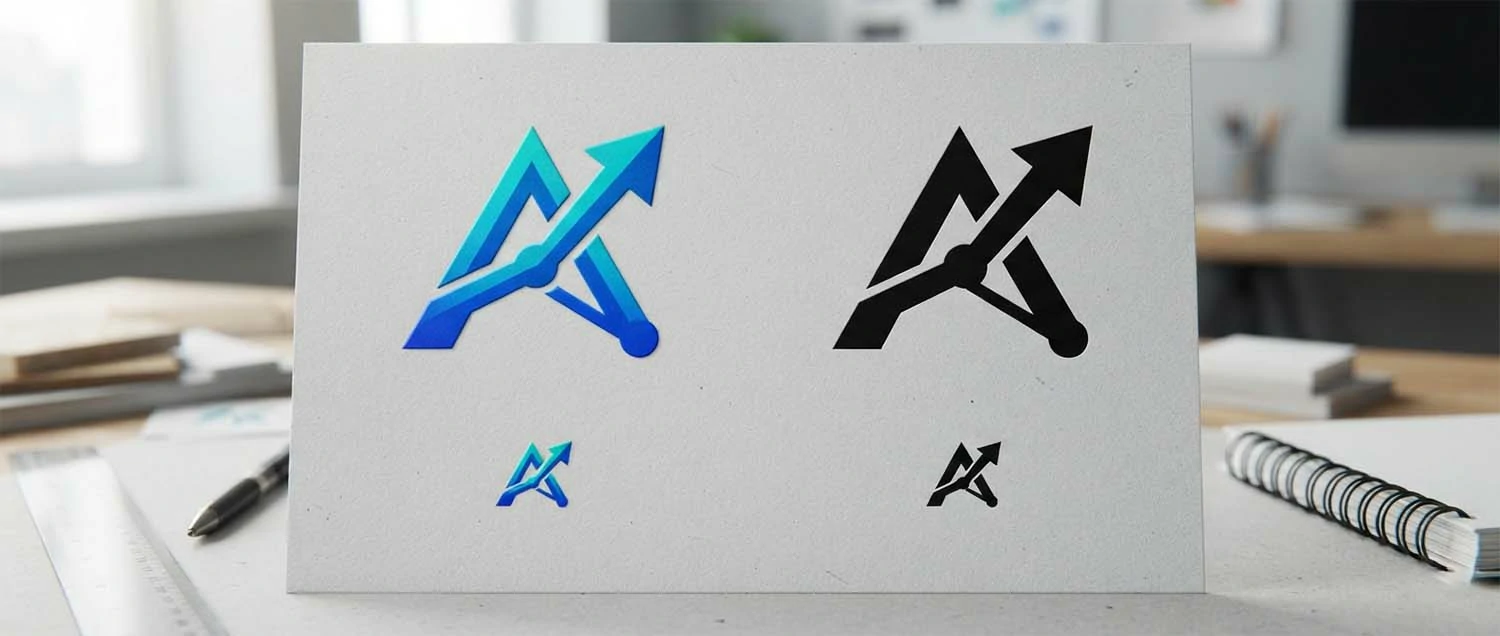
A great logo isn't just an appealing image—it has to work in the real world. That means being clear at tiny sizes (like a website icon) and large ones (like a sign), in full colour and in plain black-and-white, on screens and in print. AI can produce a nice-looking picture, but making sure it's practical everywhere, and available in the right formats, is part of proper design.
Practical, not just pretty. Ensure it's clear at tiny sizes. Check it works large, like on a sign. Make sure it reads in black-and-white. Confirm it works on screen and in print. Get it in the right file formats. Test it in real-world uses. Recognize a pretty image isn't enough. Treat practicality as part of good design. A logo has to work everywhere, not just look appealing, because it must be clear at tiny sizes like a website icon and large ones like a sign, in full colour and plain black-and-white, on screens and in print—so while AI can produce a nice-looking picture, making sure it's practical everywhere and available in the right formats is part of proper design, exactly the practicality that a well-built web presence depends on.
Why human judgment still matters
Everything a logo needs beyond a nice image—strategy, meaning, originality, longevity, and practicality—comes from human judgment. A designer understands your business and audience, brings taste and originality, and knows what will stand the test of time and work everywhere. AI can generate and assist, but it can't replace this thinking. The best logos come from people using AI, not AI working alone.
People bring what AI can't. Recognize strategy and meaning come from people. Understand designers bring taste and originality. See they judge what will last. Know they ensure it works everywhere. Value understanding of your business and audience. Let AI assist, not replace, this thinking. Combine AI's speed with human judgment. Recognize the best logos are human-led. Human judgment still matters because everything a logo needs beyond a nice image—strategy, meaning, originality, longevity, and practicality—comes from people, so a designer who understands your business and audience, brings taste and originality, and knows what will last and work everywhere provides what AI can't, meaning the best logos come from people using AI rather than AI alone, the same human-led thinking behind a strong brand identity.
Strategy & meaning
From people
Understanding your business.
Taste & originality
A designer's eye
Knows what will last.
AI assists
People lead
Best logos are human-led.
The best way to use AI for logos
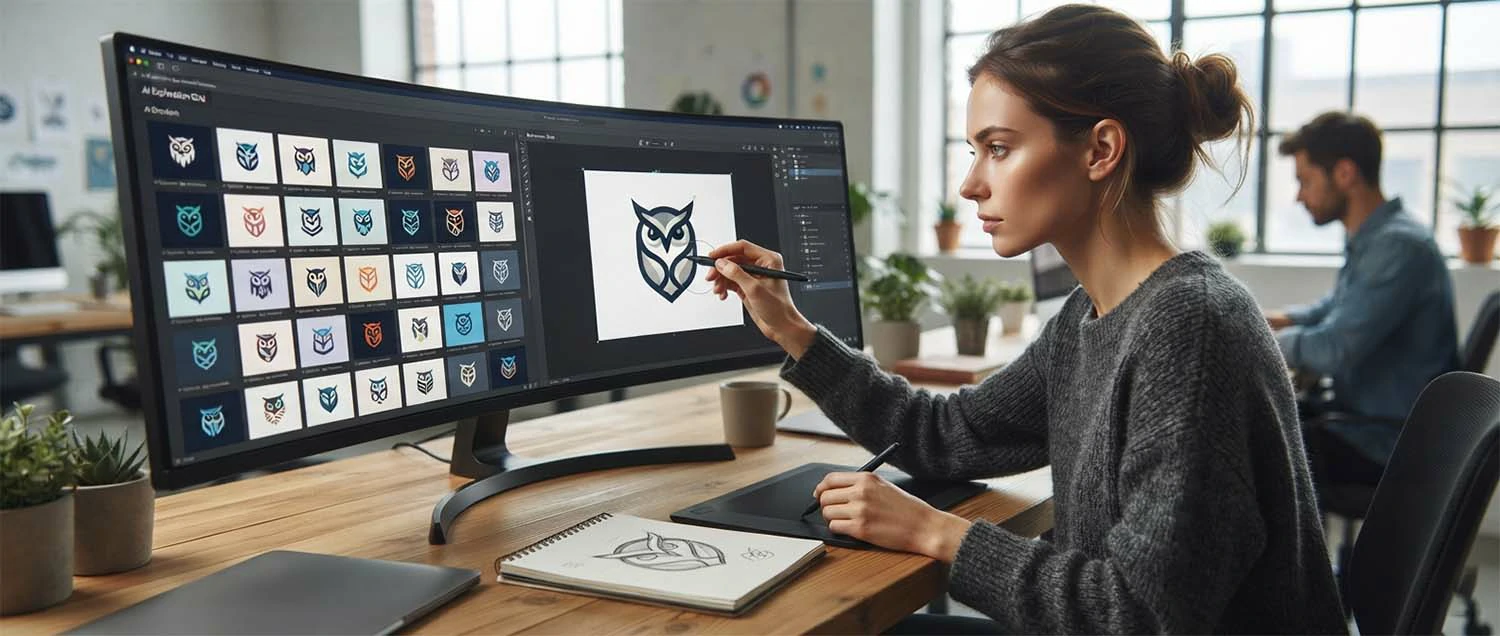
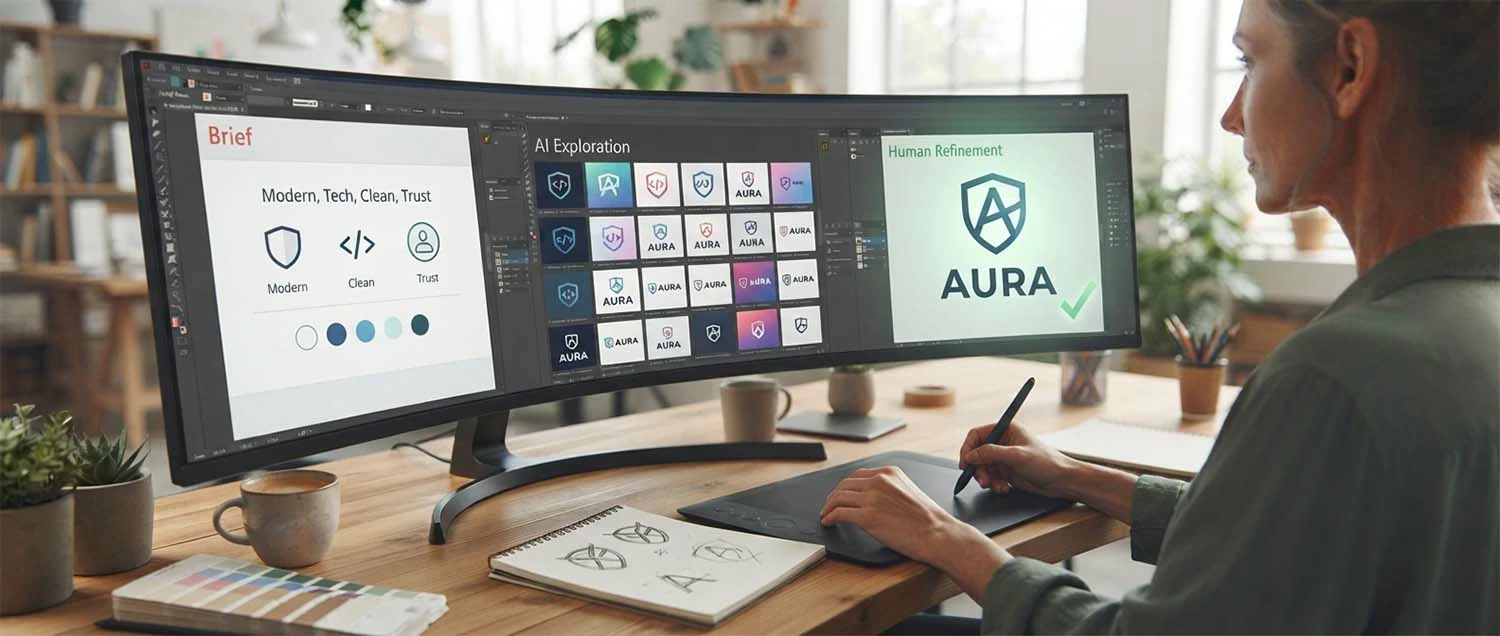
Put it all together and a clear approach emerges: use AI for what it's great at, and people for what they're great at. Let AI help you explore many directions quickly and find what resonates, then refine the strongest idea with a designer's eye—or use AI purely for inspiration and have a professional create the final mark. This blends AI's speed with the human judgment a lasting logo needs.
Blend AI speed with human judgment. Use AI to explore many directions fast. Find what resonates and clarify your taste. Take the strongest idea forward. Refine it with a designer's eye. Or use AI just for inspiration. Have a professional finalise the mark. Get the best of both approaches. Recognize this is how AI logos work best. The best way to use AI for logos is to use it for what it's great at and people for what they're great at—letting AI help you explore many directions quickly and find what resonates, then refining the strongest idea with a designer's eye, or using AI purely for inspiration and having a professional create the final mark—so you blend AI's speed with the human judgment a lasting logo needs, exactly how AI fits into a wider creative workflow.
The best logos are usually simple
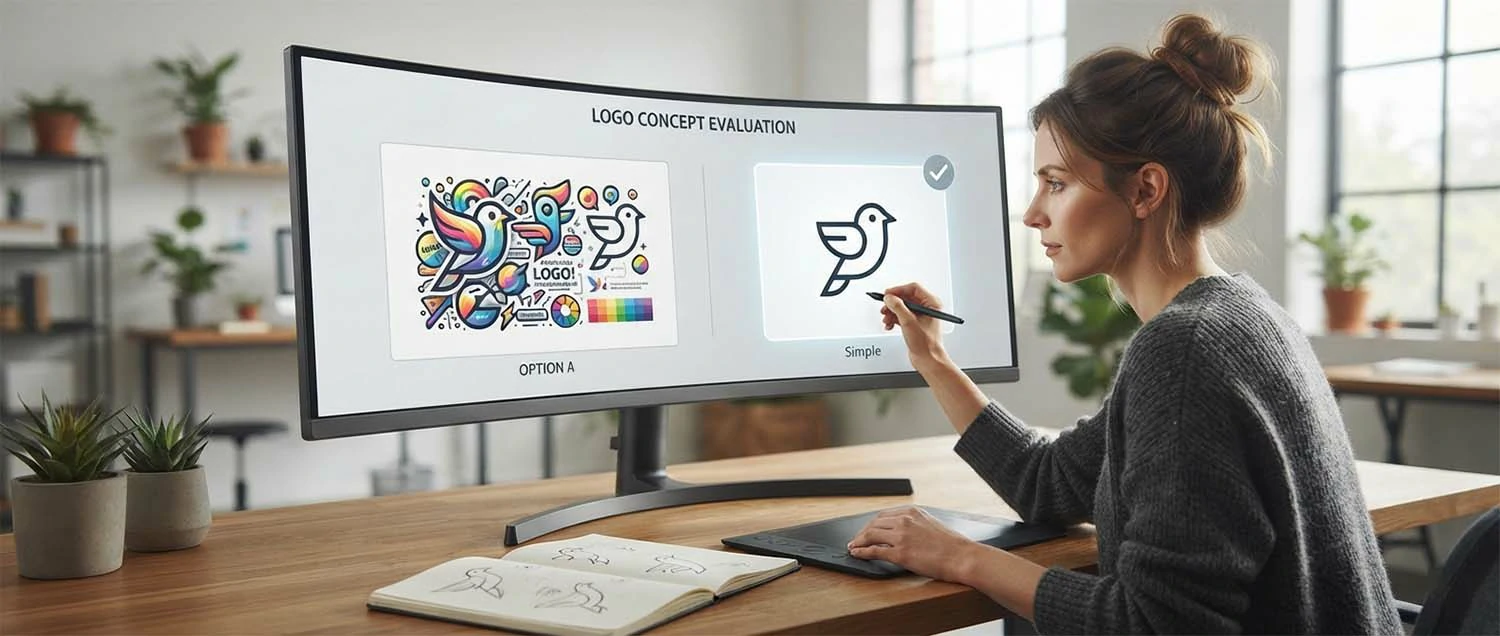
A useful thing to know when judging AI options is that the strongest logos tend to be simple. Clean, uncluttered marks are easier to recognise, remember, and reproduce at any size, and they age far better than busy, fashionable ones. AI can be tempted to produce elaborate designs, so leaning toward the simpler, clearer options it offers often points you toward a logo that will actually work.
Favour simple and clear. Recognize simple logos are easier to remember. Understand clean marks work at any size. Know simplicity ages better than fashion. Resist over-complicated AI designs. Lean toward the clearer options. Ask if a mark reads instantly. Strip back anything unnecessary. Recognize simple usually wins. The best logos are usually simple, which is useful when judging AI options because clean, uncluttered marks are easier to recognise, remember, and reproduce at any size, and they age far better than busy, fashionable ones—so since AI can be tempted to produce elaborate designs, leaning toward the simpler, clearer options points you toward a logo that will actually work, exactly the timeless clarity a strong brand identity aims for.
Simple
Easy to remember
Works at any size.
Clean
Ages well
Beats busy and fashionable.
Lean simpler
When choosing
Strip back the unnecessary.
Colour and type still need thought
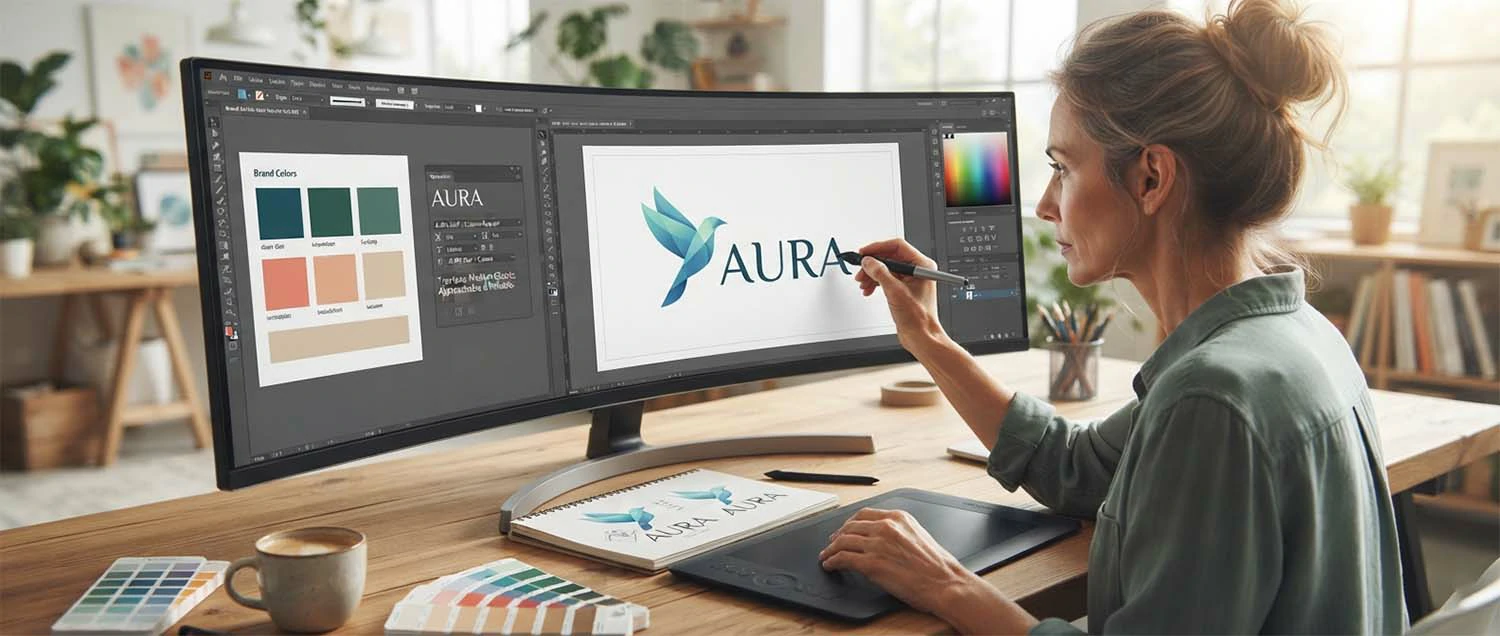
A logo isn't just a shape—its colours and any lettering carry a lot of meaning too. Colours evoke feelings and should suit your brand and audience; the style of any text should match your personality and stay readable. AI will suggest these, but they deserve considered choices, not just whatever the tool picked, because they shape how your logo feels as much as the icon does.
Choose colour and type deliberately. Remember colours carry feeling and meaning. Pick colours that suit your brand and audience. Make sure any lettering stays readable. Match the type style to your personality. Don't just accept the AI's defaults. Check colours work in one colour too. Consider how it all feels together. Recognize these choices shape the whole logo. Colour and type still need thought because a logo isn't just a shape—its colours evoke feelings that should suit your brand and audience, and the style of any lettering should match your personality while staying readable—so although AI will suggest these, they deserve considered choices rather than just whatever the tool picked, since they shape how your logo feels as much as the icon does, the same deliberate care behind a consistent brand.
Get the right files and versions
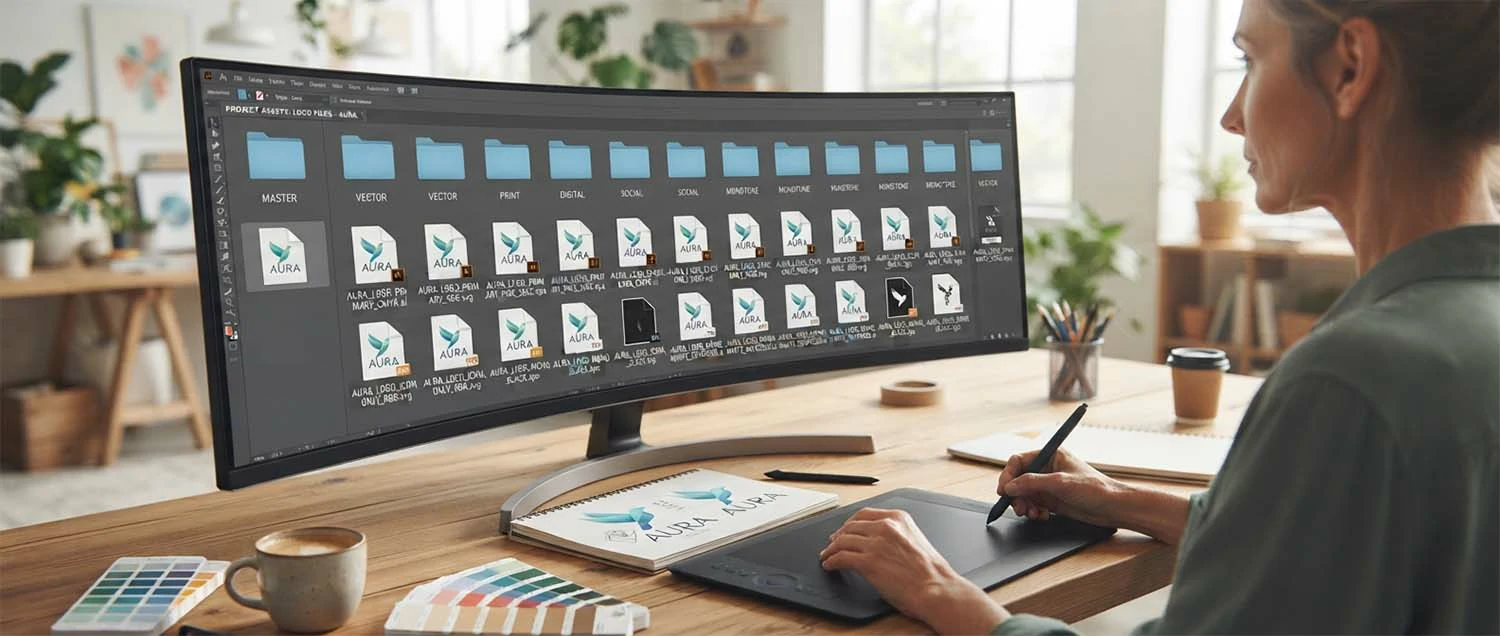
A logo isn't much use if you only have it in one small format. To use it everywhere, you need it in the right file types and a few versions—high-resolution for print, web-ready for screens, a version that scales without going blurry, and variants for light and dark backgrounds. Making sure you end up with a proper set of logo files is a practical detail that's easy to overlook but really matters.
Have the versions you'll need. Get a high-resolution version for print. Have a web-ready version for screens. Ensure a version that scales without blurring. Prepare variants for light and dark backgrounds. Keep a plain black-and-white version. Store the master files safely. Make sure you own the files you get. Recognize the right files make a logo usable. Getting the right files and versions matters because a logo isn't much use in only one small format—to use it everywhere you need the right file types and a few versions: high-resolution for print, web-ready for screens, one that scales without blurring, and variants for light and dark backgrounds—so ending up with a proper set of logo files, and owning them, is a practical detail that's easy to overlook but really matters, exactly the practicality a well-built web presence depends on.
Print & web
Right formats
High-res and web-ready.
Scales cleanly
And variants
Light, dark, black-and-white.
Own the files
Store them safely
A proper set you control.
Test a logo before you commit
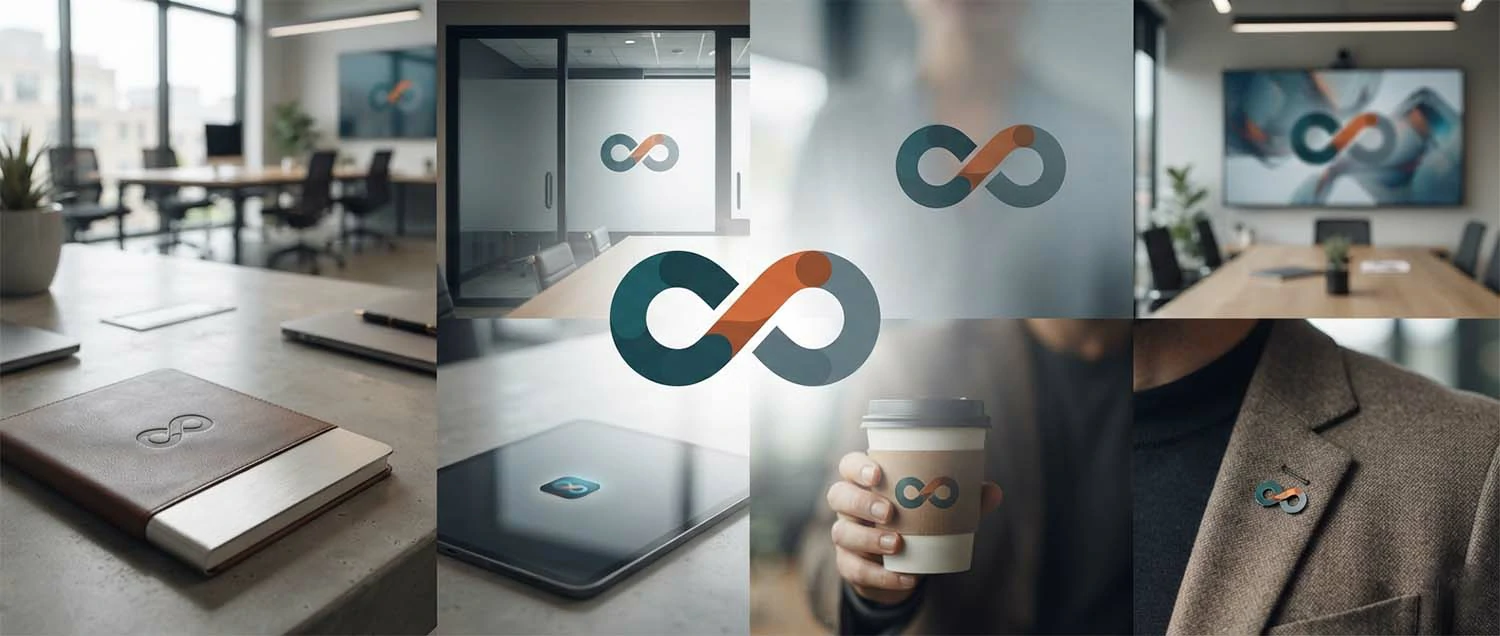
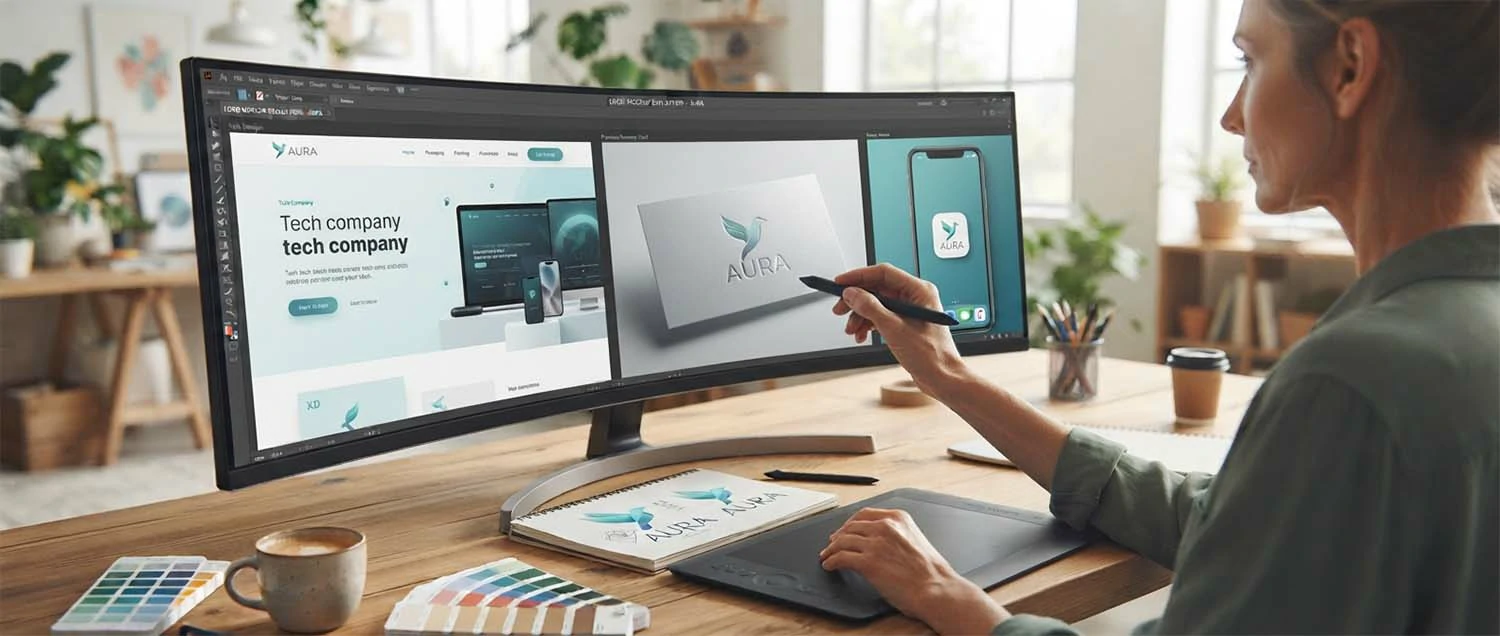
Before settling on a logo, it's wise to see it in real use rather than just admiring it on its own. Put it on a mock website, a business card, a product, or a social profile; shrink it to a tiny icon; show it to a few people you trust. Seeing how it actually looks and feels in context often reveals things a single view doesn't—and helps you commit with confidence.
See it in the real world first. View the logo in real contexts, not in isolation. Mock it up on a site, card, or product. Shrink it to a tiny icon to test clarity. Check it in colour and black-and-white. Show it to a few trusted people. Sleep on it before deciding. Notice anything that feels off. Commit only once you're confident. Testing a logo before you commit is wise because seeing it in real use rather than admiring it on its own reveals things a single view doesn't—so putting it on a mock website, a business card, a product, or a tiny icon, and showing it to a few trusted people, shows how it actually looks and feels in context and helps you commit with confidence, the same real-world checking that avoids the missteps that quietly cost businesses.
AI logo mistakes to avoid
A few common mistakes lead to weak AI logos. Recognizing them helps you end up with a mark that truly works.
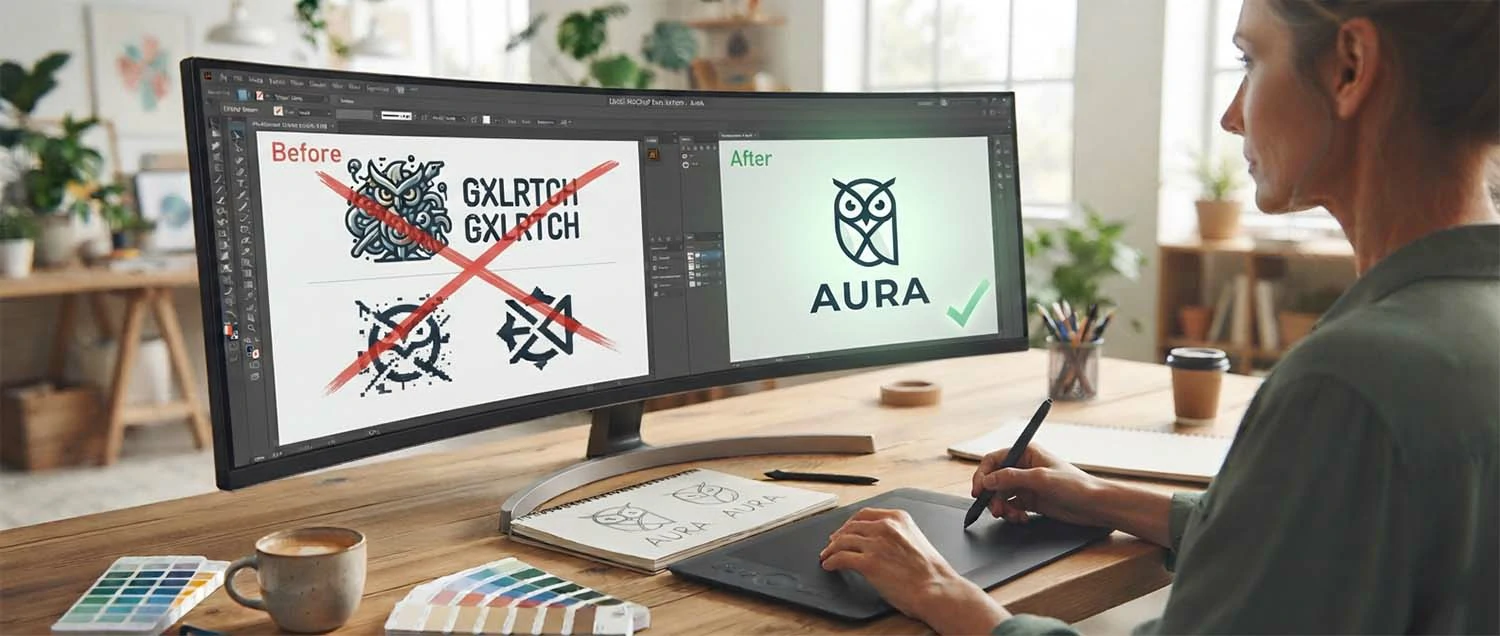
Using the first result
The first is rarely best. Explore and refine.
Settling for generic
It won't make you stand out. Push for distinctive.
Skipping uniqueness checks
It could clash. Review before committing.
Ignoring practicality
It must work everywhere. Check sizes and formats.
No human judgment
A logo needs strategy. Bring in a designer.
Treating it as throwaway
It's a lasting asset. Give it real care.
How we can help with your logo and brand
A great logo blends fast exploration with real design judgment. Our team helps you explore, refine, and finalise a distinctive, practical logo—and brings a full range of services so your whole brand looks its best.
Web Design and Development
We build the websites where your logo and brand come to life and build trust.
Video Editing
We create branded videos and animated logos that bring your identity to life.
Image Editing
We refine and perfect logo and brand visuals to a professional finish.
Audio Editing
We polish the audio in your branded content, so everything sounds professional.
3D Design and Rendering
We create striking 3D versions of your logo and brand visuals that stand out.
SEO Services
We help people find your brand, so your logo gets seen by the right audience.
Frequently asked questions
What is AI logo design?
AI logo design uses artificial intelligence to generate logo ideas from a description of your business, style, and preferences. It produces options in seconds, which is great for exploring directions and getting started quickly—though turning a generated idea into a logo that truly works usually still needs human judgment and refinement.
Is an AI logo good enough for my business?
It can be a good starting point, and for some very small or early ventures it may be enough. But a logo is a long-term, important asset, so most businesses benefit from refining an AI idea with a designer's eye, or using AI for inspiration and having a professional create the final mark.
What is AI logo design good for?
It's excellent for exploring ideas fast, seeing many directions cheaply, sparking inspiration, and getting a rough starting point. It helps you discover what you like and don't like quickly, which is genuinely valuable—especially early on when you're still working out what your brand should feel like.
What are the limits of AI logo design?
AI doesn't truly understand your business, market, or meaning, so it can miss the strategy and uniqueness a great logo needs. It may produce generic or similar-looking results, struggle with truly original ideas, and can't judge what will work long-term. Human insight fills these gaps.
Why does a logo need human judgment?
A logo carries meaning, strategy, and long-term brand value—things that need understanding of your business and audience. A designer brings taste, originality, and judgment about what will stand the test of time, ensure it's distinctive, and work everywhere it's used. AI can assist, but not replace, that thinking.
Can I use AI to get logo ideas then refine them?
Absolutely—this is one of the best ways to use it. Use AI to explore lots of directions quickly and find what resonates, then refine the best idea with a designer or careful judgment. This blends AI's speed with the human insight a strong, lasting logo needs.
Will an AI logo be unique to me?
Not necessarily. Because AI draws on patterns, generated logos can look generic or resemble others, and it can't guarantee originality or check nothing similar exists. Making a logo genuinely distinctive and legally safe to use usually needs human review and, often, a designer's involvement.
How should I approach getting a logo?
Be clear about your business and what you want the logo to say, use AI to explore ideas if it helps, and then invest human judgment—your own and ideally a designer's—in refining and finalising. Treat the logo as a lasting, important asset worth getting right, not just a quick generated image.
How to approach getting a logo
A sensible approach ties everything together. Start by getting clear about your business and what you want your logo to say—its personality, feel, and what makes you different. Then, if it helps, use AI to explore many directions quickly and clarify your taste. Treat what it produces as inspiration and raw material, not a finished answer, and note what resonates and what doesn't.
From there, invest human judgment in getting it right. Refine the strongest direction with your own careful eye and, ideally, a designer who can bring strategy, originality, and practicality—making sure your logo is distinctive, safe to use, and works everywhere from a tiny icon to a large sign. This is where a good idea becomes a genuinely strong, lasting logo.
Above all, remember what your logo is: a long-lived, important asset that represents your business for years. AI can help you get there faster and more cheaply, especially early on—but it works best as a starting point and a source of ideas, with human judgment doing the crucial work of turning those ideas into a logo you'll be proud of for a long time.
Bringing it all together
AI logo design is a genuinely useful tool—brilliant for exploring directions fast, sparking inspiration, and getting a cheap starting point, especially early on. But it's an idea-generator, not a full designer: it doesn't understand your business, tends toward the generic, can't guarantee uniqueness, and can't judge what will last or work everywhere. Those gaps are exactly what a great logo needs.
That's why the best approach blends AI's speed with human judgment. Use AI to explore and clarify, then refine the strongest idea with a designer's eye—bringing the strategy, originality, and practicality that turn an appealing image into a distinctive, lasting mark. Remember a logo is a long-lived, important asset that deserves that care, not just a quick generated picture.
Approach it that way—clear about your brand, using AI wisely for ideas, and investing human judgment in the finish—and you get the best of both worlds: the speed and inspiration of AI, and a logo that genuinely works, stands out, and represents your business proudly for years to come.