


Search increasingly answers before it links. Learn how to become an accurate, trusted source that AI Overviews and assistants cite—without chasing tricks that break the moment the model changes.
Quick Answer
How do you earn visibility in AI Overviews and answer engines?
You earn it by being the clearest, most accurate, and most trustworthy answer to a real question. AI Overviews and assistants compose replies from web sources and cite the ones they can safely rely on. To be that source, state a direct answer near the top of the page, support it with verifiable evidence and dates, structure the content so machines can read it, and publish from a site with a credible, recognizable reputation.
This is not a separate discipline that replaces search optimization. It builds on the same foundations: being crawlable, relevant, and genuinely useful. The shift in emphasis is toward self-contained, factual statements a model can lift without distorting them, and toward the signals of expertise and trust that make a system comfortable attributing an answer to you.
No technique guarantees inclusion—generated answers vary by query and change over time. What you can control is the quality, clarity, and credibility of your content. The rest of this guide explains how these systems work, how to write and structure content they can use, what to measure, and which shortcuts to avoid.

Follow the guide from how it works to how to measure it
Table of contents
- How do you earn visibility in AI Overviews and answer engines?
- Follow the guide from how it works to how to measure it
- Search is starting to answer, not only to list
- A shared vocabulary for AI search
- How answer engines actually assemble a reply
- What makes a source likely to be used and cited
- Step 1: Give a clear answer before you elaborate
- Step 2: Write statements a model can safely reuse
- Step 3: Structure content so machines can read it
- Step 4: Support every claim with visible evidence
- Step 5: Build recognizable expertise and trust
- Step 6: Cover a topic completely, not just its keywords
- Step 7: Keep facts current and clearly dated
- Step 8: Stay retrievable and technically sound
- Step 9: Measure visibility and accuracy, not just clicks
- How to respond to changing click patterns
- Common mistakes to avoid
- Stay honest as the surface evolves
- A practical workflow to apply this
- Answer engine optimization checklist
- Practical answers about AI Overviews and answer engines
- Be the source worth citing
- Verify with primary guidance
- Choose formats that answer engines can lift cleanly
- Think beyond a single search engine
- Strengthen your brand as a recognizable entity
- What to do when an answer gets you wrong

Search is starting to answer, not only to list
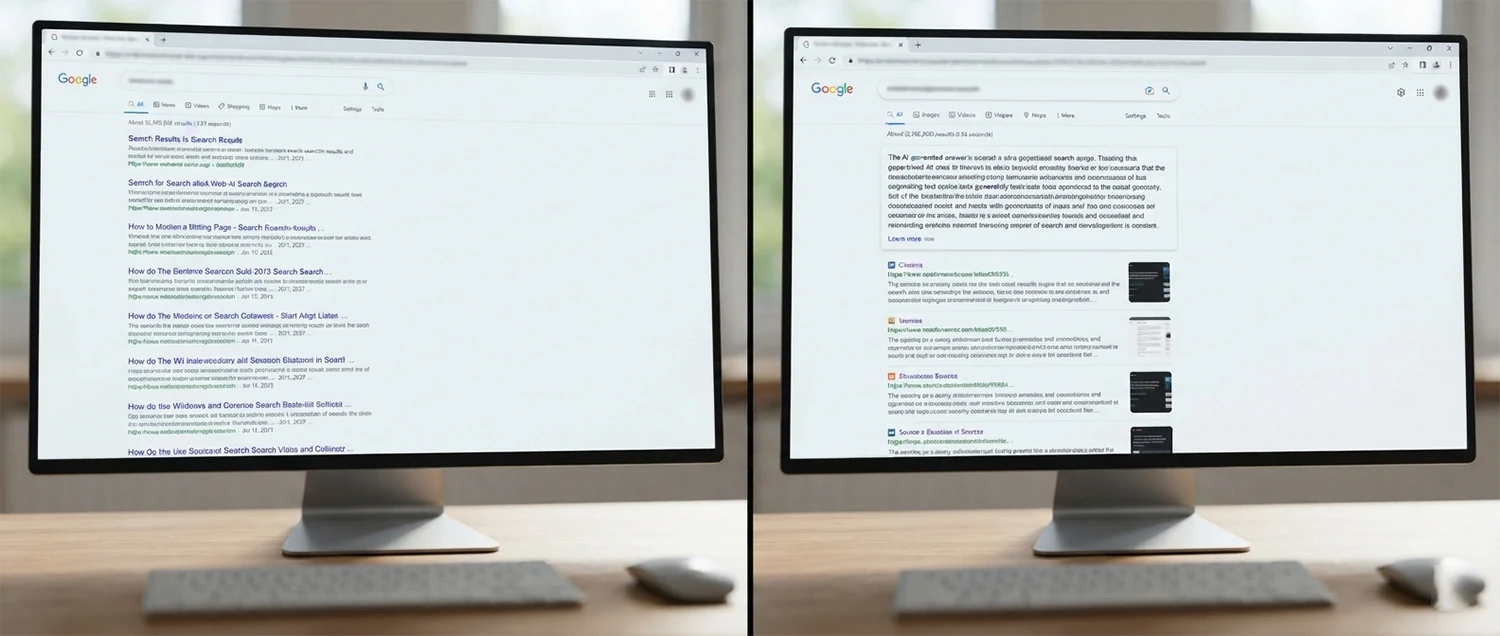
For most of its history, a search engine returned a list of links and let the person choose. That model still exists, but a growing share of results now open with a generated answer: a short summary the engine composes from several sources, often with citations. Assistants and chat interfaces go further, replying in full sentences and mentioning only some of the pages behind them.
This changes the visitor's experience. Simple questions can be answered without a click. Complex questions still send people to pages, but often after they have already read a summary that framed their expectations. The page that gets cited in that summary gains visibility and authority; the page that does not may never be seen, even if it ranks well in the traditional list below.
The response is not panic or gimmicks. It is to understand how these answers are assembled and to make your content the kind of clear, credible source they draw from. That is the entire aim of answer engine optimization, and it rewards the same qualities good publishers have always valued: accuracy, clarity, and trust.
A shared vocabulary for AI search
AI Overview
A generated summary shown atop some search results, usually with citations.
Answer engine
Any system that replies with a synthesized answer rather than a link list.
AEO
Answer engine optimization: earning use and citation in those answers.
GEO
Generative engine optimization, an overlapping term for the same practice.
Citation
The link an answer credits as a source for a statement.
Grounding
Tying a generated answer to retrieved, verifiable source material.
Terminology is still settling, and different platforms use different names. Focus on the underlying idea rather than the label: a system is composing an answer and deciding which sources to trust and credit.

How answer engines actually assemble a reply
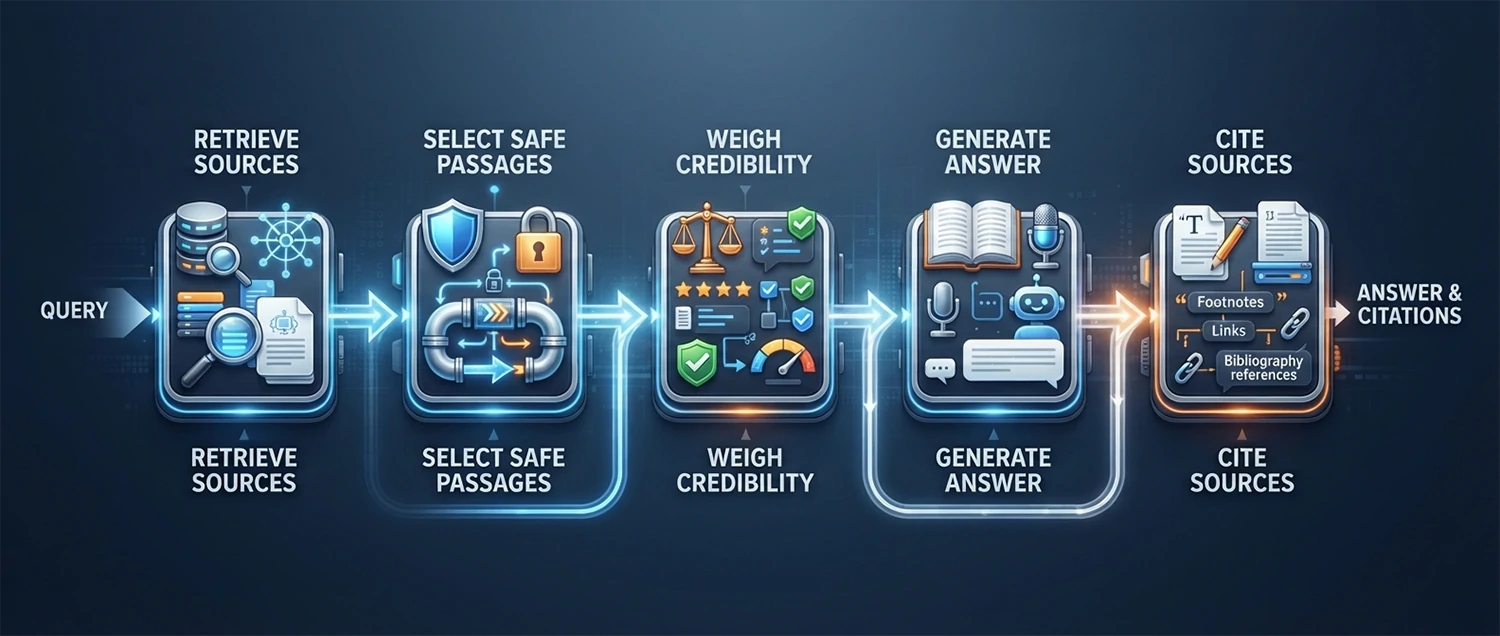
Most answer engines do not invent replies from memory alone. They retrieve relevant material from the web or an index, then use a language model to synthesize a concise answer grounded in what they found. This retrieval step is why being crawlable and clearly relevant still matters enormously: if your page is not retrieved, it cannot be used, no matter how good it is.
Once candidate sources are gathered, the system favors passages it can lift safely: statements that are clear, specific, internally consistent, and supported. Ambiguous or hedged writing is harder to reuse without risk, so it is less likely to be quoted. The model also weighs which sources appear credible for the topic, because attributing an answer to a weak source is a reputational risk for the platform.
Finally, the answer is generated and some sources are cited. The exact behavior varies by platform and by query, and it changes over time. You cannot reverse-engineer a permanent formula. What you can do is make your content easy to retrieve, safe to quote, and credible to attribute—the three things every one of these systems rewards.
What makes a source likely to be used and cited
| Signal | Why it matters to an answer engine | How you influence it |
|---|---|---|
| Retrievability | Uncrawled pages cannot be used at all | Clean crawling, indexing, and relevance |
| Clear answers | Specific statements are safe to quote | Direct, self-contained sentences |
| Evidence | Supported claims are lower risk | Sources, data, dates, methods |
| Credibility | Trusted sources protect the platform | Recognized expertise and reputation |
| Freshness | Current facts avoid stale answers | Reviewed, dated, maintained pages |
| Machine clarity | Easier parsing means safer reuse | Good structure and relevant schema |
Notice that none of these are tricks. They are the same qualities that make a page genuinely useful to a human reader, expressed in a way a machine can also verify.

Step 1: Give a clear answer before you elaborate
The single most useful habit is to answer the question directly and early, then expand. A reader in a hurry gets what they came for; a machine gets a clean, self-contained statement it can lift without distortion. Lead with the answer in plain language, then provide the nuance, caveats, and evidence that a thoughtful reader—and a cautious model—will want.
This does not mean dumbing content down. It means front-loading clarity. A page can open with a precise two-sentence answer and still contain a thorough, expert discussion beneath it. In fact, the pages most likely to be cited are usually the ones that are both immediately clear and unusually thorough, because they serve the quick summary and the deep read at once.

Step 2: Write statements a model can safely reuse
Answer engines prefer sentences that stand on their own. A statement that depends on three earlier paragraphs to make sense is risky to quote; a statement that is complete in itself is safe. Prefer specific facts over vague generalities, name the conditions under which a claim holds, and avoid contradicting yourself across the page. Consistency signals reliability to both readers and systems.
Be honest about uncertainty rather than hiding it. Clearly stating what is known, what is estimated, and what is unknown makes your content more trustworthy, not less. A model can safely reuse "as of 2026, the typical range is X" far more comfortably than a confident but undated absolute. Precision and honesty are what make writing quotable; hype and vagueness are what make it skippable.

Step 3: Structure content so machines can read it
Clear structure helps a system find and interpret the right passage. Use a descriptive title, a logical heading hierarchy, and short, focused sections that each answer one question. Lists and tables express relationships that dense prose hides. A well-organized page is easier for a person to scan and easier for a machine to segment into quotable answers.
Add structured data where it genuinely fits—marking up an article, an FAQ, a product, or an organization helps machines understand what your content is. It is not a magic switch that forces inclusion in generated answers, and marking up content that does not match the page can backfire. Used honestly, though, schema reduces ambiguity and supports the overall clarity and trust that answer engines reward. Pair it with the practices in your schema markup guide so the technical layer matches the writing.

Step 4: Support every claim with visible evidence
Evidence is what separates a quotable source from an opinion. Cite primary sources, show data with its origin and date, describe how you tested or measured something, and link to authoritative references. When a claim carries risk—health, finance, legal, safety—raise the standard of evidence accordingly. A system deciding whether to trust a statement is looking for exactly these signals.
Make your evidence legible, not buried. State the source near the claim, include the year, and note limitations plainly. This helps a careful reader and gives an answer engine the context it needs to attribute the statement confidently. Content that asserts without support may read fluently, but it is precisely the kind of material a cautious system avoids reusing.

Step 5: Build recognizable expertise and trust
Systems and readers both attribute answers more readily to sources that appear credible for the topic. Show who wrote the content and why they are qualified. Maintain a coherent body of work in your area rather than scattered, shallow posts. Earn genuine mentions and references from other reputable sources. Keep your organization's identity clear and consistent across the web.
This is the slow, durable part of the work, and it cannot be faked convincingly. There is no shortcut to being a trusted voice; there is only doing the work of being genuinely knowledgeable and letting that show. The reward is that once a system learns to treat your site as a reliable source for a subject, that trust benefits every answer it might draw from you.

Step 6: Cover a topic completely, not just its keywords
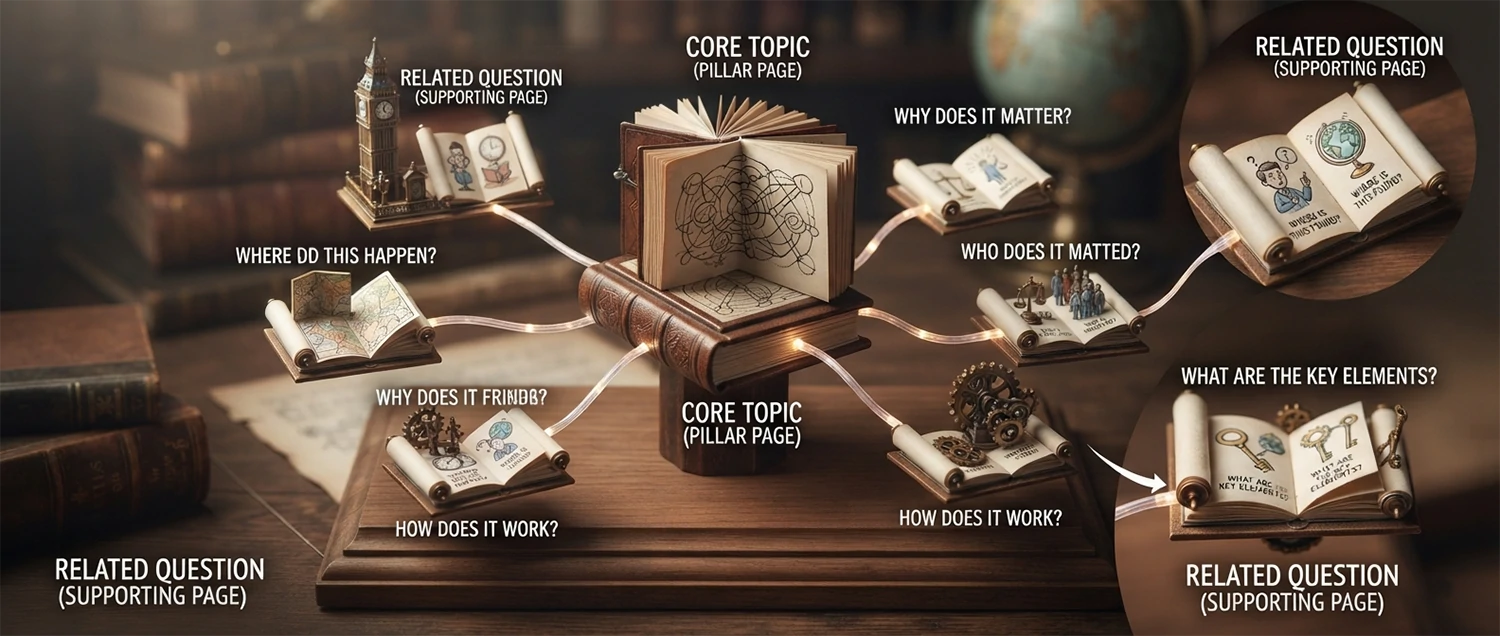
Answer engines answer many angles of a subject, so a site that covers a topic thoroughly is more useful to them than one with a single thin page per keyword. Build clusters: a strong central page supported by focused pages that answer the related questions people actually ask. Link them clearly so both readers and systems understand how they relate.
This depth also protects you as answers evolve. A single page might be summarized away, but a well-connected body of authoritative content becomes a resource that answer engines return to across many questions. Treat topical completeness as insurance: the more of a subject you genuinely own, the more often you are the natural source. Your topic cluster guide covers how to structure this.
Step 7: Keep facts current and clearly dated
Answer engines try to avoid stale answers, so content with current, clearly dated facts is safer to use. Review pages that contain changing information—prices, statistics, capabilities, rules—on a schedule that matches how fast they change. Show when the content was last meaningfully reviewed, not just when it was published, and update the underlying claims rather than only the date.
Freshness is not about republishing constantly; it is about accuracy over time. An evergreen explanation may stay correct for years, while a fast-moving topic needs frequent attention. Assign owners and review triggers so important pages do not quietly drift out of date, because an inaccurate cited answer damages trust far more than a missing one.

Step 8: Stay retrievable and technically sound
None of the writing matters if your content cannot be reached. Keep pages crawlable and indexable, serve important content in the initial HTML rather than hiding it behind scripts, and make sure key answers do not depend on interactions a crawler will not perform. Fast, stable, mobile-friendly pages are easier to retrieve and reflect well on your reliability.
Decide deliberately how you treat automated crawlers, since some sites choose to allow or restrict specific ones. Whatever you decide, make it intentional and consistent with your goals. The technical foundation for answer engines is the same disciplined work as classic technical SEO—clean crawling, sound structure, and fast delivery—applied with the awareness that a machine may be reading to answer, not only to rank.

Step 9: Measure visibility and accuracy, not just clicks
Measuring answer-engine performance is harder than counting rankings, so use several signals together. Check whether your important questions trigger a generated answer, whether you are cited, and—crucially—whether the summary represents you accurately. An answer that misstates your position is a problem to fix, not a win to celebrate.
Combine this with outcomes you can track: assisted conversions, branded searches, direct visits, and qualified traffic to pages that need depth. Accept that clicks for simple questions may fall while your influence and authority rise. The honest goal is to be an accurate, trusted source for the questions that matter to your audience, and to notice quickly when a system misrepresents you.

How to respond to changing click patterns
If summaries answer simple questions directly, some clicks will decline. Rather than fighting that, shift focus to the questions where your page adds value a summary cannot: decisions, comparisons, tools, personalized guidance, and depth that rewards a visit. These are the queries where being cited leads to real visits and where your expertise genuinely helps.
Also value the visibility itself. Appearing as a cited source builds recognition and trust even when it does not produce an immediate click, and that reputation compounds. A resilient strategy treats generated answers as a new surface to be present on, while investing in the depth and utility that keep people coming to your site directly.

Common mistakes to avoid
Chasing tricks
Gaming the model
Manipulation breaks the moment the system changes.
Thin filler
Fluent but hollow
Content that adds nothing original is rarely a trusted source.
False confidence
Unsupported claims
Assertions without evidence are risky to reuse.
Schema abuse
Mismatched markup
Marking up content the page lacks can backfire.
Ignoring SEO
Unretrievable pages
If it cannot be crawled, it cannot be cited.
Clicks-only metrics
Missing the shift
Judging solely by clicks hides visibility and accuracy.
Almost every mistake here is a shortcut. The durable approach is the unglamorous one: be genuinely accurate, clear, well-evidenced, and trustworthy, and let systems reward that.

Stay honest as the surface evolves
It is tempting to try to manipulate generated answers, but the incentives point the other way. Systems evolve to detect and discount manipulation, and being cited for an inaccurate claim can damage your reputation with both readers and platforms. The safest long-term position is to be the source that is worth trusting, so that no correction is ever needed.
Answer honestly even when a fuller answer sends fewer immediate clicks. Serving the reader's real need builds the trust that makes you the default source over time. Answer engine optimization done well is not adversarial; it is an alignment of your interests with the reader's and the platform's around the same goal: accurate, useful answers from credible sources.

A practical workflow to apply this
Phase 1
Audit the questions
List the questions your audience asks, check which trigger generated answers, and note who is cited and whether they are accurate.
Phase 2
Strengthen the answers
Rewrite key pages to lead with a clear answer, add evidence and dates, improve structure, and align schema honestly.
Phase 3
Build authority and monitor
Deepen topical coverage, earn genuine references, and track citations, accuracy, and assisted outcomes over time.
Start with the questions that matter most to your business and audience. A few well-answered, well-evidenced pages beat a rushed rewrite of everything at once.

Answer engine optimization checklist
✅ Pages are crawlable, indexable, and fast
✅ Key answers appear in the initial HTML
✅ Each page leads with a clear, direct answer
✅ Statements are specific and self-contained
✅ Structure uses clear headings, lists, and tables
✅ Authors and credentials are visible
✅ The topic is covered thoroughly, not thinly
✅ Changing facts are reviewed and dated
✅ Genuine references and reputation are growing
✅ Visibility and citation accuracy are monitored
✅ Success is judged by outcomes, not clicks alone
✅ No manipulative shortcuts are relied upon
Work through this before publishing and again at each review. A page is ready when it is retrievable, clear, well-evidenced, honestly structured, and credibly sourced.

Frequently Asked Questions
Practical answers about AI Overviews and answer engines

Be the source worth citing
AI Overviews and answer engines reward the same qualities that have always made good publishing valuable: accuracy, clarity, evidence, and trust. The new emphasis is on stating self-contained answers, supporting them visibly, structuring content for machines as well as people, and building a credible reputation in your subject. None of it depends on tricks, and all of it serves your readers directly.
Start with the questions that matter most to your audience, answer them honestly and thoroughly, and measure whether you are cited accurately and whether real outcomes follow. Treat this as a maintained practice rather than a one-time project, and your content becomes the reliable source these systems return to—an advantage that compounds as search continues to shift from listing toward answering.

Verify with primary guidance
Search features and guidance change quickly. Confirm current recommendations in official documentation before building a lasting process.

Choose formats that answer engines can lift cleanly
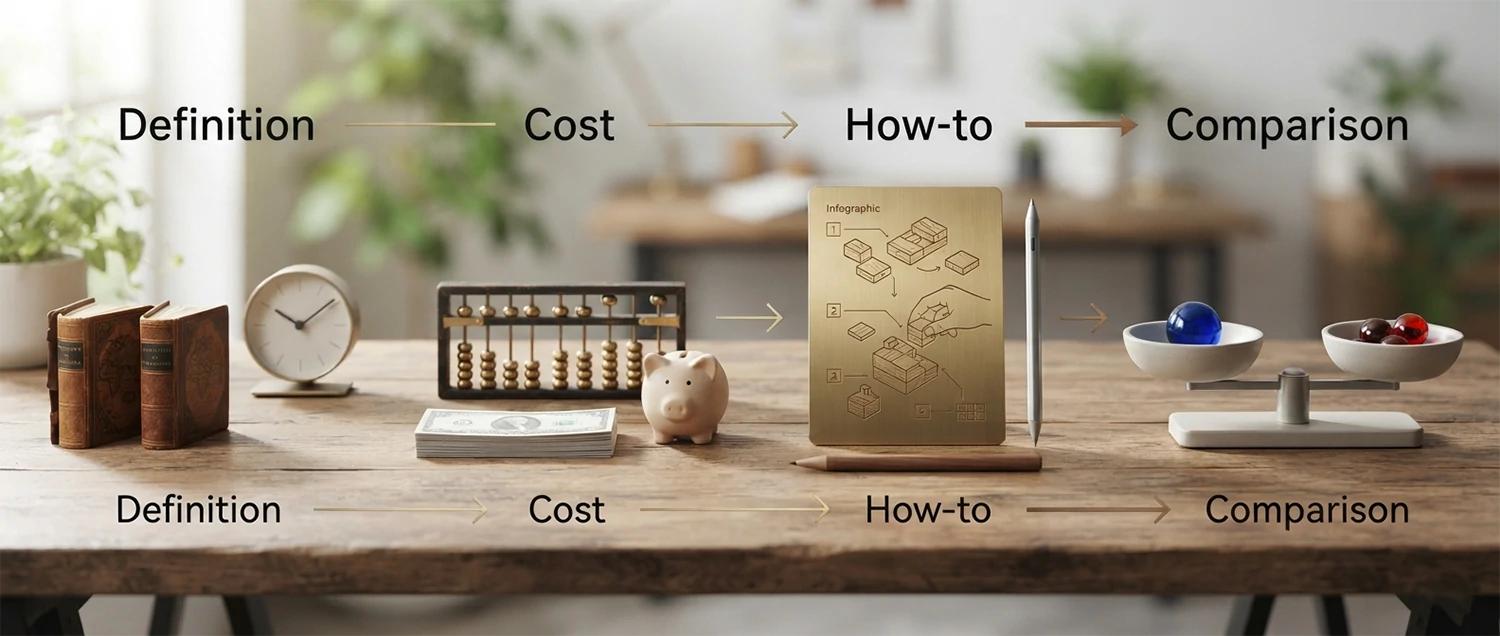
Not every format is equally easy for a system to reuse. A tightly written definition, a step-by-step list, a comparison table, and a direct question-and-answer block are all easy to segment and quote. Long, meandering prose that buries the answer in the middle of a paragraph is far harder to lift safely. Matching the format to the question makes your content both more scannable for readers and more quotable for machines.
Think about the shape of the answer before you write. A "how much does X cost" question is served by a clear range with conditions. A "how do I do X" question is served by ordered steps. A "X versus Y" question is served by a table that lines up the differences. When the format mirrors the question, the answer becomes self-contained almost automatically, which is exactly what a generated summary needs.
This is not about gaming a template. It is about respecting how people actually ask and how systems actually read. A page that offers the right shape for each question tends to earn citations across many related queries, because each section already stands on its own as a usable answer.
Think beyond a single search engine
AI Overviews are one surface, but answers now appear across many places: general-purpose assistants, chat interfaces built into browsers and phones, shopping and travel tools, and specialized industry assistants. Each retrieves and cites sources in its own way, yet they reward the same underlying qualities—clarity, evidence, and credibility. Optimizing narrowly for one platform is fragile; building genuinely trustworthy content works across all of them.
Different assistants also draw on different data. Some lean on the open web, some on licensed sources, some on their own indexes. You cannot tailor a separate page for each, and you should not try. Instead, make your best content unmistakably accurate and well-attributed so that whatever system reaches it can use it confidently. Breadth of presence follows from depth of quality, not from chasing each platform's quirks.

Strengthen your brand as a recognizable entity
Answer engines increasingly reason about entities—organizations, people, products—not just pages. A clear, consistent identity across the web helps a system understand who you are and what you are authoritative about. Keep your name, description, and key facts consistent on your site and on the reputable profiles that describe you, and make your organization and author identities explicit in your content.
This entity clarity compounds with everything else in this guide. When a system already recognizes your brand as a credible source in a subject, it is more comfortable attributing an answer to you, and your individual pages inherit that standing. Building a coherent, well-described identity is slow work, but it turns scattered pages into a recognized authority that answers can lean on.

What to do when an answer gets you wrong
Sooner or later a generated answer will misstate your position, cite you for a claim you did not make, or blend your content with a weaker source into something inaccurate. Treat this as a real issue, not background noise. Start by checking your own page: if the passage that was misread is ambiguous, outdated, or contradicts another part of your site, fixing the source is often the fastest remedy, because clearer content is harder to misquote.
Where the error is on the platform's side, use the feedback and reporting channels these systems provide, and keep a record of recurring misrepresentations so you can spot patterns. Reinforce the correct answer with unambiguous, well-evidenced statements and consistent facts across your site, so the weight of your content points clearly in one direction. You cannot control every generated answer, but you can make the accurate version of your position the easiest one to reuse.