

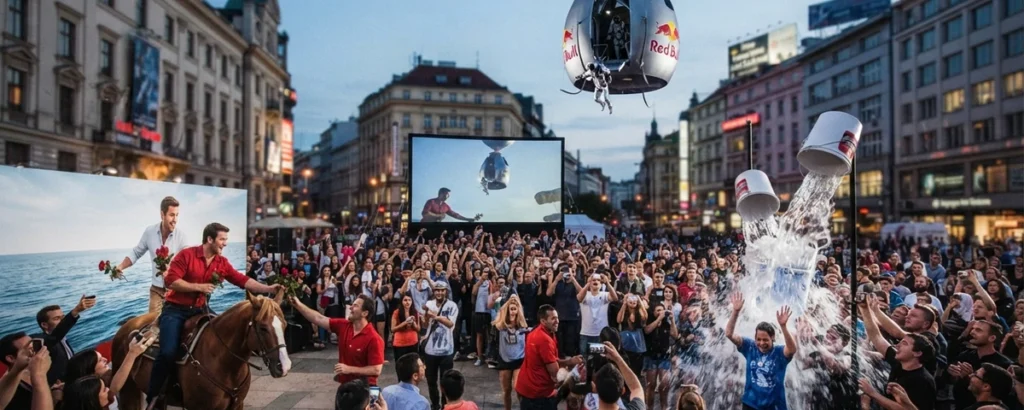
An in-depth look at the three most explosive viral campaigns in marketing history — what made them work, what they achieved, and what every marketer can learn from their genius.
Table of contents
- 1. What Makes a Marketing Campaign Go Viral?
- 2. The ALS Ice Bucket Challenge: Accidental Global Phenomenon
- 3. The Numbers Behind the Ice Bucket Challenge
- 4. Why the Ice Bucket Challenge Went Viral
- 5. Dove Real Beauty Sketches: The Most Emotional Viral Campaign Ever
- 6. The Emotional Science Behind Dove's Success
- 7. How Dove Built a Decade-Long Brand Platform
- 8. Old Spice: The Man Your Man Could Smell Like
- 9. The Interactive Response Campaign That Changed Marketing
- 10. The Business Impact of Old Spice's Virality
- 11. What These Three Campaigns Have in Common
- 12. The Psychology of Sharing: Why We Pass Content Along
- 13. The Role of Influencers and Celebrity Participation
- 14. The Importance of Platform Strategy
- 15. The Dark Side of Viral Marketing: Risks and Challenges
- 16. How to Apply These Lessons to Your Own Marketing
- 17. The Role of User-Generated Content in Virality
- 18. Measuring Viral Campaign Success Beyond Views
- 19. The Future of Viral Marketing
- 20. Frequently Asked Questions About Viral Marketing
- 21. Common Mistakes in Viral Marketing Attempts
- 22. Resources for Learning More About Viral Marketing
- 23. Case Studies in Failed Viral Attempts
- 24. The Role of Paid Amplification in Kickstarting Virality
- 25. Creating a Viral Content Calendar and Strategy
- 26. Measuring ROI from Viral Campaigns
- 27. The Bottom Line
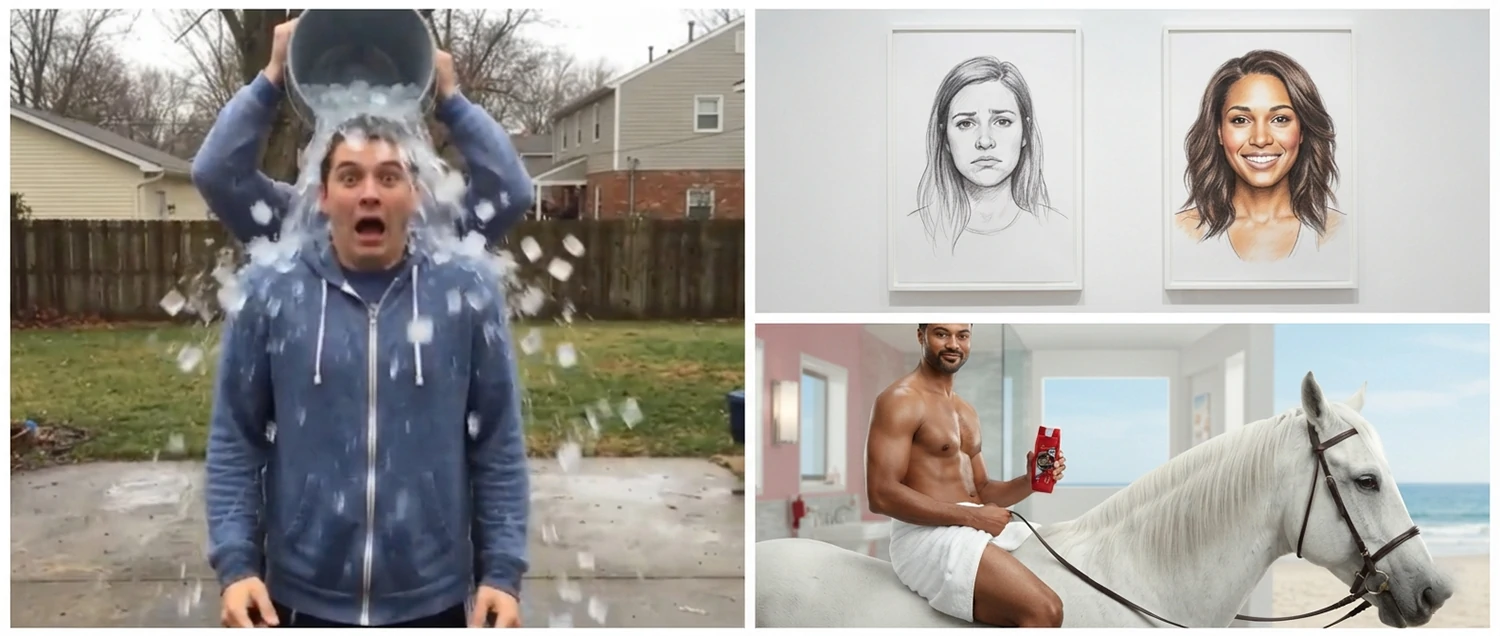
1. What Makes a Marketing Campaign Go Viral?

Viral marketing is the holy grail of modern advertising. It is the phenomenon where a piece of content — a video, an image, a challenge, or a campaign — spreads exponentially across the internet as people share it with their networks. Unlike traditional advertising, which requires paid media placement, viral marketing spreads organically through word-of-mouth, social sharing, and media coverage. A successful viral campaign can reach hundreds of millions of people at a fraction of the cost of a traditional ad buy.
The science behind virality has been extensively studied by marketing researchers and academics. Jonah Berger's book "Contagious" identifies six principles that drive content to go viral: Social Currency (people share things that make them look good), Triggers (stimuli that prompt people to think about your product), Emotion (content that evokes high-arousal emotions spreads faster), Public Visibility (the more people see others doing something, the more they do it), Practical Value (useful content gets shared), and Stories (information wrapped in a narrative is more memorable and shareable).
But knowing the theory and executing a viral campaign are two very different things. The three campaigns we will examine in this article did not just check boxes on a viral marketing checklist. They created cultural moments that captured the world's attention through a combination of perfect timing, emotional resonance, brilliant creative execution, and a deep understanding of human psychology. Each campaign achieved virality on a scale that most marketers can only dream of.
What makes these three campaigns particularly worth studying is that they achieved virality through fundamentally different mechanisms. The ALS Ice Bucket Challenge spread through peer pressure and social media participation. Dove's Real Beauty Sketches spread through emotional resonance and a powerful message about self-perception. Old Spice spread through sheer entertainment value and comedic genius. Different paths to the same destination — mass cultural impact and measurable business results.
Pro Tip
When planning a campaign, ask yourself: "Would I share this with my friends without being asked?" If the answer is no, the campaign is not ready to go viral. Authentic sharing is the only path to organic virality.
2. The ALS Ice Bucket Challenge: Accidental Global Phenomenon
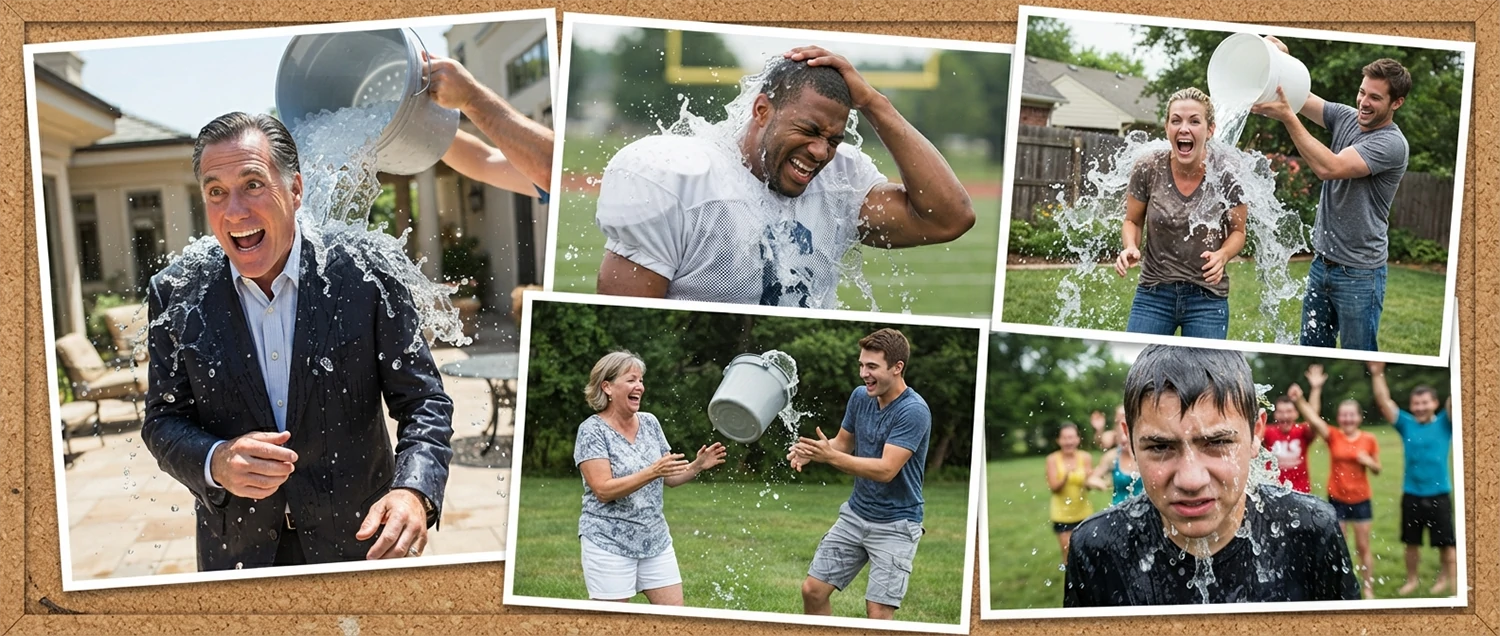
The ALS Ice Bucket Challenge is arguably the most successful viral fundraising campaign in history. Between July and August of 2014, the campaign raised $115 million for the ALS Association, funded groundbreaking research that led to the discovery of a new ALS gene, and generated over 17 million videos uploaded to Facebook alone. The campaign reached an estimated 440 million people worldwide and was participated in by everyone from Bill Gates to Oprah Winfrey to your next-door neighbor.
The mechanics of the challenge were beautifully simple: participants filmed themselves dumping a bucket of ice water over their heads, nominated three other people to do the same within 24 hours, and encouraged donations to the ALS Association. Those who declined the challenge were encouraged to donate $100. Those who accepted typically donated $10 anyway. The structure created a powerful combination of social pressure, entertainment, and charitable giving that proved irresistible to millions.
What made the Ice Bucket Challenge particularly brilliant was its nomination mechanism. By requiring each participant to nominate three others, the campaign created exponential growth. Each participant effectively became a media producer, creating content that their friends and followers wanted to watch. The peer-to-peer nomination system meant that the campaign spread through trusted social networks rather than through impersonal advertising, giving each nomination the weight of a personal recommendation.
The campaign also benefited from a perfect alignment of incentives. Participants got to demonstrate their charitable nature, create entertaining content, challenge their friends, and participate in a global cultural moment — all while supporting a worthy cause. For celebrities, participating was a low-effort way to show social responsibility and generate positive media coverage. For everyday people, it was a chance to feel connected to something bigger than themselves.
Pro Tip
The Ice Bucket Challenge succeeded because it made participation easy, visible, and socially rewarding. When designing a viral campaign, reduce the barrier to participation as close to zero as possible and build in social recognition for those who take part.
3. The Numbers Behind the Ice Bucket Challenge
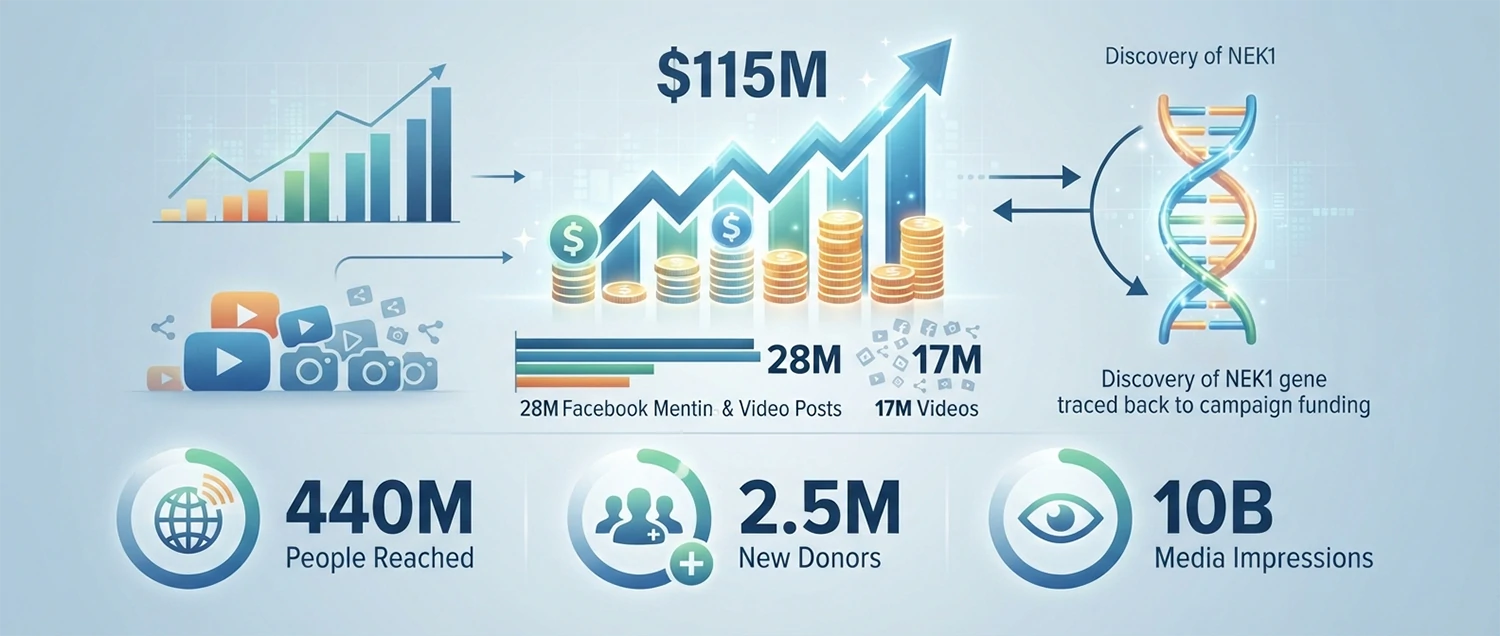
The sheer scale of the Ice Bucket Challenge's success is almost incomprehensible. In just eight weeks, the ALS Association received $115 million in donations — compared to $23 million in the entire previous year. The campaign brought in 2.5 million new donors, many of whom had never given to the organization before. Facebook reported that 28 million people mentioned the Ice Bucket Challenge in their status updates during the peak of the campaign.
Media coverage was equally staggering. The campaign generated over 10 billion media impressions globally, including coverage on every major news network, talk show, and news website. The phrase "Ice Bucket Challenge" was searched on Google more times in August 2014 than "iPhone" was searched during the same period. It became not just a campaign but a cultural event that dominated the global conversation for the better part of two months.
The financial impact went far beyond the immediate donations. The campaign funded 11 new research projects at the ALS Association, including a global gene discovery project called Project MinE. The funding from the Ice Bucket Challenge directly led to the discovery of the NEK1 gene, which is one of the most significant genetic discoveries in ALS research history. This is a powerful reminder that viral campaigns can have real-world impact far beyond marketing metrics.
Yet the Ice Bucket Challenge was not without controversy. Critics pointed out that many participants never actually donated, that the campaign was more about entertainment than charity, and that the ice water waste was environmentally questionable. The ALS Association also faced criticism for how it allocated the funds. These criticisms offer important lessons about managing the risks and expectations of viral campaigns — when you go viral, you lose control of the narrative.
Pro Tip
Prepare for success before it happens. The ALS Association was overwhelmed by the volume of donations and media attention. Have infrastructure in place to handle unexpected scale — customer service, fulfillment, PR, and financial systems must all be ready.
4. Why the Ice Bucket Challenge Went Viral
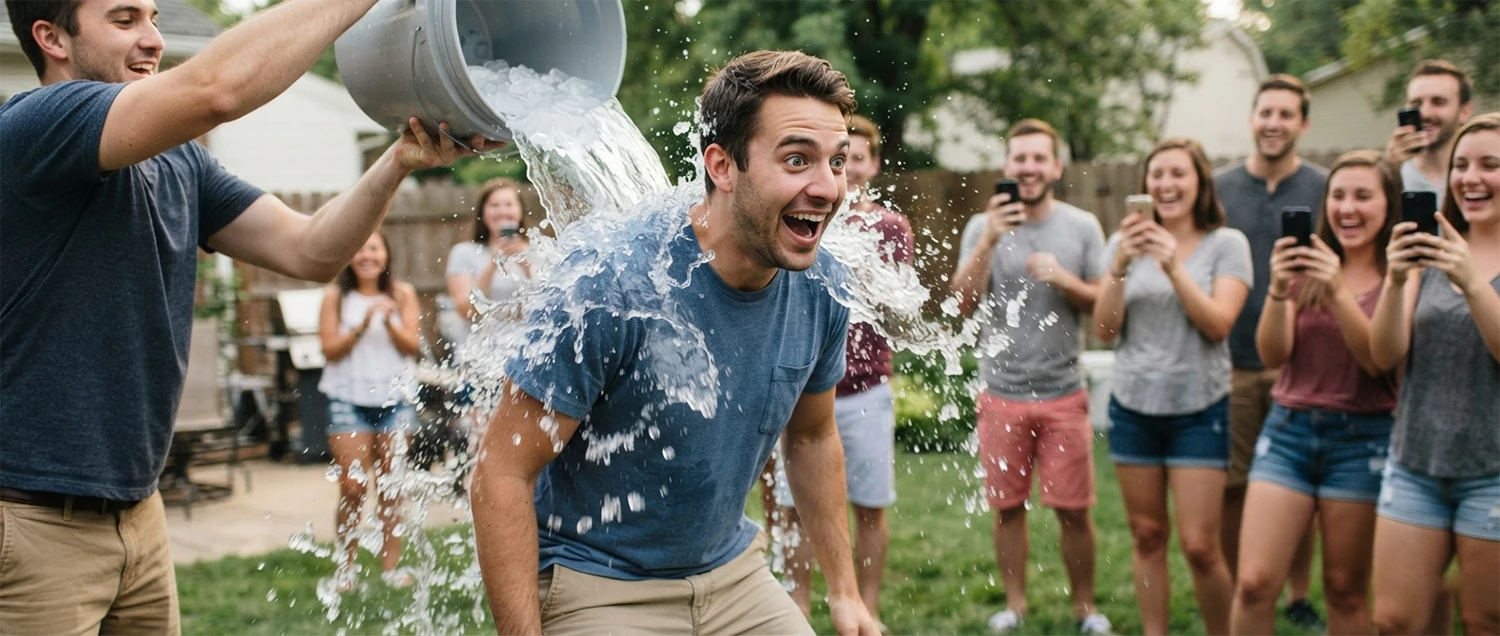
The Ice Bucket Challenge succeeded because it brilliantly exploited multiple psychological triggers simultaneously. The nomination mechanism created powerful social pressure — being nominated by a friend put you in a position where refusing felt socially awkward. The video format generated entertainment value — watching someone get drenched in ice water is inherently amusing and shareable. The charitable component provided moral cover — participants could frame their participation as altruism rather than self-promotion.
The campaign also benefited from what marketers call "social currency" — the value that sharing content provides to the sharer's social standing. Participating in the Ice Bucket Challenge signaled that you were charitable, socially aware, and part of a global movement. It made people look good in front of their peers. Content that enhances the sharer's reputation spreads faster than content that does not, and the Ice Bucket Challenge was perfectly designed to make participants feel virtuous.
Timing was another critical factor. The campaign launched in July, during the summer in the Northern Hemisphere. Dumping ice water on yourself is actually refreshing in hot weather, making the challenge pleasant rather than punishing. If the campaign had launched in December in North America, participation would have been significantly lower. The alignment of the campaign mechanics with the season was a stroke of luck that the campaign's creators have acknowledged was unintentional.
The simplicity of the concept cannot be overstated. Anyone with a smartphone could participate. No special skills, equipment, or preparation was required. The rules were clear: dump ice water, nominate three people, donate if you can. This extreme simplicity removed every possible barrier to participation. Complex campaigns require education and motivation; simple campaigns spread effortlessly because the act of participation is self-explanatory.
Pro Tip
If your campaign requires more than 30 seconds to explain, it is too complex for viral spread. The Ice Bucket Challenge could be explained in one sentence. Test your campaign concept by asking someone to explain it to a friend — if they struggle, simplify.
5. Dove Real Beauty Sketches: The Most Emotional Viral Campaign Ever

In April 2013, Dove released a video that would become the most-viewed online video ad of all time. "Real Beauty Sketches" was a social experiment in which a trained forensic sketch artist drew women as they described themselves to him, and then drew them again as a stranger described them. The difference between the two sketches was dramatic — the self-described sketches were harsher, less flattering, and less accurate, while the stranger-described sketches were warmer, more attractive, and closer to reality.
The video was uploaded to YouTube on April 14, 2013. Within its first month, it received over 114 million views, making it the most-watched online video ad in history at the time. It was shared over 3.7 million times on social media and generated over 4.6 billion media impressions. The campaign was covered by every major news outlet, discussed on talk shows, and analyzed by marketing experts worldwide. It is still studied in marketing courses today.
Dove's Real Beauty Sketches worked because it tapped into a universal emotional truth that almost every woman could relate to: the gap between how we see ourselves and how others see us. The campaign did not try to sell soap. It did not mention product features, pricing, or promotions. Instead, it made women feel understood, validated, and emotional. The brand message — that real beauty should be celebrated — was baked into the content itself rather than tacked on as an afterthought.
The campaign was part of Dove's long-running "Real Beauty" platform, which had been building brand equity around body positivity and self-esteem since 2004. Real Beauty Sketches did not come out of nowhere — it was the culmination of a decade of consistent brand positioning. This is an important lesson: viral campaigns are most effective when they are authentic extensions of an existing brand identity rather than opportunistic one-offs.
Pro Tip
The most shareable content makes people feel something strongly. Dove's campaign generated tears, empathy, and self-reflection. When you evoke high-arousal emotions — awe, anger, joy, sadness — people share because they need to process the feeling with others.
6. The Emotional Science Behind Dove's Success

Neuroscience research has shown that emotionally charged content triggers the release of oxytocin — the "bonding hormone" — in the brain. When we watch content that makes us feel empathy, connection, or emotion, our brains release oxytocin, which makes us more likely to trust and share. Dove's Real Beauty Sketches was a masterclass in oxytocin-triggering content. The video was structured as a narrative with a clear emotional arc — curiosity, recognition, sadness, and ultimately, hope and affirmation.
The campaign also leveraged the psychological principle of "identification." Viewers saw themselves in the women on screen. The participants were not models or celebrities — they were everyday women with the same insecurities and self-criticisms that most women experience. When the participants cried upon seeing their stranger-described sketches, viewers cried with them. This emotional contagion — the tendency to mimic the emotions of others — drove the campaign's extraordinary sharing rates.
The surprise element was crucial. The reveal moment — when each woman saw the two sketches side by side — created a powerful emotional payoff. The audience had been led through the entire process and understood the discrepancy intimately. The reveal was not just surprising; it was deeply meaningful because it validated a hopeful message: you are more beautiful than you think. The combination of surprise and meaning is the emotional sweet spot for viral content.
Despite its massive success, the campaign also faced criticism. Some commentators noted that the experiment's methodology was questionable — the sketch artist may have been influenced by the different descriptions. Others argued that the campaign still focused on physical appearance rather than encouraging women to value themselves for non-physical attributes. These criticisms did not dampen the campaign's impact, but they serve as a reminder that even the most successful viral content will face scrutiny.
Pro Tip
Structure your content to include a "reveal moment" — an unexpected twist or insight that creates emotional payoff. The reveal is the most shared moment of any viral video because it provides the emotional resolution viewers crave.
7. How Dove Built a Decade-Long Brand Platform
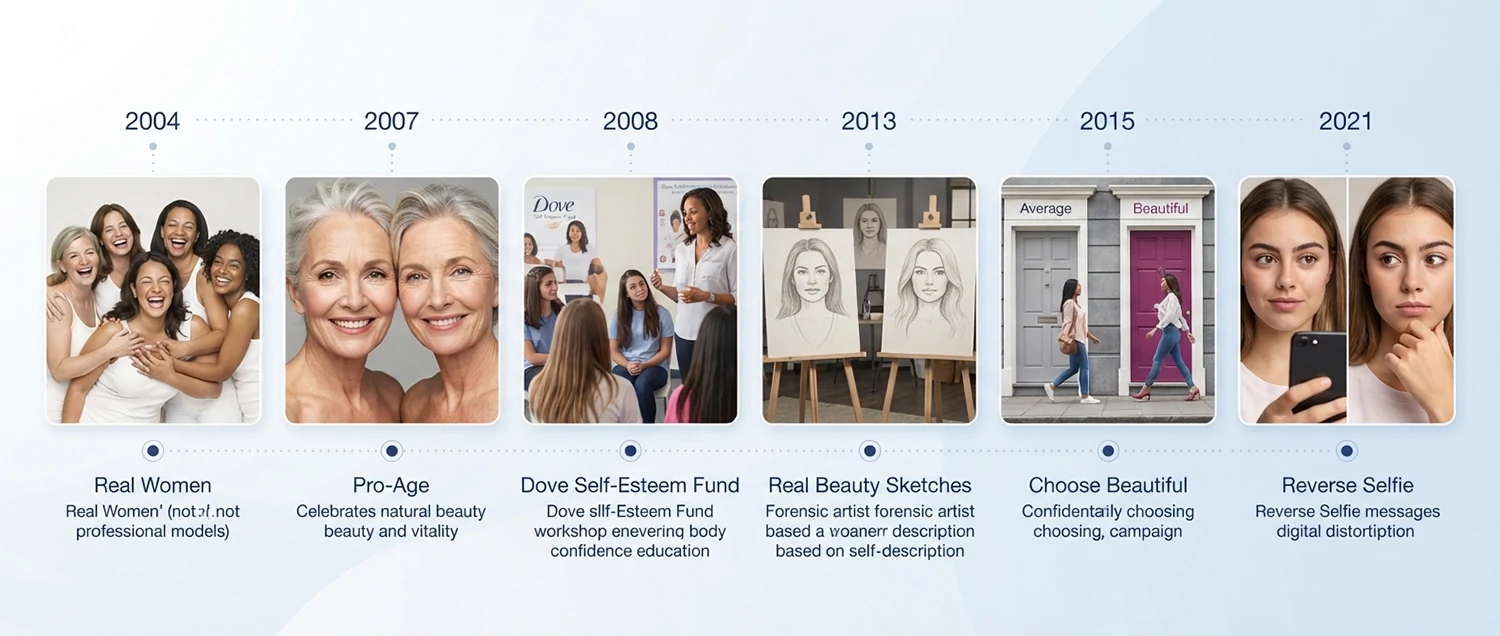
Dove's Real Beauty Sketches did not exist in isolation. It was the most visible expression of a brand platform that Dove had been building for nearly a decade. In 2004, Dove launched the "Campaign for Real Beauty" with a series of advertisements featuring women of diverse ages, sizes, and ethnicities — a radical departure from the industry norm of using young, thin models. The campaign was controversial but generated massive media attention and consumer engagement.
Over the following years, Dove expanded the Real Beauty platform through multiple initiatives. The Dove Self-Esteem Project, launched in partnership with organizations like the Girl Scouts and the World Association of Girl Guides, created educational resources to help young people develop body confidence. The project reached over 60 million young people in 150 countries by 2020. This consistent, long-term investment in a social mission gave Dove's campaigns authenticity that competitors could not replicate.
The key lesson from Dove's approach is that viral moments are not standalone events — they are explosions of accumulated brand equity. Dove had spent years building trust, credibility, and emotional connection with its audience. When Real Beauty Sketches launched, that existing relationship supercharged sharing because people already associated Dove with authentic messages about beauty. A brand with no track record of social purpose could not have launched the same campaign and achieved the same results.
This is not to say that only established brands can create viral campaigns. But it does mean that the most effective viral content is consistent with what the brand already stands for. When a brand that has always focused on value pricing suddenly tries to create an emotional campaign, consumers sense the inauthenticity. The most shareable content comes from brands that know who they are and have the courage to express their values consistently over time.
Pro Tip
Build a content platform that you can return to year after year. A single viral hit is luck; a decade of consistent messaging around a core idea is strategy. Invest in the long-term platform, not just the one-off campaign.
8. Old Spice: The Man Your Man Could Smell Like
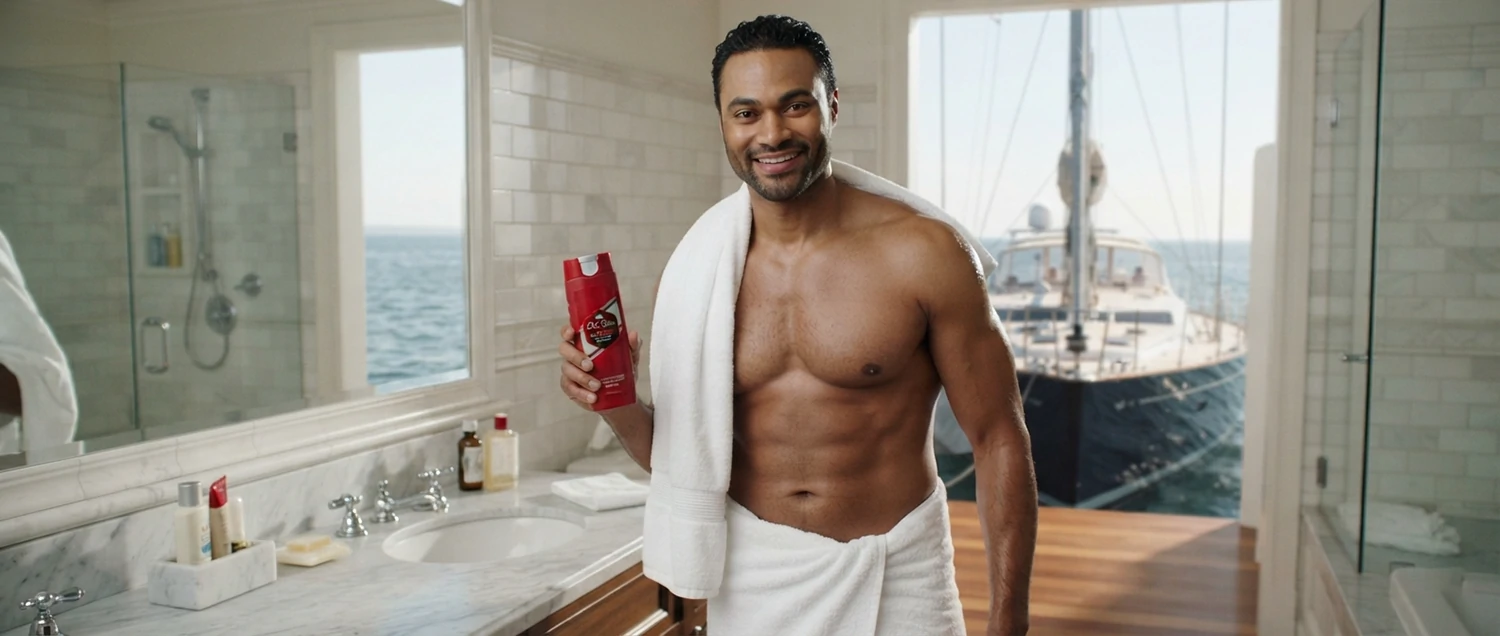
In February 2010, Old Spice launched a television commercial that would redefine the brand and become one of the most iconic ad campaigns of the decade. "The Man Your Man Could Smell Like" featured former NFL player Isaiah Mustafa delivering a rapid-fire monologue directly to the camera while seamlessly transitioning between absurd scenarios — a shower, a boat, a horse, a pile of diamonds, and a romantic dinner. The commercial was unlike anything viewers had seen before in the deodorant category.
The original 30-second commercial was a Super Bowl ad that aired in a limited market test. Within 24 hours of being posted on YouTube, it had received 6 million views. Within a week, it had been viewed 20 million times. The commercial generated hundreds of parodies, remixes, and imitations. It became a cultural touchstone referenced in TV shows, movies, and other advertisements. More importantly, it transformed Old Spice from a brand associated with older generations into one of the coolest brands on the internet.
The campaign was created by the Portland-based agency Wieden+Kennedy, which had previously created Nike's "Just Do It" and other iconic campaigns. The creative team recognized that Old Spice had a perception problem — it was seen as your grandfather's deodorant. To reach a younger audience, they needed to completely reinvent the brand's tone. They chose absurdist humor, rapid pacing, and a self-aware wink that acknowledged the ridiculousness of advertising itself.
Isaiah Mustafa's performance was a masterclass in charismatic delivery. His deep voice, deadpan expression, and incredible comedic timing turned a series of non-sequiturs into quotable gold. Lines like "I'm on a horse" and "Look at your man, now back to me" entered the cultural lexicon. The commercial was so memorable that people who had never used Old Spice products could recite lines from it years later. This memorability translated directly into sales.
Pro Tip
When your campaign creates quotable lines that people use in everyday conversation, you have achieved true cultural penetration. Write lines that are short, memorable, and repeatable. Test them on friends before production.
9. The Interactive Response Campaign That Changed Marketing
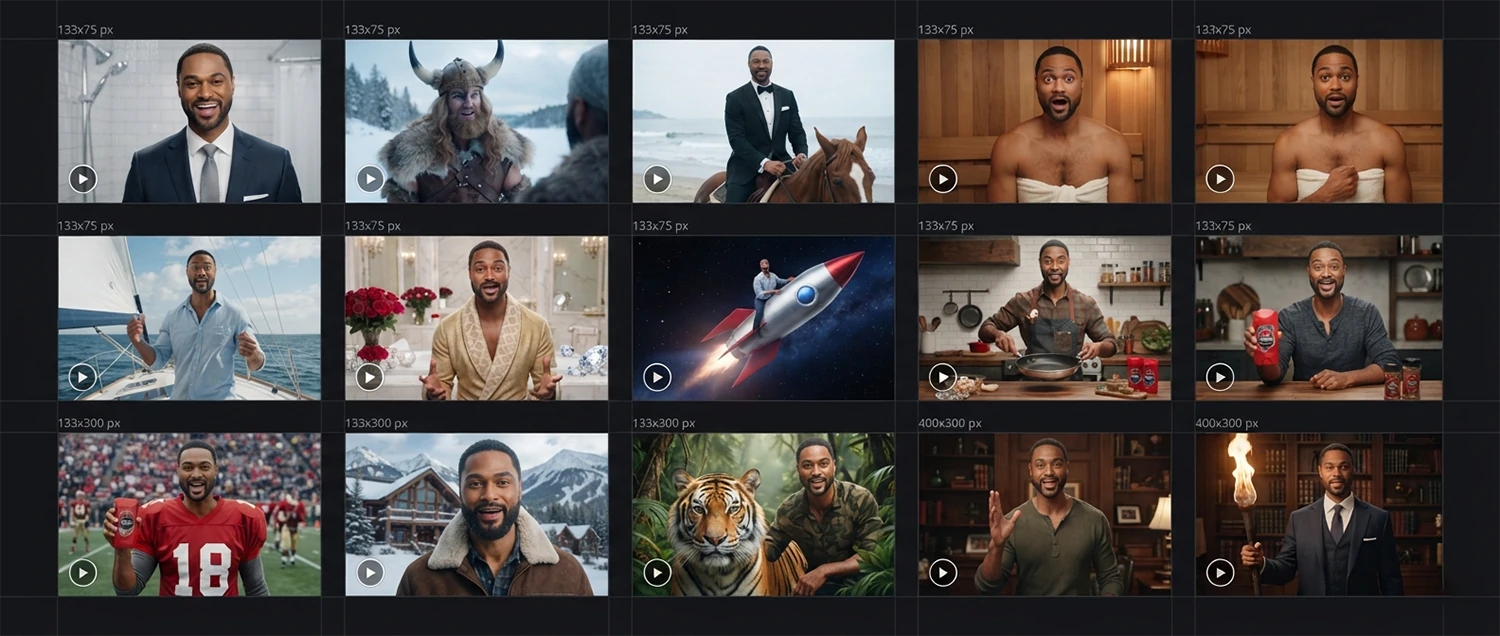
What elevated the Old Spice campaign from a great commercial to a legendary marketing moment was the response campaign that followed. In July 2010, Old Spice launched an unprecedented interactive campaign where Isaiah Mustafa recorded personalized video responses to questions and comments from fans on social media. Over the course of three days, the production team filmed 186 videos, each one tailored to a specific person who had tweeted or posted about Old Spice.
The response campaign was a logistical tour de force. The production team built a set in a warehouse and filmed continuously for 48 hours. Isaiah Mustafa changed costumes, moved between sets, and delivered personalized responses in real-time. When a fan asked about his horse, the next video showed Mustafa on the horse. When a celebrity like Alyssa Milano tweeted about Old Spice, she got a personalized response within hours. The campaign made every participant feel seen and valued.
The response campaign generated an additional 40 million YouTube views, 75 million total views across all platforms, and an 800% increase in Facebook traffic to the Old Spice page. Twitter mentions of Old Spice increased by 800% during the campaign period. The campaign won countless advertising awards and is still studied as a pioneering example of real-time social media marketing. It demonstrated that interactive, personalized content could create viral engagement at scale.
The most remarkable aspect of the response campaign was that it was genuinely interactive. Earlier social media campaigns had used the language of interaction — asking fans to comment or share — but Old Spice was the first major brand to actually listen and respond in a visible, entertaining way. This authenticity created enormous goodwill. Fans felt like they were part of something special, and they responded by sharing their videos and spreading the campaign organically.
Pro Tip
Plan for the second phase of your campaign before you launch the first phase. The Old Spice response campaign was planned and produced in advance of the initial commercial's success. Great viral campaigns have multiple stages ready to deploy.
10. The Business Impact of Old Spice's Virality
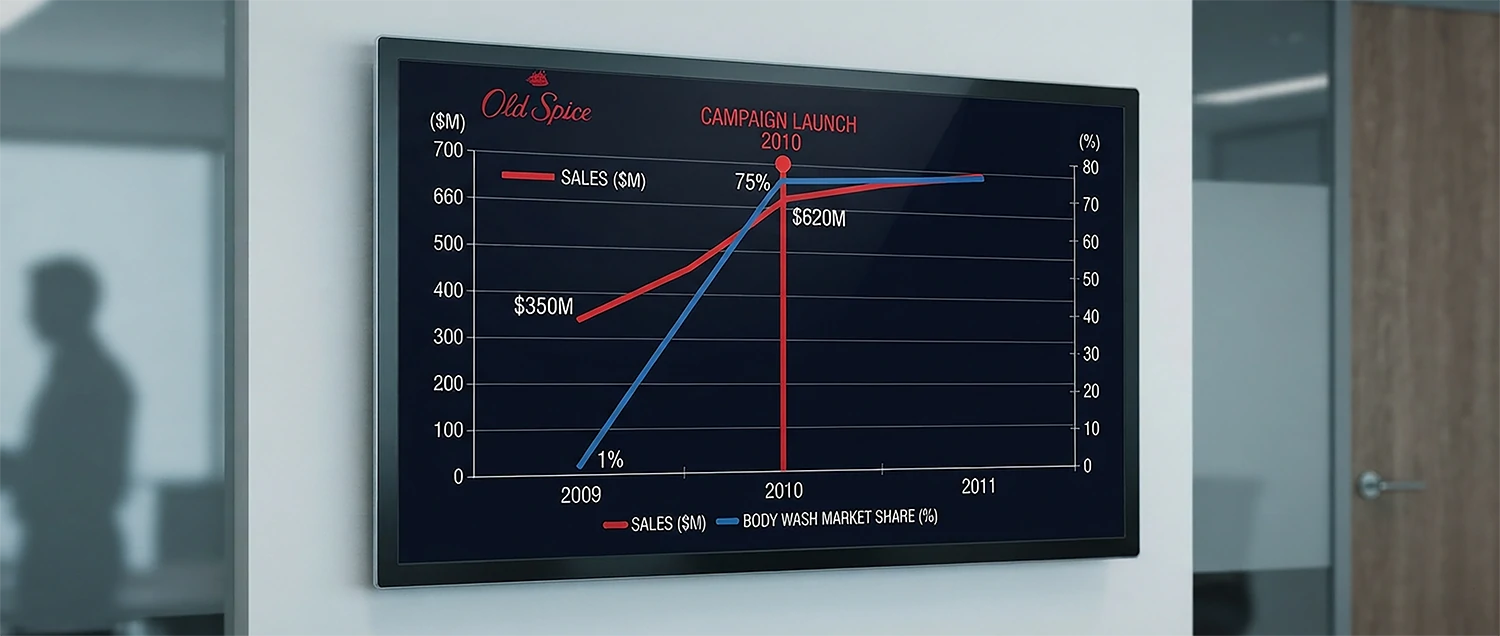
The Old Spice campaign did not just win awards and generate views — it transformed the brand's business. In the year following the campaign, Old Spice sales increased by 27% to over $620 million. The brand's body wash market share jumped from 1% to 75% of the men's body wash category. Old Spice went from a declining brand associated with older consumers to the dominant player in its category, all because of a brilliantly executed viral campaign.
The campaign also changed the demographics of Old Spice's customer base. Before the campaign, the brand's core customer was over 45. After the campaign, the brand had successfully reached millennials and younger consumers who had never considered Old Spice before. This demographic shift had long-term implications for the brand's growth trajectory. By reaching consumers earlier in their purchasing journey, Old Spice built a customer base that would remain loyal for decades.
Procter & Gamble, Old Spice's parent company, reported that the campaign generated $100 million in incremental sales in its first year alone. The total media spend for the campaign was approximately $10 million, giving it an extraordinary return on investment. The response campaign cost virtually nothing in media spend because the videos spread organically. This is the dream of viral marketing — massive impact with minimal paid media support.
The Old Spice campaign proved that viral marketing is not just about brand awareness — it directly drives sales. Many marketers assume that viral campaigns are good for top-of-funnel metrics but do not necessarily translate to bottom-line results. Old Spice demolished that assumption. The campaign created such strong brand preference and purchase intent that millions of consumers switched their deodorant and body wash brands based on the power of the creative alone.
Pro Tip
Measure the business impact of your viral campaign, not just the vanity metrics. Views, shares, and impressions are meaningless if they do not translate to sales, leads, or donations. Set up tracking before you launch.
11. What These Three Campaigns Have in Common
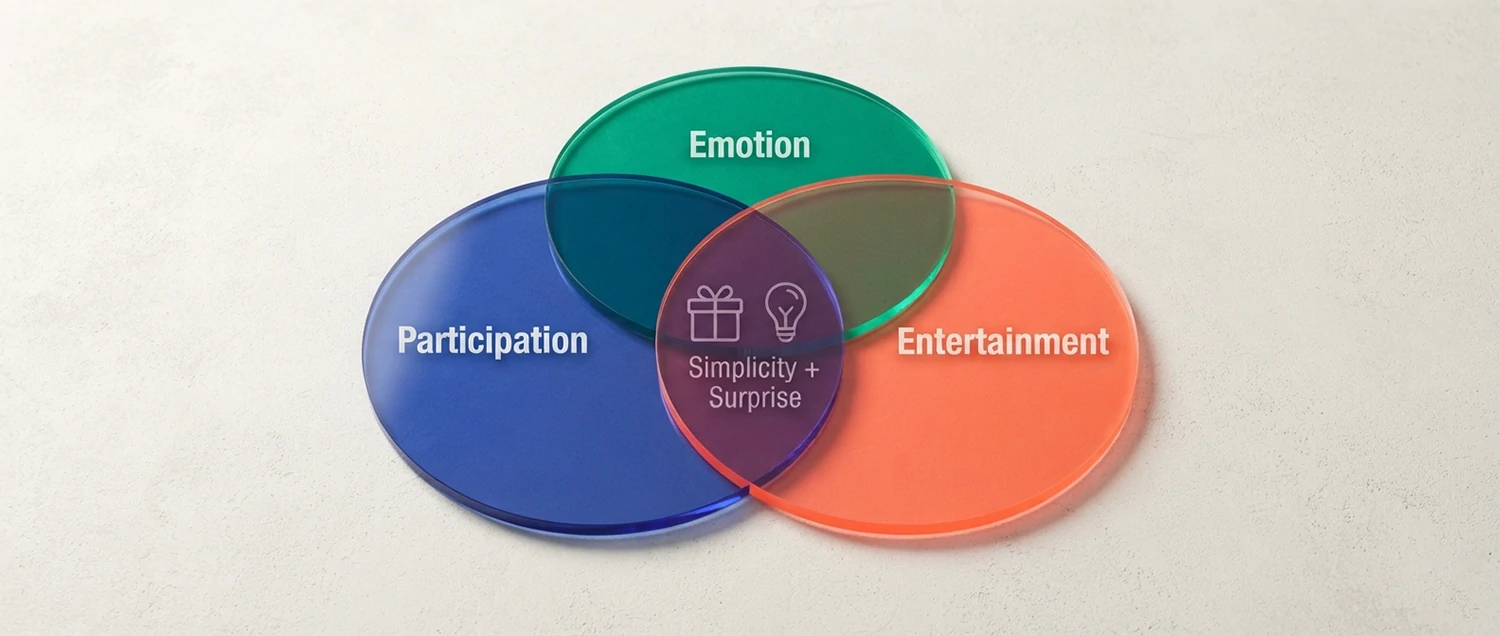
Despite their radically different approaches, the Ice Bucket Challenge, Dove Real Beauty Sketches, and Old Spice share several critical characteristics that explain their viral success. First and most importantly, all three campaigns were built around a simple, powerful core idea that could be understood instantly. The Ice Bucket Challenge: dump ice water on yourself for charity. Dove: you are more beautiful than you think. Old Spice: a smooth-talking man in a towel takes you on an absurd ride.
All three campaigns also generated strong emotional responses, though the emotions were different in each case. The Ice Bucket Challenge generated surprise, laughter, and social obligation. Dove generated empathy, validation, and hope. Old Spice generated delight, amusement, and sheer entertainment. In each case, the emotional response was powerful enough to motivate sharing. Content that makes people feel nothing does not get shared. Content that makes people feel something strongly gets shared compulsively.
Each campaign also had an element of surprise or unexpectedness that captured attention. The Ice Bucket Challenge was surprising because a charity campaign had never achieved that scale of participation. Dove's sketch reveal was surprising because the difference between the two drawings was so stark. Old Spice was surprising because no one expected a deodorant commercial to be that funny and creative. Surprise disrupts our expectations and makes content more memorable and shareable.
Finally, all three campaigns benefited from perfect timing and cultural alignment. The Ice Bucket Challenge hit during summer when participation was fun rather than punishing. Dove's campaign aligned with a growing cultural conversation about body positivity and women's self-image. Old Spice arrived at a time when social media was becoming mainstream and brands were just beginning to understand its potential. Each campaign was the right message at the right moment on the right platform.
Pro Tip
Before launching a campaign, ask yourself three questions: Is it simple enough to explain in one sentence? Does it make people feel something strongly? Would I share it without being asked? If any answer is no, go back to the drawing board.
12. The Psychology of Sharing: Why We Pass Content Along
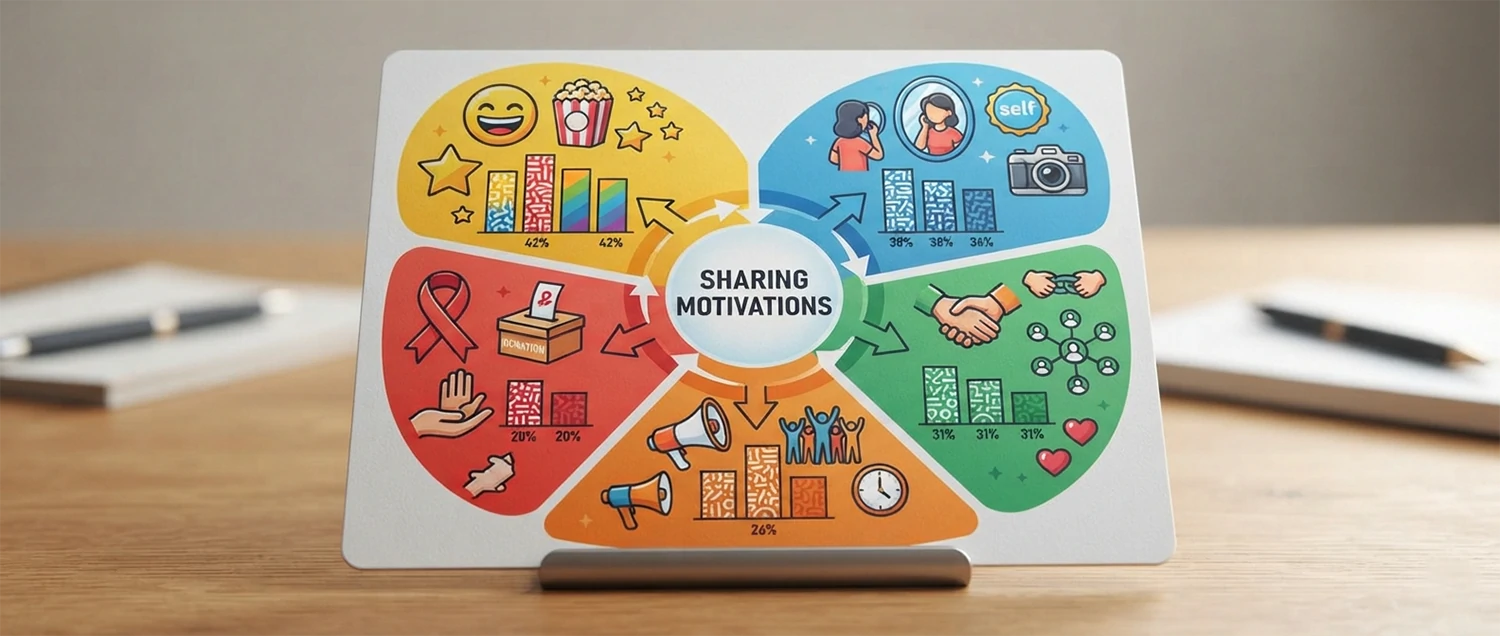
Understanding why people share content is fundamental to creating content that will be shared. The New York Times Customer Insight Group conducted a landmark study on the psychology of sharing and identified five primary motivations. The most common reason people share is to entertain and bring value to others. When we share something funny, inspiring, or useful, we are giving a gift to our social network. The Old Spice campaign was shared primarily for this reason — people wanted to give their friends a laugh.
The second motivation is self-definition. We share content that reflects our identity, values, and beliefs. Sharing the Dove Real Beauty Sketches signaled that the sharer cares about body positivity, women's issues, and emotional authenticity. The content became a proxy for the sharer's values. When someone shared the Dove video, they were implicitly saying "this is what I believe." Content that helps people express their identity spreads because identity expression is a fundamental human need.
The third motivation is relationship building and social bonding. Sharing content is a way of maintaining and strengthening relationships. When you share something with someone, you are saying "I thought of you" or "I want to connect with you." The Ice Bucket Challenge was built entirely on relationship-based sharing — the nomination mechanism forced participants to engage their existing relationships and turn the campaign into a social bonding experience.
The fourth motivation is feeling involved in a larger movement or conversation. People share content to participate in cultural moments and feel connected to something bigger than themselves. The Ice Bucket Challenge made millions of people feel like they were part of a global movement to fight ALS. The Dove campaign made women feel part of a movement to redefine beauty standards. The desire to belong is a powerful driver of sharing behavior.
Pro Tip
Map your campaign content against the five sharing motivations before launch. If your content only satisfies one motivation, it is less likely to go viral than content that satisfies two or three simultaneously.
13. The Role of Influencers and Celebrity Participation
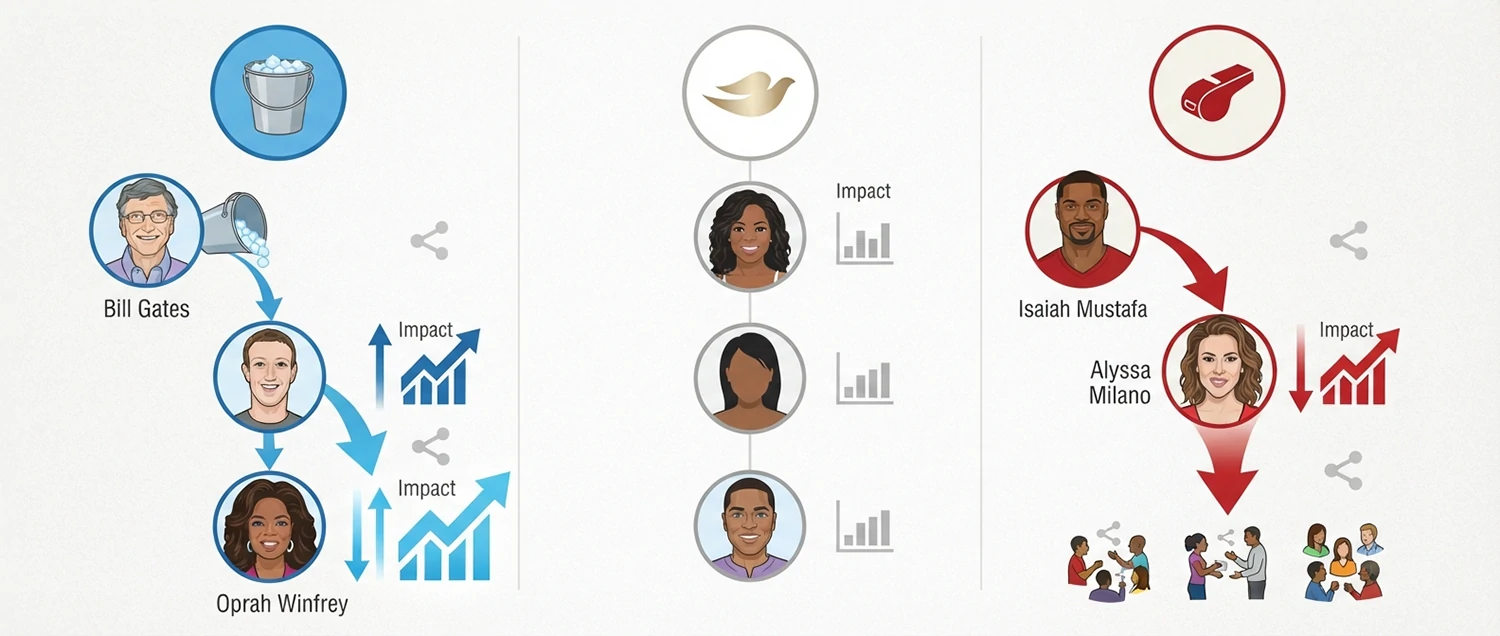
Celebrity participation played a significant role in accelerating the viral spread of both the Ice Bucket Challenge and Old Spice, but in very different ways. The Ice Bucket Challenge had no paid celebrity endorsements — celebrities participated because they were nominated by friends or wanted to show support for the cause. When Bill Gates, Mark Zuckerberg, Oprah Winfrey, and scores of other A-list celebrities posted their Ice Bucket Challenge videos, their massive social media followings were exposed to the campaign simultaneously.
The celebrity participation in the Ice Bucket Challenge was particularly powerful because it felt authentic. These were not paid endorsements — they were genuine participation in a cultural moment. When Taylor Swift posted her video, her fans saw her as charitable and fun, not as a paid spokesperson. This authenticity made the celebrity content more shareable than traditional celebrity endorsements. The campaign proved that earning celebrity participation organically is far more valuable than paying for it.
Old Spice's celebrity strategy was different but equally effective. Rather than relying on celebrities to promote the campaign, the campaign engaged directly with celebrities as part of the interactive response series. When Old Spice responded to Alyssa Milano's tweet with a personalized video, both her followers and the brand's followers shared the content. The campaign turned celebrities into participants in the brand's story rather than paid endorsers of the brand's products.
Dove took yet another approach — there were no celebrity participants in Real Beauty Sketches. The campaign featured everyday women, intentionally avoiding celebrities to maintain authenticity and relatability. This choice was consistent with Dove's brand message that real beauty is found in real women, not in airbrushed celebrities. The campaign proved that celebrity involvement is not necessary for viral success when the content itself is emotionally powerful enough to stand on its own.
Pro Tip
If you use influencers in your campaign, give them creative freedom rather than a script. The Ice Bucket Challenge's celebrity videos were successful because each celebrity made the content their own. Authentic content outperforms polished content every time.
14. The Importance of Platform Strategy
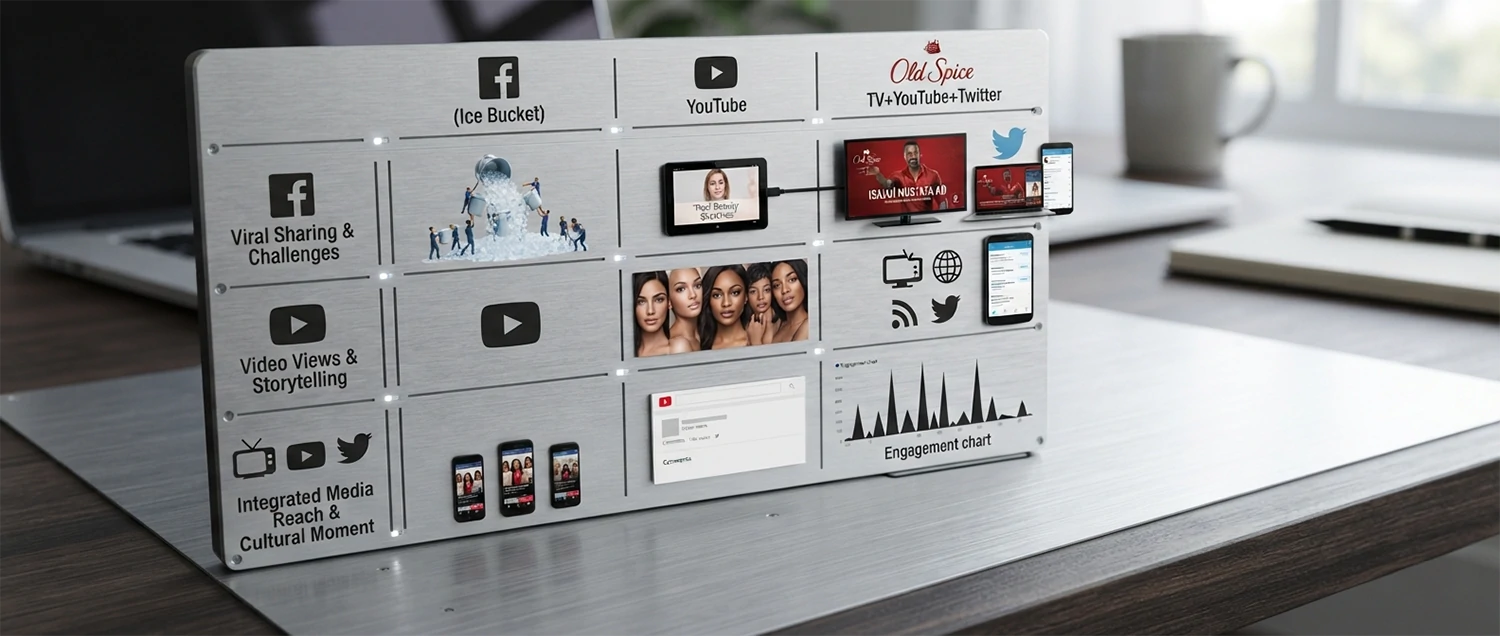
Each of these three campaigns chose the right platform for its content — and in some cases, the platform itself became part of the campaign's success. The Ice Bucket Challenge was primarily a Facebook phenomenon. Facebook's video auto-play, tagging, and nomination features made it the perfect platform for the challenge's peer-to-peer mechanics. Facebook's algorithm also favored video content during the campaign period, giving the Ice Bucket Challenge additional organic reach.
Dove's Real Beauty Sketches was a YouTube-first campaign. The video was over three minutes long — far longer than a typical television commercial — and YouTube was the only platform that could accommodate the length while allowing viewers to share the video easily. YouTube's suggested video algorithm also helped the campaign go viral by recommending the video to users watching related content. The platform's sharing tools made it easy for viewers to post the video to Facebook, Twitter, and other networks.
Old Spice was a multi-platform campaign that leveraged television, YouTube, and Twitter in a coordinated strategy. The television commercial drove initial awareness and search volume. YouTube hosted the long-form content and response videos. Twitter was the platform for the interactive response campaign, where fans could ask questions and receive personalized video responses. The integration across platforms created a seamless experience that maximized the campaign's reach and engagement.
The lesson for marketers is clear: do not try to be everywhere at once. Choose the platform that best suits your content and your audience, and go deep on that platform rather than spreading your efforts thin across every available channel. A campaign that perfectly fits one platform will outperform a campaign that is stretched across five platforms. Master one platform before expanding to others.
Pro Tip
Design your campaign for the platform where your audience already spends time, not the platform where you wish they would find you. Each platform has distinct content formats, algorithms, and user behaviors. Match your content to the platform's native format.
15. The Dark Side of Viral Marketing: Risks and Challenges

Viral success comes with significant risks that every marketer should consider before pursuing a viral strategy. When content goes viral, the brand loses control of the narrative. The Ice Bucket Challenge, for all its success, faced criticism about water waste, performative charity, and questions about how the ALS Association would use the funds. Dove's campaign was criticized for still focusing on physical appearance and for using questionable methodology. Old Spice faced the challenge of maintaining relevance after the campaign's buzz faded.
The speed and scale of viral spread mean that any mistake in the campaign — a tone-deaf message, an unintended implication, a cultural insensitivity — is magnified instantly and globally. Brands that try to manufacture virality often face backlash for being inauthentic or manipulative. The key is to ensure that your campaign is built on a foundation of genuine value and authenticity. If your campaign is fundamentally honest and well-intentioned, it will survive criticism. If it is manipulative or deceptive, the backlash will be devastating.
Another risk is the "one-hit wonder" problem. Many brands that achieve viral success struggle to maintain momentum after the campaign ends. The Old Spice campaign permanently transformed the brand, but many other viral campaigns have faded without leaving a lasting business impact. Viral success should be part of a long-term brand-building strategy, not an end in itself. A viral campaign that does not build lasting brand equity is a wasted opportunity.
Finally, there is the risk of trying too hard. Audiences are sophisticated and can smell desperation. Campaigns that are obviously engineered to go viral often fail because they lack the authenticity that drives genuine sharing. The best viral content does not feel like marketing. It feels like entertainment, education, or inspiration that happens to come from a brand. The viral marketing graveyard is filled with campaigns that tried too hard to be clever and ended up being ignored.
Pro Tip
Before launching a viral campaign, prepare a crisis communication plan. Draft responses to potential criticisms, have your customer service team ready for increased volume, and ensure your website infrastructure can handle a traffic spike.
16. How to Apply These Lessons to Your Own Marketing
You do not need a Super Bowl budget to create viral-worthy content. The three campaigns we have studied demonstrate that virality is driven more by creative strategy than by media spend. The Ice Bucket Challenge had almost no paid media. Dove's campaign had modest media support for a brand of its size. Old Spice's initial media buy was limited to a Super Bowl test market. The viral spread was driven by the content itself, not by the advertising budget behind it.
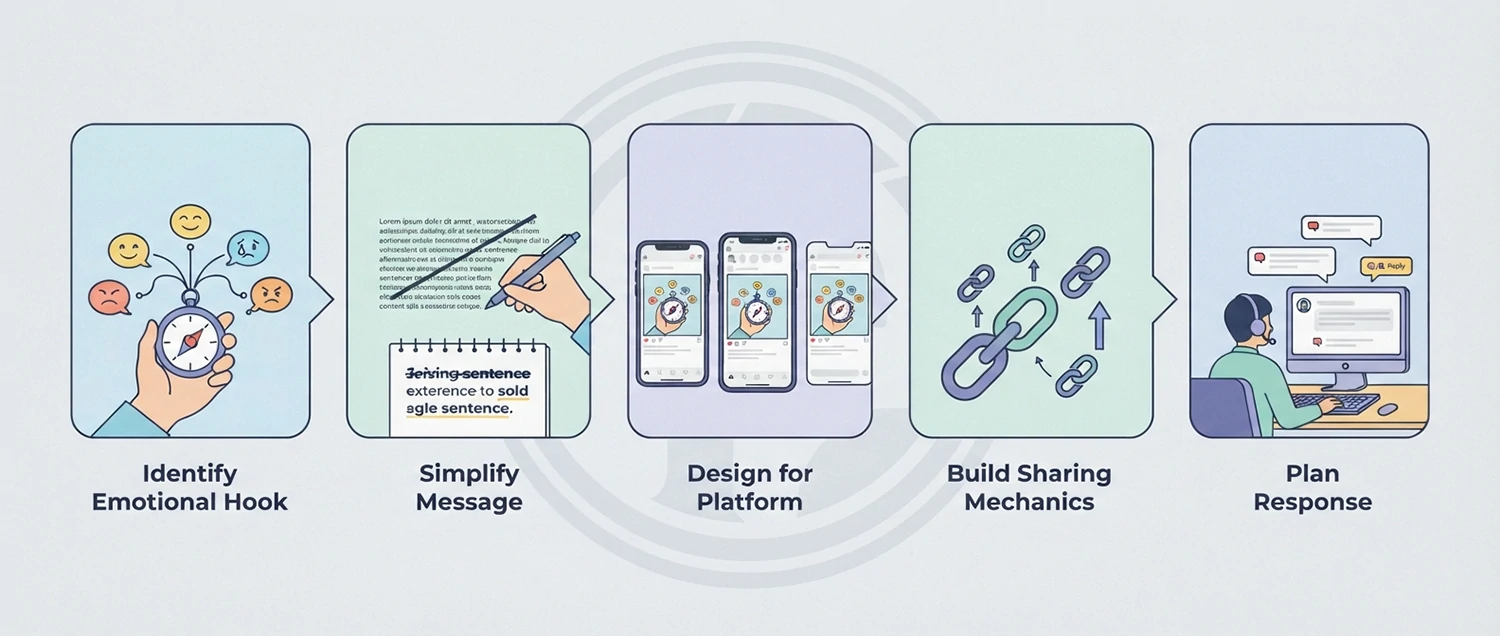
Start by identifying the core emotional hook of your campaign. What feeling do you want your audience to experience? Surprise, joy, inspiration, empathy, amusement? The emotional hook determines everything else — the creative execution, the platform choice, the sharing mechanism, and the content format. Spend the majority of your planning time getting the emotional hook right. Everything else flows from it.
Simplify your message until it can be expressed in one sentence. The Ice Bucket Challenge: dump ice water on yourself to support ALS research. Dove: you are more beautiful than you think. Old Spice: your man could smell like this if he used our body wash. If you cannot express your campaign idea in one sentence, it is not simple enough. Complexity is the enemy of virality. Simple ideas spread; complex ideas require explanation, and explanation kills momentum.
Finally, build sharing mechanics into the campaign itself. The Ice Bucket Challenge's nomination system was not an afterthought — it was the engine of the campaign's growth. Dove's video had a clear call to action that encouraged viewers to share with women in their lives. Old Spice built sharing into the interactive response format by making each video personally relevant to the recipient. Your campaign should have a structural reason for people to share it, not just a hope that they will.
Pro Tip
Test your campaign concept with a focus group of 10 people who match your target audience. If at least 3 of them volunteer that they would share it with friends, you have potential. If none of them mention sharing unprompted, go back to the drawing board.
17. The Role of User-Generated Content in Virality

User-generated content was the engine behind the Ice Bucket Challenge's viral spread and played a significant role in both the Dove and Old Spice campaigns. When brands empower their audience to create content rather than just consume it, they unlock a powerful viral growth mechanism. Each piece of user-generated content is created, shared, and promoted by the user themselves, with the brand benefiting from the exposure without paying for the media.
The Ice Bucket Challenge was essentially a user-generated content campaign disguised as a charity event. The brand (ALS Association) provided a simple template — dump ice water, nominate three people — and users did the rest. They created the videos, edited them, uploaded them, shared them, and nominated their friends. The brand's role was minimal after the initial launch. This is the ultimate goal of a UGC campaign: to create a framework that users are motivated to populate with their own content.
Dove's campaign inspired user-generated content through emotional resonance. After watching the video, thousands of women created their own content about self-image, body positivity, and beauty standards. They shared photos without makeup, wrote blog posts about their insecurities, and started conversations about beauty. While the original video was professionally produced, the conversation it sparked was authentic and user-driven. The campaign's success was measured not just by views but by the volume of user-generated conversations it inspired.
Old Spice's response campaign was a hybrid model — the brand created the content, but the content was driven by user input. Each response video was a collaboration between the brand and the individual who asked the question. Users felt ownership over "their" video and shared it widely. This approach required significant production resources but created an unparalleled level of engagement and personalization. The investment paid off in the form of massive organic sharing and media coverage.
Pro Tip
Make it easy for users to create and share content. Provide templates, hashtags, suggested captions, and easy sharing buttons. Every barrier to user participation reduces your campaign's viral potential. Remove barriers, not create them.
18. Measuring Viral Campaign Success Beyond Views

Vanity metrics — views, likes, impressions — are the most visible measures of viral success but often the least meaningful. A campaign can generate millions of views and still fail to move the business forward if those views do not translate into measurable outcomes. The three campaigns we studied all generated impressive view counts, but their real success was measured by tangible business results: donations for ALS, sales for Old Spice, and brand equity for Dove.
Set clear KPIs before your campaign launches. Decide what success looks like in measurable terms. The ALS Association's primary KPI was donation revenue. Old Spice's primary KPI was sales growth and market share. Dove's primary KPI was brand perception metrics and share of voice. Each campaign had different goals, and each was measured against those specific goals rather than against generic metrics. Define your success metrics before you create the content.
Beyond immediate metrics, consider the long-term impact of your campaign. Did the Ice Bucket Challenge increase ALS awareness permanently? Did Dove's campaign change how women think about beauty in lasting ways? Did Old Spice's campaign create a permanent shift in the brand's market position? Long-term impact is harder to measure but more important than short-term spikes. A viral campaign that creates lasting change is worth far more than one that generates a week of headlines and fades away.
Finally, measure the efficiency of your viral success. Calculate your cost per view, cost per share, cost per engagement, and most importantly, cost per desired action (donation, sale, signup). Compare these metrics to your other marketing channels. If your viral campaign delivers a lower cost per acquisition than your paid advertising, that is the strongest possible argument for investing more in viral content creation. If the viral campaign is less efficient than paid channels, rethink your approach.
Pro Tip
Set up Google Analytics goals and UTM tracking for every link in your campaign before launch. Without proper tracking, you will have no idea whether your viral success is translating into business results. Measure before you launch.
19. The Future of Viral Marketing
The viral marketing landscape continues to evolve as platforms, algorithms, and consumer behaviors change. The TikTok era has created new formats and dynamics for viral content. Short-form video, algorithm-driven discovery, and remix culture have made virality more accessible to smaller creators and brands. A 15-second TikTok video can reach millions of people without any paid promotion if the algorithm favors it. This democratization of viral reach is a significant shift from the YouTube-and-Facebook-dominated era of the campaigns we studied.
Artificial intelligence is beginning to play a role in viral content creation and distribution. AI tools can analyze vast amounts of social media data to predict what content is likely to go viral, optimize headlines and images for engagement, and even generate content variations for A/B testing. However, AI-generated content often lacks the authentic human emotion that drives genuine sharing. The most successful viral campaigns will likely be those that combine AI-driven optimization with authentic human creativity.
The fragmentation of social media presents both challenges and opportunities. Audiences are spread across more platforms than ever — TikTok, Instagram, YouTube, Facebook, Twitter, LinkedIn, Snapchat, Pinterest, BeReal, Threads, and emerging platforms. Creating content that works across multiple platforms is increasingly difficult, but the opportunity for platform-specific viral hits is greater than ever. The next great viral campaign may emerge on a platform that does not even exist yet.
Despite the changing landscape, the fundamental principles of viral marketing remain constant. Emotional resonance, simplicity, surprise, and shareability will always drive viral spread regardless of the platform. The platforms change, the formats evolve, and the algorithms update, but human psychology remains remarkably stable. The campaigns that will go viral in the future will be those that understand and leverage the same psychological principles that made the Ice Bucket Challenge, Dove, and Old Spice successful.
Pro Tip
Stay flexible with your platform strategy. The platform that is perfect for your campaign today may be obsolete tomorrow. Build campaigns around a core emotional idea that can be adapted to any platform rather than being tied to a specific platform's features.
20. Frequently Asked Questions About Viral Marketing

Q: Can virality be guaranteed? A: No. No strategy, budget, or formula can guarantee that content will go viral. Virality is inherently unpredictable because it depends on the behavior of millions of independent individuals. The best you can do is create content that follows the principles of shareability and maximize its chances of spreading. Anyone who promises guaranteed virality is selling something you should not buy.
Q: How much budget do I need for a viral campaign? A: The Ice Bucket Challenge had virtually no budget for content creation or media distribution. Dove and Old Spice had significant budgets, but the viral spread was organic, not paid. The amount of budget you need depends on the complexity of your content and whether you need paid amplification to reach critical mass. Many of the most successful viral campaigns started with very small budgets.
Q: How long does it take for a campaign to go viral? A: Viral spread typically follows an exponential curve — slow growth initially, followed by a rapid spike, then a gradual decline. The Ice Bucket Challenge took about two weeks to reach critical mass before exploding. Dove's video grew steadily over several weeks. Old Spice's initial commercial went viral within 24 hours. The timeline is unpredictable, but most viral campaigns reach their peak within 1–4 weeks of launch.
Q: Should I create my campaign for a specific platform or multiple platforms? A: Start with one primary platform and optimize your content for that platform's native format and audience. If the content gains traction on that platform, you can expand to other platforms with adaptations. Trying to create content that works perfectly on every platform usually results in content that works perfectly on none. Master one platform first, then expand.
Pro Tip
Build a library of content rather than betting everything on a single piece. Create 5–10 pieces of content with viral potential and launch them over several weeks. Multiple at-bats increase your chances of hitting a home run.
21. Common Mistakes in Viral Marketing Attempts

Trying too hard to be funny is one of the most common mistakes in viral marketing. Humor can be a powerful viral driver, but forced humor is immediately recognized and rejected by audiences. The Old Spice campaign succeeded because the humor was authentic to the brand's new voice and was executed with impeccable timing and delivery. Most brands are not that funny, and trying to be will result in content that is awkward rather than amusing. If humor does not come naturally to your brand, do not force it.
Ignoring the platform's native culture is another frequent error. Each social media platform has its own norms, language, content formats, and unwritten rules. Content that works on LinkedIn will not work on TikTok. Content that goes viral on Twitter may flop on Instagram. Brands that try to force content onto a platform without understanding its culture are immediately identified as outsiders and ignored. Take the time to understand the platform before you create content for it.
Making the campaign about the brand rather than the audience is a classic mistake. The Ice Bucket Challenge was not about the ALS Association — it was about participants challenging their friends. Dove was not about soap — it was about women's self-perception. Old Spice was not about deodorant — it was about entertainment. When the content is primarily about the brand, the audience has no reason to share it. When the content is primarily about the audience, sharing becomes a form of self-expression.
Not having a clear call to action is a missed opportunity. Every viral campaign should direct the audience toward a specific action: donate, visit a website, sign up for a newsletter, make a purchase, or create their own content. The Ice Bucket Challenge's call to action was built into the nomination mechanism. Dove's call to action was to share the video and visit the Self-Esteem Project website. Old Spice's call to action was to buy the product. Your campaign should make it obvious what you want people to do after they engage.
Pro Tip
Study viral content in your industry to understand what resonates with your specific audience. What types of content get shared most? What emotional triggers work? What formats perform best? Learn from what is already working before trying something untested.
22. Resources for Learning More About Viral Marketing

To deepen your understanding of viral marketing, start with Jonah Berger's "Contagious: Why Things Catch On." This book is the definitive academic study of virality, based on Berger's research at the Wharton School. Berger identifies the six STEPPS principles — Social Currency, Triggers, Emotion, Public, Practical Value, Stories — that drive content to spread. Every viral marketing strategy can be analyzed through the lens of these six principles.
Malcolm Gladwell's "The Tipping Point" is a classic exploration of how ideas, products, and behaviors spread through society. Gladwell introduces concepts like the Law of the Few (the importance of connectors, mavens, and salesmen in spreading ideas), the Stickiness Factor (how to make messages memorable), and the Power of Context (the role of environment in behavior). While written before social media, the principles apply perfectly to digital viral campaigns.
"Made to Stick" by Chip and Dan Heath explores why some ideas survive and thrive while others die. The book's SUCCESs framework — Simple, Unexpected, Concrete, Credible, Emotional, Stories — provides a practical checklist for creating sticky, shareable content. The Heath brothers use vivid examples from business, education, and everyday life to illustrate how sticky ideas are structured and communicated.
Beyond books, study the campaigns themselves. Watch the original Ice Bucket Challenge videos from celebrities and everyday participants. Watch Dove's Real Beauty Sketches and the follow-up content they created. Watch every Old Spice commercial from the original through the response campaign. Analyze what works in each. The best way to learn viral marketing is to study the masters, apply their principles, and create your own content. Theory without practice is just entertainment.
Pro Tip
Create a swipe file of viral campaigns that you admire. Save links, screenshots, notes, and analyses. Review your swipe file before starting any new campaign. The best creative work is built on a foundation of studying what has come before.
23. Case Studies in Failed Viral Attempts
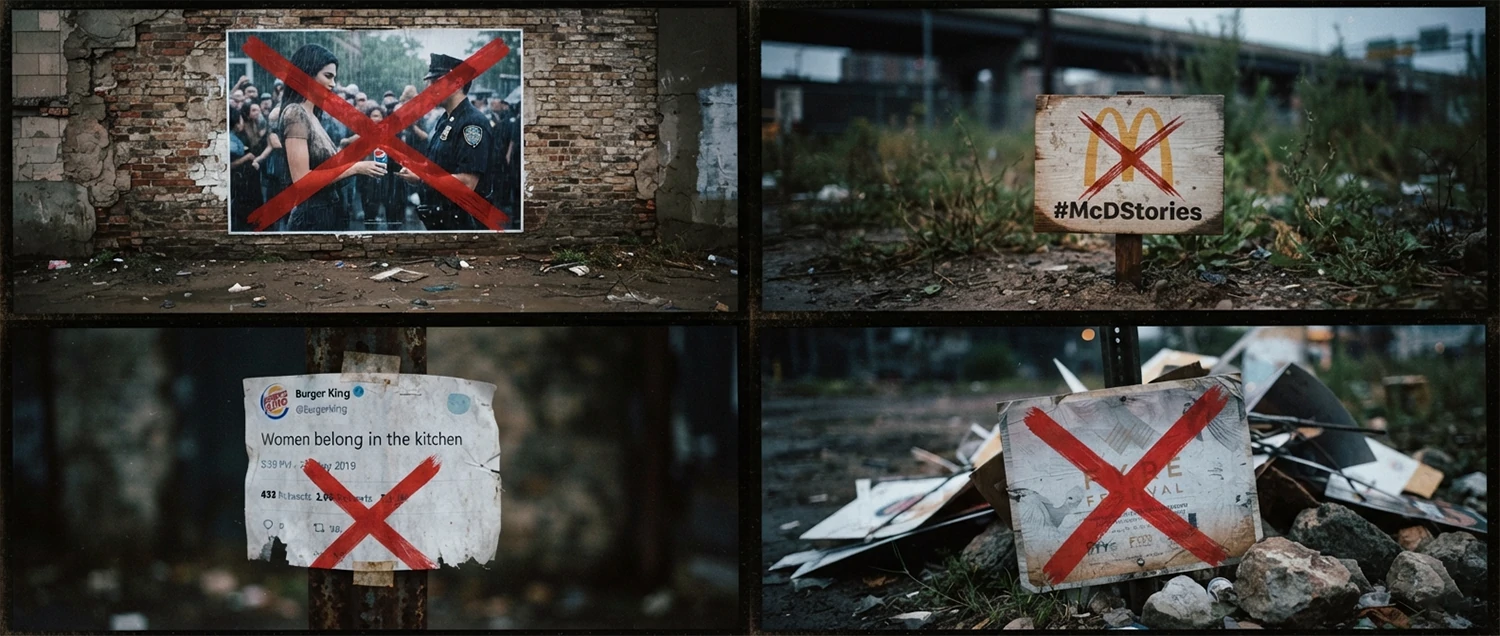
Learning from failed viral attempts is just as important as studying successful ones. Pepsi's 2017 advertisement featuring Kendall Jenner was attempting to capture the cultural energy of social justice movements and create a viral moment of unity. Instead, the ad was universally criticized for trivializing the Black Lives Matter movement and using protest imagery to sell soda. The ad was pulled within 24 hours, Pepsi issued a public apology, and the campaign became a textbook example of tone-deaf marketing that backfired spectacularly.
McDonald's #McDStories campaign in 2012 was intended to generate positive customer stories about the brand. McDonald's launched the hashtag with a paid Twitter promotion, expecting heartwarming tales of family meals and childhood memories. Within hours, the hashtag had been hijacked by critics sharing horror stories about food quality, health impacts, and working conditions. McDonald's pulled the campaign after just two hours, but the damage was done. The campaign demonstrated the risk of giving your audience an open platform without controlling the narrative.
Burger King's International Women's Day tweet in 2021 attempted to go viral with a message about women in the kitchen — but the joke fell flat. The tweet read "Women belong in the kitchen" followed by a thread explaining that the company was launching a scholarship program for women pursuing culinary careers. While the follow-up revealed the positive intent, many viewers never scrolled past the initial provocative headline. The campaign generated massive engagement, but much of it was negative, and the brand was criticized for using a harmful stereotype as clickbait.
The common thread in these failures is that the brands prioritized attention over authenticity. They tried to manufacture virality by jumping on cultural moments or using provocative messaging without understanding the context or respecting the audience. The lesson is clear: virality achieved through deception, insensitivity, or manipulation is not success — it is a crisis waiting to happen. Authentic, values-driven content may not spread as fast, but it builds lasting brand equity rather than destroying it.
Pro Tip
Before publishing any campaign that touches on a sensitive topic, run it through a diverse review panel. Ask people from different backgrounds, ages, and perspectives to give honest feedback. If anyone flags a concern, take it seriously.
24. The Role of Paid Amplification in Kickstarting Virality

While most viral campaigns achieve their scale through organic sharing, paid amplification often plays a critical role in the early stages. The concept of "seeding" — using paid advertising to put your content in front of the right initial audience — can provide the initial momentum needed to trigger organic spread. Very few campaigns achieve virality without some form of initial distribution, whether through paid media, influencer partnerships, or existing audience channels.
The Ice Bucket Challenge is a rare exception to this rule — it had virtually no paid seeding. However, it had something even more powerful: a built-in distribution mechanism through the nomination system. Each participant was both a content creator and a distributor, eliminating the need for paid amplification. Most campaigns do not have this structural advantage and need at least some paid support to reach the critical mass required for organic spread.
Effective paid seeding targets not just the broadest possible audience but the right audience. You want to reach individuals who are likely to share — influencers, content creators, journalists, and highly engaged community members. These "super-shares" have large followings and high credibility within their networks. A single share from an influential person can be worth more than thousands of impressions from the general public.
The key to paid seeding is timing. Paid amplification should be concentrated in the first 48–72 hours after launch to create the appearance of momentum. Social media algorithms are more likely to promote content that already shows engagement signals — likes, shares, comments. A well-timed paid boost that generates early engagement can trigger algorithmic amplification that continues long after the paid campaign ends. The paid spend primes the pump; organic sharing provides the flow.
Pro Tip
Allocate 70% of your paid seeding budget to the first 48 hours after launch. A concentrated burst of early engagement signals to algorithms that your content is popular, triggering organic distribution that no amount of sustained low-level spend can match.
25. Creating a Viral Content Calendar and Strategy

Viral marketing cannot be left to chance. The most successful brands approach virality with the same discipline they apply to any other marketing channel. They plan, create, test, measure, and optimize. A viral content calendar ensures that you are consistently creating shareable content rather than betting everything on a single campaign. Consistency compounds — each piece of content builds your brand's shareability reputation and increases the probability that something will eventually break through.
Structure your content calendar around different types of viral potential. Some content should aim for "slow burn" virality — evergreen content that builds shares steadily over months or years. Other content should target "fast spike" virality — timely content tied to current events, holidays, or cultural moments. A balanced calendar includes both types, reducing your dependence on any single piece of content succeeding while maximizing your total opportunities for viral spread.
Build testing and iteration into your calendar. Not every piece of content will go viral, and that is fine. The goal is to learn from each piece and improve the next. A/B test headlines, images, formats, and distribution channels. Analyze what resonates with your audience. Use data from each campaign to inform the next. Over time, you will develop an intuitive sense for what your audience will share and what they will ignore.
Include repurposing in your calendar. A single piece of content can be adapted into multiple formats — a blog post becomes a video, a video becomes a series of social posts, a social post becomes an infographic. Each format reaches a different audience segment and extends the life of your content investment. The most viral content often finds its audience on a different platform than the one it was originally created for.
Pro Tip
Leave room in your calendar for reactive content. Some of the best viral moments come from responding to unexpected events, trends, or conversations. A content calendar should be a guide, not a cage. Build in flexibility to seize opportunities as they arise.
26. Measuring ROI from Viral Campaigns

Measuring the return on investment from viral campaigns is notoriously difficult but essential for justifying continued investment in viral marketing. Traditional ROI calculations that compare campaign cost to direct revenue often undervalue viral campaigns because they fail to capture the long-term brand equity and earned media value that virality generates. A comprehensive ROI framework must account for both tangible and intangible returns.
Start with the tangible metrics: direct sales, donations, leads, signups, or other conversions that can be directly attributed to the campaign. Use UTM parameters, promo codes, and landing page analytics to track conversions. The Ice Bucket Challenge could directly attribute $115 million in donations. Old Spice could directly attribute a 27% sales increase. These numbers make ROI calculation straightforward. If your campaign cannot show direct conversions, it is harder to justify the investment.
Next, calculate earned media value — the equivalent advertising cost of the organic reach and media coverage your campaign generated. If your campaign generated 10 billion media impressions, what would it have cost to buy that reach through paid advertising? Earned media values typically range from 3x to 10x the campaign cost for successful viral campaigns. This metric helps justify viral marketing investment even when direct conversions are harder to track.
Finally, measure long-term brand lift. Conduct brand tracking surveys before and after your campaign to measure changes in awareness, favorability, consideration, and purchase intent. Monitor your brand's search volume, social media follower growth, and website traffic trends in the months following the campaign. These metrics capture the lasting value of virality beyond the immediate campaign period. A campaign that permanently shifts brand perception is worth far more than its immediate ROI suggests.
Pro Tip
Run a brand lift study 30 days before and 30 days after your viral campaign launch. Compare awareness, favorability, and purchase intent scores. A 5% or greater lift in any of these metrics represents significant long-term value that justifies continued viral investment.
27. The Bottom Line
"Viral marketing is not a formula you can copy or a button you can push. It is the intersection of a powerful idea, perfect timing, authentic emotion, and a deep understanding of human nature. The campaigns that go viral are not the ones that try the hardest to be viral — they are the ones that connect most deeply with what it means to be human."
— Marketing Strategist
The three campaigns we have explored — the ALS Ice Bucket Challenge, Dove Real Beauty Sketches, and Old Spice "The Man Your Man Could Smell Like" — represent different paths to the same destination: cultural impact at a scale that most marketers only dream of. Each campaign succeeded for different reasons, but all three shared a foundation of emotional resonance, simplicity, and authentic human connection.
The lessons from these campaigns are not just for big brands with massive budgets. The principles that drove their success — emotional triggers, social currency, simplicity, surprise, user participation, and platform fit — can be applied by any business, nonprofit, or individual creator. You do not need millions of dollars to create content that resonates. You need a compelling idea, a deep understanding of your audience, and the courage to execute boldly.
The most important lesson is this: stop trying to create a viral campaign. Instead, create a campaign that is so emotionally resonant, so genuinely useful, so entertaining, or so inspiring that people cannot help but share it. Focus on creating value for your audience rather than engineering shareability. The viral spread will take care of itself when the content is truly worth sharing.
Now it is your turn. Study the principles. Analyze the masters. Create something that matters. And let the world decide what goes viral.