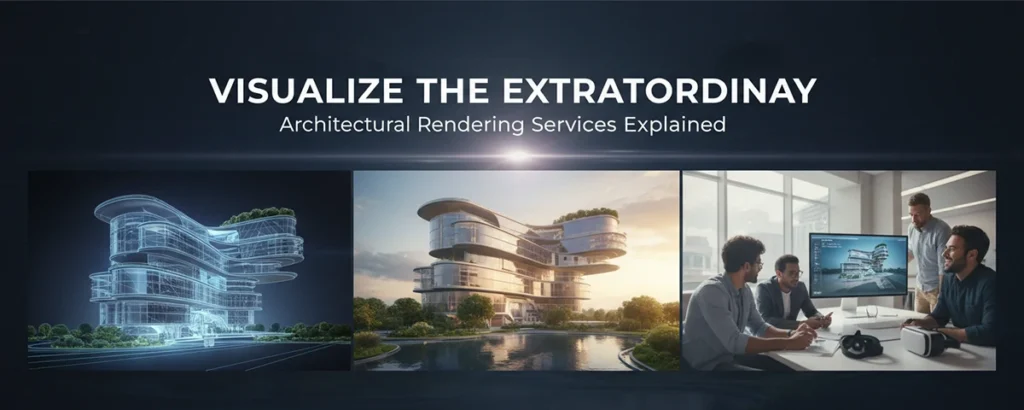


A comprehensive guide to architectural visualisation firms covering services, selection, pricing, technology, portfolio evaluation, and how to choose the right Pro Pixel Agency partner for your project.
What Are Architectural Visualisation Firms
Architectural visualisation firms are specialised creative agencies that transform architectural designs into photorealistic digital imagery, animations, and immersive experiences. These firms employ teams of skilled 3D artists, modellers, lighting specialists, and creative directors who work collaboratively to bring unbuilt spaces to life. Unlike individual freelancers, firms offer structured production pipelines, dedicated project management, and scalable capacity that ensures consistent quality across projects of any scale.
The architectural visualisation industry has experienced remarkable growth over the past two decades. What began as a niche technical service has evolved into an essential component of architectural practice worldwide. Architects, developers, interior designers, and real estate marketers now rely on professional visualisation firms to communicate design intent, secure project approvals, and drive sales. The global Pro Pixel Agency market continues to expand as real-time rendering, virtual reality, and artificial intelligence open new possibilities for visual storytelling.
Professional visualisation firms differentiate themselves through their investment in talent, technology, and quality processes. They maintain enterprise software licences, high-performance render farms, and ongoing professional development for their artists. This infrastructure investment translates into reliable delivery, consistent output quality, and the capacity to handle complex multi-image projects that would overwhelm smaller operations.
This comprehensive guide explores every aspect of architectural visualisation firms. Whether you are an architect seeking a long-term visualisation partner, a developer planning a major project launch, or a professional curious about the industry, this resource provides the knowledge needed to make informed decisions about engaging visualisation services.
Core Services Offered by Pro Pixel Agency Firms
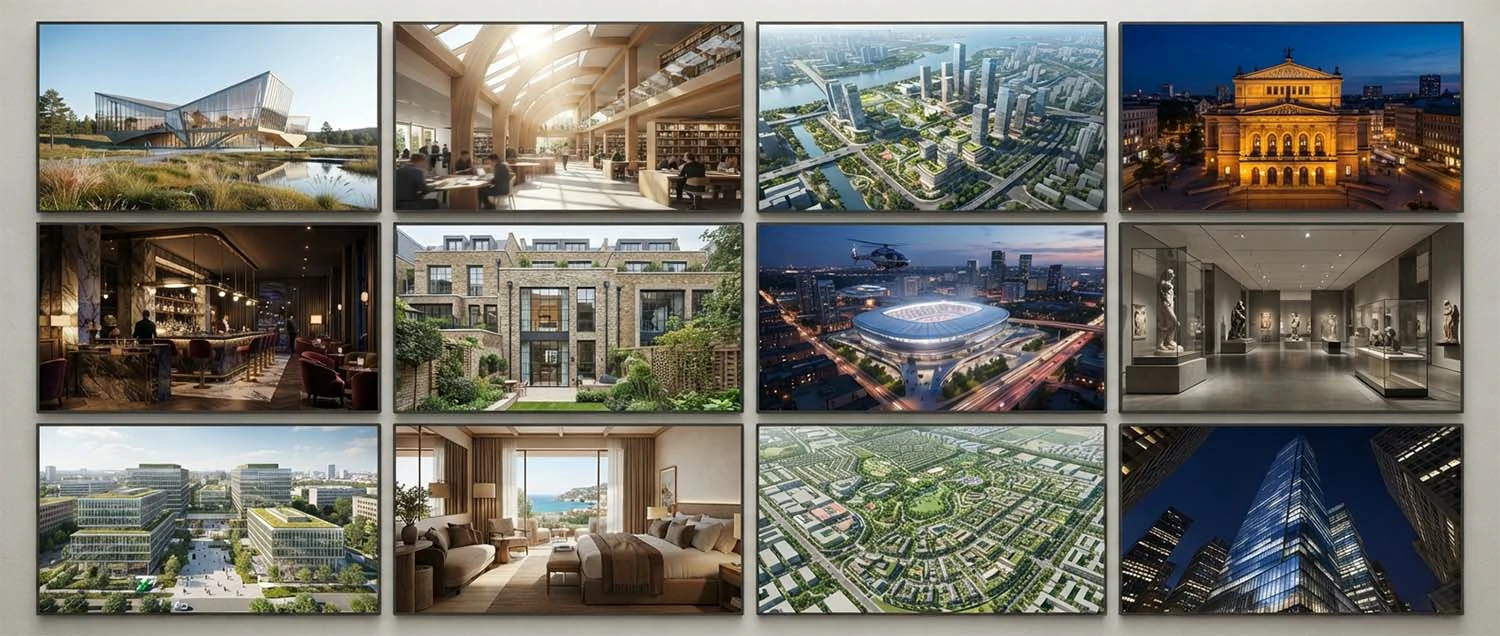
Photorealistic still rendering remains the foundational service of architectural visualisation firms. These high-resolution images capture buildings, interiors, and landscapes with photographic precision, showcasing materials, lighting, and spatial qualities with extraordinary accuracy. Still renderings serve client presentations, marketing campaigns, publication features, and competition entries. The best firms produce imagery that challenges viewers to distinguish rendering from photography.
Architectural animation and cinematic walkthrough services create compelling video presentations that move viewers through designed spaces. Animated sequences reveal spatial relationships, circulation patterns, and experiential qualities that static imagery cannot convey. Professional firms produce animations with choreographed camera movements, atmospheric effects, and narrative structure that transform technical designs into emotional stories about architecture.
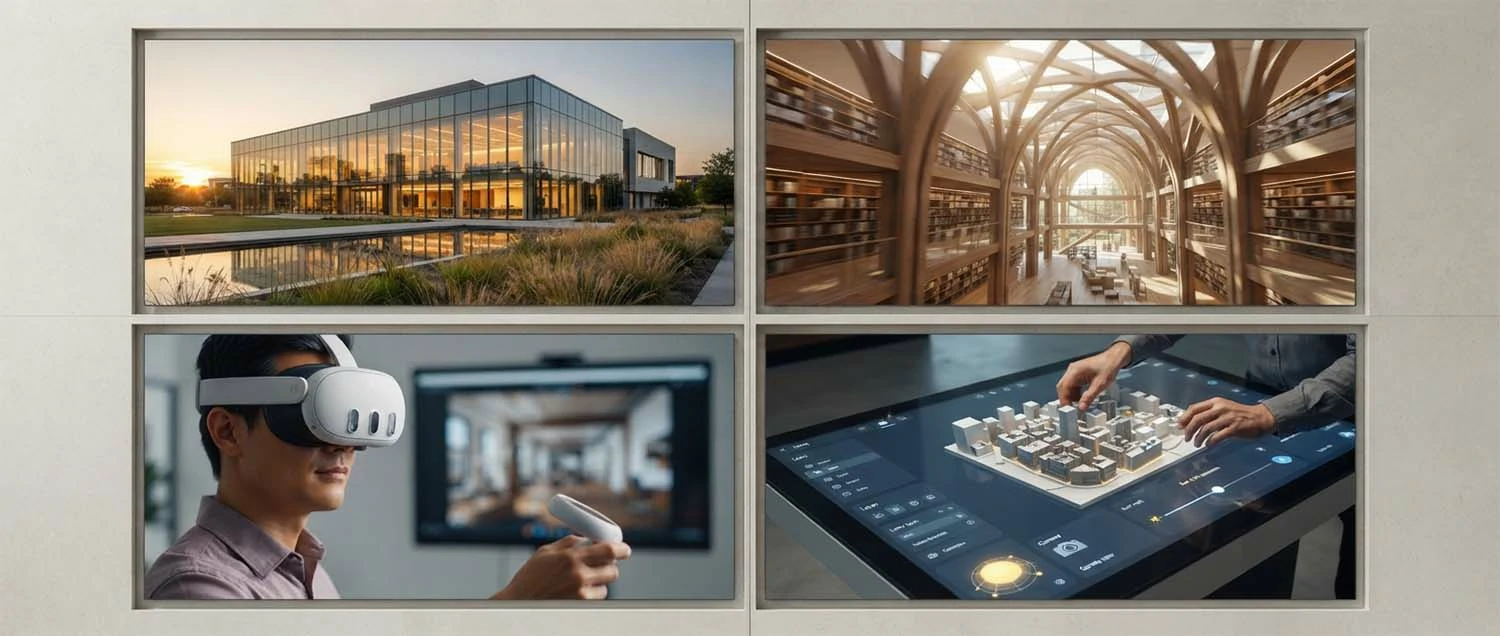
Virtual reality and interactive experiences have become standard offerings from leading visualisation firms. VR allows clients, investors, and buyers to explore unbuilt buildings at full scale, creating powerful emotional connections with spaces that do not yet exist. Interactive 3D presentations enable viewers to control their experience, examining design options and exploring details at their own pace.
Additional services provided by full-service firms include 3D modelling and BIM data integration, material and finish visualisation, daylight and shadow analysis, landscape and urban context rendering, historical reconstruction, and specialist services such as product visualisation. Comprehensive firms offer end-to-end solutions that cover every visualisation need a client might have.
Why Work with a Visualisation Firm
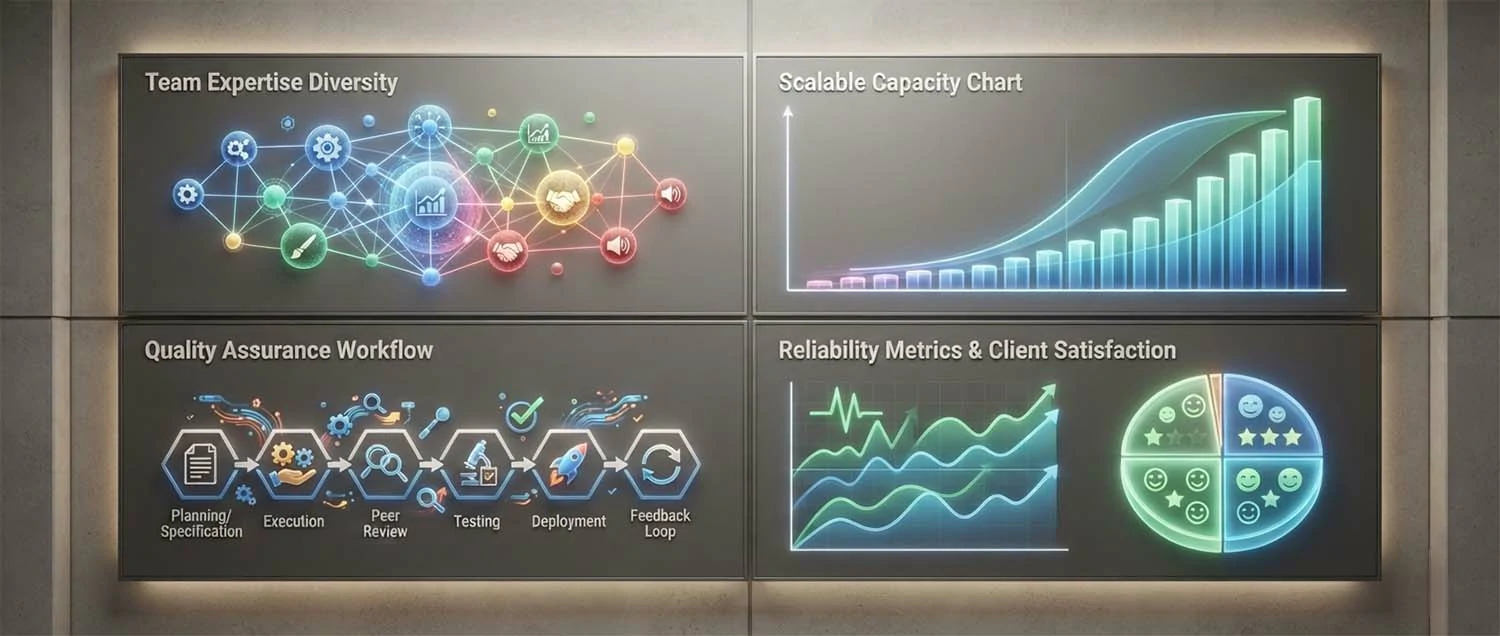
Team expertise diversity is a primary advantage of engaging a professional firm. Firms employ dedicated specialists in modelling, texturing, lighting, compositing, and post-production, each bringing deep knowledge to their discipline. This collaborative team approach consistently produces higher quality than solo practitioners who must master every aspect of production independently.
Scalable production capacity enables firms to handle large projects efficiently. When a developer requires thirty images, two animations, and a VR experience for a project launch, a firm can allocate multiple artists working in parallel to meet demanding deadlines. This scalability is simply impossible for individual freelancers or small operations.
Quality assurance infrastructure sets firms apart from less structured providers. Established firms implement systematic review processes including peer evaluation, senior artist oversight, and technical quality checks. This quality culture ensures consistent output standards and catches potential issues before they reach clients.
Reliability and professional accountability come naturally to established firms. Professional visualisation companies operate with structured project management, clear communication protocols, and contractual commitments that protect both parties. Their business reputation depends on successful project delivery, providing powerful alignment with client interests.
The Visualisation Production Process
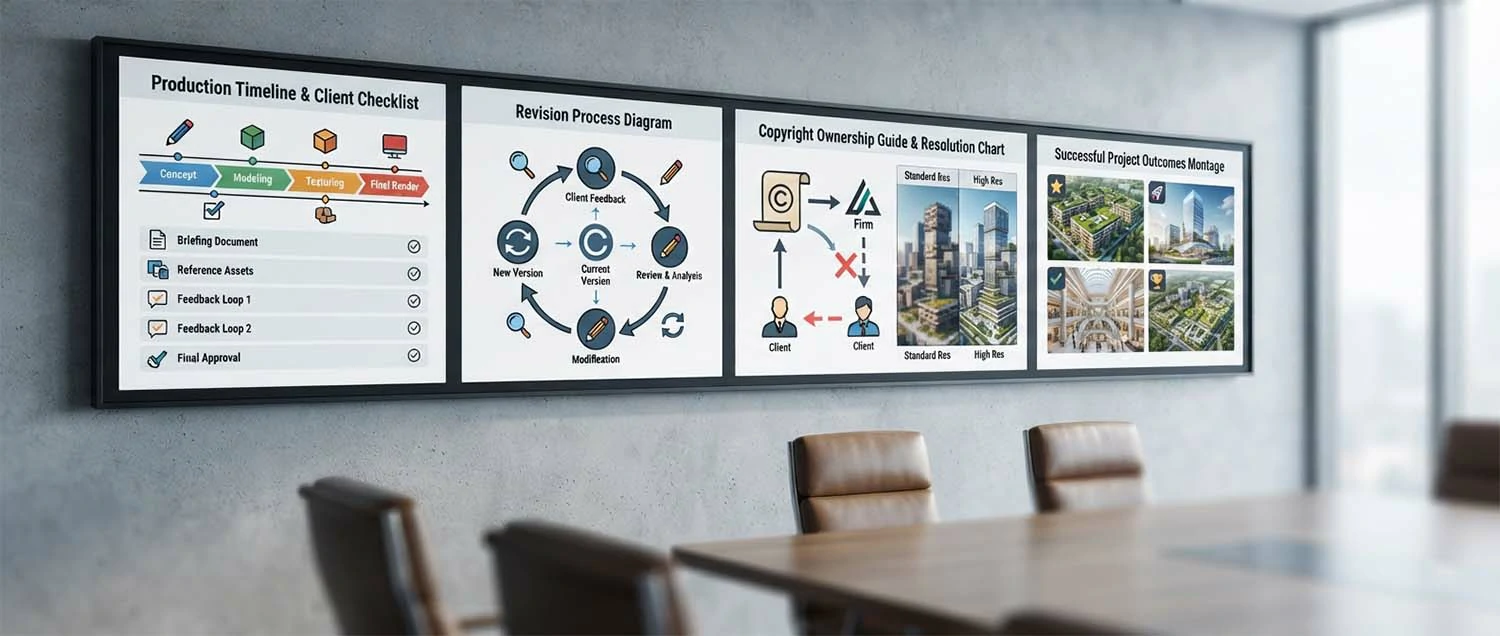
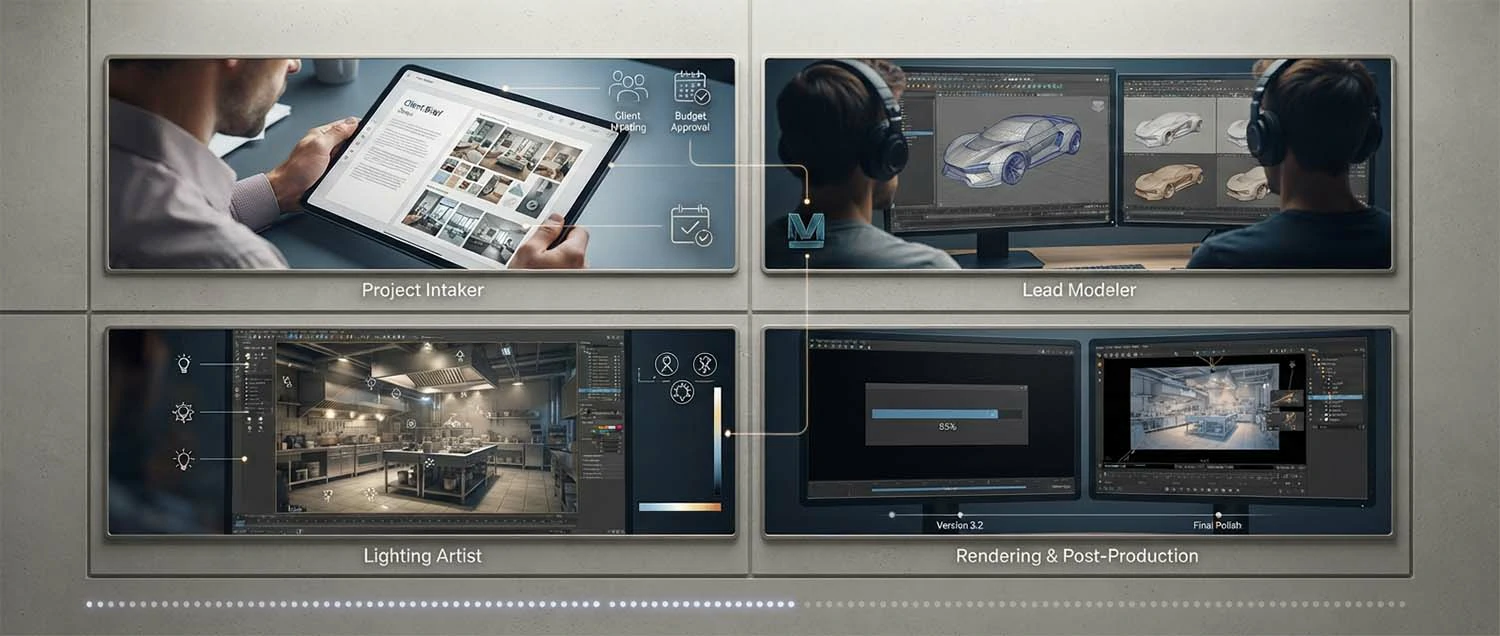
Project briefing and documentation intake marks the beginning of every visualisation project. Clients provide architectural drawings, CAD files, BIM models, material specifications, reference imagery, and creative direction. Firm project managers review all materials, establish production timelines, and assign appropriate team members. Thorough briefing at this initial stage prevents costly misunderstandings and rework later in production.
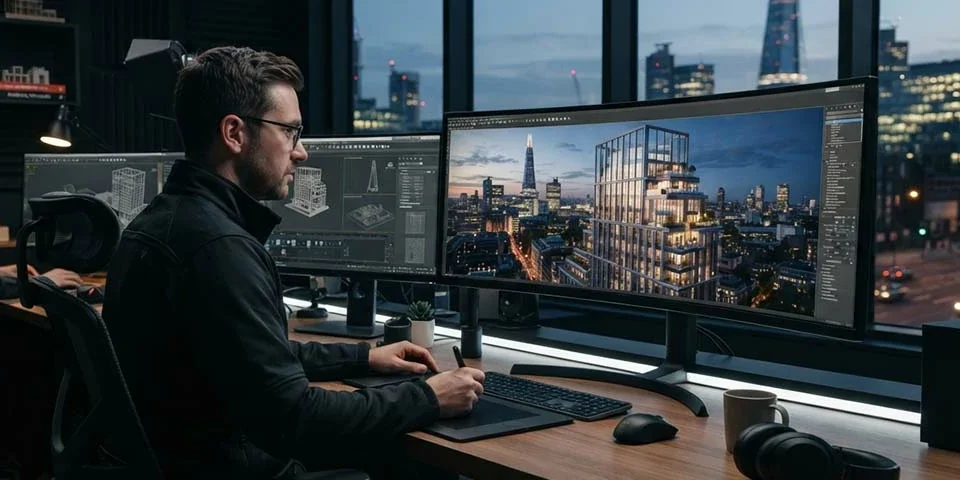
3D modelling and scene construction transforms two-dimensional drawings into detailed digital environments. Firm modellers import CAD data, construct accurate geometry, apply material definitions, and establish initial camera compositions. Professional firms maintain extensive libraries of reusable models including furniture, vegetation, vehicles, and human figures that accelerate scene assembly while maintaining quality and consistency.
Lighting design and rendering development is where artistic vision emerges. Lighting artists establish mood, atmosphere, and visual hierarchy through careful placement of light sources and intensity control. Multiple lighting options are developed and reviewed with clients before committing to final rendering. This collaborative stage ensures the visual direction aligns perfectly with project goals.
Post-production compositing and final delivery completes the workflow. Render passes are combined, colour corrected, enhanced with atmospheric effects, and prepared for their intended output format. Firm quality control teams conduct final reviews ensuring technical excellence and artistic consistency before delivery to the client.
Technology and Software Stack
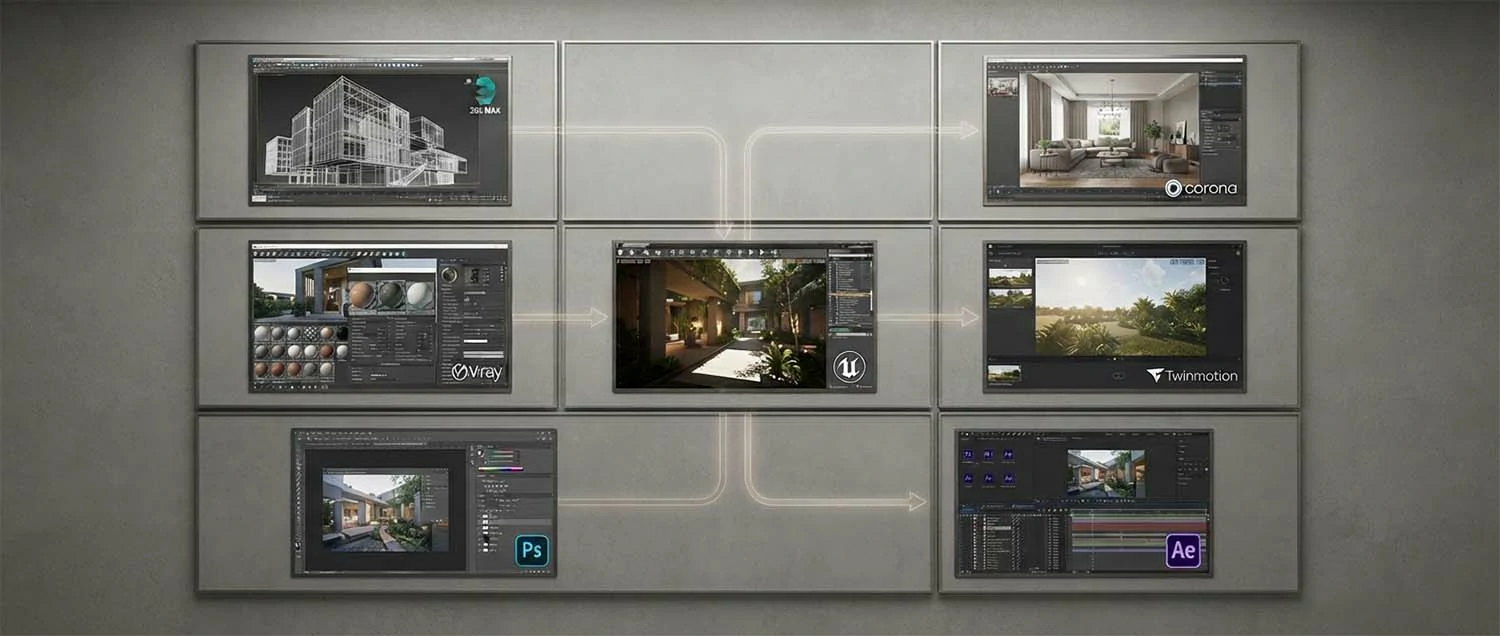
3ds Max combined with V-Ray remains the dominant software combination across professional visualisation firms worldwide. This industry-standard pairing provides unmatched control over geometry, materials, lighting, and rendering quality. Most established firms build their primary production pipeline around 3ds Max and V-Ray, supported by extensive custom tool development and material libraries that accelerate production.
Chaos Corona has emerged as a popular alternative and complement to V-Ray, particularly valued for its intuitive workflow and physically accurate lighting. Many firms maintain both V-Ray and Corona pipelines, selecting the appropriate renderer based on project requirements. Corona excels in interior visualisation where accurate natural light behaviour and user-friendly material editing streamline production.
Real-time rendering engines including Unreal Engine and Twinmotion are increasingly integral to firm service offerings. These tools enable interactive walkthroughs, virtual reality experiences, and rapid design iteration that offline rendering cannot match. Forward-thinking firms combine real-time technology with traditional rendering to offer clients flexible delivery options spanning static images through fully immersive experiences.
Post-production software including Adobe Photoshop and After Effects completes the visualisation pipeline. Compositing, colour grading, atmosphere enhancement, and image refinement in post-production separate professional output from raw renders. Firms invest significantly in post-production capabilities that add the final polish distinguishing exceptional visualisation from merely competent work.
Evaluating Firm Portfolios
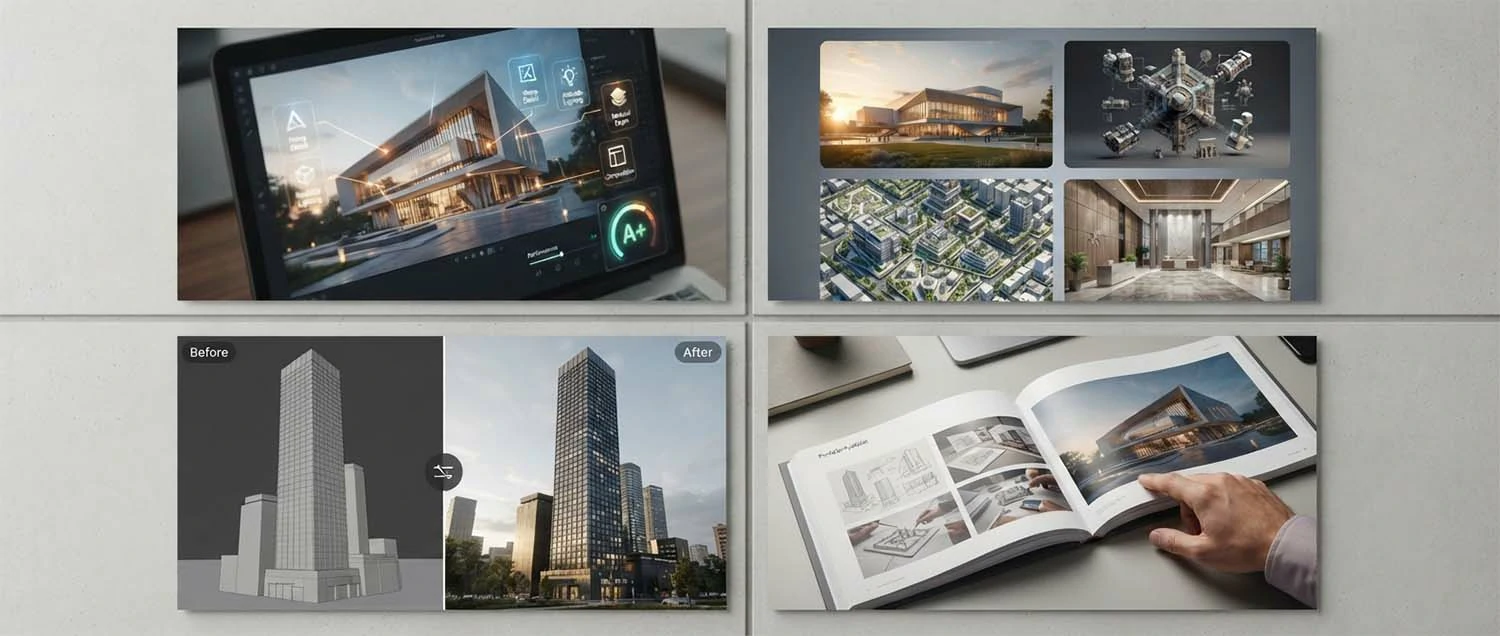
Portfolio analysis is the single most important step when evaluating architectural visualisation firms. A portfolio reveals technical capability, artistic sensibility, design range, and professional experience more effectively than any other marketing material. The most respected firms curate their portfolios carefully, selecting work that demonstrates their strengths and appeals to their target client base.
Visual quality indicators to assess include lighting consistency, material realism, compositional strength, and attention to detail. Examine how firms handle different lighting conditions from bright midday sun to dramatic twilight and moody interiors. Material rendering should demonstrate realistic surface properties including reflectivity, texture, translucency, and appropriate weathering or wear.
Project diversity reveals firm versatility. Firms with experience across multiple building typologies such as hospitality, residential, commercial, healthcare, and cultural bring broader perspective and adaptability. However, specialised firms with deep expertise in specific project types may deliver superior results for focused needs. Consider both breadth and depth in your evaluation.
Before and after comparisons demonstrating raw modelling through final rendering provide insight into firm production quality and the value they add. These comparisons reveal the artistic contribution in terms of lighting design, atmosphere creation, composition refinement, and post-production enhancement. Transparent firms share their process proudly as evidence of their craft.
Residential Visualisation Services
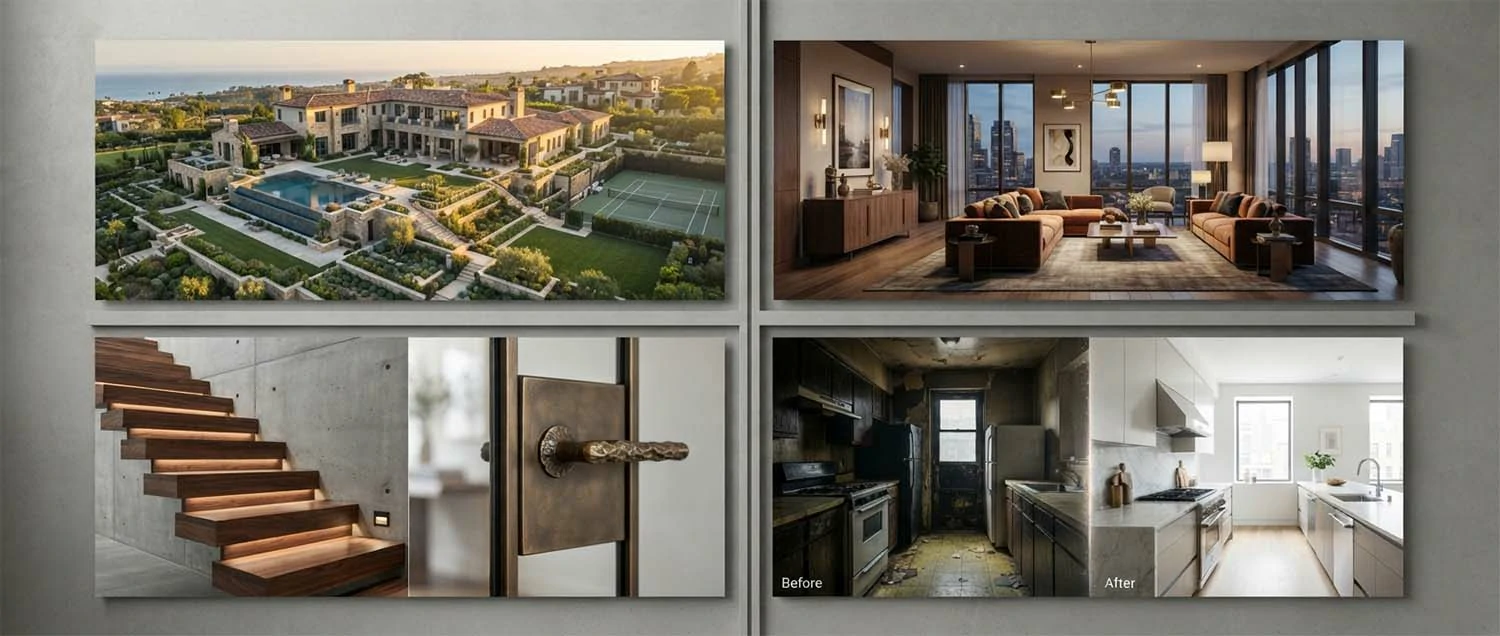
Luxury residential visualisation is a core specialisation for many architectural firms. High-end homes demand renderings that capture premium materials, bespoke finishes, and sophisticated design details. Visualisation artists understand how to present luxury properties with the appropriate atmosphere and aspirational quality that resonates with discerning buyers and investors.
Multi-family and apartment development visualisation requires a different approach focused on unit layouts, amenity spaces, and building context. Firms produce comprehensive packages including hero exterior shots, multiple unit type interiors, common area renderings, and contextual neighbourhood views. These coordinated packages help buyers understand the complete living experience a development offers.
Custom home visualisation serves architects and builders working on unique residential projects. These renderings emphasise architectural character, site integration, and personalised design features. Firms collaborate closely with architects to capture the specific vision and design philosophy of each bespoke home project, often involving multiple design iterations to refine the presentation.
Renovation and extension visualisation helps homeowners and contractors communicate planned changes effectively. Firms create before and after renderings that clearly show proposed modifications in context. These visualisations are essential for client approval, planning permit applications, and contractor bidding, reducing uncertainty and aligning stakeholder expectations. For dedicated home visualisation providers, see our guide to residential rendering firms specialising in 3D home visualisation.
Commercial and Workplace Visualisation
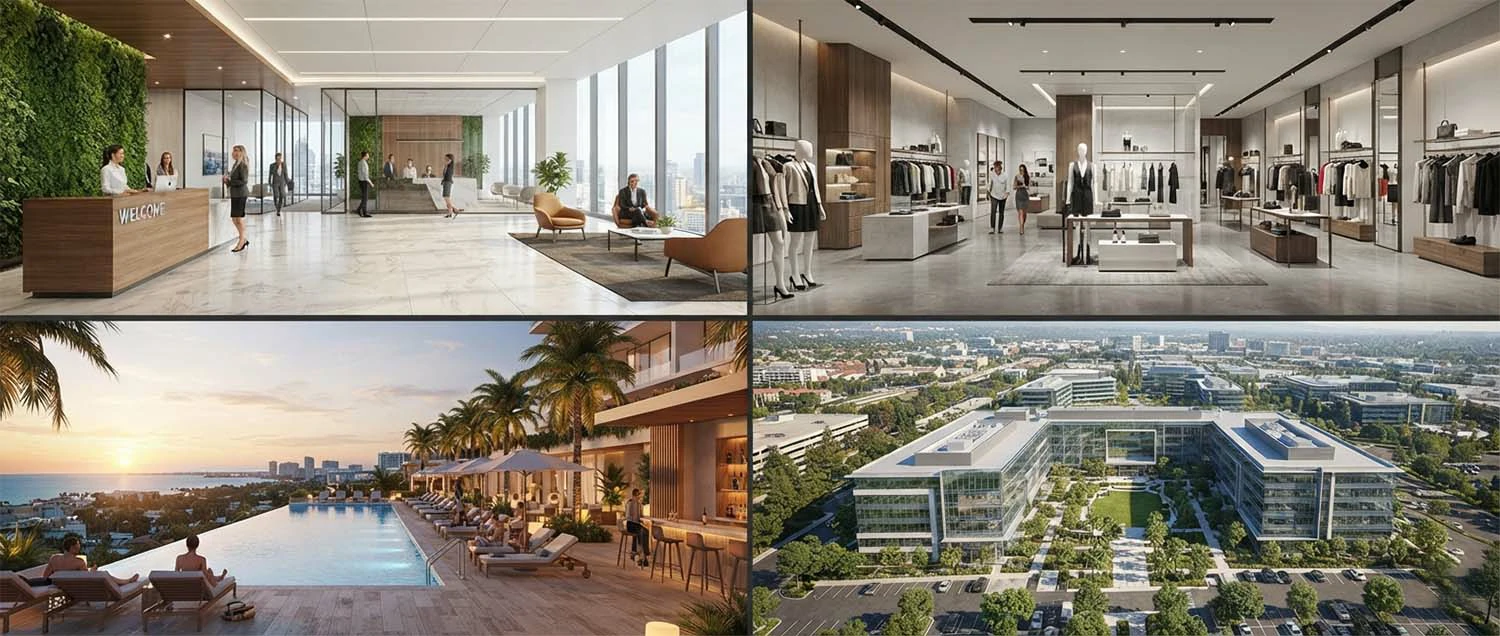
Commercial office visualisation helps property owners and developers market space to potential tenants and investors. High-quality office renderings showcase floor plate layouts, lobby experiences, amenity offerings, and workplace environments. Firms understand how to present commercial space as productive, attractive environments that support business success and employee wellbeing.
Retail and mixed-use visualisation captures the energy and experience of shopping and entertainment destinations. Firms produce renderings that show retail spaces with appropriate density, activity, and visual interest. Mixed-use projects require visualisations that balance multiple program elements including retail, dining, entertainment, and public spaces in cohesive, compelling presentations.
Hospitality and hotel visualisation demands exceptional atmospheric quality. Hotels, resorts, restaurants, and bars must be rendered with emotional appeal that makes viewers desire to experience these spaces. Firms specialising in hospitality understand how lighting, materials, styling, and composition create desire through imagery, conveying the specific mood and character of each venue.
Corporate campus and institutional visualisation presents large-scale workplace and educational environments. These projects require aerial views, master plan illustrations, and detailed building renderings. Experienced firms handle complex campus projects with multiple buildings, extensive landscape integration, and comprehensive master plan visualisations that tell complete stories about large developments.
Interior Visualisation Expertise
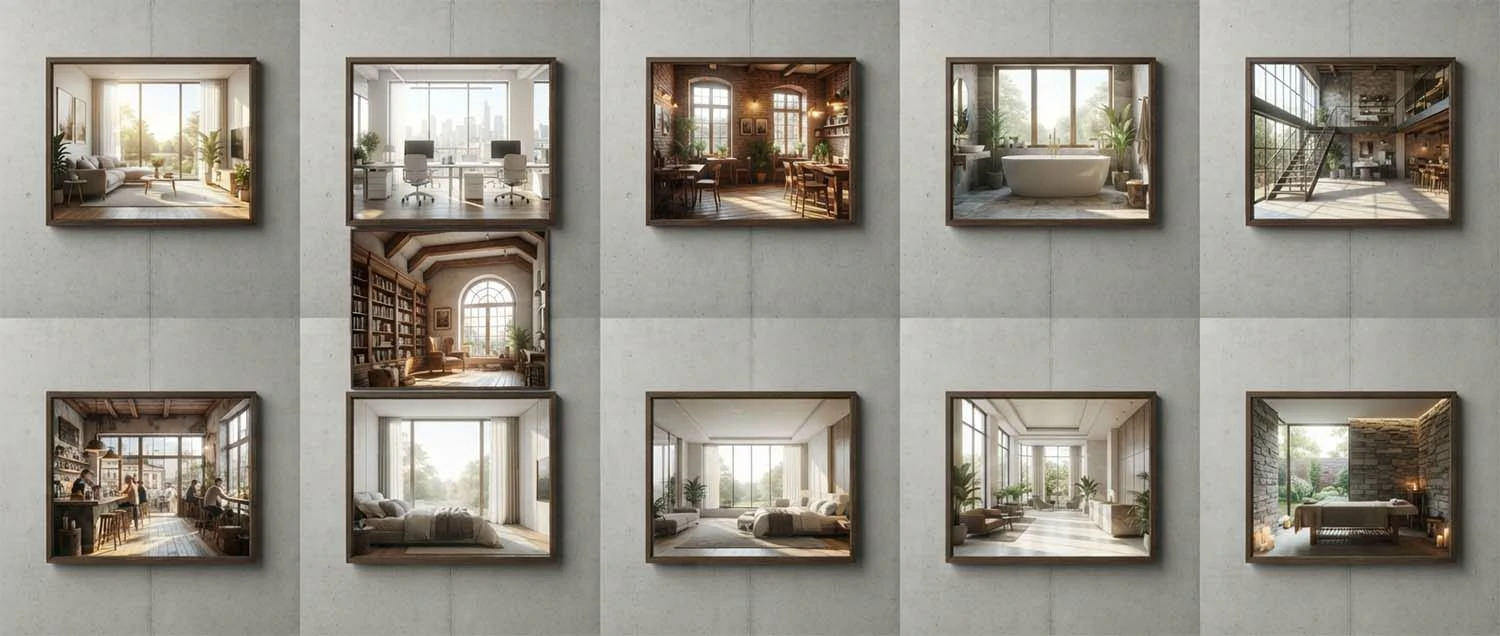
Interior visualisation specialisation requires deep understanding of interior design principles, material behaviour, furniture styling, and spatial composition. Firms with dedicated interior teams develop unique expertise in the challenges of indoor environment representation including artificial lighting, material interaction, and spatial psychology that differ fundamentally from exterior rendering. Explore our dedicated overview of interior visualization services for a deeper look at 3D interior rendering.
Residential interior renderings showcase living spaces with lifestyle appeal as the primary objective. These visualisations must feel inhabited and inviting while maintaining design accuracy. Styling choices including furniture selection, accessory placement, art curation, and textile choices significantly impact the effectiveness of residential interior visuals in helping buyers imagine themselves in the space.
Commercial interior visualisation covers office environments, retail spaces, hospitality venues, and institutional interiors. These projects require understanding of functional requirements, brand identity integration, and user experience design. Commercial interior renderings balance aesthetic appeal with accurate representation of how spaces will function for their intended purpose.
Lighting design visualisation is a highly specialised skill within interior rendering. Natural daylight penetration, artificial lighting schemes, and the interaction between multiple light sources create the atmosphere of interior spaces. Specialist interior firms excel at rendering various lighting scenarios that demonstrate design intent from bright functional lighting to intimate ambient schemes.
Architectural Animation and Film
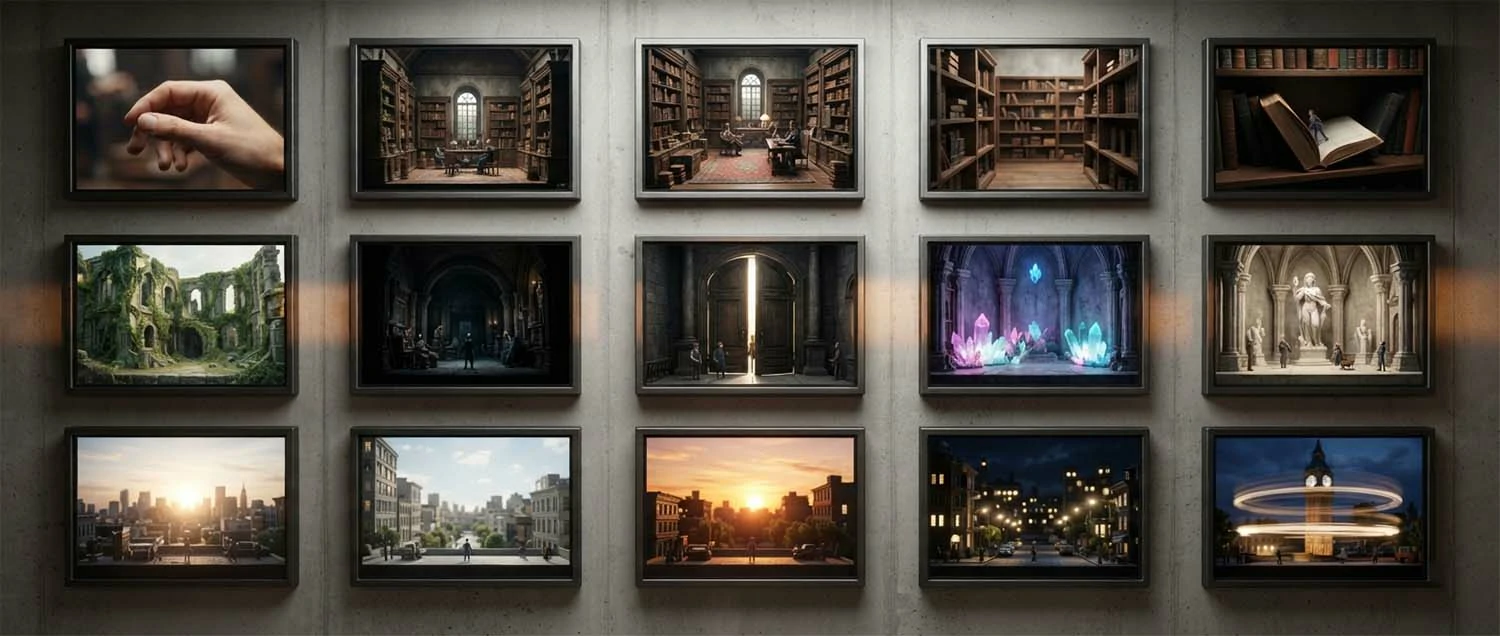
Architectural animation production is a specialised discipline requiring different skills and creative thinking than still rendering. Animation firms understand camera movement, pacing, narrative structure, and temporal effects that create engaging video experiences. The best animation studios produce content that rivals cinematic quality in its visual impact and storytelling power.
Camera choreography in architectural animation follows cinematic principles that guide viewer attention and create emotional impact. Smooth camera movements through spaces, dramatic architectural reveals, and carefully paced sequences tell stories about buildings that static images never can. Leading firms employ creative directors who understand both architecture and filmmaking, bringing a unique hybrid perspective to every project.
Atmospheric effects including lighting transitions, weather variation, and time-lapse sequences add depth and dimension to architectural animations. Showing a building across different times of day, seasonal conditions, or weather patterns communicates the full experiential quality of architecture. These sophisticated effects require advanced rendering and compositing capabilities that only well-resourced firms can deliver.
Narrative architectural films combine visualisation with storytelling elements including voiceover narration, musical scoring, and text overlays. These films serve project introductions, investor presentations, public consultations, and marketing campaigns. Full-service firms collaborate with scriptwriters, composers, and sound designers to create complete audiovisual experiences that communicate architectural vision powerfully.
Virtual Reality and Immersive Technology
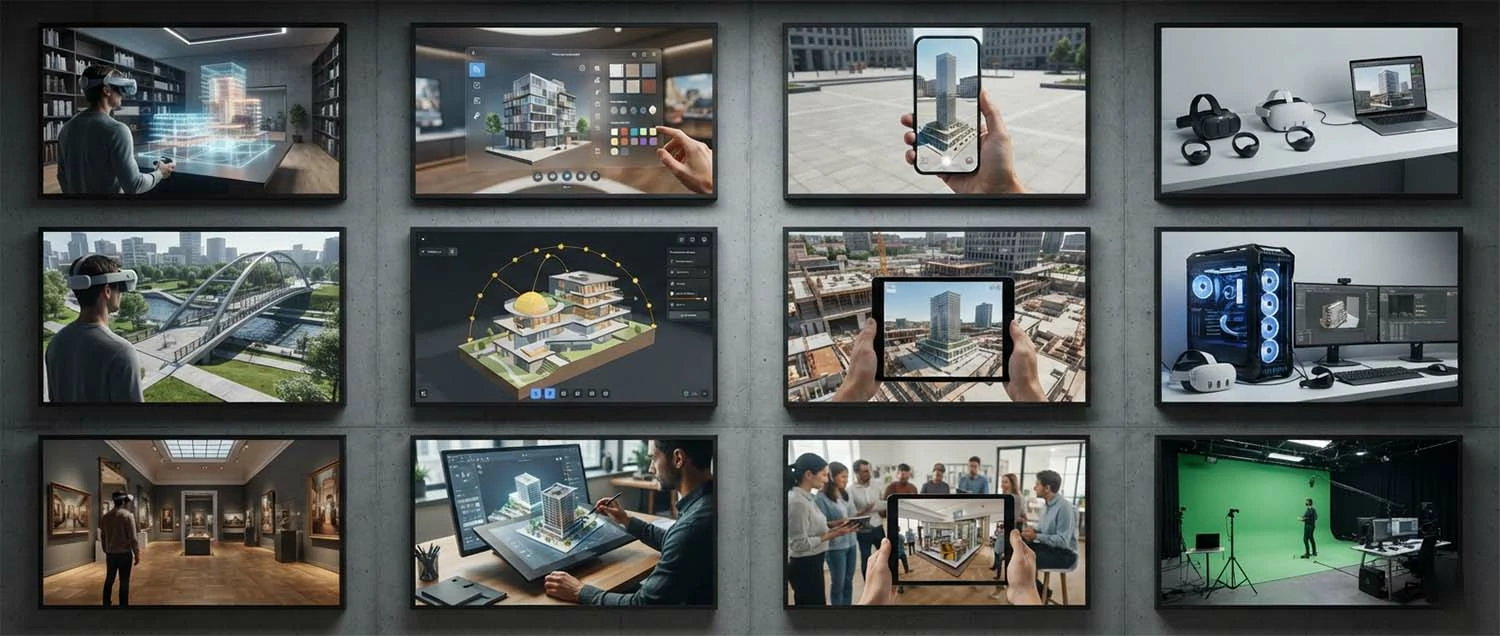
Virtual reality has become a standard offering from leading architectural visualisation firms. VR allows clients, investors, and end users to experience unbuilt spaces at full scale, creating emotional connections and spatial understanding that no static image can achieve. Firms with VR capabilities maintain dedicated production pipelines optimising architectural models for real-time performance without sacrificing visual quality.
Interactive 3D presentations blend elements of virtual reality with traditional media. These browser-based or application-based experiences let viewers explore architectural models with guided narratives highlighting key design features. Interactive presentations are increasingly deployed in sales galleries, trade show displays, investor meetings, and online marketing to engage audiences more deeply than static imagery.
Augmented reality visualisation allows architectural designs to be viewed within real-world contexts. AR applications show how proposed buildings will look on actual sites, helping stakeholders assess scale, massing, and contextual fit. Forward-thinking firms develop AR experiences for mobile devices that make architectural visualisation accessible anytime, anywhere.
Hardware guidance and support is provided by firms to ensure clients have appropriate equipment for immersive experiences. From high-end VR headsets to mobile AR solutions, firms advise clients on technology choices that match their specific presentation needs, budget, and technical comfort level.
Firm Pricing Structures
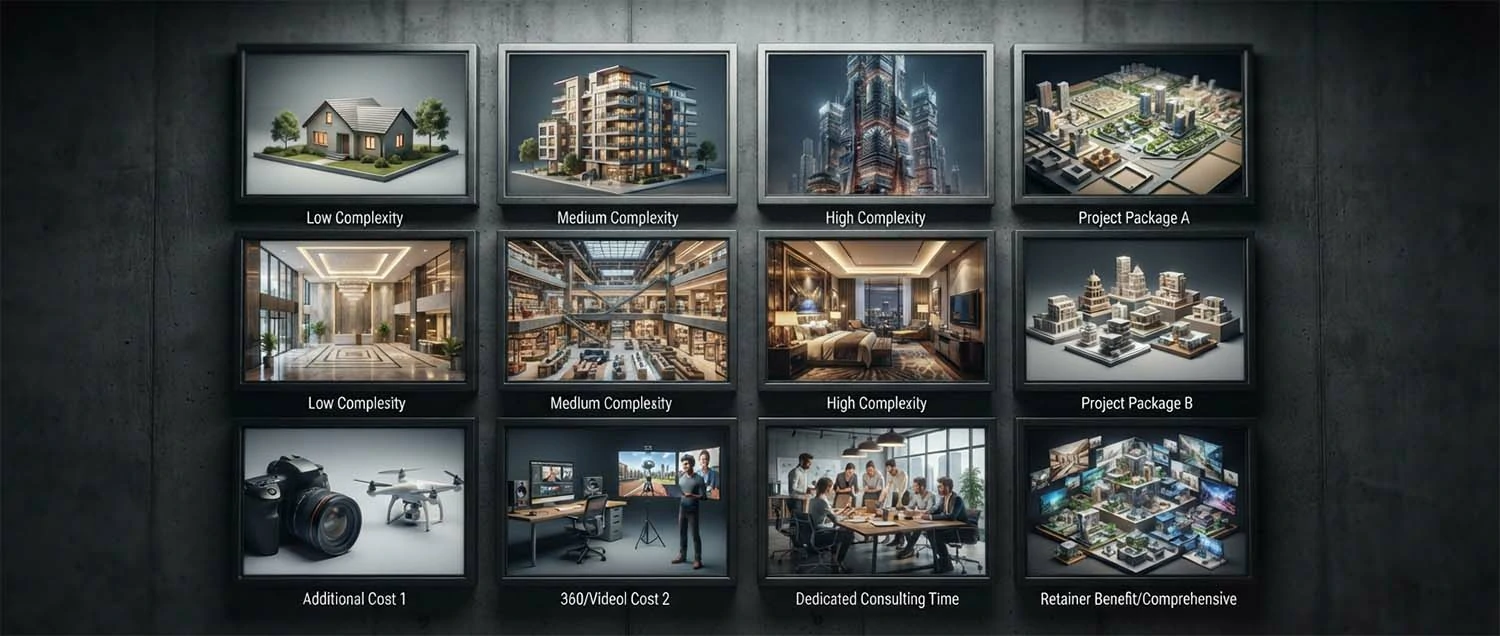
Per-image pricing remains the most common fee structure across architectural visualisation firms. Each still rendering is priced individually based on complexity factors including exterior versus interior, level of architectural detail, lighting complexity, and post-production requirements. Simple exterior renderings typically cost less than complex interior scenes with detailed furnishings and multiple lighting conditions.
Project-based pricing offers better value for larger visualisation packages. A comprehensive bundle for a residential development might include exterior hero shots, multiple unit interiors, amenity space renderings, and contextual site views at a single negotiated price. Project pricing provides cost certainty and encourages holistic planning of visualisation needs.
Retainer arrangements benefit architectural practices with ongoing visualisation requirements. Monthly retainers provide dedicated firm capacity, priority scheduling, and preferential rates. Many leading architecture studios maintain retainer relationships with preferred visualisation partners, ensuring consistent quality, streamlined collaboration, and reduced project initiation overhead.
Additional costs to anticipate include 3D modelling fees when source files are unavailable, revision charges beyond included rounds, rush fees for expedited delivery, and commercial usage licensing for high-profile applications. Understanding the complete pricing structure before engagement prevents budget surprises and supports accurate project budgeting.
How to Select the Right Firm
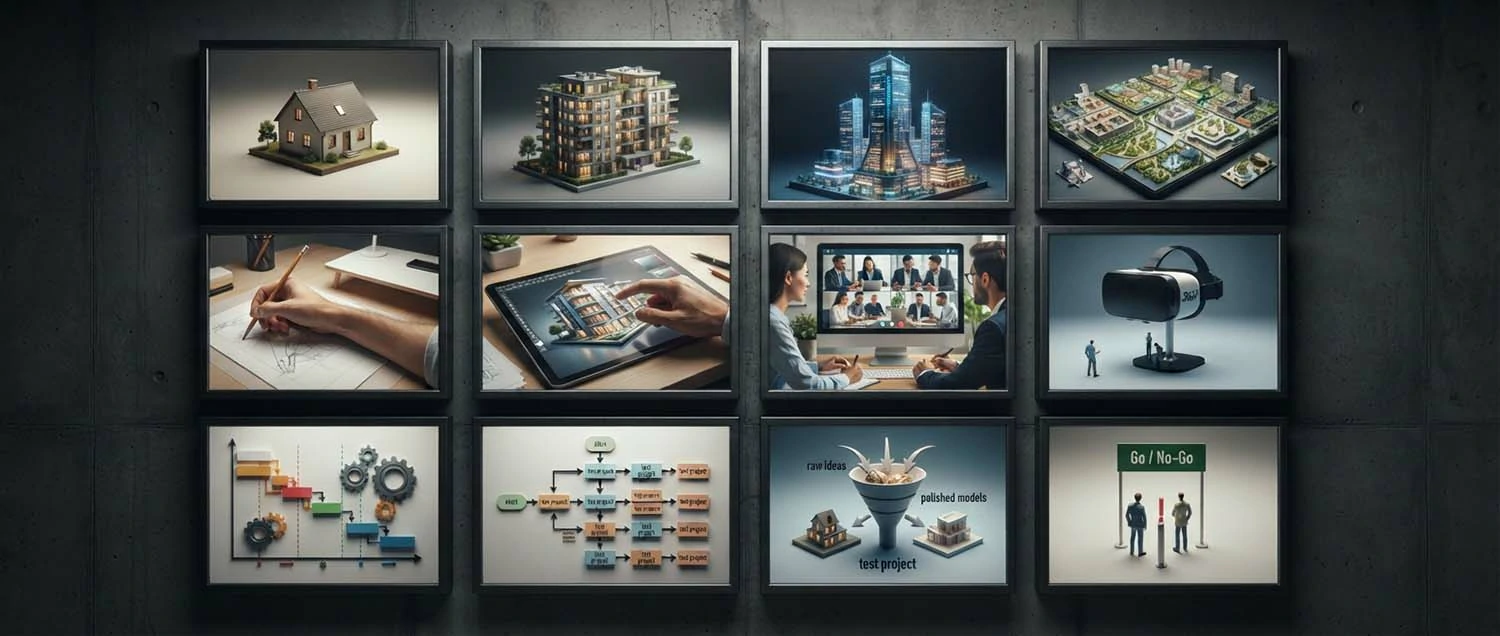
Project type alignment should be your primary consideration when selecting a visualisation firm. Choose firms whose portfolio demonstrates relevant experience with your specific building typology. A firm that excels at luxury hospitality may not be the ideal choice for healthcare or industrial projects. Specialised experience brings relevant techniques, material knowledge, and industry understanding that generalist firms may lack.
Communication style and collaboration approach should match your team preferences. Some firms operate with minimal client involvement, delivering finished images at predetermined milestones. Others favour frequent interaction with regular review sessions and collaborative creative decision-making. Choose a firm whose working style complements your team and project management approach.
Timeline reliability and production capacity are critical evaluation criteria. Ask potential firms about current workload, typical turnaround times, and their capacity to accommodate your schedule requirements. The most professional firms maintain realistic scheduling and communicate proactively about any timeline considerations.
Test projects provide the most reliable assessment of firm capabilities. Many established firms offer paid trial projects that allow you to evaluate quality, communication, and workflow before committing to larger engagements. A test project reveals how the firm handles feedback, manages revisions, and delivers under real project conditions.
Quality Control in Visualisation Firms
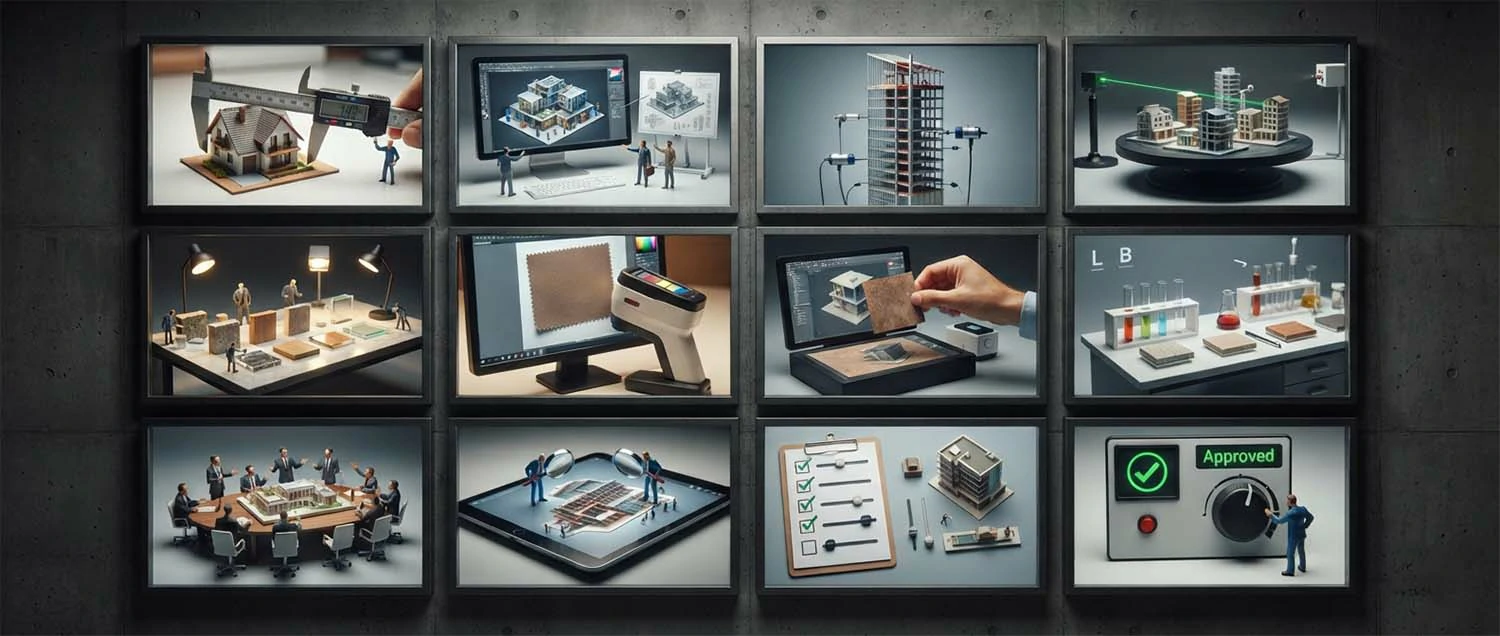
Model accuracy verification is the first quality checkpoint in professional visualisation production. Artists verify that 3D models match architectural drawings precisely, checking dimensions, proportions, and spatial relationships against source documentation. Any discrepancies are identified and resolved before rendering begins, preventing costly rework during later production stages.
Material and colour consistency across multiple images is essential for professional presentation quality. Firms maintain standardised material libraries and colour management workflows ensuring consistent appearance across different views, lighting conditions, and output formats. This consistency builds client confidence and maintains brand integrity across entire project packages.
Peer review processes where senior artists review work before client delivery provide an additional quality assurance layer. Fresh eyes catch subtle issues that project artists may have overlooked during intensive production. This collaborative quality culture ensures only the finest work reaches clients, maintaining firm reputation and client satisfaction.
Technical quality verification checks resolution specifications, colour space accuracy, file format compatibility, and delivery medium requirements. Firms ensure every deliverable meets exact technical specifications for its intended use, from web-optimised digital assets through large-format print production files.
Local vs International Visualisation Firms
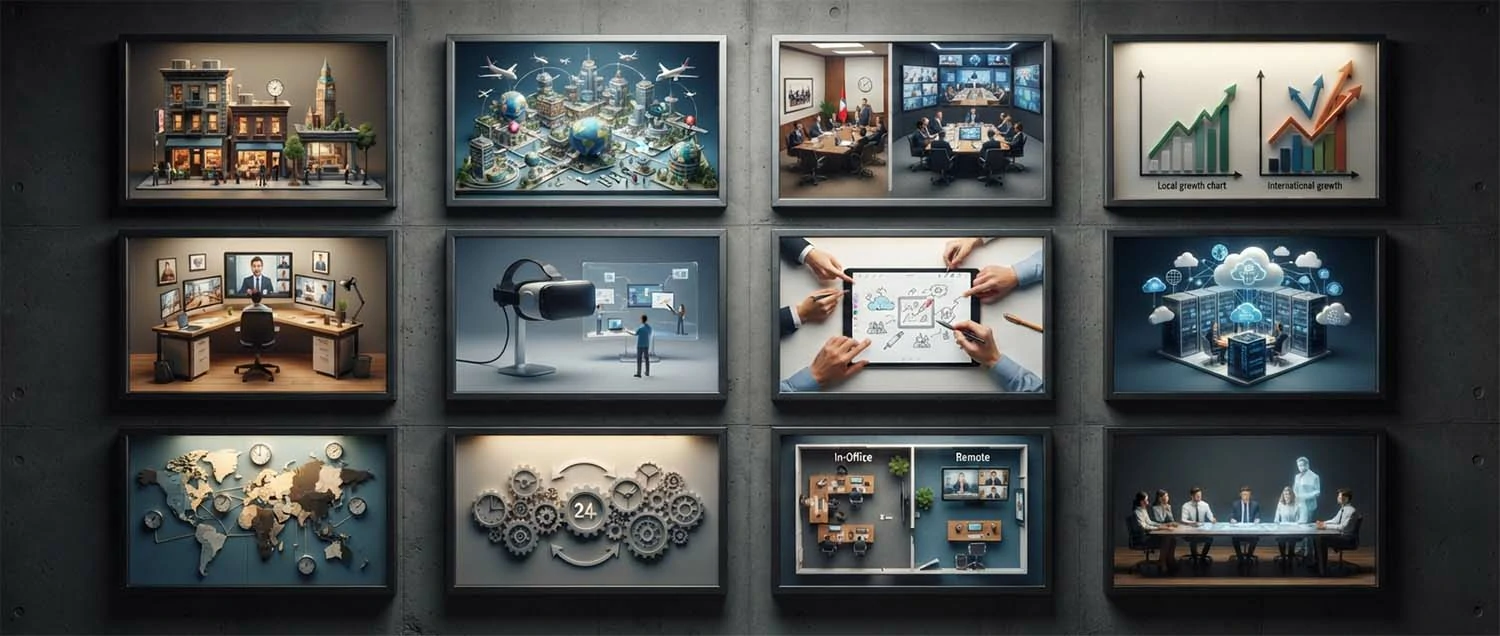
Local visualisation firms offer advantages in site familiarity, regulatory knowledge, and communication convenience. They understand regional architectural styles, local construction methods, and material availability specific to their market. Local firms can visit project sites and meet stakeholders in person, facilitating deeper collaboration and contextual understanding that benefits project outcomes.
International firms bring global perspective and diverse project experience to every engagement. Working across different markets exposes international firms to wider architectural styles, design approaches, and project typologies. This breadth of experience can introduce fresh ideas and innovative techniques to local projects.
Remote collaboration has become seamless through modern communication and project management tools. Time zone differences can actually benefit production when workflow handoffs enable round-the-clock progress on time-sensitive projects. Many successful firms serve international clients across multiple continents efficiently.
Hybrid models combining local coordination with international production resources offer compelling advantages. Some firms maintain offices in multiple countries, providing local client management with global production capabilities. This structure ensures cultural understanding and responsive communication while leveraging worldwide talent and cost efficiencies.
Industry Specialisations
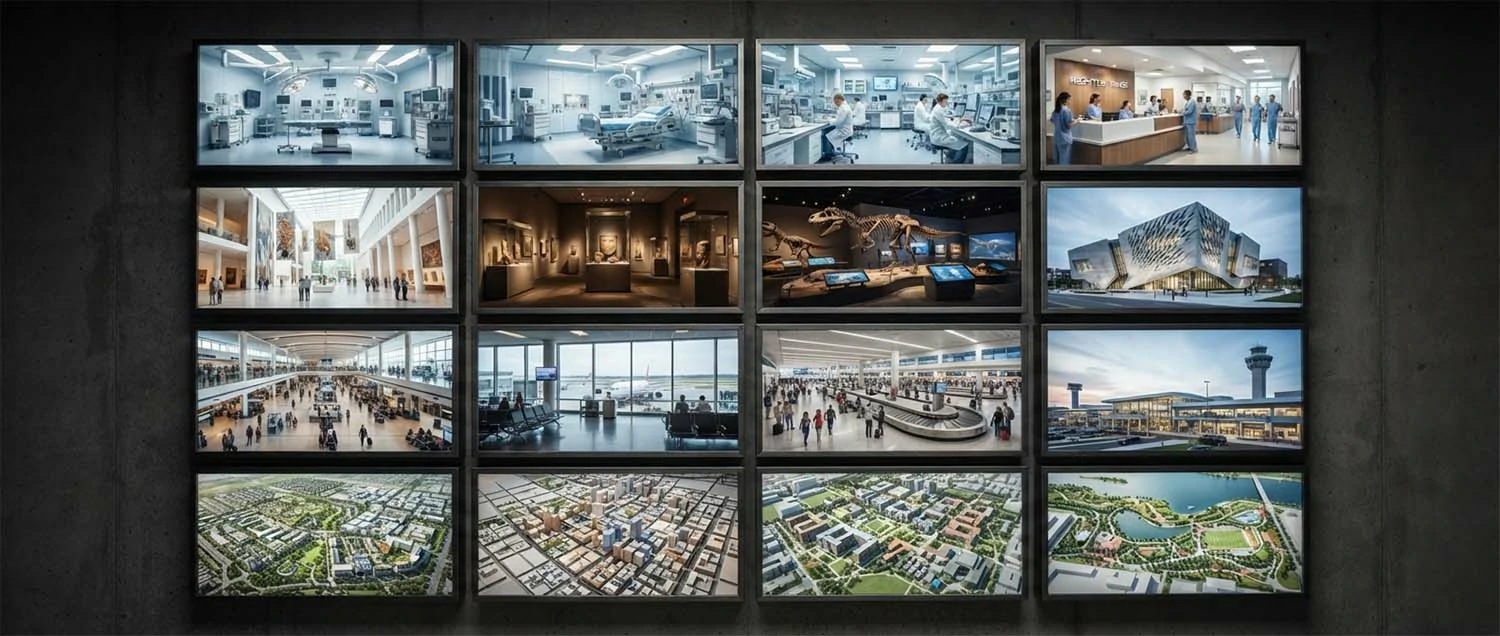
Healthcare visualisation requires understanding of medical facility design principles, infection control requirements, and patient experience considerations. Firms specialising in healthcare rendering must accurately represent clinical environments while maintaining appropriate atmosphere. These specialised visualisations support hospital planning, equipment layout, and wayfinding design.
Education and cultural facility visualisation presents unique challenges in representing learning environments, performance spaces, and museum experiences. These projects demand renderings that capture institutional character, flexible space utilisation, and public engagement potential. Specialist firms understand how to present educational and cultural spaces as inspiring environments that serve their communities.
Transportation and infrastructure visualisation handles major public projects including airports, railway stations, transit hubs, and bridges. These large-scale projects require sophisticated modelling of complex geometries, extensive contextual environments, and clear communication of passenger experience. Firms with infrastructure experience manage enormous scene files and coordinate with multiple stakeholders.
Master planning and urban design visualisation presents whole neighbourhoods, districts, and city quarters. These projects require aerial perspectives, street-level views, phasing diagrams, and comprehensive contextual presentations. Specialist firms excel at managing extensive urban scenes with hundreds of buildings, landscape systems, and infrastructure elements.
Industry Trends and Future Directions
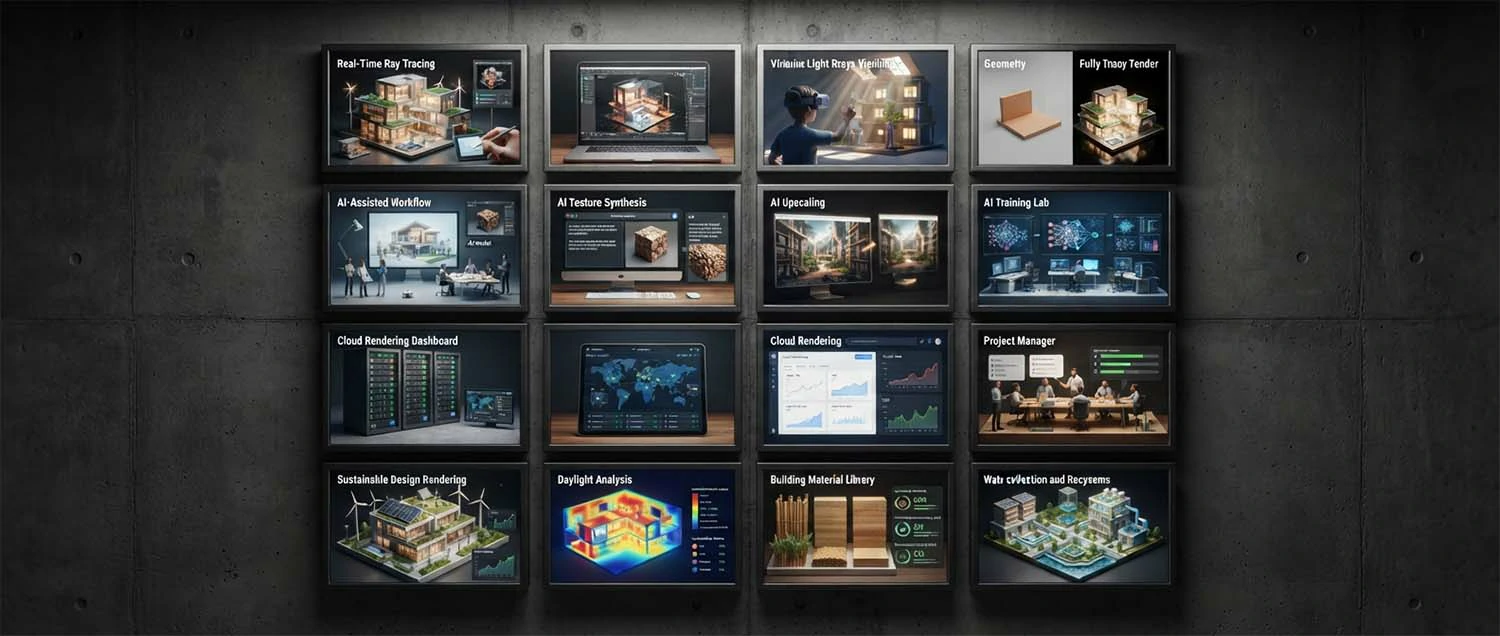
Real-time ray tracing technology is fundamentally transforming firm workflows and client experiences. NVIDIA RTX and similar technologies enable interactive rendering with accurate reflections, shadows, and global illumination that previously required lengthy offline processing. Firms integrating real-time ray tracing offer faster iteration cycles and more collaborative client review sessions.
Artificial intelligence tools are emerging as powerful productivity enhancers across the visualisation pipeline. AI assists with scene population, texture generation, image upscaling, and noise reduction, accelerating routine tasks. While artificial intelligence cannot replace creative judgment and artistic sensibility, it enables artists to focus more time on creative decision-making rather than technical processing.
Cloud rendering services enable firms to scale production capacity elastically without massive capital investment in hardware. Cloud render farms process complex scenes in parallel, dramatically reducing turnaround times for large projects. This technology democratises access to high-performance rendering, allowing smaller firms to compete with larger operations.
Sustainability visualisation is growing rapidly as environmental performance becomes central to architectural practice. Firms develop expertise in rendering green building features, energy performance data visualisation, and ecological context presentation. This capability positions firms for future market demands where sustainability communication will be essential.
Marketing Support from Visualisation Firms
Visualisation firms play an increasingly strategic role in client marketing programmes. High-quality architectural imagery is central to how development projects are presented to buyers, investors, and the public. The most effective firms understand marketing principles and produce visuals that support specific objectives from brand building through direct sales conversion.
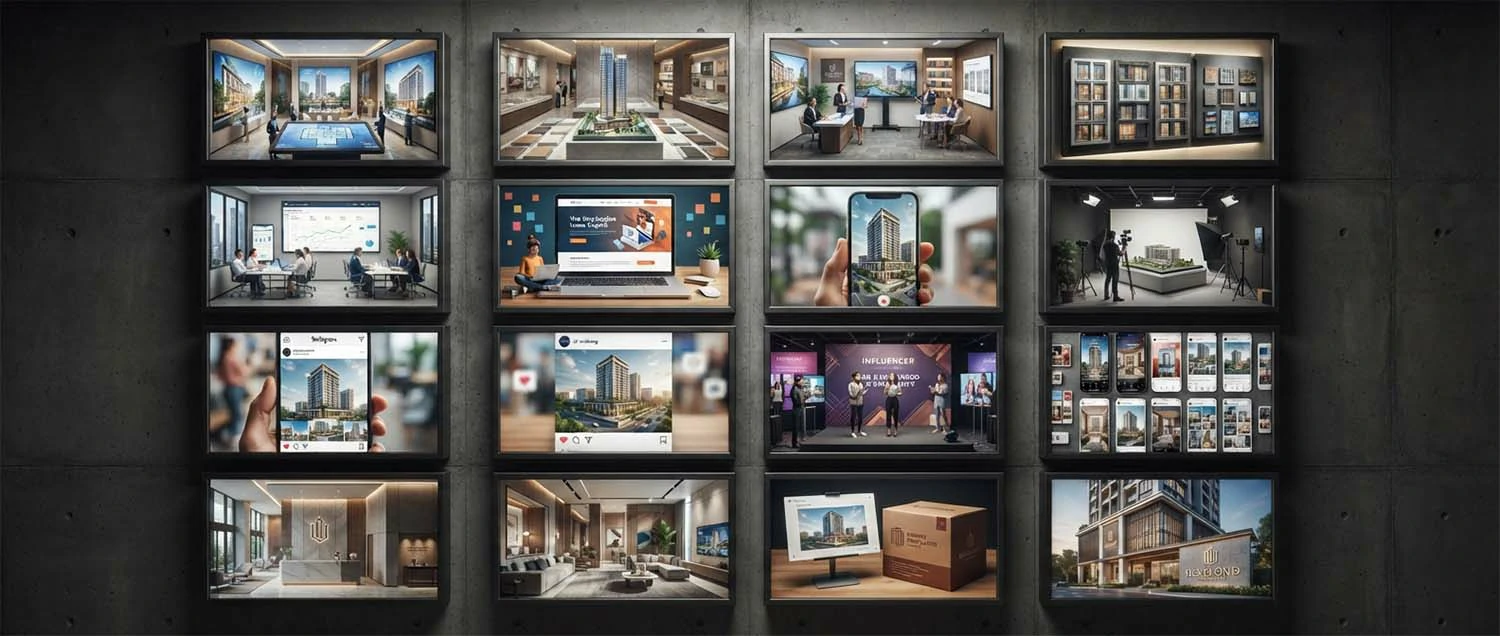
Sales gallery and marketing suite visualisation extends firm services into physical exhibition spaces. Large-format prints, digital displays, and interactive presentations in sales centres depend on high-quality visualisation. Firms produce marketing materials optimised for various display formats from billboards and banners to brochures and digital screens.
Digital marketing content including social media visuals, website imagery, and email campaign assets extends the reach of architectural visualisation. Firms produce content specifically designed for digital platforms, understanding the technical requirements and audience engagement patterns of different online channels and social media platforms.
Brand identity integration ensures visualisations align with developer or architect brand guidelines. Consistent colour palettes, typography, and visual style across all project imagery strengthens brand recognition and professional presentation. Leading firms collaborate with client marketing teams to reflect brand positioning in every visualisation.
Collaborative Workflows with Clients
Successful visualisation projects depend on effective collaboration between firms and their clients. The best firms have developed workflows that integrate seamlessly with their clients design and marketing processes. These workflows respect the clients creative vision while bringing visualisation expertise to enhance project outcomes.
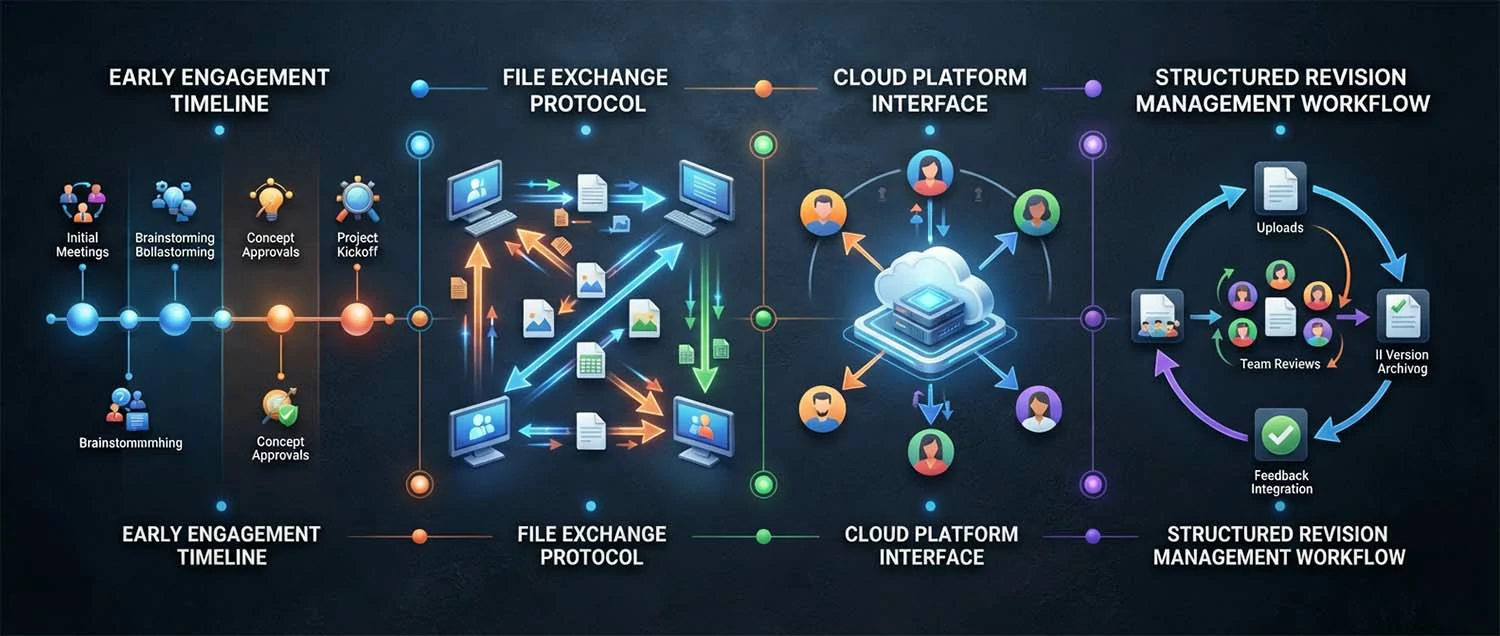
Early engagement of visualisation teams in the design process produces the best results. When firms are involved during schematic design, they can advise on how design decisions will translate into visuals. This early collaboration helps architects make informed choices about materials, lighting, and composition that optimise both design quality and visualisation impact.
File exchange and version control protocols are critical for smooth collaboration. Firms establish clear procedures for receiving updated design files, tracking model versions, and communicating changes effectively. Cloud-based platforms enable real-time file sharing, comment threads, and approval workflows that keep projects moving efficiently.
Structured feedback management ensures client input is captured, addressed, and documented throughout production. Well-defined review rounds with clear deliverables prevent scope creep and ensure each revision cycle moves the project forward. Professional firms use project management tools that provide transparency into project status and revision history.
Legal Considerations When Engaging Firms
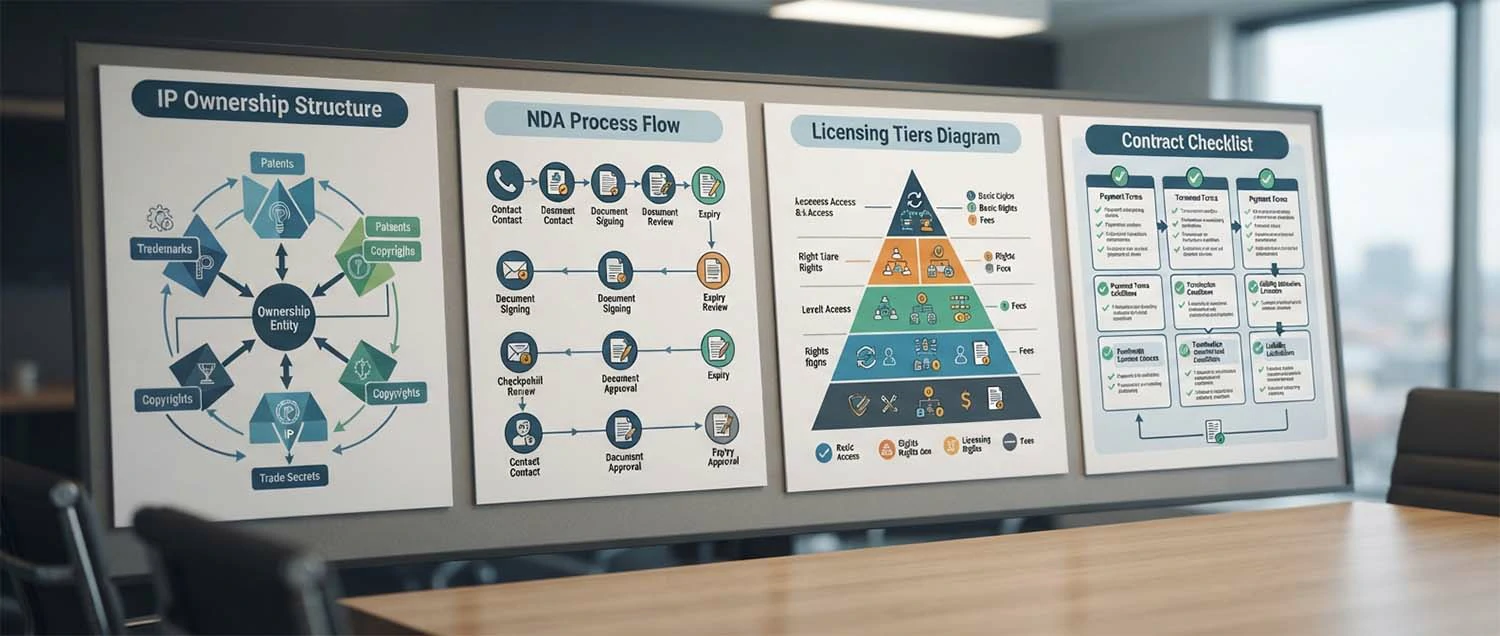
Intellectual property rights are a fundamental legal consideration in visualisation engagements. Ownership of rendered images, source 3D models, and project files should be clearly defined in service agreements. Most commercial arrangements transfer full copyright to clients upon final payment, but terms vary regarding portfolio usage rights and reuse of generic model assets across projects.
Confidentiality and non-disclosure agreements protect sensitive project information throughout the visualisation process. Architectural designs are often proprietary before public announcement, and firms must maintain strict confidentiality. Established firms have standard NDA processes that protect client intellectual property while enabling efficient production.
Licensing and usage rights determine how rendered images can be used across different applications. Standard licences typically cover marketing materials and presentations. Extended licences may be required for large-scale reproduction, broadcast use, or sublicensing. Understanding usage rights prevents unintended copyright infringement and ensures appropriate licensing for each application.
Essential contract terms include scope of work definition, deliverable specifications, payment schedules, revision allowances, timeline commitments, and dispute resolution procedures. Well-drafted contracts protect both parties and prevent misunderstandings. Professional firms use agreements reviewed by legal counsel specialising in creative services and intellectual property.
Project Management in Visualisation Firms
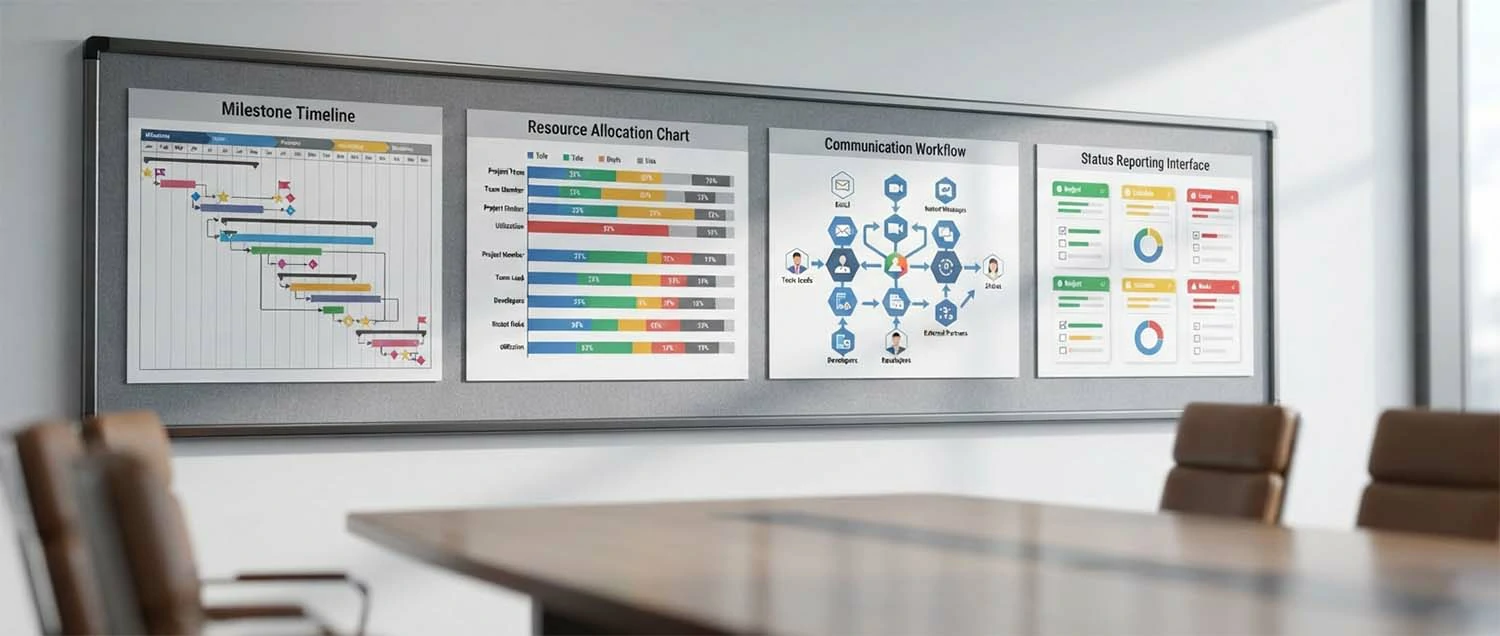
Dedicated project management is a key advantage of engaging professional visualisation firms. Firms assign project managers who serve as the primary client contact, coordinating communication between clients and production teams. Project managers track timelines, budgets, and deliverables, ensuring projects stay on schedule and within agreed scope.
Milestone-based project tracking provides clear progress indicators for clients throughout production. Firms establish project milestones from initial modelling through final delivery, with review points at each stage. This structured approach keeps clients informed and engaged throughout the visualisation process, building confidence and trust.
Resource allocation and capacity planning ensure firms can deliver on their commitments consistently. Production managers assign appropriate artists based on project requirements and individual skill sets. Firms with multiple teams can parallelise work across different project phases, reducing overall production time while maintaining quality.
Communication protocols establish clear expectations for project updates, creative reviews, and milestone approvals. Regular status meetings, written progress reports, and milestone review sessions keep all stakeholders aligned. Professional firms prioritise transparent communication that prevents surprises and builds lasting client relationships.
Sustainable Design Visualisation
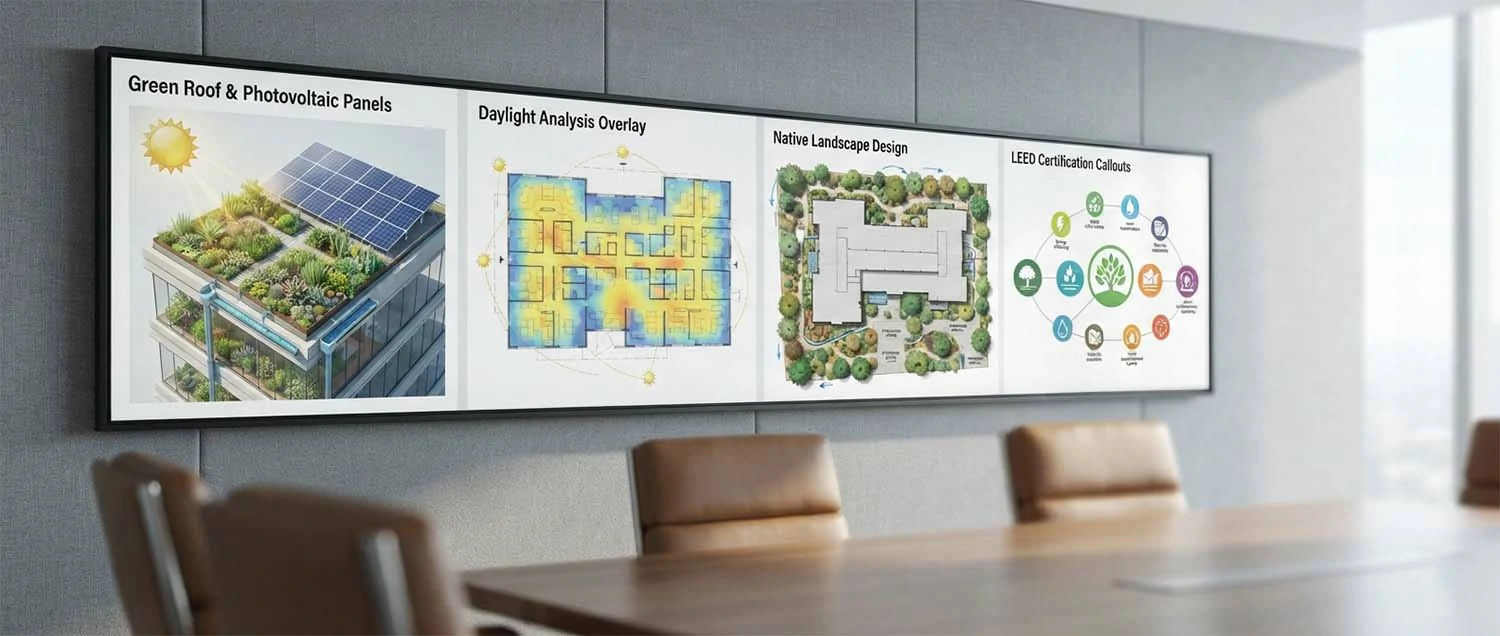
Sustainable design visualisation is an increasingly important capability for architectural visualisation firms. Renderings that showcase green building features, energy-efficient design strategies, and sustainable materials help clients communicate their environmental commitment. Firms with sustainability expertise effectively visualise photovoltaic panels, green roofs, rainwater harvesting systems, and natural ventilation strategies.
Daylight analysis and passive design visualisation demonstrates how buildings perform environmentally. Renderings showing solar penetration patterns, natural ventilation airflow, and thermal performance characteristics help architects and clients understand sustainable design strategies. These analytical visuals combine technical accuracy with compelling presentation.
Green building certification support through visualisation helps projects achieve LEED, BREEAM, WELL, and other sustainability ratings. Renderings that clearly show sustainable design features support certification documentation and stakeholder communication. Knowledgeable firms understand green building standards and incorporate relevant visual indicators.
Biodiversity and ecological landscape visualisation emphasises the environmental context of architectural projects. Renderings showing native plantings, wildlife corridors, and ecological restoration communicate environmental stewardship effectively. These visuals are increasingly important for projects seeking community approval and regulatory permits in environmentally sensitive areas.
Common Mistakes When Choosing a Firm
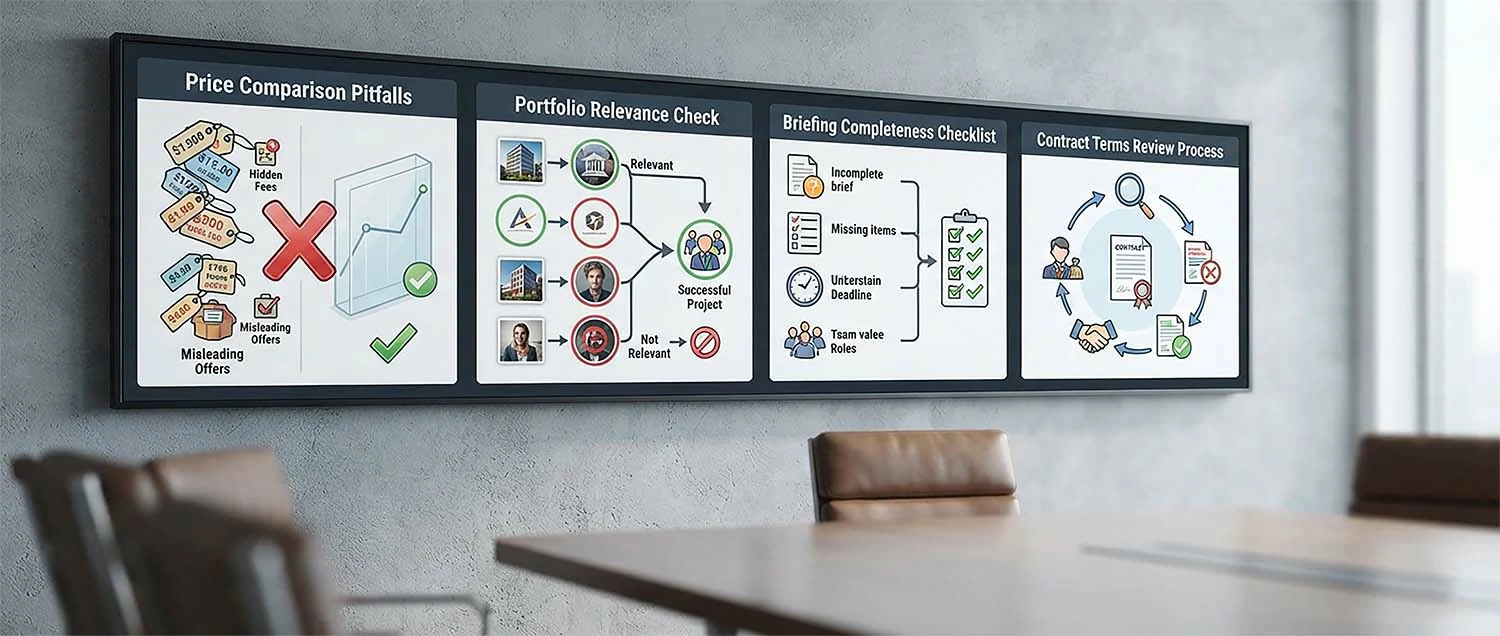
Selecting based on price alone is the most common mistake when engaging visualisation firms. Low-cost firms often compromise on quality, experience, and reliability. The cheapest option rarely delivers the best value considering the impact of visualisation quality on project success and marketing effectiveness.
Failing to review relevant portfolio work leads to mismatched expectations. A firm portfolio may showcase impressive work that differs substantially from your project type. Always request examples that are specifically relevant to your building typology, scale, and design complexity.
Insufficient project briefing creates costly misunderstandings and rework. Providing incomplete documentation or vague creative direction forces firms to make assumptions that may not align with your vision. Comprehensive briefs with reference images, material specifications, and clear creative direction prevent disappointment.
Ignoring revision policies and contract terms creates potential for disputes and budget overruns. Understanding included revisions, change order procedures, payment schedules, and termination clauses protects both parties and ensures smooth project execution from start to finish.
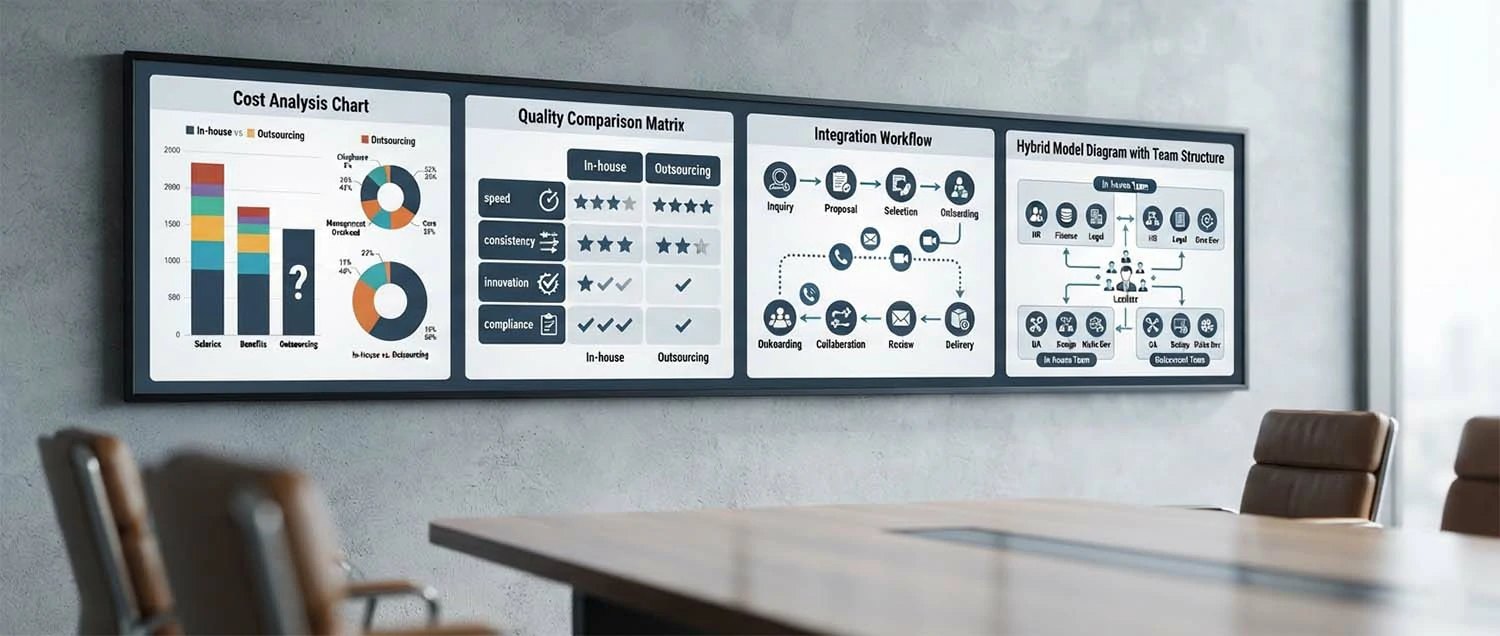
Outsourcing vs In-House Visualisation
The decision between outsourcing visualisation to a specialist firm and building an in-house team is a strategic choice that architectural practices and development companies regularly face. Each approach carries distinct advantages and considerations that affect cost, quality, control, and operational flexibility.
Outsourcing to established visualisation firms provides immediate access to experienced talent, established workflows, and scalable production capacity. Firms bring diverse project experience from working across different architectural styles, project types, and client requirements. This breadth of exposure enriches the visualisation output with techniques and approaches refined across hundreds of projects. Our guide to outsourcing 3D rendering covers how to structure these engagements for the best results.
In-house visualisation teams offer advantages in integration with design processes, immediate availability, and deep understanding of firm-specific design language. Large architectural practices with consistent visualisation volume may benefit from dedicated internal teams that develop intimate knowledge of the practice design philosophy and preferences.
Hybrid models combining internal coordination with external production are increasingly common. Many architectural practices maintain small in-house visualisation teams for quick studies and design development while engaging specialist firms for high-end marketing imagery and complex animation projects. This approach balances cost efficiency with quality outcomes.
The Global Visualisation Firm Landscape
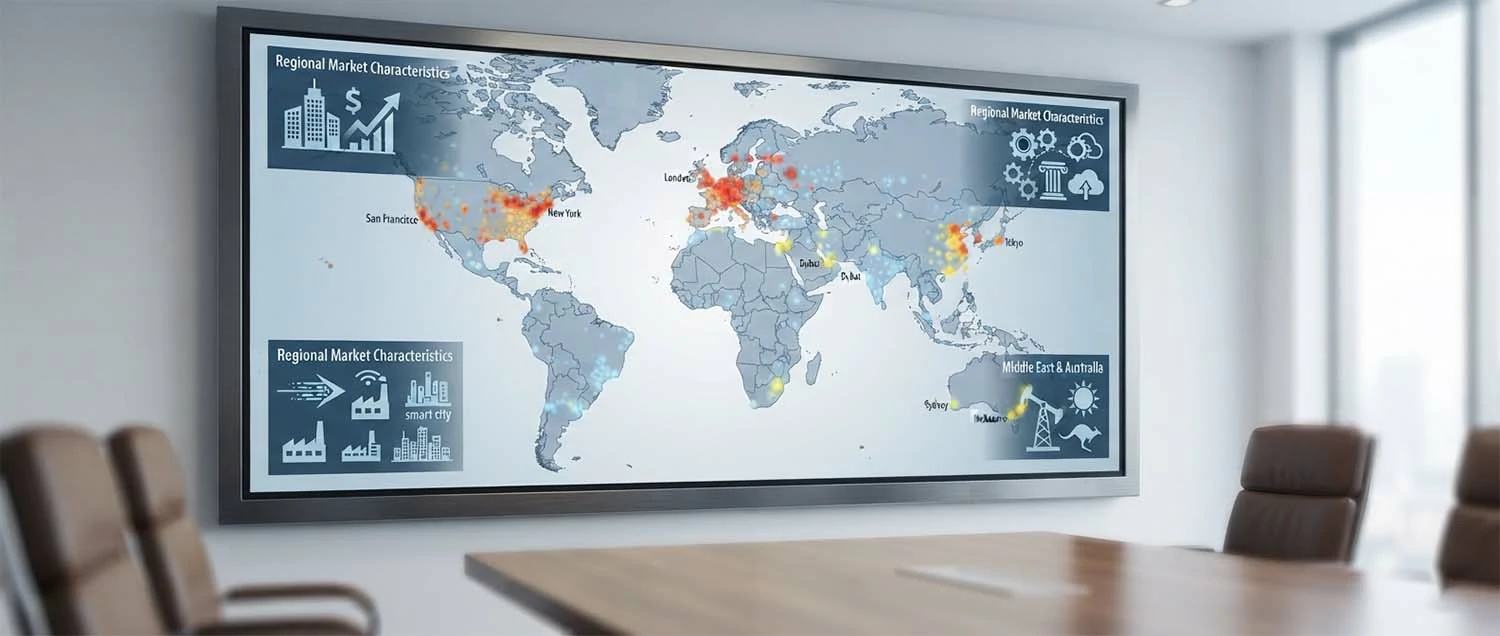
The architectural visualisation industry is truly global, with prominent firms operating across every continent. European visualisation firms, particularly those based in London, Barcelona, and Amsterdam, are recognised for their artistic sophistication and have historically set quality benchmarks for the industry. These firms often work with the world leading architects on high-profile international projects.
North American firms serve the largest single market for architectural visualisation services. The United States and Canadian markets are characterised by high demand from commercial real estate, residential development, and institutional projects. North American firms often emphasise marketing impact and sales conversion alongside architectural accuracy in their work.
Asian visualisation firms, particularly those in China, Singapore, and India, have grown rapidly in capability and market share. These firms often offer competitive pricing while delivering quality that rivals Western studios. The Asian market has driven innovation in high-volume production workflows and real-time visualisation adoption.
Australian and Middle Eastern firms occupy distinctive market positions. Australian studios benefit from strong ties to Asian markets and unique expertise in residential and hospitality visualisation, as covered in our Australian architectural visualisation guide. Middle Eastern firms serve ambitious development programmes in Dubai, Abu Dhabi, and Doha, specialising in luxury and large-scale master planning visualisation.
How Firms Build Their Portfolios
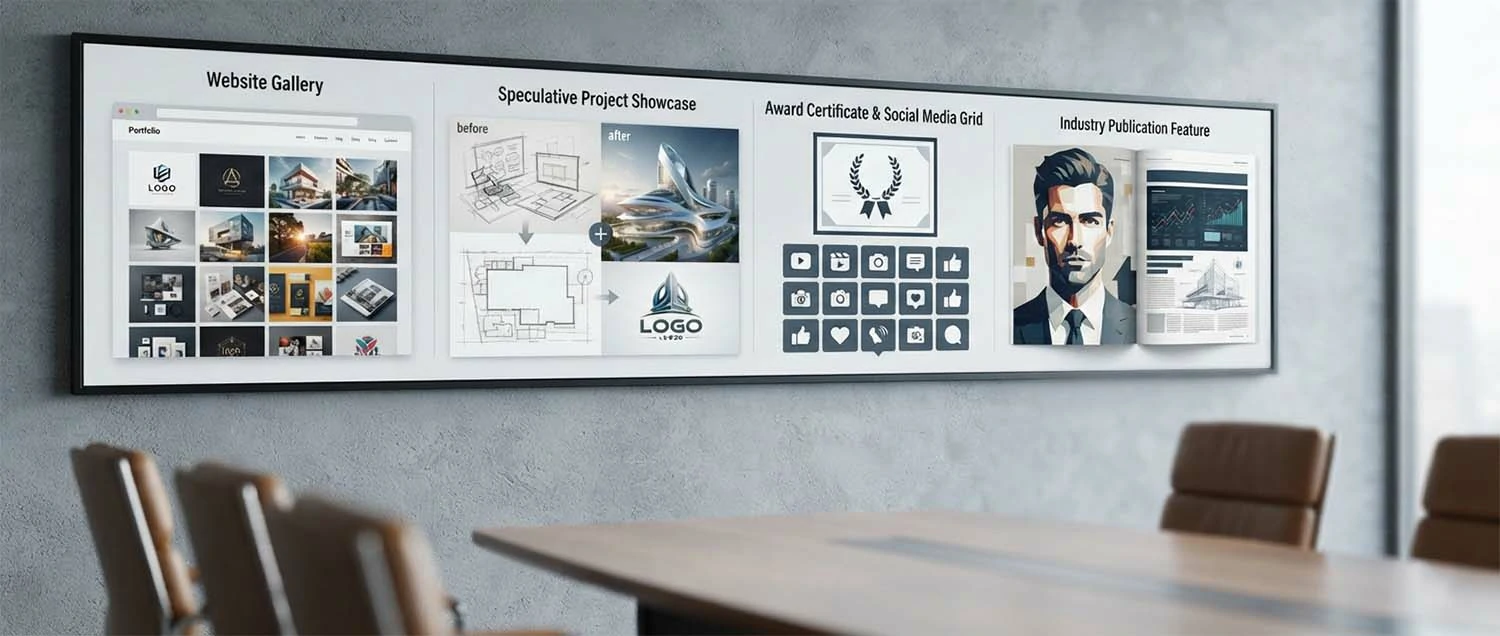
Portfolio development is a strategic priority for visualisation firms, directly influencing the clients and projects they attract. The most successful firms approach portfolio curation as an ongoing process, continuously updating their showcases with their strongest recent work while retiring older pieces that no longer represent current capabilities.
Speculative and self-initiated projects play an important role in portfolio development. Firms sometimes create personal or speculative visualisations that demonstrate creative range, technical skill, and artistic vision beyond what client work alone allows. These passion projects often attract attention from architects seeking fresh visualisation approaches.
Industry recognition through awards, publications, and competition wins validates firm quality and raises market profile. Prestigious visualisation awards and features in architectural publications provide third-party endorsement of firm capability. Firms actively pursue these opportunities as part of their marketing and portfolio strategy.
Digital presence including website portfolios, social media showcases, and online gallery profiles is essential for modern visualisation firms. Instagram and Behance have become important platforms for reaching architects and designers. Firms invest significantly in their digital presentation, understanding that their online portfolio is often the first impression potential clients receive.
Building Long-Term Client Relationships
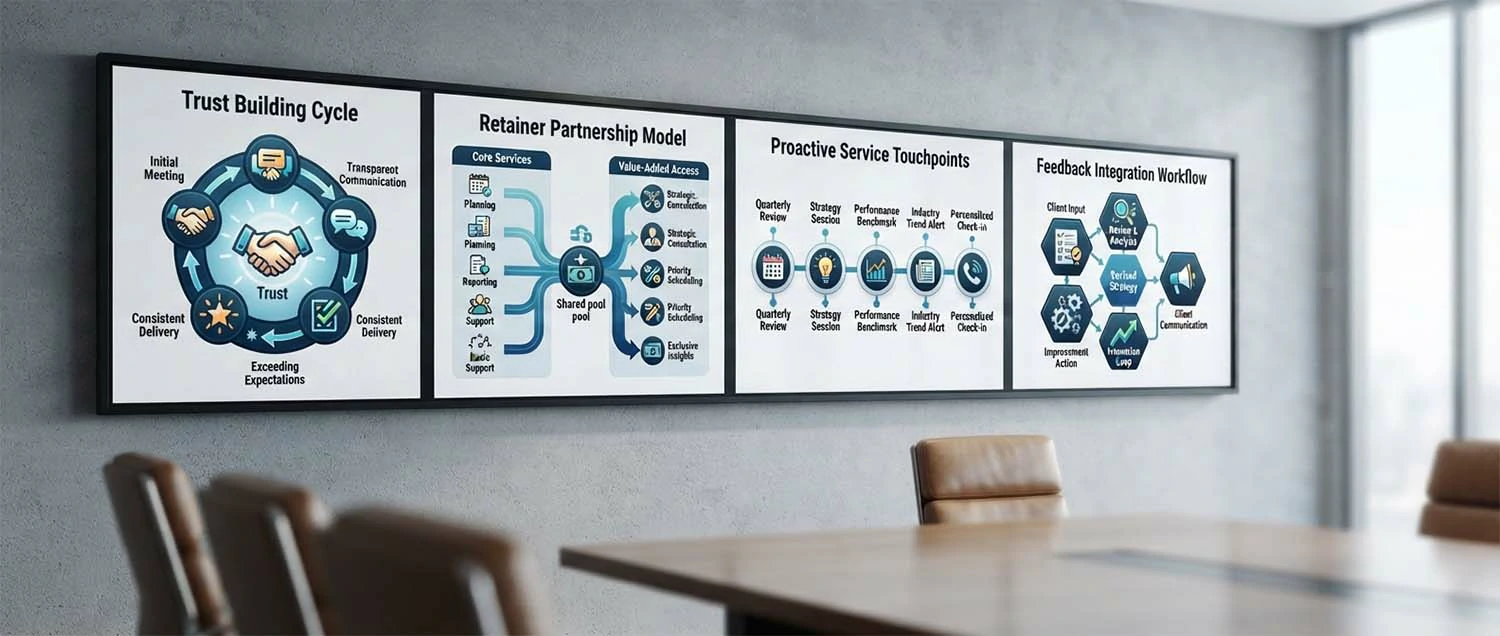
Long-term client relationships are the foundation of successful visualisation firms. Repeat business from satisfied clients provides stable revenue, reduced acquisition costs, and growing efficiency as teams develop familiarity with client preferences. The most successful firms cultivate relationships that span years and even decades.
Trust building through consistent delivery is the primary driver of long-term relationships. Clients return to firms that consistently meet deadlines, maintain quality standards, and communicate professionally. Reliability in the visualisation industry is as valuable as artistic talent, and firms known for dependable delivery build enduring client loyalty.
Proactive service and strategic partnership thinking differentiate exceptional firms from transactional providers. Firms that understand client business objectives, anticipate needs, and offer creative solutions become valued strategic partners rather than merely vendors. This partnership approach leads to deeper engagement and more rewarding professional relationships.
Feedback integration and continuous improvement demonstrate commitment to client satisfaction. Firms that actively seek feedback, track satisfaction metrics, and implement improvements based on client input build reputations for excellence. Regular check-ins and post-project reviews strengthen relationships and identify opportunities for better service.
Starting Your Own Visualisation Firm
Starting an architectural visualisation firm requires a combination of technical skill, business acumen, and industry connections. Many successful firms began as solo operations founded by experienced artists who identified market opportunities and built teams around growing client demand. Understanding the business side of visualisation is essential for sustainable growth.
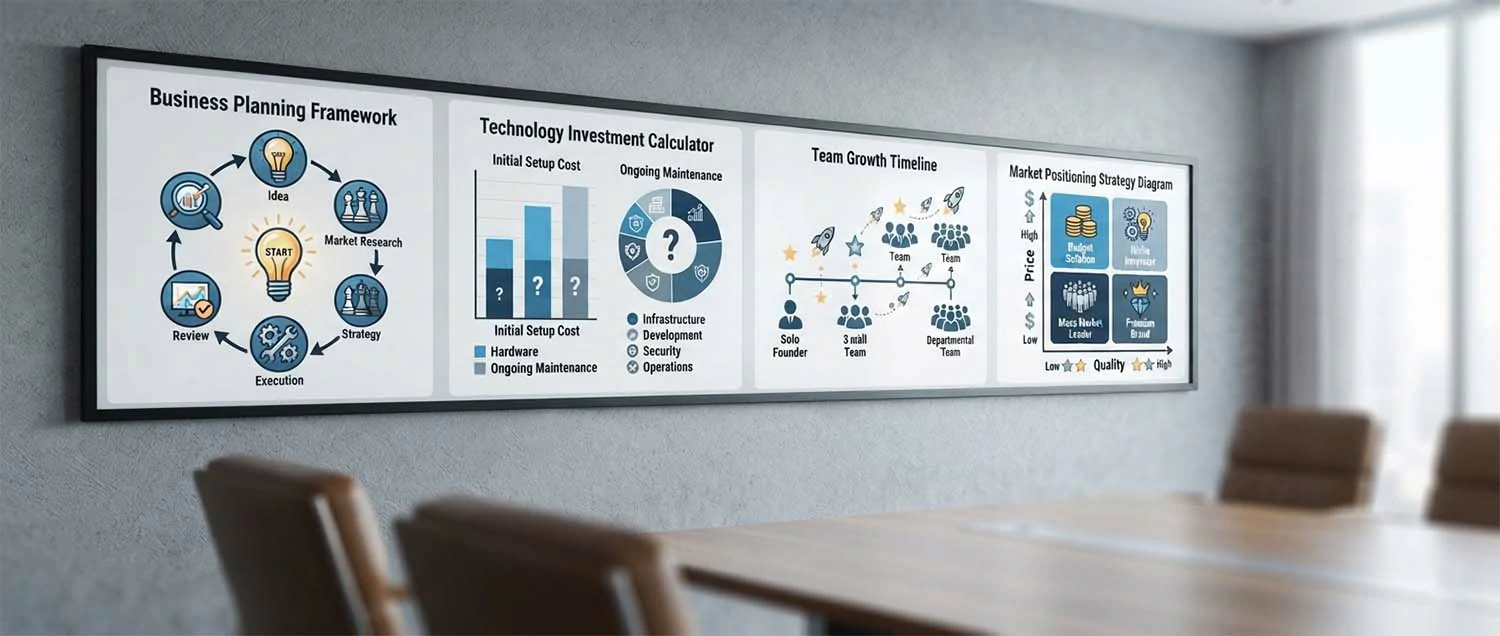
Business planning fundamentals include defining target markets, establishing service offerings, setting pricing structures, and developing marketing strategies. New firms must identify their competitive advantage whether through specialised expertise, superior quality, faster turnaround, or competitive pricing and communicate this clearly to potential clients.
Technology investment decisions are critical for new firms. Balancing software licences, hardware investment, and render farm access against available capital requires careful planning. Many new firms start with cloud rendering services to avoid hardware costs, scaling investment as revenue grows.
Talent acquisition and team building become priorities as firms grow. Recruiting skilled artists, establishing company culture, and developing training programmes are essential for scaling. The most successful growing firms invest in their people, creating environments where talented artists can develop their craft and build careers.
Firm Success Stories and Case Studies
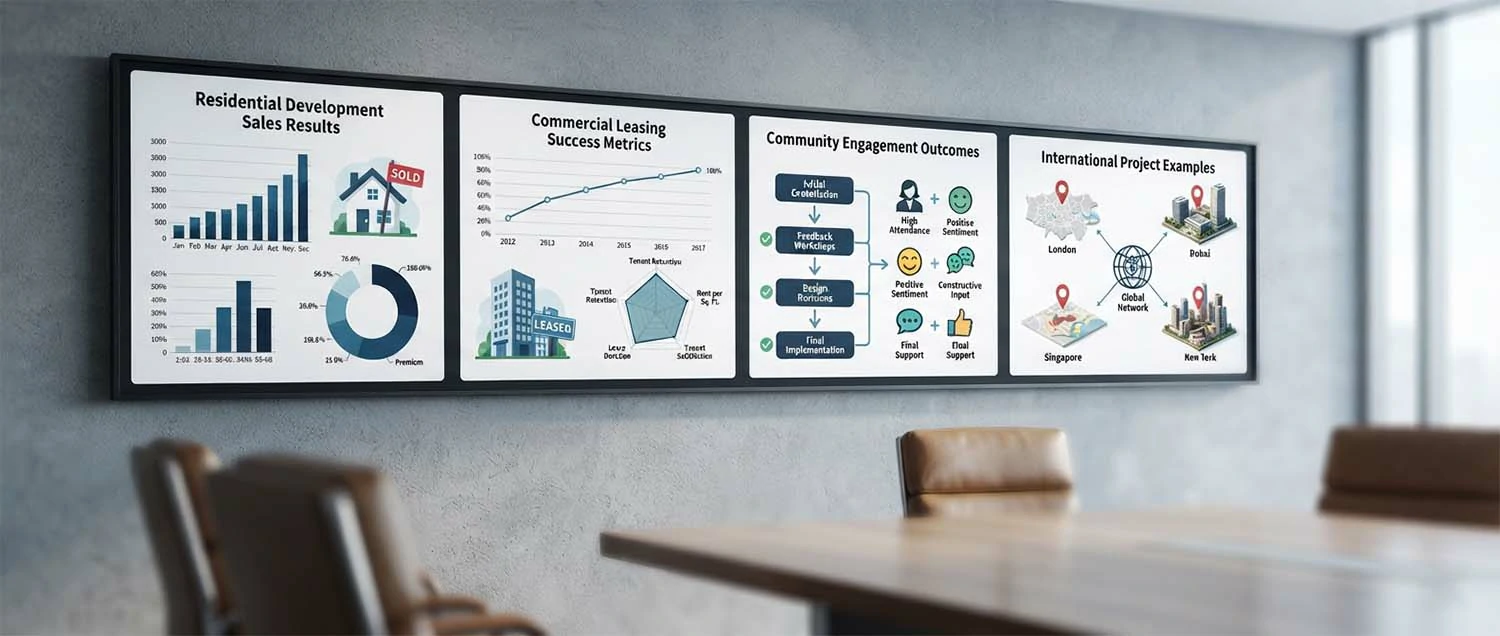
Residential development case studies demonstrate how visualisation firms support pre-sales and marketing campaigns. Renderings that capture the experience of living in a new community help developers achieve sales targets before construction completion. Successful case studies show measurable results including faster sales cycles, higher average prices, and reduced marketing costs.
Commercial project success stories reveal how visualisation accelerated leasing and investment outcomes. Office building renderings that attract premium tenants, retail visuals that secure anchor tenants, and hospitality imagery that drives advance bookings all demonstrate tangible firm impact on commercial project success.
Cultural and civic project case studies show how firms supported public engagement and community approval. Renderings that helped communities understand proposed developments, build support for projects during consultation, and communicate design intent during planning processes demonstrate the broader societal value of professional visualisation.
International project examples demonstrate firm capability to work across different markets, regulatory environments, and cultural contexts. Firms with global experience bring valuable perspective and proven reliability to projects anywhere in the world. Case studies spanning different countries and project types showcase firm versatility and international competence.
Frequently Asked Questions About Visualisation Firms
How long does a visualisation firm typically take to produce renderings? Simple exterior renderings may be completed in one to two weeks. Complex interior scenes with detailed furnishings typically require three to four weeks. Large projects with multiple images, animations, or VR experiences require longer timelines. Discuss scheduling during initial consultation for accurate estimates.
What information do I need to provide to a visualisation firm? Provide architectural drawings or CAD files, material and finish specifications, reference and inspiration images, creative direction notes, site photography, and brand guidelines. Comprehensive briefing helps firms produce accurate images aligned with your vision from the first iteration.
How many revisions are typically included in firm pricing? Most firms include two to three revision rounds in standard pricing packages. Major scope changes or additional revision rounds beyond the included allowance may incur extra charges. Always clarify revision policies and limits before project commencement.
Do I own the copyright to rendered images? Copyright ownership should be clearly defined in your service agreement. Most firms transfer full copyright to clients upon final payment completion. Some firms retain rights to display work in their portfolio. Confirm ownership terms in writing before engaging services.
Can visualisation firms work with BIM models? Yes, many firms integrate BIM data into their visualisation workflow. Revit models and IFC files can be imported into visualisation software while maintaining data integrity. BIM integration ensures design changes are reflected in renderings throughout the project lifecycle.
What resolution will my visualisations be delivered at? Typical output resolutions range from 3000 to 6000 pixels on the longest side for still renderings. Higher resolutions are available for large-format print applications. Discuss specific resolution requirements with your firm before production begins.
Conclusion: Finding Your Ideal Visualisation Partner
Architectural visualisation firms combine artistic excellence, technical mastery, and professional reliability to create imagery that brings architectural visions to life. The firm landscape offers an impressive range of options from boutique artistic studios specialising in high-end residential to large-scale production houses serving global development corporations, each with distinct strengths and specialisations. To benchmark your shortlist, review our roundup of the best 3D architectural visualization companies.
Choosing the right visualisation partner requires careful evaluation of portfolio quality, technical capabilities, industry experience, communication style, and cultural fit. Investment in quality visualisation pays dividends through improved client communication, faster planning approvals, more effective marketing, and ultimately more successful project outcomes.
As technology continues to advance, visualisation firms will offer increasingly sophisticated services including real-time rendering, virtual and augmented reality, AI-assisted workflows, and comprehensive sustainable design visualisation. Firms that embrace innovation while maintaining uncompromising artistic and technical excellence will continue to lead the industry.
Whether you are an architect, developer, interior designer, or real estate professional, the architectural visualisation industry offers exceptional talent capable of transforming your design vision into compelling visual reality. Take time to research and select a firm whose capabilities, experience, and values align with your project goals and working preferences.