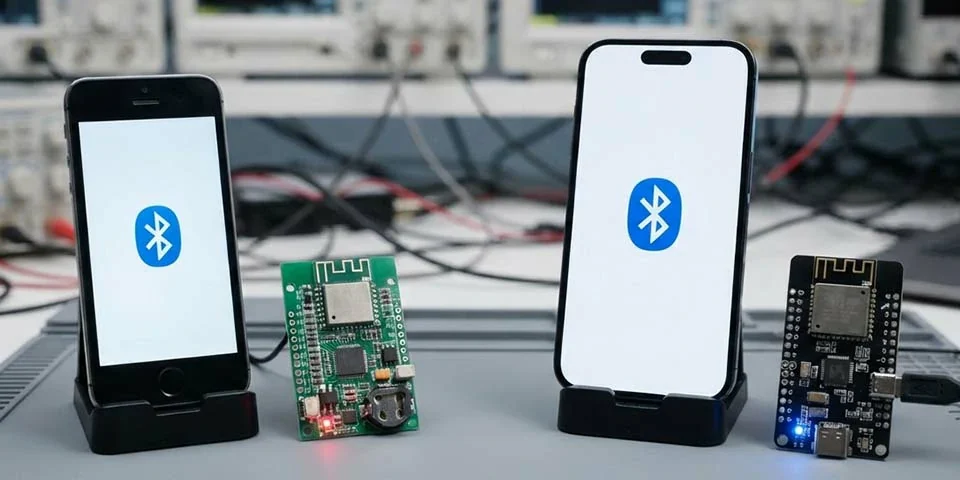
Everything you need to understand Bluetooth 5.2. Explore LE Audio, the LC3 codec, multi-stream audio, broadcast audio, isochronous channels, and how this Bluetooth generation is transforming wireless audio and connectivity.
Explore the Guide
What Is Bluetooth 5.2?
Bluetooth 5.2 is a version of the Bluetooth Core Specification adopted by the Bluetooth Special Interest Group in December 2019 that introduces LE Audio, a revolutionary new architecture for wireless audio transmission over Bluetooth Low Energy, along with the LC3 codec, multi-stream audio, broadcast audio, and enhanced hearing aid support. It represents the most significant advancement in Bluetooth audio since the technology was invented.
Unlike earlier Bluetooth versions that focused on improving range, speed, or broadcasting at the physical layer, Bluetooth 5.2 fundamentally reimagines how audio works over Bluetooth. It introduces an entirely new audio architecture called LE Audio that operates over the Bluetooth Low Energy radio, breaking free from the classic Bluetooth audio framework that had been in place for nearly two decades. This architectural change brings transformative improvements in audio quality, power consumption, latency, and multi-device support.
This comprehensive guide explores 36 essential topics explaining what Bluetooth 5.2 is, how it works, and what it means for consumers, developers, and the wireless industry. Whether you are shopping for new audio devices, developing Bluetooth products, or simply curious about wireless technology evolution, this resource provides the knowledge you need.
Image suggestion: A Bluetooth 5.2 logo alongside a wireless earbud and smartphone showing the LE Audio and LC3 codec badges representing the core features.
Table of Contents
1. Bluetooth 5.2 Definition
2. Release History
3. LE Audio Explained
4. LC3 Codec
5. Isochronous Channels
6. Multi-Stream Audio
7. Broadcast Audio
8. Hearing Aid Support
9. Common Audio Profile
10. Audio Quality
11. Power Efficiency
12. Latency Improvements
13. True Wireless Earbuds
14. Headphones
15. Smartphones
16. Laptops and PCs
17. Automotive Systems
18. Medical Devices
19. Smart Home
20. Gaming
21. Pro Audio
22. Enterprise Use
23. Backward Compatibility
24. Upgrade Requirements
25. Chipset Support
26. Development Tools
27. Certification
28. Market Adoption
29. vs Bluetooth 5.0
30. vs Bluetooth 5.3
31. Security Features
32. Device Pairing
33. Troubleshooting
34. Future Evolution
35. Buying Guide
36. FAQ
Chapter 1
Defining Bluetooth 5.2
Bluetooth 5.2 is a version of the Bluetooth Core Specification that introduces LE Audio, a fundamentally new architecture for transmitting audio over Bluetooth Low Energy, along with associated features including the LC3 codec, multi-stream audio, broadcast audio, and isochronous channels. It was adopted by the Bluetooth Special Interest Group in December 2019.
The Bluetooth 5.2 specification builds on the physical layer improvements introduced in Bluetooth 5.0 and 5.1, adding higher-layer protocol enhancements that primarily focus on audio. The key innovation is the shift from classic Bluetooth audio, which uses the BR-EDR radio with the SCO and eSCO links, to LE Audio, which operates entirely over the Bluetooth Low Energy radio and brings dramatic improvements in efficiency, quality, and flexibility.
Bluetooth 5.2 incorporates the Isochronous Adaptation Layer that enables time-synchronized data delivery essential for multi-channel audio, the LC3 codec that provides superior audio compression efficiency, the Common Audio Profile that ensures interoperability across devices, and several other enhancements that collectively transform the Bluetooth audio experience.
Image suggestion: A Bluetooth 5.2 specification diagram showing the core components including LE Audio, LC3, multi-stream, broadcast, and isochronous channels.
Chapter 2
Release History and Context
Bluetooth 5.2 was adopted by the Bluetooth SIG in December 2019, approximately three years after Bluetooth 5.0 and less than one year after Bluetooth 5.1, reflecting the industry urgency around audio improvements. Understanding the release context helps explain why 5.2 focused so heavily on audio.
When Bluetooth 5.0 arrived in 2016, it fundamentally improved the physical layer with longer range and higher speed, but audio remained tied to the classic Bluetooth architecture. The rise of true wireless earbuds following Apple AirPods launch in 2016 created immense market demand for better wireless audio technology, driving the Bluetooth SIG to prioritize audio innovation in the next specification.
Bluetooth 5.1, released in January 2019, focused on direction finding capabilities for location services. Its rapid succession by 5.2 in December 2019 demonstrates that audio improvements were being developed in parallel and required their own specification version. The LE Audio specification was finalized separately in 2020, with commercial devices beginning to appear in 2021 and 2022.
Image suggestion: A timeline of Bluetooth versions from 4.0 through 5.3 with release dates, key features, and the market context that drove each version development.
Chapter 3
LE Audio Architecture Explained
LE Audio is the central innovation of Bluetooth 5.2, a complete rearchitecture of Bluetooth audio that operates over the Bluetooth Low Energy radio instead of the classic BR-EDR radio, bringing dramatic improvements in efficiency, quality, and capabilities. Understanding LE Audio is key to understanding Bluetooth 5.2.
The classic Bluetooth audio architecture, in use since the early 2000s, relied on the SCO and eSCO links over the BR-EDR radio to transmit audio. This approach was designed when Bluetooth headsets were primarily for phone calls and had significant limitations including higher power consumption, limited audio quality, rigid channel configurations, and inability to support multi-device audio sharing.
LE Audio replaces this with a flexible, packet-based audio transmission system over the LE radio. It uses the Isochronous Adaptation Layer to synchronize audio delivery across multiple channels, the LC3 codec for efficient compression, and the Common Audio Profile for standardized device communication. This architecture enables superior audio quality, longer battery life, multi-stream audio, broadcast audio, and seamless hearing aid integration.
Image suggestion: A side-by-side comparison of the classic Bluetooth audio stack versus the LE Audio stack showing the different protocol layers and radio pathways.
Chapter 4
The LC3 Codec
The Low Complexity Communication Codec is the mandatory audio codec in LE Audio, designed from the ground up to deliver superior audio quality at lower bitrates compared to the legacy SBC codec used in classic Bluetooth audio. LC3 is the most important practical improvement that Bluetooth 5.2 brings to consumers.
LC3 was developed by the Fraunhofer Institute, the same organization behind MP3 and AAC, specifically to address the limitations of SBC. At 192 kbps, LC3 delivers audio quality comparable to SBC at 328 kbps, meaning equivalent quality at nearly half the bitrate. This efficiency translates directly to longer battery life for wireless audio devices and more robust connections in challenging RF environments.
LC3 also features lower algorithmic delay than SBC, approximately 3 milliseconds compared to 5 milliseconds for SBC. This contributes to the overall lower system latency that Bluetooth 5.2 can achieve. The codec performs well across its entire bitrate range, maintaining usable audio quality even at very low bitrates for speech applications, and scales up to deliver excellent quality for music at higher bitrates.
Image suggestion: A codec comparison chart showing SBC versus LC3 audio quality scores at different bitrates with listening test results and efficiency annotations.
Chapter 5
Isochronous Channels
The Isochronous Adaptation Layer introduced in Bluetooth 5.2 enables time-synchronized data delivery, allowing multiple audio streams to be transmitted with precise timing relationships essential for stereo audio, multi-channel sound, and synchronized broadcast reception. IAL is the technical foundation that makes LE Audio features possible.
Isochronous channels are fundamentally different from the traditional connection-oriented or connectionless data channels in Bluetooth. They provide reserved transmission opportunities at regular intervals, ensuring consistent data delivery timing. This is critical for audio where data must arrive at regular intervals to maintain continuous playback without glitches or buffer underruns.
Bluetooth 5.2 defines two types of isochronous channels: connected isochronous streams for point-to-point audio connections like a phone to earbuds, and broadcast isochronous streams for one-to-many audio transmission. Both types use the same underlying timing framework, ensuring consistent synchronization. The IAL enables sub-millisecond timing accuracy across multiple receiving devices.
Image suggestion: A timing diagram showing isochronous channel transmission intervals with synchronized audio data delivery to multiple receiving devices.
Chapter 6
Multi-Stream Audio
Multi-stream audio allows a Bluetooth 5.2 source device to transmit independent, synchronized audio streams to multiple receiving devices simultaneously, eliminating the relay architecture used by Bluetooth 5.0 true wireless earbuds. This feature fundamentally improves the wireless earbud experience.
Before Bluetooth 5.2, true wireless earbuds used a relay system where one earbud received the audio from the phone and forwarded it to the other earbud. This approach had several drawbacks including higher power consumption in the primary earbud causing battery imbalance, increased latency from the relay hop, and a single point of failure where losing the connection between earbuds would disrupt audio.
With Bluetooth 5.2 multi-stream audio, the phone transmits separate left and right audio streams directly to each earbud simultaneously. The isochronous channels ensure both streams are synchronized perfectly. This eliminates the relay latency, balances power consumption between earbuds, improves connection reliability, and enables new use cases like sharing audio between two separate sets of earbuds.
Image suggestion: A comparison diagram showing the 5.0 relay-based earbud architecture versus the 5.2 direct multi-stream architecture with latency and battery life annotations.
Chapter 7
Broadcast Audio
Broadcast audio is a Bluetooth 5.2 feature that enables a single audio source to transmit to an unlimited number of receiving devices using isochronous broadcast channels, creating a one-to-many audio broadcasting capability that was previously impossible with Bluetooth technology. This opens entirely new use cases for public and shared audio.
With broadcast audio, a venue can transmit audio streams that any Bluetooth 5.2 device within range can receive. Airports can broadcast gate announcements directly to travelers earbuds. Movie theaters can provide audio tracks in multiple languages for foreign films. Museums can offer guided tour audio synchronized with exhibit locations. Conference venues can stream translation services to attendees.
Broadcast audio supports multiple simultaneous audio streams on different channels, allowing venues to offer several language options or content types. The broadcasts can be encrypted for private events or left open for public access. Receivers can join and leave broadcasts dynamically without pairing, and the system supports an unlimited number of listeners without signal degradation.
Image suggestion: A broadcast audio use case diagram showing a source transmitting to multiple receivers at an airport, cinema, and museum with language channel options.
Chapter 8
Hearing Aid Support
Bluetooth 5.2 introduces standardized hearing aid support through LE Audio, providing a universal, low-power, high-quality audio streaming standard that works across all hearing aid manufacturers and source devices. This is a transformative improvement for the hearing aid industry.
Before Bluetooth 5.2, hearing aid Bluetooth support was fragmented. Some hearing aids used proprietary protocols, others used ASHA, and many were incompatible with certain smartphones. Users often faced the frustrating situation where their hearing aids worked with one phone model but not another, or could stream audio from some apps but not others.
Bluetooth 5.2 LE Audio solves this with standardized hearing aid profiles that ensure any hearing aid supporting LE Audio will work with any LE Audio source device. The low power consumption of LE Audio is critical for hearing aids where battery life is measured in days rather than hours. Multi-stream audio enables independent left and right hearing aid processing. Broadcast audio allows hearing aids to connect directly to public audio systems in venues.
Image suggestion: A hearing aid streaming diagram showing a smartphone transmitting audio directly to both hearing aids with LE Audio multi-stream and profile interoperability.
Chapter 9
Common Audio Profile
The Common Audio Profile is a Bluetooth 5.2 specification that defines how LE Audio devices discover, connect, and communicate with each other, ensuring interoperability across different manufacturers and device types. CAP is the interoperability layer that makes the LE Audio ecosystem work.
CAP standardizes the discovery and connection process for LE Audio devices, defining how devices advertise their capabilities, how source and sink devices establish audio streams, how multi-stream configurations are negotiated, and how broadcast audio sessions are announced and joined. It replaces the various audio profiles from classic Bluetooth with a unified framework.
Under CAP, devices declare their support for specific use cases including stereo music streaming, hands-free calling, hearing aid streaming, and broadcast reception. The profile ensures that a phone from one manufacturer can seamlessly connect to earbuds from another manufacturer and automatically configure the optimal audio setup without user intervention.
Image suggestion: A Common Audio Profile discovery and connection sequence diagram showing device capability exchange and stream setup between a phone and earbuds.
Chapter 10
Audio Quality Improvements
Bluetooth 5.2 with LE Audio delivers perceptibly better audio quality than classic Bluetooth audio at the same bitrate, thanks to the LC3 codec efficiency gains, enabling richer, more detailed sound reproduction across all types of audio content. The quality difference is noticeable to most listeners.
Classic Bluetooth audio with the mandatory SBC codec at its default settings produces acceptable quality for casual listening but exhibits audible artifacts with complex music. High frequencies can sound compressed, transients can be smeared, and stereo imaging can be less precise. While optional codecs like AAC and aptX improve quality, they are not universally supported across all devices.
LC3 at its default 192 kbps bitrate delivers audio quality comparable to SBC at 328 kbps, providing clearer high frequencies, better transient response, and more accurate stereo imaging. At higher bitrates like 256 kbps, LC3 performance approaches that of high-quality codecs like aptX HD. The mandatory nature of LC3 in LE Audio means all Bluetooth 5.2 devices will support this improved quality baseline.
Image suggestion: An audio quality spectrum comparison showing SBC versus LC3 frequency response and distortion measurements at equivalent bitrates.
Chapter 11
Power Efficiency
Bluetooth 5.2 with LE Audio achieves significantly better power efficiency than classic Bluetooth audio, reducing energy consumption by 30 to 50 percent for the same listening duration, extending battery life for wireless audio devices. Power efficiency is one of the most practically valuable benefits of Bluetooth 5.2.
The power savings come from multiple architectural improvements. LE Audio operates over the Bluetooth LE radio which has fundamentally lower power consumption than the classic BR-EDR radio used by traditional Bluetooth audio. The LC3 codec requires fewer bits to transmit the same audio quality, reducing radio active time. Multi-stream audio eliminates the power-hungry relay in true wireless earbuds.
In real-world usage, Bluetooth 5.2 earbuds can achieve several additional hours of playback time compared to equivalent 5.0 models. For hearing aids, where battery life is critical, the power savings can mean the difference between all-day and multi-day usage. The efficiency gains are particularly noticeable in smaller devices where battery capacity is constrained by physical size limitations.
Image suggestion: A power consumption comparison graph showing classic Bluetooth audio versus LE Audio battery drain rates for the same listening duration with percentage savings.
Chapter 12
Latency Improvements
Bluetooth 5.2 with LE Audio achieves significantly lower audio latency compared to classic Bluetooth audio, with end-to-end delays as low as 20 to 30 milliseconds in optimized implementations, compared to 100 to 300 milliseconds for typical Bluetooth 5.0 audio. This makes 5.2 much better suited for gaming and video content.
The latency improvement comes from several factors. LC3 has a lower algorithmic delay than SBC, approximately 3 milliseconds versus 5 milliseconds. The isochronous channels provide precise timing that reduces buffering requirements. The elimination of the relay in multi-stream audio removes the additional latency of forwarding audio from one earbud to another.
For video watching, the lower latency reduces the lip-sync gap to imperceptible levels. For gaming, audio cues arrive in time with visual events rather than noticeably behind. For voice calls, the reduced delay makes conversations feel more natural. For professional audio monitoring, the low latency makes wireless in-ear monitors viable for live performance.
Image suggestion: A latency comparison chart showing classic Bluetooth audio, LE Audio, and wired audio delay measurements for different use cases.
Chapter 13
True Wireless Earbuds
Bluetooth 5.2 transforms the true wireless earbud experience with multi-stream audio that eliminates the relay architecture, providing balanced battery life between earbuds, lower latency, and more reliable connections. The difference is immediately noticeable for daily earbud users.
With Bluetooth 5.0 true wireless earbuds, the primary earbud handles the connection to the phone and relays audio to the secondary earbud. This causes the primary earbud to drain battery faster, leading to the common complaint where one earbud dies before the other. The relay also adds latency and creates a dependency where losing the inter-earbud connection disrupts audio.
True wireless earbuds with Bluetooth 5.2 receive independent streams directly from the phone, eliminating the relay. Both earbuds have balanced power consumption, battery life is extended, and connection reliability improves because each earbud maintains its own independent connection. Audio synchronization is also tighter thanks to the isochronous channel timing.
Image suggestion: A cross-section illustration of true wireless earbuds showing the internal components and connection architecture for Bluetooth 5.2 multi-stream.
Chapter 14
Wireless Headphones
Bluetooth 5.2 headphones benefit from improved audio quality through the LC3 codec, longer battery life through LE Audio power efficiency, and lower latency for video and gaming content. Over-ear and on-ear headphones see significant improvements from the Bluetooth 5.2 transition.
For over-ear headphones, the LC3 codec delivers noticeably better audio quality, especially at the moderate bitrates that balance quality and battery life. The power efficiency of LE Audio translates to longer listening sessions between charges, with many Bluetooth 5.2 headphones achieving over 40 hours of playback time with active features enabled.
Bluetooth 5.2 headphones also benefit from multi-stream audio for features like separate game audio and voice chat mixing. Broadcast audio reception allows headphones to receive public audio streams in compatible venues. The Common Audio Profile ensures seamless switching between audio sources, making multipoint connections more reliable and easier to manage.
Image suggestion: A pair of Bluetooth 5.2 over-ear headphones with feature callouts showing LC3 support, battery life, and multipoint connectivity capabilities.
Chapter 15
Smartphone Bluetooth 5.2 Support
Smartphone Bluetooth 5.2 support has become standard in most devices released since 2021, enabling users to take advantage of LE Audio audio quality and battery life improvements when paired with compatible accessories. The smartphone is the most common Bluetooth 5.2 source device for consumers.
Apple introduced Bluetooth 5.2 support with the iPhone 13 series in 2021. Samsung followed with the Galaxy S22 series in 2022. Google included 5.2 in the Pixel 6 series. As of 2026, virtually all new smartphones at every price point include Bluetooth 5.2 or later, making the technology widely accessible to consumers upgrading their phones.
It is important to note that a Bluetooth 5.2 phone only provides LE Audio benefits when paired with Bluetooth 5.2 audio accessories that also support LE Audio. When connected to older Bluetooth 5.0 earbuds or headphones, the phone will fall back to classic Bluetooth audio. To experience the full benefits, both the phone and the audio device must support Bluetooth 5.2 LE Audio.
Image suggestion: A smartphone Bluetooth settings screen showing LE Audio support information and a compatibility chart of phone models with Bluetooth 5.2.
Chapter 16
Laptop and Desktop Support
Laptop and desktop computer Bluetooth 5.2 support has been slower to arrive than smartphone support but is becoming standard in newer devices and is easily added through USB adapters for existing computers. Many users can upgrade their computers to Bluetooth 5.2 affordably.
Starting in 2023, newer laptops began shipping with Bluetooth 5.2 and 5.3 chipsets. Desktop computers typically require a USB Bluetooth adapter, and 5.2 USB adapters are available for under twenty dollars, making upgrading affordable. M.2 wireless cards for desktop motherboards also offer Bluetooth 5.2 support.
For laptop and PC users, upgrading to Bluetooth 5.2 provides better audio quality with LE Audio compatible headphones, lower latency for video conferencing and gaming, improved connection stability with multiple Bluetooth peripherals connected simultaneously, and reduced power consumption for battery-powered laptops.
Image suggestion: A USB Bluetooth 5.2 adapter and laptop showing how to upgrade a computer along with compatibility information for operating systems.
Chapter 17
Automotive Applications
Bluetooth 5.2 brings significant improvements to automotive audio systems, with LE Audio enabling higher quality hands-free calling, multi-stream audio for personalized in-car entertainment, and broadcast audio for vehicle announcements. The automotive industry is an important adopter of Bluetooth technology.
In-car hands-free calling benefits from the LC3 codec superior voice quality, which provides clearer speech transmission even with road noise and cabin acoustics. The power efficiency of LE Audio is less critical in cars where power is abundant, but the quality and reliability improvements are valuable for the premium in-car experience that automakers seek to deliver.
Multi-stream audio enables vehicles to transmit separate audio streams to different passengers, allowing personalized listening without interference. Broadcast audio can be used for in-vehicle public address systems or for transmitting navigation instructions to passengers devices. Bluetooth 5.2 also improves the phone key experience with more reliable connections for vehicle access and start.
Image suggestion: An in-car Bluetooth 5.2 system showing hands-free calling, multi-stream audio for passengers, and phone key connectivity in a modern vehicle.
Chapter 18
Medical Device Applications
Bluetooth 5.2 has particularly important applications in medical devices, especially hearing aids, where LE Audio standardized support, low power consumption, and broadcast audio capability address critical needs. The medical device industry is one of the most significant beneficiaries of Bluetooth 5.2.
Beyond hearing aids, Bluetooth 5.2 benefits other medical audio applications including speech therapy devices, audiology testing equipment, patient communication systems, and assistive listening devices for hospital environments. The standardized profiles ensure medical devices from different manufacturers can interoperate reliably.
Broadcast audio is particularly valuable in healthcare settings where patients can receive public address announcements or entertainment audio through their personal hearing aids or headphones. The low latency of LE Audio is beneficial for real-time communication between patients and caregivers. The power efficiency supports the long battery life requirements of medical devices.
Image suggestion: Medical devices using Bluetooth 5.2 including hearing aids, patient monitors, and assistive listening devices in a healthcare environment.
Chapter 19
Smart Home Integration
Bluetooth 5.2 enhances smart home audio applications with better quality wireless speakers, multi-room audio synchronization through broadcast audio, and improved voice assistant performance through LE Audio clearer voice capture. Smart speakers and home audio systems benefit from the Bluetooth 5.2 improvements.
Bluetooth 5.2 smart speakers can deliver higher quality music streaming using the LC3 codec, with better fidelity and longer battery life for portable speakers. Multi-stream audio enables synchronized playback across multiple speakers in different rooms without the complexity of Wi-Fi based multi-room systems.
Broadcast audio in the smart home allows a single source like a television to transmit audio to speakers throughout the home, creating a whole-home audio experience. Voice assistants on smart speakers benefit from better audio quality for both playback and voice capture through the LE Audio bidirectional capabilities.
Image suggestion: A smart home audio system with Bluetooth 5.2 speakers in multiple rooms receiving synchronized broadcast audio from a central source.
Chapter 20
Gaming Applications
Bluetooth 5.2 with LE Audio addresses the long-standing latency problem that has made Bluetooth less suitable for gaming, bringing end-to-end audio latency down to levels that approach dedicated wireless gaming solutions. This makes Bluetooth 5.2 a viable option for wireless gaming audio.
Classic Bluetooth audio latency of 100 to 300 milliseconds is problematic for gaming where audio cues must align with visual events. Players often notice that gunshot sounds or footsteps arrive noticeably after the corresponding visual action, creating a disconnect that affects gameplay and immersion. Many competitive gamers avoid Bluetooth for this reason.
Bluetooth 5.2 with LC3 and optimized LE Audio implementations can achieve latency below 30 milliseconds, making it suitable for all but the most competitive gaming scenarios. Multi-stream audio also enables separate handling of game audio and voice chat, allowing each to be optimized independently for the best overall experience.
Image suggestion: A gaming setup with Bluetooth 5.2 wireless headset and controller showing latency measurements and game audio versus voice chat separation.
Chapter 21
Professional Audio
Professional audio applications are a new frontier for Bluetooth 5.2, with LE Audio low latency and multi-channel capabilities making Bluetooth viable for wireless microphones, in-ear monitors, and assistive listening systems in professional settings. This represents a significant market expansion for Bluetooth.
Before Bluetooth 5.2, professional audio relied on proprietary wireless systems that were expensive, required dedicated frequency coordination, and were incompatible between manufacturers. Bluetooth was considered inadequate due to latency, quality, and reliability limitations. LE Audio changes this equation dramatically.
Wireless microphones using Bluetooth 5.2 can deliver broadcast-quality audio with low latency suitable for live performance. In-ear monitors receive independent mixes through multi-stream audio. Assistive listening systems in theaters and conference venues use broadcast audio to transmit to audience members personal devices, eliminating the need for dedicated receivers.
Image suggestion: A professional audio setup with Bluetooth 5.2 wireless microphones, in-ear monitors, and broadcast audio receivers in a live performance venue.
Chapter 22
Enterprise Applications
Enterprise applications of Bluetooth 5.2 center on broadcast audio for public address and assistive listening in commercial venues, along with improved hands-free communication for workers using wireless headsets throughout their workday. Commercial environments benefit significantly from Bluetooth 5.2 capabilities.
Airports, train stations, and bus terminals can deploy Bluetooth 5.2 broadcast audio systems that transmit departure announcements and gate changes directly to travelers personal devices. This improves the traveler experience and reduces the need for loudspeaker announcements that contribute to noise pollution.
Conference centers can offer multi-language broadcast channels for international events, allowing attendees to listen to translations in their preferred language through their own devices. Warehouse and logistics workers benefit from Bluetooth 5.2 headsets with better voice quality and longer battery life for hands-free communication throughout their shifts.
Image suggestion: An enterprise deployment showing broadcast audio at an airport gate, multi-language conference translation, and warehouse headset communication.
Chapter 23
Backward Compatibility
Bluetooth 5.2 maintains full backward compatibility with all previous Bluetooth versions, ensuring that Bluetooth 5.2 devices can communicate with Bluetooth 5.0, 4.2, and earlier devices for basic functionality and audio streaming. This backward compatibility is essential for the gradual adoption of LE Audio.
When a Bluetooth 5.2 phone connects to a Bluetooth 5.0 headset, the devices negotiate the highest mutually supported feature set. Since the headset does not support LE Audio, the connection uses classic Bluetooth audio with the SBC codec. The user gets the same audio experience they would have with a Bluetooth 5.0 phone, with no loss of functionality.
Similarly, a Bluetooth 5.0 phone connecting to Bluetooth 5.2 earbuds will use classic Bluetooth audio rather than LE Audio. The earbuds must support both classic audio and LE Audio to work with both old and new source devices. Most Bluetooth 5.2 audio products include both classic and LE Audio support for maximum compatibility.
Image suggestion: A compatibility matrix showing Bluetooth 5.2, 5.0, and 4.2 devices connecting to each other with the features and codecs available for each pairing.
Chapter 24
Upgrade Requirements
Upgrading to Bluetooth 5.2 requires new hardware because the Bluetooth version is determined by the chipset and firmware, not by software updates. LE Audio support requires hardware capable of isochronous channel processing. Understanding upgrade requirements helps users plan their technology transitions.
Smartphones cannot gain Bluetooth 5.2 support through operating system updates. The Bluetooth controller hardware must support the isochronous channels required for LE Audio. Users who want Bluetooth 5.2 on their phone must purchase a newer model. The good news is that most phones from 2021 onward already include Bluetooth 5.2 or later support.
For computers, upgrading is simpler. Replacing a USB Bluetooth adapter with a 5.2 model provides immediate 5.2 support. M.2 wireless cards in laptops and desktops can also be replaced. For audio devices, the only upgrade path is purchasing new headphones, earbuds, or speakers with Bluetooth 5.2 and LE Audio support.
Image suggestion: An upgrade guide showing different device categories with upgrade paths from Bluetooth 5.0 to 5.2 for phones, computers, and audio devices.
Chapter 25
Chipset and Module Ecosystem
Bluetooth 5.2 chipset support is now widely available from all major semiconductor vendors, with numerous options for different application categories from tiny hearing aid modules to powerful audio platform chips. The chipset ecosystem maturity has accelerated Bluetooth 5.2 adoption.
Nordic Semiconductor nRF52 and nRF53 series provide Bluetooth 5.2 support with LE Audio for IoT and wearable applications. Qualcomm QCC audio platforms target headphones, earbuds, and speakers with integrated LE Audio processing. Infineon and Renesas offer automotive-grade Bluetooth 5.2 chipsets. MediaTek and Realtek provide cost-effective options for consumer audio products.
The availability of Bluetooth 5.2 chipsets across all price points has made it economical for manufacturers to include 5.2 support even in budget audio products. The cost premium for Bluetooth 5.2 chipsets over 5.0 has decreased to minimal levels, and most new Bluetooth chipset designs now include 5.2 support as standard.
Image suggestion: A chipset comparison chart showing major Bluetooth 5.2 chipset vendors, their target applications, and key features supported.
Chapter 26
Development Tools and SDKs
Development tools and SDKs for Bluetooth 5.2 LE Audio have matured significantly, with major chipset vendors and software providers offering comprehensive toolchains for building LE Audio products. The development ecosystem is now robust enough for commercial product development.
Nordic SDK includes LE Audio support with sample applications for hearing aids, earbuds, and broadcast audio sources. Qualcomm offers the QCC SDK with LE Audio stack integrated. The Zephyr RTOS includes open-source LE Audio support. The Bluetooth SIG provides reference implementations for the Common Audio Profile and LC3 codec.
Testing tools for LE Audio development include Ellisys Bluetooth Analyzers with LE Audio decoding and Elprotronic Bluetooth testers for LC3 compliance. The Bluetooth SIG qualification tooling has been updated to support LE Audio certification testing.
Image suggestion: A development workstation with Bluetooth 5.2 SDK, protocol analyzer, and test hardware for LE Audio product development.
Chapter 27
Certification Requirements
Bluetooth 5.2 certification adds LE Audio-specific testing requirements beyond the Bluetooth 5.0 certification process, including LC3 codec conformance, isochronous channel protocol validation, and Common Audio Profile interoperability testing. Certification ensures device interoperability across manufacturers.
The Bluetooth SIG qualification program requires all Bluetooth 5.2 products to pass RF physical layer tests, protocol conformance tests, and interoperability testing. LE Audio products have additional requirements including LC3 codec bit-exact testing that verifies encoding and decoding accuracy, isochronous channel timing validation, and CAP interoperability testing.
Products that support both classic Bluetooth audio and LE Audio must pass certification for both pathways. The certification cost is higher for 5.2 devices due to the additional testing requirements, but the investment ensures that LE Audio devices from different manufacturers work together reliably.
Image suggestion: A Bluetooth 5.2 certification workflow showing the qualification process steps with LE Audio specific testing highlighted.
Chapter 28
Market Adoption Status
Bluetooth 5.2 adoption has accelerated as LE Audio devices have reached the market, with most new smartphones and audio products now supporting Bluetooth 5.2 or later versions. The adoption trajectory shows steady growth across all device categories.
As of 2026, over 80 percent of new smartphones ship with Bluetooth 5.2 or later support. The audio accessory market has seen strong adoption, with major brands like Sony, Samsung, Jabra, Sennheiser, and Anker offering LE Audio compatible products. Hearing aid manufacturers including Phonak, Oticon, and GN Hearing have embraced LE Audio for their latest devices.
Enterprise adoption of Bluetooth 5.2 broadcast audio is still emerging, with pilot deployments in airports, museums, and conference centers. The professional audio market is beginning to adopt LE Audio for wireless microphone and monitoring applications. As the installed base of LE Audio devices grows, broadcast audio infrastructure investment is expected to accelerate.
Image suggestion: An adoption rate chart showing Bluetooth 5.2 market penetration across smartphones, audio devices, hearing aids, and enterprise installations.
Chapter 29
Bluetooth 5.2 vs 5.0 Comparison
While Bluetooth 5.2 and 5.0 share the same physical layer capabilities including range and speed, the architectural differences in audio handling make 5.2 a fundamentally superior choice for audio applications. Understanding the comparison helps consumers choose the right Bluetooth version for their needs.
Bluetooth 5.0 excels in areas that do not involve audio: it offers the same 200-meter range, 2 Mbps data rate, and 255-byte advertising payloads as 5.2. For IoT sensors, asset trackers, and data transfer applications, 5.0 remains completely adequate and often more cost-effective.
Bluetooth 5.2 superiority in audio is clear: LE Audio with LC3 delivers better quality at lower bitrates, multi-stream enables superior true wireless earbuds, broadcast audio enables new public audio use cases, and the isochronous channels provide the timing precision needed for professional applications. For any audio-related use case, Bluetooth 5.2 is the better choice.
Image suggestion: A side-by-side comparison table showing Bluetooth 5.0 versus 5.2 features with audio quality, power consumption, and use case suitability ratings.
Chapter 30
Bluetooth 5.2 vs 5.3
Bluetooth 5.3, released in July 2021, builds on Bluetooth 5.2 with enhancements to LE Power Control, connection updates, and channel classification, but does not introduce any architectural changes as significant as LE Audio. Bluetooth 5.3 is an evolutionary improvement on 5.2.
Bluetooth 5.3 improvements include LE Power Control that allows devices to dynamically adjust transmission power for optimal connection quality and power efficiency, enhanced connection updates that make connection parameter changes faster and more reliable, and channel classification enhancements that improve coexistence with other wireless technologies.
For audio applications, Bluetooth 5.3 does not change the LE Audio experience compared to 5.2. The LC3 codec, multi-stream audio, and broadcast audio remain the same. The improvements in 5.3 benefit connection stability and power management but do not affect audio quality or features.
Image suggestion: A comparison diagram showing Bluetooth 5.2 versus 5.3 features with the incremental improvements of 5.3 highlighted.
Chapter 31
Security Features
Bluetooth 5.2 maintains the same security foundation as Bluetooth 5.0, including LE Secure Connections with AES-128 encryption and the Secure Simple Pairing model, with no new security protocols introduced specifically in 5.2. Bluetooth security continues to evolve as part of the ongoing specification development.
LE Audio in Bluetooth 5.2 does introduce security considerations for broadcast audio. Broadcast streams can be encrypted using the Broadcast Audio Encryption framework, ensuring that only authorized receivers can access the audio content. This is important for private or premium broadcast scenarios like paid venue audio services.
For connected isochronous streams, the same encryption and authentication mechanisms used for LE connections apply, ensuring that audio data is protected in transit between source and sink devices. The Common Audio Profile includes security requirements that all LE Audio devices must support.
Image suggestion: A Bluetooth 5.2 security architecture diagram showing encryption, authentication, and broadcast audio encryption layers.
Chapter 32
Device Pairing and Connection
Device pairing and connection in Bluetooth 5.2 follows the same process as earlier Bluetooth versions for classic Bluetooth connections, while adding new discovery and connection procedures for LE Audio. The Common Audio Profile simplifies the experience for audio device connections.
When pairing a Bluetooth 5.2 audio device with a source, the devices exchange information about their capabilities including supported codecs, audio profiles, and LE Audio support. If both devices support LE Audio, the connection uses the new audio architecture. Otherwise, they fall back to classic Bluetooth audio.
For broadcast audio, no pairing is required. A receiver simply tunes to the broadcast channel to start receiving audio. This is similar to tuning a radio and makes broadcast audio accessible to anyone within range with a compatible device. Encrypted broadcasts require the user to obtain a decryption key through an out-of-band method.
Image suggestion: A device pairing and connection flow diagram showing classic pairing versus LE Audio discovery and broadcast audio connection.
Chapter 33
Troubleshooting Common Issues
Troubleshooting Bluetooth 5.2 connections follows similar principles as earlier Bluetooth versions, with additional considerations for LE Audio features that may not work if devices do not support the same profiles. Most connection issues are related to compatibility rather than the Bluetooth version itself.
Common issues include LE Audio not working because one device does not support it, audio quality lower than expected because the devices are using classic Bluetooth fallback rather than LE Audio, broadcast audio not discoverable because the source is not transmitting or the receiver is not scanning the correct channel, and connection drops caused by interference or range limitations.
Troubleshooting steps include verifying both devices support Bluetooth 5.2 and LE Audio, checking that firmware is updated on both devices, ensuring no physical obstructions or RF interference is affecting the connection, resetting Bluetooth on both devices, and consulting device documentation for specific LE Audio configuration instructions.
Image suggestion: A troubleshooting flowchart for Bluetooth 5.2 LE Audio issues showing common problems and their solutions.
Chapter 34
Future Evolution Beyond 5.2
Bluetooth technology continues to evolve beyond 5.2, with versions 5.3 and 5.4 already released and future versions planned that will build on the LE Audio foundation while adding new capabilities. The Bluetooth roadmap shows continued investment in audio and connectivity improvements.
Bluetooth 5.4, released in 2023, added support for larger broadcast audio configurations and enhanced advertising features. Future versions are expected to bring higher-resolution audio support through LC3plus or successor codecs, improved spatial audio capabilities, enhanced multi-device synchronization for complex audio setups, and further power efficiency improvements for hearing aids.
The Bluetooth SIG continues to work on expanding LE Audio to support more use cases including higher channel counts for immersive audio, lower latency for competitive gaming, enhanced broadcast audio for public infrastructure, and improved integration with other wireless technologies like Wi-Fi and cellular for seamless connectivity experiences.
Image suggestion: A Bluetooth roadmap timeline showing past versions 5.0 through 5.4 and projected future versions with anticipated features.
Chapter 35
Buying Guide for Bluetooth 5.2 Devices
When shopping for Bluetooth 5.2 devices, understanding which product categories benefit most from 5.2 and how to verify 5.2 LE Audio support helps consumers make informed purchasing decisions. Not all products labeled Bluetooth 5.2 support LE Audio equally.
For wireless earbuds and headphones, look for products that explicitly mention LE Audio or LC3 codec support, not just Bluetooth 5.2. Some early 5.2 products supported the specification version but did not yet have LE Audio features enabled. Products released from 2023 onward are more likely to have full LE Audio support.
For smartphones, most current models include Bluetooth 5.2 or later support, and this should not be a deciding factor. For hearing aids, look for LE Audio hearing aids if you want the best compatibility with modern smartphones. For IoT devices and peripherals without audio, Bluetooth 5.0 remains sufficient and often more affordable.
Image suggestion: A buying guide infographic showing product categories with Bluetooth 5.2 benefit ratings and features to look for on product packaging.
Chapter 36
Frequently Asked Questions About Bluetooth 5.2
Q: What is Bluetooth 5.2?
A: Bluetooth 5.2 is a version of the Bluetooth specification adopted in December 2019 that introduces LE Audio, a new audio architecture featuring the LC3 codec, multi-stream audio, broadcast audio, and isochronous channels for synchronized audio delivery.
Q: What is LE Audio?
A: LE Audio is a complete rearchitecture of Bluetooth audio that operates over the Bluetooth Low Energy radio instead of the classic BR-EDR radio. It enables better audio quality, lower power consumption, and new features like multi-stream and broadcast audio.
Q: What is the LC3 codec?
A: LC3 is the mandatory audio codec for LE Audio, developed by Fraunhofer. It delivers equivalent audio quality to the older SBC codec at approximately half the bitrate, enabling better battery life and audio quality for wireless devices.
Q: Does Bluetooth 5.2 work with my old devices?
A: Yes, Bluetooth 5.2 is fully backward compatible. It will work with older devices using classic Bluetooth audio, but LE Audio features require both the source and sink devices to support Bluetooth 5.2.
Q: Do I need Bluetooth 5.2 for good wireless audio?
A: Bluetooth 5.2 LE Audio provides better audio quality and battery life, but many Bluetooth 5.0 devices with high-quality codecs like AAC and aptX still provide excellent audio for most listeners. Bluetooth 5.2 is a meaningful upgrade but not essential for good audio.
Q: Can I add Bluetooth 5.2 to my computer?
A: Yes, computers can be upgraded to Bluetooth 5.2 by replacing the USB Bluetooth adapter or M.2 wireless card with a 5.2-capable model. This is often more affordable than upgrading a smartphone.
Q: What is broadcast audio in Bluetooth 5.2?
A: Broadcast audio allows a single source to transmit audio to an unlimited number of receivers, enabling use cases like airport announcements, museum guides, and language translation services delivered directly to personal devices.
Q: Is Bluetooth 5.2 better for hearing aids?
A: Yes, Bluetooth 5.2 LE Audio provides standardized hearing aid support with low power consumption, multi-stream capabilities for independent left and right channels, and broadcast audio for public venue connectivity.
Embrace the Bluetooth 5.2 Revolution
Bluetooth 5.2 represents the most significant advancement in wireless audio since Bluetooth technology was invented. With LE Audio, the LC3 codec, multi-stream audio, and broadcast capabilities, it transforms how we experience sound through wireless devices. Whether you are a consumer enjoying better audio quality and longer battery life, a developer building next-generation audio products, or an enterprise deploying public audio infrastructure, Bluetooth 5.2 opens possibilities that were previously impossible. As the technology continues to evolve and adoption grows, Bluetooth 5.2 foundations will power the wireless audio experiences of the future.
More useful paths
Use these paths to continue with the closest practical topic, service, or decision guide.
Pro Pixel Agency
Want this done for you? Try our audio editing free.
Send a sample, get the finished result back, and only then decide. Clear prices, no commitment.