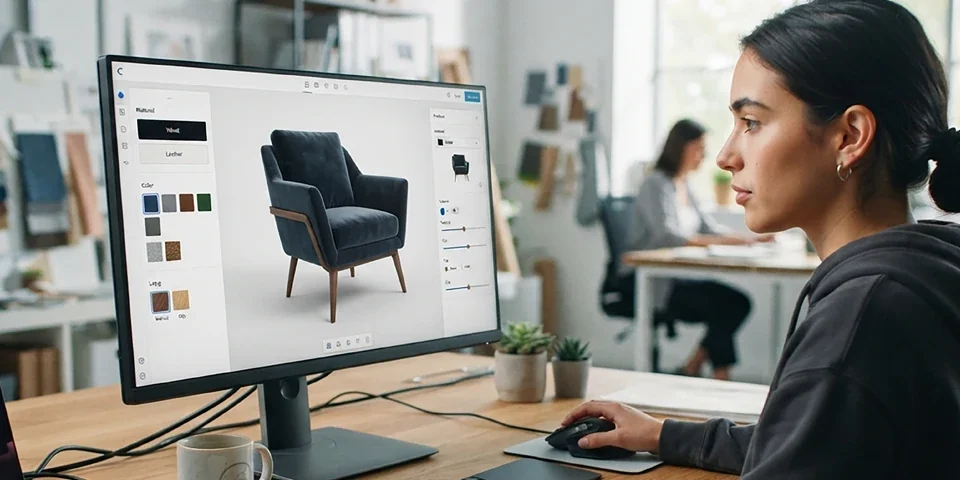
Empower your customers to design their perfect product with the best visual customization platforms on the market.

Visual product customization is the technology that allows customers to personalize products visually before purchasing through interactive online tools. The global product customization market is projected to exceed $10 billion by 2027, driven by consumer demand for unique, personalized products and the falling cost of digital manufacturing technologies. Modern customization tools combine 3D rendering, augmented reality, and real-time visualization to give customers a realistic preview of their personalized items before purchase. This comprehensive guide explores the top tools available for visual product customization, their features, pricing, and the best use cases for each platform to help you select the right solution for your e-commerce business.
Web-Based Product Customization Platforms
A screenshot collage showing the dashboard interfaces of three leading web-based customization platforms. The first panel shows the drag-and-drop designer with product templates, text tools, clip art library, and color picker on the left sidebar. The second panel shows a live preview of a custom t-shirt design being edited with the text Your Design layered over a gradient background. The third panel shows the output selection screen where customers can choose between different product types, sizes, and quantities for their customized design. Each platform interface shows clean, modern UI with the customization controls organized for intuitive use and fast rendering.
Web-based product customization platforms are the most accessible and widely adopted tools for enabling visual product customization on e-commerce websites. These platforms operate entirely within the web browser, requiring no software downloads or plugins, and integrate with major e-commerce platforms including Shopify, WooCommerce, Magento, BigCommerce, and SalesForce Commerce Cloud through dedicated plugins and API connectors. The core functionality of web-based customization platforms includes a visual product designer that allows customers to customize products through drag-and-drop interfaces, color selection tools, text input and typography controls, image upload capabilities, and clip art libraries. The designer interface typically displays the product in a live preview window that updates in real time as the customer makes changes, providing immediate visual feedback that helps customers understand exactly what their customized product will look like before they place the order. The real-time preview is the most critical feature of any customization platform, as it directly affects the customer's confidence in their design choices and reduces the likelihood of order cancellations and returns due to unexpected results.
Zakeke is one of the leading web-based customization platforms, offering a comprehensive suite of tools for product personalization that includes a 3D product viewer, 2D designer, augmented reality preview, and print-ready file generation. The Zakeke 2D designer provides full typography control with access to Google Fonts and custom font uploads, shape tools for creating geometric designs, clip art libraries with thousands of pre-designed elements, and image editing tools including filters, effects, and masking. The 3D viewer uses WebGL technology to render products in three dimensions, allowing customers to rotate, zoom, and examine their customized products from every angle before purchase. Zakeke integrates natively with Shopify, WooCommerce, Magento, and BigCommerce, with the integration typically taking less than an hour to set up using the platform's dedicated plugin. The pricing for Zakeke starts at $25 per month for the Starter plan with basic 2D customization, $79 per month for the Growth plan with 3D viewing and AR preview, and $199 per month for the Enterprise plan with advanced features including multi-product personalization, team collaboration, and priority support with dedicated account management.
Customily is another major player in the web-based customization space, with a focus on print-on-demand and dropshipping businesses that need reliable, high-volume personalization tools. The Customily platform features a product design studio that supports text personalization with over 800 Google Fonts, image uploads with automatic background removal, clip art with more than 10,000 pre-designed elements organized by category, and custom templates that can be created and saved for repeat use. The platform's print-on-demand integration is particularly strong, with direct connections to major print providers including Printful, Printify, Gooten, and AOP+ that automatically send the customized design files to the print provider when an order is placed. The automated order processing eliminates the manual file transfer step that can introduce errors and delays in the fulfillment process, ensuring that the customer's customized design is printed exactly as they designed it. Customily offers a 14-day free trial with no credit card required, after which the pricing starts at $39 per month for the Basic plan supporting up to 1,000 products, $79 per month for the Professional plan with unlimited products and advanced features, and $199 per month for the Business plan with priority support, custom development, and API access for custom integrations with third-party systems and platforms.
iCustomizer is a versatile customization solution that caters to a wide range of product categories including apparel, accessories, home decor, promotional products, and industrial items. The platform's designer interface is highly customizable, allowing merchants to configure the design tools, color palettes, clip art libraries, and pricing rules to match their specific product catalog and brand identity. The iCustomizer platform includes advanced pricing engine that can calculate the price of customized products based on the selected options, with support for tiered pricing based on quantity, configuration-based pricing for complex products with multiple customizable components, and promotional pricing rules that can be applied to specific products or customer groups. The platform's integration capabilities include native connectors for Shopify, WooCommerce, Magento, BigCommerce, and custom integrations through the REST API and webhook system. The pricing structure for iCustomizer is based on a monthly subscription with the Standard plan at $49 per month for up to 500 products, the Professional plan at $99 per month for up to 2,000 products, and the Enterprise plan at $199 per month for unlimited products with full API access and dedicated support. Each plan includes the full set of design tools, with the main differences being the product limits, the integration options, and the level of support provided.
Platform Comparison Table
| Platform | Starting Price | 3D Viewer | AR Preview | Best For |
|---|---|---|---|---|
| Zakeke | $25/mo | Yes | Yes | Full-featured customization with 3D and AR |
| Customily | $39/mo | No | No | Print-on-demand and dropshipping |
| iCustomizer | $49/mo | Yes | No | Multi-category catalogs with complex pricing |
| InkXE | $29/mo | No | No | Budget-friendly apparel customization |
| ProductCustomizer | $99/mo | No | No | Enterprise-level custom configurations |
The selection of the right web-based customization platform depends on several factors including the nature of your products, your sales volume, your technical capabilities, and your budget. Apparel and accessory businesses should prioritize platforms with strong 3D visualization and AR preview capabilities, as these products benefit the most from realistic visualization of the customized design on the product. Print-on-demand businesses should prioritize platforms with direct integration with their print providers, as the automated order processing saves significant time and reduces errors. Businesses with complex products that have multiple customizable components, such as furniture or industrial equipment, should prioritize platforms with advanced configuration engines and pricing rules that can handle the complexity of their product catalog. The implementation timeline for web-based customization platforms typically ranges from one day for platform with native plugins and simple product catalogs to several weeks for custom implementations with complex product configurations, custom design tools, and integration with existing systems and workflows.
3D Product Configurators and Visualization Engines
A dynamic 3D product configurator interface showing a custom shoe design in progress. The main view displays a realistic 3D rendered shoe that can be rotated and zoomed using mouse controls. The right sidebar shows configuration panels for the upper material selection with leather, mesh, and knit options displayed as clickable swatches, the sole color selection with a gradient color picker and preset color options, the lace style selection with four different lace patterns displayed, and the personalization panel for adding custom text to the tongue or heel area of the shoe. The add-to-cart button is displayed prominently below the configuration panels, with the dynamically updated price showing the current configuration cost.
Three-dimensional product configurators represent the cutting edge of visual product customization technology, offering customers the ability to customize products in a fully immersive 3D environment that provides a realistic representation of the finished product. Unlike 2D design tools that show a flat representation of the product, 3D configurators render the product in real-time using WebGL technology, allowing customers to rotate, zoom, and examine their customized product from every angle as if they were holding it in their hands. The 3D visualization creates a significantly higher level of customer confidence in their design choices compared to 2D previews, as customers can see exactly how their customizations look from every perspective and identify any design issues before placing the order. The technology behind 3D product configurators has advanced significantly in recent years, with modern platforms able to render highly realistic product visualizations with accurate materials, textures, lighting, and reflections that are indistinguishable from photographs of the actual product.
Threekit is the industry leader in 3D product configuration and visualization, providing a comprehensive platform that combines 3D modeling, product configuration, augmented reality, and visual asset management in a single integrated solution. The Threekit platform uses a browser-based 3D engine that can render complex product models with realistic materials, textures, and lighting effects in real time, providing customers with an immersive customization experience that builds confidence and drives conversion. The platform's product configuration capabilities include support for multiple customizable components, conditional logic that hides or shows options based on previous selections, dynamic pricing that updates in real time as options are selected, and multi-language support for international e-commerce operations. Threekit's visual asset management system automatically generates all of the product images and videos needed for the e-commerce catalog, including product shots in multiple angles, color variants, and lifestyle images, significantly reducing the time and cost of product photography. The platform integrates with major e-commerce platforms through pre-built connectors and a comprehensive API, with implementation typically taking four to twelve weeks depending on the complexity of the product catalog and the customization requirements. Threekit pricing is enterprise-level and customized based on the specific requirements of each implementation, with the total cost typically ranging from $2,000 to $10,000 per month depending on the number of products, the features required, and the level of support and customization needed.
CGTrader's 3D product configurator is a more accessible option for businesses that want to add 3D product visualization and customization to their e-commerce websites without the enterprise-level investment required by Threekit. CGTrader's configurator is built on top of the company's extensive 3D model marketplace, which provides access to thousands of pre-built 3D product models that can be customized and configured for use in the configurator. The platform supports material and color customization with realistic rendering, product rotation and zoom with smooth 60 frames per second performance, and mobile-optimized viewing that works on smartphones and tablets. The CGTrader configurator also includes a simple product builder that allows merchants to create configuration rules for their products, defining which options are available for each customizable component and how the configuration affects the product appearance and price. The pricing for CGTrader's 3D configurator starts at $299 per month for the Starter plan with up to 10 products and basic configuration options, $599 per month for the Business plan with up to 50 products and advanced configuration features, and custom pricing for the Enterprise plan with unlimited products, dedicated support, and custom development. The CGTrader marketplace also provides access to 3D modeling services for businesses that need custom 3D models created for their products, with the model creation typically costing $200 to $1,000 per product depending on the complexity of the product and the level of detail required.
ThreeJS-based custom configurators offer the ultimate flexibility for businesses with unique product customization needs and access to development resources. ThreeJS is an open-source JavaScript library for creating 3D graphics in the web browser, and it can be used to build fully custom product configurators that are tailored to the specific requirements of any product catalog. The advantage of a custom ThreeJS configurator is complete control over every aspect of the customization experience, from the user interface design and interaction patterns to the rendering quality and performance optimization. Custom configurators developed with ThreeJS can support any type of product geometry, any material and texture system, any configuration logic, and any integration with backend systems, providing capabilities that go far beyond what is possible with off-the-shelf configurator platforms. The development of a custom ThreeJS configurator requires expertise in 3D modeling, WebGL programming, and front-end development, with the total development cost typically ranging from $20,000 to $100,000 depending on the complexity of the product, the number of customizable components, and the features required. The ongoing maintenance and hosting costs for custom configurators are typically lower than subscription fees for commercial platforms, making custom development a cost-effective option for businesses with large product catalogs or unique customization requirements that justify the initial development investment.
Augmented Reality Try-On Solutions
A split-screen image showing augmented reality try-on experiences for different product categories. The left section shows a person using their smartphone camera to try on a pair of sunglasses, with the AR overlay precisely tracking their face and showing the sunglasses in real time with accurate sizing, positioning, and lighting that matches the environment. The right section shows a person using AR to preview a custom-designed piece of furniture in their living room, with the 3D model of the customized sofa rendered at the correct scale and perspective within the actual room environment, showing the fabric color and pattern selected by the customer. Both examples show the AR interface controls at the bottom of the screen for changing colors, materials, and other customization options within the AR view.
Augmented reality try-on solutions represent the most immersive and engaging form of visual product customization, allowing customers to see customized products in their real-world environment or on their own body using their smartphone camera. AR try-on technology has matured significantly in recent years, with modern solutions offering accurate product placement, realistic lighting and shadow rendering, and responsive interaction that creates a convincing virtual try-on experience. The impact of AR try-on on e-commerce conversion rates has been well documented, with studies showing that products with AR try-on capabilities see conversion rate increases of 40 to 70 percent compared to products with standard product images, as well as significant reductions in return rates. The technology works by using the smartphone camera to capture the real-world environment, then overlaying the 3D product model onto the camera feed with accurate positioning, scale, and lighting that makes the virtual product appear to be physically present in the environment.
ModiFace, now part of L'Oreal's technology division, is the leading AR try-on platform for beauty and cosmetics products, offering virtual try-on for makeup, skincare, and hair color products with industry-leading face tracking accuracy and realistic rendering. The ModiFace AR engine uses advanced facial recognition technology that maps over 100 facial landmarks to create an accurate 3D model of the user's face, allowing virtual makeup to be applied with realistic placement, blending, and lighting that matches the user's skin tone and facial features. The platform supports virtual try-on for foundation, concealer, blush, bronzer, eye shadow, eyeliner, mascara, lipstick, lip liner, and hair color, with each product type having specialized rendering algorithms that simulate the real appearance of the product on the skin or hair. The ModiFace platform integrates with e-commerce websites through a JavaScript SDK that can be embedded in any web page, and through native SDKs for iOS and Android mobile apps. The platform also includes a shade finder feature that uses artificial intelligence to analyze the user's skin tone from a selfie and recommend the exact shade match from the product catalog, significantly reducing the guesswork in selecting the right foundation or concealer shade. The pricing for ModiFace is customized based on the implementation requirements and is typically licensed on an annual basis, with the total cost ranging from $10,000 to $50,000 per year depending on the features required and the number of products in the catalog.
Wannaby, now operating as Wannakicks, is the leading AR try-on platform for footwear and apparel, offering virtual try-on for sneakers, shoes, and clothing that allows customers to see how products look on their feet or body before purchase. The Wanna platform uses advanced object tracking technology that can accurately track the position and orientation of the user's feet in real time, allowing virtual sneakers to be overlaid onto the camera feed with realistic sizing, positioning, and lighting. The virtual sneakers appear to be physically present on the user's feet, with the AR rendering accurately simulating the material textures, reflections, and shadows of the actual product. The platform supports customization integration, allowing customers to change the colors and materials of the virtual sneakers in real time within the AR view and see how different customization options look on their actual feet in their real environment. The Wanna platform integrates with e-commerce websites through a JavaScript SDK and is available as a Shopify plugin for easy integration with Shopify stores. The pricing for the Wanna platform starts at $999 per month for small businesses with up to 100 products, with custom pricing for larger catalogs and enterprise implementations. The platform also offers a pay-per-scan pricing model for businesses with lower traffic volumes, charging approximately $0.50 per AR session with volume discounts for higher usage.
Zappar is a versatile AR platform that supports a wide range of try-on and visualization use cases including eyewear, watches, jewelry, furniture, home decor, and automotive applications. The ZapWorks studio platform provides a comprehensive set of tools for creating AR experiences, including face tracking for eyewear and makeup try-on, surface tracking for furniture and home decor placement, and world tracking for large-scale AR experiences and product visualizations at full scale in real-world environments. The Zappar platform is particularly well-suited for businesses that need AR capabilities across multiple product categories, as the same platform can be used to create AR try-on for different product types without requiring separate platforms or integrations for each category. The platform integrates with e-commerce websites through a JavaScript SDK and supports WebAR technology that works directly in the mobile browser without requiring the user to download a dedicated app, significantly reducing friction in the AR try-on experience. The pricing for Zappar starts at $250 per month for the Pro plan with basic AR creation tools and up to 10,000 AR sessions per month, $1,000 per month for the Business plan with advanced features and up to 100,000 sessions, and custom pricing for the Enterprise plan with unlimited sessions, dedicated support, and custom development services for complex AR implementations.
Print-on-Demand and Dropshipping Customization Tools
A product customization workflow diagram for print-on-demand. The diagram flows from left to right showing the customer designing a product using an online design tool, the design being automatically submitted to the print-on-demand platform through API integration, the platform processing the order and routing it to the nearest print facility based on the customer location, the print facility producing the customized product using DTG printing for apparel or dye sublimation for hard goods, and the final product being shipped directly to the customer with tracking information. Each step shows the estimated processing time and the technology used, with the total end-to-end time from order to delivery shown at the bottom of the diagram.
Print-on-demand and dropshipping businesses have unique requirements for visual product customization tools, needing platforms that can handle high volumes of orders with automated processing, integrate seamlessly with fulfillment partners, and provide a smooth customization experience that works reliably for customers who may not be technically sophisticated. The print-on-demand customization workflow begins when the customer designs their product using the online design tool integrated into the e-commerce website, continues with the automated submission of the design files to the print provider when the order is placed, and concludes with the print provider manufacturing and shipping the customized product directly to the customer. The efficiency and reliability of this automated workflow are critical for print-on-demand businesses, as any manual intervention in the order processing pipeline introduces delays, errors, and costs that can make the business model uneconomical for low-margin products.
Printful's design tool is one of the most widely used customization platforms in the print-on-demand industry, offering a comprehensive set of design tools that are integrated directly into the Printful ecosystem. The Printful design tool includes a mockup generator that displays the customer's design on realistic product mockups in multiple views and angles, giving customers a clear preview of how their design will look on the actual product. The tool supports full-color designs with CMYK printing simulation that shows how colors will appear in print, text personalization with a selection of fonts and typography controls, and clip art libraries with design elements organized by category. The Printful design tool is available as an embedded designer that can be integrated into any e-commerce website through a JavaScript snippet, providing a seamless customization experience without redirecting customers to an external platform. The tool also includes a product catalog with hundreds of products including t-shirts, hoodies, hats, bags, mugs, phone cases, wall art, and home decor items, each with accurate product templates that show the printable area and the print size limits for each product. The Printful platform does not charge a monthly subscription fee for the design tool, instead generating revenue through the product markup on each order, making it an attractive option for businesses that are just starting in print-on-demand and want to minimize their fixed costs while they validate their business model and product catalog.
Printify's customization platform offers a similar set of features to Printful but with the added advantage of a multi-provider marketplace that allows merchants to choose from multiple print providers for each product type, selecting the provider that offers the best combination of price, quality, and shipping time for their specific needs. The Printify design studio includes a product mockup generator, text and image design tools, clip art libraries, and design template management that allows merchants to create and save templates for repeat use. The platform's multi-provider marketplace includes over 80 print providers located around the world, each with their own catalog of products, pricing, print quality standards, and shipping capabilities. The design studio automatically adapts the design templates to the specifications of each print provider, adjusting the print area, resolution requirements, and color profiles to match the provider's printing technology and capabilities. Printify offers a free plan with unlimited product design and access to all print providers, with the revenue generated through the product markup on each order. The Premium plan at $29 per month provides discounts of up to 20 percent on the product base price from all print providers, significantly improving the profit margins for high-volume print-on-demand businesses. The enterprise plan at $79 per month adds dedicated support, custom API integration, and volume discounts for businesses with monthly order volumes exceeding 1,000 units per month.
Gelato's customization platform takes a global approach to print-on-demand, with a distributed network of print providers in over 30 countries that allows merchants to offer localized production and shipping for their customized products. The Gelato design studio provides standard customization tools including text, image, and clip art design capabilities, with the unique addition of localized product templates that show the design on products that are relevant to each regional market. The platform's global fulfillment network automatically routes each order to the print provider that is closest to the customer's shipping address, reducing shipping times from weeks to days and significantly reducing the carbon footprint of the order fulfillment. The Gelato platform integrates with Shopify, WooCommerce, Etsy, Amazon, and BigCommerce, with the integration process typically taking less than an hour to set up. The platform also provides a product catalog with over 100 products including apparel, wall art, phone cases, mugs, tote bags, and stationery items, with new products being added regularly based on market trends and customer demand. Gelato's pricing is based on a subscription model with the Standard plan at $14.99 per month for up to 500 orders per month, the Premium plan at $39.99 per month for up to 2,000 orders per month with additional features including custom branding and priority support, and the Enterprise plan with custom pricing for businesses with monthly order volumes exceeding 2,000 units.
Enterprise-Grade Visual Customization Engines
An enterprise customization dashboard showing a product catalog management interface with advanced configuration options. The main view shows a grid of product thumbnails with configuration status indicators showing which products have active customization rules, which products need configuration review, and which products require model generation. The right panel shows the product configuration editor with tabs for basic settings, customization rules, pricing rules, inventory management, and analytics. The bottom section shows the analytics dashboard with metrics including total customizations created per day, most customized products, average customization time, conversion rate for products with customization compared to standard products, and the most popular customization options selected by customers.
Enterprise-grade visual customization engines are designed for large businesses with complex product catalogs, high order volumes, and sophisticated customization requirements that exceed the capabilities of standard web-based customization platforms. These enterprise solutions offer advanced features including multi-site and multi-language support, comprehensive API access for deep integration with existing systems, advanced security and compliance features for regulated industries, and dedicated infrastructure with guaranteed uptime and performance service level agreements. The enterprise customization market has grown significantly as large brands and retailers recognize the competitive advantage of offering personalized products, with major companies in the automotive, furniture, fashion, and consumer electronics industries investing heavily in custom visualization and configuration technology.
Adobe Scene7, now part of Adobe Experience Manager, is one of the most established enterprise-grade product visualization platforms, providing dynamic imaging, video, and 3D visualization capabilities for large-scale e-commerce operations. The Scene7 platform includes a product visualization engine that supports zoom, pan, color swatch replacement, and 360-degree spin visualization for products, allowing customers to examine products in detail and see color and material variations without needing to load multiple static images. The platform's 3D visualization capabilities support the creation of interactive 3D product experiences that can be embedded in e-commerce product pages, allowing customers to rotate, zoom, and customize products in a fully interactive 3D environment. Adobe Scene7 integrates deeply with Adobe Experience Manager and Adobe Commerce, providing a unified content management and delivery platform for enterprise e-commerce operations. The platform also includes advanced image optimization capabilities that automatically generate optimized images for different devices, screen sizes, and network conditions, ensuring fast loading times and high-quality visuals across all customer touchpoints. The pricing for Adobe Scene7 is enterprise-level and customized based on the specific requirements of each implementation, with the annual cost typically ranging from $50,000 to $500,000 depending on the features required, the volume of content delivered, and the level of support and customization needed.
Cedato is an enterprise video and interactive content platform that includes advanced product customization and visualization capabilities for large-scale e-commerce implementations. The Cedato platform supports the creation of interactive product videos that allow customers to customize products within the video experience, selecting colors, materials, and options while watching the product video and seeing their selections reflected in real time. The platform's video customization capabilities are particularly valuable for products that benefit from motion visualization, such as apparel shown on models in motion, furniture shown in room settings with camera movement, and electronics shown in use with interactive demonstrations of features and functions. The Cedato platform includes comprehensive analytics that track customer engagement with the video content, including which customization options customers explore, how much time they spend on each customization step, and the conversion rate for customers who interact with the video content. The platform integrates with major e-commerce platforms and content management systems through APIs and pre-built connectors, with the implementation typically requiring four to eight weeks for standard integrations and longer for complex custom implementations. The pricing for Cedato is customized based on the volume of content, the features required, and the level of support needed, with the annual cost typically ranging from $30,000 to $200,000.
Custom-built enterprise customization solutions using platforms like Unity, Unreal Engine, or custom WebGL frameworks offer the highest level of flexibility and performance for businesses with unique product visualization requirements. Unity and Unreal Engine are primarily known as game development platforms, but they have been increasingly adopted for product visualization and configuration applications due to their powerful 3D rendering capabilities, physics simulation, and cross-platform deployment support. These platforms enable the creation of photorealistic 3D product configurators that can run in web browsers, mobile apps, desktop applications, and even virtual reality headsets, providing a consistent customization experience across all customer touchpoints. The development of a custom enterprise visualization solution using Unity or Unreal Engine requires a team of experienced 3D artists, technical artists, and software engineers, with the total development cost typically ranging from $100,000 to $500,000 for a comprehensive product configuration platform. The ongoing maintenance and content creation costs for custom enterprise solutions include the creation and updating of 3D product models, the development of new features and capabilities, and the hosting and infrastructure costs for the deployment platform. Despite the significant upfront investment, custom enterprise solutions provide the highest level of differentiation and competitive advantage, as the customization experience can be tailored specifically to the brand, product catalog, and customer needs without the limitations of off-the-shelf platforms.
Mobile-First Customization Experiences
A mobile phone held in hand, showing a product customization interface optimized for touch interaction. The screen displays a custom product design with large touch-friendly buttons and controls spaced generously for finger tapping, a simplified color palette with large swatch circles that are easy to tap, and a prominent add-to-cart button at the bottom of the screen. The product preview area takes up most of the screen with pinch-to-zoom and swipe-to-rotate touch gestures active. Below the product preview, a simplified toolbar with icons for color, text, upload, and clip art functions is displayed, with each icon having a clear label in large text that is easily readable on small screens.
The shift to mobile commerce has made mobile-first design a critical requirement for visual product customization tools, with mobile devices now accounting for over 60 percent of all e-commerce traffic and a growing share of product customization sessions. Mobile product customization presents unique design challenges compared to desktop customization, including smaller screen real estate that limits the amount of information and controls that can be displayed simultaneously, touch interaction that requires larger touch targets and different interaction patterns than mouse-based interfaces, and variable network conditions that affect the loading time and performance of 3D visualization and other resource-intensive features. Successful mobile customization platforms address these challenges through thoughtful UX design, performance optimization, and progressive enhancement that provides a functional customization experience on all devices while taking advantage of the additional capabilities available on more capable devices and faster network connections.
The mobile-optimized customization interface should prioritize the product preview as the primary element on the screen, with the product visualization occupying at least 60 percent of the available screen space and the customization controls being accessible through a bottom sheet or sliding panel that can be opened and closed as needed. The customization controls should be designed for touch interaction with minimum touch targets of 48 by 48 pixels, sufficient spacing between interactive elements to prevent accidental taps, and gesture-based controls for common actions including pinch-to-zoom for examining details and swipe-to-rotate for viewing the product from different angles. The color and material selection interface on mobile should use large swatch circles or squares that are easy to tap, with the selected option being clearly indicated through a visual highlight that is visible even in bright outdoor lighting conditions. The text input interface should use the device's native keyboard with input validation that prevents customers from entering characters or text lengths that are not supported, and the image upload interface should support direct camera capture for customers who want to upload photos of their own artwork or designs from their phone camera.
Performance optimization for mobile customization includes the use of progressive 3D model loading that displays a lower-resolution version of the product model immediately and progressively refines the model quality as additional detail is loaded, texture compression that reduces the file size of material textures without significantly affecting the visual quality, and network-aware rendering that adjusts the quality of the 3D visualization based on the current network speed and connection reliability. The mobile customization experience should also include offline capability that allows customers to save their design work in progress and continue customizing later even if they lose their internet connection, with the design being automatically synchronized to the server when the connection is restored. The mobile-optimized checkout flow should be integrated directly into the customization experience, allowing customers to add their customized product to the cart and complete the purchase without leaving the customization interface or experiencing a jarring transition between the design and purchase experiences. The mobile customization session should be designed to be completed in under five minutes for simple products and under ten minutes for complex products with multiple customizable components, as longer session times on mobile devices are associated with higher abandonment rates and lower conversion rates.
Integrating Customization Tools with E-Commerce Platforms
An integration architecture diagram showing how the customization platform connects with the e-commerce ecosystem. The diagram shows the customization platform at the center with arrows connecting to the e-commerce platform for product data synchronization and order management, the print-on-demand fulfillment provider for automated order processing and design file transfer, the inventory management system for real-time stock tracking of customizable components, the customer relationship management system for storing customer design preferences and history, the analytics platform for tracking customization data and conversion metrics, and the payment gateway for processing orders that include customization surcharges. Each connection is labeled with the integration method such as REST API, webhooks, or native plugin, and the data flow direction is indicated with arrowheads.
The successful implementation of visual product customization requires seamless integration between the customization platform and the e-commerce ecosystem, including the product catalog, shopping cart, checkout process, inventory management, and order fulfillment systems. The integration complexity varies significantly depending on the customization platform, the e-commerce platform, and the specific requirements of the business, with some integrations taking as little as a few hours using native plugins and standard configurations, while others require weeks or months of custom development for complex requirements and specialized workflows. The integration strategy should be planned carefully, with clear requirements for each integration point and a testing protocol that validates the integration works correctly for all product types, customization options, and order scenarios before going live with the customization platform.
Shopify integration is the most straightforward for most customization platforms, as Shopify has a well-documented API and a large ecosystem of customization platform plugins that handle the integration automatically. The standard Shopify customization integration uses the product metafields and line item properties to pass the customization data from the product page through the checkout process to the order, with the customization details being stored in the order record and accessible through the Shopify admin interface and API. The integration typically includes the synchronization of product variants for customization options that affect the product price or inventory, the creation of line item properties for text and image customizations that do not affect the price, and the addition of the design preview image to the cart and checkout pages so customers can see their customized product throughout the purchase process. The Shopify integration also typically includes the automatic creation of the design files in the appropriate format for the fulfillment provider, with the files being attached to the order as a metafield or being sent directly to the fulfillment provider through the customization platform's own integration with the provider.
WooCommerce integration for customization platforms is typically more flexible than Shopify integration, as WooCommerce is built on WordPress and provides extensive hooks and filters that allow deep customization of the product page, cart, checkout, and order management workflows. The WooCommerce customization integration typically uses product add-ons or product options plugins that add customization fields to the product page, with the customization data being passed through the standard WooCommerce cart and order management system as custom cart item data and order item meta data. The flexibility of WooCommerce allows for more complex customization workflows, including conditional pricing that adjusts the product price based on the selected customization options, inventory tracking for customizable components, and custom email notifications that include the design preview image and customization details. The WooCommerce integration also benefits from the extensive WordPress plugin ecosystem, with plugins available for print-on-demand integration, 3D model viewing, and AR preview that can be combined with the customization platform to create a comprehensive product customization experience without requiring custom development for each component.
The API-based integration approach is necessary for businesses using custom e-commerce platforms or enterprise platforms that do not have native plugins for the customization platform. The API integration uses the customization platform's REST API and webhook system to synchronize product data between the e-commerce platform and the customization platform, manage the customization session data, and process orders with customization data. The product data synchronization ensures that the products available for customization in the design tool match the products available in the e-commerce catalog, including product names, descriptions, images, prices, and inventory levels. The order processing integration uses webhooks to notify the customization platform when an order is placed, triggering the creation of the design files and the transmission of the files to the fulfillment provider or the merchant for in-house production. The API-based integration approach requires experienced developers who are familiar with both platforms and can handle the complexities of data synchronization, error handling, and security, with the development typically requiring two to eight weeks depending on the complexity of the integration requirements and the quality of the API documentation for both platforms.
Data Analytics and Customer Insights from Customization
An analytics dashboard showing product customization data insights. The dashboard displays key metrics including total customizations created in the last 30 days shown as a large number with a trend arrow, the most popular product categories for customization shown as a horizontal bar chart, the most selected color options shown as a pie chart with the top colors labeled with their percentage of total selections, the average time spent in the customization tool shown as a daily line chart over the past month, the conversion rate comparison between products with customization and standard products shown as a side-by-side bar chart, and the geographic distribution of customization orders shown on a heat map of the country. Each metric includes a small info icon that reveals the definition and calculation method when hovered or tapped.
Visual product customization platforms generate valuable data about customer preferences, design choices, and behavior patterns that can be analyzed to improve product offerings, optimize the customization experience, and drive business growth. The customization data includes the specific options and design elements that customers select, the sequence in which they configure different product components, the time they spend on each customization step, the designs they create but do not purchase, and the relationship between customization choices and order value. The analysis of this data provides actionable insights that can be used to inform product development decisions, optimize the customization interface, create targeted marketing campaigns, and identify opportunities for new product introductions and product line extensions that align with customer preferences and demand patterns.
The most popular customization options analysis identifies the colors, materials, text options, and design elements that customers select most frequently, providing direct insight into customer preferences that can inform product development and inventory management decisions. If the data shows that a significant percentage of customers select the same custom color or material combination, the business should consider adding that combination as a standard product option to reduce the complexity of the customization process for future customers and potentially capture additional sales from customers who may be intimidated by a full customization interface. The analysis of abandoned customization sessions reveals the point in the customization process where customers most commonly abandon their design, indicating areas of the interface that may be confusing, frustrating, or overwhelming for customers. The high abandonment rate at a specific customization step indicates the need for interface redesign, additional guidance or tooltips, or simplification of the options available at that step. The analysis of the correlation between customization complexity and conversion rate can help determine the optimal level of customization for each product category, with the data showing the point at which additional customization options begin to decrease conversion rates due to decision paralysis and choice overload.
The relationship between customization and customer lifetime value is one of the most valuable insights that customization data analytics can provide, with studies showing that customers who purchase customized products have significantly higher lifetime value than customers who only purchase standard products. The customization data can be used to identify customers who are most likely to purchase customized products again, enabling targeted marketing campaigns that promote new customization options, seasonal design collections, and personalized product recommendations based on the customer's previous customization history. The analysis of customization data by customer segment reveals differences in preferences between demographic groups, geographic regions, and customer segments, enabling the creation of targeted customization experiences that are tailored to the preferences of each segment. The customization data can also be used to predict demand for specific customization options, enabling proactive inventory planning and production scheduling that reduces the risk of stockouts for popular options and overstock for unpopular options. The integration of customization analytics with the broader e-commerce analytics platform provides a comprehensive view of customer behavior that connects customization activity with purchase behavior, customer acquisition, retention, and lifetime value, providing the data-driven foundation for strategic decisions about product development, marketing investment, and customer experience optimization.
Future Trends and Emerging Technologies in Product Customization
A futuristic concept image showing the next generation of product customization technology. The image shows a customer using a mixed reality headset to customize a product in a fully immersive 3D environment, with virtual design tools floating in the air around the customer that can be manipulated with hand gestures. The product being customized appears as a full-scale 3D hologram in the center of the room, with the customer able to walk around it and see the customization changes in real time. The image also shows smaller insets of an AI-powered design assistant suggesting customization options based on the customer's previous purchases and style preferences, a generative design interface that creates unique product patterns based on the customer's input parameters, and a blockchain verification system that confirms the authenticity and uniqueness of each customized product.
The visual product customization industry continues to evolve rapidly, with emerging technologies that promise to transform the customization experience in ways that were previously only possible in science fiction. The convergence of artificial intelligence, augmented reality, 3D printing, and blockchain technology is creating new possibilities for product customization that go far beyond simple color and text personalization, enabling fully automated design generation, hyper-realistic virtual try-on, on-demand manufacturing of custom products, and verified authenticity and uniqueness for customized items. Businesses that stay informed about these emerging trends and invest in the right technologies at the right time will have a significant competitive advantage in the growing personalization economy.
Artificial intelligence and machine learning are transforming product customization through AI-powered design assistants that can generate unique designs based on customer input, automated product configuration that suggests optimal customization options based on the customer's preferences and usage requirements, and predictive personalization that anticipates customer needs and presents relevant customization options before the customer has to search for them. The generative AI technology based on large language models and diffusion models enables customers to describe their desired design in natural language and have the AI generate multiple design options that match their description, with the customer then refining the AI-generated design through iterative feedback until they achieve the perfect result. The AI-powered design assistant can also analyze the customer's previous purchases, browsing history, and social media activity to understand their personal style and suggest customization options that align with their aesthetic preferences and practical needs. The personalization engine can present customized product recommendations with the customer's preferred colors, materials, and design elements pre-selected, significantly reducing the time and effort required to create a personalized product and increasing the likelihood of conversion.
Virtual reality and mixed reality technologies are creating immersive customization experiences that allow customers to design products in a fully three-dimensional environment with natural interaction through hand gestures, voice commands, and eye tracking. The VR customization experience places the customer in a virtual showroom where they can see their customized product at full scale, walk around it to examine it from every angle, and interact with it as if it were physically present. The mixed reality experience using devices like the Apple Vision Pro and Meta Quest 3 combines the real environment with virtual product visualizations, allowing customers to see customized products in their actual home or office environment with realistic lighting, shadows, and reflections that make the virtual product indistinguishable from a physical product. The immersive customization experience significantly increases customer confidence in their design choices, as they can see exactly how the customized product will look in their actual environment before committing to purchase. The technology is still in the early adoption phase for e-commerce customization, but the rapid growth of the AR and VR device market and the falling cost of the technology suggest that immersive customization will become a mainstream channel for product personalization within the next three to five years.
The on-demand manufacturing revolution driven by advances in 3D printing, digital knitting, and automated production technology is enabling the physical production of customized products at costs that are approaching the cost of mass-produced products. The combination of visual product customization tools with on-demand manufacturing creates a fully integrated personalization ecosystem where customers design their product using the digital customization tool, the design is automatically converted into manufacturing instructions, and the product is produced on-demand using automated manufacturing equipment and shipped directly to the customer. The integration of customization tools with manufacturing systems requires standardized data formats that can transmit the design specifications from the customization platform to the manufacturing equipment, quality control systems that verify the manufactured product matches the customer's design specifications, and production scheduling systems that optimize the manufacturing workflow for maximum efficiency and minimum production time. The businesses that successfully integrate visual product customization with on-demand manufacturing will be able to offer their customers unlimited product variety without the inventory risk and capital investment associated with traditional mass production, fundamentally changing the economics of product personalization and creating new business models that were not previously possible in the physical product economy.
Key Technology Trends Timeline
| Technology | Current Maturity | Mainstream Adoption | Impact on Customization |
|---|---|---|---|
| AI-Powered Design Assistants | Early commercial | 2026-2027 | Automated design generation and personalization |
| Generative AI for Product Design | Emerging | 2027-2028 | Natural language to product design conversion |
| VR/Immersive Customization | Early adoption | 2027-2029 | Full-scale 3D product design and preview |
| On-Demand 3D Printing Integration | Growing | 2026-2028 | Instant manufacturing of custom products |
| Blockchain Product Authentication | Emerging | 2028-2030 | Verified uniqueness and provenance |
| Digital Twin Integration | Early commercial | 2026-2027 | Accurate real-time product visualization |
Pricing Strategies for Customizable Products
A pricing strategy comparison chart showing three common pricing models for customizable products. The first panel shows a base price plus add-on pricing model where the base product has a starting price and each customization option adds a specific amount to the total price, with a running total displayed prominently as options are selected. The second panel shows a tiered pricing model where products are offered at three pre-defined customization tiers with each tier offering more customization options at a higher price point, with the features of each tier displayed in a comparison table. The third panel shows a subscription pricing model where customers pay a monthly fee for unlimited customization of a specific product category, with the subscription benefits including free design revisions and priority production and shipping.
The pricing strategy for customizable products requires careful consideration of the value that personalization provides to customers, the cost of offering customization options, and the competitive landscape in the product category. Customers who purchase customizable products are typically willing to pay a premium over standard products because they receive a product that is uniquely tailored to their preferences and needs, creating a sense of ownership and emotional connection that does not exist with mass-produced products. The pricing premium for customizable products varies significantly by product category, with studies showing that customers are willing to pay 20 to 100 percent more for customizable products compared to standard alternatives, depending on the product type, the degree of personalization offered, and the perceived value of the customization to the customer. The pricing strategy should be designed to capture this willingness to pay while also providing transparent pricing that helps customers understand the cost of their customization choices and make informed decisions about their design selections.
The base price plus add-on pricing model is the most straightforward and transparent pricing approach for customizable products, with the base product having a starting price and each customization option adding a specific amount to the total price. The add-on pricing model works well for products where the customization options have clearly defined costs, such as premium materials that cost more than standard materials, complex customization options that require more production time or skill, and personalization features like custom embroidery or engraving that require additional processing steps. The add-on pricing should be displayed clearly in the customization interface with each option showing its price impact, and the running total should be updated in real time as the customer selects or changes options, providing complete pricing transparency throughout the customization process. The base price should be set competitively to attract customers to the customization interface, with the profit margin being built into the add-on pricing for the customization options. The add-on pricing model also allows for promotional pricing strategies such as free upgrades to premium options for orders above a certain value, bundled option packages that offer a discount when multiple premium options are selected together, and loyalty discounts that provide reduced add-on pricing for repeat customers.
The tiered pricing model offers customers pre-defined customization packages at different price points, with each tier offering a different level of customization capability and a different set of premium options included in the price. The Basic tier includes standard materials and limited customization options such as color and size selection, the Premium tier adds access to premium materials and additional customization options such as monogramming or custom text, and the Luxury tier includes all available materials, unlimited customization options, and additional benefits such as priority production, premium packaging, and extended warranty. The tiered pricing model simplifies the decision-making process for customers by reducing the number of individual pricing decisions they need to make, which can increase conversion rates for customers who find the add-on pricing model overwhelming or confusing. The tiered model also provides a natural upsell path that encourages customers to move up to higher tiers as they see the additional value offered at each level, with the pricing of each tier being set to make the upgrade from one tier to the next feel like a good value. The tiered pricing model is particularly effective for products that are commonly purchased as gifts, as the giver can select a tier that matches their budget while still offering a personalized product that demonstrates thought and effort in the gift selection.
The dynamic pricing model uses real-time data about demand, inventory levels, and customer behavior to adjust the pricing of customization options based on current market conditions. The dynamic pricing approach can increase the price of premium customization options during peak demand periods such as holiday seasons and promotional events, and decrease the price during slow periods to stimulate demand and maintain production volume. The dynamic pricing model requires sophisticated pricing software that can analyze multiple data sources and adjust pricing in real time, with the pricing rules being defined based on business objectives and constraints. The dynamic pricing model also enables personalized pricing that offers different prices to different customer segments based on their purchase history, loyalty status, and predicted willingness to pay for specific customization options. The personalized pricing approach must be implemented carefully to avoid customer perception issues, with the pricing differences being justified through loyalty program benefits, volume discounts, or membership tiers that provide transparent and understandable pricing variations. The implementation of dynamic pricing for customizable products requires A-B testing and continuous optimization to find the pricing strategy that maximizes revenue while maintaining customer satisfaction and conversion rates at optimal levels.
Pricing Model Comparison
| Model | Customer Clarity | Revenue Potential | Best Use Case |
|---|---|---|---|
| Base + Add-On | High | Medium | Products with clearly defined option costs |
| Tiered Packages | Very High | Medium-High | Gift products and customer segments |
| Dynamic Pricing | Low-Medium | High | High-demand seasonal products |
| Subscription/Membership | High | Very High | Repeat purchase categories |
| Freemium | High | Medium | Customer acquisition and brand building |
Customer Experience and Support for Product Customization
A customer support workflow diagram for a product customization business. The diagram shows the customer journey starting with the design assistance phase where customers use the online design tool with a live chat option for real-time help from design specialists, followed by the order review phase where the customer's design is automatically checked for print quality issues and production feasibility with any issues being flagged for review before the order is submitted, then the production phase where the customer receives automated order status updates with photos of their product at key production milestones, and finally the delivery and satisfaction phase where the customer receives their customized product with a personalized unboxing experience and a follow-up satisfaction survey. The diagram also shows the support escalation path for order issues with estimated response times for each support tier.
The customer experience for product customization extends far beyond the design interface, encompassing every interaction that the customer has with the brand throughout the customization journey from initial discovery to post-purchase support. The unique nature of customized products creates specific customer experience challenges that do not exist for standard products, including the need to provide design guidance and inspiration, the importance of managing customer expectations about the final product appearance and quality, the complexity of handling returns and exchanges for products that have been personalized to the customer's specifications, and the opportunity to create a memorable unboxing and ownership experience that reinforces the emotional value of the personalized product. The businesses that excel at product customization invest heavily in the customer experience because they understand that the personalized product journey creates a deeper emotional connection with the customer that translates into higher customer lifetime value, stronger brand loyalty, and positive word-of-mouth marketing that drives organic customer acquisition.
Design guidance and inspiration are critical components of the customization customer experience because many customers are excited about the idea of personalizing a product but may not have a clear vision of what they want to create or the design skills to bring their vision to life in the customization interface. The provision of design templates and pre-made design collections provides customers with a starting point that they can customize further to make their own specific design choices, significantly reducing the time and effort required to create a personalized product. The design templates should be organized by style, occasion, and product category, making it easy for customers to browse and find inspiration that matches their needs and preferences. The design inspiration content including blog posts, social media galleries, and customer showcase pages provides customers with ideas and examples of what is possible with the customization tools, inspiring them to explore creative options and invest more time in creating their personalized product. The live design assistance through chat, phone, or video call provides customers who need additional help with real-time guidance from design specialists who can answer questions, provide suggestions, and help customers achieve their desired design outcome. The design assistance service should be staffed by knowledgeable team members who understand both the design tool capabilities and the production process, so they can provide accurate guidance about what is technically possible and what design choices will produce the best results in the manufactured product.
The expectation management process for customized products is essential for customer satisfaction because the customer has specific expectations about how their design will look on the actual product, and any discrepancy between the digital preview and the physical product will result in disappointment and potentially a return or negative review. The expectation management starts with the digital preview that should accurately represent the final product appearance, including realistic material textures, accurate color reproduction, correct sizing and placement of design elements, and simulation of how the design will look on the product shape and surface. The digital preview should include a disclaimer that explains any anticipated differences between the digital preview and the physical product, such as slight color variations due to the differences between screen display and print reproduction, and the normal variations that occur in the manufacturing process for customized products. The order confirmation should include a design proof that the customer must approve before production begins, providing a final check that the design is correct and complete and giving the customer confidence that their customized product will match their expectations. The production updates that include photos of the actual product at key production milestones provide the customer with visual confirmation that their product is being manufactured correctly and builds anticipation for the delivery of their personalized item.
The returns and exchanges process for customized products requires a different approach than standard products because the product has been personalized to the customer's specifications and cannot be resold to another customer if it is returned. The returns policy for customized products should clearly communicate the conditions under which returns are accepted, with most businesses accepting returns only for manufacturing defects or errors in the customization execution rather than for design choices that the customer made during the customization process. The policy should be displayed prominently in the customization interface and at the checkout, ensuring that customers understand the returns limitations before they complete their purchase. The exceptions to the returns policy may include situations where the digital preview significantly misrepresented the final product appearance, where the product quality does not meet the standards that were promised, or where the product was damaged during shipping. The handling of returns for customized products should include a quality review process that determines whether the return is due to a manufacturing error, a design choice issue, or a customer expectation issue, with the outcome of the review determining whether the return is accepted, whether a replacement is offered, or whether the customer is provided with guidance on how to achieve their desired result in a future customization order. The customer communication throughout the returns process should be empathetic and solution-focused, recognizing that the customer invested time and emotional energy in creating their customized product and may be disappointed that the result did not meet their expectations. The businesses that handle customization returns well can often convert a disappointed customer into a loyal advocate by providing exceptional service and support that demonstrates their commitment to customer satisfaction even when the outcome is not perfect.
The Bottom Line
Visual product customization tools have become an essential technology for e-commerce businesses that want to differentiate their product offerings, increase customer engagement, and capture the growing demand for personalized products. The market offers solutions at every price point and capability level, from affordable web-based platforms like Zakeke and Customily that can be implemented in hours, to enterprise-grade solutions like Threekit and Adobe Scene7 that provide comprehensive 3D visualization and configuration capabilities for large-scale operations, to custom-built solutions that offer unlimited flexibility for businesses with unique requirements and development resources.
The key to success with visual product customization is selecting the right tool for your specific products, customers, and business model, and implementing it in a way that provides a seamless, intuitive, and enjoyable customization experience that builds customer confidence and drives conversion. The businesses that invest in product customization technology today will be well-positioned to capture the growing demand for personalized products and build lasting customer relationships based on the emotional connection that customers feel with products they have designed themselves. The future of product customization is bright, with emerging technologies including AI-powered design assistance, immersive VR and AR customization experiences, and integrated on-demand manufacturing promising to make product personalization even more accessible, affordable, and engaging for customers around the world.
The most successful customization implementations share common characteristics including a clean and intuitive design interface that does not overwhelm customers with too many choices, fast and responsive 3D visualization that provides immediate feedback on design changes, seamless integration with the e-commerce platform that provides a smooth purchase experience, reliable order processing that ensures customized products are manufactured and shipped correctly, and continuous optimization based on customer behavior data and feedback. By following these best practices and selecting the right technology partner for your specific needs, you can create a visual product customization experience that delights your customers, differentiates your brand, and drives sustainable business growth in the competitive e-commerce landscape.
Pro Pixel Agency
Visual Product Customization Guide 2026
Was this article helpful?
Pro Pixel Agency
Want this done for you? Try our SEO free.
Send a sample, get the finished result back, and only then decide. Clear prices, no commitment.