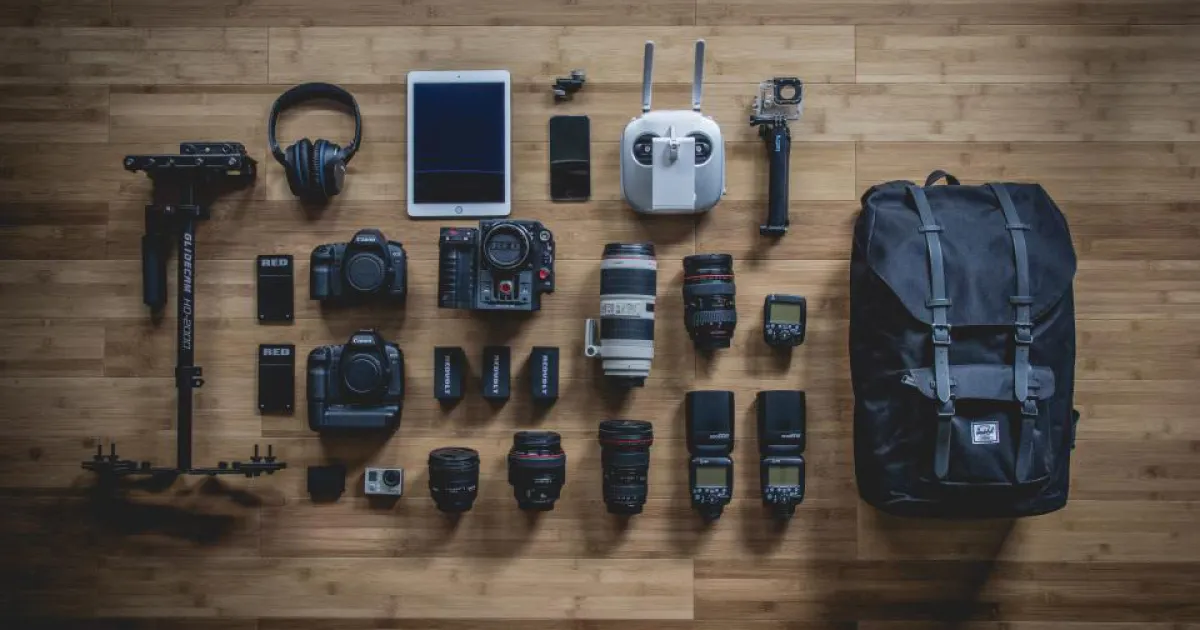
From the high-resolution A7R series for professional photographers to the cinema-grade FX6 for filmmakers, discover which Sony camera is perfect for your creative needs and budget
📷 Photography
🎬 Videography
📊 Sony Alpha
🏆 Budget Guide
📅 Updated 2025
📋 10 Cameras Reviewed
🎯 All Budgets Covered
📷 Introduction: Sony's Dominance in Digital Imaging
Sony has established itself as the undisputed leader in the full-frame mirrorless camera market, consistently pushing the boundaries of sensor technology, autofocus performance, and video capabilities. The Sony Alpha series has become the go-to choice for photographers and videographers ranging from enthusiastic beginners to Oscar-winning cinematographers. Sony's commitment to innovation has resulted in a camera lineup that offers an unprecedented combination of resolution, speed, dynamic range, and video features across multiple price points and form factors.
Choosing the right Sony camera requires understanding the nuances of their extensive lineup. The Alpha series is divided into several distinct product lines that serve different user needs. The A1 series represents the pinnacle of Sony's technology, combining extremely high resolution with blazing-fast speeds for photographers who demand the absolute best. The A9 series is designed for sports and action photographers who need speed above all else. The A7R series prioritizes resolution for studio, landscape, and commercial photographers who require maximum detail. The A7 IV series offers the best balance of performance and value for enthusiasts and professionals who need a versatile all-rounder. The A7C series packages full-frame performance in a compact body for travel and everyday carry. The APS-C A6XXX series provides excellent image quality at a more accessible price point. And the FX cinema line brings Sony's renowned cinema technology into a digital camera form factor for serious videographers.
This comprehensive guide evaluates the best Sony cameras for photography and videography in 2025, helping you navigate the lineup and find the perfect camera for your specific needs, skill level, and budget. Whether you are a professional photographer building a commercial kit, a videographer seeking cinematic image quality, or an enthusiast making your first full-frame investment, this guide covers the top Sony cameras across every category.
A hero banner showing Sony's current camera lineup arranged on a clean dark surface. The lineup includes the flagship Sony A1 with its distinctive red accent ring, the A7R V with its high-resolution sensor branding, the A7 IV as the versatile all-rounder, the compact A7C II with its slim profile, the sports-focused A9 III with its stacked sensor badge, the APS-C A6700 with its compact form factor, and the cinema FX3 and FX6 with their professional cage and accessory mounting points. Each camera is labeled with its model name and key differentiator. Behind the cameras, a selection of Sony G Master lenses are arranged, including the 24-70mm f/2.8, 70-200mm f/2.8, and 50mm f/1.2, showcasing the complete Sony ecosystem. The caption reads: "Sony's comprehensive camera lineup offers a model for every photographer and videographer. Understanding the strengths of each series is the key to choosing the perfect camera for your needs."
🎯 Sony A1: The Ultimate Flagship for Photography & Videography
The Sony A1 is the most technologically advanced full-frame mirrorless camera ever created, representing the absolute pinnacle of Sony's imaging technology. Priced at approximately $6,500, the A1 is designed for professionals who demand uncompromising performance in every category and are willing to invest in the best tools available. The A1 achieves what was previously thought impossible by combining a 50.1-megapixel full-frame stacked CMOS sensor with continuous shooting at 30 frames per second with full autofocus and auto-exposure tracking. This combination of resolution and speed makes the A1 uniquely capable across virtually every photographic genre, from studio portraiture to wildlife action photography.
Photography Performance: The A1's 50.1-megapixel sensor delivers extraordinary detail that rivals medium-format cameras, making it an exceptional tool for commercial, landscape, and studio photographers who need maximum resolution for large prints and extensive cropping. The stacked sensor architecture enables readout speeds that eliminate rolling shutter distortion, allowing the electronic shutter to be used for virtually any subject without worrying about the banding or skew that affects slower sensors. The A1's autofocus system uses 759 phase-detection points covering 92 percent of the sensor area, with Sony's latest AI-based subject recognition that can identify and track human and animal eyes, birds, insects, cars, trains, and aircraft with remarkable accuracy. The combination of 30 fps continuous shooting with real-time tracking means the A1 can capture sequences of fast action with a hit rate that was previously unachievable. This capability is transformative for sports, wildlife, and event photographers who need to capture decisive moments in fast-moving situations.
Videography Capabilities: The A1 is equally impressive as a video camera, offering internal recording of 8K video at 30 frames per second in 10-bit 4:2:2 color depth, providing extraordinary detail and color grading flexibility for professional video productions. The 8K footage can be downsampled to produce exceptional 4K footage with reduced noise and enhanced detail. The A1 also offers 4K recording at up to 120 frames per second for smooth slow-motion footage. The camera includes S-Log3 and S-Cinetone color profiles that match Sony's cinema cameras, ensuring consistent color grading across projects that combine footage from multiple Sony cameras. The A1's 5-axis in-body image stabilization provides up to 5.5 stops of correction for handheld shooting, and the electronic viewfinder with 9.44 million dots offers the most detailed and natural viewfinder experience available. The A1 is the ultimate do-everything camera for professionals who need one camera that excels at everything, though its high price and extreme capabilities are overkill for most users.
The Sony A1 camera body shown on a professional studio set with a 24-70mm f/2.8 G Master lens attached. Beside the camera, a display shows sample images: a high-resolution landscape photo with extraordinary detail revealing distant mountain textures when zoomed in, a sequence of 30 burst images of a bird in flight showing each frame tack-sharp, and a 4K video timeline demonstrating 8K downsampled footage with S-Cinetone color grading. A spec callout highlights the key features: 50.1MP stacked sensor, 30fps continuous shooting, 8K 30p video, AI autofocus with subject recognition. The caption reads: "The Sony A1 is the ultimate no-compromise camera for professionals who need the best of everything. Its combination of resolution, speed, and video capability is unmatched in any other camera."
📸 Sony A7R V: The Resolution King for Photographers
The Sony A7R V is the camera of choice for photographers who prioritize resolution above all else. Priced at approximately $3,900, the A7R V is the fifth generation of Sony's high-resolution A7R series and features a 61-megapixel full-frame sensor that delivers the highest resolution of any full-frame camera in Sony's lineup. This extraordinary resolution makes the A7R V the premier choice for studio photographers, landscape specialists, architectural photographers, and commercial shooters who need to capture every possible detail for large-format printing or extensive cropping flexibility.
Resolution and Image Quality: The 61-megapixel sensor in the A7R V captures an extraordinary amount of detail that allows for prints at massive sizes without any visible pixelation. A 61-megapixel file printed at 300 DPI produces a print measuring approximately 28 by 19 inches, and even larger prints remain detailed at typical viewing distances. The resolution also provides tremendous cropping flexibility, allowing photographers to reframe images in post-processing without sacrificing resolution for final output. The sensor features Sony's BSI design for improved dynamic range and noise performance, and the pixel shift multi-shooting mode combines 16 separate exposures to create a 240-megapixel composite image for subjects that remain perfectly still. The A7R V's dynamic range is exceptional, with approximately 15 stops of latitude that allows for extensive shadow and highlight recovery in post-processing. This combination of resolution and dynamic range makes the A7R V an extraordinary tool for commercial and fine art photography where image quality is paramount.
Autofocus and Handling: Despite its focus on resolution, the A7R V does not compromise on autofocus performance. It features the same AI processing unit found in the A1, providing highly accurate subject recognition and tracking for humans, animals, birds, insects, and vehicles. The 693-phase detection points cover 79 percent of the sensor area, and the autofocus works reliably in light levels as low as -4 EV. The A7R V features a 4-axis multi-angle LCD screen that tilts and flips for flexible composition, and the 9.44-million-dot electronic viewfinder provides a detailed, natural viewing experience. The camera's body features improved ergonomics with a deeper grip, more responsive control dials, and a dedicated joystick for focus point selection. The A7R V includes pixel shift multi-shooting and focus stacking capabilities that are valuable for product and macro photographers. The A7R V also shoots 8K video, though its primary purpose and strength remain still photography. It represents the best choice for photographers who need maximum resolution and are willing to manage the large file sizes and demanding lens requirements that come with 61 megapixels.
The Sony A7R V camera body displayed in a professional studio setting with a 50mm f/1.2 G Master prime lens. A large print on the wall behind shows a landscape image printed at 40x60 inches, with a magnifying glass held to a section revealing remarkable detail and clarity. A monitor beside the camera shows a 61-megapixel RAW file in Lightroom at 200 percent zoom, demonstrating the cropping flexibility the resolution provides. A split-screen comparison shows the same scene captured with the A7R V at 61MP and a 24MP camera, highlighting the additional detail in the higher-resolution image. An inset shows the 4-axis multi-angle screen flipped out for a low-angle composition. The caption reads: "The Sony A7R V delivers the highest resolution in Sony's lineup with 61 megapixels of detail. It is the definitive choice for photographers who need maximum resolution for large prints and extensive cropping."
🎬 Sony A7S III & FX3: The Videographer's Dream
When it comes to video performance, Sony's A7S III and FX3 cameras have become the industry standard for independent filmmakers, content creators, and videographers. Both cameras are built around the same 12.1-megapixel full-frame sensor that prioritizes low-light performance, dynamic range, and video-specific features over still image resolution. While 12 megapixels may seem low by modern standards, this sensor design allows for enormous individual pixels that capture exceptional amounts of light, resulting in outstanding high-ISO performance and clean footage in challenging lighting conditions.
Sony A7S III: Priced at approximately $3,500, the A7S III is a hybrid camera that excels at video while remaining capable for still photography. It offers internal 4K recording at up to 120 frames per second in 10-bit 4:2:2 color depth, providing smooth slow-motion footage with excellent color grading flexibility. The A7S III was the first Sony camera to introduce the AI-based autofocus system, and its subject tracking for video is exceptionally reliable, maintaining focus on subjects moving erratically or temporarily obscured. The camera features a full-size HDMI port for external recording, dual card slots compatible with high-speed CFexpress Type A cards, and a robust heat dissipation system that eliminates recording time limits. The 9.44-million-dot electronic viewfinder is one of the best available, though video shooters will spend more time using the fully articulating touchscreen that provides clear visibility from any angle. The A7S III's low-light performance is legendary, with usable footage at ISO levels that would render other cameras unusable, making it the camera of choice for wedding videographers, event shooters, and documentary filmmakers who work in uncontrolled lighting conditions.
Sony FX3: Priced at approximately $3,900, the FX3 is essentially the A7S III optimized specifically for filmmaking. The FX3 removes the electronic viewfinder and adds a built-in cooling fan for unlimited recording time in high-temperature environments. The body is designed for rigging, with multiple 1/4-20 mounting points, a top handle with a built-in XLR audio adapter, and a cage-friendly form factor. The FX3 includes S-Cinetone color science straight from Sony's Venice cinema camera, providing beautiful skin tones and a cinematic look straight out of camera with minimal grading required. The FX3 also features a tally lamp visible from the front, a more video-oriented menu system, and the ability to record proxy files alongside full-resolution footage for efficient editing workflows. For serious videographers who prioritize video above all else, the FX3's dedicated video design makes it a better choice than the hybrid A7S III. Both cameras represent the gold standard for full-frame mirrorless video performance and have been used to shoot everything from Hollywood films to YouTube content.
A video production setup featuring both the A7S III and FX3 cameras side by side. The A7S III is mounted on a gimbal with a 24-70mm f/2.8 lens, demonstrating its versatility for run-and-gun videography with its articulating screen and compact form factor. The FX3 is shown rigged for a professional film set, mounted on a shoulder rig with follow focus, top handle with XLR microphone, external monitor, and matte box. A monitor displays side-by-side footage comparisons: a night street scene shot at ISO 12,800 showing remarkably clean footage with minimal noise, and a graded S-Log3 shot demonstrating the color grading flexibility with S-Cinetone. A spec highlight notes: "12.1MP full-frame sensor, 4K 120p, 15+ stops dynamic range, AI autofocus." The caption reads: "The Sony A7S III and FX3 are the videographer's choice for low-light performance and exceptional video quality. Choose the A7S III for hybrid use or the FX3 for dedicated filmmaking rigs."
📷 Sony A7 IV: The Versatile All-Rounder
The Sony A7 IV is the most popular model in Sony's full-frame lineup for good reason. Priced at approximately $2,500, it strikes the perfect balance between resolution, speed, video capability, and price, making it the ideal choice for a vast range of photographers and videographers. The A7 IV improves on its predecessor with a 33-megapixel full-frame sensor that offers significantly more resolution than the 24-megapixel cameras that dominated this segment for years, while maintaining manageable file sizes and excellent high-ISO performance.
Photography Performance: The 33-megapixel sensor in the A7 IV delivers an excellent balance of resolution and low-light capability. It provides enough detail for large prints and significant cropping while maintaining clean images at ISO levels up to 6400 and usable results at 12,800 and beyond. The continuous shooting speed of 10 frames per second with mechanical shutter is adequate for most subjects, and the buffer depth is generous enough for extended bursts. The autofocus system uses 759 phase-detection points with the same AI-based Real-time Tracking found in Sony's flagship cameras, providing exceptional subject recognition and tracking performance. The A7 IV includes focus stacking, pixel shift multi-shooting, and a host of computational features that enhance its versatility for different photographic genres. The camera's ergonomics are refined with a deeper grip, improved button placement, and a fully articulating touchscreen that works well for both still photography and video. The 3.69-million-dot electronic viewfinder is clear and responsive, adequate for most users though not reaching the resolution of the A1 or A7R V.
Video Capabilities: The A7 IV's video performance is a significant step up from its predecessor, offering 4K recording at up to 30 frames per second from the full width of the sensor with 7K oversampling for exceptional detail, and 4K 60p with a Super 35mm crop. The camera records in 10-bit 4:2:2 color depth with S-Log3 and S-Cinetone profiles, providing professional-grade color grading flexibility. The A7 IV introduces breathing compensation that works with compatible Sony lenses to maintain consistent field of view during focus pulls, and it includes focus mapping for precise manual focus control. The camera features a headphone jack, microphone jack, micro HDMI port, and USB-C for streaming as a webcam. The A7 IV also offers Sony's Active Mode image stabilization that provides excellent handheld stability for run-and-gun video shooting. For the vast majority of photographers and videographers who need one camera that does everything well without breaking the bank, the Sony A7 IV is the best all-around choice in Sony's lineup.
The Sony A7 IV camera body photographed in a lifestyle setting showing its versatility. The camera is shown on a travel photographer's backpack with a 24-105mm f/4 G lens attached, suggesting its all-purpose travel capability. Beside it, sample images are displayed: a portrait with beautiful skin tones and background blur, a landscape with excellent dynamic range, a street photography scene captured at high ISO with minimal noise, and a video editing timeline showing graded 4K footage. A spec highlight notes: "33MP sensor, 4K 60p 10-bit, AI autofocus, vari-angle screen." Three icons show "Photo, Video, Hybrid" all active, emphasizing the camera's all-rounder nature. The caption reads: "The Sony A7 IV is the perfect balance of resolution, performance, video capability, and price. It is the best choice for photographers and videographers who need a single camera that excels across all disciplines."
🧳 Sony A9 III: Speed Demon for Sports & Wildlife
The Sony A9 III is the world's first full-frame camera with a global shutter sensor, representing a revolutionary advancement in camera technology. Priced at approximately $6,000, the A9 III is designed exclusively for sports, wildlife, and action photographers who need the absolute fastest shooting speeds and the most reliable autofocus tracking available. The global shutter eliminates rolling shutter distortion entirely, allowing the electronic shutter to flash-sync at any shutter speed without any banding, flicker, or distortion artifacts.
The global shutter sensor reads out the entire frame simultaneously rather than scanning line by line, which means there is no rolling shutter effect whatsoever. This is revolutionary for sports photographers who shoot fast-moving subjects, as it completely eliminates the skewed distortion that can affect images of speeding cars, swinging golf clubs, or fast-moving athletes. The A9 III can shoot at an incredible 120 frames per second with full autofocus and auto-exposure tracking, capturing moments that happen too quickly for the human eye to see. The electronic shutter is silent and vibration-free, making the A9 III ideal for quiet environments like tennis matches and golf tournaments. The autofocus system features 759 phase-detection points with AI-based subject recognition that includes human and animal eyes, birds, and vehicles. The A9 III's buffer can hold over 200 compressed RAW frames at 120 fps, allowing photographers to capture entire sequences of action without the camera slowing down. The 24.6-megapixel sensor resolution is optimized for speed rather than maximum detail, providing ample resolution for sports and wildlife applications while keeping file sizes manageable for rapid-fire shooting. The A9 III is a specialized tool for a specific type of photography, but for sports and action photographers who need the absolute fastest shooting speeds available, it is unmatched by any other camera on the market.
The Sony A9 III camera body with a 70-200mm f/2.8 G Master II lens attached, shown on a football field or wildlife reserve setting. A burst sequence of 12 frames shows a sprinter exploding from starting blocks, each frame perfectly sharp with no rolling shutter distortion. A callout highlights the global shutter: "120fps continuous shooting, zero rolling shutter, flash sync at any speed." An inset shows a comparison between rolling shutter and global shutter: a fast-moving bicycle wheel appears skewed with rolling shutter but perfectly circular with global shutter. The camera's silent shooting icon and twin CFexpress card slots are highlighted. The caption reads: "The Sony A9 III's global shutter is a revolutionary advancement for action photography. It captures the impossible at 120 frames per second with zero distortion, making it the ultimate tool for sports and wildlife professionals."
📡 Sony A7C II & A7C R: Compact Full-Frame for Travel & Everyday
Not every photographer needs or wants a large, professional-grade camera body. The Sony A7C series packages full-frame image quality into a significantly smaller and lighter body that is ideal for travel, street photography, vlogging, and everyday carry. The A7C II and A7C R represent the second generation of this compact series, offering the full-frame performance of Sony's larger cameras in a body that is nearly as small as many APS-C cameras.
Sony A7C II: Priced at approximately $2,200, the A7C II features the same 33-megapixel sensor as the A7 IV, packed into a body that is approximately 20 percent smaller and lighter. The A7C II includes the same AI-based autofocus system as Sony's flagship cameras, providing exceptional subject tracking in a compact package. The electronic viewfinder is smaller than the A7 IV's, but the fully articulating touchscreen makes composition easy from any angle. The A7C II records 4K video at up to 30 fps from the full sensor width with 7K oversampling, and 4K 60p with a Super 35mm crop, matching the A7 IV's video capabilities. The camera features 5-axis in-body image stabilization, a single SD card slot, and a compact lens mount that pairs beautifully with Sony's smaller lenses like the 35mm f/1.8, 50mm f/2.5 G, and 28-60mm f/4-5.6 kit lens.
Sony A7C R: Priced at approximately $3,000, the A7C R is the compact version of the A7R V, featuring the same 61-megapixel sensor in the small A7C body. The A7C R offers the highest resolution of any compact full-frame camera, appealing to photographers who need maximum detail for landscape, architectural, and travel photography but prioritize a lightweight kit. The A7C R includes pixel shift multi-shooting for 240-megapixel composites and the same advanced autofocus as the A7C II. Both cameras use Sony's Z-series battery, providing excellent battery life in a compact package. The A7C series is the perfect choice for travel photographers, content creators, and anyone who values portability without sacrificing image quality. The primary trade-offs are the smaller viewfinder, single card slot, and slightly less robust build compared to the larger A7 series bodies.
A size comparison showing the A7C II and A7C R alongside the larger A7 IV to demonstrate the size difference. The A7C II is shown with a compact 35mm f/1.8 lens and a 28-60mm kit lens, fitting easily into a small sling bag alongside a passport, water bottle, and notebook. A travel scene shows a photographer using the A7C II in a cityscape setting, with the camera held easily in one hand. Both the A7C II and A7C R are shown with their model badges highlighted, and a spec comparison chart below shows: "A7C II 33MP, A7C R 61MP, same compact body, AI autofocus, 4K video." The caption reads: "The Sony A7C series delivers full-frame image quality and autofocus in a compact, travel-friendly body. Choose the A7C II for the best balance or the A7C R for maximum resolution in a lightweight kit."
📷 Sony APS-C Cameras: A6700 & ZV-E10 II for Enthusiasts
Sony's APS-C camera lineup offers excellent image quality at more accessible price points, making them ideal for enthusiasts, content creators, and photographers who prefer a smaller, lighter system. The APS-C sensor size provides a 1.5x crop factor that gives additional reach for telephoto photography, making these cameras particularly attractive for wildlife and sports enthusiasts on a budget. Sony's two standout APS-C cameras in 2025 are the A6700 and the ZV-E10 II.
Sony A6700: Priced at approximately $1,400, the A6700 is Sony's flagship APS-C camera and the most capable crop-sensor camera in the lineup. It features a 26-megapixel stacked CMOS sensor that provides excellent image quality, fast readout speeds for reduced rolling shutter, and continuous shooting at 11 frames per second with mechanical shutter. The A6700 includes the same AI-based autofocus system found in Sony's full-frame cameras, providing exceptional subject recognition and tracking performance that rivals much more expensive cameras. The camera records 4K video at up to 120 fps with 10-bit 4:2:2 color depth, S-Log3, and S-Cinetone, making it a highly capable video camera in its own right. The A6700 features 5-axis in-body image stabilization, a fully articulating touchscreen, and a high-resolution electronic viewfinder. The camera is compatible with Sony's entire E-mount lens system, including both APS-C and full-frame lenses, giving users a clear upgrade path to full-frame if they choose to expand their kit in the future.
Sony ZV-E10 II: Priced at approximately $1,000, the ZV-E10 II is designed specifically for content creators and vloggers who prioritize video performance, ease of use, and portability. It features a 26-megapixel APS-C sensor, 4K video recording with 10-bit color depth, and Sony's most user-friendly interface with dedicated controls for product showcase mode, background defocus, and cinematic vlog settings. The ZV-E10 II includes a directional 3-capsule microphone with a windscreen for improved audio quality, a fully articulating screen that faces forward for vlogging, and a compact body that is comfortable to hold for extended recording sessions. The camera features Sony's Real-time Eye AF for humans and animals, ensuring sharp focus during video recording. The ZV-E10 II is the best choice for content creators who want excellent video quality in an affordable, user-friendly package without the complexity and cost of Sony's full-frame cameras.
A comparison display of the A6700 and ZV-E10 II in use. The A6700 is shown in a wildlife photography setting with a 70-350mm f/4.5-6.3 G OSS lens, demonstrating the reach advantage of the APS-C crop factor. A sample wildlife image shows a sharp bird photo with excellent detail. The ZV-E10 II is shown in a vlogging setup with its articulating screen flipped forward, the camera mounted on a small tripod on a desk with ring light and microphone. A sample video frame shows a person talking to camera with background blur effect active. A spec comparison between the two shows: "A6700: advanced photography + video, 11fps, EVF, IBIS" and "ZV-E10 II: content creator focused, vlogging features, compact, affordable." Both cameras show the E-mount badge indicating lens compatibility. The caption reads: "Sony's APS-C cameras offer excellent value for enthusiasts and content creators. The A6700 is the most capable APS-C camera for hybrid shooting, while the ZV-E10 II is purpose-built for vloggers and content creators."
🔍 Sony E-Mount Lens Ecosystem: Glass Matters
The camera body is only half of the equation. Sony's E-mount lens ecosystem is one of the most comprehensive and highest-quality lens systems available, with over 70 native lenses ranging from ultra-wide-angle to super-telephoto, from affordable f/1.8 primes to exotic f/1.2 G Master optics. The quality of your lens choices has a more significant impact on image quality than the camera body, and understanding Sony's lens lineup is essential for building a system that delivers the results you envision.
G Master Series: Sony's G Master lenses represent the pinnacle of optical engineering, delivering the highest resolution, most beautiful bokeh, and fastest autofocus performance in the E-mount system. The GM series includes essential lenses like the 24-70mm f/2.8 GM II, which is widely regarded as the best standard zoom lens ever made, the 70-200mm f/2.8 GM II, which combines exceptional sharpness with a remarkably lightweight design, and prime lenses like the 50mm f/1.2 GM, 85mm f/1.4 GM, and 135mm f/1.8 GM that deliver extraordinary image quality for professional portrait and commercial work. The GM series has expanded to include ultra-wide-angle options like the 14mm f/1.8 GM and 12-24mm f/2.8 GM for architectural and astrophotography, as well as super-telephoto lenses like the 400mm f/2.8 GM and 600mm f/4 GM for sports and wildlife professionals. G Master lenses are expensive, typically ranging from $1,500 to over $12,000, but they deliver optical performance that rivals or exceeds any lens system in the world.
G Series and Third-Party Options: Sony's G series lenses offer excellent optical quality at more accessible prices than the GM series. The G series includes versatile options like the 24-105mm f/4 G OSS, which is the perfect all-purpose travel lens, the 20mm f/1.8 G for landscape and astrophotography, and the 70-350mm f/4.5-6.3 G OSS for APS-C wildlife photography. Sony also offers a range of affordable f/1.8 prime lenses, including the 35mm f/1.8, 50mm f/1.8, and 85mm f/1.8, which provide excellent image quality at prices under $600. The E-mount ecosystem has also attracted outstanding third-party lens manufacturers. Sigma's Contemporary and Art series lenses offer exceptional optical quality at competitive prices, including popular options like the 24-70mm f/2.8 Art, 85mm f/1.4 Art, and the compact i-series primes. Tamron's lens lineup focuses on versatility and value, with popular options including the 28-75mm f/2.8 G2, 70-180mm f/2.8, and the incredibly versatile 35-150mm f/2-2.8. The breadth and depth of the E-mount lens system is one of Sony's strongest advantages over competing systems, offering choices at every price point and for virtually every photographic application.
A comprehensive display of Sony E-mount lenses arranged by category. The top row shows G Master lenses: 24-70mm f/2.8 GM II, 70-200mm f/2.8 GM II, 50mm f/1.2 GM, 85mm f/1.4 GM, 135mm f/1.8 GM, with the distinctive orange G Master badge and red accent ring highlighted. The middle row shows G series and Sony prime lenses: 24-105mm f/4 G, 35mm f/1.8, 50mm f/2.5 G, 85mm f/1.8, 20mm f/1.8 G. The bottom row shows popular third-party lenses from Sigma and Tamron: Sigma 24-70mm f/2.8 Art, Sigma 85mm f/1.4 Art, Tamron 28-75mm f/2.8 G2, Tamron 35-150mm f/2-2.8. Each lens has a price and key feature listed below. A compatibility note states: "All E-mount lenses work on both full-frame and APS-C Sony cameras." The caption reads: "Sony's E-mount lens ecosystem is one of the most comprehensive in photography. From affordable f/1.8 primes to exotic G Master optics, the right lens choices matter more than the camera body for image quality."
📊 Sony Camera Comparison: How to Choose the Right Model
With so many Sony camera models to choose from, selecting the right one can feel overwhelming. The best approach is to evaluate your specific needs across several key dimensions and match them to the camera that best aligns with your priorities. No single camera is best for everyone, but by understanding how the models differ in resolution, speed, video capability, size, and price, you can identify the camera that is best for you.
For Professional Photographers: If you are a professional photographer and image quality is your primary concern, the Sony A1 offers the ultimate combination of resolution and speed at $6,500. If your work focuses on studio, landscape, or commercial photography where maximum resolution is critical, the A7R V at $3,900 with its 61-megapixel sensor is the better value. If you specialize in sports or wildlife and need the fastest shooting speeds available, the A9 III at $6,000 with its revolutionary global shutter is unmatched.
For Enthusiast Photographers: For most enthusiast photographers, the Sony A7 IV at $2,500 offers the best balance of resolution, performance, features, and value. Its 33-megapixel sensor, excellent autofocus, and hybrid photo-video capabilities make it suitable for virtually any type of photography. If you prioritize portability for travel, the A7C II at $2,200 offers the same sensor and autofocus in a significantly smaller body. If you want the highest resolution in a compact package, the A7C R at $3,000 pairs the 61-megapixel sensor with a compact body.
For Videographers and Filmmakers: If video is your primary focus, the A7S III at $3,500 and FX3 at $3,900 are the clear choices, offering exceptional low-light performance, 4K 120p recording, and professional video features. Choose the A7S III if you also need still photography capability, or the FX3 if you are building a dedicated filmmaking rig. For content creators and vloggers, the ZV-E10 II at $1,000 offers excellent video quality in an affordable, user-friendly package.
For Beginners and Budget-Conscious Buyers: If you are new to mirrorless cameras or working with a limited budget, the A6700 at $1,400 offers exceptional image quality, autofocus, and video capabilities in the APS-C format. The A6700 is compatible with Sony's entire E-mount lens system, providing a clear upgrade path to full-frame in the future. If your budget is under $1,000, the ZV-E10 II provides excellent video and still image quality for content creation and everyday photography, and it uses the same E-mount lenses that will work with any Sony camera you may upgrade to in the future.
A decision flowchart for choosing the right Sony camera. The flowchart starts with "What is your primary use?" with branches for "Professional Photography," "Enthusiast Photography," "Video/Filmmaking," and "Content Creation." Each branch leads to recommended camera models with their key specs and prices. The Professional branch splits into "Studio & Commercial" leading to A7R V, "Sports & Wildlife" leading to A9 III, and "Everything" leading to A1. The Enthusiast branch splits into "Best All-Rounder" leading to A7 IV, "Travel & Portable" leading to A7C II, and "Max Resolution Compact" leading to A7C R. The Video branch splits into "Hybrid Video+Photo" leading to A7S III, "Dedicated Cinema" leading to FX3, and "Vlogging" leading to ZV-E10 II. The Content Creation branch leads to A6700 and ZV-E10 II. A sidebar shows price ranges from under $1,000 to over $6,000. The caption reads: "Choosing the right Sony camera starts with understanding your primary use case, budget, and priorities. Use this guide to narrow your options and find the perfect camera for your needs."
📱 Essential Accessories for Your Sony Camera
A camera body and lens are the foundation of your imaging system, but the right accessories can dramatically expand your creative capabilities, improve your workflow, and protect your investment. Sony camera owners have access to a vast ecosystem of accessories ranging from essential protective gear to specialized tools for specific photographic disciplines. Investing in quality accessories enhances your shooting experience and helps you capture images and footage that would be impossible with the camera alone.
Memory Cards and Storage: Choosing the right memory cards is essential for getting the most out of your Sony camera. For cameras that support CFexpress Type A cards, the Sony TOUGH series offers the fastest read and write speeds, essential for 8K video recording and high-speed burst shooting. These cards are also ruggedized, resistant to drops, water, and bending. For SD card users, the Sony SF-G series UHS-II cards provide excellent speed and reliability. A best practice is to use two cards in cameras with dual slots, configuring the camera to record simultaneously for instant backup during critical shoots, or to overflow to the second card when the first is full. Invest in a quality card reader that supports the fastest transfer speeds your cards can deliver, as transferring large files over slow readers becomes a significant bottleneck in your workflow. External SSD drives from Samsung, SanDisk, and LaCie provide fast, portable storage for backing up images in the field, and many photographers now use iPad Pros or small laptops with card readers for on-location editing and backup.
Batteries and Power Solutions: Sony's Z-series batteries used in the A1, A7 IV, A7R V, A7S III, and FX3 provide excellent battery life, but professional shooters still need multiple batteries for all-day shoots. Sony's NP-FZ100 batteries are available in official Sony versions and third-party alternatives from brands like Wasabi and DSTE. The official Sony batteries offer the most reliable performance and communicate accurate remaining capacity information to the camera. For studio and long-duration shooting, the Sony NPA-MQZ1K multi-battery adapter allows four Z-series batteries to be hot-swapped for unlimited continuous shooting. USB-C power delivery allows many Sony cameras to be powered directly from power banks or wall adapters during extended video recording or time-lapse sessions. For videographers, V-mount battery solutions with dummy battery adapters provide professional-grade power for extended production days, powering both the camera and accessories through a single battery system.
Camera Support and Stabilization: The right support system is essential for sharp images and smooth video. For still photography, a quality tripod from brands like Gitzo, Really Right Stuff, or Peak Design provides a stable platform for landscape, studio, and long-exposure photography. Carbon fiber tripods offer the best strength-to-weight ratio for travel photographers. For video work, a gimbal stabilizer from DJI or Zhiyun transforms handheld footage into smooth, cinematic shots. Sony cameras with compact form factors like the A7C series and A6700 pair exceptionally well with smaller gimbals for travel and run-and-gun shooting. A monopod provides a balance of stability and mobility for sports and wildlife photographers who need to move quickly while reducing fatigue from heavy telephoto lenses. For macro and product photography, a focusing rail allows precise positioning for focus stacking, and a sturdy tabletop tripod provides stability for close-up work.
Filters and Lens Protection: Quality filters are essential tools for certain types of photography and provide important lens protection. A UV or clear protective filter should be considered an essential investment for every lens, protecting the front element from scratches, dust, moisture, and impact. For landscape photographers, a circular polarizer filter reduces reflections from water and glass, enhances color saturation, and darkens blue skies for more dramatic landscape images. Neutral density filters allow for longer exposures in bright conditions, creating smooth water effects in landscapes and enabling wide-aperture shooting in bright light for shallow depth of field. Variable ND filters are particularly useful for videographers who need to maintain consistent shutter angles when changing aperture or lighting conditions. Graduated ND filters help balance exposure between bright skies and darker foregrounds in landscape photography. When investing in filters, choose multi-coated options from reputable brands like B+W, Hoya, or Breakthrough Photography to minimize flare and maintain image quality.
A Sony camera accessory kit laid out on a clean surface. The layout is organized into four groups. Group 1 "Storage & Power" shows a Sony TOUGH CFexpress Type A card, SD card, card reader, external SSD, Sony NP-FZ100 battery, multi-battery adapter, and USB-C power bank. Group 2 "Support & Stabilization" shows a carbon fiber tripod with a Really Right Stuff ball head, a DJI RS4 gimbal with a Sony A7 IV mounted, and a monopod with a Wimberley monogimbal head for telephoto lenses. Group 3 "Filters & Protection" shows a UV filter, circular polarizer, variable ND filter, and a filter holder system with square graduated ND filters, all with a lens cleaning kit including a blower, brush, and microfiber cloth. Group 4 "Audio & Video" shows a Sony ECM-B1M shotgun microphone, XLR adapter unit, wireless lavalier microphone system, and a small LED video light. Each item has a small price tag, and the total estimated investment is shown at the bottom. The caption reads: "The right accessories expand your creative capabilities and protect your investment. Start with the essentials and build your kit as your skills and specific needs develop."
🔧 Caring for Your Sony Camera: Maintenance Best Practices
Your Sony camera is a precision instrument that represents a significant financial investment. Proper care and maintenance will keep it performing at its best for years and protect its resale value when you eventually upgrade. Sony cameras are built to professional standards with weather sealing that protects against dust and moisture, but they still require regular cleaning and careful handling to maintain optimal performance. Developing good maintenance habits prevents problems before they occur and ensures your camera is ready to perform when you need it most.
Sensor Cleaning: The sensor is the most critical and delicate component of your camera, and keeping it clean is essential for image quality. Dust spots on the sensor appear as dark, fuzzy spots in the same position on every image, particularly visible in smooth areas like skies and out-of-focus backgrounds. Sony cameras include a sensor cleaning function that vibrates the sensor to shake off loose dust particles, which is effective for minor dust but cannot handle stubborn particles. When the built-in cleaning function is insufficient, manual sensor cleaning is required. Use a blower designed specifically for sensor cleaning, holding the camera with the sensor facing downward to allow dislodged dust to fall out of the camera body. Never use compressed air, as the propellant can leave residue on the sensor. For stubborn spots, use a sensor cleaning swab with a drop of sensor cleaning solution, using a single, gentle swipe across the sensor surface. Always check the sensor carefully with a magnifying loupe after cleaning, and send the camera to a professional service center if you are uncomfortable performing sensor cleaning yourself.
Lens Maintenance: Lenses require regular cleaning to maintain contrast and sharpness. Use a blower to remove loose dust and debris from the front and rear lens elements before using any cleaning cloth, as rubbing dry dust across the lens surface can cause micro-scratches. A lens cleaning brush with soft camel hair bristles can gently remove remaining particles. For smudges and fingerprints, use a microfiber cleaning cloth with a drop of lens cleaning solution applied to the cloth, never directly to the lens. Clean in a circular motion from the center outward, and inspect the lens under bright light to ensure complete cleaning. Store lenses with both front and rear caps in a dry, dust-free environment. Silica gel packets in your camera bag help absorb moisture and prevent lens fungus growth in humid environments. For lenses with weather sealing, ensure the rubber gasket at the lens mount is clean and free of debris to maintain the seal's effectiveness.
Camera Body Care: The camera body itself requires regular maintenance to keep all systems functioning properly. Clean the exterior surfaces with a slightly damp microfiber cloth, avoiding the lens mount, sensor area, and electronic contacts. Use a soft brush to clean crevices around buttons, dials, and the viewfinder eyecup where dust and debris accumulate. Inspect and clean the electronic contacts on the lens mount and battery compartment with a dry cloth or contact cleaning pen to ensure reliable communication between the camera and accessories. Keep the viewfinder and LCD screen clean using a microfiber cloth, and consider applying a tempered glass screen protector to prevent scratches on the LCD. When storing the camera for extended periods, remove the battery to prevent battery drain and potential leakage, and store the camera in a dry, temperature-controlled environment. Use a camera bag with adequate padding and dividers to protect the camera during transport, and consider a rain cover for shooting in wet conditions even with weather-sealed cameras.
Firmware Updates: Sony regularly releases firmware updates that improve camera performance, add new features, and fix bugs. Keeping your camera's firmware up to date ensures you have access to the latest improvements and capabilities. Firmware updates are installed by downloading the update file from Sony's support website to a formatted SD card and inserting it into the camera. Before updating, fully charge the camera battery, as an interrupted firmware update can render the camera inoperable. Read the firmware release notes to understand what changes the update includes before installing it. Some updates offer significant improvements, such as new autofocus subject recognition categories, improved video features, or expanded lens compatibility. Subscribe to Sony's firmware notification service or periodically check the support page for your camera model to stay informed about available updates.
A step-by-step camera maintenance guide with photographs showing each procedure. Step 1 "Sensor Cleaning" shows a person using a blower with the camera body facing downward, then a sensor swab being used with a single smooth motion across the sensor. Step 2 "Lens Cleaning" shows the sequence: blower to remove loose dust, brush for remaining particles, then microfiber cloth with cleaning solution in a circular motion. Step 3 "Body Care" shows a soft brush being used on the buttons and dials, a contact cleaning pen on the lens mount pins, and a screen protector being applied. Step 4 "Firmware Update" shows a computer screen with Sony's support website displaying the firmware download page, and the camera with an SD card inserted showing the update screen. A maintenance schedule sidebar lists tasks by frequency: "Before each shoot: quick visual inspection and blower," "Weekly: lens cleaning and body wipe-down," "Monthly: sensor check and contact cleaning," "Quarterly: deep clean and firmware check," "Annually: professional service check-up." The caption reads: "Regular maintenance keeps your Sony camera performing at its best and protects your investment. Establish a routine that includes sensor checks, lens cleaning, and firmware updates for reliable performance."
❓ Frequently Asked Questions About Sony Cameras
Common questions about Sony's camera lineup and choosing the right model
❗ Which Sony camera is best for photography?
The Sony A1 is the best overall camera for photography, offering a 50.1-megapixel sensor with 30fps continuous shooting. For maximum resolution, the A7R V with its 61-megapixel sensor is the best choice for studio, landscape, and commercial photography. For most photographers, the A7 IV offers the best balance of features, performance, and value at a more accessible price point.
❗ Which Sony camera is best for video?
The Sony A7S III and FX3 are the best dedicated video cameras in Sony's lineup, offering exceptional low-light performance, 4K 120p recording, and professional video features. The A1 offers 8K recording for maximum resolution. The A7 IV offers excellent 4K video for hybrid shooters. The ZV-E10 II is the best value for content creators and vloggers.
❗ Is Sony better than Canon or Nikon for photography?
Sony, Canon, and Nikon all produce excellent cameras, and the best system depends on your specific needs and preferences. Sony leads in sensor technology, autofocus performance, and lens ecosystem breadth. Canon excels in color science and user interface design. Nikon offers exceptional ergonomics and lens quality. Sony's advantage in full-frame mirrorless comes from its early market entry, resulting in the most mature lens lineup and the most advanced sensor technology.
❗ Should I buy a full-frame or APS-C Sony camera?
Full-frame cameras offer better image quality, low-light performance, dynamic range, and shallower depth of field than APS-C cameras. APS-C cameras offer smaller size, lighter weight, lower cost, and a 1.5x crop factor that provides additional reach for telephoto photography. Choose full-frame if image quality and low-light performance are your top priorities. Choose APS-C if portability, budget, and telephoto reach are more important, or if you are new to mirrorless cameras and want a more affordable entry point.
❗ Do Sony cameras use SD cards or CFexpress cards?
Sony cameras support various card formats depending on the model. The A1, A7S III, FX3, and A9 III use dual CFexpress Type A and SD card slots, giving you flexibility to choose your preferred format. The A7R V, A7 IV, and A7C series use dual SD card slots. The APS-C A6700 and ZV-E10 II use single SD card slots. CFexpress cards offer faster read and write speeds for high-resolution burst shooting and high-bitrate video recording, while SD cards are more affordable and widely available.
❗ What lenses should I buy with my first Sony camera?
Start with a versatile standard zoom lens that covers the most common focal lengths. The Sony 24-70mm f/2.8 GM II is the best option if your budget allows, or the Tamron 28-75mm f/2.8 G2 offers excellent value. Add a fast prime lens like the Sony 50mm f/1.8 or 85mm f/1.8 for portraits and low-light shooting. A telephoto zoom like the Sony 70-200mm f/4 G or Tamron 70-180mm f/2.8 rounds out a versatile three-lens kit that covers virtually any photographic situation.
🏆 Conclusion: Find Your Perfect Sony Camera
Sony's camera lineup in 2025 offers more choice, more advanced technology, and better value than ever before. From the revolutionary global shutter of the A9 III to the extraordinary resolution of the A7R V, from the low-light mastery of the A7S III to the versatile all-round performance of the A7 IV, there is a Sony camera perfectly suited to every photographer and videographer.
The key to choosing the right Sony camera is understanding your specific needs and matching them to the appropriate model. Consider what you photograph most often, the conditions you shoot in, your need for video capabilities, your budget for both the camera and lenses, and your priorities in terms of size, weight, and handling. No camera is perfect for every situation, but Sony's lineup is deep enough that there is a camera that is perfect for your situation.
Remember that the camera body is only the beginning of your imaging system. Invest in quality lenses that match your photographic vision, and they will serve you through multiple camera body upgrades. Sony's E-mount system offers the most comprehensive lens selection in the mirrorless market, with options at every price point from Sony, Sigma, Tamron, and other manufacturers.
Whichever Sony camera you choose, you are investing in a system that will grow with you as your skills develop and your creative vision expands. Sony's commitment to innovation ensures that your E-mount investment will remain relevant and supported for years to come, and the exceptional image quality that Sony cameras deliver will help you create images and videos that you will be proud to share.
📷 Start Your Sony Journey Today
Choose your Sony camera, invest in quality lenses, and start capturing images that reflect your unique creative vision.
📋 Download Camera Comparison Chart
📱 Find Sony Camera Deals
Was this article helpful?
Pro Pixel Agency
Want this done for you? Try our video editing free.
Send a sample, get the finished result back, and only then decide. Clear prices, no commitment.