


Hey there! Ready to turn your financial dreams into reality? Let's dive into how professional analysis can supercharge your business and investments.
Table of contents
- Introduction to Financial Analysis Services
- What Exactly is Financial Analysis?
- Types of Financial Analysis Services – Find Your Perfect Match
- Why Invest in Professional Financial Analysis? The Perks Are Real!
- Common Mistakes to Avoid in Financial Analysis
- How to Pick the Perfect Financial Analysis Partner
- Success Stories: Real People, Real Results
- What Our Clients Say: Real Testimonials
- The Future of Financial Analysis: What's Next?
- Frequently Asked Questions
- Essential Tools and Resources for Financial Analysis
- Getting Started: Your First Steps to Financial Clarity
- Common Financial Ratios and What They Mean
- Industry-Specific Financial Analysis Insights
- Ethical Considerations in Financial Analysis
- Building Your Own Financial Analysis Skills
- Integrating Financial Analysis with Business Strategy
- Conclusion: Your Financial Future Starts Now
- 🚀 Ready to Transform Your Finances?
Introduction to Financial Analysis Services

Picture this: You're navigating the wild world of business, where every decision could make or break your success. That's where financial analysis services come in – your trusty compass in the financial jungle. These aren't just boring spreadsheets; they're powerful tools that help you understand your money story, spot opportunities, and dodge potential pitfalls.
In this friendly guide, we're going to chat about everything you need to know about financial analysis services. Whether you're a startup founder, a seasoned entrepreneur, or just someone looking to make smarter money moves, we've got you covered. By the end, you'll feel confident and excited about taking control of your financial future. Let's get started! 🚀
💡 Pro Tip: Imagine a financial analyst as your personal money detective – uncovering hidden treasures and warning you about sneaky risks!
What Exactly is Financial Analysis?

At its heart, financial analysis is like giving your business or investments a thorough health check-up. It's about digging deep into numbers, trends, and patterns to understand what's really going on beneath the surface. But here's the cool part – professional services take this to a whole new level with expert analysts using fancy tools to tell your financial story in a way that actually makes sense.
The Key Ingredients of Financial Analysis
- Financial Statement Sleuthing: We examine your balance sheets, income statements, and cash flow like a detective at a crime scene.
- Ratio Magic: Crunching numbers to reveal your profitability, liquidity, and efficiency – it's like having x-ray vision for your finances!
- Trend Spotting: Identifying patterns over time to predict what might happen next – because who doesn't love a good crystal ball?
- Cash Flow Chronicles: Tracking money in and out to ensure you always have enough to keep the lights on.
- Risk Radar: Spotting potential dangers before they become big problems – think of it as your financial early warning system.
Did you know? Smart financial analysis can boost your profits by up to 20% by uncovering hidden efficiencies and optimization opportunities. That's like finding money in your couch cushions – but way more exciting!
Types of Financial Analysis Services – Find Your Perfect Match

Not all financial analysis is created equal! Different services cater to different needs, just like how you wouldn't use the same tool for hammering a nail and painting a wall. Let's explore the main types so you can pick what's right for you.
1. Investment Analysis: Your Wealth-Building Sidekick
Ever wondered if that hot stock tip is really worth your hard-earned cash? Investment analysis dives deep into stocks, bonds, real estate, and more to help you make smart choices that grow your money.
2. Business Valuation: What's Your Company Really Worth?
Whether you're selling your business, merging with another, or just curious, business valuation gives you the real scoop on your company's market value using tried-and-true methods.
3. Financial Planning & Forecasting: Your Future Financial Blueprint
Think of this as creating a roadmap for your financial journey. We help you set goals, predict outcomes, and prepare for whatever the economy throws your way.
4. Risk Management: Your Financial Safety Net
Life is full of surprises – some good, some not so much. Risk analysis helps you identify potential threats and build strategies to protect your financial well-being.
5. Budget Analysis & Cost Control: Trim the Fat, Boost the Profit
Ever feel like your expenses are sneaking up on you? We compare your actual spending to your budget and help you cut costs without cutting corners.
Why Invest in Professional Financial Analysis? The Perks Are Real!

Okay, we get it – hiring experts costs money. But trust us, the benefits far outweigh the investment. Here's why smart folks (like you!) choose professional financial analysis services.
1. Decisions Backed by Real Data (No More Guessing Games)
Say goodbye to gut feelings and hello to informed choices that actually move the needle for your business or investments.
2. Dodge Financial Landmines Before They Explode
We spot risks early, so you can avoid costly mistakes and navigate economic storms with confidence.
3. Supercharge Your Financial Performance
Uncover inefficiencies, optimize resources, and watch your profits soar – it's like giving your finances a turbo boost!
4. Stay Ahead of the Competition
In today's fast-paced world, financial insights can be your secret weapon to outsmart rivals and seize opportunities.
5. Sleep Easy Knowing You're Compliant
We ensure everything's above board with regulations, so you can focus on growing your business instead of worrying about audits.
6. Build a Solid Foundation for Your Dreams
Strategic planning becomes a breeze when you have clear financial insights guiding your every move.
Real Talk: One of our clients, a growing manufacturing company, discovered $500K in annual savings through our analysis. That's not just numbers – that's real money back in their pocket and a 15% jump in profits!
Common Mistakes to Avoid in Financial Analysis

Even the smartest people make financial faux pas. But don't worry – we're here to help you sidestep these common pitfalls that could cost you big time.
1. Ignoring the Big Picture
Focusing only on short-term gains? That's like driving with blinders on. Always consider long-term implications.
2. Overlooking Hidden Costs
Those "small" expenses add up fast. Dig deep to uncover all costs before making decisions.
3. Emotional Decision Making
Love that stock because of a good story? Emotions can cloud judgment – stick to the facts!
4. Neglecting Risk Assessment
What happens if things go south? Always have a Plan B (and C) ready.
5. DIY Analysis Without Expertise
Spreadsheets are great, but complex analysis often needs professional eyes to spot what you might miss.
How to Pick the Perfect Financial Analysis Partner

Choosing a financial analysis service is like picking a dance partner – you want someone who matches your rhythm and makes you look good. Here's how to find your perfect match.
1. Check Their Credentials and Experience
Look for industry certifications, years in the game, and success stories that match your situation.
2. Services That Fit Like a Glove
Make sure they offer everything you need – from basic reports to advanced modeling.
3. Tech-Savvy Tools
They should use cutting-edge software for accurate, lightning-fast analysis.
4. Tailored to You
Your analysis should feel personal, not like a one-size-fits-all solution.
5. Clear Communication
They should explain things in plain English, not financial jargon-speak.
6. Worth Every Penny
Quality matters, but so does value. Compare what you get for what you pay.
Success Stories: Real People, Real Results

Don't just take our word for it – let's look at how financial analysis has transformed real businesses and individuals.
Tech Startup Turns Cash Flow Crisis into Growth Spurt
A booming app company was drowning in expenses despite skyrocketing users. Our analysis uncovered wasteful spending, leading to 30% cost cuts while keeping the growth train rolling. Boom – problem solved!
Manufacturing Giant Uncovers Hidden Efficiency Gold
Profits plummeting? Not on our watch. We pinpointed supply chain bottlenecks, resulting in 25% efficiency gains and a serious profit boost. Talk about a turnaround!
Investor's Portfolio Gets a Smart Makeover
Too many eggs in too many baskets? We rebalanced this investor's portfolio, ditching underperformers and boosting returns by 20% with lower risk. Smart money moves!
What Our Clients Say: Real Testimonials

Hear directly from our satisfied clients about how our financial analysis services have made a difference in their lives and businesses.
"The financial analysis team didn't just give us numbers – they gave us clarity and confidence. Our business decisions are now data-driven, and we've seen a 40% increase in profitability. Highly recommend!"
- Sarah Johnson, CEO of TechStart Inc.
"As an individual investor, I was overwhelmed by the market. Their personalized analysis helped me build a diversified portfolio that actually works for my goals. My returns have improved significantly!"
- Michael Chen, Independent Investor
"The risk assessment analysis saved us from a potential disaster. We identified vulnerabilities early and implemented safeguards that protected our company during economic uncertainty."
- Lisa Rodriguez, CFO of Manufacturing Plus
The Future of Financial Analysis: What's Next?

The financial world is evolving faster than ever. Here's what's shaping the future of analysis services.
AI and Machine Learning: Your New Financial Superheroes
Robots crunching numbers at lightning speed? Yes please! AI spots patterns and predicts trends way faster than humans ever could.
Big Data Magic
More data means deeper insights. We're talking comprehensive analysis from sources you never knew existed.
Blockchain Transparency
Secure, transparent transactions? Blockchain makes financial data more reliable than ever.
Real-Time Insights
No more waiting for quarterly reports. Get instant analysis for split-second decisions in fast markets.
ESG: Doing Good While Doing Well
Environmental, Social, and Governance factors are becoming key players in investment decisions and risk assessments.
Frequently Asked Questions
Essential Tools and Resources for Financial Analysis

Want to dive deeper? Here are some must-have tools and resources to supercharge your financial knowledge.
Free Tools to Get Started
- Google Sheets/Excel: Your free spreadsheet sidekick for basic analysis.
- Yahoo Finance: Free stock data and basic analysis tools.
- Investopedia: Learn financial concepts with their comprehensive encyclopedia.
Professional Software
- Tableau: Visualize your data like a pro.
- QuickBooks: Essential for small business financial tracking.
- Bloomberg Terminal: The gold standard for professional analysis (if you can afford it!).
Books to Read
- "The Intelligent Investor" by Benjamin Graham: Timeless wisdom for smart investing.
- "Financial Statement Analysis" by Martin Fridson: A deep dive into the art of analysis.
Getting Started: Your First Steps to Financial Clarity

Ready to take the plunge? Here's your roadmap to getting started with financial analysis services.
1. Know What You Need
Investment advice? Business valuation? Risk assessment? Clarify your goals first.
2. Hunt for the Right Partner
Research firms with great reviews, relevant experience, and services that match your needs.
3. Gather Your Financial Docs
Statements, budgets, projections – get everything organized and ready.
4. Set Clear Goals
What do you want to achieve? Growth? Risk reduction? Be specific!
5. Put Insights into Action
Don't just read the report – implement the recommendations and track your progress.
Common Financial Ratios and What They Mean
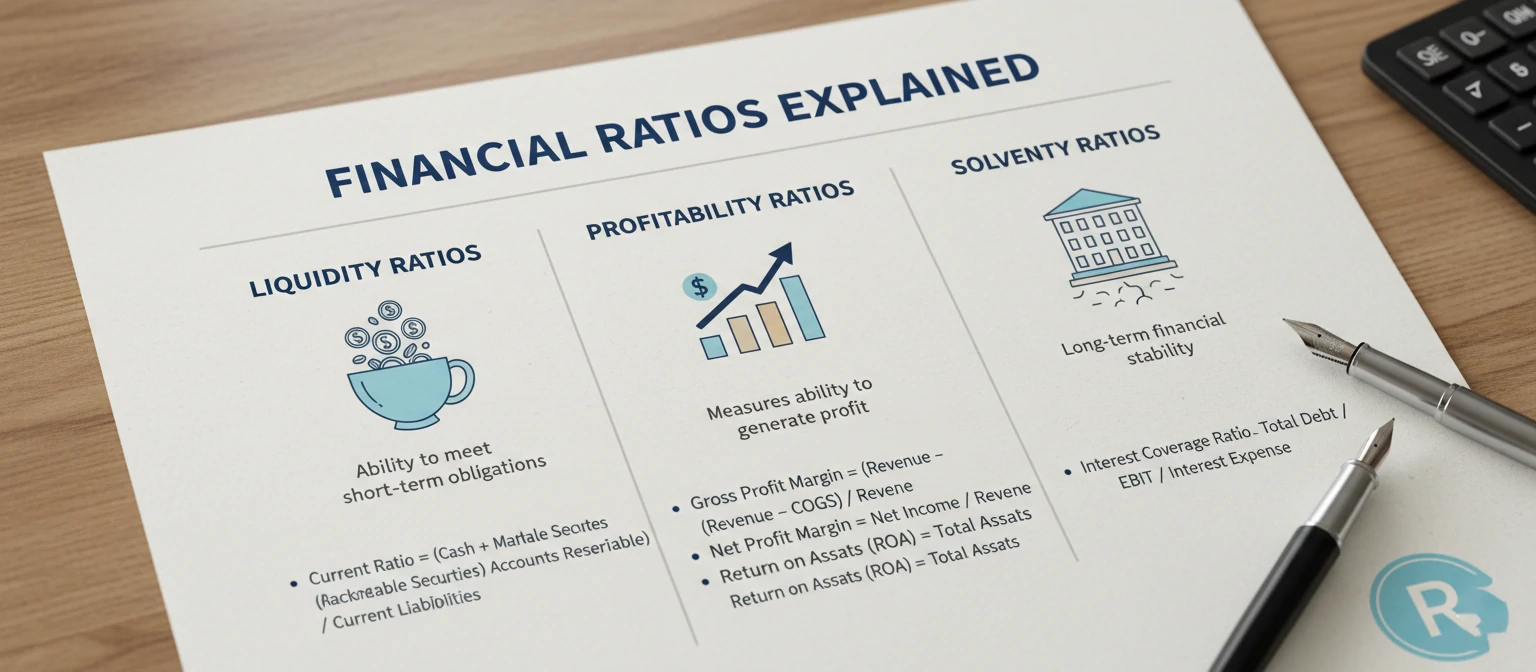
Financial ratios are like the vital signs of your business or investments. They give you quick insights into health, performance, and potential issues. Let's break down some of the most important ones in plain English.
Profitability Ratios: How Much Money Are You Making?
- Gross Profit Margin: Shows how much profit you make on each dollar of sales after paying for goods. Higher is better – aim for 20-30% depending on your industry.
- Net Profit Margin: The percentage of revenue that turns into actual profit. This tells you how efficient your overall operations are.
- Return on Assets (ROA): How effectively you're using your assets to generate profit. A good ROA is usually 5-10%.
Liquidity Ratios: Can You Pay Your Bills?
- Current Ratio: Your current assets divided by current liabilities. A ratio of 1.5-2 means you're in good shape to cover short-term debts.
- Quick Ratio: Similar to current ratio but excludes inventory. If it's over 1, you can pay bills without selling inventory.
Efficiency Ratios: How Well Are You Managing Resources?
- Inventory Turnover: How many times you sell and replace inventory in a year. Higher turnover means you're not sitting on slow-moving stock.
- Asset Turnover: How efficiently you use assets to generate sales. Compare this to industry averages.
Remember: Ratios are most useful when compared to industry benchmarks and your own historical performance. Don't panic if one ratio is off – look at the bigger picture!
Industry-Specific Financial Analysis Insights

Different industries have unique financial landscapes. What works for a tech startup might not apply to a manufacturing giant. Here's how financial analysis adapts to various sectors.
Tech and Software: Growth Over Profit
In tech, we focus on user acquisition costs, lifetime value, and scalability metrics. Burn rates and runway are crucial – how long can you operate before needing more funding?
Retail and E-commerce: Inventory and Customer Metrics
Stock turnover, gross margins, and customer acquisition costs take center stage. We analyze seasonal trends and supply chain efficiency to keep shelves stocked and profits flowing.
Manufacturing: Efficiency and Asset Management
Capacity utilization, cost of goods sold, and maintenance expenses are key. We look at how well you're turning raw materials into profitable products.
Healthcare: Compliance and Patient Metrics
Regulatory compliance costs, patient volumes, and reimbursement rates matter most. We ensure financial health while maintaining quality care standards.
Pro Tip: Always benchmark against industry peers. What seems like a great ratio in one sector might be average in another!
Ethical Considerations in Financial Analysis

Financial analysis isn't just about numbers – it's about integrity, transparency, and doing the right thing. Ethical practices build trust and ensure long-term success.
Transparency and Full Disclosure
We believe in complete honesty. All assumptions, methodologies, and limitations are clearly explained so you can make informed decisions.
Conflict of Interest Management
If there's any potential conflict, we disclose it upfront. Your interests always come first.
Data Privacy and Security
Your financial data is sacred. We use bank-level security and never share information without explicit permission.
Objectivity in Reporting
Good news or bad, we report facts objectively. No sugarcoating, no hiding – just clear, actionable insights.
Building Your Own Financial Analysis Skills

While professional services are invaluable, building your own financial literacy empowers you to make better decisions every day. Here's how to get started.
Start with the Basics
Learn to read financial statements. Understand balance sheets, income statements, and cash flow statements – they're not as scary as they seem!
Practice with Real Data
Use public company reports or your own business data. Calculate simple ratios and track trends over time.
Learn from Experts
Read books, take online courses, and follow financial news. Resources like Investopedia and Khan Academy are great starting points.
Use Technology
Tools like Excel, Google Sheets, or specialized software can automate calculations and visualize data.
Remember: Building skills takes time, but every step makes you more confident and capable. Start small and build from there!
Integrating Financial Analysis with Business Strategy

Financial analysis shouldn't be an afterthought – it should drive your business strategy. Here's how to make numbers work for your vision.
Align Analysis with Goals
Every analysis should tie back to your strategic objectives. Are you aiming for growth, stability, or market dominance?
Scenario Planning
Use financial models to test different strategies. What if you expand? Cut costs? Enter new markets? See the financial impact before committing.
Regular Reviews
Don't analyze once and forget. Make financial reviews part of your regular business rhythm – monthly, quarterly, annually.
Cross-Functional Integration
Share insights with marketing, operations, and HR teams. Financial health affects every department.
When strategy and finance work together, magic happens. Your business becomes more agile, profitable, and future-ready!
Conclusion: Your Financial Future Starts Now

Financial analysis services aren't just about crunching numbers – they're about unlocking your potential and giving you the confidence to chase your dreams. With expert insights, you can spot opportunities, dodge risks, and build a brighter financial future.
Whether you're growing a business, building wealth, or planning for tomorrow, professional financial analysis is your secret weapon. Remember, in the world of finance, knowledge truly is power. So why wait? Take that first step towards financial clarity today – your future self will thank you! 🌟