
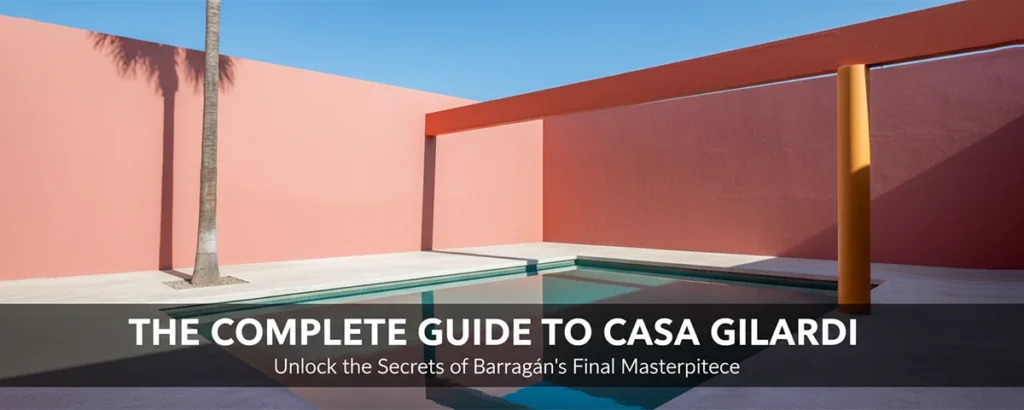
Explore the profound beauty, innovative design, and cultural significance of Luis Barragán’s final residential masterpiece — a meditation on color, light, water, and emotional architecture in the heart of Mexico City.
Table of contents
- What Is Casa Gilardi?
- Luis Barragán & His Vision
- Architectural Design & Layout
- Color, Light & Water
- Key Spaces & Rooms
- Construction & Materials
- Cultural & Historical Context
- Planning Your Visit
- Photography & Documentation
- Global Influence & Legacy
- Other Barragán Sites to Explore
- Preservation & Future
- Frequently Asked Questions
- Experience the Poetry of Architecture
What Is Casa Gilardi?
Casa Gilardi stands as the crowning achievement of Luis Barragán’s illustrious career, representing the culmination of decades of architectural innovation, artistic vision, and philosophical inquiry into the nature of space and human experience. Completed in 1976, this remarkable residence in the Tacubaya neighborhood of Mexico City serves as both a private home and an enduring testament to the power of color, light, and water in creating transcendent architectural experiences that engage every human sense.
Commissioned by Francisco Gilardi, the house was designed around an existing jacaranda tree that Barragán insisted on preserving as the central organizing element of the entire composition. This decision reveals the architect’s deep reverence for nature and his belief that architecture should always defer to the living world rather than dominate it. The result is a building that breathes with the seasons, transforming throughout the year as the jacaranda cycles through its spectacular bloom of purple flowers, its lush green canopy, and its spare winter silhouette.
Final Residential Work
Casa Gilardi was the last private residence Barragán ever designed, making it the definitive statement of his mature architectural philosophy and the synthesis of everything he had learned throughout his remarkable career.
Color as Architecture
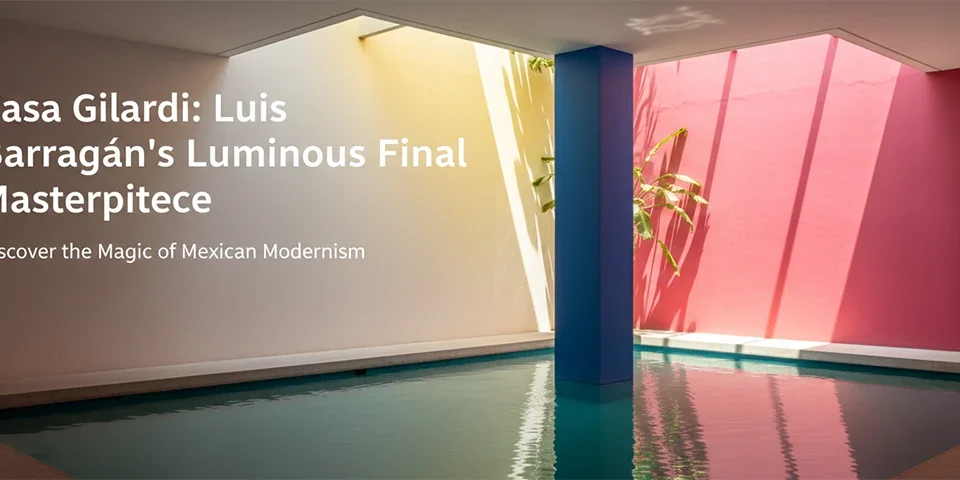
The house is renowned for its masterful use of color, particularly the famous pink and blue walls of the pool corridor that create an otherworldly atmosphere unlike any other residential space in the world.
Water Integration
The indoor swimming pool is not merely recreational but serves as a fundamental architectural element, creating reflections, modulating light, and producing acoustic textures that define the spatial experience.
Luis Barragán & His Vision
Luis Barragán (1902–1988) was born in Guadalajara, Mexico, and went on to become the most internationally celebrated Mexican architect of the twentieth century. He received the Pritzker Architecture Prize in 1980 — the highest honor in the profession — in recognition of his singular ability to merge modernist principles with the deep cultural traditions of Mexico, creating spaces of extraordinary emotional resonance and spiritual depth.
Barragán’s architectural philosophy was rooted in what he called “emotional architecture,” the belief that buildings should not merely shelter the body but nourish the soul. He drew inspiration from the haciendas and convents of colonial Mexico, the gardens of Moorish Spain, the geometric abstractions of European modernism, and the saturated colors found throughout Mexican folk art and natural landscapes. In Casa Gilardi, all of these influences converge into a unified masterwork.
Early Influences
Barragán’s formative years in Guadalajara exposed him to the hacienda architecture of Jalisco, the vibrant colors of Mexican markets, and the contemplative atmosphere of colonial-era religious buildings. His early European travels introduced him to Le Corbusier’s work and the Alhambra’s gardens, both of which profoundly shaped his aesthetic sensibility.
Mature Philosophy
By the time he designed Casa Gilardi, Barragán had moved far beyond functionalism into a deeply personal architectural language that valued mystery, serenity, silence, and solitude. He believed architecture should create spaces for contemplation and introspection rather than merely serve practical needs.
The Pritzker Legacy
When Barragán received the Pritzker Prize, the jury praised his ability to create “gardens, plazas, and fountains of haunting beauty.” His acceptance speech emphasized that architecture must always serve beauty, silence, solitude, and serenity — values that pervade every corner of Casa Gilardi.
Collaboration with Artists
Barragán frequently collaborated with artists, including painter Jesús Reyes Ferreira, whose color sensibility influenced the vivid palette used throughout Casa Gilardi and many of the architect’s other residential projects during his later career.
Architectural Design & Layout
Casa Gilardi occupies a narrow, elongated lot in the Tacubaya neighborhood, a constraint that Barragán transformed into a virtue through his brilliant spatial choreography. The house is organized as a linear sequence of spaces that unfold along a central corridor, each room presenting a carefully orchestrated experience of color, light, and proportion that builds toward the dramatic climax of the pool hall at the rear of the property.
The façade presents a deliberately austere face to the street — a tall, flat wall punctuated by a single vertical window and painted in a vivid fuchsia pink. This minimalist exterior gives no hint of the rich spatial complexity that lies within, embodying Barragán’s belief that the most profound architectural experiences should be discovered rather than displayed. The contrast between the restrained exterior and the lavish interior is one of the house’s most powerful design strategies.
The Street Façade
A monolithic pink wall rises sharply from the sidewalk, pierced by a single tall window that hints at the vertical proportions within. The façade functions as a screen, a boundary between the public world and the private sanctuary beyond.
The Entry Vestibule
Visitors pass through a deliberately compressed entrance that heightens the sense of transition from the outside world. The low ceiling and muted tones create a moment of compression before the spaces open dramatically beyond.
The Corridor Sequence
A long, yellow-tinted corridor extends along the property, modulating light through carefully positioned openings. This passage builds anticipation as visitors move through alternating zones of brightness and shadow toward the pool hall.
The Courtyard & Jacaranda
The preserved jacaranda tree occupies a central courtyard that admits natural light and creates a living, breathing heart for the composition. The tree’s seasonal changes infuse the house with a constant sense of natural rhythm and transformation.
The Pool Hall
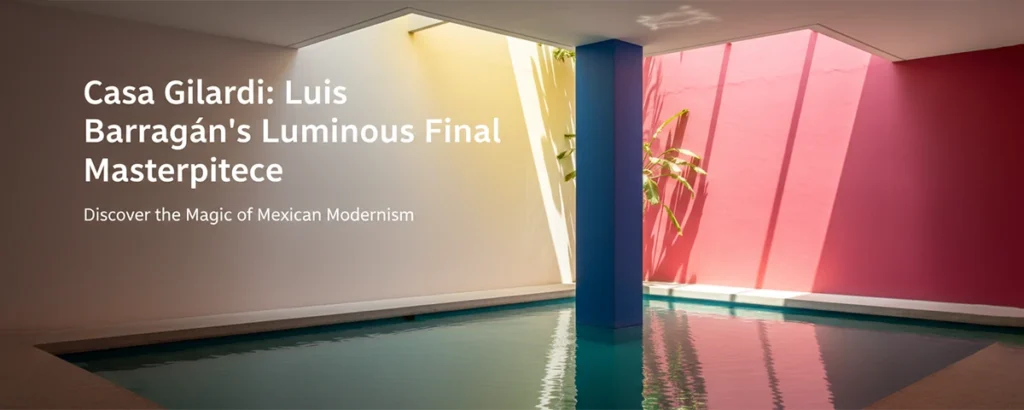
The spatial climax of the house, where the famous pink and blue walls meet the shimmering water of the indoor pool. A skylight bathes the space in natural light that shifts throughout the day, creating an ever-changing composition of reflected color.
The Upper Levels
The bedrooms and private spaces occupy the upper floors, each carefully proportioned and oriented to capture specific qualities of light at different times of day. The rooftop terrace offers views of the surrounding neighborhood and distant mountains.
Color, Light & Water
The interplay of color, light, and water constitutes the very essence of Casa Gilardi’s architectural genius. Barragán understood that these three elements, when orchestrated with precision and sensitivity, could produce spatial experiences of extraordinary emotional depth. In this house, color is not applied as decoration but deployed as a fundamental structural material that defines volume, directs movement, and evokes specific psychological states in every person who enters.
The famous pool corridor demonstrates this philosophy at its most powerful. A tall pink wall and an opposing blue wall flank a long indoor swimming pool, while a skylight above admits natural light that shifts constantly throughout the day. In the morning, warm golden rays illuminate the pink surface, casting coral reflections into the water. By afternoon, the light moves to emphasize the blue wall, transforming the entire atmosphere from warm to cool. At sunset, both walls glow with an otherworldly luminosity that visitors frequently describe as a deeply spiritual experience.
The Color Palette Explained
The Signature Pink
This isn’t merely a decorative choice — Barragán’s pink is a carefully calibrated hue that changes character throughout the day, appearing coral at dawn, vivid magenta at noon, and deep rose at sunset. The color was developed in collaboration with painter Jesús Reyes Ferreira and references the bougainvillea and buganvilia flowers ubiquitous throughout Mexico.
The Profound Blue
Positioned opposite the pink wall in the pool corridor, the blue creates a powerful chromatic dialogue that evokes the contrast between earth and sky, warmth and coolness, passion and serenity. The water surface mediates between these two extremes, blending their reflections into a constantly shifting palette of intermediate tones.
The Golden Corridor
The long approach corridor is bathed in warm yellow tones that evoke Mexican sunlight and create a psychological transition from the neutral exterior to the vivid pool hall. This golden passage functions as an emotional prelude, gradually preparing visitors for the chromatic intensity that awaits them.
💡 Light Throughout the Day
Barragán designed Casa Gilardi to be experienced across the full arc of a day. Morning light enters from the east, creating warm tones in the upper rooms. Midday sun streams through the skylight, illuminating the pool corridor at its most vibrant. Afternoon light softens the palette toward amber and gold, while the final rays of sunset produce the famous rosy glow that has been photographed by architects and artists from around the world.
Key Spaces & Rooms
Each room in Casa Gilardi serves a specific purpose within the overall spatial narrative, contributing to the progressive revelation of architectural meaning that Barragán orchestrated so masterfully. From the restrained entrance to the ecstatic pool hall, every space is designed to evoke particular emotions and guide visitors through a carefully choreographed sequence of experiences that builds in intensity and wonder.
The Entry Hall
A deliberately compressed threshold space with low ceilings and muted colors that creates a powerful sense of transition from the urban exterior. Visitors must pass through this intimate zone before the spaces begin to expand and reveal their chromatic richness.
The Yellow Corridor
A long, luminous passage that extends along the courtyard, bathed in golden light filtered through strategically placed openings. This corridor functions as the spine of the house, connecting all major spaces while building anticipation toward the pool hall at the terminus.
The Jacaranda Courtyard
The preserved jacaranda tree creates a living atrium that brings nature directly into the heart of the house. In spring, the tree erupts in a cascade of purple blossoms that filter sunlight into a violet haze, while in summer its green canopy provides cool, dappled shade throughout the interior.
The Pool Hall
The culmination of the entire spatial sequence, where pink and blue walls meet shimmering water beneath a skylight. This is the most photographed space in the house and represents Barragán’s most concentrated expression of color, light, and emotional architecture working in perfect harmony.
The Dining Area
Adjacent to the pool hall, the dining space shares the water’s reflections and chromatic intensity while maintaining a functional domestic character. The juxtaposition of everyday dining with the extraordinary pool creates a unique experience of living within a work of art.
The Rooftop Terrace
An open-air space at the top of the house that offers panoramic views and frames the sky as an architectural element. High walls in bold colors create an outdoor room that captures the essence of Barragán’s approach to landscape as architecture and architecture as landscape.
Construction & Materials
Barragán’s material palette in Casa Gilardi is deliberately restrained, favoring honest, locally sourced materials that connect the building to its Mexican context while achieving a timeless quality that transcends any particular era or style. The construction relies on traditional masonry techniques elevated through extraordinary craftsmanship and the architect’s exacting attention to surface quality, proportion, and finish.
The thick, solid walls are built from concrete block and plastered with stucco, then painted in Barragán’s signature saturated colors. These massive walls serve multiple purposes: they provide thermal mass that regulates interior temperatures naturally, they create acoustic isolation from the noisy street, and they form the monolithic surfaces on which color and light perform their daily choreography. The floors throughout the house feature volcanic stone, a material deeply rooted in Mexican building tradition that adds both visual warmth and tactile richness.
Materials & Techniques
| Material | Application | Significance |
|---|---|---|
| Stucco Plaster | All wall surfaces | Creates seamless surfaces for color projection |
| Volcanic Stone | Flooring throughout | Connects to Mexican building tradition |
| Concrete Block | Structural walls | Provides thermal mass and acoustic isolation |
| Tropical Hardwood | Doors and window frames | Adds organic warmth to geometric forms |
| Glass Skylight | Pool hall ceiling | Controls and modulates natural light |
Cultural & Historical Context
Casa Gilardi was designed and built during a pivotal period in both Mexican history and the evolution of international architecture. By the mid-1970s, Mexico was experiencing rapid urbanization and modernization, and the architectural profession was increasingly dominated by functionalist approaches that prioritized efficiency and standardization over beauty and emotional experience. Barragán’s insistence on creating spaces of poetic resonance represented a powerful counter-narrative to the prevailing trends of his era.
The house also reflects the broader cultural movement in Mexico toward reclaiming and celebrating indigenous aesthetic traditions while engaging with international modernism on equal terms. Barragán drew from pre-Hispanic color traditions, colonial-era spatial planning, and the vibrant folk art of his native Jalisco to create an architecture that was simultaneously deeply Mexican and universally resonant. This synthesis has made Casa Gilardi one of the most studied buildings in architectural education worldwide.
Mexican Modernism
Casa Gilardi belongs to the broader movement of Mexican modernism that includes figures such as Juan O’Gorman, Félix Candela, and Ricardo Legorreta. However, Barragán’s approach was uniquely personal and poetic, prioritizing emotional impact over structural expression or social functionalism.
UNESCO Recognition
While Barragán’s own house and studio in Tacubaya received UNESCO World Heritage designation in 2004, Casa Gilardi’s proximity and thematic connection to this site have elevated its significance within the broader constellation of Barragán’s protected architectural legacy.
The Tacubaya Connection
Located in the same neighborhood as Barragán’s own home and studio, Casa Gilardi forms part of a remarkable cluster of architectural masterworks that together constitute one of the most significant concentrations of modernist residential architecture in the Americas.
Planning Your Visit
Casa Gilardi remains a private residence to this day, which means visiting requires advance planning and coordination with authorized tour operators. The intimate nature of the house and the need to protect its fragile surfaces and finishes means that access is carefully controlled, with small groups the only option. This exclusivity, however, enhances the experience immeasurably — visitors describe feeling as though they have been granted access to a secret temple of architecture rather than simply touring another museum.
Book Well in Advance
Contact authorized architectural tour operators in Mexico City at least three to six months before your intended visit date. Availability is extremely limited, particularly during peak tourist seasons and architectural events. Weekday visits typically offer better availability than weekends.
Study Before You Go
Familiarize yourself with Barragán’s philosophy and other works before your visit. Understanding his design principles will dramatically enhance your ability to appreciate the subtle spatial sequences, color relationships, and material choices that make Casa Gilardi so extraordinary.
Choose the Right Time
Morning visits between 9:00 AM and 11:00 AM offer the most dramatic light conditions in the pool hall, with warm rays illuminating the pink wall at its most vivid. Spring visits coincide with the jacaranda’s spectacular purple bloom, adding another dimension of color to the experience.
Getting There
The house is located at General Antonio León 82, San Miguel Chapultepec, Tacubaya, Mexico City. The nearest Metro station is Tacubaya (Lines 1, 7, and 9), followed by a fifteen-minute walk through the residential neighborhood. Alternatively, ride-share services offer convenient door-to-door transportation from anywhere in the city.
Respect the Space
Remember that this is a private residence, not a museum. Follow all guidelines provided by your tour operator, speak in hushed tones, avoid touching walls and surfaces, and ask permission before taking photographs. The intimate scale of the house demands a contemplative, respectful approach from all visitors.
Photography & Documentation
Photographing Casa Gilardi presents both extraordinary opportunities and unique challenges. The saturated colors, dramatic light contrasts, and intimate scale of the spaces demand careful technical preparation and a thoughtful approach to capturing the essence of Barragán’s vision without reducing it to a series of flat images that fail to convey the spatial and emotional depth of the actual experience.
Camera Settings
Shoot in RAW format to capture the full dynamic range of the colored walls and light reflections. Use a wide-angle lens (16–24mm) for interiors, and be prepared for extreme color contrasts that may challenge automatic white balance. Manual exposure is recommended to preserve the nuanced gradations of the pink and blue walls.
Composition Tips
Focus on the interplay of color planes rather than trying to capture entire rooms. The most powerful images from Casa Gilardi tend to be abstract compositions of overlapping color fields, reflected light on water surfaces, and the geometry of walls meeting at precise angles in the saturated chromatic environment.
Water Reflections
The pool surface creates extraordinary photographic opportunities as it mirrors and blends the colors of the surrounding walls. A polarizing filter can help control glare and deepen the reflected colors, while long exposures can smooth the water surface into a perfect mirror for the architectural elements above.
Sketching Alternative
Many architects and visitors find that hand-sketching offers a deeper engagement with the spaces than photography alone. Drawing forces close observation of proportions, light patterns, and spatial relationships that cameras can miss. Consider bringing a small sketchbook and watercolor pencils to capture the chromatic experience directly.
⚠️ Photography Policies
Photography policies vary depending on the tour operator and current household preferences. Always confirm in advance whether photography is permitted, and respect any restrictions on flash photography, tripod use, or social media sharing. The best photographs of Casa Gilardi are taken with patience and sensitivity rather than equipment and technique alone.
Global Influence & Legacy
Casa Gilardi’s influence extends far beyond Mexico, inspiring architects, designers, and artists across continents and generations. The house’s demonstration that color, light, and emotional resonance can serve as primary architectural tools — rather than mere decorative afterthoughts — has fundamentally shaped contemporary thinking about the relationship between space and human experience in the built environment.
Contemporary Architecture
Architects like Tadao Ando, Peter Zumthor, and Ricardo Legorreta have all acknowledged Barragán’s influence on their work. The emphasis on sensory experience, material honesty, and emotional atmosphere that characterizes much of today’s best architecture traces a direct lineage back to buildings like Casa Gilardi.
Interior Design
The bold use of saturated color in contemporary interior design owes much to Barragán’s example. Casa Gilardi proved that intense color could be sophisticated and refined rather than garish, opening the door for designers worldwide to embrace more daring chromatic palettes in residential and commercial projects.
Art & Photography
The house has been the subject of countless photographic essays, art installations, and academic publications. Its spaces have been captured by some of the world’s leading architectural photographers, and its influence can be seen in contemporary light art, installation art, and color field painting.
Architectural Education
Casa Gilardi is studied in architecture programs at leading universities worldwide, from Harvard and MIT to the Architectural Association in London and universities throughout Latin America. It serves as a case study in the integration of color theory, spatial sequencing, and phenomenological design approaches.
Other Barragán Sites to Explore
To fully appreciate Casa Gilardi, visitors should explore the broader constellation of Barragán’s works throughout Mexico City and beyond. Each project represents a different facet of his architectural vision and helps illuminate the design principles that reach their fullest expression in his final residential masterpiece.
Casa Barragán (UNESCO)
The architect’s own home and studio in Tacubaya, a UNESCO World Heritage Site since 2004. This is essential viewing for understanding the personal aesthetic that culminated in Casa Gilardi, and its proximity makes it easy to visit on the same day.
Cuadra San Cristóbal
An equestrian estate in Los Clubes featuring Barragán’s most dramatic use of water and color planes in a landscape setting. The famous pink wall reflected in the horse trough is one of the most iconic images in twentieth-century architecture.
Torres de Satélite
A monumental sculptural collaboration with artist Mathias Goeritz, consisting of five prismatic towers in bold colors that mark the entrance to Ciudad Satélite. This public work demonstrates Barragán’s ability to apply his color philosophy at urban scale.
Jardines del Pedregal
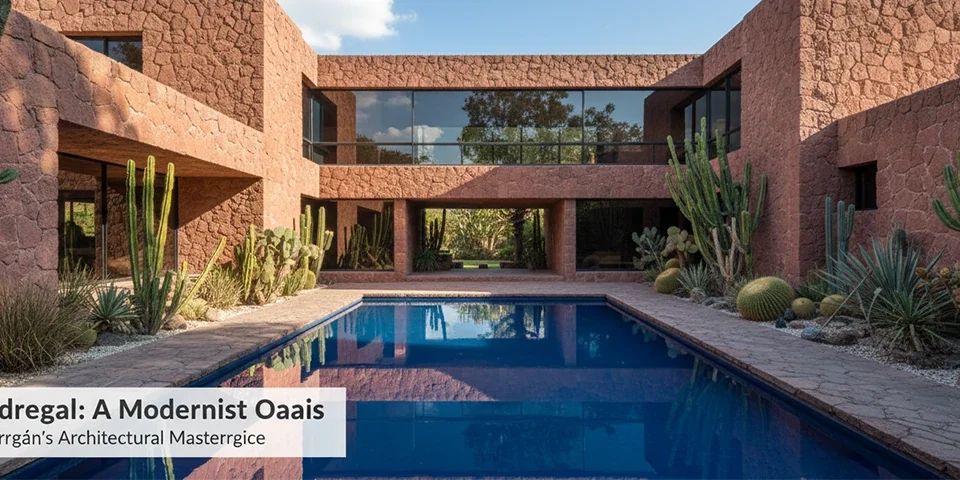
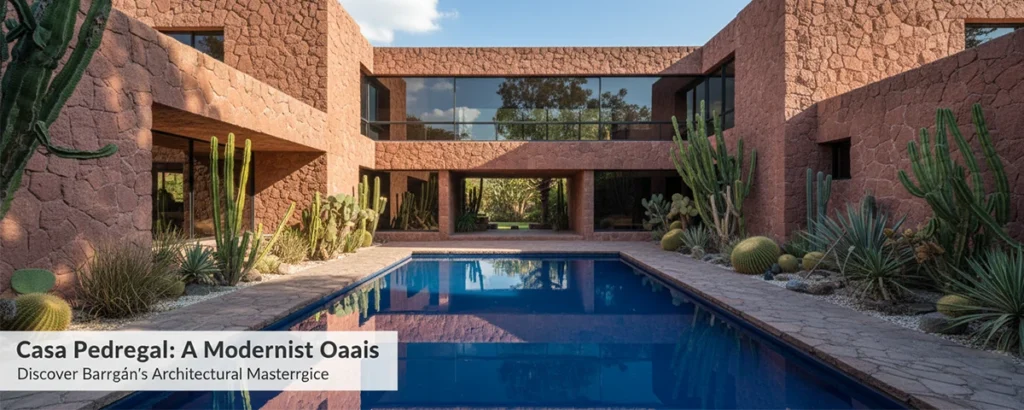
Barragán’s master-planned residential development on a volcanic lava field south of Mexico City. The landscape design preserves the dramatic natural terrain and integrates it with modernist residential architecture, revealing his deep understanding of the relationship between built and natural environments.
Preservation & Future
The ongoing preservation of Casa Gilardi presents unique challenges and opportunities. As a private residence that also serves as an internationally significant cultural monument, the house must balance the practical needs of daily living with the imperative to maintain Barragán’s original design intent for future generations. The saturated colors that define the house require periodic repainting with carefully matched pigments, while the pool and water systems demand constant maintenance to preserve their role as architectural elements.
Climate change poses emerging threats to the house’s environment, including changes in rainfall patterns that affect the jacaranda tree and shifting light quality that may alter the chromatic experiences Barragán so carefully calibrated. Architectural conservation experts are developing strategies to address these challenges while respecting the building’s authenticity and the family’s continued occupation of the space as a private home.
Color Conservation
Maintaining the exact hues that Barragán specified requires specialized knowledge of traditional Mexican paint formulations and careful color matching. Conservation specialists work closely with the Gilardi family to ensure that each repainting preserves the original chromatic relationships that define the architectural experience.
Digital Documentation
Advanced digital scanning and photogrammetry technologies are being used to create comprehensive three-dimensional records of the house’s current condition. These digital archives will serve as invaluable references for future conservation work and enable virtual access for researchers and students worldwide.
The Living Legacy
Perhaps the most powerful form of preservation is the continued occupation and care of the house by the Gilardi family, who serve as stewards of Barragán’s vision. Their commitment to maintaining the house as a living home ensures that it remains the inhabited work of art the architect intended.
Frequently Asked Questions
Can anyone visit Casa Gilardi?
Yes, but visits are by appointment only through authorized architectural tour operators. The house is a private residence, so access is limited to small guided groups of typically five to eight people. Booking three to six months in advance is strongly recommended.
How much does a visit cost?
Costs vary depending on the tour operator, group size, and whether the visit is combined with other Barragán sites. Individual tour prices typically range from $40 to $100 USD per person, while architectural group tours that include multiple sites may cost more but offer better value and expert commentary.
What is the best time of year to visit?
Spring (March through May) offers the most spectacular experience, as the jacaranda tree is in full purple bloom and the weather is consistently clear and warm. However, each season presents the house differently, and many visitors recommend returning at different times of year to appreciate the full range of atmospheric conditions.
Is photography allowed inside?
Photography policies vary and should be confirmed with your tour operator before the visit. Some tours permit personal photography without flash, while others have stricter restrictions. Professional or commercial photography typically requires separate arrangements and additional fees.
Who designed Casa Gilardi?
Casa Gilardi was designed by Luis Barragán (1902–1988), Mexico’s most celebrated architect and winner of the 1980 Pritzker Architecture Prize. It was his final residential project, completed in 1976 for Francisco Gilardi, and represents the culmination of his entire career’s exploration of color, light, and emotional space.
What makes the pink wall so famous?
The pink wall in the pool corridor has become an icon of twentieth-century architecture because it demonstrates how color can function as a primary architectural material rather than mere decoration. The wall’s hue changes throughout the day as natural light shifts, creating an ever-evolving composition that visitors describe as profoundly moving and spiritually uplifting.
How long is a typical visit?
Guided tours typically last forty-five to sixty minutes, though some operators offer extended visits of up to ninety minutes for architectural professionals and serious enthusiasts. The intimate scale of the house means that even a relatively short visit can provide a deeply meaningful experience if you arrive prepared and focused.
Is the pool still functional?
Yes, the indoor swimming pool remains a functional element of the house and continues to serve both as a place for swimming and as the central architectural feature that Barragán designed it to be. The water’s surface reflects and blends the colors of the surrounding pink and blue walls, creating the mesmerizing chromatic effects that have made this space world-famous.
Experience the Poetry of Architecture
Casa Gilardi represents more than a house — it is a meditation on the power of color, light, and water to transform space into something profoundly human. Begin planning your pilgrimage to Barragán’s final masterpiece and discover architecture that touches the soul.
Architecture Guide Editorial Team
Specialists in Mexican Modernist Architecture & Cultural Heritage
Our team combines architectural expertise with deep cultural knowledge to provide comprehensive, authoritative guides to the world’s most significant buildings. We have visited and studied Casa Gilardi and Barragán’s other works extensively over many years.