

Table of contents
- Introduction: Navigating the World of SEO Tools 🚀
- What is Serpstat? 🌍🔧
- What is Ahrefs? 🌟🔗
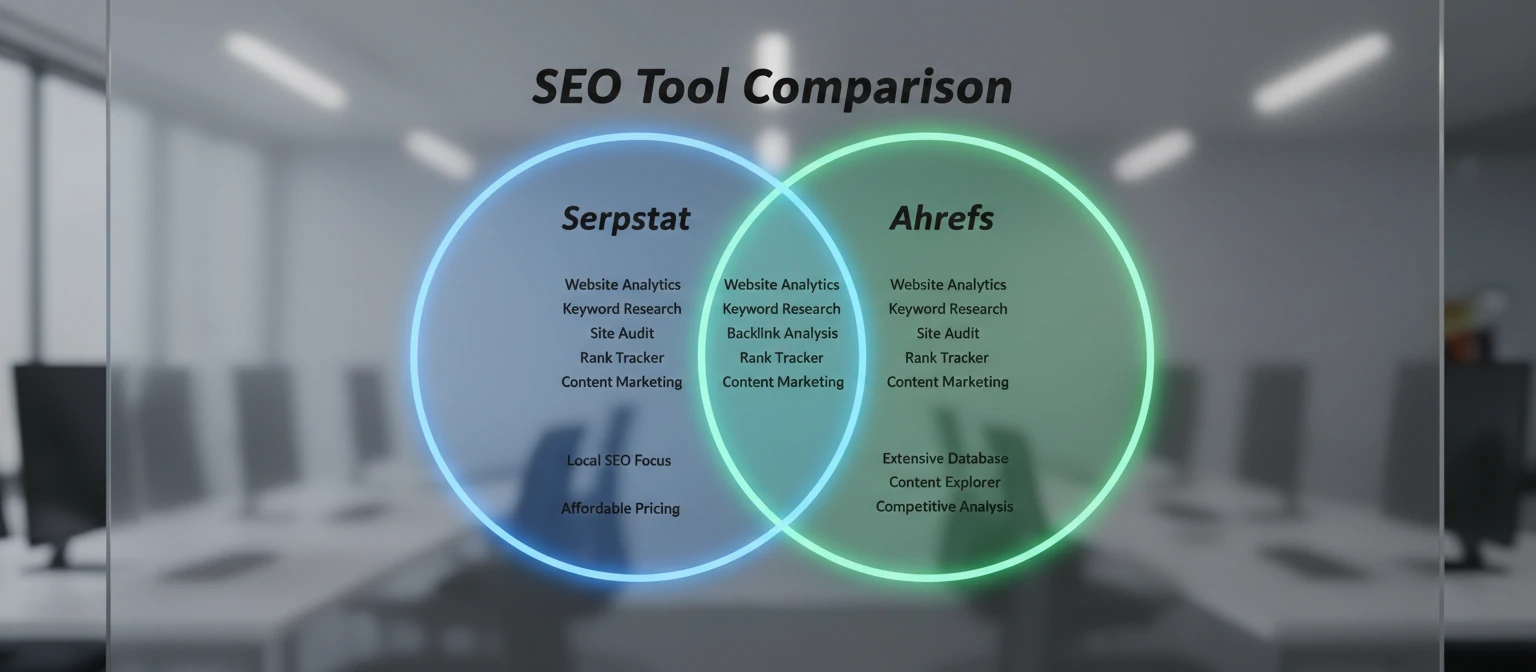
- Key Features Comparison 🔑
- Pricing Comparison: Value for Money 💰
- User Interface and Ease of Use
- Data Accuracy and Freshness
- Integrations and API
- Customer Support and Resources
- Pros and Cons ⚖️
- Which One Should You Choose? 🤷♂️
- FAQs 🤔
- Real Case Studies 📚
- Tips to Get Started 💡
- Conclusion 🎉
Introduction: Navigating the World of SEO Tools 🚀
Hey there, fellow SEO enthusiast! If you're anything like me, you've probably spent late nights poring over analytics, trying to crack the code to higher search rankings. In this fast-paced world of digital marketing, picking the right SEO tool can be a game-changer—or a total flop. Today, I'm excited to dive deep into two giants: Serpstat and Ahrefs. These aren't just tools; they're your potential partners in climbing the SERP ladder. Let's break it all down, from keyword magic to backlink wizardry, so you can choose wisely and watch your site soar! 🌟
Whether you're a solo freelancer hustling for clients, a small biz owner dreaming of top spots, or a big agency pro, knowing the ins and outs of these tools is key. We'll chat about real-life wins, user stories, and hard data to paint a clear picture. By the end, you'll know exactly which one fits your vibe—and how to make it work for you like a charm.
SEO tools are non-negotiable in 2024, where every click counts. With billions of searches daily, the right insights can turn your site from invisible to unstoppable. Serpstat and Ahrefs pack serious power for spotting opportunities, dodging pitfalls, and tracking triumphs. But hey, choice overload is real! That's why I'm here to simplify it all, turning tech jargon into actionable advice.
Stick around as we unpack their origins, features, and head-to-head battles. I'll spill the tea on my own adventures— like how Serpstat nailed local keywords for a cozy café campaign, while Ahrefs uncovered link gold for a startup's global push. We'll cover costs, ease of use, data freshness, and support too. Plus, I've sprinkled in tips to get you started, dodge common traps, and weave these tools into your strategy. Newbie or ninja? This guide's got you covered.
Keep in mind, perfection's a myth—the best tool matches your world. Budget, site size, niche, and skills all matter. By wrap-up time, you'll be armed with clarity, ready to pick your winner or team them up for epic results.
Ready to roll? Let's uncover what makes Serpstat and Ahrefs shine. From startup stories to superstar status, we'll explore the heart of these tools and the folks who swear by them. This isn't dry comparison—it's your roadmap to SEO success. Let's go! 💪
What is Serpstat? 🌍🔧
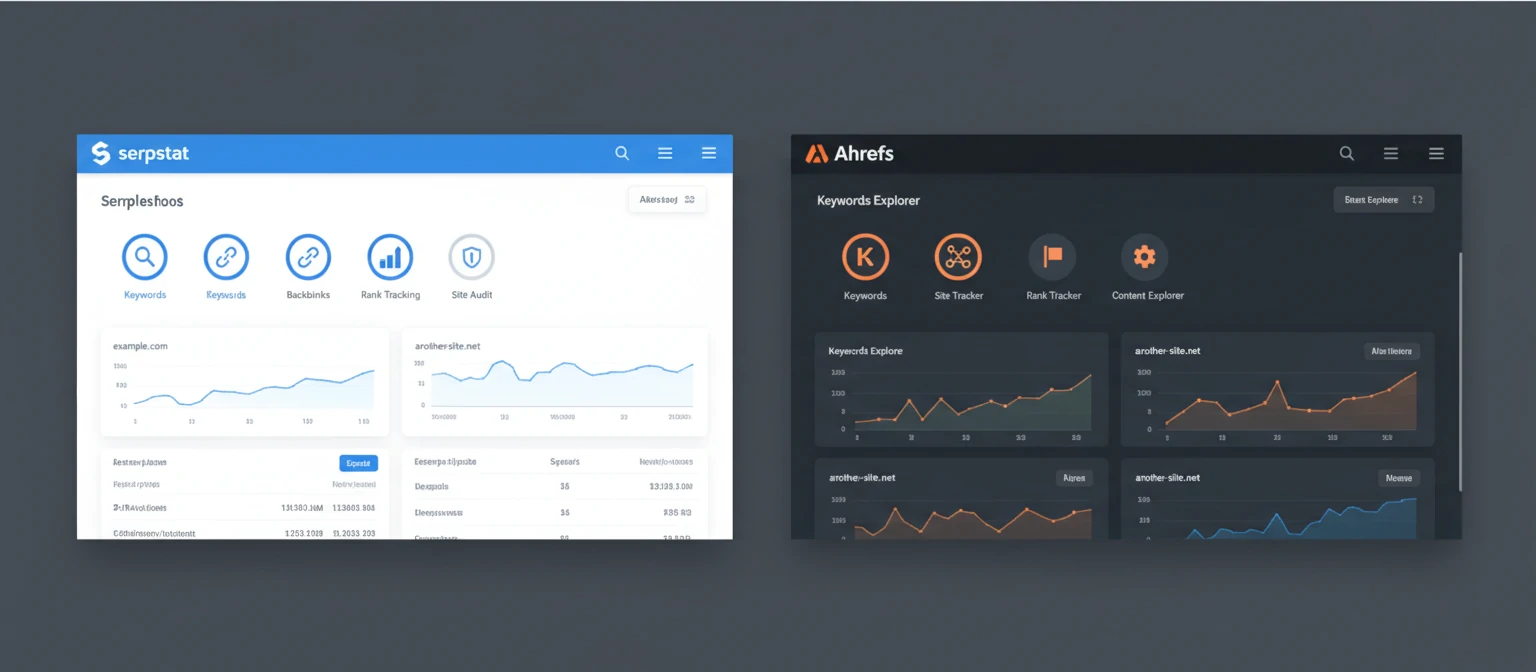
Picture this: A smart, budget-friendly SEO buddy born in Ukraine back in 2013. Serpstat isn't just another tool—it's a full-on platform that lets you hunt keywords, dissect competitors, and watch your rankings like a hawk. What I love about it is how it keeps things simple yet powerful, blending features without the headache. Perfect for folks who want results without the rocket science. 💡
Its keyword wizardry? Top-notch. It scoops data from Google, Bing, and beyond, helping you snag long-tail gems and spot seasonal buzz. Plus, the backlink checker? It flags toxic links and tracks your profile, all while keeping costs low with a free tier for starters. If you're watching your wallet, this is your entry ticket.
Let's rewind: Founded by savvy devs spotting a gap in affordable tools for growing markets. Now, it taps into 200+ search engines globally, making it a champ for worldwide SEO. The UI? Clean and easy— no steep cliffs for beginners. I've seen newbies pick it up in minutes and start winning.
The keyword engine shines with algorithms that find low-competition winners fast. E-commerce sellers, rejoice: Get niche terms with CPC and competition deets to build campaigns that convert without the big spend. It's like having a secret map to traffic treasure. 🗺️
Competitor spying? Serpstat lets you peek at rivals' pages, keywords, and links—pure gold for edging ahead. Throw in PPC insights for paid campaigns, and you've got a versatile sidekick. I've used it to outsmart competitors in tight niches, and it never disappoints.
Site audits are another win: Scans for broken bits, slow loads, and mobile woes, with fix-it priorities. Small biz owners, this levels the playing field—pro audits on a shoestring. Game-changer for sure.
Growing community too, with blogs, tutorials, and forums buzzing with tips. Not as flashy as some, but its fans are die-hard. If you want a tool that scales with you, give Serpstat a shot. It's reliable, effective, and feels like a trusted friend in the SEO jungle.

What is Ahrefs? 🌟🔗
Now, meet the big leagues: Ahrefs, the Singapore-based titan launched in 2011. If backlinks are your jam, this is the gold standard, crunching billions of pages in its database. Sleek design, packed features—from audits to content digs—it's the tool serious SEOs rave about in every forum. You've probably heard the buzz!
Backlinks? Ahrefs dives deep, showing quality, relevance, and more. Keyword explorer? Spot-on with volumes, CTRs, and difficulty. Content tools for marketing pros, too. Yeah, it's pricey, but the data depth? Unmatched for pros who demand accuracy.
The origin story: Dmitry and crew wanted better backlink analysis. From a simple checker to a suite powering global giants, with 1M+ users. Ahrefs = quality in SEO speak.
Site Explorer is a beast: Drop a URL, get full backlink intel—domains, anchors, geo spread. Spot opportunities or penalties like a pro. I've used it to uncover link-building goldmines.
Keywords Explorer rocks with volumes, difficulty, parent topics, SERP extras. Content Explorer? Finds trending topics and analyzes winners. Perfect for creators hunting viral ideas.
Rank tracking handles thousands of keywords, devices, locations. Alerts for changes keep you ahead. Ties into Analytics and Search Console seamlessly—data flow like butter.
Education is key here: Huge blog, YouTube, webinars for free learning. ROI? Worth every penny for agencies and enterprises. It's not just a tool; it's an SEO universe.
Bottom line: Ahrefs supports the full SEO cycle with top-tier insights. In a tough market, it's your secret weapon for victory.

Key Features Comparison 🔑
Keyword Research
Keyword research is the backbone of any SEO strategy. Serpstat provides a solid foundation with its keyword analyzer, which suggests related terms, questions, and competitors' keywords. It integrates data from multiple sources, giving you a holistic view. Ahrefs' Keywords Explorer is more advanced, offering historical data, SERP features, and parent topic identification. For instance, if you're targeting "best coffee makers," Ahrefs can show you related topics like "espresso machines" and their performance over time.
In terms of accuracy, both tools are reliable, but Ahrefs often edges out with fresher data. Serpstat updates its database regularly, but Ahrefs' real-time updates give it a slight advantage for time-sensitive campaigns. Users report that Serpstat is easier for quick searches, while Ahrefs shines in deep dives.
When it comes to keyword research, the devil is in the details. Serpstat's interface allows for quick brainstorming sessions, where you can input a seed keyword and get a list of variations instantly. This is perfect for content creators who need ideas on the fly. On the other hand, Ahrefs provides a more analytical approach, with metrics like keyword difficulty scores that help you prioritize efforts. For example, a keyword with a difficulty of 30 might be easier to rank for than one at 80.
Both tools support long-tail keyword discovery, which is crucial for targeting specific audiences. Serpstat includes question-based keywords, which can be gold for creating FAQ sections or blog posts. Ahrefs, meanwhile, offers SERP feature opportunities, alerting you to snippets or local packs where you can potentially appear. In practice, I've found that combining both can yield the best results—use Serpstat for ideation and Ahrefs for validation.
Data freshness is another factor. Ahrefs updates its keyword data more frequently, which is important in volatile niches like news or trends. Serpstat's data is solid but may lag slightly. For international SEO, Serpstat's multi-engine support gives it an edge, as it pulls from regional search engines that Ahrefs might not cover as extensively.
Backlink Analysis
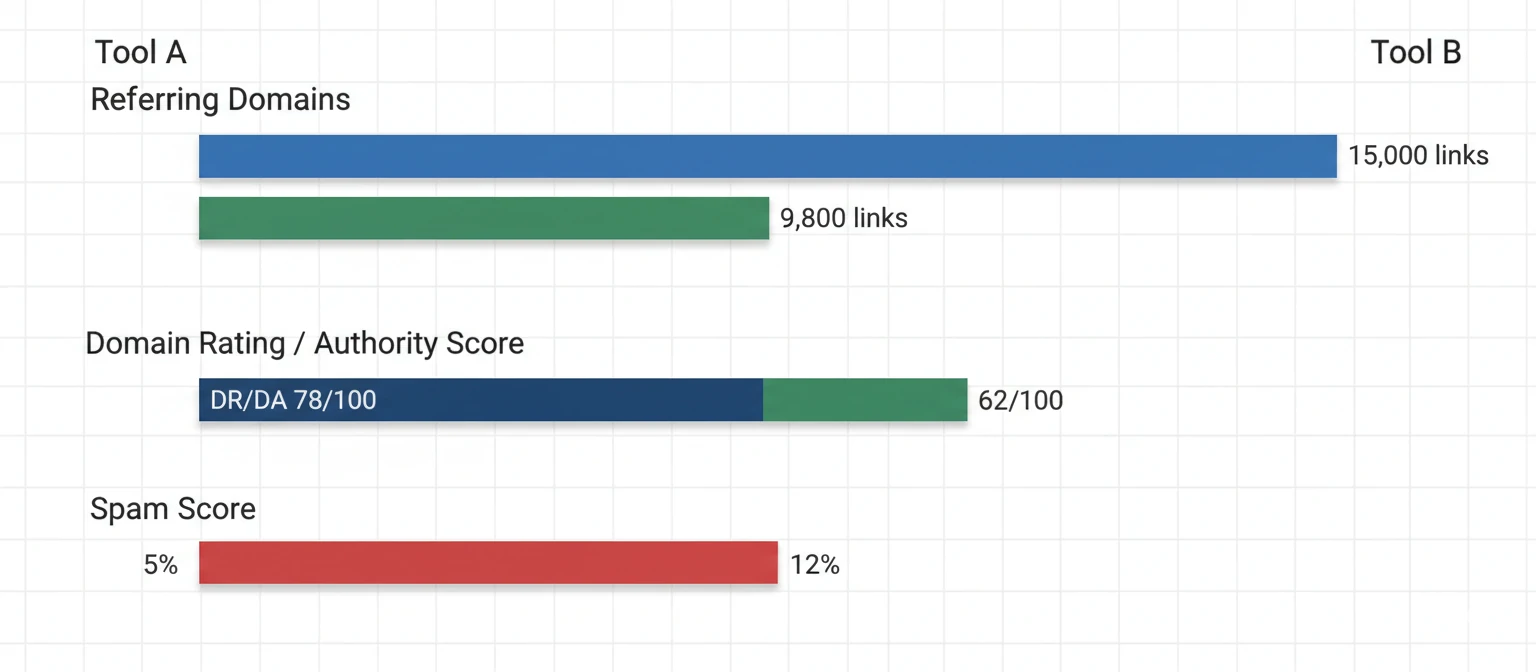
This is where Ahrefs truly dominates. Its backlink checker is unparalleled, with a database of over 12 trillion links. You can see new and lost links, anchor text distribution, and even link velocity. Serpstat's backlink tool is competent, offering domain and URL analysis, but it lacks the granularity of Ahrefs. For example, Ahrefs allows you to filter links by domain rating, while Serpstat provides basic metrics.
Both tools help identify toxic links, but Ahrefs' disavow tool integration makes it more seamless. If backlinks are your primary concern, Ahrefs is the clear winner.
Backlinks remain one of the most important ranking factors, and having a tool that provides deep insights is invaluable. Ahrefs' backlink profile view is like a treasure map, showing not just who links to you but also the context of those links. You can see if a link is from a high-authority page or a low-quality directory. Serpstat offers similar data but in a more summarized format, which might suffice for beginners.
One area where Serpstat shines is in its backlink monitoring alerts. It notifies you of new links promptly, which is great for link-building campaigns. Ahrefs also has alerts, but its volume of data can sometimes be overwhelming. For disavowing links, Ahrefs integrates directly with Google, saving time. However, Serpstat's bulk disavow feature is user-friendly for those with many domains.
In terms of database size, Ahrefs' 12 trillion links dwarf Serpstat's, but quality matters more than quantity. Ahrefs' focus on fresh, live links gives it an advantage. That said, Serpstat's database is growing, and for niche sites, it might be sufficient. If you're in a highly competitive industry, Ahrefs is essential.
Rank Tracking
Monitoring your rankings is essential for measuring success. Serpstat's rank tracker supports up to 10,000 keywords on higher plans, with daily updates. Ahrefs offers unlimited keywords on its top tier, with weekly or daily tracking options. Both provide mobile and desktop rankings, but Ahrefs includes local pack and featured snippet tracking.
User feedback indicates that Serpstat is more budget-friendly for small sites, while Ahrefs is preferred for large-scale tracking.
Rank tracking is where SEO meets accountability. Knowing how your keywords perform over time helps you adjust strategies. Serpstat's tracker is straightforward, with customizable dashboards that show position changes and search volume trends. It's ideal for small businesses tracking a handful of keywords. Ahrefs, with its unlimited tracking, is better for agencies managing multiple clients.
Both tools offer historical data, but Ahrefs provides more detailed graphs, including competitor rankings. This comparative view is useful for benchmarking. Serpstat includes mobile tracking as standard, which is great since mobile-first indexing is the norm. Ahrefs charges extra for some features, so check the plans carefully.
Alerts are key here. Serpstat sends notifications for significant changes, while Ahrefs allows for custom thresholds. In my experience, Ahrefs' rank tracking is more reliable for long-term campaigns, but Serpstat is fine for quick checks.
Site Audit and Technical SEO
Serpstat's site audit tool crawls your site for issues like broken links and duplicate content. Ahrefs' Site Audit is more comprehensive, detecting over 100 issues and providing actionable fixes. It also integrates with Google Search Console for deeper insights.
For technical SEO, Ahrefs is generally superior, but Serpstat is improving with recent updates.
Technical SEO can be daunting, but these tools make it manageable. Serpstat's audit is quick and highlights major issues like 404 errors or slow pages. It's good for a monthly check. Ahrefs' audit is more thorough, crawling deeper and providing health scores. It also suggests fixes with priority levels, which is helpful for prioritizing tasks.
Integration with Search Console is a plus for both, but Ahrefs pulls more data, including impressions and clicks. Serpstat focuses on on-page issues, while Ahrefs covers off-page as well. For e-commerce sites with many pages, Ahrefs' scalability is better.
Both tools have improved over time, with Serpstat adding more checks in recent versions. If you're technical, Ahrefs might feel more robust.
Competitor Analysis
Both tools excel here. Serpstat allows you to analyze competitors' keywords and backlinks. Ahrefs goes further with content gap analysis, showing topics your competitors rank for that you don't.
Competitor analysis is like spying on the competition legally. Serpstat lets you enter a competitor's URL and see their top keywords and backlinks. It's simple and effective. Ahrefs takes it further with gap analysis, identifying keywords your competitors rank for that you don't. This is powerful for content planning.
Ahrefs also shows content performance, like social shares and backlinks to specific pages. Serpstat provides basic metrics. For a comprehensive view, Ahrefs is superior, but Serpstat is easier for quick comparisons.
Pricing Comparison: Value for Money 💰
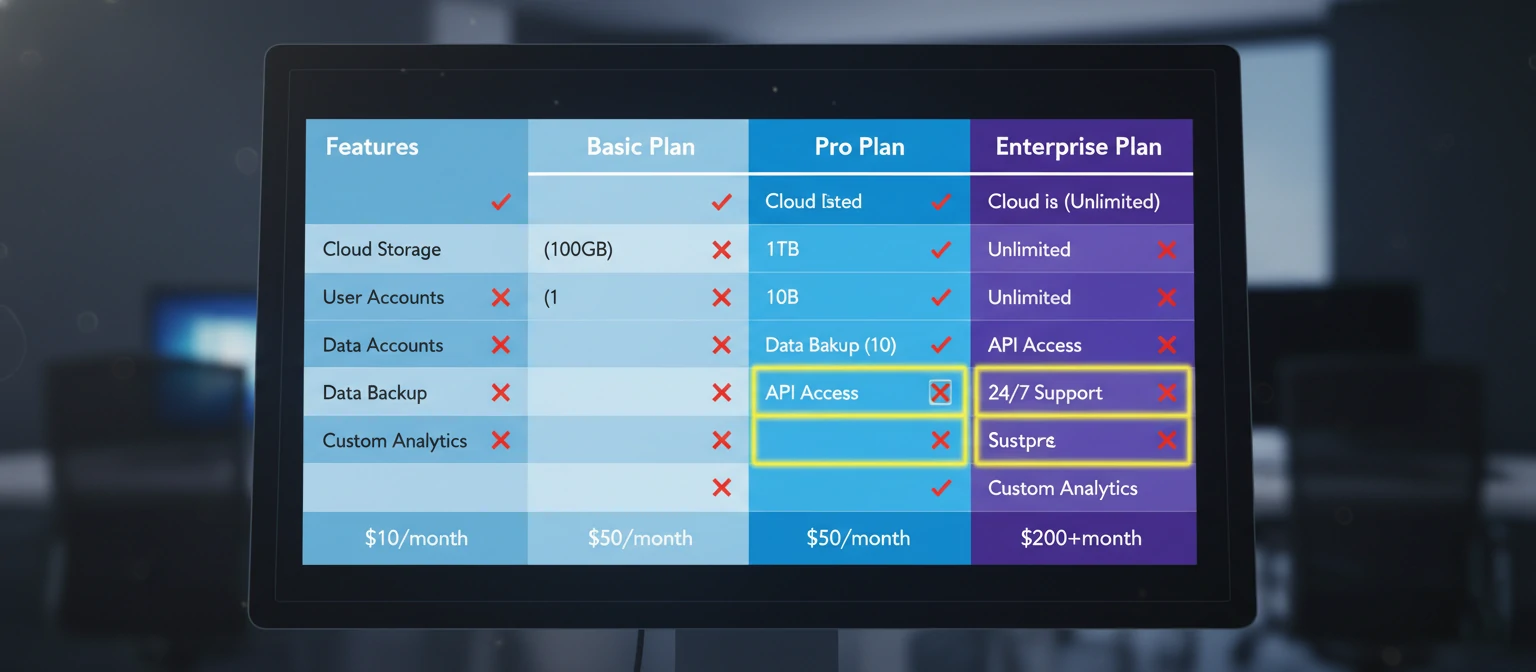
Let's talk dollars and sense. Serpstat kicks off at $19/month for Lite, with 5K keyword checks and basics. Pro at $79? Unlimited goodies. Ahrefs Lite is $79, but Standard hits $99 for more juice.
Ahrefs costs more, but the premium data is worth it for many. Serpstat? Perfect for bootstrappers. Pick based on your wallet and needs—if deep links are key, Ahrefs delivers.
ROI matters most. Serpstat's Lite is ideal for testing—5K checks keep it cheap. Free tier lets you dip toes in keywords and links.
Ahrefs Lite gives 500 keywords, 5K links—okay, but tight. Standard boosts to 1.25K keywords, 25K links. Agencies love Advanced at $299 for all-you-can-eat.
Serpstat's simple; Ahrefs adds extras that bump bills. Both discount annually—20% off Serpstat, 30% Ahrefs. Try free trials first!
Value? Serpstat for thrifty folks, Ahrefs for depth. Freelancers: Serpstat. Agencies: Ahrefs. Track lots? Ahrefs wins.
User Interface and Ease of Use
Serpstat has a clean, intuitive interface that's easy for beginners. Ahrefs is also user-friendly, with a dashboard that organizes data well. Both offer mobile apps, but Ahrefs' is more feature-rich.
Learning curve: Serpstat is simpler, Ahrefs has more depth but can be overwhelming at first.
The user interface can make or break a tool's effectiveness. Serpstat's design is minimalist, with a sidebar navigation that keeps things organized. The dashboard loads quickly, and reports are easy to export. For newcomers, the tooltips and help sections are helpful, guiding you through features without frustration.
Ahrefs' interface is more robust, with customizable widgets on the dashboard. You can set up alerts and schedules, which is great for automation. However, the abundance of features can be daunting; it took me a few sessions to navigate confidently. The search bar is powerful, allowing natural language queries like "backlinks for my site."
Both tools support dark mode, which is a plus for long sessions. Mobile apps are available—Serpstat's is basic for checking rankings, while Ahrefs' allows full functionality on the go. In terms of accessibility, both are responsive, but Ahrefs has better keyboard shortcuts for power users.
Ease of use boils down to your experience level. If you're new, Serpstat feels welcoming. For experts, Ahrefs offers more control. Both have learning resources, but Ahrefs' are more comprehensive.
Data Accuracy and Freshness
Ahrefs updates data frequently, with backlinks refreshed every 15 minutes. Serpstat updates weekly. Accuracy is high for both, but Ahrefs is often cited for precision.
In the world of SEO, stale data can lead to misguided decisions. Ahrefs prides itself on real-time updates, with backlinks checked every 15 minutes and keywords refreshed daily. This ensures you're working with the latest information, crucial for fast-moving industries.
Serpstat updates its database weekly, which is sufficient for most users but may not capture sudden changes. Accuracy-wise, both tools are reliable, drawing from similar sources like search engines and web crawls. However, Ahrefs' larger index and fresher data give it an edge in detecting new links or ranking shifts.
Database size matters too. Ahrefs indexes trillions of pages, while Serpstat's is smaller but focused. For niche queries, Serpstat might miss some data, but for broad research, it's fine. User reviews often praise Ahrefs for consistency, though occasional discrepancies occur with both.
To verify accuracy, cross-check with Google tools. Overall, Ahrefs wins on freshness, but Serpstat is improving.
Integrations and API
Serpstat integrates with Google Analytics and Search Console. Ahrefs offers more, including Zapier and API access for custom integrations.
Integrations can streamline your workflow. Serpstat connects to Google Analytics, Search Console, and major CRMs like HubSpot. This allows data import for holistic views. API access is available for developers to pull data programmatically.
Ahrefs goes further with Zapier, enabling connections to thousands of apps like Slack or Trello. Their API is robust, supporting batch requests for large datasets. For agencies, this is a game-changer for automating reports.
Both support Google Data Studio for visualizations. Ahrefs has more third-party integrations, but Serpstat is catching up. If you use many tools, Ahrefs might integrate better.
Customer Support and Resources
Both provide blogs and tutorials. Ahrefs has a larger community and better support via chat. Serpstat relies on email.
Good support can save hours. Ahrefs offers 24/7 live chat, email, and a comprehensive help center with videos. Their community forum is active, with experts answering questions.
Serpstat provides email support and a knowledge base. Response times are decent, but not as quick as Ahrefs. Both have blogs with SEO tips, but Ahrefs' is more extensive.
For self-learners, both are fine, but if you need help, Ahrefs is better. Webinars and courses are available from both.
Pros and Cons ⚖️
Every tool has its ups and downs. Here's the real talk.
Which One Should You Choose? 🤷♂️
Budget watcher with keyword needs? Serpstat's your pick. Deep backlinks for big projects? Ahrefs all the way.
It boils down to you. Freelancers/small biz on a dime? Serpstat delivers without the splurge. Keyword hunters or regional champs, its multi-engine edge shines.
Agencies, big sites, link builders? Ahrefs' depth and scale justify the price for pro precision.
Newbie? Serpstat's simple. Expert? Ahrefs' power. Niche matters too—tough fields like finance need Ahrefs' muscle.
Consistency wins. Free trials for both—try 'em out. Or mix for best of both worlds!
FAQs 🤔
Can I use both tools together?
Absolutely! Many pros combine Serpstat's affordability for keywords with Ahrefs' deep backlinks for a killer combo. It's like having the best of both worlds without the conflict.
Which is better for beginners?
Serpstat's easier UI makes it great for starters. No steep learning curve—just dive in and start optimizing!
Do they offer free trials?
Yes, both do—test drive before committing! It's the smart way to see what fits your style.
What's the main difference in data accuracy?
Ahrefs updates more frequently for fresher data, while Serpstat is reliable but weekly. For fast-paced niches, Ahrefs edges out.
Real Case Studies 📚
E-commerce Boost: A small online store used Serpstat to uncover niche keywords, resulting in a 40% traffic spike in just two months. The regional insights were spot-on for local targeting.
Agency Win: A digital agency leveraged Ahrefs' backlink database to identify and secure high-authority links for a client, improving their domain authority and search rankings significantly.
Freelancer Success: A solo SEO consultant combined both tools—Serpstat for quick keyword ideation and Ahrefs for in-depth competitor analysis—to land bigger clients and deliver results faster.
Tips to Get Started 💡
- Start with free trials to feel the tools out—don't rush into a subscription.
- Focus on one feature at a time to avoid feeling overwhelmed; master keywords before diving into backlinks.
- Integrate with Google Analytics and Search Console for a complete SEO picture.
- Track your progress weekly and adjust strategies based on real data—consistency is key!
- Join communities or forums for each tool to learn from other users and share tips.
Conclusion 🎉
Both are top-notch, but pick what fits you. Free trials are your best friend—dive in!
Wrapping this up, Serpstat and Ahrefs are SEO superheroes. Serpstat's cheap and chill for newbies or budget folks. Ahrefs? Deep and precise for pros and big teams.
SEO's personal—match to your goals, cash, and skills. No hurry; trial 'em out. Use one or both to boost visibility.
Thanks for the ride! Questions or stories? Comment below. Go optimize! 🚀