


Transform your manufacturing business with proven SEO strategies that drive qualified leads and boost online visibility
Table of contents
- Introduction
- Understanding SEO Basics for Manufacturing
- The Critical Importance of SEO for Manufacturers
- Keyword Research for Manufacturing SEO
- On-Page SEO Strategies for Manufacturers
- Off-Page SEO and Link Building for Manufacturing
- Measuring SEO Success in Manufacturing
- Conclusion: Your Manufacturing SEO Success Journey
- Ready to Transform Your Manufacturing Business with SEO?
Introduction
🎯 Key Takeaway
Manufacturing SEO is the strategic optimization of manufacturing companies' online presence to improve search engine rankings, drive qualified traffic, and generate high-quality leads in an increasingly digital B2B landscape.
In today's digital-first economy, manufacturing companies can no longer rely solely on traditional sales methods and word-of-mouth referrals. The industrial landscape has fundamentally shifted, with 89% of B2B buyers now conducting online research before making purchasing decisions. This digital transformation has made Manufacturing SEO not just beneficial, but absolutely essential for sustainable growth and competitive advantage.
Manufacturing SEO encompasses the specialized strategies and techniques used to optimize manufacturing websites, product pages, and digital content for search engines like Google, Bing, and industry-specific platforms. Unlike consumer-focused SEO, manufacturing SEO targets highly specific, technical keywords and serves a sophisticated B2B audience with longer sales cycles and complex decision-making processes.
Unique Challenges in Manufacturing SEO
- ⚠️ Technical Complexity: Manufacturing products often involve complex specifications, technical jargon, and industry-specific terminology that can be challenging to optimize for search engines while remaining accessible to potential customers.
- ⚠️ Niche Markets: Many manufacturers serve highly specialized markets with limited search volume, making traditional keyword research approaches less effective.
- ⚠️ Long Sales Cycles: B2B manufacturing sales cycles can span months or years, requiring SEO strategies that nurture prospects throughout extended decision-making processes.
- ⚠️ Limited Digital Resources: Many manufacturing companies have traditionally focused on production and engineering, often lacking dedicated digital marketing expertise or resources.
This comprehensive guide addresses these unique challenges and provides actionable strategies specifically tailored for manufacturing companies. We'll explore how to conduct effective keyword research for technical products, optimize complex product specifications for search engines, build authority in niche industrial markets, and measure SEO success using manufacturing-specific KPIs.
Whether you're a precision machining shop looking to attract new clients, an industrial equipment manufacturer seeking to expand market reach, or a component supplier aiming to improve online visibility, this guide will equip you with the knowledge and tools needed to succeed in the digital manufacturing landscape.
Understanding SEO Basics for Manufacturing
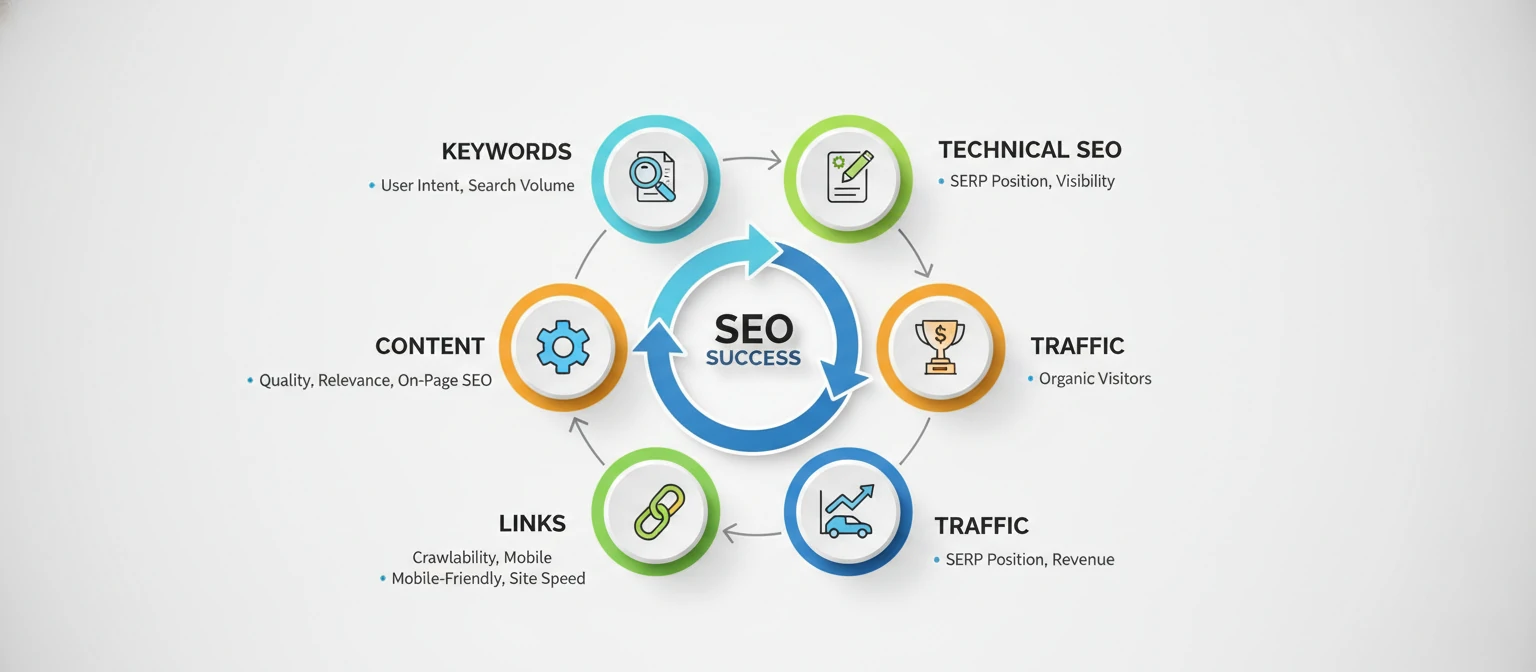
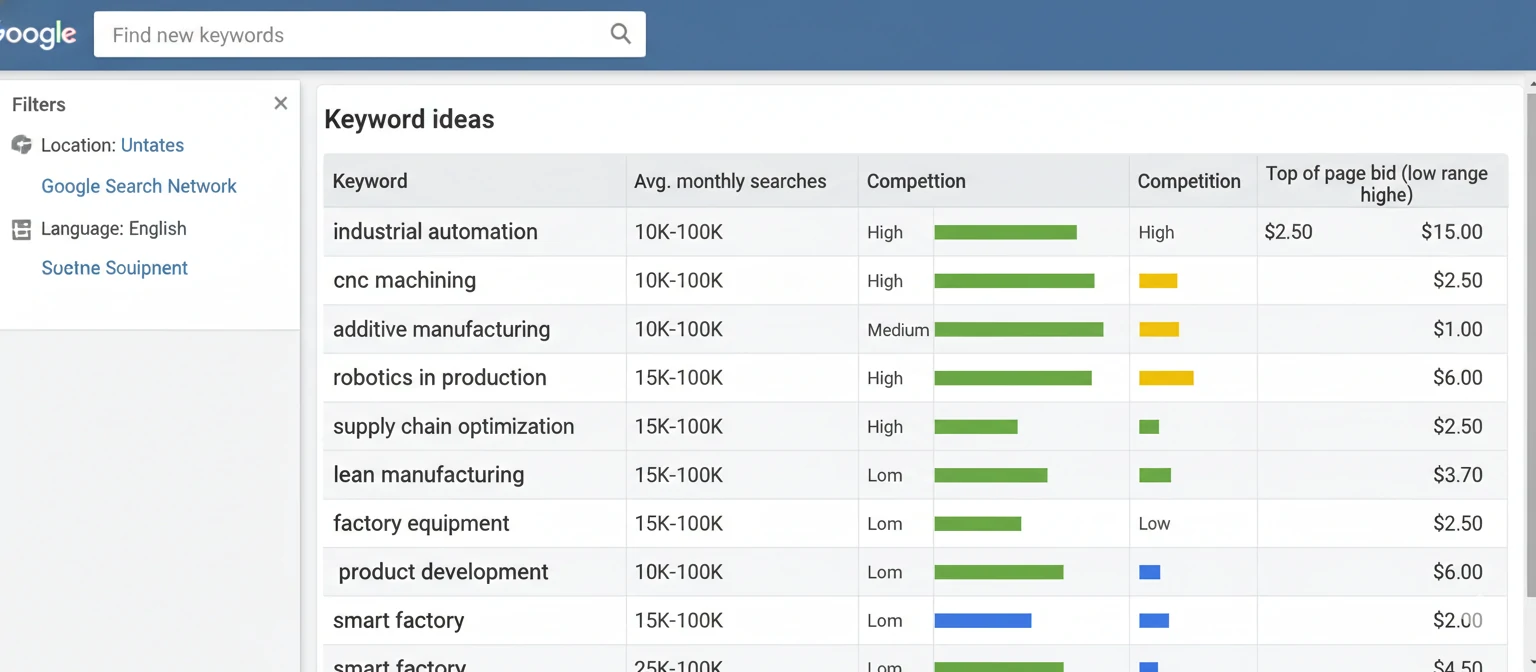
Search Engine Optimization (SEO) for manufacturing companies involves optimizing your digital presence to rank higher in search results when potential customers search for your products, services, or solutions. Unlike consumer SEO, manufacturing SEO targets decision-makers, engineers, procurement specialists, and other B2B professionals who use specific technical terminology and have distinct search behaviors.
Core SEO Components for Manufacturers
Keywords in Manufacturing Context
Manufacturing keywords differ significantly from consumer keywords. They're often highly technical, include specific part numbers, material specifications, and industry standards. For example, instead of "metal parts," a manufacturer might target "precision CNC machined aluminum components ISO 9001" or "custom injection molded thermoplastic assemblies."
Examples of Manufacturing Keywords:
- "316 stainless steel flanges ANSI B16.5"
- "custom PCB assembly services"
- "industrial automation solutions"
- "precision grinding services aerospace"
Backlinks and Authority Building
In manufacturing SEO, backlinks from industry publications, trade associations, supplier directories, and customer testimonials carry significant weight. A link from a respected industry magazine or trade association website signals to search engines that your company is a trusted authority in your field.
High-Value Manufacturing Backlink Sources:
- Industry trade publications and magazines
- Professional associations and chambers of commerce
- Supplier and vendor directories
- Customer case studies and testimonials
- Industry conference and event websites
On-Page SEO for Technical Content
Manufacturing websites must balance technical accuracy with search engine optimization. This involves optimizing product specifications, technical datasheets, and capability descriptions while maintaining the precision required by engineering and procurement professionals.
Key On-Page Elements:
- Title tags with specific product/service terms
- Meta descriptions highlighting key capabilities
- Header tags organizing technical specifications
- Alt text for product images and technical diagrams
- Schema markup for products and services
Off-Page SEO and Industry Presence
Off-page SEO for manufacturers extends beyond traditional link building to include industry networking, trade show participation, and thought leadership. Your company's reputation in industry circles directly impacts your search engine authority and rankings.
Manufacturing Off-Page Strategies:
- Guest articles in trade publications
- Speaking at industry conferences
- Participating in industry forums and discussions
- Collaborating with industry partners
- Maintaining active social media presence
💡 Manufacturing SEO Success Tip
The key to successful manufacturing SEO is understanding that your audience consists of technical professionals who use specific terminology and have precise requirements. Your SEO strategy should reflect this by targeting long-tail, technical keywords and creating content that demonstrates deep industry expertise and technical competency.
The Critical Importance of SEO for Manufacturers

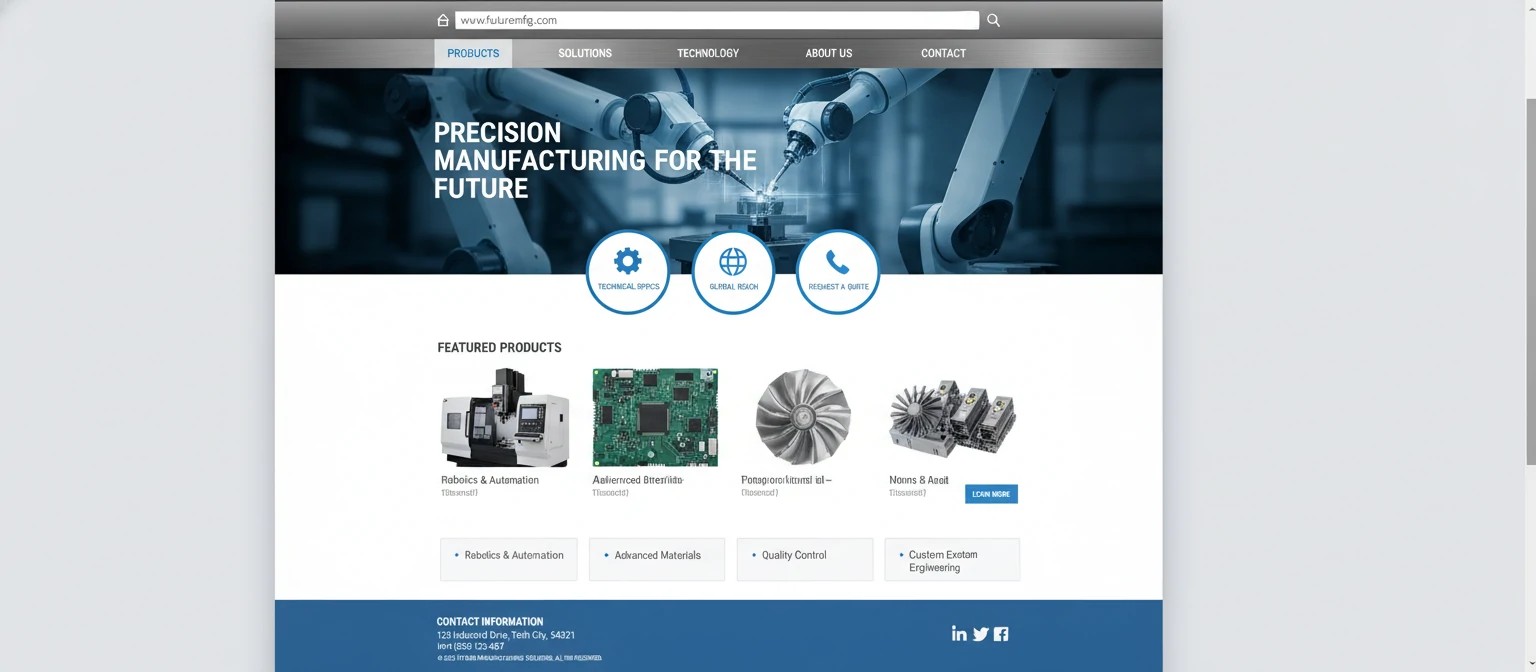
The manufacturing industry has undergone a digital transformation that fundamentally changed how buyers discover, evaluate, and purchase industrial products and services. Today's procurement professionals, engineers, and decision-makers begin their search for manufacturing solutions online, making SEO not just beneficial but essential for business growth and survival.
How SEO Drives Manufacturing Success
🎯 Qualified Lead Generation
SEO attracts highly qualified prospects who are actively searching for your specific products or services. Unlike traditional advertising that interrupts potential customers, SEO connects you with buyers who have already identified a need and are researching solutions.
Case Study Example:
A precision machining company increased qualified leads by 340% in 18 months by optimizing for long-tail keywords like "aerospace precision machining services" and "medical device CNC manufacturing," resulting in $2.3M in new contracts.
💰 Cost-Effective Marketing
SEO provides exceptional ROI compared to traditional manufacturing marketing methods. While trade shows, print advertising, and cold calling require ongoing investment, SEO builds long-term organic visibility that continues generating leads without per-click costs.
ROI Comparison:
- SEO: $2.75 return for every $1 invested
- Trade Shows: $1.20 return for every $1 invested
- Print Advertising: $0.80 return for every $1 invested
- Cold Calling: $0.60 return for every $1 invested
🏆 Competitive Advantage
Many manufacturing companies still rely heavily on traditional marketing methods, creating significant opportunities for early SEO adopters. By establishing strong search presence now, manufacturers can capture market share and build barriers to entry for competitors.
Competitive Benefits:
- First-mover advantage in search results
- Increased brand visibility and recognition
- Higher perceived authority and credibility
- Reduced dependence on sales team for lead generation
📊 Measurable Results
Unlike traditional manufacturing marketing, SEO provides detailed analytics and measurable results. You can track exactly which keywords drive traffic, which pages generate leads, and calculate precise ROI for your SEO investment.
Key Metrics to Track:
- Organic traffic growth and keyword rankings
- Lead generation and conversion rates
- Cost per lead and customer acquisition cost
- Revenue attribution and sales cycle impact
📈 Real-World Success Story
Industrial Equipment Manufacturer Case Study:
A mid-sized industrial equipment manufacturer implemented a comprehensive SEO strategy targeting technical keywords and industry-specific terms. Over 24 months, they achieved:
- 425% increase in organic website traffic
- 280% growth in qualified lead generation
- $4.2M in new revenue directly attributed to SEO
- 65% reduction in cost per lead compared to trade shows
- First page rankings for 47 high-value industry keywords
The evidence is clear: manufacturing companies that invest in SEO gain significant competitive advantages, generate more qualified leads, and achieve better ROI than those relying solely on traditional marketing methods. As the industrial buying process becomes increasingly digital, SEO has evolved from a nice-to-have to a business-critical necessity for manufacturing success.
Keyword Research for Manufacturing SEO
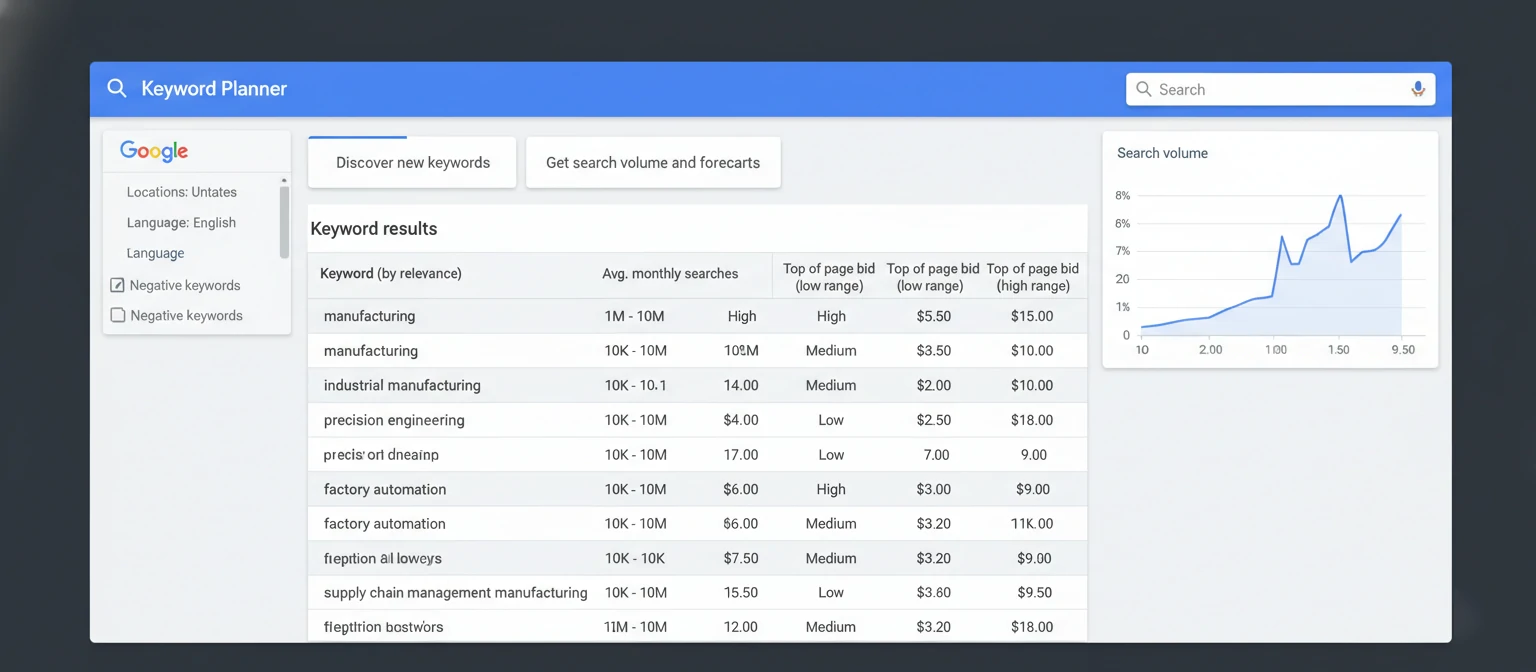

Effective keyword research for manufacturing companies requires a deep understanding of industry terminology, buyer personas, and the technical language used by engineers, procurement specialists, and decision-makers. Unlike consumer keyword research, manufacturing keyword research focuses on highly specific, technical terms with lower search volumes but higher commercial intent and value.
Manufacturing Keyword Research Strategy
🎯 Understanding Manufacturing Search Intent
Manufacturing searches typically fall into four categories, each requiring different keyword strategies and content approaches:
Informational Intent
Buyers researching solutions, processes, or specifications
Examples:
- "CNC machining tolerances"
- "injection molding process"
- "ISO 9001 requirements"
Commercial Investigation
Comparing suppliers, services, or solutions
Examples:
- "best CNC machining services"
- "precision grinding vs turning"
- "custom fabrication companies"
Transactional Intent
Ready to request quotes or make purchases
Examples:
- "CNC machining quote"
- "custom parts manufacturer"
- "precision machining services near me"
Navigational Intent
Searching for specific companies or brands
Examples:
- "[Company Name] capabilities"
- "[Brand] distributors"
- "[Supplier] contact information"
Google Keyword Planner
Free tool providing search volume data and keyword suggestions. Essential for understanding baseline search demand for manufacturing terms.
SEMrush/Ahrefs
Premium tools offering competitor keyword analysis, allowing you to discover what keywords successful manufacturing competitors rank for.
Industry Forums and Communities
Engineering forums, LinkedIn groups, and industry-specific communities reveal the actual language professionals use when discussing your products or services.
Customer and Sales Team Input
Your sales team and existing customers are goldmines of keyword insights, providing real-world terminology and pain points that drive searches.
📝 Long-Tail Keywords in Manufacturing
Long-tail keywords are particularly valuable in manufacturing SEO because they capture specific technical requirements and demonstrate high purchase intent. These keywords typically have lower search volumes but much higher conversion rates.
Long-Tail Keyword Examples by Industry:
Precision Machining:
- "5-axis CNC machining aerospace components"
- "tight tolerance machining +/- 0.0001"
- "medical device precision machining FDA"
Industrial Equipment:
- "custom conveyor systems food grade"
- "industrial automation PLC programming"
- "pneumatic cylinder repair services"
Pro Tip: Long-tail manufacturing keywords often include specifications, standards, materials, and applications. Focus on keywords that include technical details your prospects would search for when they're ready to make purchasing decisions.
🎯 Manufacturing Keyword Research Action Plan
- Audit Current Keywords: Analyze your existing website content and identify technical terms already being used
- Interview Sales Team: Document the exact language prospects use when inquiring about your products or services
- Analyze Competitors: Use SEO tools to identify keywords your successful competitors rank for
- Research Industry Terms: Study trade publications, technical specifications, and industry standards for relevant terminology
- Validate Search Volume: Use keyword tools to confirm search demand and competition levels
- Prioritize by Intent: Focus on keywords that indicate commercial intent and readiness to purchase
On-Page SEO Strategies for Manufacturers
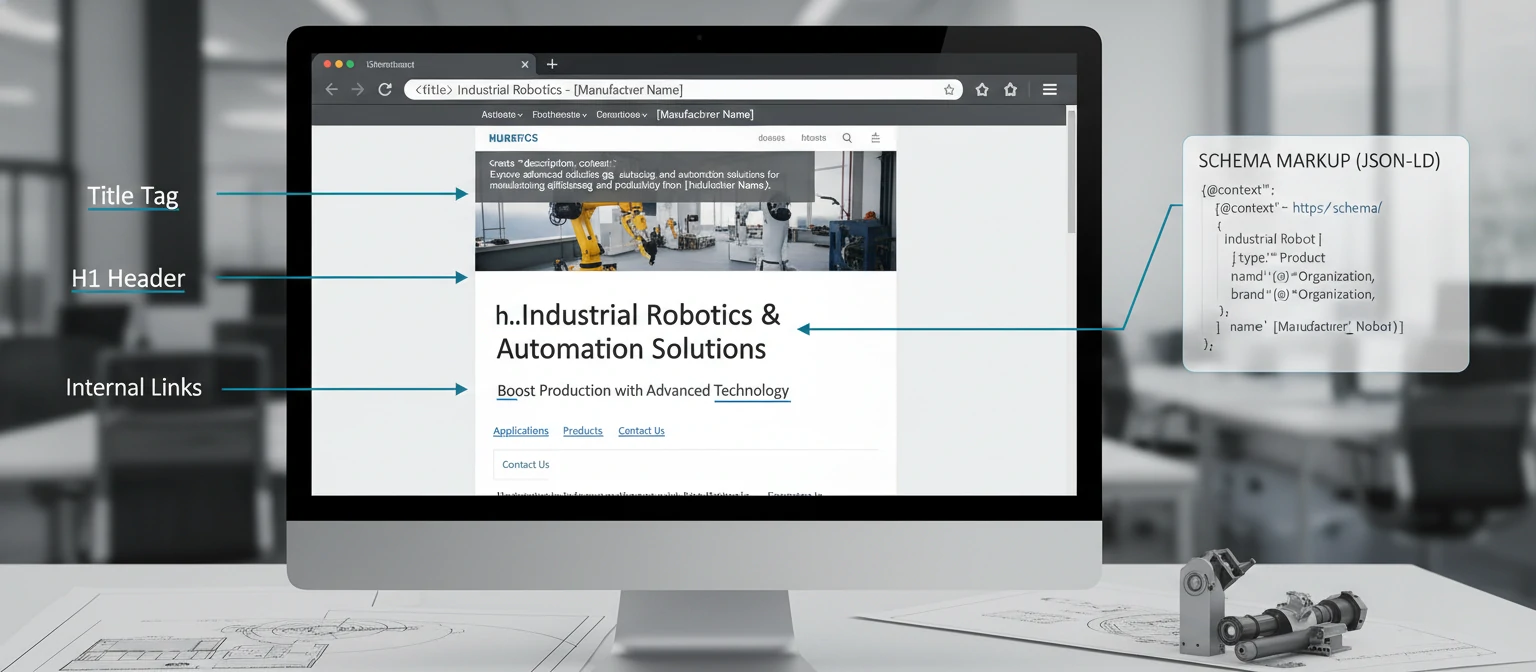
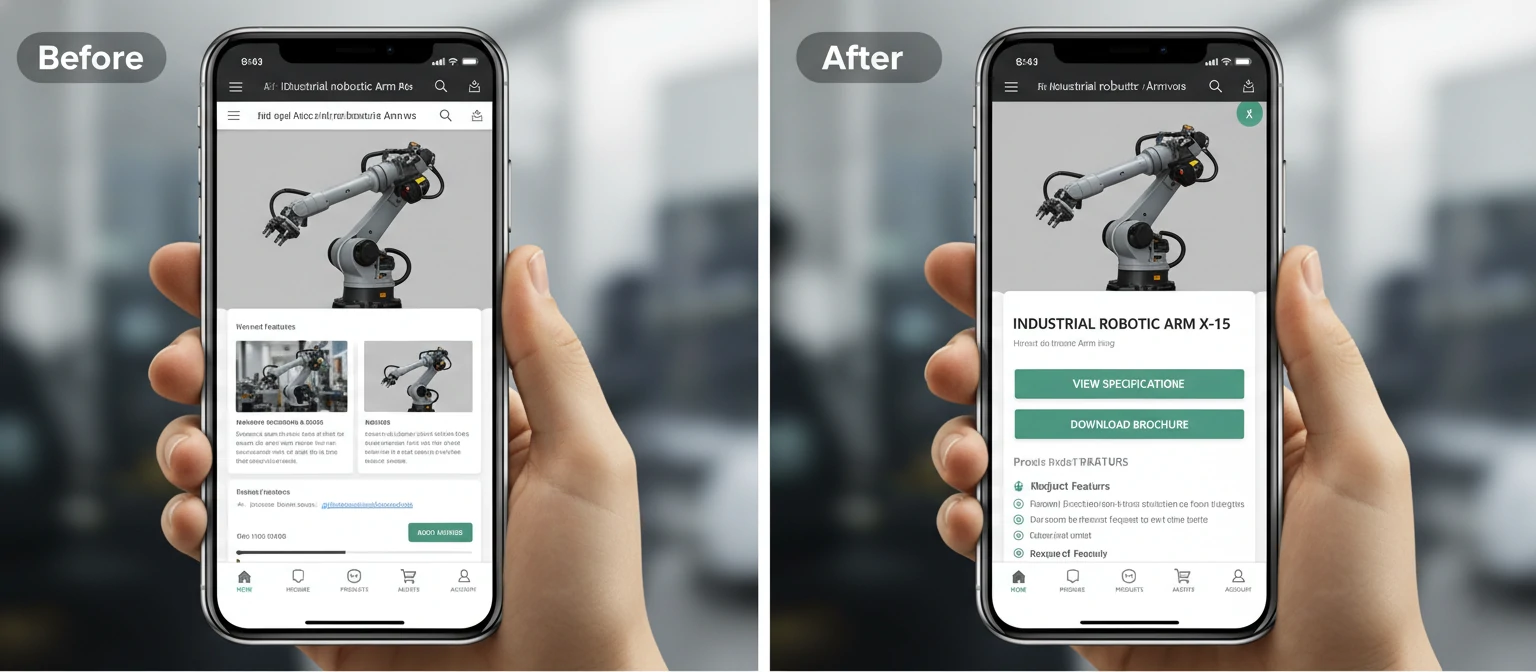
On-page SEO for manufacturing websites requires balancing technical accuracy with search engine optimization. Your content must satisfy both search engine algorithms and sophisticated B2B buyers who demand precise specifications, detailed capabilities, and comprehensive technical information.
Essential On-Page Elements for Manufacturing
📝 Title Tags and Meta Descriptions
Manufacturing title tags should include specific product names, key specifications, and location when relevant. Meta descriptions should highlight unique capabilities and competitive advantages.
✅ Good Manufacturing Title Tag:
"Precision CNC Machining Services | Aerospace & Medical | ±0.0001" Tolerance | [Company Name]"
Includes service, industries served, key specification, and company name
❌ Poor Manufacturing Title Tag:
"Home | [Company Name] | Manufacturing Company"
Generic, no specific services or capabilities mentioned
✅ Effective Meta Description:
"ISO 9001 certified precision machining for aerospace, medical, and automotive industries. 5-axis CNC capabilities, ±0.0001" tolerances, prototype to production. Request quote today."
Highlights certifications, industries, capabilities, and includes call-to-action
🏗️ Header Structure and Technical Content
Organize technical content using clear header hierarchy that helps both users and search engines understand your capabilities and specifications.
Recommended Header Structure for Product Pages:
H1: Primary Product/Service Name
H2: Key Capabilities Overview
H3: Technical Specifications
H3: Materials and Standards
H3: Industries Served
H2: Quality Certifications
H2: Request Quote/Contact Information
📱 Mobile Optimization for B2B Users
Even B2B manufacturing buyers increasingly use mobile devices for research. Your website must provide excellent mobile experience while maintaining access to detailed technical information.
Mobile Optimization Priorities:
- Fast loading times (under 3 seconds)
- Easy-to-tap contact buttons
- Readable technical specifications
- Simplified navigation menus
- Optimized forms for quote requests
Technical Content on Mobile:
- Use collapsible sections for specs
- Implement horizontal scrolling for tables
- Provide downloadable PDF datasheets
- Use clear, large fonts for numbers
- Include click-to-call functionality
🛠️ Product Page Optimization
Manufacturing product pages must balance SEO optimization with the detailed technical information that B2B buyers require for decision-making.
Technical Specifications SEO
Structure specifications using schema markup and clear formatting that search engines can understand and index.
Example: Use structured data for product specifications, materials, tolerances, and certifications to enhance search visibility.
Image Optimization
Optimize product images, technical drawings, and diagrams with descriptive alt text and file names.
Alt text example: "5-axis CNC machined aluminum aerospace bracket with anodized finish and precision mounting holes"
Internal Linking Strategy
Link related products, capabilities, and technical resources to help users and search engines understand your full range of offerings.
Link from CNC machining pages to related services like finishing, assembly, and quality inspection.
🎯 Manufacturing On-Page SEO Checklist
Technical Elements:
- ☐ Unique title tags with key specifications
- ☐ Compelling meta descriptions with CTAs
- ☐ Proper header hierarchy (H1-H6)
- ☐ Schema markup for products/services
- ☐ Optimized images with descriptive alt text
- ☐ Fast page loading speeds
Content Elements:
- ☐ Detailed technical specifications
- ☐ Industry-specific terminology
- ☐ Quality certifications and standards
- ☐ Clear contact and quote request options
- ☐ Related product/service links
- ☐ Mobile-optimized experience
Off-Page SEO and Link Building for Manufacturing
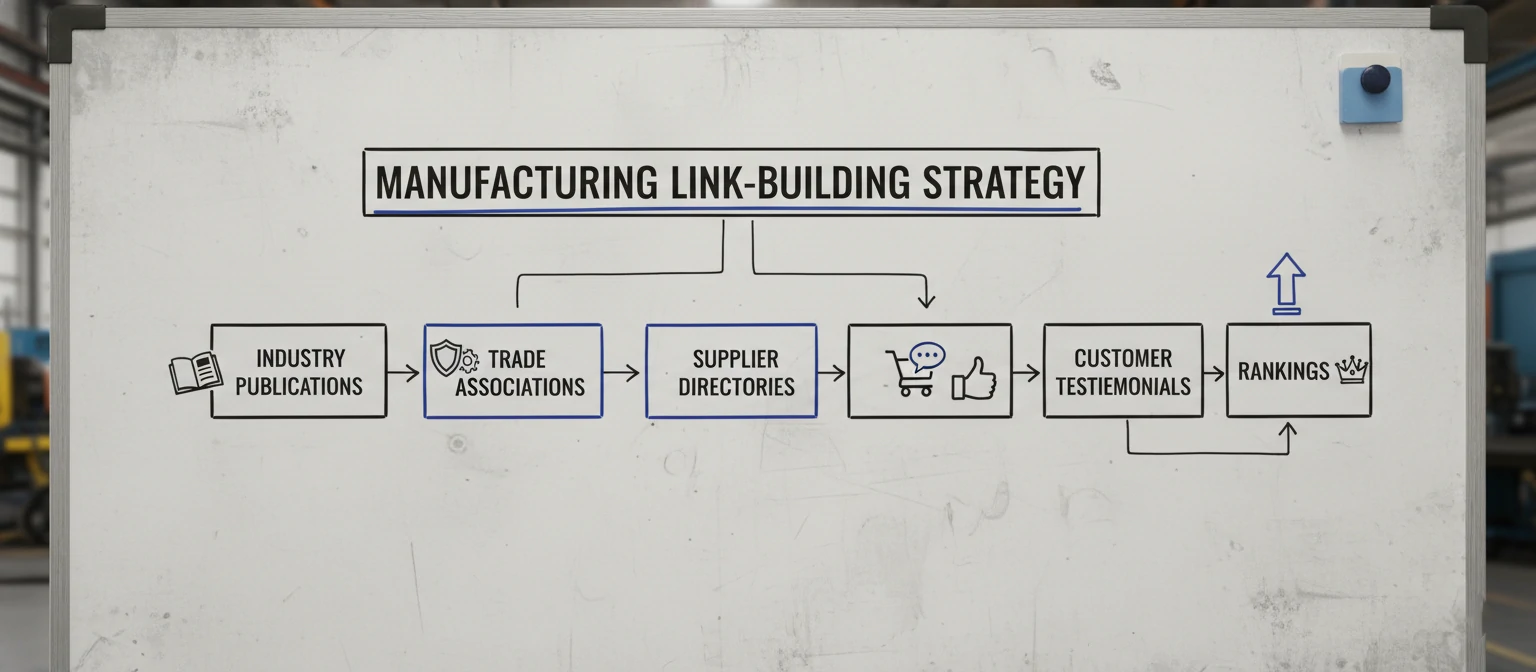
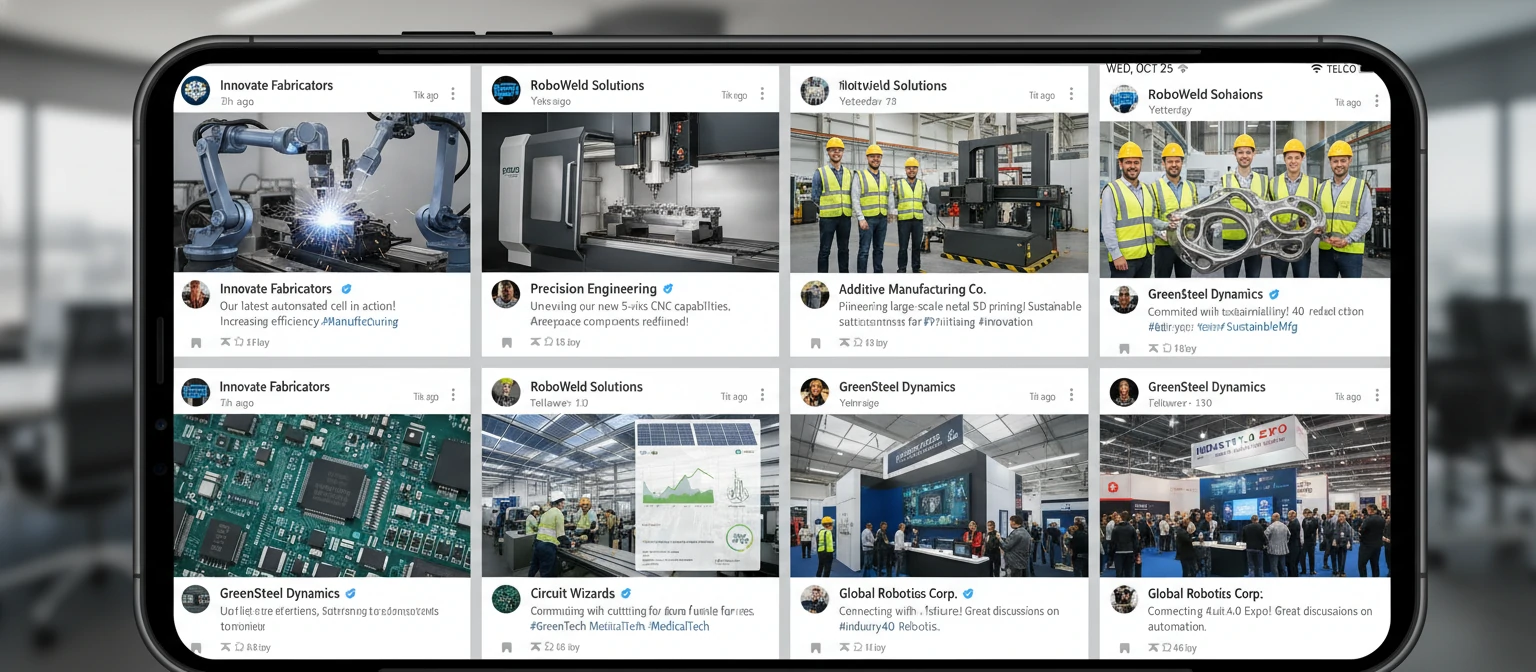
Off-page SEO for manufacturing companies extends beyond traditional link building to encompass industry authority, professional relationships, and thought leadership. Success requires building credibility within your specific manufacturing niche and establishing your company as a trusted industry expert.
Manufacturing Link Building Strategies
📰 Industry Publications and Trade Media
Trade publications and industry magazines are among the most valuable link sources for manufacturing companies. These links carry significant authority and reach your target audience directly.
High-Value Publication Types:
- Industry-specific trade magazines
- Engineering and technical journals
- Manufacturing news websites
- Professional association publications
- Regional business journals
Content Opportunities:
- Guest articles on industry trends
- Technical expertise pieces
- Case studies and success stories
- New product announcements
- Industry award recognition
Pro Tip: Develop relationships with trade publication editors by providing expert commentary on industry news and trends. This positions you as a go-to source for quotes and features, leading to natural link opportunities.
🏢 Professional Associations and Directories
Industry associations and professional directories provide authoritative links while demonstrating your commitment to industry standards and professional development.
Trade Associations
Join relevant manufacturing associations and participate actively to earn profile links and directory listings.
Examples: National Association of Manufacturers (NAM), Society of Manufacturing Engineers (SME), Precision Machined Products Association (PMPA)
Supplier Directories
List your company in industry-specific supplier directories and procurement platforms.
Examples: ThomasNet, GlobalSpec, MFG.com, Alibaba.com, industry-specific supplier networks
Certification Bodies
List your company in industry-specific supplier directories and procurement platforms.
Examples: ThomasNet, GlobalSpec, MFG.com, Alibaba.com, industry-specific supplier networks
🤝 Strategic Partnerships and Collaborations
Building relationships with complementary businesses, suppliers, and customers creates natural link opportunities while expanding your business network.
Partnership Opportunities:
- Complementary service providers
- Equipment and tooling suppliers
- Engineering and design firms
- Quality testing laboratories
- Logistics and shipping companies
Link-Building Activities:
- Joint case studies and projects
- Cross-promotional content
- Supplier/partner directory listings
- Co-authored technical articles
- Mutual testimonials and references
📱 Social Media and Digital Presence
While social media links may not directly impact SEO rankings, they increase brand visibility, drive traffic, and create opportunities for earning natural links from other sources.
LinkedIn Strategy for Manufacturing:
- Share technical expertise and industry insights
- Participate in manufacturing and engineering groups
- Showcase completed projects and capabilities
- Connect with industry professionals and potential customers
- Publish thought leadership articles
YouTube for Manufacturing:
- Create facility tours and capability videos
- Demonstrate manufacturing processes
- Share customer testimonials and case studies
- Provide technical education and tutorials
- Showcase quality control and testing procedures
🎯 Manufacturing Link Building Action Plan
Month 1-2: Foundation
- Audit existing backlink profile
- Join relevant trade associations
- Create comprehensive supplier directory listings
- Optimize social media profiles
Month 3-6: Content & Outreach
- Develop guest article topics
- Reach out to trade publications
- Create partnership opportunities
- Launch social media content strategy
Measuring SEO Success in Manufacturing


Measuring SEO success for manufacturing companies requires tracking metrics that align with B2B sales cycles, lead quality, and long-term business growth. Unlike consumer businesses, manufacturing SEO success is measured by qualified lead generation, sales pipeline contribution, and revenue attribution rather than just traffic volume.
Key Performance Indicators for Manufacturing SEO
🎯 Lead Generation Metrics
Organic Lead Volume
Track the number of qualified leads generated from organic search traffic, including quote requests, contact form submissions, and phone calls.
Lead Quality Score
Measure lead quality based on company size, industry relevance, project scope, and budget indicators.
Cost Per Lead (CPL)
Calculate the cost of generating leads through SEO compared to other marketing channels like trade shows or advertising.
💰 Revenue Attribution Metrics
SEO-Attributed Revenue
Track revenue from customers who first discovered your company through organic search, including multi-touch attribution.
Customer Lifetime Value (CLV)
Measure the long-term value of customers acquired through SEO, accounting for repeat business and referrals.
Return on Investment (ROI)
Calculate the financial return from SEO investment, including both direct revenue and pipeline value.
📈 Technical SEO Performance
Track rankings for target manufacturing keywords and technical terms
Monitor organic search traffic growth and user engagement metrics
Track site speed, mobile usability, and crawl error resolution
Essential Analytics Tools for Manufacturing
🔍 Google Analytics 4 Setup
Configure GA4 to track manufacturing-specific goals and conversions:
- Quote request form completions
- Technical specification downloads
- Contact form submissions by service type
- Phone call tracking from organic search
- Capability brochure downloads
📊 Google Search Console Monitoring
Use Search Console to track technical SEO performance:
- Manufacturing keyword impression and click data
- Technical page indexing status
- Mobile usability for product pages
- Core Web Vitals performance
- Structured data validation
🎯 CRM Integration
Connect SEO data with your CRM system to track full sales cycle:
- Lead source attribution from organic search
- Sales cycle length for SEO-generated leads
- Win rate comparison by traffic source
- Customer lifetime value tracking
- Pipeline value from organic traffic
📋 Monthly SEO Audit Checklist
Performance Review:
- ☐ Organic traffic growth analysis
- ☐ Keyword ranking changes
- ☐ Lead generation performance
- ☐ Conversion rate optimization
- ☐ Revenue attribution tracking
Technical Health:
- ☐ Site speed and Core Web Vitals
- ☐ Mobile usability testing
- ☐ Crawl error resolution
- ☐ Broken link identification
- ☐ Content freshness review
Conclusion: Your Manufacturing SEO Success Journey
The manufacturing industry stands at a digital crossroads. Companies that embrace SEO now will capture market share, generate qualified leads, and build sustainable competitive advantages. Those that delay risk being left behind as B2B buyers increasingly rely on search engines to discover and evaluate manufacturing partners.
🚀 Key Takeaways for Manufacturing SEO Success
Strategic Foundations:
- Focus on technical, long-tail keywords
- Create content that demonstrates expertise
- Optimize for mobile B2B users
- Build industry authority through quality links
Measurement & Growth:
- Track lead quality over quantity
- Measure revenue attribution accurately
- Conduct regular technical audits
- Continuously refine and improve
Manufacturing SEO is not a one-time project but an ongoing investment in your company's digital future. The strategies outlined in this guide provide a roadmap for success, but implementation requires commitment, patience, and consistent effort. Start with the fundamentals—keyword research and on-page optimization—then gradually expand to advanced link building and content marketing strategies.
Remember that manufacturing SEO success is measured differently than consumer SEO. Focus on generating qualified leads, building industry authority, and contributing to your sales pipeline rather than just increasing traffic volume. The goal is to connect with decision-makers who have the authority and budget to become valuable long-term customers.
💬 Share Your Manufacturing SEO Experience
We'd love to hear about your manufacturing SEO journey! Share your experiences, challenges, and successes in the comments below. Your insights could help other manufacturers navigate their digital transformation.
• What manufacturing SEO strategies have worked best for your company?
• Which challenges have you encountered in optimizing technical content?
• How has SEO impacted your lead generation and sales process?
• What advice would you give to manufacturers just starting their SEO journey?