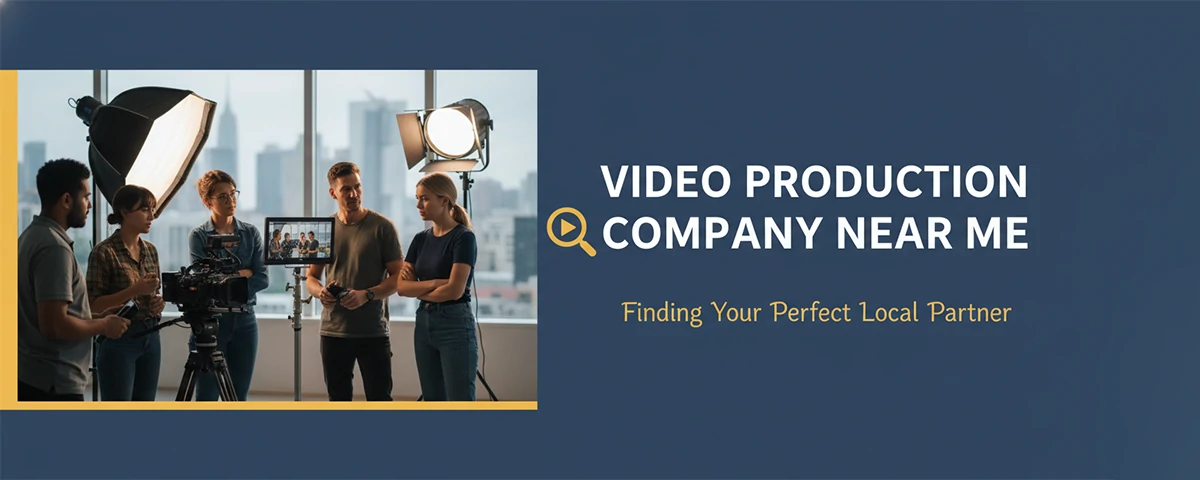
The complete guide to producing professional video content for local businesses, community organisations, and regional brands — from strategy to production to distribution.
📅 Updated 2026
📖 Guide
📄 What You Will Learn
1. What Is Local Video Production
2. Why Local Video Matters
3. Types of Local Video Content
4. Understanding Your Local Audience
5. Planning Your Local Video Strategy
6. Scripting for Local Appeal
7. Production Considerations
8. Local Locations and Landmarks
9. Budgeting for Local Production
10. Working With Local Production Companies
11. Small Business Video
12. Local SEO and Video
13. Social Media for Local Video
14. Measuring Local Video Success
15. Trends in Local Video
16. DIY vs Professional Production
17. Video for Different Local Businesses
18. Repurposing Local Video
19. Community Partnerships
20. Frequently Asked Questions
What Is Local Video Production
Local video production is the creation of video content designed for local audiences, local businesses, and regional markets. Unlike national or global video production, which aims to reach broad audiences across large geographic areas, local video production focuses on connecting with people in a specific city, town, region, or community. It is video content that speaks the local language, reflects local culture, showcases local landmarks, and addresses the specific needs and interests of a local audience.
The demand for local video production has grown significantly as businesses have recognised that consumers increasingly want to support local companies and engage with content that feels relevant to their community. A restaurant in Austin needs video content that feels like Austin. A dentist in Portland needs video content that resonates with Portland residents. A real estate agent in Denver needs video content that showcases Denver neighborhoods. Local video production bridges the gap between professional quality and community connection, creating content that is both polished and personal.
Local video production is not limited to small businesses. Large national brands also invest in local video content for regional marketing campaigns, local market penetration, and community engagement initiatives. A national retailer might create different video content for each of its regional markets, highlighting local employees, local customers, and local community involvement. This approach recognises that even global brands need to feel local to connect authentically with consumers in different markets.
The local video production industry encompasses a wide range of services, from simple smartphone videos captured by business owners themselves to professionally produced content created by local video production companies. The key differentiator is not the production value but the local focus — the content is created for a specific geographic community and designed to resonate with the people who live, work, and shop there. This local focus influences every aspect of production, from the locations and talent selected to the language and references used in the script.
Local Video Defined
Video content created for a specific geographic community, featuring local locations, local voices, and locally relevant messaging. Designed to connect with audiences in a particular city, town, or region.
Market Reality
46% of Google searches are looking for local information. Consumers are 28% more likely to engage with video content that features local landmarks, local language, and local community references.
Why Local Video Matters for Your Business
Local video matters because local connection matters. In an increasingly digital world, consumers crave authentic connections with the businesses they support. They want to know that the businesses in their community understand them, share their values, and are invested in the same community they are. Local video content is one of the most effective ways to demonstrate that connection and build the trust that drives local business success.
Building community trust. Trust is the currency of local business. When potential customers see a video that features local locations, local employees, and genuine community involvement, they immediately feel a sense of familiarity and trust. A video that shows your team volunteering at a local food bank, your storefront in the local business district, or your employees talking about why they love the community communicates that you are not just a business operating in the area but a genuine part of the community. This trust translates directly into customer preference, loyalty, and word-of-mouth referrals.
Standing out in local search. Local search has become increasingly competitive, and video content gives businesses a significant advantage in local search results. Google prioritises video content in search results, and local businesses with video content on their websites, Google Business profiles, and social media channels consistently outperform competitors who rely on text and photos alone. Video content signals to search algorithms that your business is active, engaged, and providing valuable content to the community. Local video content that includes location-specific keywords, landmarks, and references further strengthens local SEO performance.
Connecting with mobile and social audiences. Local consumers are predominantly mobile and social. They search for businesses on their phones, discover new places through social media, and make decisions based on the content they see in their feeds. Video is the most engaging content format on mobile devices and social platforms, and local video content that feels authentic and relevant captures attention in crowded social feeds. A well-produced local video can generate shares, comments, and engagement that far exceeds what text or photo content can achieve, extending its reach organically through the local community.
Key Takeaway: Local video is not just about being seen — it is about being felt. When your video content reflects genuine local identity and community connection, it builds the trust, familiarity, and preference that drives local business growth. The businesses that invest in authentic local video content are the ones that become household names in their communities.
Types of Local Video Content
Local video content comes in many forms, each suited to different business types, objectives, and audiences. Understanding the range of options helps you choose the right type of video for your specific needs and budget. The most effective local video strategies often combine multiple types of content to create a comprehensive video presence across different channels and audiences.
Business overview and brand films. A local brand film tells the story of your business — who you are, what you do, why you do it, and what makes you different. For local businesses, the brand film should emphasise local roots, community involvement, and connection to the area. Feature your storefront, your local team, your regular customers, and the community landmarks that matter to you. A local brand film serves as the primary video asset on your website and can be used across multiple channels. Keep it between sixty seconds and three minutes, and make sure the local connection is evident from the first frame.
Local testimonial and review videos. Testimonial videos featuring local customers are incredibly effective for local businesses. When potential customers see familiar faces from their own community praising your business, the social proof is powerful and immediate. Local testimonial videos can be shot in your place of business, at the customer's home or workplace, or at a local landmark that both your business and the customer are associated with. The key is authenticity — real customers sharing genuine experiences in their own words, with enough local context to make the connection clear to viewers.
Community involvement and event coverage. Videos that showcase your business's involvement in the local community are powerful trust-builders. Sponsor a local sports team, participate in a community festival, volunteer at a local charity, or host a community event — and capture it all on video. These videos demonstrate that your business is invested in the community beyond just selling products or services. They humanise your brand and create positive associations that extend far beyond the content itself. Community involvement videos are also highly shareable, as the people and organisations featured in them are likely to share the content with their own networks.
Behind-the-scenes and day-in-the-life content. Behind-the-scenes video content gives local audiences a look at the people and processes behind the business. Show your team preparing for the day, crafting products, serving customers, or just enjoying time together. This type of content builds familiarity and connection, making your business feel accessible and human. Day-in-the-life videos featuring local employees are particularly effective for recruitment and employer branding, showcasing your business as a great local place to work.
Local Video Types: Brand films • Customer testimonials • Community event coverage • Behind-the-scenes • Product showcases • Local service explanations • Team introductions • Neighborhood tours • Seasonal promotions • Educational how-to content • Local partnership stories
Understanding Your Local Audience
Creating effective local video content requires a deep understanding of your local audience. Who lives in your community? What do they care about? What challenges do they face? What makes them proud of their community? The answers to these questions should inform every aspect of your video content, from the topics you cover to the locations you feature to the language you use.
Demographics and psychographics. Understanding the demographic makeup of your local audience helps you create content that reflects their realities. Is your community predominantly families with young children, retirees, young professionals, or a mix? What are the income levels, education levels, and cultural backgrounds of your target audience? Beyond demographics, psychographics — values, interests, lifestyle preferences — provide deeper insight into what motivates your local audience. A community that values outdoor recreation will respond to different video content than a community that values arts and culture, even if the demographics are similar.
Local culture and identity. Every community has its own culture, identity, and sense of pride. Successful local video content taps into this local identity, reflecting and celebrating what makes the community unique. This might include local traditions, local slang or dialect, local historical references, local sports teams, local food culture, or local natural landmarks. When your video content demonstrates that you understand and appreciate local culture, local audiences will feel an immediate connection to your brand. Conversely, video content that feels generic or could have been produced anywhere in the country will fail to build this connection.
Local needs and pain points. The most effective local video content addresses the specific needs and pain points of your local audience. A local HVAC company might create videos about preparing for the specific climate challenges of the area. A local restaurant might create videos featuring local produce and regional cuisine. A local financial advisor might create videos about the specific economic concerns of the community. By addressing locally relevant needs, you position your business as a local expert and demonstrate that you understand and care about the specific challenges your community faces.
Image Suggestion: A diverse group of local community members gathered at a neighborhood farmers market, with local storefronts visible in the background. Natural sunlight, fresh produce on display, and genuine smiles create a warm, authentic representation of a thriving local community. This visual captures the human element that makes local video content so powerful.
Planning Your Local Video Strategy
A well-planned local video strategy ensures that your content efforts are focused, effective, and aligned with your business goals. Without a strategy, it is easy to create video content that looks good but fails to deliver meaningful results. The planning process helps you clarify what you want to achieve, who you want to reach, and how you will measure success.
Setting local video objectives. What do you want your local video content to achieve? Common objectives for local video include increasing foot traffic to a physical location, generating local phone calls and inquiries, building local brand awareness, improving local search rankings, attracting local talent, and engaging with the local community on social media. Your objectives determine the type of content you create, the channels you distribute it on, and the metrics you use to measure success. Be specific about your objectives and ensure they are measurable. Increasing foot traffic by 20% over six months is a more useful objective than simply getting more people to visit.
Content planning and calendaring. A content calendar helps you plan your local video content in advance, ensuring consistent output and strategic alignment with business cycles, seasonal events, and community activities. Map out the year and identify key opportunities for local video content — local holidays and festivals, seasonal changes that affect your business, community events your business participates in, product or service launches, and regular content series you want to maintain. A content calendar also helps you balance different types of content, ensuring variety while maintaining focus on your strategic objectives.
Distribution and amplification plan. Creating great local video content is only half the equation. You also need a plan for getting that content in front of your local audience. Your distribution plan should identify the channels where your local audience spends their time — local social media groups, community forums, local news websites, neighborhood apps, and of course your own website and social media profiles. Consider paid amplification for important content, targeting local audiences by location, demographics, and interests. Local partnerships can also amplify your reach — when you feature another local business or community organisation in your video, they are likely to share the content with their own audience.
Planning Essentials
Define objectives • Know your audience • Map content to business goals • Create a calendar • Plan distribution • Set metrics • Review and adjust regularly
Seasonal Video Ideas
Spring: Local events • Summer: Outdoor community • Fall: Seasonal preparations • Winter: Holiday and year-end • Year-round: Ongoing community involvement
Scripting for Local Appeal
Scripting for local video requires a different approach than scripting for national or generic content. The language, references, and tone need to be tailored specifically to your local audience, reflecting the way people in your community talk, the things they care about, and the cultural context they share. A script that works for a national audience will feel generic and disconnected when used for local content.
Using local language and references. The most effective local video content uses language that feels native to the community. This might include regional phrases or expressions, local names for landmarks and neighborhoods, references to local events and institutions, and a tone that matches the local communication style. A video script for a business in the Pacific Northwest might reference the rain, coffee culture, and outdoor lifestyle. A script for a business in the Southwest might reference the heat, desert landscape, and local culinary traditions. These references signal that you are part of the community and speaking directly to local viewers.
Featuring local voices. Whenever possible, feature real local voices in your video content. This might be the business owner, local employees, local customers, or community partners. Authentic local voices carry a credibility that professional voice talent cannot replicate for local content. The local accent, the genuine passion for the community, and the real-life experience of being part of the area all come through when real local people speak on camera. Even if the production quality is slightly lower, the authenticity of local voices more than compensates in terms of audience connection and trust.
Keeping it conversational and accessible. Local video content should feel like a conversation between neighbors, not a formal presentation from a faceless corporation. The script should use conversational language, short sentences, and a warm, approachable tone. Avoid jargon, corporate speak, and language that feels like it came from a marketing manual. Write the way you would explain your business to a new neighbor over the fence — friendly, helpful, and genuine. This conversational approach makes your video content feel personal and accessible, which is exactly what local audiences are looking for.
Scriptwriting Tips for Local Video: Use local language and references naturally • Feature real local voices • Keep it conversational and warm • Address local needs and interests • Include specific local details • Test the script with local colleagues for authenticity
Production Considerations for Local Video
Production for local video content involves many of the same technical considerations as any video production, but with some important differences. Local video production often happens on tighter budgets, shorter timelines, and in locations that are not traditional production environments. Adapting your production approach to these realities while maintaining professional quality is the key to successful local video production.
Working with available resources. Many local businesses do not have the budget for a full professional production crew, and that is okay. Local video production can be highly effective with minimal equipment, as long as the fundamentals are handled well. Good lighting, clear audio, and stable footage are the non-negotiable basics. A modern smartphone with a good camera, a simple lighting kit, and a lavalier microphone can produce excellent results for many types of local video content. The key is focusing on the content and the connection rather than trying to achieve broadcast-level production value. Authenticity matters more than perfection for local audiences.
Capturing authentic local environments. For local video, the environment is as important as the subject. Shoot in locations that reflect the local character — the storefront, the local park, the neighborhood street, the community center. These authentic local environments provide visual context that reinforces the local connection and makes the content feel grounded and genuine. Avoid the temptation to shoot everything in a studio or against a generic background. The imperfections and character of real local environments are assets, not liabilities, for local video content.
Production efficiency and batching. To maximise the value of local video production, plan production days efficiently and batch content creation. A single production day can capture footage for multiple videos — an overview video, several social media clips, customer testimonial content, and b-roll for future use. Batching production reduces per-video costs and ensures consistent quality across your content library. Plan your batching around your content calendar, capturing seasonal content in advance and maintaining a library of evergreen content that can be used year-round.
Minimum Viable Setup
Smartphone with 4K video • Small LED light panel • Lavalier microphone • Simple tripod • Natural window light • Quiet indoor location
Professional Setup
Mirrorless or cinema camera • Professional lighting kit • Wireless lavalier system • Boom microphone • Field recorder • Full grip and support equipment
Local Locations and Landmarks
The locations you choose for your local video content play a crucial role in establishing local identity and connection. Strategic use of local locations and landmarks instantly communicates that your content is created for and about a specific community, creating a sense of familiarity and belonging for local viewers.
Iconic local landmarks. Every community has landmarks that its residents recognise and feel connected to. This might be a historic building, a prominent natural feature, a well-known park, a distinctive bridge, a famous sign, or a iconic street corner. Featuring these landmarks in your video content immediately establishes local context and creates a visual anchor that local audiences will recognise and appreciate. Use landmarks thoughtfully — they should support the content rather than distract from it, and they should be relevant to the story you are telling about your business and its relationship to the community.
Neighborhood character and hidden gems. Beyond the obvious landmarks, every community has its hidden gems — the local coffee shop that everyone loves, the quirky neighborhood street, the community garden, the local mural, the family-owned market that has been there for generations. These locations add depth and authenticity to your local video content, showing that you know the community beyond its tourist attractions. Featuring these locations also builds goodwill with other local businesses and community members, as you are showcasing and celebrating the broader local ecosystem.
Your own business location. Your business location is itself an important local landmark for your customers. Whether you operate out of a storefront on Main Street, an office in a professional building, a food truck at local events, or a home-based business, your physical location is part of your local identity. Videos that feature your actual business location help customers find you, create a sense of familiarity before they even visit, and reinforce your presence in the community. Show the exterior so people know what to look for, and show the interior so people feel like they already know the space when they arrive.
Image Suggestion: A charming local main street with independent storefronts, decorative street lamps, and pedestrians enjoying a sunny afternoon. The street features a mix of retail shops, cafes, and local businesses with awnings and signage that reflect the community's unique character. This classic small-town or neighborhood main street scene is the perfect visual representation of local business community.
Budgeting for Local Video Production
Local video production budgets vary widely depending on the complexity of the content, the production quality desired, and the resources available. The good news is that effective local video content does not require a large budget. With thoughtful planning, creative resourcefulness, and a focus on authenticity over polish, businesses of all sizes can create compelling local video content that achieves their objectives.
Low-budget approaches. For businesses just getting started with local video, the lowest-cost approach is to create content in-house using equipment you already own. A modern smartphone, a simple tripod, and an affordable lavalier microphone can produce surprisingly good results. Free or low-cost editing software makes it possible to produce polished final videos without professional editing services. The time investment is significant, but the financial investment can be minimal. This approach works best for simple content types like behind-the-scenes videos, team introductions, and quick updates. The key is focusing on good lighting, clear audio, and stable footage — the basics that separate watchable content from unwatchable content.
Mid-range production investment. For businesses ready to invest more seriously in local video, hiring a local production company or freelance videographer for a day of production can yield professional-quality content at a reasonable price. A single production day can capture footage for multiple videos, making the per-video cost much more affordable. Expect to invest between one thousand and five thousand dollars for a day of professional production with basic editing included. This level of investment typically results in polished content that can be used across multiple channels for an extended period.
Premium local video production. For businesses that want the highest quality local video content, full-service production with a professional crew, multiple shoot days, professional talent, and extensive post-production can deliver exceptional results. This level of production is appropriate for flagship brand films, major campaign launches, and content that will be used extensively across multiple channels. Premium local video production typically starts at ten thousand dollars and can go significantly higher depending on the scope and complexity of the project.
Budget Ranges: DIY in-house: $0-500 • Freelance videographer: $1,000-5,000 per day • Professional production company: $5,000-15,000+ • Premium multi-day production: $15,000-50,000+ • Ongoing retainer for regular content: $1,000-5,000 per month
Working With Local Production Companies
For businesses that want professional-quality local video content without the learning curve of DIY production, working with a local video production company is the ideal solution. Local production companies bring expertise, equipment, and experience that ensure professional results, and they bring something even more valuable — local knowledge and connections that make the content authentically local.
Why hire local. A local production company understands your community. They know the best locations, they have relationships with local talent, they understand the local culture and audience, and they are invested in the success of local businesses. When you hire a local production company, you are not just hiring technical expertise — you are hiring local knowledge and community connections that make your video content more authentic and effective. Local production companies also understand local business realities, including budget constraints and timeline expectations, and they are typically more flexible and responsive than larger out-of-town production companies.
What to look for in a local production partner. When evaluating local production companies, look for experience with local businesses and local content. Review their portfolio for examples of work that feels authentic and locally connected, not just technically polished. Ask about their familiarity with your specific community and industry. Discuss your budget openly and ask for creative solutions that maximise value. Look for a production partner who listens to your needs, understands your vision, and brings creative ideas to the table. The relationship with your local production company should feel like a partnership, not just a transaction.
Building an ongoing relationship. The best local video content comes from ongoing relationships between businesses and production companies. When you work with the same production team over time, they develop a deep understanding of your brand, your business, and your community. They can maintain consistency across multiple videos, anticipate your needs, and bring creative ideas that build on previous work. An ongoing relationship also makes production more efficient and cost-effective, as the production team already understands your preferences and requirements.
Questions to Ask
Do you have experience with local businesses? Can you share examples of local content? How do you approach local storytelling? What is your typical timeline? Can you work within our budget?
Benefits of Local
Local market knowledge • Community connections • Flexible and responsive • Understands local audience • Invested in community success • Typically more affordable than national firms
Small Business Local Video
Small businesses are the heart of local communities, and video content is one of the most powerful tools available for small businesses to connect with local customers, tell their story, and compete effectively in the local market. The beauty of local video for small businesses is that it does not require a big budget or professional production experience to be effective — authenticity and local connection matter more than production polish.
Getting started with simple equipment. Every small business can start creating local video content with the equipment they already have. A smartphone with a good camera is all you need to begin. Add a simple tripod for stability and a lavalier microphone for clear audio, and you have everything required to produce professional-feeling local video content. Natural light from a window provides excellent illumination for indoor videos. A quiet room with minimal background noise ensures clear audio. The most important thing is to start creating content and learn as you go — each video will be better than the last, and the accumulated library of content becomes increasingly valuable over time.
Content ideas for small businesses. The possibilities for small business local video content are limited only by your imagination. Introduce your team members and their roles. Show behind-the-scenes footage of your daily operations. Highlight local suppliers and partners you work with. Share customer success stories and testimonials. Create how-to content related to your products or services. Document your participation in local events. Celebrate local holidays and community milestones. Answer frequently asked questions from local customers. Showcase new products or services as they launch. Each of these content types reinforces your local presence and builds connection with your community.
Consistency over perfection. For small businesses, consistency is more important than perfection. A steady stream of authentic, locally focused video content will build a stronger connection with your community than a single polished video that took months to produce. Commit to a regular posting schedule — whether that is weekly, bi-weekly, or monthly — and stick to it. Use a content calendar to plan ahead and ensure variety in your content. The cumulative effect of consistent local video content is powerful — each video reinforces your local presence, and over time, you become a familiar and trusted part of the local media landscape.
Image Suggestion: A small business owner speaking warmly to the camera inside their local shop, natural light streaming through the front window. Products line the shelves behind them, and a satisfied customer can be seen browsing in the background. The scene conveys authenticity, local character, and genuine human connection that defines successful small business video content.
Local SEO and Video Optimization
Video content is a powerful driver of local search engine optimisation. Search engines prioritise video content in results, and local businesses with video content consistently outperform those without. Optimising your local video content for search ensures that it reaches the local audience that is actively looking for the products, services, and information you provide.
Local keyword strategy for video. When optimising your local video content for search, include location-specific keywords in your video titles, descriptions, and tags. Instead of a generic title like Our Services, use a locally optimised title like Expert Plumbing Services in Austin, Texas. Include your city, neighborhood, and region in your video metadata. Use natural language that reflects how local people actually search for your type of business. Think about the questions local customers ask and create video content that answers those questions. Each video becomes a search asset that helps local customers find your business.
Google Business Profile integration. Your Google Business Profile is one of the most important local search assets, and video content should be a central part of your profile. Upload videos directly to your Google Business Profile showcasing your business, your products or services, your team, and your location. Google prioritises profiles with video content, and potential customers can watch your videos directly in search results and Google Maps. Make sure your videos are short, clear, and focused on the information local customers are looking for. Update your Google Business Profile videos regularly to keep your profile active and engaging.
Video sitemaps and schema markup. For maximum local SEO impact, ensure your video content is properly indexed by search engines. Create a video sitemap that lists all your video content and submits it to Google Search Console. Use schema markup to provide search engines with detailed information about your videos, including title, description, thumbnail URL, duration, and upload date. Video schema markup can result in rich video snippets in search results, making your listing more prominent and increasing click-through rates. Your local production company or web developer can help implement video sitemaps and schema markup for your website.
Local Video SEO Checklist: Location keywords in title and description • Upload videos to Google Business Profile • Create video sitemap • Implement schema markup • Embed videos on location-specific landing pages • Use local hashtags on social media • Encourage local reviews on video platforms
Measuring Local Video Success
Measuring the success of your local video content helps you understand what is working, what needs improvement, and what return you are getting on your video production investment. The specific metrics you track should align with the objectives you defined during the planning phase. For local video, the most meaningful metrics are often those that connect directly to local business outcomes.
Local engagement metrics. Beyond standard video metrics like views and watch time, local video success is measured by local engagement indicators. Are local residents commenting on and sharing your videos? Are local businesses and community organisations engaging with your content? Are your videos being discussed in local community groups and forums? These qualitative indicators of local engagement are often more meaningful than raw view counts for local video content. Track comments, shares, and mentions from local accounts as key performance indicators for your local video strategy.
Business outcome metrics. The ultimate measure of local video success is its impact on your business. Track metrics that connect directly to business objectives. For a local retail business, increased foot traffic is a key outcome metric. For a local service business, phone calls and quote requests are important. For a local restaurant, reservation requests and takeaway orders matter. For any local business, website visits from local viewers, Google Business Profile interactions, and local search ranking improvements are meaningful indicators of video effectiveness. Connect your video analytics to your business systems to track the full journey from video view to customer action.
Continuous improvement through measurement. Use the data from your local video content to continuously improve your approach. Identify which types of content generate the most local engagement and create more of that content. Identify which distribution channels drive the most local traffic and focus your efforts there. Identify which topics and formats resonate most with your local audience and incorporate those insights into your content planning. The most successful local video programs are those that treat measurement as an ongoing learning process, using data to refine their strategy and improve their results over time.
Local Video Metrics: Local engagement and shares • Foot traffic to physical location • Phone calls and inquiries • Website visits from local viewers • Google Business Profile interactions • Local search ranking improvements • Customer feedback and mentions
Trends in Local Video Production for 2026
The local video production landscape continues to evolve, driven by changes in technology, consumer behavior, and platform algorithms. Staying current with trends helps local businesses and production companies create content that remains effective and competitive in an increasingly crowded video marketplace.
Authenticity over production value. The trend toward authenticity continues to dominate local video. Audiences increasingly prefer raw, genuine content over highly produced, polished videos. This trend benefits local businesses, which can create authentic content with minimal equipment and still connect effectively with local audiences. The key is finding the balance between authenticity and quality — content should feel genuine and unscripted while still being watchable with good lighting and clear audio. The most successful local video content feels like it was created by a real person in a real place, not by a marketing department in a studio.
Short-form video dominance. Short-form video continues to grow in importance for local content. Platforms like Instagram Reels, TikTok, and YouTube Shorts have trained audiences to consume short, engaging video content, and local businesses can leverage these platforms to reach local audiences effectively. Short-form local video content is quick to produce, easy to distribute, and highly shareable. A thirty-second video showcasing a new product, a behind-the-scenes moment, or a local event can reach more local viewers than a longer, more produced video. Local businesses should prioritise short-form video content as part of their overall video strategy.
Hyperlocal targeting and personalisation. Advances in advertising and distribution technology allow for increasingly precise hyperlocal targeting. Businesses can now target video content to specific neighborhoods, zip codes, or even individual streets. Combined with personalisation techniques that customise video content for specific audience segments, hyperlocal targeting enables businesses to create video content that feels personally relevant to each viewer. A restaurant could target different video ads to different neighborhoods, featuring the location closest to each viewer. A service business could create personalised video offers for specific local customer segments.
Trends to Watch: Authentic raw content • Short-form video dominance • Hyperlocal targeting • AI-assisted local content creation • Interactive local video experiences • Live streaming local events • User-generated local content campaigns • Sustainability and local impact stories
DIY vs Professional Local Video Production
One of the most common questions local businesses face is whether to create video content in-house or hire a professional production company. Both approaches have their place, and the right choice depends on your budget, objectives, skills, and the type of content you want to create. Understanding the strengths and limitations of each approach helps you make informed decisions about how to allocate your video production resources.
Advantages of DIY video. DIY video production offers several benefits for local businesses. The most obvious is cost — creating videos yourself eliminates production fees and allows you to create content on your own schedule. DIY video also offers complete creative control and the ability to create content quickly, responding to local events and opportunities in real time. For simple content types like behind-the-scenes videos, team introductions, and quick updates, DIY production can produce perfectly effective results. The learning curve for basic video production is manageable, and the skills you develop become a long-term asset for your business. Many successful local businesses started with smartphone videos and gradually improved their production quality over time.
When to hire a professional. Professional production becomes valuable when the video needs to represent your business at its absolute best. Brand films, website hero videos, high-stakes sales presentations, and content that will be used extensively across multiple channels benefit from professional production. Professionals bring expertise, equipment, and experience that are difficult to replicate with DIY approaches. They know how to light interviews flatteringly, capture clean audio, compose compelling shots, and edit content for maximum impact. Professionals also save time — what might take a business owner days to produce can be accomplished by a professional production team in hours. For important videos that will represent your business for an extended period, professional production is typically a worthwhile investment.
The hybrid approach. Many successful local businesses use a hybrid approach that combines DIY and professional production. Regular social media content and quick updates are created in-house, while flagship videos and important campaigns are produced professionally. This approach maximises the value of your production budget while maintaining both frequency and quality. A typical hybrid strategy might include weekly DIY social media videos, monthly professionally produced content, and quarterly major productions for campaigns or events. The hybrid approach allows you to build a comprehensive video presence that balances authenticity with polish, frequency with quality, and cost with impact.
Best for DIY
Social media clips • Behind-the-scenes • Quick updates • Team introductions • Event highlights • Customer thank-yous • Seasonal greetings
Best for Professionals
Brand films • Website hero videos • Sales presentations • Commercials • Testimonial packages • Product launches • Major campaign content
Local Video for Different Business Types
Different types of local businesses have different video needs, audience expectations, and creative opportunities. Understanding the specific video content that works best for your business type helps you create content that resonates with your local customers and achieves your business objectives.
Restaurants and food service. Video content is essential for local restaurants. Showcase your dishes with mouth-watering food footage, introduce your chef and kitchen team, give virtual tours of your dining space, and capture the energy of a busy service. Behind-the-scenes content showing food preparation is particularly engaging. Customer testimonial videos featuring regulars create powerful social proof. Seasonal menu previews and event announcements keep your audience informed and excited. Platforms like Instagram and TikTok are particularly effective for restaurant video content, where visual appeal drives engagement and visits.
Retail and e-commerce. Local retail businesses use video to showcase products, share style inspiration, and create a connection with local shoppers. Product demonstration videos show items in use and highlight features. Store tour videos help local customers feel familiar with your space before they visit. Personal shopping recommendation videos position your team as trusted advisors. Local retail video content should emphasise the in-person shopping experience — the ability to see, touch, and try products — that online shopping cannot replicate.
Professional and home services. Local service businesses — plumbers, electricians, landscapers, cleaners, contractors — benefit from video content that builds trust and demonstrates expertise. Before-and-after project videos showcase the quality of your work. How-to and maintenance tip videos position you as a helpful local expert. Team introduction videos put faces to the name and build familiarity. Customer testimonial videos provide the social proof that is critical for service businesses. Service business video content should be practical, informative, and focused on solving customer problems.
Health and wellness. Local gyms, studios, spas, and health practitioners use video to showcase their facilities, introduce their team, and demonstrate their approach. Class preview videos give potential customers a feel for the experience before they book. Practitioner introduction videos build trust and familiarity. Client testimonial videos share transformation stories that inspire and motivate. Virtual tour videos showcase the cleanliness and atmosphere of your facility. Health and wellness video content should be warm, inviting, and focused on the positive outcomes clients can expect.
Image Suggestion: A local restaurant chef plating a signature dish in an open kitchen, with warm ambient lighting highlighting the fresh ingredients and careful presentation. Diners are visible in the softly blurred background, creating an inviting atmosphere that captures the local dining experience. This type of visual content is perfect for restaurant social media and website video.
Repurposing Local Video Content
Repurposing video content across multiple formats and channels is one of the most effective ways to maximise the return on your local video production investment. A single piece of video content can be adapted for multiple platforms, audiences, and purposes, dramatically extending its value and reach. Planning for repurposing from the beginning ensures that your content is captured and produced in ways that support multiple uses.
Breaking down long-form content. A longer video — such as a customer testimonial interview or a business overview — contains many shorter segments that can stand alone as individual pieces of content. Key quotes from a testimonial can become short social media clips. Different services discussed in an overview video can be edited into individual service spotlights. Moments from a community event video can be shared as individual highlights. When planning your video production, consider how the content can be broken down into smaller pieces. Shoot with repurposing in mind, capturing clean versions of each segment that can be used independently.
Format adaptation for platforms. Different platforms require different video formats, and adapting your content for each platform increases its reach and effectiveness. A horizontal interview video can be reformatted into vertical clips for Instagram Reels and TikTok, square videos for LinkedIn and Facebook, and audio-only versions for podcast distribution or Google Business Profile. Each adaptation requires different editing decisions — vertical video needs to be visually engaging in a smaller frame, square video works well for in-feed social content, and audio-only requires clean vocal tracks without visual dependencies. Planning for multiple formats during production ensures you capture the footage needed for all versions.
Content series and franchises. Creating a series of related videos builds audience loyalty and creates a content library that provides long-term value. A monthly customer spotlight series builds social proof over time. A weekly tips series positions your business as a helpful local resource. A seasonal series that follows your business through the year creates anticipation and recurring engagement. Series content benefits from consistent formatting, opening and closing graphics, and a clear value proposition that viewers can count on. Over time, your video series becomes a recognised and anticipated part of your local audience's media consumption.
Repurposing Strategy: Extract short clips from longer videos • Adapt format for each platform • Create audio-only versions • Turn video transcripts into blog posts • Use video stills for social graphics • Build content series from production batches • Plan for multiple cuts during pre-production
Local Video and Community Partnerships
Community partnerships are a powerful way to amplify your local video content while strengthening your ties to the community. By collaborating with other local businesses, community organisations, nonprofits, and local influencers, you can create video content that reaches new audiences, builds goodwill, and demonstrates your commitment to the community. These partnerships create a win-win situation where all parties benefit from shared content and cross-promotion.
Collaborating with other local businesses. Partnering with complementary local businesses for video content creates mutual promotional opportunities. A local coffee shop might collaborate with a local bakery for a feature video on the perfect morning pairing. A fitness studio might partner with a local healthy meal service for a wellness-focused video series. A real estate agent might work with a local home staging company for property showcase videos. These collaborations introduce your business to a new local audience while creating content that is more interesting and valuable than what either business could create alone. The key is finding partners whose audience overlaps with yours but who are not direct competitors.
Nonprofit and cause partnerships. Partnering with local nonprofit organisations for video content demonstrates your commitment to community impact while supporting causes that matter to your customers. Document your team volunteering at a local charity, sponsoring a community event, or supporting a local cause. These videos build emotional connections with viewers who care about the same issues, and they differentiate your business as one that gives back to the community. Nonprofit partners will typically amplify the content to their supporters, extending your reach to an engaged, values-aligned audience.
Local influencer and ambassador programs. Local influencers — community members with engaged local followings on social media — can be powerful partners for local video content. Unlike national influencers, local influencers have authentic connections to your community and can create content that feels genuine and trusted. Partner with local influencers for store visits, product reviews, event coverage, or ongoing ambassador relationships. Local influencer content often performs better than branded content because it comes from a trusted local voice. Chicago and other major cities have vibrant local influencer communities across niches from food and fashion to business and lifestyle.
Partnership Ideas
Co-branded content series • Cross-promotional videos • Event coverage collaborations • Local influencer takeovers • Nonprofit spotlight features • Chamber of commerce highlights
Who to Partner With
Complementary local businesses • Local nonprofits and charities • Community organisations • Local influencers • Chamber of commerce • Local media • Event organisers • Local schools and sports teams
Frequently Asked Questions
Do I need professional equipment for local video?
No. A modern smartphone with a good camera, a simple tripod, and a lavalier microphone can produce excellent results for local video content. Focus on good lighting, clear audio, and stable footage. Authenticity matters more than production polish for local audiences. As your video content strategy grows, you can invest in better equipment or professional production services.
How often should I post local video content?
Consistency is more important than frequency. It is better to post one high-quality local video per week consistently than to post five videos one week and then nothing for a month. Aim for at least one local video per week on your primary platform, and adjust based on your audience's response and your capacity to create content. Regular posting signals to both audiences and algorithms that you are an active, engaged local business.
How long should local video content be?
The ideal length depends on the platform and the purpose of the video. For social media, keep videos between fifteen and sixty seconds. For your website, videos between sixty seconds and three minutes work well. For YouTube, longer content of three to ten minutes can be effective for searchable topics. For Google Business Profile, keep videos under thirty seconds. The most important rule is to make every second count — respect your viewers' time and deliver value quickly.
Should I hire a professional or create videos myself?
Both approaches can work, depending on your budget, skills, and objectives. DIY video creation is cost-effective and allows for frequent, authentic content. Professional production delivers higher quality, saves time, and is better suited for flagship content like brand films and major campaigns. Many local businesses use a hybrid approach — creating simple content in-house for regular social media posting and hiring professionals for important videos and campaigns.
What are the best platforms for local video distribution?
The best platforms for local video distribution depend on your audience and objectives. Google Business Profile is essential for local search visibility. Facebook is strong for community group sharing. Instagram and TikTok are ideal for reaching younger local audiences. YouTube provides long-term search value. LinkedIn works well for B2B local content. Nextdoor is designed specifically for hyperlocal community engagement. A diversified distribution strategy across multiple platforms is typically most effective.
How do I feature local landmarks without it feeling forced?
The key to natural landmark integration is relevance. Use locations that are genuinely connected to your business story. If you are near a local landmark, feature it naturally as part of the environment. If your business sponsors or participates in events at a local venue, capture footage there. If you serve customers who live near a particular landmark, mention it in context. Avoid gratuitous landmark shots that feel disconnected from the content. When landmarks are integrated naturally and meaningfully, they enhance rather than distract from your message.
Local Video Production Guide
A comprehensive resource for businesses and organisations exploring local video content creation and distribution.
More useful paths
Use these paths to continue with the closest practical topic, service, or decision guide.
- TopicVideo Production article library
- ArticleVideo Production Company Near Me: Finding Your Perfect Local Partner
- ArticleB-Roll Guide for Video Production
- ArticleLos Angeles Video Production: The Complete Guide to Production in the Entertainment Capital
- ArticleMarketing Video Productionin Chicago
- Service3D and Animated Video Production
Was this article helpful?
Pro Pixel Agency
Want this done for you? Try our video editing free.
Send a sample, get the finished result back, and only then decide. Clear prices, no commitment.