

Everything you need to know about keyword research services, how to evaluate providers, and maximizing your SEO investment
Table of contents
- Key Takeaways
- 1. What Is a Keywords Company?
- 2. Services Offered
- 3. Why Hire a Keywords Company?
- 4. Types of Keyword Research Providers
- 5. How to Evaluate Providers
- 6. Understanding Pricing
- 7. What to Expect in Deliverables
- 8. Red Flags to Avoid
- 9. DIY vs. Professional Services
- 10. Maximizing Your Investment
- Frequently Asked Questions
In the competitive world of digital marketing, keywords remain the foundation of search engine optimization. They're the bridge between what your potential customers are searching for and the content you create to reach them. But finding the right keywords—the ones that drive qualified traffic and actual conversions—requires expertise, tools, and dedicated time that many businesses simply don't have.
That's where keywords companies come in. These specialized firms offer keyword research services ranging from basic keyword lists to comprehensive SEO strategies. After spending 12 years in SEO consulting and working with dozens of keyword research providers, I've learned what separates excellent keyword services from those that waste your money.
This guide will help you understand what keywords companies do, how to evaluate them, what to expect in terms of pricing and deliverables, and how to get the maximum value from your investment. Whether you're a small business owner dipping your toes into SEO or a marketing manager looking to outsource keyword research, you'll find practical insights to make informed decisions.

Key Takeaways
- ✓ Keywords companies provide specialized research, competitive analysis, and strategic keyword mapping
- ✓ Professional keyword research typically costs $500-$5,000+ depending on scope and provider type
- ✓ Quality deliverables include search intent analysis, not just volume and difficulty metrics
- ✓ The best providers understand your business goals, not just SEO metrics
- ✓ Ongoing keyword research outperforms one-time projects for sustained SEO success
1. What Is a Keywords Company?
A keywords company—also known as a keyword research service or SEO keyword provider—specializes in identifying the search terms that people use to find products, services, and information online. These companies use specialized tools, databases, and expertise to uncover keyword opportunities that can drive targeted traffic to your website.
At its core, keyword research answers fundamental questions: What are your potential customers searching for? How competitive are those searches? Which keywords represent the best opportunities for your specific business? And how should you structure your content to capture that search traffic?
What Keywords Companies Analyze
Search Volume
Monthly search frequency for each keyword
Difficulty Score
How hard it is to rank for the term
Search Intent
What users want when they search
Commercial Value
Potential ROI and conversion likelihood
Trend Data
Rising vs. declining search interest
Competitive Gap
Keywords competitors rank for that you don't
The sophistication of keyword research has evolved dramatically. Modern keywords companies don't just provide lists of search terms with volume data—they deliver strategic insights that connect keywords to business outcomes. They analyze search intent, map keywords to the buyer's journey, identify content gaps, and prioritize opportunities based on your specific competitive position.
2. Services Offered
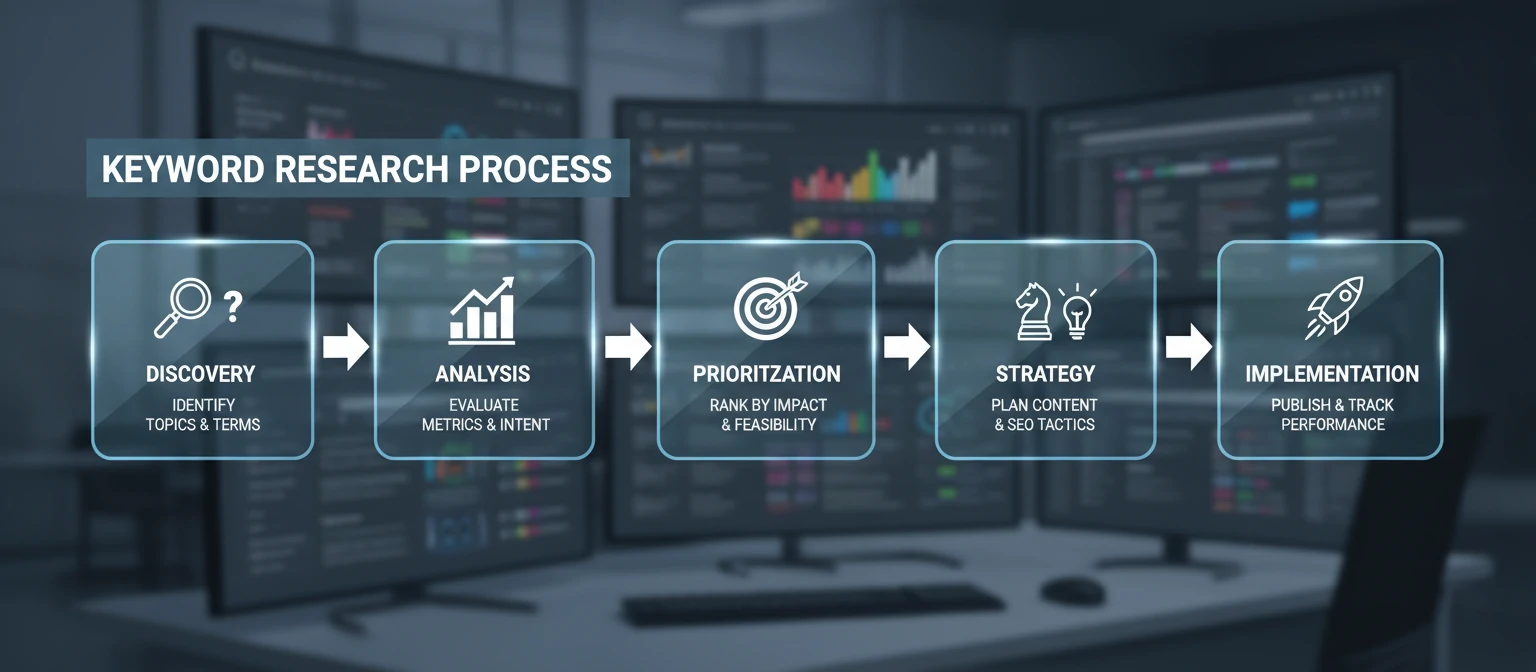
Keywords companies offer a range of services that extend well beyond basic keyword lists. Understanding these offerings helps you identify what you actually need and avoid paying for services that don't align with your goals.
Keyword Discovery & Research
The core service: identifying relevant keywords for your business, industry, products, or services. This includes finding primary keywords, long-tail variations, question-based queries, and related semantic terms.
Typical Deliverable: Keyword lists with volume, difficulty, and CPC data
Competitive Keyword Analysis
Analyzing what keywords your competitors rank for, identifying gaps in your coverage, and finding opportunities where you can outperform them. This reveals strategies you might otherwise miss.
Typical Deliverable: Competitor comparison reports with opportunity scoring
Keyword Mapping & Content Planning
Organizing keywords into logical groups and mapping them to specific pages or content pieces. This strategic layer ensures you're not cannibalizing your own rankings or missing important topics.
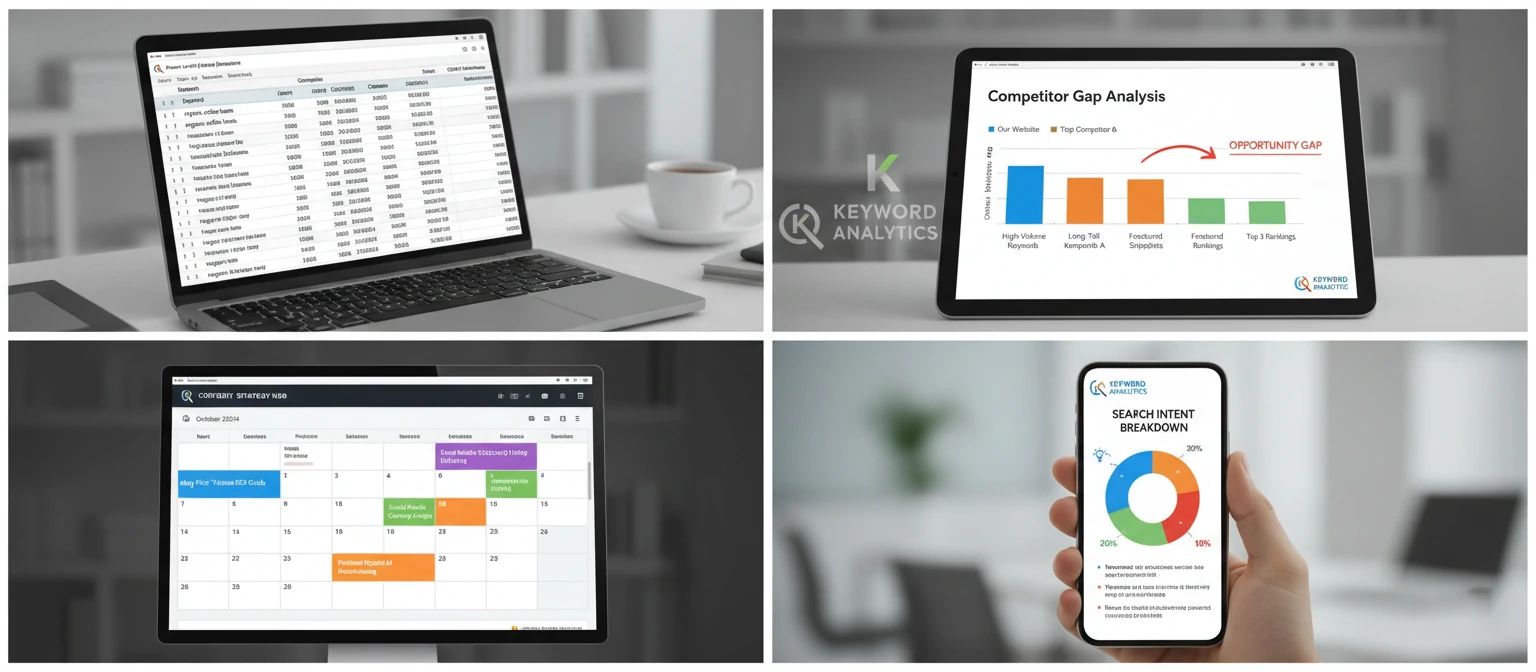
Typical Deliverable: Content calendar with keyword assignments and priorities
Search Intent Analysis
Categorizing keywords by user intent: informational (learning), navigational (finding), commercial (researching purchases), or transactional (ready to buy). This determines what type of content will actually rank.
Typical Deliverable: Intent-categorized keyword lists with content recommendations
Local Keyword Research
For businesses serving specific geographic areas, local keyword research identifies location-based search opportunities, "near me" variations, and market-specific terms.
Typical Deliverable: Location-specific keyword lists with local search insights
International/Multilingual Research
Keyword research for multiple markets and languages. This isn't just translation—it's understanding how different cultures search for similar products and services.
Typical Deliverable: Market-specific keyword strategies with cultural context
3. Why Hire a Keywords Company?
With keyword research tools available to anyone, you might wonder why businesses hire specialized companies for this work. The answer lies in the difference between having access to data and knowing how to use it strategically.
The Tool Trap
"Having access to SEMrush or Ahrefs doesn't make you a keyword strategist any more than owning a stethoscope makes you a doctor. The tools provide data; expertise provides interpretation and strategy."
Key Benefits of Professional Keyword Research
Time Efficiency
Comprehensive keyword research takes 20-40+ hours. Professionals do this faster with refined processes and deliver results in days rather than weeks.
Industry Expertise
Specialists understand nuances in your industry, know which metrics matter, and can identify opportunities that generalists miss.
Tool Access
Professional SEO tools cost $200-$500+/month. Hiring a keywords company gives you the benefit of these tools without subscription costs.
Strategic Perspective
External experts see opportunities you might miss because you're too close to your own business. Fresh eyes catch blind spots.
The cost-benefit equation depends on your situation. If you have an in-house SEO team with bandwidth, you might handle keyword research internally. If you're a business owner wearing multiple hats, the time spent on keyword research is time not spent on activities that directly generate revenue.
4. Types of Keyword Research Providers
Not all keywords companies are structured the same way. Understanding the different types helps you choose the right fit for your needs and budget.
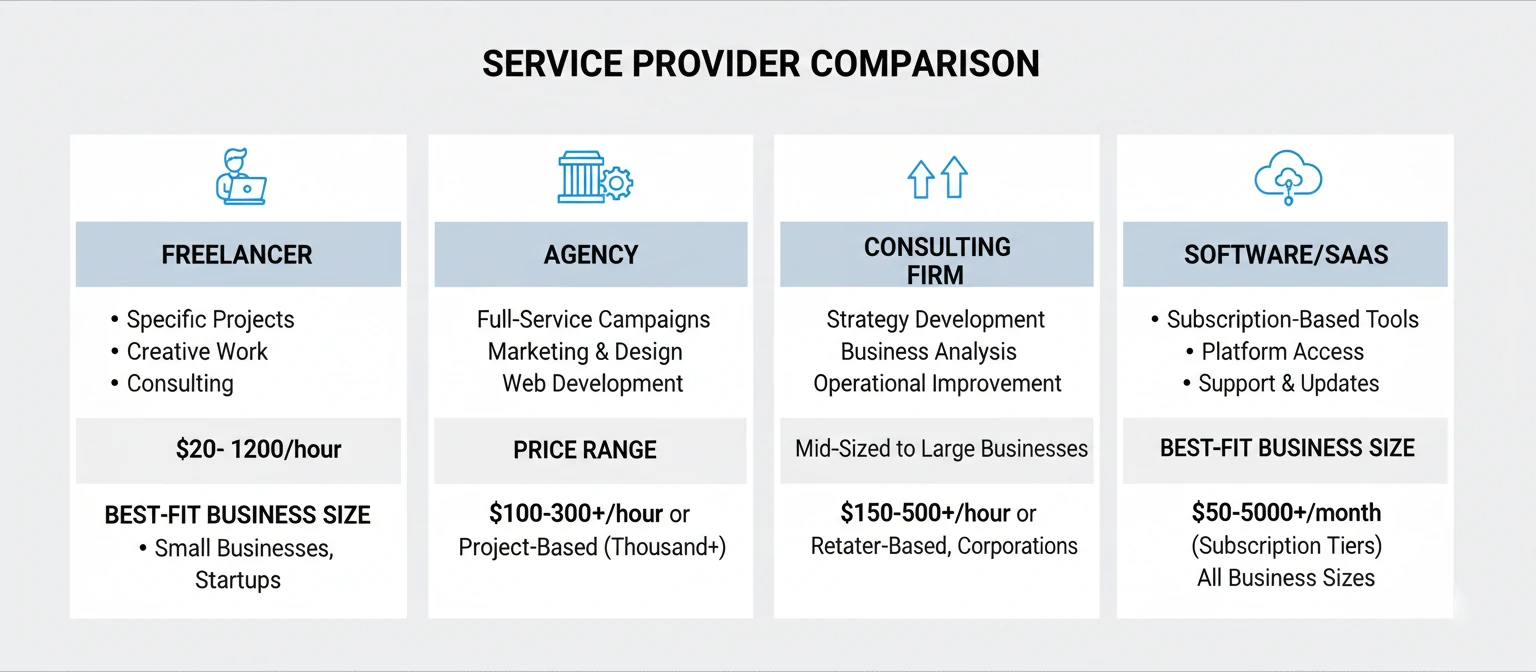
Full-Service SEO Agencies
Keyword research is part of comprehensive SEO services including content creation, link building, and technical optimization. Best for businesses wanting end-to-end SEO management.
Specialized Keyword Research Firms
Companies focused specifically on keyword research and content strategy. Deep expertise in research methodology without the overhead of full-service offerings.
Freelance SEO Consultants
Independent professionals offering keyword research services. Quality varies widely, but top freelancers provide excellent value with personalized attention.
Automated/AI Keyword Services
Software platforms that generate keyword suggestions automatically. Lower cost but less strategic insight. Good for supplementing human analysis.
5. How to Evaluate Providers
Choosing the right keywords company requires due diligence. The SEO industry unfortunately includes providers ranging from excellent to outright fraudulent. Here's how to separate the quality providers from the pretenders.
Provider Evaluation Checklist
Ask for specific examples showing traffic or ranking improvements from their keyword research. Vague claims without data should raise concerns.
Quality providers can explain their research process. They should discuss tools used, how they prioritize keywords, and how they determine search intent.
Experience in your industry matters. B2B SaaS keyword research differs significantly from local service business research. Ask about relevant experience.
Request sample reports or anonymized examples of previous work. This shows you exactly what you'll receive and helps compare providers.
Reputable providers happily connect you with past clients. Reluctance to provide references is a significant warning sign.
Good providers ask about your goals, target audience, and competitive landscape before proposing solutions. Cookie-cutter pitches indicate low quality.
Questions to Ask Potential Providers
- "What tools and data sources do you use for keyword research?"
- "How do you determine which keywords are worth pursuing?"
- "Can you walk me through your research process for a client similar to me?"
- "How do you account for search intent in your recommendations?"
- "What ongoing support or updates do you provide after the initial research?"
- "How do you measure success, and what should I expect in terms of timeline?"

6. Understanding Pricing
Keyword research pricing varies dramatically based on scope, provider type, and service depth. Understanding these factors helps you budget appropriately and compare proposals fairly.
Basic Research
$500 - $1,500
- 50-200 keywords
- Basic volume and difficulty data
- Single market/location
- Standard turnaround (1-2 weeks)
Standard Research
$1,500 - $3,500
- 200-500 keywords
- Competitive analysis included
- Search intent categorization
- Content recommendations
Comprehensive Strategy
$3,500 - $10,000+
- 500+ keywords with clustering
- Full content mapping
- Multiple markets/languages
- Ongoing updates and support
Factors That Influence Pricing
| Factor | Impact on Price |
|---|---|
| Number of Keywords | More keywords = higher cost, but economies of scale apply |
| Industry Complexity | Technical or niche industries require more research time |
| Geographic Scope | Multi-location or international research increases costs |
| Competitive Analysis Depth | Detailed competitor research adds significant time |
| Turnaround Time | Rush projects typically cost 25-50% more |

7. What to Expect in Deliverables
Understanding what quality deliverables look like helps you assess whether you're getting value for your investment. Here's what professional keyword research should include.
Essential Deliverable Components
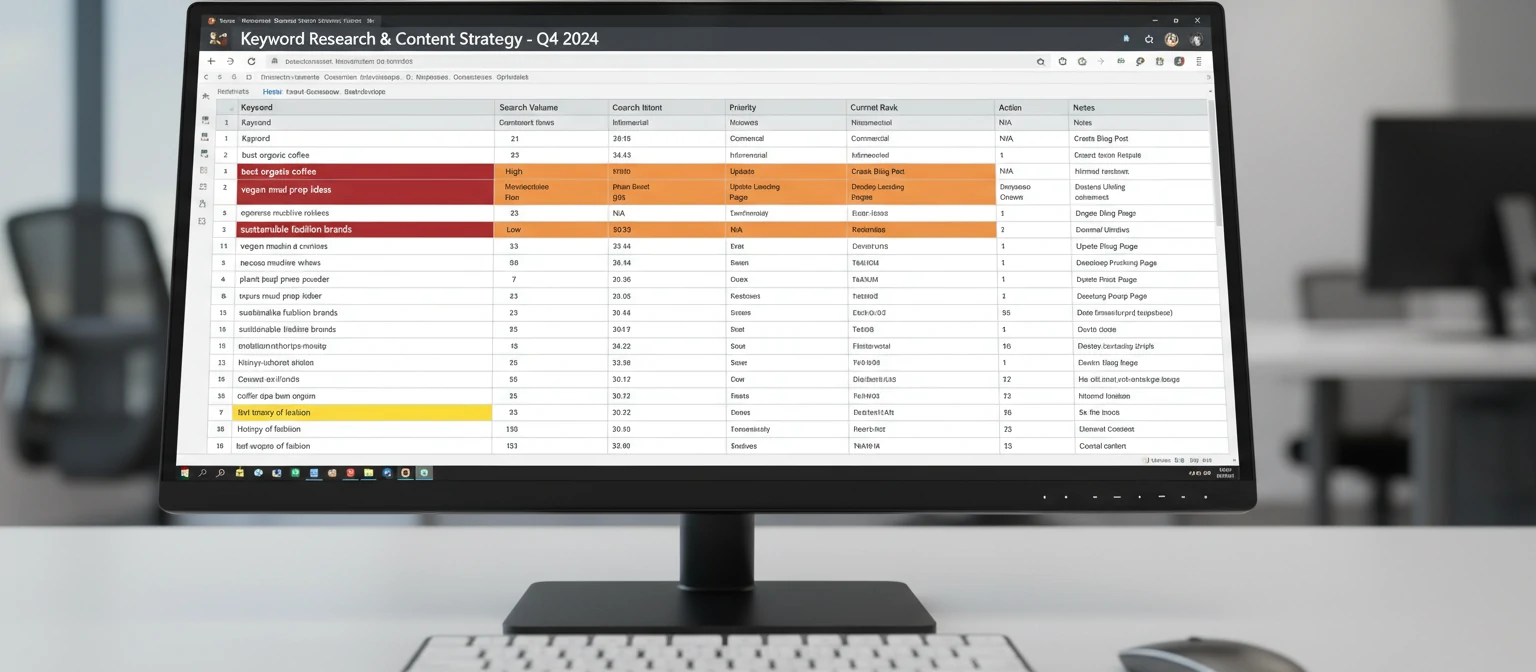
Master Keyword List
Organized spreadsheet with all keywords, volume, difficulty, CPC, and trend data. Should be filterable and sortable.
Search Intent Mapping
Each keyword categorized by intent type with explanation of what content format will rank.
Priority Recommendations
Keywords ranked by opportunity score based on volume, difficulty, and business value alignment.
Topic Clusters
Keywords grouped into logical themes that support content hub architecture.
Competitive Insights
Analysis of competitor keyword strategies with gap analysis and opportunity identification.
Implementation Guide
Actionable recommendations for how to use the research, including content suggestions and page assignments.
Format Considerations
Deliverables should be provided in usable formats. Expect Excel/Google Sheets for keyword data (so you can filter and sort), PDF or presentation format for strategic recommendations, and documentation that your team can actually implement without needing the provider to translate.
Quality providers also include a walkthrough session to explain findings and answer questions. Raw data without context and guidance has limited value—make sure presentation and support are included in your package.
8. Red Flags to Avoid
The SEO industry has its share of bad actors and low-quality providers. Recognizing warning signs early protects your budget and prevents wasted time on ineffective research.
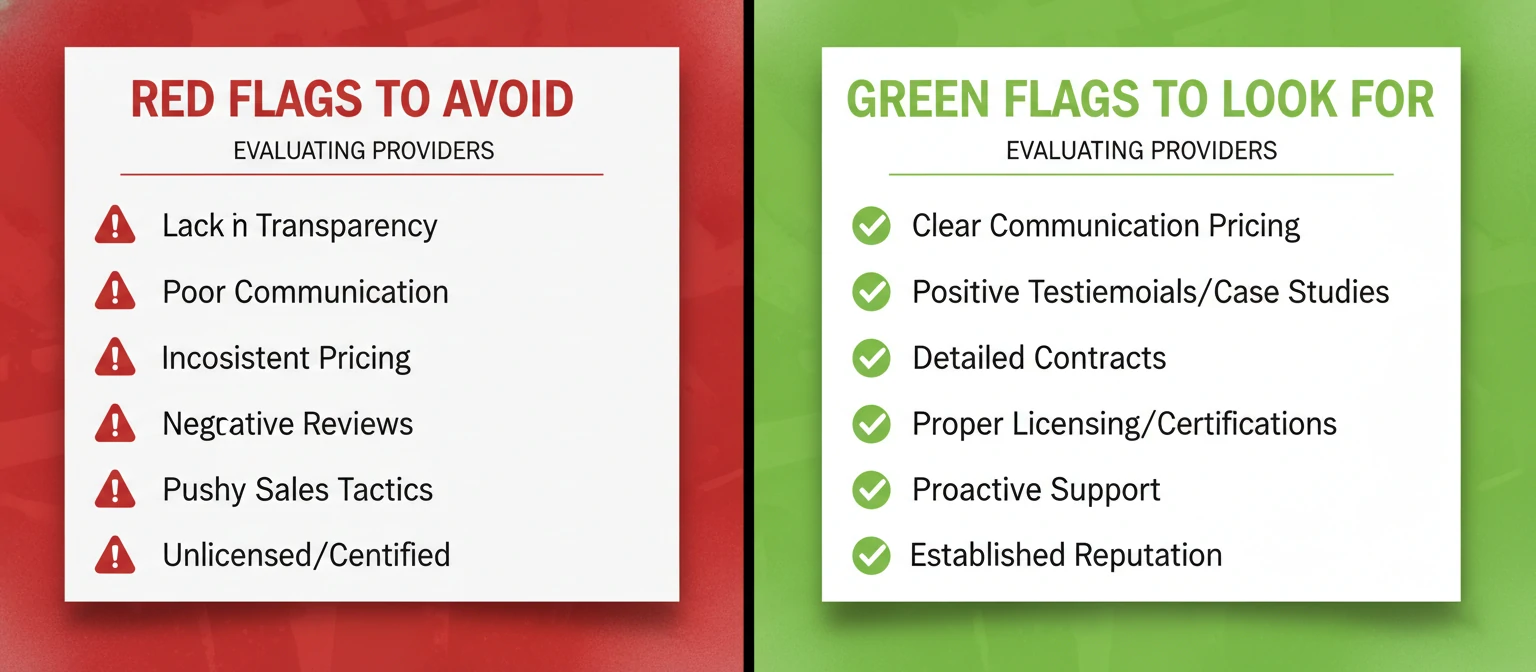
Warning Signs to Watch For
Guaranteed Rankings
No one can guarantee specific rankings. Google's algorithm is complex and constantly changing. Promises of "guaranteed page one rankings" indicate either dishonesty or naivety.
Suspiciously Low Prices
Quality keyword research takes time and expertise. If prices are dramatically below market rates, you're likely getting automated reports without human analysis or strategy.
No Discovery Process
Providers who propose solutions before understanding your business are selling templates, not custom research. Quality work requires questions about your goals, audience, and competitors.
Vague Deliverables
If they can't clearly explain what you'll receive, you may end up with a generic keyword list that provides no strategic value. Insist on specific deliverable descriptions.
Refusal to Share Methodology
Legitimate providers can explain their process without revealing proprietary secrets. Excessive secrecy often hides lack of a real process.
Volume-Only Focus
Providers who only discuss search volume are missing crucial factors. Modern keyword research requires understanding intent, difficulty, competition, and business alignment.
9. DIY vs. Professional Services
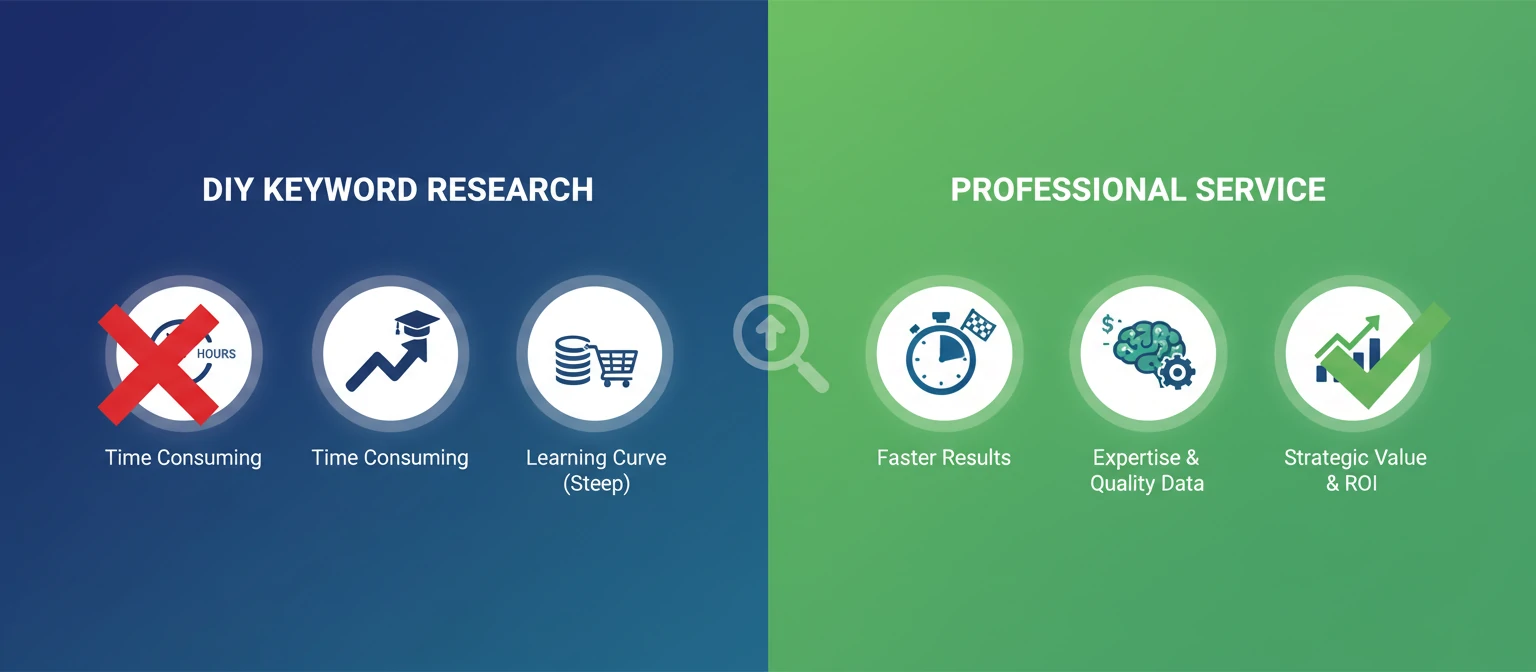
Should you handle keyword research in-house or hire a professional? The answer depends on your resources, expertise, and how central SEO is to your business success.
DIY Makes Sense When...
- You have an in-house SEO team with bandwidth
- Your budget is extremely limited but time is available
- You're in a niche industry where you have deep expertise
- You already pay for professional SEO tools
- SEO is a learning investment for your organization
Hire Professionals When...
- Your time is more valuable spent on core business
- You need strategic insight, not just data
- You're entering a new market or launching new products
- Previous DIY efforts haven't produced results
- Competitive pressure demands expert-level work
The Hybrid Approach
Many successful organizations use a hybrid model: they hire a keywords company for major strategic research projects (new product launches, annual content planning, market expansion) while handling routine keyword research internally. This balances expertise with cost efficiency.
DIY vs. Professional: Quick Comparison
| Factor | DIY | Professional |
|---|---|---|
| Cost | Lower direct cost | Higher direct cost |
| Time Investment | High | Low |
| Expertise Level | Variable | High (if vetted) |
| Strategic Insight | Limited | Comprehensive |
| Scalability | Constrained | Flexible |

10. Maximizing Your Investment
Getting keyword research is only the beginning. The real value comes from how you implement and build upon the research. Here's how to extract maximum value from your investment.
Create an Implementation Plan
Don't let keyword research sit in a spreadsheet. Develop a timeline for content creation, page optimization, and tracking. Assign responsibilities and set deadlines for acting on the research.
Track Performance Rigorously
Set up proper tracking before implementation. Monitor rankings, traffic, and conversions for targeted keywords. This data informs future research and proves ROI.
Refresh Research Regularly
Keyword landscapes change. Search trends shift, competitors adjust strategies, and new opportunities emerge. Plan for quarterly or semi-annual research updates to stay current.
Integrate with Content Strategy
Keyword research should drive content decisions across your organization. Share insights with content creators, product teams, and sales. Keywords reveal customer language and priorities.
Build Long-Term Relationships
If you find a provider who understands your business, maintain that relationship. Ongoing partnerships produce better results than constantly switching providers who need to learn your context.
Use Research Beyond SEO
Keyword data informs PPC campaigns, social content, email subject lines, product naming, and more. Maximize value by applying insights across marketing channels.
Final Thought
"Keyword research is an investment, not an expense. The companies that treat it as foundational to their marketing strategy—and act on the insights it provides—consistently outperform those who view it as a checkbox exercise."

Frequently Asked Questions
How often should I update my keyword research?
Most businesses benefit from comprehensive research updates every 6-12 months, with lighter quarterly reviews. However, if you're in a rapidly changing industry or launching new products frequently, more frequent updates make sense.
What's the difference between keyword research and SEO?
Keyword research is one component of SEO. It identifies what to target. SEO as a whole also includes on-page optimization, technical SEO, content creation, link building, and more. Keywords companies may focus only on research or offer broader SEO services.
How long does professional keyword research take?
Depending on scope, expect 1-4 weeks for comprehensive research. Basic projects might complete in a week, while enterprise-level research with multiple markets can take a month or more. Rush timelines are usually possible for additional cost.
Can I use keyword research for PPC and SEO together?
Absolutely. Good keyword research serves both channels. The data can inform Google Ads campaigns while simultaneously guiding organic content strategy. Many providers specifically note when keywords are better suited for one channel versus the other.
What if my industry is very niche?
Niche industries often benefit most from professional research because volume data can be misleading, and opportunities are harder to find. Experienced providers know how to uncover valuable keywords in low-volume niches where standard tools struggle.
About Nathan Parker
Nathan Parker is an SEO strategist and marketing consultant with over 12 years of experience in search marketing. He has led keyword research and SEO strategy for companies ranging from startups to Fortune 500 enterprises. Nathan is a regular speaker at marketing conferences and contributes to leading industry publications on SEO and content strategy.