
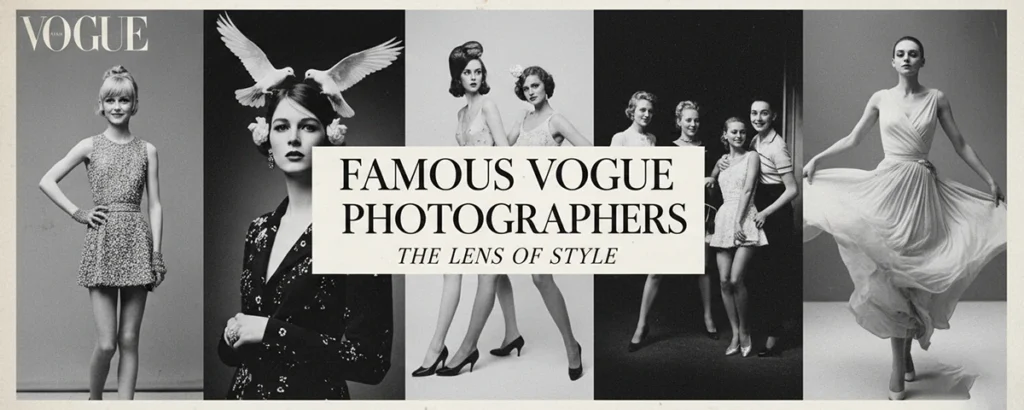
These aren't just photographers—they're visual poets who shaped how the world sees fashion, beauty, and the human form. Their work transcends documentation to become cultural commentary.
What Makes a Vogue Photographer Different?
Here's something that took me years to understand: the photographers who made it to Vogue weren't just technically brilliant—they were cultural commentators with cameras. They didn't just capture clothes. They captured the mood of an era, the aspirations of a generation, the dreams we didn't even know we had.
Think about it: when you see a Richard Avedon image, you're not just looking at a model in a dress. You're seeing movement frozen in time, emotion captured in a fraction of a second, a whole story told in a single frame. That's not luck or just good lighting—that's vision.
Whether you dream of shooting for Vogue yourself or simply want to understand what makes great fashion photography work, studying these masters is like taking a masterclass from the best teachers who ever lived. Let me introduce you to them.
The Legends Who Defined the Craft
Each one revolutionized fashion photography in their own way—and their influence still shapes images today
Richard Avedon
1923–2004 | American Vogue
Avedon didn't capture models—he captured movement, energy, and soul. His signature? Clean white backgrounds that stripped away everything except raw human presence. His images of Dovima among elephants and the famous "Audrey Hepburn" portraits remain touchstones of fashion photography.
Helmut Newton
1920–2004 | French & American Vogue
Newton brought cinematic drama and provocative power to fashion photography. His images were bold, often controversial, always unforgettable. He shot women as strong, commanding presences—never passive objects. His architectural compositions and use of contrast created imagery that felt like film stills from movies that didn't exist yet.
Annie Leibovitz
1949–Present | American Vogue
Leibovitz turned celebrity portraiture into theater. Her conceptual approach—transforming subjects into characters in elaborate tableaux—redefined what fashion photography could be. From Demi Moore's pregnant Vanity Fair cover to her Disney Dream Portrait series, she creates images that feel like paintings come to life.
Steven Meisel
1954–Present | Italian Vogue
The most reclusive genius in fashion photography. Meisel has shot every Italian Vogue cover since 1988. He discovered supermodels, defined the '90s aesthetic, and continues to push boundaries. His ability to reinvent himself decade after decade—while rarely giving interviews—has made him fashion's most mysterious power player.
More Visionaries You Should Know
Irving Penn
Minimalist master of light and composition
Peter Lindbergh
B&W humanist who captured real beauty
Mario Testino
Sun-drenched glamour and energy
Patrick Demarchelier
Princess Diana's favorite photographer
What They Do Differently
The techniques that separate good fashion photography from iconic imagery
Lighting: The Foundation of Everything
Here's what separates amateurs from masters: lighting isn't just about making things visible—it's about creating emotion, sculpting form, and directing the viewer's eye exactly where you want it to go. Every legendary Vogue photographer developed their own relationship with light.
Avedon's White Void
Clean, bright, eliminating all context. The subject becomes everything. Flat lighting that somehow makes movement pop.
Newton's Drama
Hard, directional light creating deep shadows. Theatrical contrast. Architecture and body sculpted by darkness and light.
Penn's Elegance
Precise, controlled, almost scientific. Every shadow deliberate, every highlight placed. Minimal but never flat.
The Art of Directing
Great Vogue photographers are often described as incredible directors. They don't just arrange—they coax, inspire, and transform.
Build trust first. The best shots come when subjects feel safe to be vulnerable.
Give feelings, not positions. "Think about something you've lost" beats "turn your head 15 degrees left."
Play music. Nearly every master uses it. The right track changes everything.
Composition Secrets
Fashion photography breaks traditional rules—but you have to know them first to break them meaningfully.
Negative space is narrative. What you leave out matters as much as what you include.
Tension creates interest. Off-balance compositions hold attention longer.
Lead with geometry. Lines, shapes, and patterns guide the eye through the frame.
Finding Your Own Voice
Here's the paradox: you need to study the masters obsessively, then forget everything and find your own way. Every Vogue photographer became famous by doing something nobody had seen before.
Study One Master
Spend 30 days recreating their techniques. Understand why their decisions work.
Then Break Free
The next 30 days, shoot the opposite. Find what feels authentically yours.
Iterate Forever
Your style will evolve. The masters reinvented themselves decade after decade.
The Path to Vogue
What it actually takes to build a career in high fashion photography
A Reality Check
Breaking into Vogue-level photography typically takes 7-15 years of dedicated work. Richard Avedon assisted for years before getting his break. Annie Leibovitz started at Rolling Stone and built her way up. This isn't a sprint—it's a marathon that rewards persistence and continuous growth.
The Typical Path (There's No Shortcut)
Assist, Assist, Assist
Work as an assistant to established photographers. You'll learn lighting setups, client management, and the unglamorous reality of shoots. This is where you earn your education. Many assistants become digital techs, then first assistants, building networks that last their entire careers.
Build Your Portfolio Through Tests
Collaborate with new models, stylists, and makeup artists on "test shoots"—unpaid creative work that benefits everyone's portfolios. This is where you experiment, fail, learn, and develop your voice. Your 15-20 best images will become your calling card.
Start Small, Publish Often
Submit to smaller publications, online magazines, and regional editions. Getting published—anywhere—builds momentum and credibility. Many Vogue photographers started with tiny indie magazines before getting noticed by bigger publications.
Cultivate Key Relationships
Fashion photography is deeply collaborative and relationship-driven. Build genuine connections with stylists, creative directors, and editors. When they rise, they bring their trusted collaborators with them. Your network often matters as much as your portfolio.
What Photo Editors Look For
Consistent Vision
A clear aesthetic point of view that carries across different subjects and scenarios.
Technical Excellence
Flawless execution—focus, exposure, color, and retouching must be impeccable.
Storytelling Ability
Images that suggest narrative, emotion, and meaning beyond surface beauty.
Fresh Perspective
Something they haven't seen before—a new angle, mood, or approach to familiar subjects.
The Challenges Nobody Talks About
The unglamorous reality behind the glamorous images
Creative Block and Burnout
Even the greats hit walls. Producing consistently creative work under deadline pressure is mentally exhausting. Some photographers have spoken about years-long creative droughts.
What helps: Feed your creativity with non-fashion inputs. Visit museums, read novels, travel, explore other art forms. Many photographers credit painting, cinema, or architecture for their breakthroughs.
The Financial Reality
Editorial rates are notoriously low—often $200-500 per day for magazine work. The prestige rarely pays the bills. Most fashion photographers subsidize editorial work with commercial and advertising assignments.
What helps: Diversify your income. Balance prestigious editorial work with better-paying commercial and advertising clients. Many successful photographers maintain separate portfolios for each market.
Constant Rejection
For every "yes," there are hundreds of rejections. Submissions go unanswered. Clients go with other photographers. Even established names get passed over for newer, younger talent.
What helps: Develop resilience and don't take it personally. Keep submitting. Keep creating. Every famous photographer was rejected countless times before their breakthrough. Avedon was initially rejected by Harper's Bazaar.
Staying Relevant
Fashion moves fast. The aesthetic that made you famous five years ago might feel dated today. There's constant pressure to evolve while maintaining your identity. Some photographers become "so last season" almost overnight.
What helps: Never stop learning. Study emerging photographers. Embrace new technologies. But don't chase every trend—deepen your vision rather than abandoning it. The masters evolved while staying true to their core aesthetic.
The Real Legacy
What makes a famous Vogue photographer isn't just technical skill or creative vision—it's the ability to capture something true about their moment in history while creating images that transcend their time.
What the Masters Teach Us
Vision matters more than equipment. Irving Penn shot masterpieces in a tiny daylight studio. The tool doesn't make the artist.
Persistence beats talent. The photographers who made it weren't always the most gifted—they were the ones who didn't quit.
Be a student of culture. Fashion photography is cultural commentary. Know art, history, film, music—everything feeds the work.
Find your voice, then trust it. The industry needs your unique perspective, not another imitation of what already exists.
Continue Your Education
Essential Books
"Avedon Fashion," "Helmut Newton: SUMO," "Annie Leibovitz at Work"
Visit Exhibitions
ICP New York, Getty Museum LA, Helmut Newton Foundation Berlin
Archive Diving
Vogue Archive online, Getty Images, Condé Nast historical collections