
The complete guide to understanding how digital marketing agencies work, what services they offer, and how to choose the perfect partner for your business growth.
Table of contents
- Introduction: Why Digital Marketing Matters More Than Ever
- What is a Digital Marketing and Advertising Agency?
- Core Services Offered by Digital Marketing Agencies
- Benefits of Partnering with a Digital Marketing Agency
- How to Choose the Right Digital Marketing Agency
- Measuring Success: KPIs That Matter
- Common Challenges and How Agencies Solve Them
- The Future of Digital Marketing Agencies
- Conclusion: Your Path to Digital Marketing Success
- Ready to Transform Your Digital Presence?

Introduction: Why Digital Marketing Matters More Than Ever
In today’s hyper-connected world, the way businesses reach and engage with customers has fundamentally transformed. Gone are the days when a simple newspaper ad or a billboard could drive substantial business growth. We now live in an era where your potential customers spend an average of seven hours daily consuming digital content, scrolling through social media, searching on Google, and interacting with brands online.
This seismic shift in consumer behavior has given rise to a crucial business partner that every modern company needs: the digital marketing and advertising agency. These specialized firms have become the architects of online success, helping businesses of all sizes navigate the complex and ever-evolving digital landscape.
But what exactly does a digital marketing and advertising agency do? How can they help your business grow? And perhaps most importantly, how do you choose the right one for your specific needs? This comprehensive guide will answer all these questions and provide you with actionable insights to make informed decisions about your digital marketing journey.
What You’ll Learn: This guide covers the fundamentals of digital marketing agencies, their core services, benefits of partnership, how to choose the right agency, measuring success, and future trends shaping the industry.
What is a Digital Marketing and Advertising Agency?
Understanding the foundation of modern marketing partnerships
A digital marketing and advertising agency is a specialized company that helps businesses promote their products, services, and brand through various online channels. Unlike traditional advertising agencies that focus on TV commercials, print ads, and radio spots, digital agencies operate exclusively in the online space, leveraging the power of the internet to connect businesses with their target audiences.
These agencies employ teams of specialists including strategists, content creators, designers, data analysts, SEO experts, social media managers, and paid advertising professionals. Together, they create comprehensive marketing campaigns that drive traffic, generate leads, build brand awareness, and ultimately increase revenue for their clients.
The beauty of digital marketing lies in its measurability. Every click, impression, conversion, and dollar spent can be tracked and analyzed, allowing agencies to continuously optimize campaigns for better results. This data-driven approach sets digital marketing apart from traditional methods where measuring ROI was often guesswork.
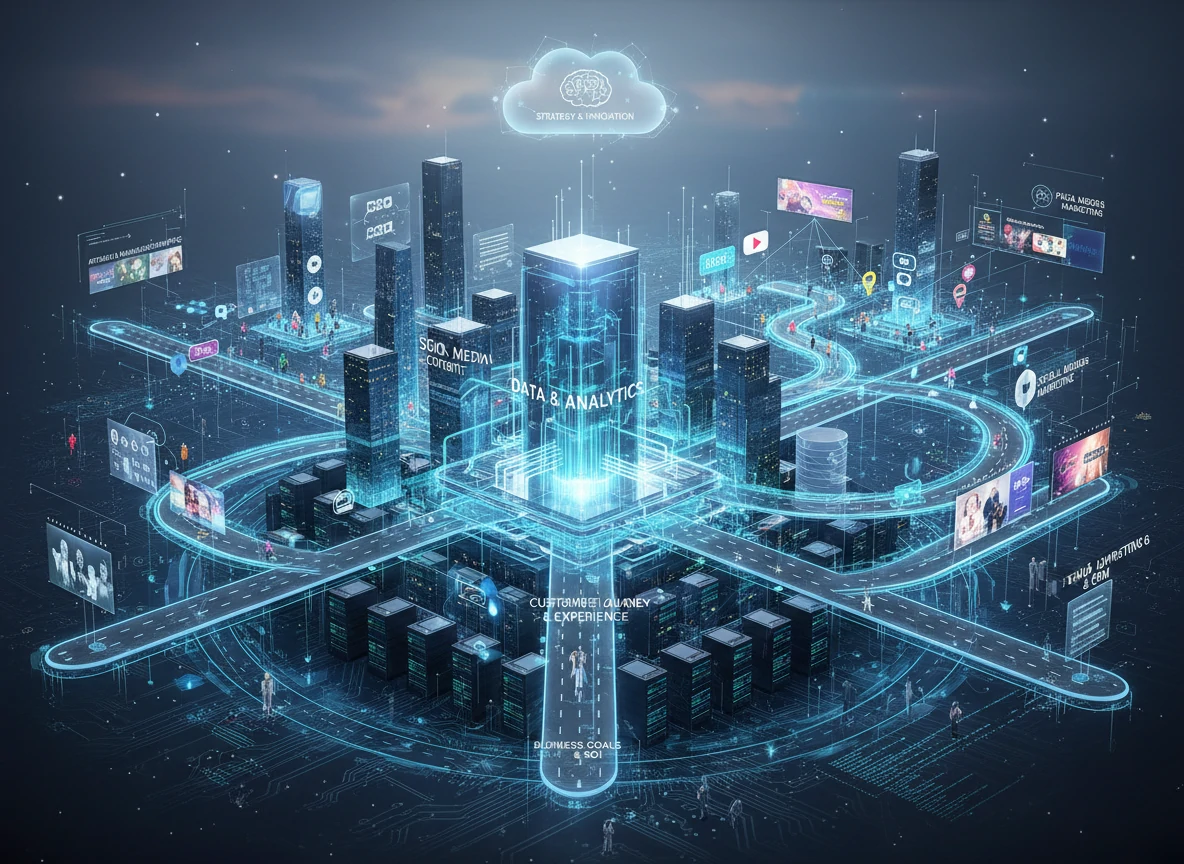
Key Characteristics of Digital Marketing Agencies
Data-Driven Decision Making
Every strategy is backed by analytics and real-time data. Agencies use sophisticated tools to track performance and make informed optimizations that maximize ROI.
Multi-Disciplinary Teams
Access to diverse expertise under one roof: strategists, designers, developers, writers, analysts, and platform specialists working collaboratively on your campaigns.
Agility and Adaptability
The digital landscape changes rapidly. Agencies stay ahead of algorithm updates, platform changes, and emerging trends to keep your marketing effective.
The Evolution of Digital Marketing Agencies
The Beginning
First banner ads appear. Email marketing emerges as a channel.
Search Era
Google AdWords launches. SEO becomes essential for visibility.
Social Explosion
Facebook, Instagram, and content marketing dominate strategies.
AI & Automation
Machine learning, personalization, and omnichannel strategies prevail.
Core Services Offered by Digital Marketing Agencies
Comprehensive solutions for every aspect of your online presence
Search Engine Optimization (SEO)
SEO is the foundation of organic digital visibility. It involves optimizing your website and content to rank higher in search engine results pages (SERPs) for relevant keywords. When potential customers search for products or services you offer, SEO ensures your business appears prominently.
A comprehensive SEO strategy includes technical optimization (site speed, mobile-friendliness, crawlability), on-page optimization (content, meta tags, internal linking), and off-page optimization (backlink building, brand mentions, social signals).
Key SEO Services Include:
- Keyword research and strategy development
- Technical SEO audits and implementation
- Content optimization and creation
- Link building and digital PR
- Local SEO for geographic targeting


Pay-Per-Click Advertising (PPC)
While SEO builds long-term organic visibility, PPC delivers immediate results through paid advertising. When you run PPC campaigns, your ads appear at the top of search results or across various platforms, and you only pay when someone clicks on your ad.
Digital marketing agencies excel at PPC because it requires constant monitoring, testing, and optimization. They manage bidding strategies, ad copy testing, landing page optimization, and conversion tracking to ensure every dollar spent generates maximum return.
PPC Platforms Managed:
Social Media Marketing
Social media has transformed from a place to connect with friends into a powerful business platform. With billions of users across platforms like Facebook, Instagram, LinkedIn, Twitter, and TikTok, social media marketing offers unprecedented opportunities to reach and engage your target audience.
Agencies develop comprehensive social media strategies that include content planning, community management, influencer partnerships, and paid social advertising. They understand each platform’s unique algorithm and best practices, ensuring your content reaches the right people at the right time.
4.9B
Social Media Users
2.5 hrs
Daily Usage Average


Content Marketing
Content is the fuel that powers every digital marketing channel. From blog posts and articles to videos, infographics, podcasts, and ebooks, content marketing focuses on creating valuable, relevant material that attracts and engages your target audience.
The best digital marketing agencies don’t just create content—they develop comprehensive content strategies aligned with your business goals. This includes audience research, topic ideation, editorial calendars, content creation, distribution, and performance analysis.
Content Types Produced:
Additional Essential Services
Email Marketing
Automated email campaigns, newsletters, drip sequences, and personalized messaging that nurture leads and drive conversions with 4,200% average ROI.
Web Design & Development
Conversion-optimized websites, landing pages, and user experiences designed to turn visitors into customers while reflecting your brand identity.
Analytics & Reporting
Comprehensive tracking, custom dashboards, and actionable insights that demonstrate ROI and guide strategic decisions for continuous improvement.
Benefits of Partnering with a Digital Marketing Agency
Why businesses of all sizes choose to outsource their digital marketing
Deciding whether to build an in-house marketing team or partner with an agency is one of the most significant decisions a business owner can make. While both approaches have merit, partnering with a digital marketing agency offers distinct advantages that can accelerate your growth.
Consider this: to replicate the capabilities of a full-service agency in-house, you’d need to hire SEO specialists, content writers, graphic designers, social media managers, paid advertising experts, web developers, and data analysts. The combined salaries, benefits, tools, and training costs would easily exceed $500,000 annually for a mid-level team.
An agency gives you access to all these specialists for a fraction of the cost, with the added benefit of their diverse experience across multiple industries and clients.
Cost Comparison: In-House vs. Agency
Access to Expertise
Get immediate access to specialists in every digital marketing discipline without the hiring, training, and retention challenges of building an in-house team.
Cost Efficiency
Agencies spread the cost of premium tools and talent across multiple clients, giving you enterprise-level capabilities at a fraction of the cost.
Scalability
Easily scale your marketing efforts up or down based on business needs, seasonal demands, or budget changes without the complexity of hiring or layoffs.
Fresh Perspectives
Benefit from cross-industry insights and creative ideas that agencies bring from working with diverse clients and staying current with trends.
Time Savings
Free up your time to focus on core business operations while marketing experts handle the complexities of digital campaigns.
Accountability & Results
Agencies are accountable to deliver results. Regular reporting and clear KPIs ensure transparency and continuous performance improvement.

How to Choose the Right Digital Marketing Agency
A step-by-step guide to finding your perfect marketing partner
Choosing the right digital marketing agency is one of the most important business decisions you’ll make. The right partner can accelerate your growth exponentially, while the wrong choice can waste thousands of dollars and months of valuable time. Here’s a systematic approach to finding your ideal agency partner.
1. Define Your Goals and Budget
Before you start researching agencies, get crystal clear on what you want to achieve. Are you looking to increase brand awareness, generate more leads, boost e-commerce sales, or improve your search engine rankings? Your goals will determine the type of agency you need and the services you should prioritize. Similarly, establish a realistic budget range—this helps you filter agencies that are the right fit and sets expectations for both parties.
Questions to Answer
- • What specific business outcomes do you want to achieve in the next 6-12 months?
- • What is your monthly marketing budget, and how flexible is it?
- • Do you need a full-service agency or a specialist in a particular area?
- • What has and hasn’t worked in your previous marketing efforts?
2. Research and Create a Shortlist
Start with a broad search and narrow it down. Look at agency directories, industry publications, peer recommendations, and online reviews. Pay attention to agencies that specialize in your industry or have demonstrated success with businesses similar to yours. Aim to create a shortlist of 3-5 agencies that seem like potential fits.
🚩 Red Flags
- • Guarantees specific rankings or results
- • No case studies or portfolio available
- • Unusually low prices compared to market rates
- • Long-term contracts with no exit clause
✅ Green Flags
- • Transparent pricing and clear deliverables
- • Proven results with verifiable case studies
- • Industry certifications and partnerships
- • Willingness to customize strategies for your needs
3. Evaluate Their Portfolio and Case Studies
A reputable agency will proudly showcase their work. Look for case studies that include specific metrics—vague claims of “increased traffic” or “improved engagement” without numbers should raise concerns. The best case studies tell a story: what was the client’s challenge, what strategy did the agency implement, and what measurable results were achieved?
Pay special attention to case studies in your industry or with businesses of a similar size. An agency that has driven results for Fortune 500 companies may not be the best fit for a small business, and vice versa. Look for versatility in their approach and consistency in their results across different clients and campaigns.
4. Assess Communication and Culture Fit
Your agency relationship will involve regular communication and collaboration. During the evaluation process, pay attention to how responsive and transparent potential agencies are. Do they listen to your concerns? Do they explain their strategies in terms you can understand? A great agency should feel like an extension of your team, not an outside vendor.
💡 Pro Tip
Schedule a discovery call with your top choices. The quality of questions they ask about your business is often more telling than the answers they give about their services. A great agency will be genuinely curious about your challenges and goals.
5. Understand Their Process and Reporting
Ask detailed questions about how the agency works. What does the onboarding process look like? How often will you receive reports? What metrics do they track? What tools and platforms do they use? A well-established agency will have a clear, documented process that they can walk you through confidently.
Reporting transparency is crucial. You should expect regular reports that clearly show what work has been done, what results have been achieved, and what the plan is moving forward. Avoid agencies that are vague about their reporting or reluctant to share detailed performance data.
6. Check References and Reviews
Don’t skip this step. Ask the agency for references from current and past clients, and actually follow up with them. Look at third-party review sites like Google Reviews, Clutch, and G2 for unfiltered feedback—both positive and negative. Pay attention to how the agency responds to negative reviews, as this reveals a lot about their professionalism and commitment to client satisfaction.
Questions for References
- • What results has the agency delivered for your business?
- • How would you describe the communication and responsiveness?
- • Were there any challenges, and how did the agency handle them?
- • Would you recommend this agency to other businesses?
Measuring Success: KPIs That Matter
Understanding the right key performance indicators (KPIs) is essential for evaluating your agency’s performance and the success of your digital marketing campaigns. Here are the metrics that truly matter for measuring your return on investment.
| Category | KPI | Description | Benchmark |
|---|---|---|---|
| Traffic | Website Sessions | Total visits to your website | Month-over-month growth |
| Traffic | Organic Traffic | Visitors from search engines | 53% of all traffic |
| Engagement | Bounce Rate | % leaving without interaction | 26-40% (lower is better) |
| Engagement | Time on Site | Average session duration | 2-3 minutes |
| Conversion | Conversion Rate | % of visitors who convert | 2-5% (industry varies) |
| Conversion | Cost Per Lead | Ad spend ÷ leads generated | $20-$200 (varies by industry) |
| Revenue | ROAS | Return on ad spend | 4:1 or higher |
Leading Indicators
- • Website traffic and session duration
- • Social media engagement rates
- • Email open and click-through rates
- • Search engine ranking improvements
Lagging Indicators
- • Revenue generated from marketing
- • Customer acquisition cost (CAC)
- • Customer lifetime value (CLV)
- • Return on marketing investment (ROMI)
Common Challenges and How Agencies Solve Them
Every business faces obstacles in digital marketing—here’s how professional agencies tackle the most common ones.
The Future of Digital Marketing Agencies
The digital marketing landscape is constantly evolving. Here are the key trends that are shaping the future of the industry and how forward-thinking agencies are adapting to stay ahead.
AI-Powered Marketing
Artificial intelligence is revolutionizing how agencies approach marketing—from predictive analytics and automated content creation to hyper-personalized customer experiences. Agencies leveraging AI can deliver more precise targeting and better ROI for their clients.
Video-First Strategies
Video content continues to dominate engagement metrics across all platforms. From short-form TikTok and Reels content to long-form YouTube strategies, agencies are building video-first approaches that capture audience attention and drive meaningful engagement.
Privacy-First Marketing
With increasing privacy regulations and the phasing out of third-party cookies, agencies are developing new strategies for audience targeting and measurement. First-party data collection, contextual advertising, and privacy-compliant tracking are becoming essential skills.
Voice Search Optimization
As smart speakers and voice assistants become ubiquitous, optimizing for voice search is increasingly important. Agencies are adapting SEO strategies to account for conversational queries and featured snippet optimization.
Omnichannel Integration
Customers interact with brands across multiple touchpoints—website, social media, email, in-store, and more. Leading agencies are creating seamless omnichannel experiences that deliver consistent messaging and personalized interactions regardless of the channel.

Conclusion: Your Path to Digital Marketing Success
Digital marketing is no longer optional—it’s a fundamental component of business success in the modern economy. Whether you’re a startup looking to establish your online presence or an established enterprise seeking to optimize your digital strategy, the right marketing agency can be a transformative partner in your growth journey.
Throughout this guide, we’ve explored what digital marketing agencies do, the services they offer, how to choose the right partner, and what the future holds for the industry. The key takeaway is that successful digital marketing requires a strategic, data-driven approach that integrates multiple channels and continuously adapts to changing consumer behavior and technology.
Remember that the best agency relationships are true partnerships built on transparency, communication, and shared goals. Take your time in the selection process, ask the right questions, and don’t be afraid to expect excellence—your business deserves a marketing partner that’s as invested in your success as you are.
The digital landscape will continue to evolve, but the fundamentals remain the same: understand your audience, deliver value, measure results, and optimize continuously. With the right agency by your side, the possibilities for growth are limitless.
“The best marketing doesn’t feel like marketing. It feels like a genuine connection between a brand and its audience—and that’s exactly what a great agency helps you build.”