
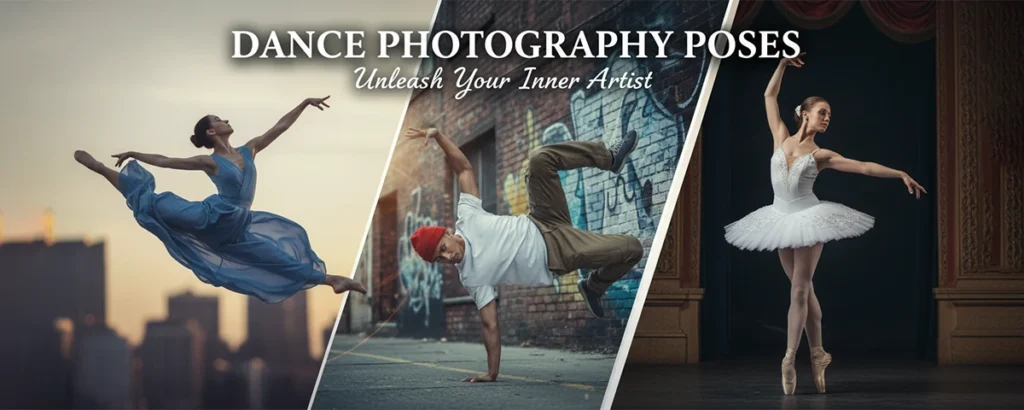
Master the art of capturing movement, emotion, and grace through expertly crafted dance photography poses. Your complete guide to stunning dance portraits.
Understanding Dance Photography Poses
Dance photography poses are carefully composed positions that capture the essence, emotion, and technical skill of dancers
Effective dance photography poses go beyond simple documentation—they tell stories, convey emotions, and showcase the incredible athleticism and artistry of dance. Whether you’re photographing ballet, contemporary, hip-hop, or cultural dances, understanding how to direct and capture compelling poses is essential for creating impactful imagery.
These poses serve multiple purposes in the world of dance and photography, from documenting performances to creating promotional materials and artistic expressions.
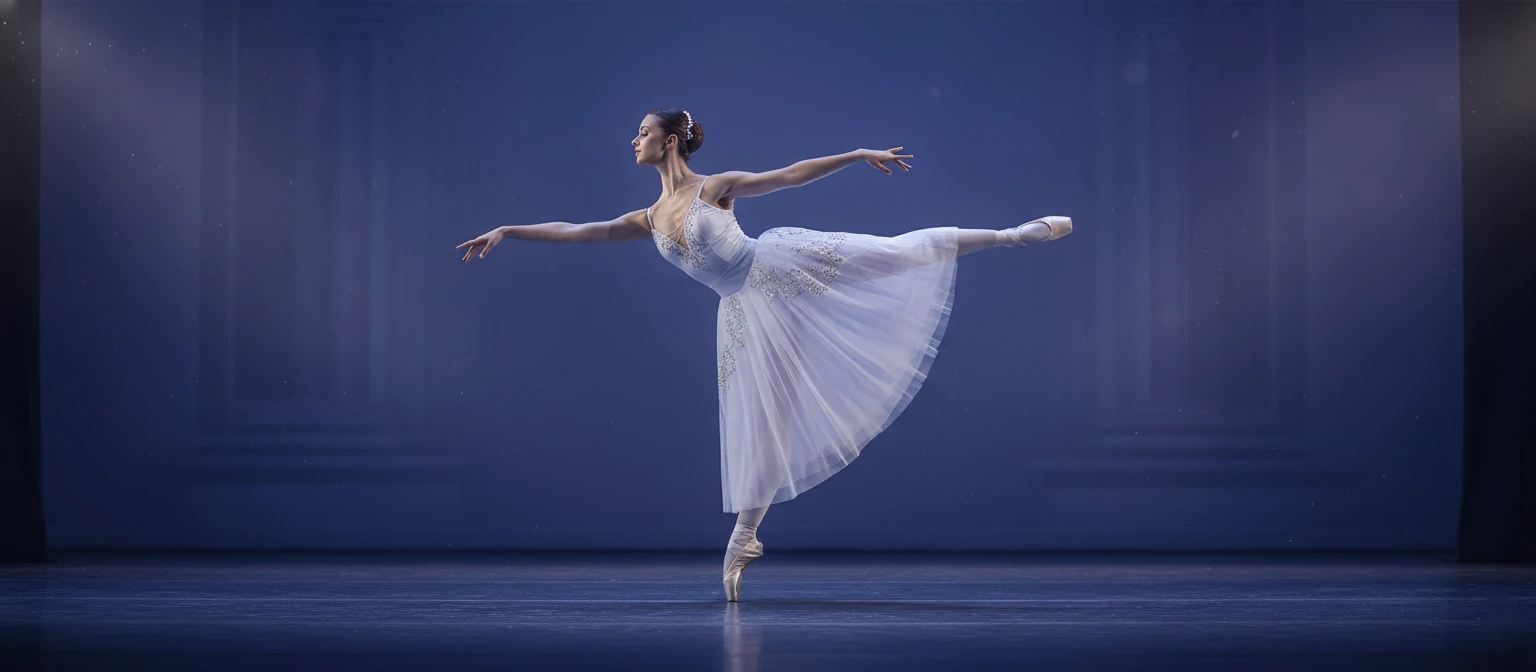
Performance Documentation
Capturing live performances and rehearsals to preserve artistic moments and showcase technical excellence.
Promotional Materials
Creating striking images for marketing, social media, and professional portfolios that attract audiences.
Artistic Expression
Exploring creative interpretations that blend dance and photography as collaborative art forms.
Essential Equipment & Setup
Successful dance photography requires the right equipment and proper preparation
Essential Equipment
Camera Body
DSLR or mirrorless with fast autofocus and high ISO performance
Lighting
Continuous LED panels or strobes with softboxes and reflectors
Accessories
Tripod, remote trigger, extra batteries, and memory cards
Preparation Steps
Location Scouting
Choose spaces with adequate room for movement, good natural light, or controllable artificial lighting. Studios, theaters, and outdoor locations each offer unique advantages.
Dancer Communication
Discuss the vision, preferred poses, and any physical limitations. Understanding the dancer’s style and comfort level is crucial for authentic results.
Lighting Setup
Position lights to minimize harsh shadows while maintaining dramatic contrast. Side lighting often works well for highlighting muscle definition and movement.
Camera Settings
Start with shutter priority mode (1/250s or faster), continuous autofocus, and burst mode for capturing peak moments.
Essential Dance Photography Poses
These fundamental dance photography poses work across multiple dance styles and provide a strong foundation
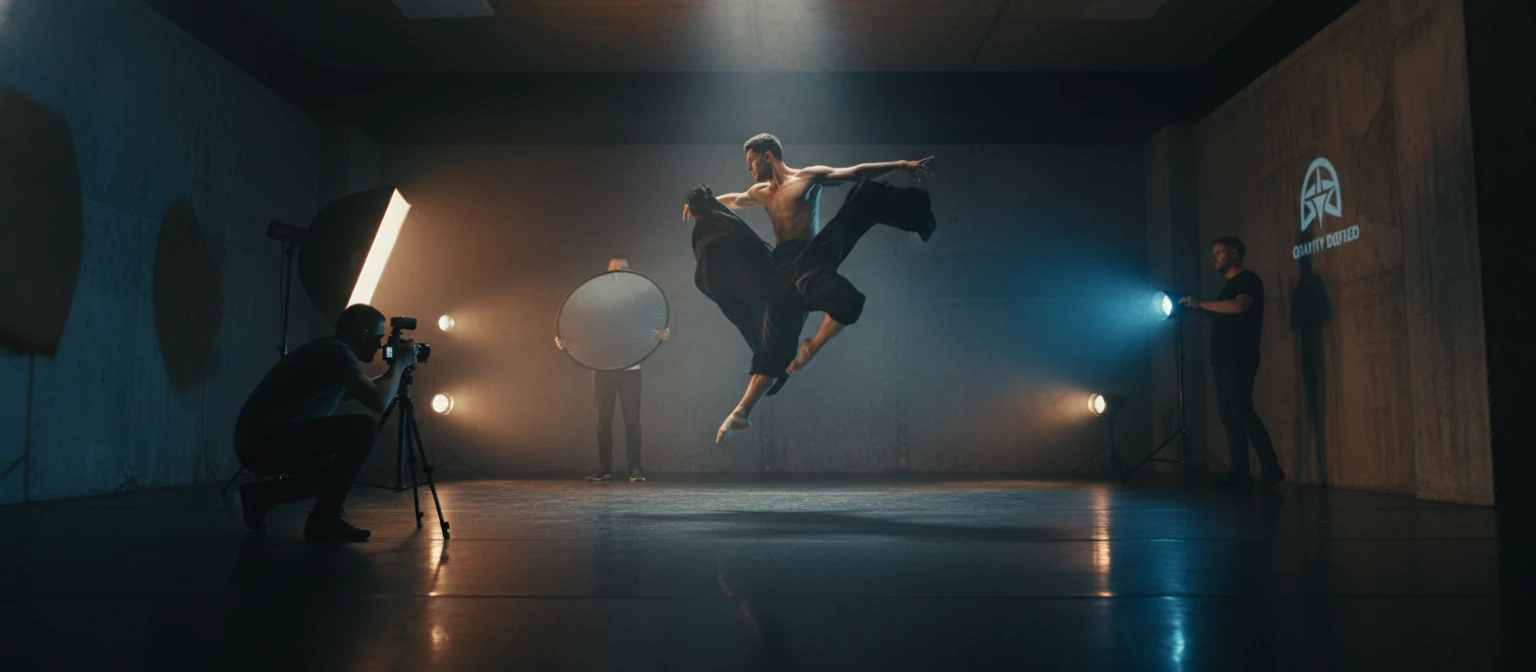
Arabesque
Classic ballet pose with one leg extended behind, creating beautiful lines and demonstrating balance and grace.
Tip: Shoot from the side to capture the full extension. Use a low angle to emphasize the height and elegance.
Grand Jeté
Dynamic jumping pose that showcases athleticism and creates dramatic action shots with both legs extended.
Tip: Use fast shutter speed (1/500s+) and continuous autofocus. Capture at the peak of the jump.
Attitude
Elegant pose with one leg raised and bent, offering versatility for both classical and contemporary styles.
Tip: Focus on the supporting leg’s line and the curve created by the raised leg. Experiment with angles.
Spiral/Twist
Contemporary movement showing torso rotation and creating dynamic visual interest through body curves.
Tip: Capture the full range of motion. Side lighting helps define the twist and adds depth.
Floor Work
Ground-based poses that showcase flexibility and create intimate, powerful compositions.
Tip: Get low with your camera. Use the floor as a leading line and consider overhead shots.
Partner Poses
Collaborative poses between two or more dancers that emphasize connection and shared movement.
Tip: Focus on interaction points and ensure both dancers are well-lit. Capture the emotional connection.
Optimizing for Best Results
Elevate your dance photography with these advanced techniques and professional insights
Technical Excellence
Timing is Everything
Learn to anticipate peak moments in dance movements. The highest point of a jump or the fullest extension creates the most impact.
Composition Rules
Use the rule of thirds, leading lines, and negative space. The dancer’s lines should guide the viewer’s eye through the frame.
Focus Techniques
Use single-point autofocus for precision with moving subjects. For static poses, consider manual focus for ultimate control.
Creative Direction
Storytelling
Each pose should contribute to a narrative. Consider the emotion, character, or story you want to convey.
Wardrobe Coordination
Collaborate on costume choices that complement poses and enhance movement visibility. Flowing fabrics add drama.
Environmental Integration
Use locations that enhance rather than distract. Architecture, nature, or studio elements should support the composition.
Common Challenges and Solutions
Even experienced photographers encounter these obstacles. Here are proven solutions.
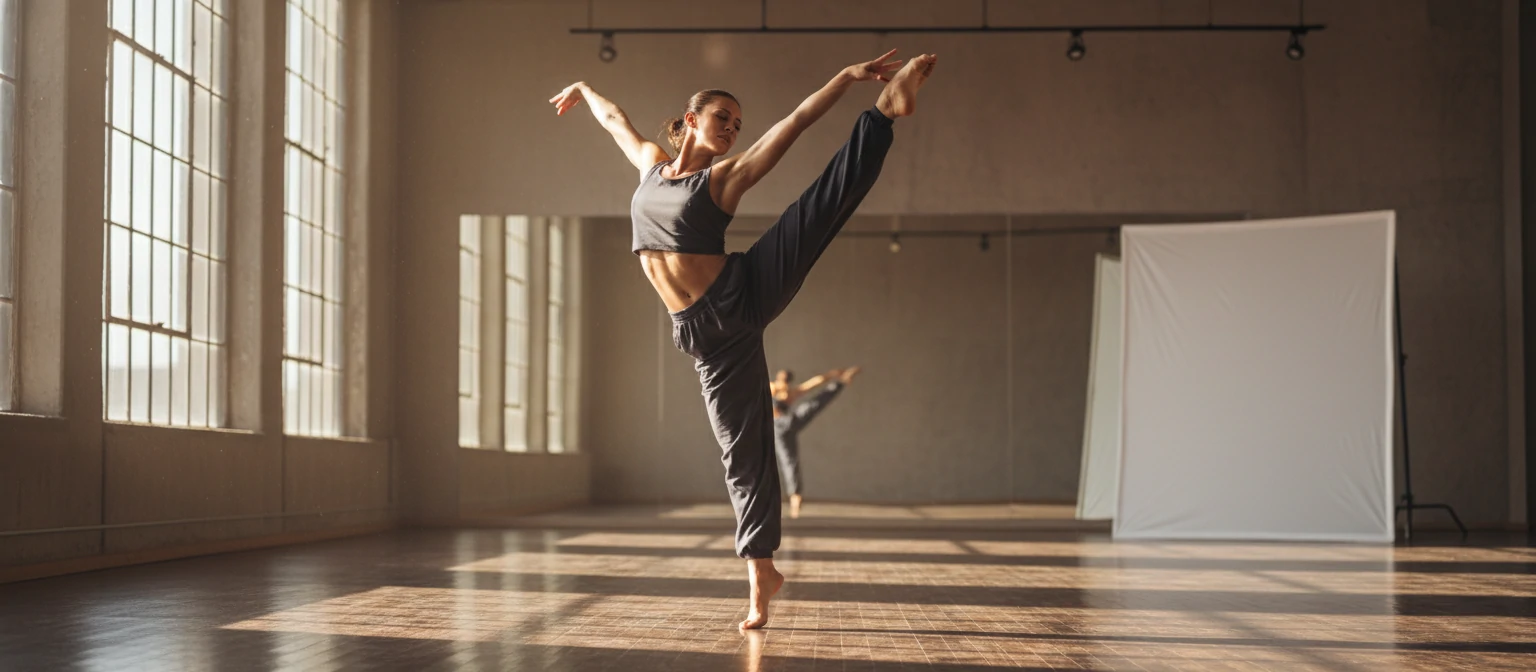
Challenge: Motion Blur in Action Shots
Fast movements can result in unwanted blur, especially in jumping or spinning poses.
Solution: Use shutter speeds of 1/500s or faster for most dance movements. For artistic motion blur, try panning techniques with slower shutter speeds (1/60s—1/125s) while following the dancer’s movement.
Challenge: Inconsistent Lighting
Stage lighting or mixed lighting sources can create color casts and exposure issues.
Solution: Shoot in RAW format for maximum post-processing flexibility. Use custom white balance settings and consider bringing your own continuous lighting for consistent results.
Challenge: Capturing Peak Moments
Missing the perfect moment when the pose reaches its most dramatic point.
Solution: Use burst mode and practice with the dancer to understand their timing. Communicate about when they’ll hit peak positions, and don’t be afraid to ask for multiple attempts.
Challenge: Dancer Fatigue
Complex poses are physically demanding, leading to decreased performance quality over time.
Solution: Plan the most demanding poses early in the session. Take regular breaks, provide water, and have a clear shot list. Consider splitting complex shoots across multiple sessions.
Challenge: Focus Accuracy
Autofocus systems can struggle with fast-moving subjects or low-contrast situations.
Solution: Use back-button focus for better control. Pre-focus on the area where the pose will occur, and use continuous autofocus modes for moving subjects.
Ready to Master Dance Photography?
Apply these techniques in your next dance photography session. Remember that mastering dance photography poses requires practice, patience, and collaboration with your dancers. Each shoot is an opportunity to refine your skills and develop your unique artistic vision.