
This knowledge-based, visitor-centric guide explains what separates custom WordPress development from off-the-shelf solutions—from bespoke architecture and proprietary code to long-term scalability and operations—so you can invest with confidence and partner with the right team.
Table of contents
- What Custom WordPress Development Actually Means
- Custom Development vs Templates: The Real Tradeoffs
- Architecture and Design: Building for the Future
- Custom Themes and Plugins: Proprietary Code
- APIs and Integrations: Connect Your Ecosystem
- Scalability and Performance: Built for Growth
- Quality and Testing: Confidence in Production
- Security by Design: Protect Your Assets
- Team Composition: Who Builds Custom Solutions
- Delivery Models and Engagement Structures
- Maintenance and Operations: The Long Game
- Pricing and ROI: Understanding the Investment
- How to Choose a Custom WordPress Development Vendor
- Delivery Playbooks: Proven Patterns
- KPIs and Governance: Measure Success
- Mini Case Studies (Hypothetical)
- FAQ
- Downloadable Checklist: Custom Development Readiness
- Conclusion: WordPress as a Platform for Innovation
SECTION 01
What Custom WordPress Development Actually Means
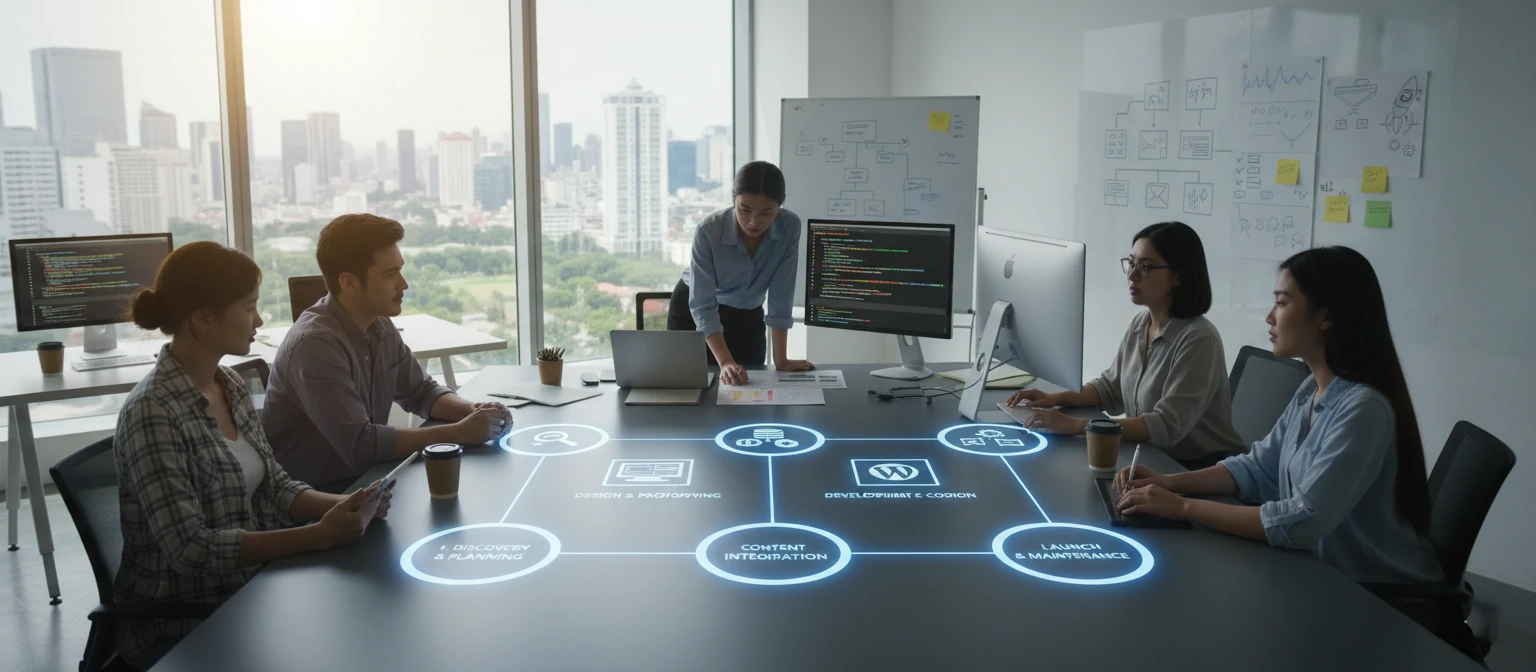
Custom WordPress development means building solutions tailored to your exact business logic, workflows, and constraints—not adapting your business to fit a template. It involves bespoke themes, proprietary plugins, custom APIs, and integrations that work seamlessly with your existing systems. The result is a site that scales with your business, not against it.
Custom development is an investment. It costs more upfront but pays dividends through flexibility, performance, and reduced long-term maintenance burden. You own the code, the architecture, and the roadmap.
SECTION 02
Custom Development vs Templates: The Real Tradeoffs
Both have a place. Choose based on your constraints and ambitions.
Templates & Builders
Pros: Fast, cheap, easy to edit. Cons: Limited customization, bloat, vendor lock-in.
Custom Development
Pros: Flexible, performant, scalable. Cons: Higher cost, longer timeline, requires skilled team.
SECTION 03
Architecture and Design: Building for the Future
Good custom development starts with architecture. A skilled team designs for scalability, maintainability, and change. They think about data models, API contracts, caching strategies, and deployment pipelines before writing code.
- Modular design: Separate concerns; make components reusable and testable
- API-first: Design APIs as products; enable headless frontends and integrations
- Data modeling: Custom post types, taxonomies, and relationships that fit your domain
- Caching strategy: Object cache, page cache, CDN; invalidation logic
- Infrastructure as code: Reproducible, version-controlled environments
SECTION 04
Custom Themes and Plugins: Proprietary Code
Custom themes and plugins are where your business logic lives. They’re built to your specifications, tested rigorously, and maintained by your team or vendor.
- Block themes: Modern, performant themes built with Gutenberg blocks and FSE
- Custom post types: Model your domain: services, products, resources, events
- Advanced Custom Fields (ACF): Flexible field groups for complex data structures
- Custom admin interfaces: Streamlined workflows for editors and admins
- Proprietary plugins: Business logic, workflows, and integrations unique to your needs
SECTION 05
APIs and Integrations: Connect Your Ecosystem
Custom development enables deep integrations with your entire tech stack. REST APIs, GraphQL, webhooks, and custom connectors let WordPress work seamlessly with CRMs, marketing automation, analytics, and data platforms.
- REST and GraphQL APIs for headless frontends
- Webhooks for event-driven workflows
- CRM integrations (HubSpot, Salesforce, Pipedrive)
- Marketing automation (Marketo, Klaviyo, ConvertKit)
- Analytics and data platforms (GA4, Segment, Mixpanel)
- Payment gateways and subscription services
SECTION 06
Scalability and Performance: Built for Growth
Custom development anticipates growth. A site that works for 1,000 users may crumble at 100,000. A skilled team designs for scale from day one: caching, database optimization, async processing, and infrastructure that grows with demand.
- Multi-layer caching: object cache, page cache, CDN
- Database optimization: indexing, query profiling, read replicas
- Async processing: queues for heavy tasks (imports, emails, reports)
- Load balancing and auto-scaling infrastructure
- Performance monitoring and alerting
SECTION 07
Quality and Testing: Confidence in Production
Quality separates professional development from hobbyist work. Custom development includes rigorous testing: unit tests, integration tests, end-to-end tests, performance tests, and security scans.
- Unit tests for business logic
- Integration tests for API contracts
- End-to-end tests for critical user flows
- Performance testing and load testing
- Security scanning (SAST, dependency checks, pen testing)
- Staging environments that mirror production
SECTION 08
Security by Design: Protect Your Assets
Custom development bakes security into every layer. From secure coding practices to infrastructure hardening, a mature team treats security as a first-class concern.
- Secure coding practices (OWASP Top 10)
- Input validation and output escaping
- Authentication and authorization (OAuth, JWT, 2FA)
- Encryption in transit and at rest
- WAF, DDoS protection, and rate limiting
- Regular security audits and penetration testing
SECTION 09
Team Composition: Who Builds Custom Solutions
Custom development requires specialists across the stack. Expect to see:
- ✓Architects
- ✓Backend engineers
- ✓Frontend engineers
- ✓DevOps/SRE
- ✓QA engineers
- ✓Product managers

SECTION 10
Delivery Models and Engagement Structures
Choose a model that fits your needs and risk tolerance.
- ◈Project‑based
- ◈Time & materials
- ◈Dedicated team
- ◈Retainer + project
SECTION 11
Maintenance and Operations: The Long Game
Custom code requires ongoing care. A responsible vendor will offer:
- ✓Automated updates
- ✓Performance monitoring
- ✓Backup verification
- ✓24/7 monitoring
- ✓Code reviews
SECTION 12
Pricing and ROI: Understanding the Investment
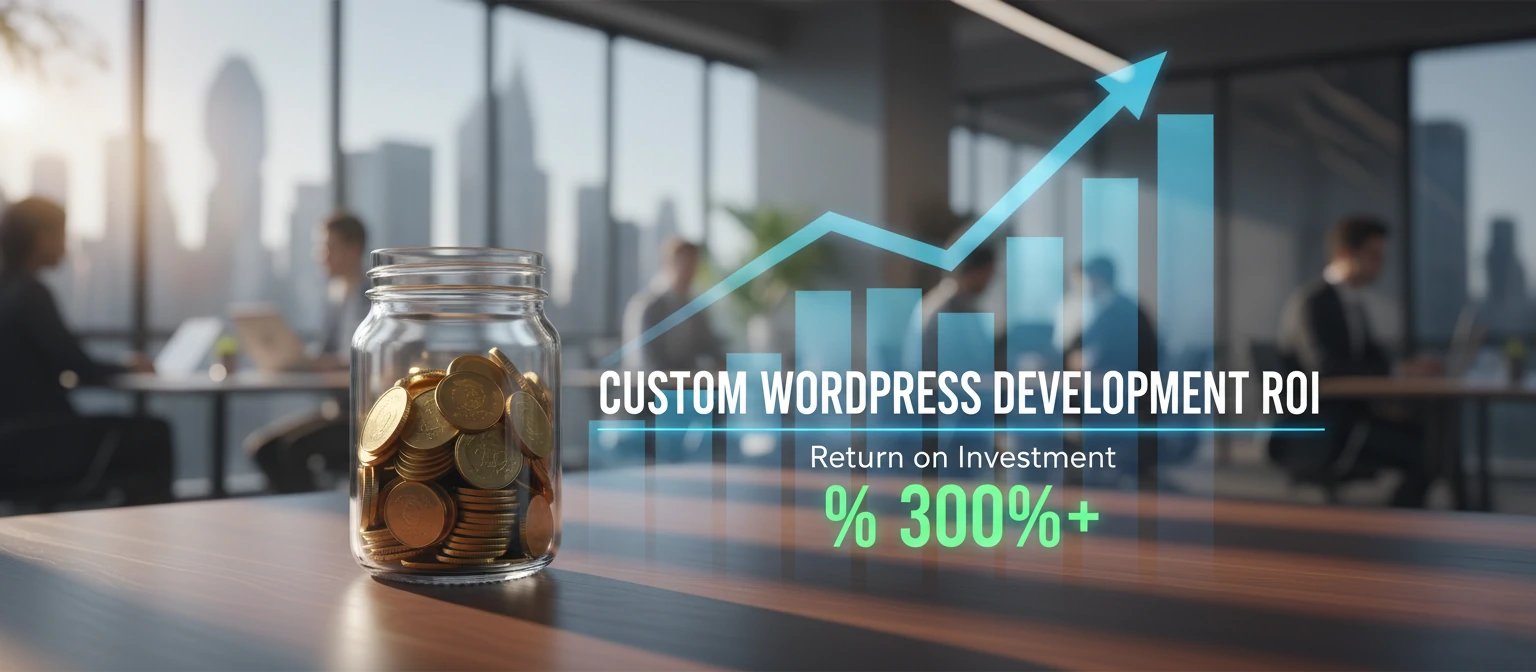
Custom development costs more upfront but delivers long‑term value. Typical ranges:
- ◈$25K–$75K — Small‑scale custom features
- ◈$75K–$250K — Mid‑range platform builds
- ◈$250K–$1M+ — Enterprise‑grade solutions
- ◈$3K–$15K/month — Ongoing retainers
SECTION 13
How to Choose a Custom WordPress Development Vendor
Signals of Strength
- ✓Referenceable projects
- ✓Published architecture
- ✓Testing/CI/CD evidence
- ✓Security certifications
- ✓Leadership access
Red Flags
- ✗Heavy page builders
- ✗Plugin sprawl
- ✗No testing
- ✗Vague on architecture
SECTION 14
Delivery Playbooks: Proven Patterns
1. Custom Platform Build (6–12 months)
- Discovery & architecture
- Core platform development
- Integration & data migration
- Testing & QA
- Launch & optimization
2. Rapid MVP (8–12 weeks)
- Scope definition
- Sprint‑based development
- User testing
- Launch & iterate
3. Migration & Modernization (3–6 months)
- Audit & planning
- Phased migration
- Validation & cutover
SECTION 15
KPIs and Governance: Measure Success
- ◈Delivery metrics — On‑time, on‑budget, scope accuracy
- ◈Quality metrics — Bug rates, code coverage, technical debt
- ◈Performance metrics — Core Web Vitals, TTFB, uptime
- ◈Security metrics — Vulnerability scans, incident response time
- ◈Business metrics — Conversion rates, revenue impact, user satisfaction
SECTION 16
Mini Case Studies (Hypothetical)
SaaS Platform Rebuild
A legacy SaaS product serving 100K+ users was rebuilt on WordPress as a headless CMS with a React frontend, achieving a 45% reduction in infrastructure costs and dramatically improved developer velocity.
Enterprise E‑commerce
A custom WooCommerce build handled 500K+ visitors on Black Friday with zero downtime, delivering a 52% increase in revenue year‑over‑year through personalized shopping experiences.
Publishing Network
A multisite WordPress network powering 100+ publications was consolidated and modernized, resulting in a 60% reduction in operational overhead and unified content governance.
SECTION 17
FAQ
How long does a custom WordPress project take?
Timelines range from 8–12 weeks for a rapid MVP to 6–12+ months for a full enterprise platform build. Discovery, integrations, and content migration are the biggest variables.
What are the ongoing costs?
Plan for 20–30% of the initial build cost annually for maintenance, hosting, security monitoring, and iterative improvements.
Can I switch vendors later?
Yes, with clean code and proper documentation. A quality vendor writes standards‑compliant, well‑documented code that any competent team can take over.
SECTION 18
Downloadable Checklist: Custom Development Readiness
- ☐Business requirements documented
- ☐Budget range established
- ☐Timeline expectations set
- ☐Integration requirements identified
- ☐Content migration plan outlined
- ☐Internal stakeholders aligned
- ☐Success metrics defined
- ☐Vendor evaluation criteria prepared
- ☐Maintenance budget allocated
Conclusion: WordPress as a Platform for Innovation
Custom WordPress development is not for everyone. It’s for organizations that have outgrown off‑the‑shelf solutions and need a platform that scales with their ambitions. When done right — with the right team, architecture, and governance — WordPress becomes an enterprise‑grade foundation capable of powering complex digital experiences at scale.
The investment is significant, but the returns — in performance, flexibility, and competitive advantage — are transformative.