

This knowledge-based, visitor-centric guide shows how top custom AI development companies deliver business value—from problem framing and data readiness to model selection, deployment, and ongoing operations—so you can de–risk investments and ship results you can trust.
Table of contents
- What a Custom AI Development Company Actually Does
- Use Cases and Where AI Delivers Business Value
- Data Readiness, Governance, and Labeling
- Modeling Options: LLMs, Classical ML, and CV
- MLOps and Deployment That Don’t Break
- Security, Privacy, and Compliance
- Delivery Models, Team Composition, and Pricing
- How to Choose the Right Partner
- Delivery Playbooks That Work
- KPIs, Evaluation, and Responsible AI
- Contracts, SLAs, and Commercials
- Mini Case Studies (Hypothetical)
- FAQ
- Downloadable Checklist: AI Program Readiness
- Conclusion: AI That Ships, Scales, and Stays Accountable
SECTION 01
What a Custom AI Development Company Actually Does
A custom AI development company translates business problems into machine learning systems that operate reliably in production. Beyond models, they bring product thinking, data engineering, MLOps, security, and change management—because useful AI is less about a single algorithm and more about a cohesive pipeline that stays correct as data, users, and constraints evolve.
- Problem framing, use-case discovery, and ROI modeling
- Data audits, pipelines, labeling strategies, and governance
- Model selection (LLMs, classical ML, CV, NLP, recommender systems)
- Evaluation design, experimentation, and A/B frameworks
- Deployment, monitoring, and lifecycle management (MLOps)
- Security, privacy, and compliance for sensitive data
- Change management: documentation, training, and adoption

SECTION 02
Use Cases and Where AI Delivers Business Value
Good candidates for custom AI have high decision volume, clear value per decision, and enough data to learn patterns—or access to experts to label and bootstrap models. Here are patterns a strong partner can implement.
Intelligent search & RAG
Retrieve-augmented generation over your documents, tickets, or product data for grounded Q&A and summarization.
Recommendations
Personalized ranking and next-best-action for ecommerce, media, or internal workflows.
Forecasting & optimization
Demand planning, inventory optimization, scheduling, and pricing with uncertainty estimates.
Computer vision
Defect detection, OCR, scene understanding, and safety compliance from images or video.

SECTION 03
Data Readiness, Governance, and Labeling
Strong AI is born from strong data. A capable partner won’t demand perfect data; they’ll help you make it useful with pragmatic pipelines and quality controls.
- Audits: Sources, schemas, missingness, drift, bias, and PII mapping.
- Pipelines: Ingestion, cleaning, enrichment, feature stores, and observability.
- Labeling: Expert-in-the-loop, active learning, and quality spot checks.
- Governance: Data catalogs, lineage, access controls, and retention policies.
SECTION 04
Modeling Options: LLMs, Classical ML, and CV
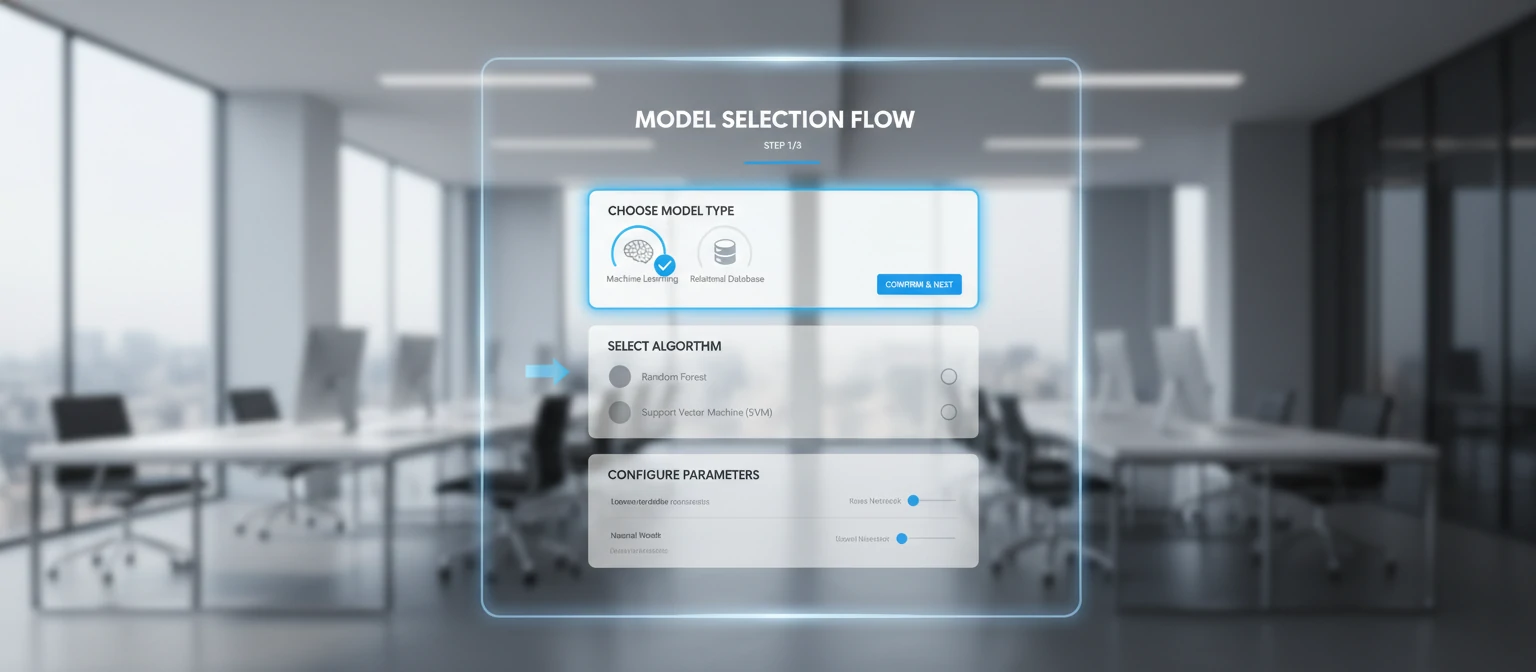
Model choice follows problem framing and data constraints. The most capable partners are model-agnostic and match tools to tasks rather than forcing a favorite architecture.
- LLMs and RAG: For Q&A, summarization, classification, and workflow automation. Combine with vector search and guardrails.
- Classical ML: Gradient boosting, linear models, and trees for forecasting, scoring, and tabular data.
- Deep learning (CV/NLP): CNNs/transformers for images/video; sequence models for time series.
- Hybrid systems: Rules + ML + LLMs for controllability and auditability.
SECTION 05
MLOps and Deployment That Don’t Break
Shipping a model is the easy part; running it safely is the work. A seasoned partner sets up versioned datasets, reproducible training, model registries, gated releases, and monitoring tied to user outcomes.
- CI/CD for data and models; feature stores and registries.
- Shadow deployments, canaries, and rollbacks for safety.
- Monitoring: input drift, output quality, latency, cost, and fairness.
- Human-in-the-loop review for high-stakes decisions.
SECTION 06
Security, Privacy, and Compliance
AI systems often handle sensitive data. Demand a security posture that equals your core apps: least privilege, encryption, and auditable operations—plus transparent model behavior.
- SSO/MFA, role-based access, and network segmentation
- PII handling: tokenization, anonymization, and retention limits
- Compliance: SOC 2, ISO 27001, GDPR/CCPA, HIPAA (if applicable)
- Model safety: content filters, prompt injection defenses, red-teaming

SECTION 07
Delivery Models, Team Composition, and Pricing
Choose a model that matches your risk tolerance and internal capacity. Expect a seasoned partner to be transparent about staffing and to provide access to technical leadership.
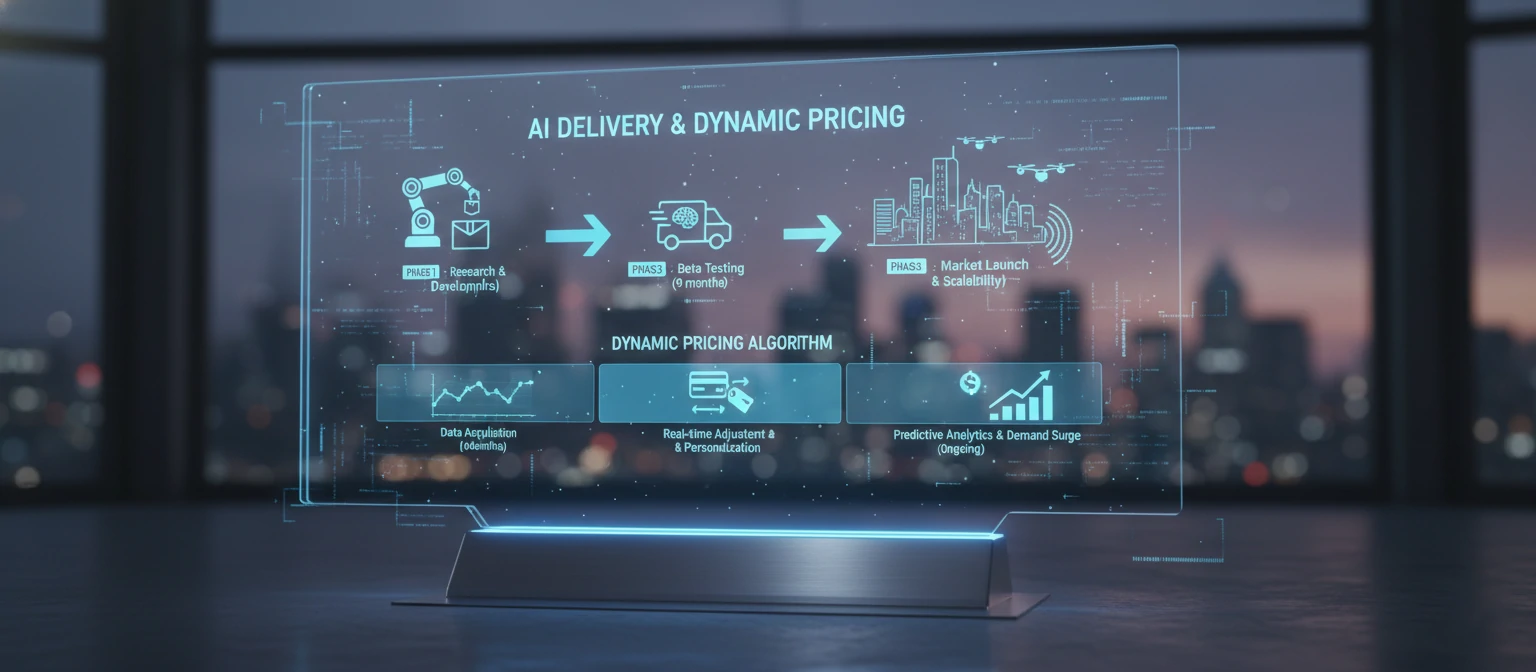
- Discovery sprint (2–6 weeks): Problem framing, data audit, baseline experiments, and a delivery plan.
- Managed delivery: Milestone-based scope (e.g., RAG search MVP) with SLAs and demos.
- Dedicated squad: Embedded team for ongoing roadmap (TL, DS/ML, data engineer, FE/BE, MLOps, QA).
Pricing varies by geography and skill. Directionally: DS/ML $60–$180/hr, MLE/MLOps $70–$180/hr, Data Eng $50–$150/hr, FE/BE $40–$140/hr. Fixed-fee discovery is common; delivery may be T&M with gates.
SECTION 08
How to Choose the Right Partner
Look for engineering maturity, not just demos. Ask about data handling, evaluation discipline, and post-launch operations.
Signals of strength
- Referenceable projects in your domain or with similar constraints
- Clear evaluation framework (offline + online), and model cards
- MLOps artifacts: registries, pipelines, and dashboards
- Security posture: SSO/MFA, least privilege, data isolation
- Leadership access: meet the architect and delivery lead
Red flags
- “We’ll tune a foundation model and be done” (no data or ops plan)
- No evaluation beyond accuracy; vague on bias and drift
- Opaque staffing; frequent rotation without notice
- Slideware-heavy, repo-light demos
SECTION 09
Delivery Playbooks That Work
1) RAG Search MVP (8 weeks)
- Weeks 1–2: Corpus audit, schema design, baseline retrieval
- Weeks 3–4: Prompting, grounding, and guardrails; offline eval set
- Weeks 5–6: UI, auth, and latency tuning; shadow deployment
- Weeks 7–8: Canary release; online metrics and iteration
2) Forecasting & Optimization (12 weeks)
- Feature engineering; uncertainty modeling; stress tests
- Backtesting and ablations; scenario planning with stakeholders
- Service integration; dashboards; alerting
3) CV Quality Inspection (10 weeks)
- Data collection and labeling; class imbalance strategies
- Model benchmarking; on-device optimization if needed
- Pilot on a limited line; monitor false positives/negatives
SECTION 10
KPIs, Evaluation, and Responsible AI
Measure both technical performance and business impact. Define acceptable tradeoffs and establish a governance loop that includes stakeholders from product, legal, security, and operations.
- Technical: accuracy/precision/recall, latency, cost, drift
- Business: conversion, resolution time, NPS, revenue lift
- Safety: jailbreak rate, toxicity/PII leaks, fairness measures
- Operations: incident rate, MTTR, model/version coverage
SECTION 11
Contracts, SLAs, and Commercials
- IP ownership, contributor agreements, and licensing of models/assets
- Data processing agreements; residency and retention clauses
- SLAs: latency, availability, incident response, severity levels
- Exit plan: knowledge transfer, artifact handover, and decommissioning

SECTION 12
Mini Case Studies (Hypothetical)
1) Self-Service Analytics (RAG)
A B2B SaaS provider launches secure, grounded Q&A over customer support docs. Resolution time drops 21% and customer satisfaction improves, with latency under 1.2s via hybrid search and caching.
2) Inventory Optimization
A retailer deploys probabilistic forecasting with policy simulation. Overstock falls 14%, stockouts 10%, and planners trust the model thanks to uncertainty bands and human-in-the-loop overrides.
3) Vision QA for Manufacturing
A CV model identifies defects on a production line with 96% recall. A small on-device model handles pre-filtering; a cloud model handles edge cases flagged for review.
SECTION 13
FAQ
How long does a first version take?
Discovery (2–6 weeks) → MVP (6–12 weeks) is common for scoped projects like RAG search or forecasting. Complex programs may take longer based on data and compliance.
Do we need perfect data?
No—start with the most valuable slice. Add labeling and controls to improve signal. A phased approach beats waiting for perfection.
How do we ensure safety?
Use content filters, guardrails, and red-team tests. Monitor for prompt injection, data leakage, and bias. Keep humans in the loop for high-stakes decisions.
SECTION 14
Downloadable Checklist: AI Program Readiness
- Use-case storyboard and ROI hypothesis
- Data audit: sources, PII, quality risks
- Evaluation plan (offline + online) and success metrics
- Security baseline: SSO/MFA, least privilege, logging
- MLOps scaffolding: registry, CI/CD, monitoring
- Change management: docs, training, and support
- Commercials: SLAs, IP, and exit plan
Conclusion: AI That Ships, Scales, and Stays Accountable
Custom AI succeeds when strategy, data, modeling, and operations come together under clear governance. With the right partner—and a disciplined approach to evaluation and safety—you can reduce toil, amplify teams, and make better decisions at scale. Start with a small, well-instrumented pilot, learn fast, and grow with confidence.