
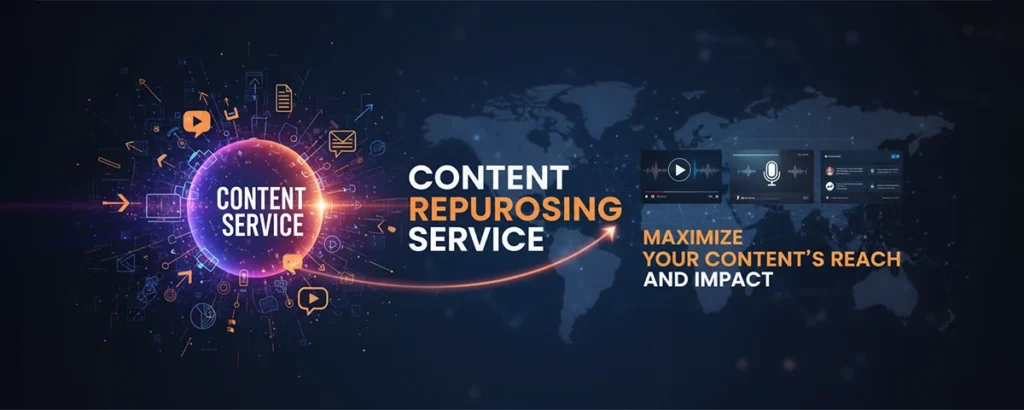
Transform your existing content into a content empire. Reach new audiences, boost engagement, and amplify your brand's voice across multiple platforms.
Table of contents
- Introduction: The Art of Content Repurposing
- What is Content Repurposing?
- Why Content Repurposing Matters in Today's Digital Landscape
- The Benefits of Content Repurposing Services
- How Content Repurposing Services Work
- Types of Content Repurposing
- Best Practices for Content Repurposing
- Case Studies: Success Stories in Content Repurposing
- Tools and Resources for Content Repurposing
- Common Mistakes to Avoid
- The Future of Content Repurposing
- Client Testimonials
- Pricing Plans
- Frequently Asked Questions
- Ready to Maximize Your Content's Potential?
Introduction: The Art of Content Repurposing
In today's digital landscape, where content is king and attention is the currency, businesses are constantly grappling with the challenge of creating fresh, engaging material that resonates with their audience. But what if I told you that you could take your existing content and transform it into a multitude of formats, each designed to capture different segments of your audience? Welcome to the world of content repurposing – a strategic approach that's revolutionizing how brands maximize their content investments.
Imagine writing a single blog post and then repurposing it into a video, infographic, podcast episode, social media series, and email newsletter. That's the power of content repurposing. It's not about recycling old content; it's about breathing new life into your valuable assets, ensuring that your message reaches the right people in the format they prefer.
As a content creator, marketer, or business owner, you're likely familiar with the 80/20 rule – 80% of your results come from 20% of your efforts. Content repurposing takes this principle and amplifies it, allowing you to leverage your best content across multiple channels without starting from scratch each time.
In this comprehensive guide, we'll dive deep into the world of content repurposing services. You'll learn what it entails, why it's crucial for your content strategy, and how to implement it effectively. We'll explore real-world examples, best practices, and the tools that can help you streamline the process. By the end of this guide, you'll have a clear roadmap for turning your content into a well-oiled machine that works around the clock to grow your brand.
Whether you're a startup looking to make the most of limited resources, an established brand aiming to scale your content efforts, or a freelancer seeking to expand your reach, content repurposing offers a practical solution that delivers measurable results. Let's embark on this journey together and unlock the full potential of your content.

Throughout this guide, we'll emphasize the importance of maintaining quality and authenticity in every repurposed piece. The goal isn't just to repurpose for the sake of it, but to create value for your audience in multiple ways. When done right, content repurposing doesn't just extend your reach – it deepens your connection with your audience and establishes you as a thought leader in your niche.
So, whether you're new to content marketing or a seasoned pro looking to optimize your strategy, this guide will provide you with the knowledge and tools you need to master the art of content repurposing. Let's get started.
What is Content Repurposing?
At its core, content repurposing is the process of taking existing content and adapting it into different formats or channels to reach new audiences or achieve different objectives. It's not about simply copying and pasting; it's about strategically transforming your content to fit different mediums while preserving its core message and value.
For example, you might start with a long-form blog post about digital marketing trends. From this single piece, you could create:
- A short video summarizing the key points
- An infographic highlighting the main statistics
- A podcast episode discussing the trends in depth
- Social media posts sharing bite-sized insights
- An email newsletter breaking down the information
- A webinar or live stream exploring the topic
Each of these formats serves a different purpose and appeals to different segments of your audience. The video might attract visual learners on YouTube, while the infographic could go viral on Pinterest, and the podcast might engage commuters during their daily drives.
The beauty of content repurposing lies in its efficiency. Instead of creating entirely new content for each platform, you're maximizing the value of your existing assets. This approach not only saves time and resources but also ensures consistency in your messaging across all channels.
However, effective content repurposing requires more than just format changes. It demands creativity, strategic thinking, and an understanding of how different audiences consume content. The goal is to maintain the integrity of your original message while optimizing it for each new format's unique characteristics and audience preferences.
In the context of content repurposing services, this process is often handled by professionals who specialize in transforming content across various mediums. These services can help you identify repurposing opportunities, adapt your content for different formats, and ensure that each version delivers maximum impact.
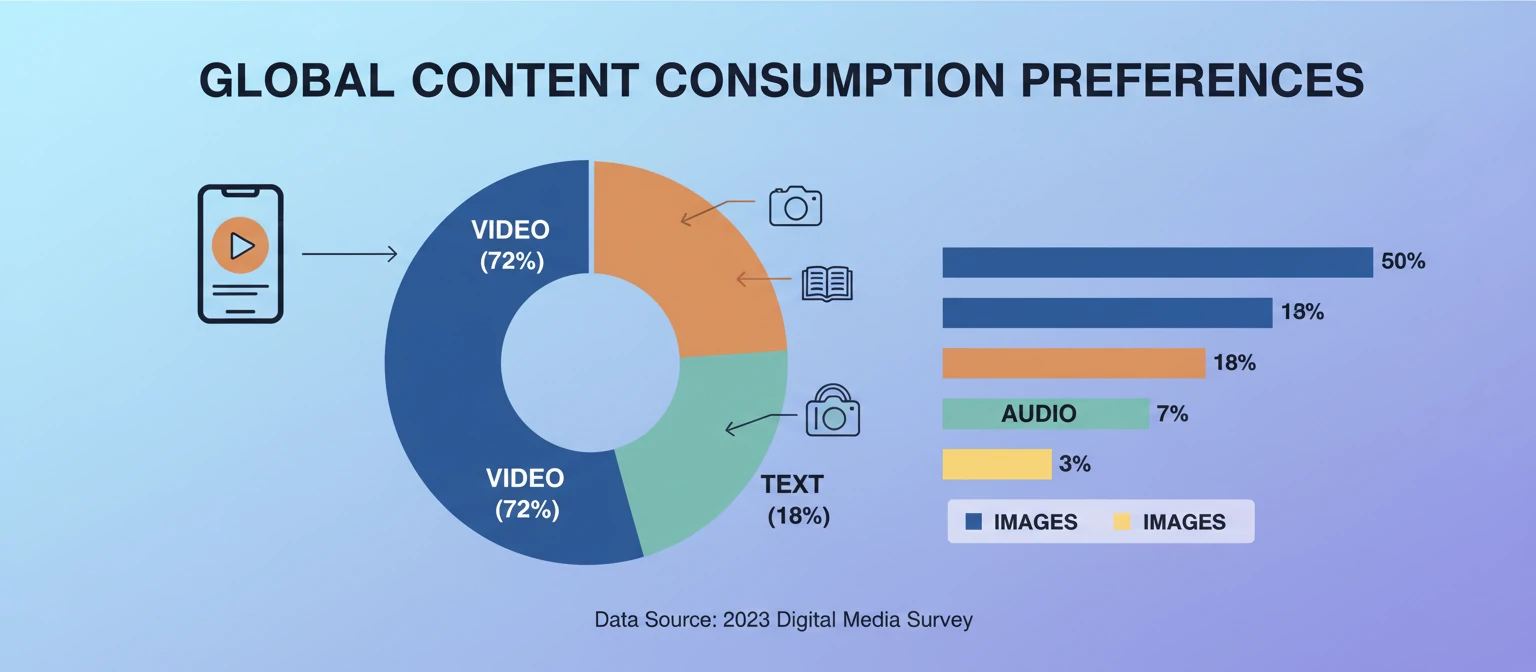
As content consumption habits continue to evolve, with audiences increasingly preferring video, audio, and visual formats over traditional text, content repurposing has become essential for any comprehensive content strategy. It's no longer optional – it's a necessity for brands that want to stay relevant and competitive in the digital space.
Why Content Repurposing Matters in Today's Digital Landscape
In an era where consumers are bombarded with content from every direction, standing out has never been more challenging. According to recent studies, the average person is exposed to between 6,000 to 10,000 ads per day, and content is created at a rate of 2.5 quintillion bytes per day. In this crowded marketplace, content repurposing offers a strategic advantage that can make the difference between being heard and being ignored.
One of the primary reasons content repurposing is crucial is the concept of "content fatigue." Audiences don't want to consume the same information in the same way repeatedly. By repurposing content into different formats, you cater to various learning styles and consumption preferences. Some people prefer reading blog posts, others enjoy watching videos, while some learn best through audio or visual aids.
Moreover, different platforms reward different types of content. LinkedIn favors long-form articles, Instagram thrives on short videos and stories, TikTok demands quick, engaging clips, and podcasts are perfect for in-depth discussions. Content repurposing allows you to optimize your content for each platform's algorithm and audience preferences, maximizing your reach and engagement.
From a business perspective, content repurposing is a cost-effective way to extend your content's lifespan and ROI. Creating original content is time-consuming and expensive. By repurposing, you can get multiple pieces of content from a single source, effectively multiplying your investment. This is particularly valuable for small businesses or startups with limited resources.
Another compelling reason is the improved SEO benefits. Search engines love fresh content, and repurposing allows you to update and refresh your existing content regularly. This can lead to better search rankings, increased organic traffic, and improved domain authority.
Content repurposing also supports the customer journey at different stages. A prospect might first encounter your brand through a social media video, then read your blog post for more details, listen to a podcast for deeper insights, and finally attend a webinar for comprehensive understanding. Each touchpoint reinforces your message and builds trust.
In terms of brand consistency, repurposing ensures that your messaging remains cohesive across all channels. It reinforces your brand voice, values, and key messages, creating a unified brand experience that resonates with your audience.
Finally, content repurposing fosters creativity and innovation within your content team. The process of adapting content for different formats encourages thinking outside the box and discovering new ways to present information, ultimately leading to better content overall.
As we move further into the digital age, content repurposing will become increasingly important. With the rise of new platforms and changing consumer behaviors, the ability to adapt and repurpose content will be a key differentiator for successful brands. Those who master this skill will not only save time and money but also create more meaningful connections with their audiences.
The Benefits of Content Repurposing Services
When you invest in professional content repurposing services, you're not just getting help with format conversion – you're gaining a strategic partner that can transform your content strategy. Here are some of the key benefits:
Cost Efficiency
Repurposing existing content is significantly cheaper than creating new content from scratch. Services can help you identify high-performing content and maximize its potential across multiple channels.
Extended Reach
Each repurposed format reaches a different audience segment. What starts as a blog post can become a video series, podcast, infographic, and more, exponentially increasing your visibility.
Improved SEO
Repurposing creates more indexed content, improving your search engine rankings and driving organic traffic. Each format provides additional opportunities for backlinks and shares.
Better Engagement
Different formats cater to different preferences, increasing overall engagement rates. Videos might get more shares, while in-depth articles could generate more comments and discussions.
Brand Consistency
Professional repurposing ensures your brand voice, messaging, and visual identity remain consistent across all formats and platforms.
Time Savings
Expert services handle the repurposing process, freeing up your team to focus on creating new content and other strategic initiatives.
These benefits compound over time, creating a content ecosystem that works synergistically to grow your brand. When you invest in content repurposing services, you're not just extending the life of your content – you're building a scalable content machine that delivers results consistently.
How Content Repurposing Services Work
Professional content repurposing services follow a systematic process to ensure maximum effectiveness. Here's how it typically works:
1. Content Audit and Analysis
The process begins with a thorough audit of your existing content. Services analyze performance metrics, engagement rates, and content quality to identify high-potential pieces for repurposing.
2. Strategy Development
Based on the audit, a customized repurposing strategy is developed. This includes identifying target formats, platforms, and the optimal sequence for release.
3. Content Adaptation
Skilled content creators adapt the original material for different formats. This might involve scriptwriting for videos, designing infographics, or restructuring content for podcasts.
4. Production and Optimization
The adapted content is produced and optimized for each platform. This includes video editing, graphic design, audio production, and platform-specific formatting.
5. Distribution and Promotion
The repurposed content is distributed across relevant platforms and promoted to maximize reach and engagement.
6. Performance Tracking and Optimization
Results are monitored, and insights are used to refine future repurposing efforts for better performance.
This systematic approach ensures that every piece of content is repurposed strategically, maximizing its potential and delivering consistent results.
Types of Content Repurposing
Content can be repurposed in numerous ways, depending on the original format and target audience. Here are some common types:
Text to Video
Transform blog posts, articles, or whitepapers into engaging videos. This could be explainer videos, talking head videos, or animated content.
Video to Text
Convert video content into blog posts, transcripts, or social media captions. This makes video content accessible to text-preferring audiences.
Text to Audio
Turn written content into podcasts or audio versions. Perfect for busy audiences who prefer listening over reading.
Data to Visuals
Convert statistics, research, or reports into infographics, charts, or data visualizations for better comprehension.
Long-form to Short-form
Break down comprehensive content into bite-sized pieces for social media, such as threads, carousels, or short videos.
Cross-platform Adaptation
Optimize content for different social media platforms, such as turning a LinkedIn article into Instagram Reels or TikTok videos.
The key to successful repurposing is understanding your audience's preferences and the strengths of each format. A good repurposing strategy considers the entire content ecosystem.
Best Practices for Content Repurposing
To get the most out of your content repurposing efforts, follow these best practices:
Start with Quality Content
Only repurpose content that performs well or has strong potential. Not all content is worth repurposing – focus on your best work.
Understand Your Audience
Know where your audience consumes content and what formats they prefer. Tailor your repurposing strategy accordingly.
Maintain Brand Consistency
Ensure all repurposed content aligns with your brand voice, visual identity, and messaging for a cohesive experience.
Add Value in Each Format
Don't just repackage – enhance each version with format-specific elements that add unique value.
Optimize for Each Platform
Tailor content for platform-specific requirements, such as video length for YouTube vs. TikTok.
Track and Measure Performance
Use analytics to understand what works and refine your strategy based on data-driven insights.
Case Studies: Success Stories in Content Repurposing
Real businesses have achieved remarkable results through strategic content repurposing. Here are some inspiring examples:
Tech Startup's Blog to Video Transformation
A SaaS company repurposed their technical blog posts into short explainer videos. Result: 300% increase in website traffic and 150% boost in demo requests.
E-commerce Brand's Podcast Series
An online retailer turned customer success stories into a podcast series and repurposed episodes into blog posts and social media content. Outcome: 200% growth in social media engagement and 50% increase in customer retention.
Consulting Firm's Whitepaper to Multi-Format Campaign
A consulting firm repurposed a comprehensive whitepaper into infographics, videos, and email series. Result: 400% more leads generated and improved brand authority in their niche.
Non-Profit's Impact Stories
A non-profit organization repurposed donor impact stories into videos, infographics, and social media campaigns. Outcome: 250% increase in donations and expanded reach to new donor segments.
These case studies demonstrate that content repurposing can deliver significant ROI across various industries and business models.
Tools and Resources for Content Repurposing
While professional services handle much of the heavy lifting, here are some tools that can support your content repurposing efforts:
Video Creation
- Camtasia or Adobe Premiere for editing
- Canva or Lumen5 for quick video creation
- Animoto for animated videos
Audio Production
- Audacity for free audio editing
- GarageBand for podcast production
- Descript for AI-powered editing
Graphic Design
- Canva for user-friendly design
- Adobe Creative Suite for professional work
- Piktochart for infographics
Content Management
- Trello or Asana for project management
- Google Analytics for performance tracking
- Buffer or Hootsuite for scheduling
Common Mistakes to Avoid
Even with the best intentions, content repurposing can go wrong. Here are common pitfalls to avoid:
- Repurposing Low-Quality Content: Only repurpose your best work. Poor content in multiple formats is still poor content.
- Ignoring Platform Differences: What works on LinkedIn might not work on TikTok. Adapt content for each platform's audience and format requirements.
- Losing the Core Message: Ensure the main message remains intact across all formats. Don't sacrifice substance for style.
- Overlooking Copyright and Permissions: Always secure rights for images, music, and third-party content used in repurposed materials.
- Failing to Promote: Repurposing alone isn't enough. Develop a promotion strategy for each format to maximize reach.
- Not Measuring Results: Track performance across all formats to understand what's working and what needs improvement.
The Future of Content Repurposing
As technology evolves, so does content repurposing. Here are some trends to watch:
AI-Powered Repurposing
Artificial intelligence will automate much of the repurposing process, from script generation to format conversion.
Interactive Content
Repurposed content will become more interactive, with polls, quizzes, and clickable elements enhancing engagement.
Personalized Experiences
Content will be dynamically repurposed based on individual user preferences and behavior patterns.
Multi-Modal Content
Future repurposing will combine multiple formats simultaneously, like video with interactive text overlays.
Client Testimonials
"The content repurposing service transformed our blog posts into engaging videos and infographics. Our engagement rates skyrocketed, and we saw a 200% increase in leads."
- Sarah Johnson, Marketing Director at TechCorp
"Thanks to their expert repurposing, our whitepapers reached audiences we never thought possible. The ROI has been incredible."
- Michael Chen, CEO of Innovate Solutions
"The team's creativity in repurposing our content into podcasts and social media series helped us connect with our audience on a deeper level."
- Emily Rodriguez, Content Manager at GreenLife
Pricing Plans
Choose the plan that best fits your content repurposing needs. All plans include our core services with varying levels of customization and support.
Frequently Asked Questions
What types of content can be repurposed?
We can repurpose any digital content including blog posts, whitepapers, videos, podcasts, social media posts, infographics, and more. Our team assesses each piece to determine the best repurposing opportunities.
How long does the repurposing process take?
Timeline varies depending on the complexity and volume of content. Simple repurposing (e.g., blog to social media) can take 1-2 weeks, while comprehensive multi-format campaigns may take 4-6 weeks.
Do you provide analytics and reporting?
Yes, all plans include performance tracking and reporting. We provide detailed analytics on engagement, reach, and ROI for all repurposed content across different platforms.
Can you work with existing content or do I need to provide new material?
We specialize in repurposing existing content. If you have a content library, we'll audit it and identify the best pieces for repurposing. We can also create new content if needed.
What platforms do you repurpose content for?
We cover all major platforms including YouTube, LinkedIn, Instagram, TikTok, Twitter, Facebook, podcasts, blogs, and email marketing. We'll recommend the best platforms based on your audience.
Is there a minimum contract length?
Our plans are month-to-month with no long-term contracts. You can start with any plan and upgrade or downgrade as your needs change.
Ready to Maximize Your Content's Potential?
Don't let your valuable content gather dust. Transform it into a content powerhouse that drives results across all platforms.
Contact our content repurposing experts today and discover how we can help you create a scalable, multi-format content strategy that delivers measurable ROI.