

In the attention economy, content is currency. Learn how professional content development services can transform your marketing, establish authority, and drive sustainable business growth.
What Are Content Development Services?
Content development services encompass the strategic planning, creation, and management of content designed to achieve specific business objectives. This goes far beyond simply writing blog posts—it includes developing a cohesive content strategy, producing diverse content formats, and optimizing that content for search engines, social platforms, and audience engagement.
Professional content development providers act as an extension of your marketing team. They research your industry, understand your audience, develop a content calendar, produce high-quality assets, and often handle distribution and performance analysis. The goal is to create content that attracts, engages, and converts your target audience.
In today's digital landscape, businesses compete for attention across countless channels. Those with a strategic, consistent approach to content development gain significant competitive advantage—building trust, demonstrating expertise, and staying top-of-mind with potential customers.
Content Development vs. Content Writing
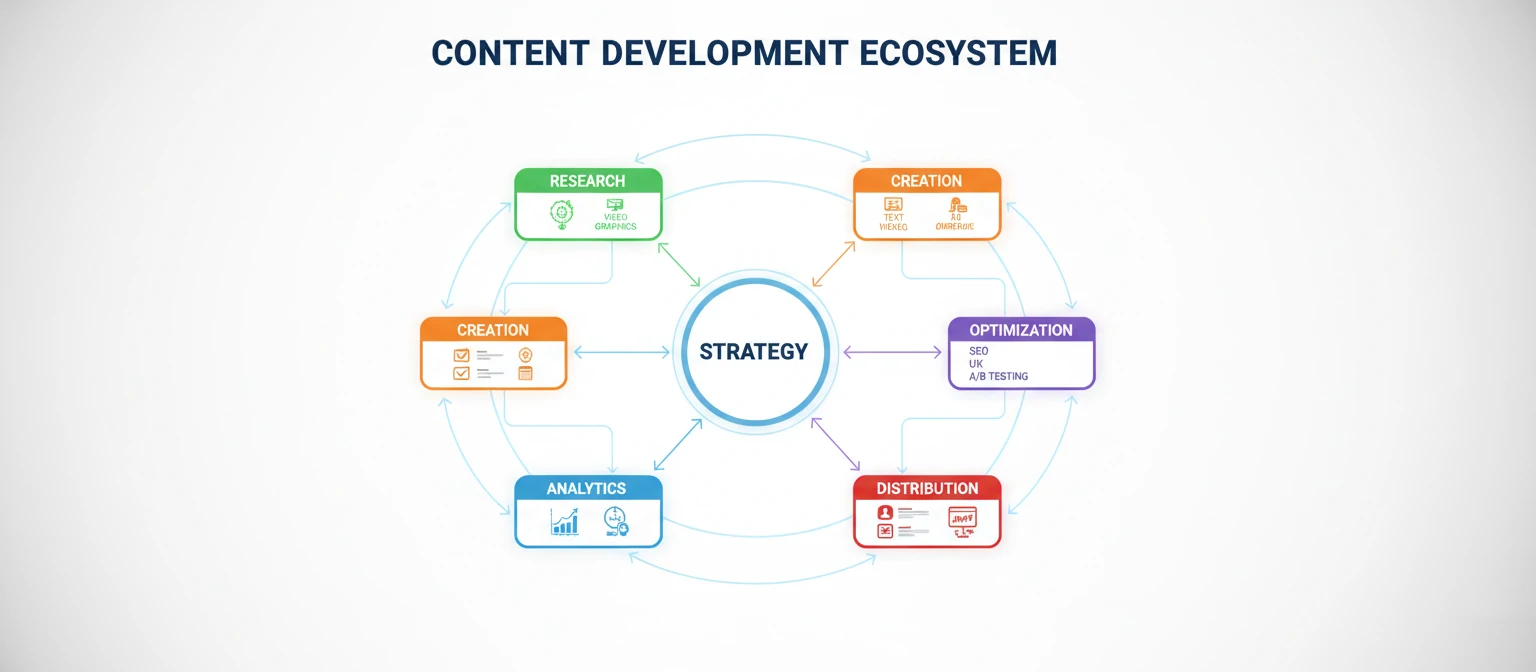
Content writing is the act of producing written material. Content development is the broader strategic process that includes research, planning, creation (in multiple formats), optimization, and performance measurement. A content development service handles the entire lifecycle, not just the writing.
Types of Content Development Services
From written articles to video production, here's what professional content developers offer.
Written Content
Blog posts, articles, whitepapers, eBooks, case studies, email newsletters, website copy, and social media captions. The foundation of most content strategies.
- SEO-optimized blog articles
- Long-form thought leadership
- Conversion-focused landing pages
Video Content
Explainer videos, product demos, testimonials, social media clips, webinars, and YouTube content. Video dominates engagement metrics across platforms.
- Short-form social videos
- Educational tutorials
- Brand storytelling films
Visual & Graphic Content
Infographics, social media graphics, presentation decks, data visualizations, and branded imagery. Visual content increases understanding and shareability.
- Data-driven infographics
- Social post templates
- Interactive visuals
Audio Content
Podcasts, audio articles, voiceovers, and audio ads. The rise of on-demand audio has opened new channels for reaching audiences during commutes and workouts.
- Branded podcast production
- Audio blog versions
- Interview series
The Content Development Process
Discovery & Strategy
The process begins with understanding your business, audience, and goals. Content developers conduct competitor analysis, audience research, keyword research, and content audits (if existing content exists) to form a strategic foundation.
Deliverable: Content strategy document, audience personas, content pillars
Content Planning & Calendar
Based on the strategy, a content calendar is built. This maps out topics, formats, target keywords, publication dates, and distribution channels for weeks or months ahead. Planning ensures consistency and strategic alignment.
Deliverable: Editorial calendar, topic clusters, content briefs
Content Creation
The production phase. Writers, designers, videographers, and other specialists create the content according to the briefs. Quality content development includes subject matter research, multiple drafts, and professional editing.
Deliverable: Articles, videos, graphics, podcasts (per calendar)
Optimization & Publishing
Before publication, content is optimized for its target channel—SEO for articles, platform-specific formatting for social, accessibility features for video. Then it's published according to the calendar schedule.
Deliverable: SEO-optimized content, published assets, metadata
Performance Analysis & Iteration
Content development is cyclical. Performance is tracked (traffic, engagement, conversions), insights are gathered, and strategy is refined. High-performing content may be repurposed; underperforming content is analyzed and improved.
Deliverable: Analytics reports, optimization recommendations, updated strategy
Benefits of Professional Content Development
Established Authority
Consistent, quality content positions your brand as a trusted expert in your field. Authority leads to trust; trust leads to conversions.
Improved SEO
Strategic content drives organic search traffic. Each piece of optimized content is an opportunity to rank and attract visitors without ad spend.
Cost-Effective Lead Generation
Content marketing generates 3x more leads per dollar than paid advertising, and those leads often convert at higher rates because they've been nurtured.
Compounding Returns
Unlike ads that stop working when you stop paying, evergreen content continues driving traffic and leads for years after publication.
Sales Enablement
Quality content—case studies, whitepapers, FAQs—arms your sales team with resources that address objections and educate prospects.
Customer Retention
Content isn't just for acquisition. Onboarding content, help documentation, and community content keep existing customers engaged and loyal.
How to Choose a Content Development Partner
1. Industry Experience
Do they understand your industry? Content that resonates requires familiarity with your audience's language, pain points, and decision-making process. Ask for case studies in your vertical.
2. Strategic Capabilities
A great provider isn't just a content factory. They should offer strategic guidance—helping you determine what content to create, not just producing what you request.
3. Quality Portfolio
Review their work samples critically. Is the writing engaging? Are the visuals professional? Does the video content feel polished? Quality is non-negotiable—it reflects directly on your brand.
4. Scalability & Consistency
Can they scale with your needs? Content development isn't a one-time project—it's ongoing. Ensure they have the capacity to maintain quality as volume increases.
5. Measurement & Reporting
How do they measure success? A data-driven provider tracks content performance and ties it to business outcomes. Avoid partners who just create and disappear.
Content Development Pricing
Per 1,000-2,000 word optimized article. Includes research and SEO.
Per video. Range reflects complexity from social clips to produced films.
For ongoing content packages. Typically includes strategy, creation, and reporting.
Frequently Asked Questions
How long until I see results from content development?
Content marketing is a long-term strategy. SEO-driven results typically take 3-6 months to materialize. However, some content (like social or email) can drive immediate engagement. Patience and consistency are key.
Should I create content in-house or outsource?
It depends on your resources. Outsourcing provides specialized expertise, scalability, and frees your team for core business activities. In-house offers more control but requires significant investment in talent and tools.
How often should I publish new content?
Consistency matters more than frequency. Publishing 2-4 quality pieces per week is better than daily low-quality posts. Find a cadence you can sustain long-term.
What content types should I prioritize?
Start with where your audience spends time. B2B often benefits from blog content and LinkedIn. B2C may prioritize video and Instagram. A good content development partner will help you identify the right mix.