
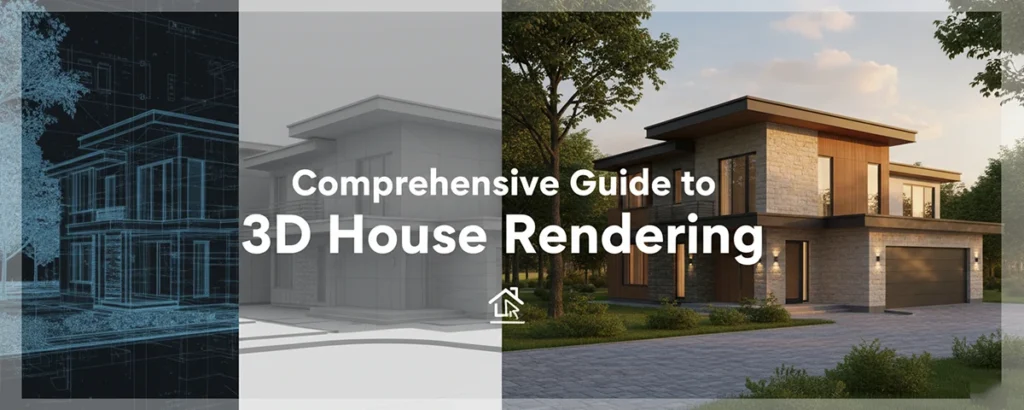
Transforming Architectural Visualization: From Concept to Photorealistic Reality
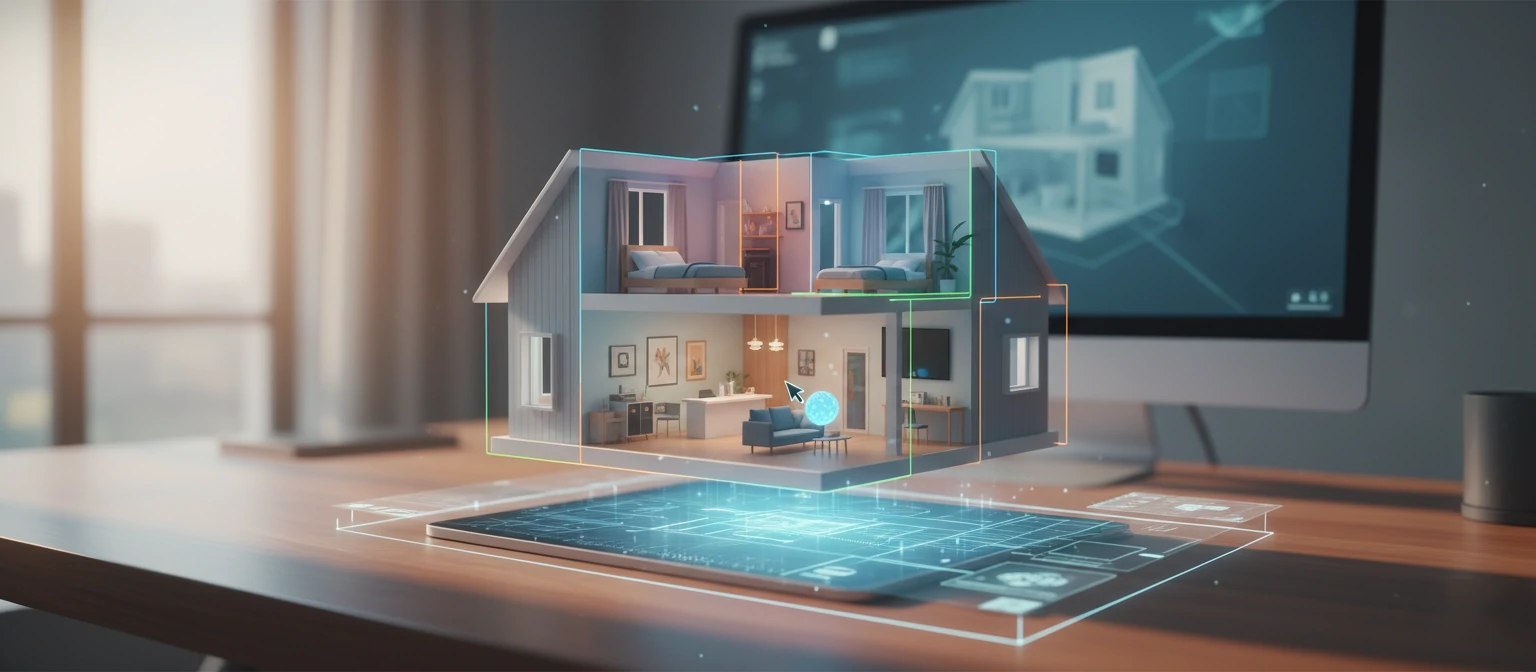
Interactive 3D House Demo
What You'll Learn
Understanding 3D Rendering
Learn the fundamentals and different rendering techniques
Benefits & Applications
Discover how 3D rendering transforms design workflows
Step-by-Step Process
Master the complete rendering pipeline
Industry Applications
Explore real-world use cases and success stories
Latest Trends
Stay updated with cutting-edge technologies
Best Practices
Professional tips for high-quality results
Understanding 3D House Rendering
What is 3D House Rendering?
3D house rendering is the process of creating photorealistic or stylized images of architectural designs using computer graphics. It transforms 2D blueprints and concepts into immersive, three-dimensional visualizations that allow clients, architects, and stakeholders to experience a space before it's built.
Evolution of Rendering Technology
1980s-1990s
Basic wireframe models
2000s-2010s
Textured 3D models
2020s
Photorealistic real-time rendering
Types of Rendering Techniques
Photorealistic Rendering
Creates images that are virtually indistinguishable from photographs, featuring accurate lighting, materials, and environmental effects.
- Global illumination
- Ray tracing technology
- High-resolution textures
- Realistic material properties
Conceptual Rendering
Focuses on design intent and spatial relationships rather than photorealism, often used in early design phases.
- Stylized visualization
- Emphasis on form and space
- Faster rendering times
- Design exploration tool
Popular 3D Rendering Software
SketchUp + V-Ray
User-friendly modeling with professional rendering
Blender
Free, open-source with powerful Cycles renderer
3ds Max + Corona
Industry standard for architectural visualization
Benefits of 3D House Rendering
Enhanced Design Communication
Bridge the gap between technical drawings and client understanding with visual clarity that eliminates misinterpretation.
Cost-Effective Revisions
Identify and resolve design issues in the virtual environment, saving thousands in construction changes.
Accelerated Sales
Properties with 3D renderings sell 68% faster and command higher prices in competitive markets.
Impact on Different Stakeholders
For Architects & Designers
- ✓ Validate design concepts before construction
- ✓ Experiment with materials and lighting
- ✓ Create compelling portfolio pieces
- ✓ Win more project proposals
For Real Estate & Marketing
- ✓ Market properties before construction
- ✓ Create virtual tours and walkthroughs
- ✓ Generate social media content
- ✓ Increase buyer confidence and engagement
ROI Statistics
Faster property sales
Reduction in design revisions
Higher project win rate
The 3D Rendering Process
Follow this comprehensive workflow to create stunning architectural visualizations
1. Conceptualization & Design Brief
Gather all project requirements, architectural drawings, and client preferences to establish the visual direction.
Key Deliverables:
- Architectural plans and elevations
- Material specifications and color schemes
- Lighting requirements and time of day preferences
- Camera angles and composition guidelines
2. 3D Modeling & Structure
Create the basic geometry and architectural elements that form the foundation of your render.
Pro Tips:
- Start with basic shapes and add detail progressively
- Maintain proper scale and proportions
- Use modular components for efficiency
- Keep geometry clean and optimized
3. Texturing & Materials
Apply realistic materials and textures to bring surfaces to life with accurate physical properties.
Material Categories:
Architectural Materials:
- Concrete and stone
- Wood and timber
- Glass and metals
Surface Properties:
- Roughness and reflection
- Bump and normal maps
- Transparency and refraction
4. Lighting Setup
Design the lighting scheme that will define the mood, atmosphere, and realism of your render.
Lighting Types:
Sun and sky systems
Interior fixtures
Environmental lighting
5. Rendering & Post-Processing
Execute the final render and enhance the image with post-processing techniques for professional results.
Rendering Settings:
- Resolution: 4K+ for print, 1080p for web
- Sample count: Higher for final renders
- Render passes: Separate elements for compositing
Post-Processing:
- Color correction and grading
- Depth of field and atmospheric effects
- People, vehicles, and landscaping
Applications of 3D House Rendering
Industry Applications
🏗️ Architecture & Construction
Design validation, client presentations, and construction documentation
🏠 Real Estate Development
Pre-construction marketing, investor presentations, and sales materials
🎨 Interior Design
Space planning, furniture layouts, and material selection visualization
🏙️ Urban Planning
Master planning, zoning visualization, and community engagement
Success Story: Luxury Resort Development
Oceanview Resort Complex
Maldives Development Project
Challenge
Secure $50M investment for luxury resort before construction, showcasing integration with natural environment.
Solution
Created photorealistic renderings showing villas at different times of day, weather conditions, and seasonal variations.
Results
- 100% pre-construction funding secured
- 60% of units pre-sold before groundbreaking
- Featured in 15+ international publications
- Won 3 architectural visualization awards
Specialized Applications
Film & Entertainment
Virtual sets, concept art, and pre-visualization for movies and games
Heritage Preservation
Digital reconstruction of historical buildings and archaeological sites
Legal & Insurance
Accident reconstruction, property damage assessment, and court presentations
Trends in 3D House Rendering
🥽 Virtual & Augmented Reality
Immersive experiences that allow clients to walk through spaces before construction begins.
- VR headset compatibility
- Interactive walkthroughs
- AR mobile applications
- Real-time design modifications
⚡ Real-Time Rendering
Instant visualization updates powered by gaming engines and GPU acceleration.
- Unreal Engine integration
- Live material changes
- Interactive lighting controls
- Immediate client feedback
Emerging Technologies
AI-Powered Rendering
Automated material assignment and lighting optimization
Cloud Rendering
Scalable rendering farms for faster turnaround times
Mobile Integration
On-site visualization and client presentations
Sustainability Focus
Energy analysis and environmental impact visualization
Future Predictions (2024-2030)
Democratization of 3D Rendering
Advanced AI tools will make professional-quality rendering accessible to non-technical users.
Photogrammetry Integration
Real-world scanning technology will seamlessly blend with 3D models for hybrid visualizations.
Blockchain & NFT Integration
Digital ownership and verification of architectural designs through blockchain technology.
Best Practices for Effective 3D House Rendering
✅ Do's - Professional Standards
Maintain Accurate Scale & Proportions
Use real-world measurements and maintain consistent scaling throughout your model to ensure believable results.
Study Natural Lighting
Observe how light behaves in real environments and replicate these conditions in your 3D scenes.
Use High-Quality Reference Materials
Collect real-world texture samples and material references to achieve authentic surface appearances.
Plan Your Camera Compositions
Apply photography principles like rule of thirds and leading lines to create compelling viewpoints.
Optimize Render Settings
Balance quality and render time by understanding your output requirements and deadline constraints.
❌ Don'ts - Common Pitfalls
Over-Saturate Colors & Materials
Avoid unrealistic color intensity that makes renders look artificial and unprofessional.
Ignore Environmental Context
Don't render buildings in isolation - include surrounding landscape, neighboring structures, and atmospheric elements.
Rush the Modeling Phase
Poor geometry and shortcuts in modeling will be evident in the final render, regardless of post-processing.
Neglect File Organization
Disorganized project files lead to inefficiency and errors, especially in collaborative environments.
Skip Client Review Stages
Failing to get approval at key milestones can result in extensive revisions and project delays.
Professional Workflow Checklist
Pre-Production
Production
Post-Production
Quality Assurance Tips
Technical Quality
- Check for geometry errors and overlapping faces
- Verify material UV mapping and texture resolution
- Test render settings with small samples first
- Validate color accuracy across different displays
Artistic Quality
- Ensure composition follows design principles
- Check lighting mood matches project requirements
- Verify architectural accuracy and proportions
- Review overall visual impact and storytelling
Transform Your Architectural Vision
3D house rendering has revolutionized how we visualize, communicate, and market architectural designs. From enhancing client presentations to accelerating sales processes, the benefits are undeniable and the technology continues to evolve at an unprecedented pace.
Clear Communication
Bridge the gap between technical drawings and client understanding
Proven ROI
Faster sales, fewer revisions, and higher project win rates
Future-Ready
Stay ahead with VR, AR, and real-time rendering technologies
Join thousands of architects and designers who've transformed their workflow