

Discover the last residential project of Mexico's greatest architect—a symphony of color, light, and water that continues to inspire visitors from around the world.
The moment you step through the narrow entrance of Casa Gilardi and see that first shaft of yellow light washing down the corridor walls, you understand why Luis Barragán is considered one of the greatest architects of the 20th century. This isn't just a house—it's a meditation on color, light, and the poetry of space.
Completed in 1976 when Barragán was 74 years old, Casa Gilardi represents the culmination of a lifetime spent exploring the emotional power of architecture. Commissioned by Francisco Gilardi and designed around a magnificent jacaranda tree that the client refused to remove, the house demonstrates everything Barragán believed: that architecture should move the soul, that color is as important as structure, and that a building can be both a private sanctuary and a work of art.
I first visited Casa Gilardi as an architecture student and have returned many times since—each visit revealing new details, new plays of light I hadn't noticed before. In this guide, I'll share everything you need to know to experience this masterpiece for yourself, from the history and design philosophy to practical visiting information.
Who Was Luis Barragán
Luis Barragán (1902-1988) is widely considered the most important Mexican architect of the 20th century and one of the most influential architects in modern history. His work earned him the Pritzker Prize in 1980—architecture's highest honor—with the jury praising his ability to create spaces of profound emotional impact through minimal means.
Born in Guadalajara, Barragán initially trained as an engineer before traveling to Europe in the 1920s, where he encountered the work of Ferdinand Bac and the gardens of the Alhambra in Spain. These experiences, combined with his deep Mexican roots, shaped an architectural philosophy that merged modernist principles with traditional Mexican aesthetics.
Barragán's Design Principles
Light
Natural light as primary material
Color
Bold, emotional color palettes
Water
Reflective, contemplative elements
Silence
Spaces for contemplation
What set Barragán apart was his belief that architecture should evoke emotion. While his contemporaries focused on function and form, Barragán spoke of "emotional architecture"—spaces that could inspire serenity, joy, and introspection. His work drew from Mexican haciendas, monasteries, and vernacular buildings, filtered through a modernist sensibility.
"I believe in an emotional architecture. It is very important for humankind that architecture should move by its beauty; if there are many equally valid technical solutions to a problem, the one which offers the user a message of beauty and emotion, that one is architecture."
— Luis Barragán
The Story of Casa Gilardi
In 1975, Francisco Gilardi and Martín Luque approached the 73-year-old Barragán with a request: design a house for their narrow lot in the Tacubaya neighborhood. Barragán initially declined—he had largely retired from residential commissions. But when he visited the site and saw the magnificent jacaranda tree in the courtyard, he changed his mind.
The clients made one non-negotiable demand: the tree must stay. For Barragán, this wasn't a constraint but an inspiration. The entire house would be designed around the jacaranda, which blooms in spectacular purple each spring and serves as the spiritual heart of the home.
Timeline of Casa Gilardi
1975
Francisco Gilardi commissions Barragán. Initial design begins with the jacaranda tree as the centerpiece.
1976
Construction completed. The Gilardi family moves in. The house immediately attracts attention from the architectural community.
1980
Barragán receives the Pritzker Prize. Casa Gilardi is cited as evidence of his mastery of emotional architecture.
Today
Still a private residence, the house welcomes visitors by appointment, maintaining Barragán's vision while sharing it with the world.
What makes Casa Gilardi particularly significant is its status as Barragán's final residential work. By this point in his career, he had refined his ideas to their essence. Every element in the house—every color, every angle of light, every proportion—reflects decades of experimentation distilled into pure form.
Design Philosophy and Elements
Casa Gilardi embodies Barragán's mature philosophy: architecture as an emotional experience rather than a functional exercise. The house is modest in size—just under 350 square meters—but feels expansive due to masterful manipulation of space, light, and color.
The Narrow Lot
Built on a plot just 10 meters wide, the house uses its constraints creatively. Spaces flow sequentially, creating a journey through light and color rather than a traditional floor plan.
The Closed Facade
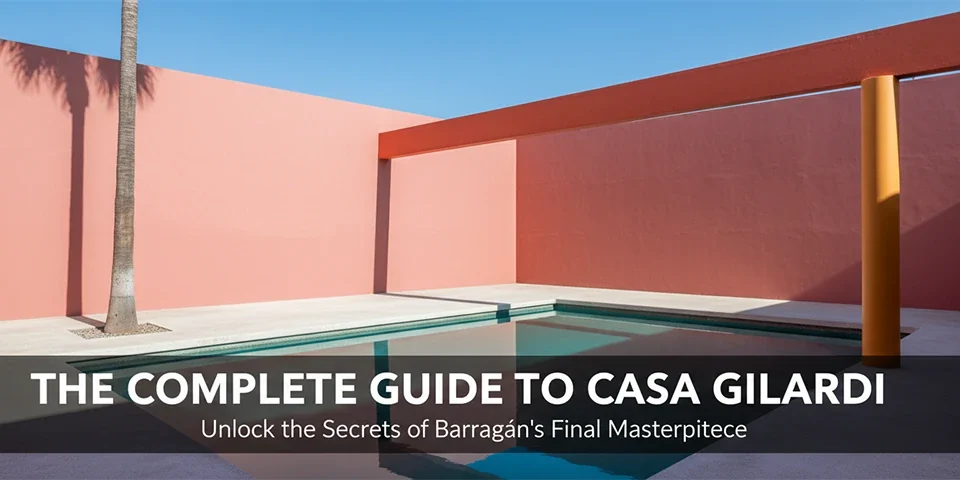
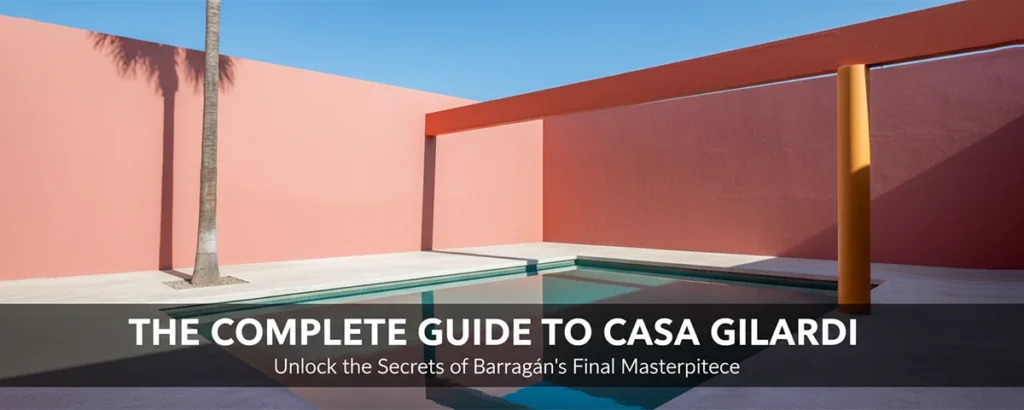
The street-facing exterior is deliberately austere—a pink wall with minimal openings. Privacy from the urban environment creates the sense of entering a sacred space.
Nature Integration
The jacaranda tree isn't just preserved—it's celebrated. The house wraps around the courtyard, with major rooms offering views of the tree through carefully positioned windows.
Material Simplicity
Smooth stucco walls, wooden beams, stone floors. Barragán used humble materials but combined them with extraordinary color to create something transcendent.
Room by Room Experience
Experiencing Casa Gilardi is a carefully choreographed journey. Barragán designed the sequence of spaces to create emotional progression—from the mystery of the entrance to the revelation of light and water at the journey's end.
The Entrance
A narrow door in the pink facade leads to a compressed vestibule. The transition from bright street to shadow creates anticipation. Barragán believed entrances should slow visitors down, shifting them from the external world to an interior one.
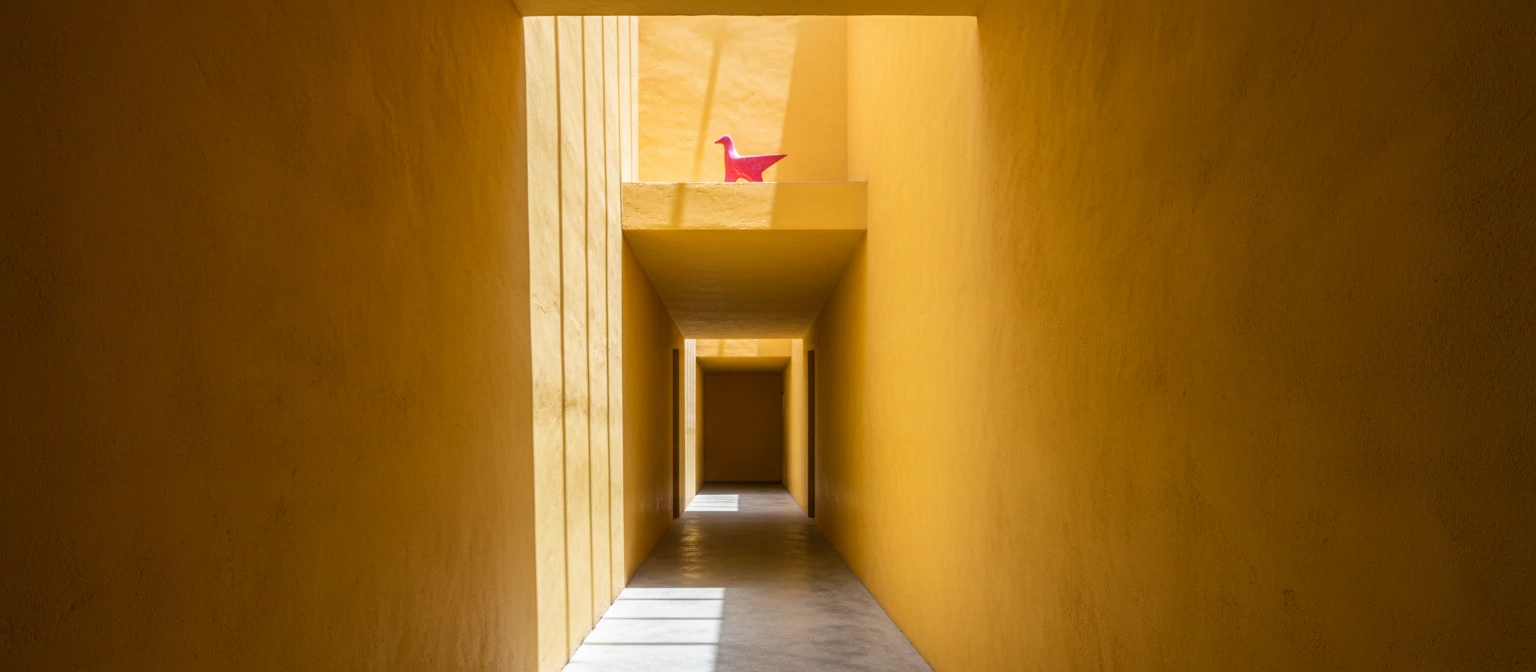
The Yellow Corridor
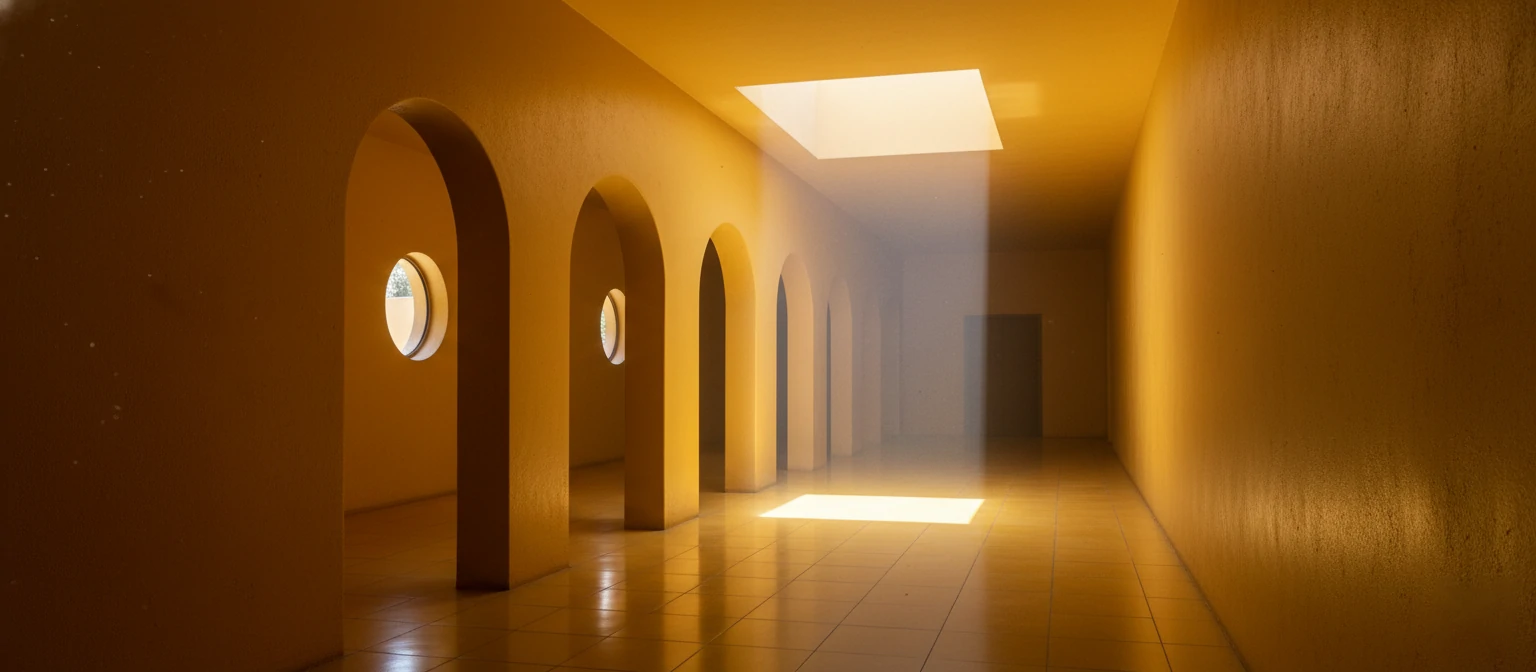
Emerging from the entrance, you encounter the famous yellow corridor. Sunlight pours through a skylight, washing the walls in golden light. The effect is almost religious—a procession toward something sacred. This is one of Barragán's most photographed spaces.
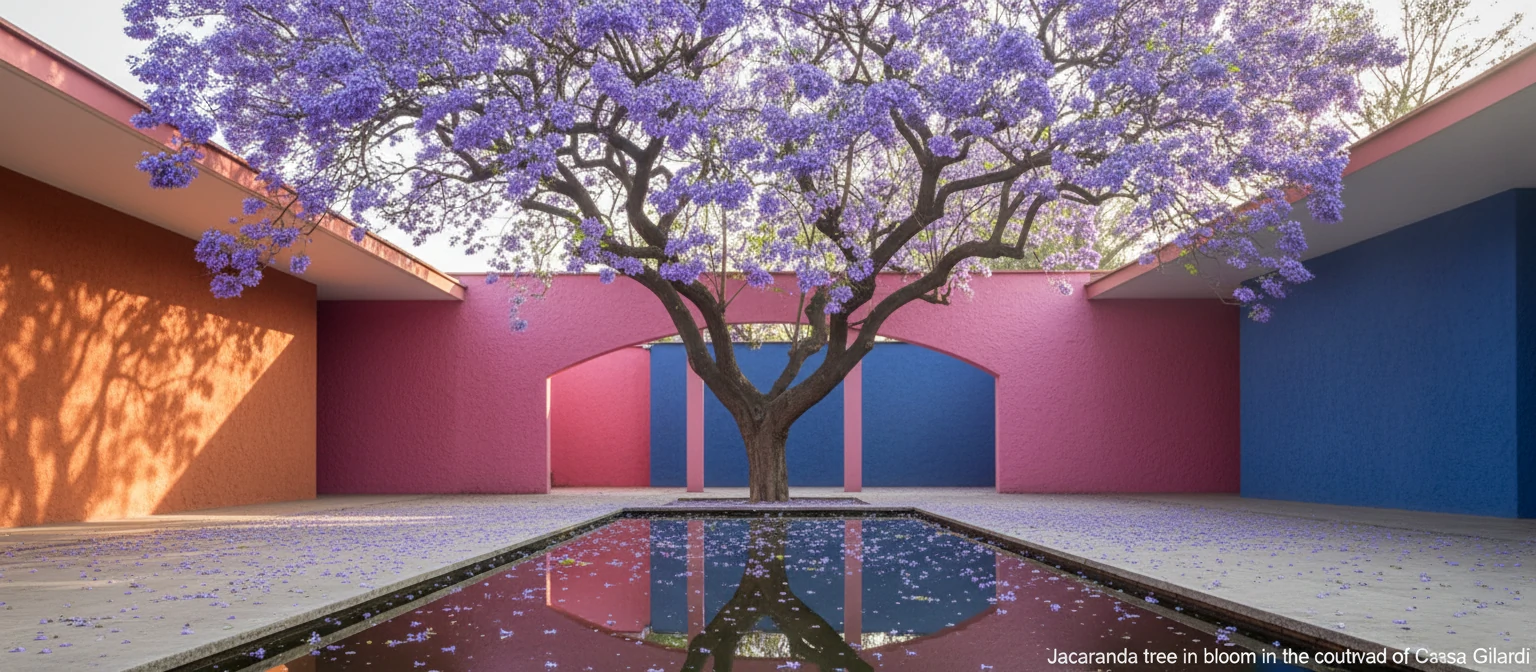
The Courtyard
The jacaranda tree dominates this outdoor room. Pink and purple walls create a backdrop for the tree's seasonal changes. In spring, when the jacaranda blooms, the courtyard becomes a symphony of purples and pinks that seem almost unreal.
The Pool and Dining Room
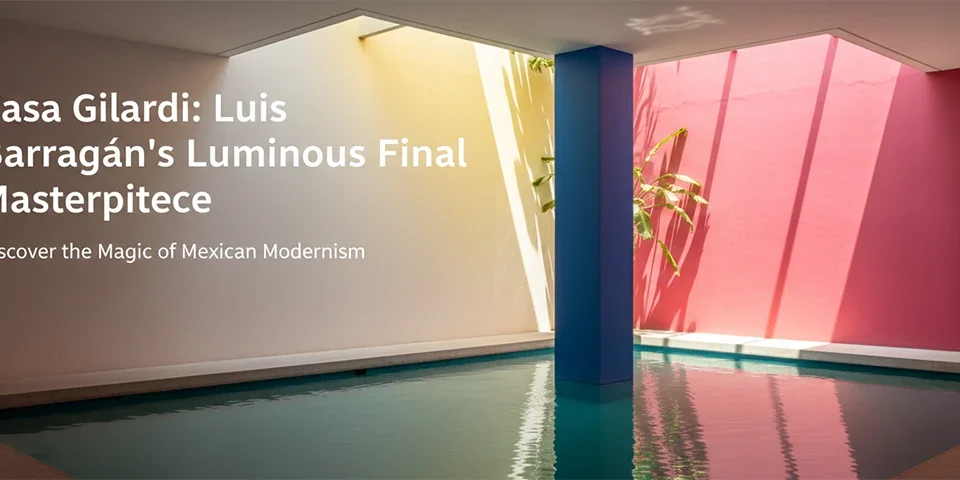
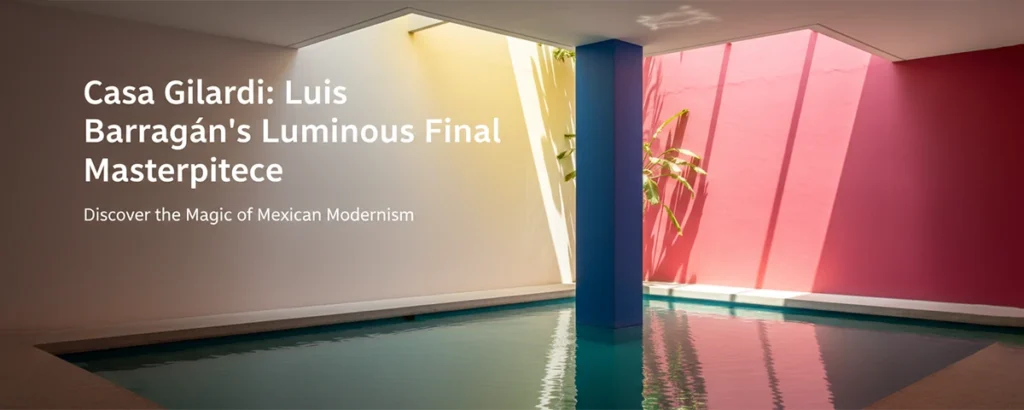
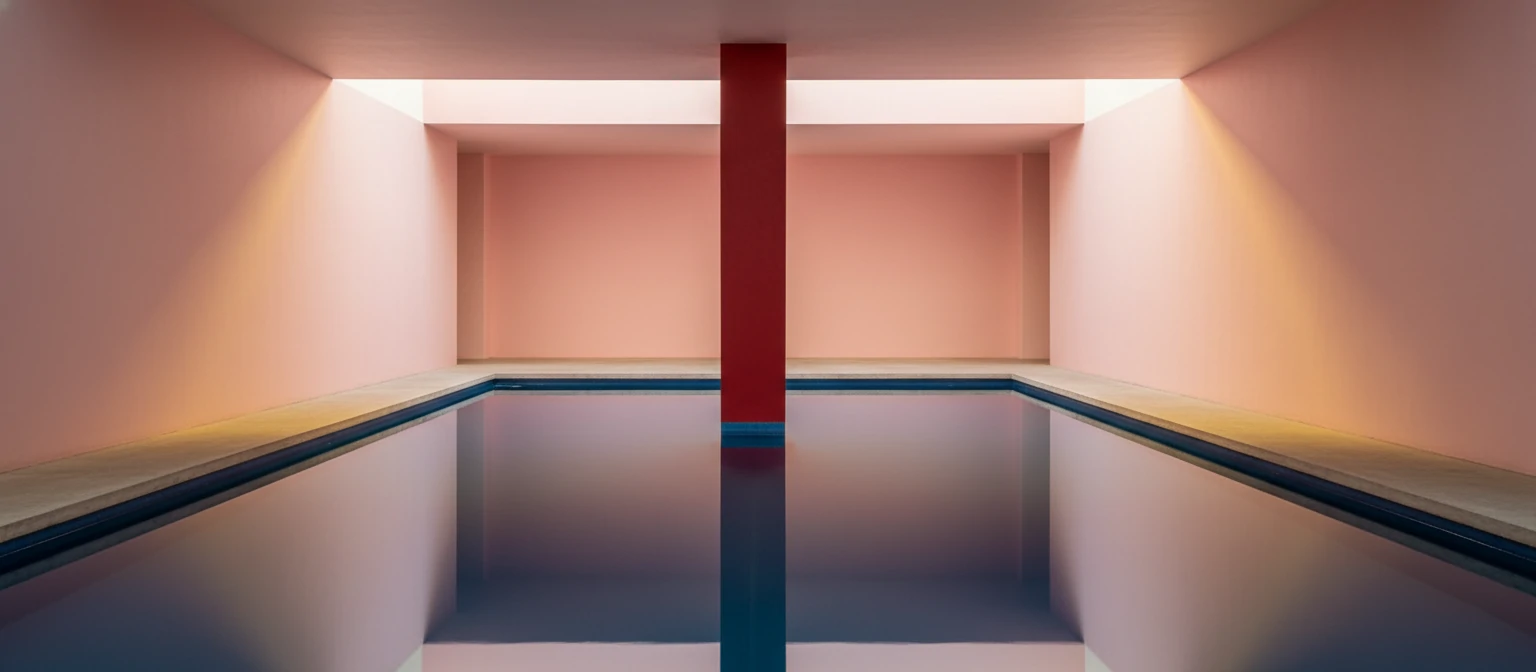
The climax of the spatial journey. A swimming pool extends indoors, flanked by a bold red column and pink walls. The dining table sits beside the water. Light filtered through a yellow glass ceiling casts an otherworldly glow. This space alone is worth the visit.
The Meaning of Color
Color in Barragán's architecture is never decorative—it's structural, emotional, and deeply meaningful. At Casa Gilardi, each color was chosen to evoke specific feelings and create particular relationships with light.
Yellow
Joy, warmth, spiritual illumination. The corridor transforms sunlight into a golden embrace.
Pink
Mexican identity, earthiness, the warmth of adobe. References traditional Mexican architecture.
Blue
Water, sky, infinity. Creates depth and coolness in the pool space.
Red
Energy, passion, drama. The red column in the pool room anchors the space with intensity.
Purple
Spirituality, mystery. Echoes the jacaranda blooms and creates depth in the courtyard.
Barragán didn't invent using bold colors in architecture—Mexican vernacular buildings have always embraced vibrant pigments. But he elevated this tradition into a sophisticated language, showing how color could transform simple spaces into profound experiences.
🎨 Color Note: The colors in Casa Gilardi were mixed by Barragán himself, often requiring multiple attempts to achieve the exact shade he envisioned. He insisted on natural pigments that would age gracefully and interact beautifully with changing light throughout the day.
The Iconic Pool and Dining Room
If there's one image that defines Casa Gilardi—and arguably Barragán's entire career—it's the pool and dining room. This single space encapsulates everything he believed about architecture: the integration of water, the drama of color, the spiritual quality of light.
This space demonstrates Barragán's genius for creating emotional impact through simple means. There's nothing technologically complex here—just walls, water, light, and color. Yet the effect is overwhelming. Visitors often describe entering the pool room as a spiritual experience.
Planning Your Visit
Casa Gilardi remains a private residence, generously opened to visitors by the Gilardi family. Visits are by appointment only and typically conducted as small group tours. Here's everything you need to know.
How to Book
Step 1: Email Request
Send an email to the Casa Gilardi contact address (available through their official website or architecture tour operators) requesting a visit. Include your preferred dates, group size, and language preference.
Step 2: Confirmation
Wait for confirmation of your time slot. Popular times fill up quickly, especially during spring (jacaranda season). Be flexible with your schedule if possible.
Step 3: Arrive on Time
Arrive exactly at your scheduled time. This is a private home, and the family manages visits carefully. Being punctual shows respect and ensures a smooth experience.
⚠️ Important: Because Casa Gilardi is a functioning home, tour availability can be limited or occasionally suspended. Book well in advance, especially for spring visits when the jacaranda is blooming. Be prepared for potential schedule changes.
Photography Guide
Casa Gilardi is extraordinarily photogenic, and photography is generally permitted during tours. Here's how to capture its beauty.
Best Time of Day
Late morning to early afternoon when sunlight penetrates the skylights most dramatically. The yellow corridor is most stunning around 10-11 AM when light floods in from above.
Equipment
Wide-angle lenses (16-35mm) capture the tight spaces best. Smartphones work well for the colorful walls. No flash—natural light is essential to the experience.
Color Accuracy
The colors are so vivid they can appear oversaturated in photos. Consider shooting in RAW format. You may need to reduce saturation in post-processing to match what your eyes see.
Etiquette
Listen to your guide about photography rules. Some areas may be restricted. Be mindful of other visitors and don't monopolize prime spots. This is someone's home—respect it.
Must-Capture Shots
Yellow corridor looking up
Pool room with red column
Jacaranda in courtyard
Water reflections
Barragán Architecture Trail
Make the most of your architectural pilgrimage by visiting other Barragán works in Mexico City. Several are within easy reach of Casa Gilardi and together provide a comprehensive view of his evolution as an architect.
Casa Luis Barragán (UNESCO World Heritage)
Barragán's own home and studio, now a museum. The essential starting point for understanding his work. Book well in advance—it's extremely popular.
📍 Tacubaya | Distance: 1 km from Casa Gilardi
Cuadra San Cristóbal
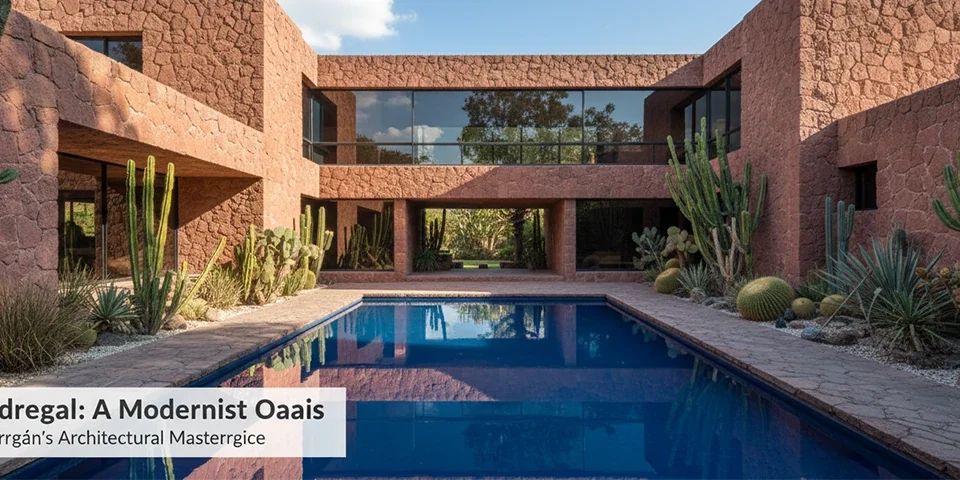
A horse stable and residence featuring Barragán's famous pink walls, a spectacular fountain, and a pool where horses can drink. One of his most photographed works.
📍 Los Clubes, Atizapán | Distance: 30 km north
Torres de Satélite
Monumental colored towers designed with sculptor Mathias Goeritz. A landmark of Mexican modernism visible from the highway. Best seen driving by rather than on foot.
📍 Ciudad Satélite | Distance: 20 km north
Capilla de las Capuchinas
A small chapel for a convent featuring Barragán's masterful use of light. The interplay of yellow light and shadow creates an intensely spiritual atmosphere.
📍 Tlalpan | Distance: 15 km south
Insider Tips
After many visits to Casa Gilardi, here are my recommendations for making the most of your experience.
🌸 Visit in Spring (March-April)
The jacaranda tree blooms in late March through April, transforming the courtyard into a cascade of purple. This is when Barragán's color choices make the most sense—the purple blooms against pink walls is unforgettable.
📚 Read About Barragán First
The more you understand Barragán's philosophy before visiting, the more the spaces will resonate. Even reading his Pritzker Prize acceptance speech gives valuable context for experiencing his work.
⏰ Take Your Time
Within the constraints of the tour, move slowly. Let your eyes adjust to each space before moving on. The play of light changes constantly—wait and watch. Barragán designed these spaces for contemplation, not rushing.
👂 Listen to the Silence
Barragán valued silence as a design element. Despite being in bustling Mexico City, the house creates profound quiet. Notice how the thick walls and introverted design block urban noise.
🎁 Show Appreciation
The Gilardi family opens their private home to strangers out of a desire to share Barragán's legacy. A sincere thank you, and treating the space with respect, honors their generosity.
Frequently Asked Questions
Is Casa Gilardi the same as Casa Luis Barragán?
No, they are different buildings. Casa Luis Barragán was Barragán's personal home and is now a UNESCO World Heritage museum. Casa Gilardi was designed for the Gilardi family and remains their private residence. Both are essential to understanding Barragán's work.
Can I swim in the pool?
No. The pool is a functional element of the private home, not a visitor amenity. During tours, you observe the pool room but cannot enter the water. The Gilardi family still uses the pool for swimming.
Is Casa Gilardi wheelchair accessible?
Unfortunately, the house has stairs and narrow passages that make wheelchair access difficult. Contact the house directly to discuss your specific needs—they may be able to accommodate certain limitations.
How do I get to Casa Gilardi?
The house is in the San Miguel Chapultepec neighborhood. Take a taxi or Uber directly to the address. The nearest Metro is Constituyentes, about 15 minutes walk. The neighborhood is residential and quiet.
When is the best time to visit?
Late March to early April offers blooming jacaranda. For photography, book a late morning slot (10-11 AM) when light fills the yellow corridor. Avoid rainy season afternoons (June-September) when cloud cover reduces the light effects.
Rafael Córdoba
Architectural Historian & Writer
Rafael is an architectural historian specializing in Latin American modernism. He studied at UNAM and has written extensively about Luis Barragán, Ricardo Legorreta, and other masters of Mexican architecture. He leads architectural tours of Mexico City and teaches design history at the Instituto Tecnológico de Monterrey.