
Unlock efficiency and focus on your core business with expert outsourcing strategies
Table of contents
- Introduction to Back Office Process Outsourcing
- What is Back Office Process Outsourcing?
- Benefits of Outsourcing Back Office Processes
- Types of Back Office Processes to Outsource
- How to Choose the Right BPO Provider
- Case Studies and Real-World Examples
- Challenges and How to Overcome Them
- Future Trends in Back Office Process Outsourcing
- Common Mistakes to Avoid in BPO
- Frequently Asked Questions
- Testimonials from Satisfied Clients
- Conclusion
Introduction to Back Office Process Outsourcing
Picture this: You're the owner of a thriving business, but instead of focusing on innovation and growth, you're drowning in paperwork, data entry, and administrative headaches. That's where back office process outsourcing comes in to save the day. This guide will walk you through everything you need to know, helping you reclaim your time and boost your business.
As a business owner or manager, you're probably juggling multiple responsibilities. Outsourcing non-core functions allows you to concentrate on strategic initiatives while experts handle the day-to-day operations. Whether you're a startup looking to scale or an established company seeking efficiency, BPO can be a game-changer.

Throughout this article, we'll explore the ins and outs of back office outsourcing, from basic concepts to advanced strategies. You'll learn about the benefits, potential challenges, and how to choose the right partner. By the end, you'll have the knowledge to determine if BPO is right for your organization and how to implement it successfully.
What is Back Office Process Outsourcing?
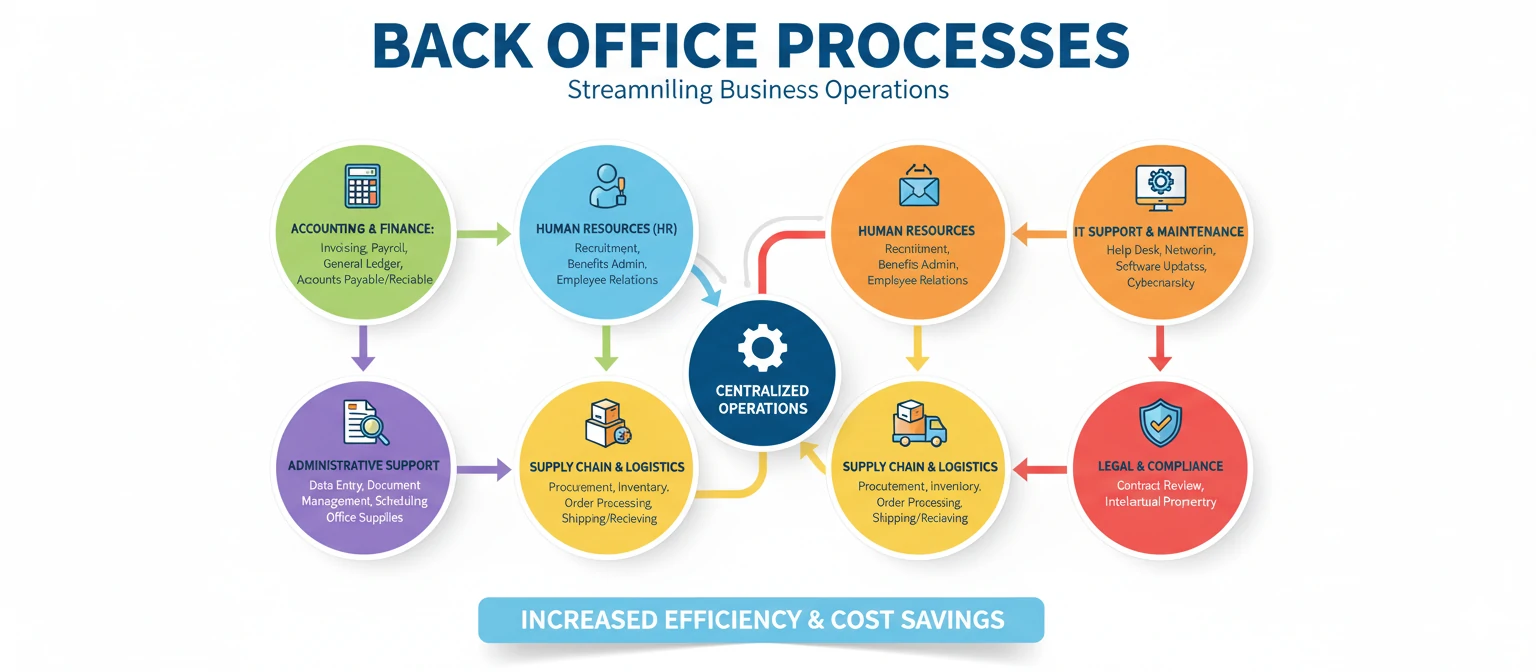
Back office process outsourcing involves delegating administrative and support functions to external service providers. These are the behind-the-scenes operations that keep your business running smoothly but don't directly generate revenue. Common examples include accounting, human resources, IT support, data entry, and customer service.
Unlike front-office functions that interact directly with customers, back-office processes support internal operations. The goal of outsourcing these is to reduce costs, improve efficiency, and allow your team to focus on core business activities.
BPO has evolved significantly since its inception in the 1980s. Initially focused on cost savings, it now encompasses strategic partnerships that can provide competitive advantages. Modern BPO providers offer not just labor cost reductions but also access to specialized skills, advanced technology, and scalable solutions.
When considering BPO, it's important to distinguish between onshore, nearshore, and offshore outsourcing. Onshore keeps operations within your country, nearshore in neighboring countries, and offshore in distant locations. Each has its pros and cons related to cost, time zones, and cultural alignment.
Benefits of Outsourcing Back Office Processes
The advantages of back office outsourcing extend far beyond simple cost savings. Let's explore the key benefits that make it an attractive option for businesses of all sizes.
Cost Reduction
One of the most compelling reasons for outsourcing is cost efficiency. By outsourcing, you can significantly reduce operational expenses. Labor costs in outsourcing destinations are often 40-60% lower than in developed countries. Additionally, you eliminate costs associated with hiring, training, and maintaining an in-house team.
Beyond direct labor savings, outsourcing reduces overhead costs like office space, equipment, and software licenses. You also avoid expenses related to employee benefits, taxes, and compliance.
Access to Skilled Talent
BPO providers specialize in specific functions and employ experts with deep knowledge and experience. This gives you access to a global talent pool that might be difficult or expensive to recruit internally.

Moreover, outsourcing providers invest heavily in training and technology, ensuring your processes are handled by highly qualified individuals.
Focus on Core Business
By outsourcing routine tasks, your internal team can dedicate more time to strategic activities that drive growth. This shift allows you to innovate, develop new products, and improve customer relationships.
Many businesses report increased productivity and faster time-to-market for new initiatives after implementing BPO.
Scalability and Flexibility
Outsourcing provides the flexibility to scale operations up or down based on business needs. During peak seasons, you can quickly increase capacity without long-term commitments. Conversely, you can reduce services during slow periods.
This scalability is particularly valuable for seasonal businesses or those experiencing rapid growth.
Risk Mitigation
Outsourcing can help mitigate various risks. Providers often have robust disaster recovery plans, data security measures, and compliance frameworks in place. They also stay updated on regulatory changes, reducing your compliance burden.
Improved Service Quality
Specialized BPO firms often deliver higher quality services due to their focus and expertise. They use advanced tools, follow best practices, and continuously improve processes.
Many providers offer service level agreements (SLAs) that guarantee performance standards, giving you assurance of consistent quality.
Types of Back Office Processes to Outsource
Back office functions span a wide range of business operations. Here's a breakdown of common processes that businesses outsource:
Finance and Accounting
This includes bookkeeping, payroll processing, tax preparation, financial reporting, and accounts payable/receivable management. Outsourcing these functions ensures accuracy and compliance while freeing up your finance team for strategic analysis.
Human Resources
HR outsourcing covers recruitment, employee onboarding, benefits administration, payroll, and compliance. Providers can handle complex labor laws and regulations across different jurisdictions.

IT Support and Infrastructure
Managing IT infrastructure, helpdesk services, software maintenance, and cybersecurity can be outsourced to specialized providers. This ensures 24/7 support and access to the latest technologies.
Data Entry and Management
Processing large volumes of data, maintaining databases, and ensuring data accuracy are ideal for outsourcing. Providers use advanced tools for efficient data handling.
Customer Service
While often considered front-office, back-office customer service includes order processing, complaint resolution, and support ticket management.
Procurement and Supply Chain
Managing vendor relationships, purchase orders, inventory tracking, and logistics coordination can be streamlined through outsourcing.
Legal and Compliance
Contract management, regulatory reporting, and legal research are complex areas that benefit from specialized expertise.
How to Choose the Right BPO Provider
Selecting the right outsourcing partner is crucial for success. Here's a step-by-step guide to help you make an informed decision.
Assess Your Needs
Start by clearly defining what processes you want to outsource and your objectives. Consider volume, complexity, and required turnaround times.
Research Potential Providers
Look for providers with relevant experience in your industry. Check their track record, client testimonials, and case studies.

Evaluate Capabilities
Assess the provider's technology infrastructure, security measures, and scalability. Ensure they have certifications relevant to your industry.
Consider Location and Cultural Fit
Think about time zone differences, language skills, and cultural alignment. Nearshore options often provide better communication and similar business practices.
Review Contracts and SLAs
Carefully examine service level agreements, pricing models, and termination clauses. Understand how performance will be measured and reported.
Plan for Transition
Choose a provider that offers comprehensive transition support, including knowledge transfer and training.
Start Small
Consider piloting with a small project before committing to large-scale outsourcing.
Case Studies and Real-World Examples
Real-world success stories demonstrate the impact of effective BPO implementation.
Manufacturing Company Streamlines Operations
A mid-sized manufacturer outsourced their accounting and procurement functions. Result: 35% cost reduction and improved cash flow management.

Tech Startup Scales Rapidly
A growing tech company outsourced HR and IT support. This allowed their core development team to focus on product innovation, leading to a 200% increase in user base.
Healthcare Provider Enhances Compliance
By outsourcing medical billing and coding, a healthcare network reduced errors by 50% and improved reimbursement rates.
E-commerce Business Improves Customer Service
An online retailer outsourced order processing and customer support, resulting in 40% faster response times and higher customer satisfaction scores.
Challenges and How to Overcome Them
While BPO offers many benefits, it's important to be aware of potential challenges.
Communication Barriers
Time zone differences and cultural nuances can lead to misunderstandings. Solution: Establish clear communication protocols and use collaboration tools.
Data Security Concerns
Sharing sensitive information externally raises security risks. Mitigate by choosing providers with strong security certifications and implementing data protection agreements.

Quality Control
Maintaining consistent quality can be challenging. Address through detailed SLAs, regular audits, and performance monitoring.
Hidden Costs
Unexpected expenses can arise from transition, training, or scope changes. Plan for these by including contingency budgets and clear pricing structures.
Dependency on Provider
Over-reliance on a single provider can be risky. Diversify by having backup plans and maintaining some in-house capabilities.
Future Trends in Back Office Process Outsourcing
The BPO industry continues to evolve with technological advancements.
Artificial Intelligence and Automation
AI and robotic process automation (RPA) are transforming BPO, enabling faster, more accurate processing of routine tasks.
Cloud-Based Solutions
Cloud platforms provide scalable, secure, and cost-effective outsourcing options.

Specialized Services
Providers are offering more niche, industry-specific services tailored to unique business needs.
Sustainability Focus
There's growing emphasis on environmentally friendly practices in outsourcing operations.
Common Mistakes to Avoid in BPO
Even experienced business owners can make missteps when outsourcing. Here are some pitfalls to watch out for:
Rushing the Decision
Don't jump into outsourcing without thorough research. Take time to understand your needs and evaluate providers carefully.
Choosing Based on Price Alone
While cost is important, quality, reliability, and cultural fit matter more in the long run. The cheapest option might end up costing you more.
Neglecting Communication
Poor communication can lead to misunderstandings and errors. Establish clear channels and regular check-ins from the start.
Outsourcing Core Functions
Remember, only outsource non-core processes. Keep your competitive advantages in-house.
Frequently Asked Questions
How much can I save by outsourcing back office processes?
Savings vary, but businesses often see 30-50% reduction in operational costs. This includes labor, overhead, and efficiency gains.
Is outsourcing secure?
Yes, when done right. Choose providers with strong security certifications and clear data protection agreements.
How long does it take to implement BPO?
Implementation timelines vary from weeks to months, depending on complexity. Start with a pilot project for faster results.
Can small businesses benefit from outsourcing?
Absolutely! Small businesses often see the biggest impact, as outsourcing frees up time for growth activities.
Testimonials from Satisfied Clients
"Outsourcing our accounting saved us 40% on costs and gave us back hours each week. Our team can now focus on what they do best." - Sarah Johnson, CEO of TechStart Inc.
"The BPO provider handled our HR processes flawlessly. Compliance issues vanished, and our employees are happier." - Mike Chen, Operations Manager at Global Logistics.
"Scalability was key for our seasonal business. Outsourcing allowed us to handle peak loads without hiring temporary staff." - Lisa Rodriguez, Founder of Seasonal Goods Co.
Conclusion
Back office process outsourcing can be a powerful strategy for businesses looking to improve efficiency, reduce costs, and focus on core competencies. By carefully selecting the right processes to outsource and choosing a reliable provider, you can unlock significant benefits for your organization.
Remember, successful outsourcing requires careful planning, clear communication, and ongoing management. Start with a pilot project to test the waters, and scale up as you gain confidence.
Ready to explore outsourcing for your business? Contact us for a free consultation and discover how we can help streamline your operations.