

Discover how specialized B2B SEO strategies differ from consumer marketing, and learn what it takes to dominate search results in competitive business markets.
Table of contents
- Understanding B2B SEO: What Makes It Different
- Core B2B SEO Services Explained
- The B2B Buyer's Journey and SEO
- Measuring B2B SEO Success
- Industry-Specific B2B SEO Considerations
- Choosing a B2B SEO Service Provider
- Integrating B2B SEO with Your Sales Process
- Building Your B2B SEO Strategy
- The Future of B2B SEO
- Conclusion: Making B2B SEO Work for Your Business
Business-to-business marketing operates in a fundamentally different world than consumer marketing. The decision-making processes are longer, the stakeholders are multiple, and the purchases often represent significant investments that can shape a company's future. When it comes to search engine optimization, these differences matter enormously. B2B SEO services have evolved to address these unique challenges, helping companies reach the right decision-makers at the right time with the right message.
If you're a business selling to other businesses and you're wondering whether SEO is worth your investment, this comprehensive guide will answer that question definitively. We'll explore what makes B2B SEO different, what services you should expect from a specialized agency, and how to build a search strategy that generates qualified leads and drives real business growth. Whether you're considering your first SEO engagement or looking to level up your current efforts, you'll find actionable insights to guide your decisions.

Understanding B2B SEO: What Makes It Different
Before diving into specific services, it's crucial to understand why B2B SEO requires a specialized approach. The fundamental differences between business and consumer purchasing behavior cascade through every aspect of search optimization, from keyword research to content strategy to conversion tracking.
In consumer SEO, you're often targeting individuals making relatively quick decisions based on immediate needs or desires. Someone searching for "best running shoes" might make a purchase within hours. B2B searches, however, typically represent the beginning of a much longer journey. A search for "enterprise resource planning software" could be the first step in a decision process that spans months and involves multiple stakeholders across different departments.
This extended buying cycle changes everything about how B2B SEO must function. Instead of optimizing for immediate conversions, B2B strategies focus on capturing attention at multiple stages of the buyer's journey, building trust and authority over time, and nurturing relationships that eventually lead to high-value deals.
🔄 B2B vs B2C SEO: Key Differences
🏢 B2B SEO
- Longer sales cycles (3-12+ months)
- Multiple decision-makers
- Lower search volume, higher value
- Focus on lead generation
- Technical/educational content
- Relationship-based conversions
🛒 B2C SEO
- Shorter cycles (minutes to days)
- Individual decision-maker
- Higher volume, lower per-sale value
- Focus on direct sales
- Entertaining/emotional content
- Transaction-based conversions
The Multiple Stakeholder Challenge
Perhaps the most significant difference in B2B SEO is the need to appeal to multiple stakeholders with different priorities. A single B2B purchase might involve technical evaluators who care about specifications and integrations, financial decision-makers focused on ROI and total cost of ownership, end users concerned about ease of adoption, and C-suite executives thinking about strategic alignment.
Effective B2B SEO services recognize this complexity and develop content strategies that address each stakeholder's concerns while maintaining a cohesive brand message. This often means creating multiple content tracks targeting different personas, all optimized for the specific search terms each group uses when researching solutions.
Lower Volume, Higher Stakes
B2B keywords typically have lower search volumes than consumer terms, but the value of each search is substantially higher. While "CRM software" might get searched fewer times than "iPhone case," a single conversion from that CRM search could represent tens or hundreds of thousands of dollars in lifetime customer value.
This dynamic requires B2B SEO practitioners to think differently about success metrics. Rather than chasing massive traffic numbers, the focus shifts to attracting highly qualified visitors who match your ideal customer profile. A hundred visits from decision-makers at target companies is worth far more than ten thousand visits from people who will never buy.
Core B2B SEO Services Explained
Understanding what B2B SEO agencies actually do helps you evaluate potential partners and set realistic expectations. While the specific services vary by agency, most comprehensive B2B SEO engagements include several core components working together to drive results.
Strategic B2B Keyword Research
Keyword research for B2B differs significantly from consumer-focused research. Beyond identifying relevant terms, B2B keyword research must map search intent to the buyer's journey, identify keywords that indicate buying readiness versus early-stage research, uncover the specific language your target industries use, and find opportunities in long-tail variations that may have low volume but high conversion potential.
Good B2B SEO services invest considerable time in understanding your sales process and ideal customer profile before conducting keyword research. This alignment ensures the keywords targeted will actually drive business results, not just traffic metrics that look good on reports but don't translate to revenue.
Keyword Research
Industry-specific keyword discovery mapped to buyer journey stages and decision-maker personas.
Technical SEO
Site architecture, performance optimization, and technical foundation for enterprise websites.
Content Strategy
Thought leadership content that educates buyers and establishes industry authority.
Link Building
Authority building through industry publications, partnerships, and digital PR campaigns.
Analytics & Reporting
Revenue-focused metrics connecting SEO efforts to pipeline and closed business.
Conversion Optimization
Landing page optimization and lead capture strategies designed for complex B2B funnels.
Technical SEO for Enterprise Websites
B2B websites often face unique technical challenges that require specialized expertise. Enterprise sites tend to be larger and more complex, with multiple subdomains, international versions, gated content sections, and integrations with CRM and marketing automation systems. Technical SEO services address these complexities to ensure search engines can properly crawl, index, and rank all your important content.
Common technical focus areas include site architecture optimization to ensure logical content hierarchy, page speed improvements that matter for both rankings and user experience, mobile optimization that accounts for how B2B buyers actually research on different devices, schema markup implementation to help search engines understand your content, and ensuring proper handling of gated content without sacrificing SEO potential.
B2B Content Strategy and Creation
Content is the engine that drives B2B SEO success. But B2B content operates under different rules than consumer content. Your audience consists of professionals who are experts in their fields, skeptical of marketing fluff, and looking for substantive information that helps them do their jobs better or solve real business problems.
Effective B2B SEO content services develop comprehensive strategies that include thought leadership pieces establishing your expertise and unique perspective, in-depth guides and resources that serve as definitive references on important topics, case studies demonstrating real results for similar companies, comparison content helping buyers evaluate options including yours, and bottom-funnel content that converts researchers into leads.
The best B2B content doesn't just target keywords; it builds your brand's reputation as a trusted authority. When executives encounter your content repeatedly throughout their research process, always finding it helpful and credible, they develop familiarity and trust that influence their eventual purchasing decision.
B2B Link Building and Authority Development
Link building for B2B requires a more sophisticated approach than many consumer-focused strategies. Your links need to come from sources that not only pass SEO value but also reinforce your credibility within your industry. A link from a respected trade publication or industry analyst carries both ranking power and brand value.
B2B link building strategies often include digital PR campaigns that earn coverage in industry publications, guest contributions to respected business and trade media, partnerships with complementary businesses for co-marketing opportunities, original research and data studies that attract citations, and thought leadership placement that builds both links and brand awareness.
The B2B Buyer's Journey and SEO
Understanding how B2B buyers move through their purchasing journey is essential for effective SEO strategy. Unlike impulse consumer purchases, B2B decisions typically progress through distinct stages, and your SEO strategy should meet prospects at each one.
🛤️ The B2B Buyer's Journey
Awareness Stage SEO
At the awareness stage, prospects are recognizing they have a problem or opportunity but haven't yet defined how to address it. They're searching for educational content that helps them understand their situation better. SEO at this stage targets informational keywords: "how to improve supply chain efficiency," "signs your CRM isn't working," or "benefits of cloud migration."
Content for awareness-stage searchers should educate without being overtly promotional. Your goal is to be helpful and demonstrate expertise, not to push for a sale. Prospects at this stage aren't ready to buy; they're ready to learn. Meeting them with valuable information begins the relationship-building process that eventually leads to consideration of your solutions.
Consideration Stage SEO
Once buyers understand their challenge, they begin evaluating possible solutions. Consideration-stage searches often include comparative language: "ERP vs best-of-breed software," "top project management tools for construction," or "in-house vs outsourced IT support." These searchers want to understand their options before narrowing down to specific vendors.
Content at this stage should help prospects evaluate their options fairly while subtly positioning your approach favorably. Comparison guides, category overviews, and methodology explanations work well. You can be more direct about your solution's benefits here, but always in the context of helping the buyer make a well-informed decision rather than pure sales messaging.
Decision Stage SEO
At the decision stage, buyers are actively evaluating specific vendors. They're searching for your company name, reading reviews, looking at case studies, and comparing pricing. These searches have the highest conversion intent but often the lowest volume. Every visit at this stage is precious.
Decision-stage SEO focuses on your branded terms, product-specific pages, competitive comparison pages, and conversion-focused content like case studies demonstrating ROI. Your pages need to answer the specific questions decision-makers ask before signing contracts: implementation timelines, support options, integration capabilities, and proof of results with similar companies.
Measuring B2B SEO Success
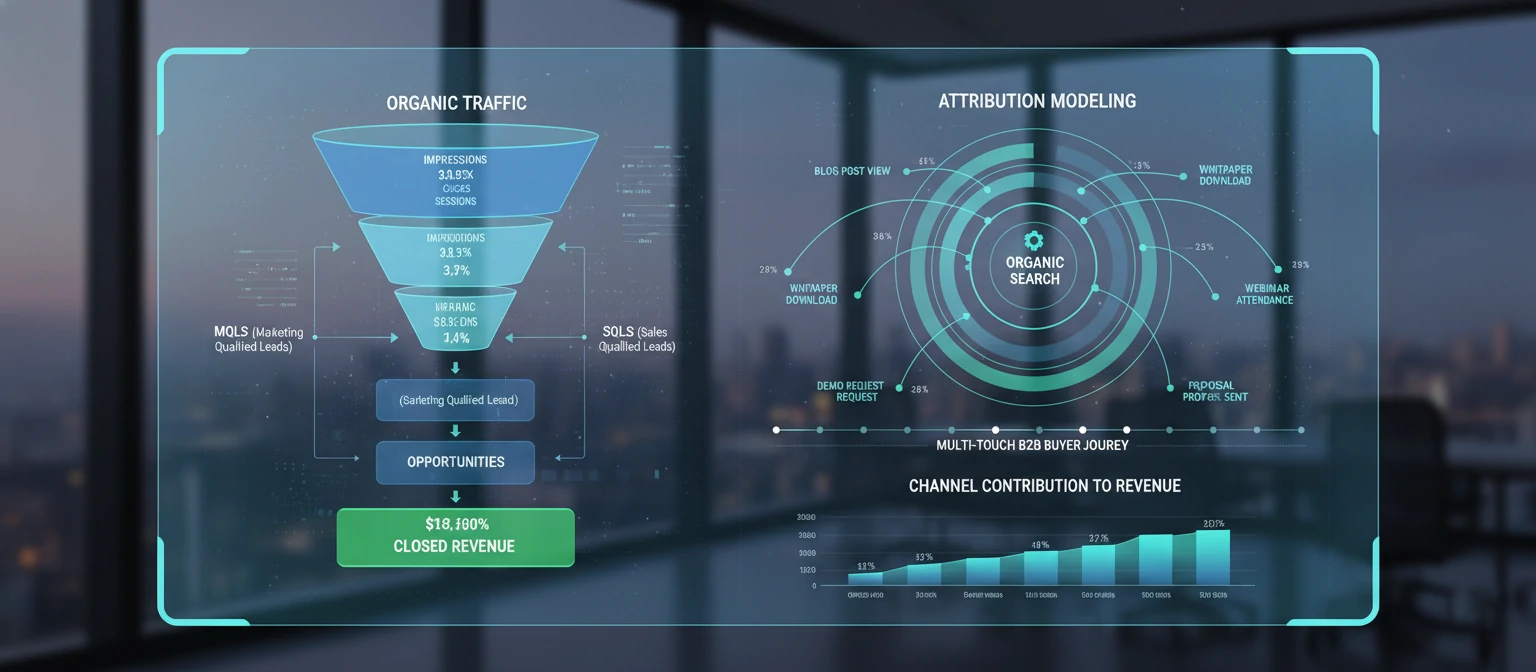
Traditional SEO metrics like rankings and organic traffic matter in B2B, but they tell only part of the story. Because B2B purchases involve longer cycles and multiple touchpoints, measuring true SEO success requires connecting search performance to business outcomes further down the funnel.
The most sophisticated B2B SEO programs track the full journey from first organic touch to closed revenue. This requires integration between your SEO tools, CRM system, and marketing automation platform. When you can see that a prospect first found you through an organic search, engaged with multiple content pieces over several months, and eventually closed as a six-figure deal, you understand SEO's true business impact.
Attribution in B2B is inherently complex because purchases rarely result from a single channel or interaction. Look for SEO services that understand multi-touch attribution and can demonstrate how organic search contributes to your pipeline alongside other channels. This nuanced view prevents both over-crediting and under-crediting SEO's contribution to your revenue.
Industry-Specific B2B SEO Considerations
While core B2B SEO principles apply broadly, different industries present unique challenges and opportunities that specialized agencies understand how to navigate. Here's how B2B SEO adapts to several major sectors.
Technology and SaaS
Technology companies face fierce competition for high-value keywords and need to balance technical depth with accessibility. SEO for tech involves capturing both technical evaluators searching for specific features and business decision-makers focused on outcomes. The fast pace of technology evolution means content strategies must continuously adapt to new terminology and emerging topics.
Product-led growth models common in SaaS add another dimension. SEO must support both direct sales motions for enterprise deals and self-service conversion paths for smaller accounts. This often requires separate content tracks and conversion strategies optimized for different buyer types.
Professional Services
Consulting firms, agencies, and professional service providers sell expertise and relationships, making thought leadership content especially critical. SEO for professional services emphasizes establishing individual practitioner credibility alongside company authority, capturing searches related to specific challenges prospects face, and demonstrating deep expertise in targeted verticals or service areas.
Local SEO often matters for professional services, as many engagements involve in-person interaction or geographic proximity. Even nationally-focused firms may benefit from local optimization for their office locations to capture nearby prospects who prefer working with providers they can meet face-to-face.
Technology/SaaS
Focus on technical depth, feature comparisons, integration guides, and capturing emerging technology trends early.
Professional Services
Thought leadership, practitioner profiles, case studies, and local optimization for office locations.
Manufacturing
Technical specifications, compliance documentation, supply chain content, and international SEO for global markets.
Healthcare B2B
HIPAA considerations, clinical evidence content, regulatory compliance, and multi-stakeholder targeting.
Manufacturing and Industrial
Manufacturing SEO requires balancing technical product information with broader industry education. Buyers often search for very specific specifications, part numbers, or compliance requirements. At the same time, there are opportunities to capture higher-funnel searches about industry trends, best practices, and problem-solving approaches.
International SEO becomes crucial for manufacturers selling globally. This involves optimizing for different languages and regional search engines, understanding how technical terminology varies by market, and ensuring your website architecture supports multi-market targeting effectively.
Choosing a B2B SEO Service Provider
Not all SEO agencies are equipped to handle B2B complexity. When evaluating potential partners, look beyond general SEO capabilities to assess their specific B2B experience and understanding.
Questions to Ask Potential Partners
Start by asking about their experience with companies similar to yours. Have they worked with B2B businesses in your industry or with similar sales cycles? Can they show case studies demonstrating not just traffic growth but actual business impact, leads generated and revenue influenced? Understanding their track record with B2B-specific challenges tells you whether they truly grasp what success means in your context.
Explore their approach to content. B2B content requires either deep subject matter expertise or strong processes for extracting knowledge from your internal experts. How do they develop content that resonates with sophisticated business audiences? How do they ensure technical accuracy while maintaining SEO optimization? Their answer reveals whether they can produce content that actually serves your audience.
✅ B2B SEO Agency Evaluation Checklist
Red Flags to Watch For
Be wary of agencies that focus primarily on vanity metrics or promise specific ranking results. B2B SEO success isn't about ranking number one for a few keywords; it's about systematically capturing demand across your target market and converting that attention into business results. Agencies that don't ask about your sales process, deal sizes, or target customer profile probably don't understand B2B dynamics.
Similarly, be cautious of agencies with purely consumer-focused portfolios trying to break into B2B. While core SEO skills transfer, the strategic understanding of B2B buying behavior, sales alignment, and content requirements takes time to develop. An agency learning B2B on your dime may not deliver the results you need.

Integrating B2B SEO with Your Sales Process
One of the most powerful aspects of B2B SEO is its potential to directly support and enhance your sales efforts. When SEO and sales work together, you create a powerful engine for growth that leverages the strengths of both channels.
Sales-Driven Content Opportunities
Your sales team knows exactly what questions prospects ask, what objections they raise, and what information helps close deals. This intelligence is gold for SEO content planning. Regular communication between SEO and sales ensures your content addresses real buyer concerns, uses language that resonates with actual prospects, and supports sales conversations at every stage.
Some of the most effective B2B SEO content directly answers questions sales reps hear repeatedly. When prospects can find thorough answers to their concerns via search, they arrive at sales conversations already educated and closer to purchasing. Sales cycles shorten, and the quality of conversations improves.
Using SEO Content in Sales Outreach
High-quality SEO content serves double duty as sales enablement material. Sales reps can share relevant blog posts, guides, and resources with prospects during outreach and follow-up. This adds value to every interaction and positions your company as a helpful resource rather than just another vendor pushing for a meeting.
Track which content pieces sales uses most and which generate the best engagement from prospects. This data helps prioritize future content investments and ensures your SEO efforts create assets that serve multiple business purposes.
📈 The Impact of Sales-SEO Alignment
Building Your B2B SEO Strategy
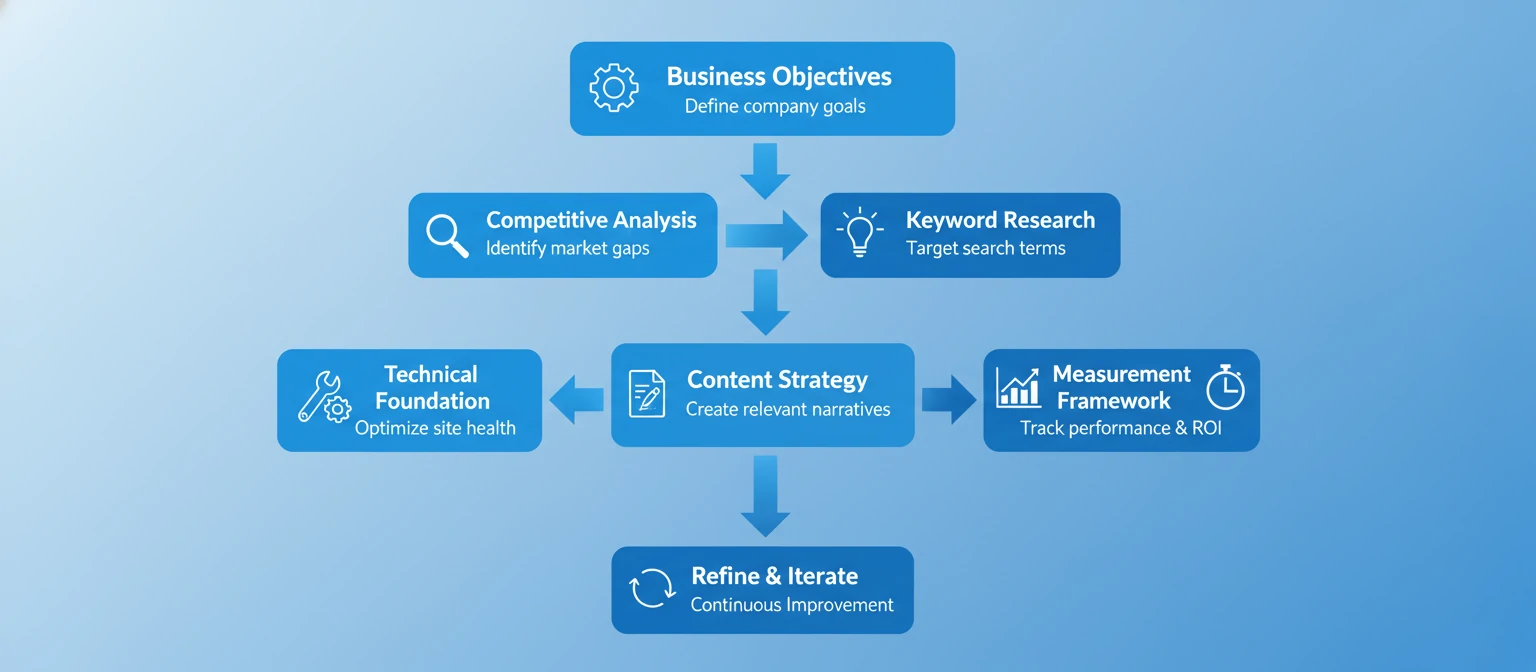
Whether you work with an agency or build internal capabilities, successful B2B SEO requires a strategic foundation that aligns with your overall business objectives. Here's a framework for building your approach.
Start with Business Objectives
Every B2B SEO strategy should begin with clear business objectives. Are you trying to enter a new market segment? Generate more pipeline for the sales team? Support the launch of a new product line? Build brand awareness in a specific industry vertical? Your objectives shape every subsequent decision about keywords, content, and resource allocation.
Be specific about what success looks like. Rather than vague goals like "improve SEO," define measurable targets: generate 50 qualified leads per month from organic search, achieve page-one rankings for 20 priority keywords, increase organic traffic to product pages by 100%. Clear goals enable clear measurement and keep efforts focused.
Map Your Competitive Landscape
Understanding who you're competing with in search results shapes your strategy significantly. Your SEO competitors may differ from your business competitors; sometimes you're competing with industry publications, analysts, or companies in adjacent spaces for the same search visibility. Analyze who ranks for your target keywords and assess what it will take to compete.
Competitive analysis reveals gaps and opportunities. Maybe competitors dominate informational keywords but neglect bottom-funnel commercial terms. Perhaps there's an underserved topic area where you could establish authority before others catch on. Strategic thinking about the competitive landscape helps you allocate resources where they'll have the most impact.
The Future of B2B SEO
B2B SEO continues to evolve as search technology advances and buyer behavior shifts. Staying ahead of these trends ensures your strategy remains effective in a changing landscape.
AI and machine learning are transforming both how search engines work and how SEO is practiced. Google's algorithms increasingly understand semantic meaning and user intent, rewarding content that truly addresses searcher needs over content that simply targets keywords. B2B SEO must evolve toward creating genuinely helpful, expert content rather than optimizing for algorithms that will continue to get smarter.
Voice search and AI assistants are also growing, though their impact on B2B is more gradual than consumer search. As these technologies mature, optimizing for conversational queries and featured snippets becomes increasingly important. B2B buyers may increasingly use AI tools to research solutions, making it essential to appear in AI-generated summaries and recommendations.
Conclusion: Making B2B SEO Work for Your Business
B2B SEO services offer tremendous potential for businesses willing to invest in search as a strategic channel. The unique dynamics of business buying, longer cycles, multiple stakeholders, higher transaction values, require specialized approaches that differ significantly from consumer SEO. Understanding these differences is the first step toward building an effective program.
Success in B2B SEO comes from aligning search strategy with business objectives, creating content that genuinely serves your target audience, building authority that extends beyond rankings to true market influence, and measuring results in terms of business outcomes rather than vanity metrics. When done well, B2B SEO becomes a sustainable competitive advantage that generates qualified leads, supports sales efforts, and builds brand awareness across your entire target market.
Whether you choose to work with a specialized B2B SEO agency or develop internal capabilities, the key is committing to a long-term approach. B2B SEO results build over time, compounding as your content library grows, your authority increases, and your understanding of what works deepens. Start building now, and you'll reap the benefits for years to come.