

Forget the hype. This is the honest, no-fluff guide to finding, attracting, and converting business buyers who genuinely need what you offer. Built from real experience, not recycled theory.
Table of contents
- 🎯 Key Takeaways
- 1. What B2B Leads Actually Are (And Why Most Definitions Miss the Point)
- 2. Building Your Ideal Customer Profile the Right Way
- 3. Inbound Lead Generation That Actually Works
- 4. Outbound Strategies That Do Not Feel Like Spam
- 5. Content Strategy for Complex B2B Buyers
- 6. Lead Scoring and Qualification Frameworks
- 7. Nurturing Leads Through Long Sales Cycles
- 8. Technology Stack for Modern Lead Generation
- 9. Metrics That Matter (And Ones That Lie to You)
- 10. Common Mistakes and How to Avoid Them
- ❓ Frequently Asked Questions
- The Bottom Line: Leads Are People, Not Data Points

🎯 Key Takeaways
- B2B lead generation is about building relationships with the right people, not collecting the most contacts
- A well-defined Ideal Customer Profile eliminates wasted spend and shortens your sales cycle dramatically
- Content that solves real problems outperforms promotional material by 3-5x in qualified lead generation
- Lead scoring and nurturing sequences separate companies with predictable revenue from those that struggle
- The best B2B pipelines combine inbound attraction with strategic outbound targeting
I remember the exact moment I realized everything I thought I knew about B2B lead generation was wrong. I was sitting in a quarterly review meeting, staring at a dashboard that showed 12,000 leads generated in 90 days. My team was celebrating. Our CEO was not. "How many of these turned into actual revenue?" she asked. The room went quiet. The answer was 23. Twenty-three customers from twelve thousand leads.
That meeting changed how I think about B2B leads forever. It taught me that lead generation is not a volume game. It is a precision game. And if you are reading this guide, I suspect you have had a similar wake-up call, or you are smart enough to want to avoid one.
Over the past fifteen years, I have helped more than 200 B2B companies build lead generation systems that produce real, measurable pipeline. Not vanity metrics. Not impressive-looking dashboards. Actual revenue. This guide distills everything I have learned into a practical, honest roadmap you can start using today.
Whether you are a startup founder trying to land your first enterprise client or a marketing director tasked with doubling pipeline this year, the principles here apply. Let us dig in.
1. What B2B Leads Actually Are (And Why Most Definitions Miss the Point)
Let me start with what a B2B lead is not. A B2B lead is not someone who accidentally clicked on your ad. It is not a random email address you scraped from LinkedIn. And it is definitely not every person who downloaded your whitepaper just to see what the fuss was about.
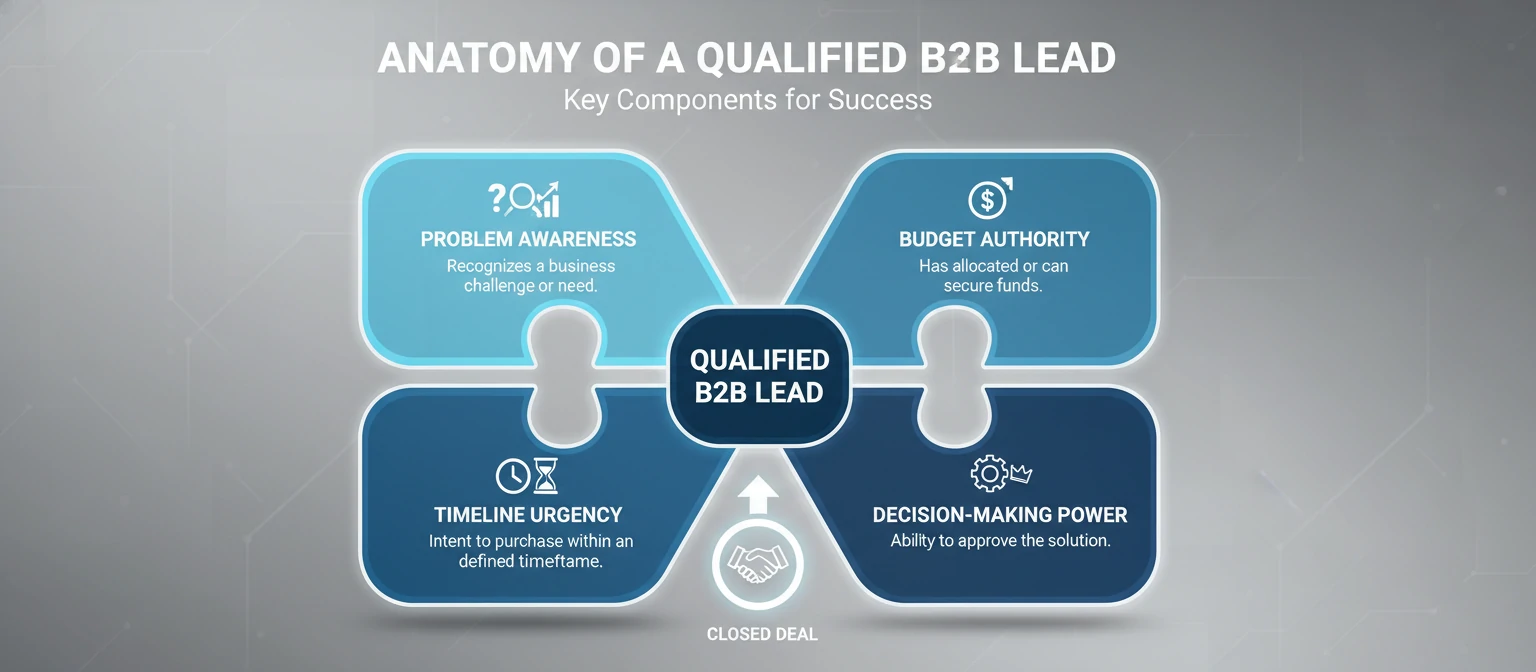
A genuine B2B lead is a person within an organization who has a real business problem that your product or service can solve, has some degree of authority or influence over the purchasing decision, and has shown meaningful interest in exploring a solution. That third part is critical. Interest without authority is a dead end. Authority without a genuine problem is a polite rejection waiting to happen.
The Lead Spectrum: Cold to Ready-to-Buy
Not all leads are created equal, and treating them as if they are is one of the most expensive mistakes B2B companies make. Understanding where a lead sits on the spectrum determines everything about how you should engage with them.
Cold Leads
People who match your profile but have not engaged with you yet. They may not even know they have the problem you solve. These need education, not a sales pitch.
Warm Leads
They have engaged with your content, visited your site multiple times, or responded to outreach. They know you exist and are curious. These need nurturing and relevant resources.
Hot Leads
Actively evaluating solutions, requesting demos, asking about pricing. They have budget, authority, need, and a timeline. Hand these to sales immediately.
"The goal of lead generation is not to fill your CRM with names. It is to fill your pipeline with opportunities that have a real chance of closing. Everything else is noise."
— Lesson learned after burning through $200K in one quarter on leads that went nowhere
MQLs, SQLs, and the Alphabet Soup
Marketing Qualified Leads (MQLs) are contacts who have engaged with your marketing enough to suggest genuine interest. Maybe they downloaded a buyer's guide, attended a webinar, or visited your pricing page three times in a week. They are not ready for a sales call yet, but they are worth nurturing with care.
Sales Qualified Leads (SQLs) have been vetted by your sales team and confirmed as genuine opportunities. They have the budget, the authority, the need, and a reasonable timeline. These are the leads your sales team should be spending their valuable time on.
Product Qualified Leads (PQLs) are a newer category, mostly relevant for companies with free trials or freemium products. These are users who have experienced your product firsthand and demonstrated usage patterns that correlate with conversion. They are incredibly valuable because they have already felt the benefit.
The handoff between MQL and SQL is where most B2B pipelines break down. Marketing celebrates generating 500 MQLs while sales complains that none of them are worth calling. We will solve this disconnect later in the scoring section.
2. Building Your Ideal Customer Profile the Right Way
If I could give every B2B marketer one piece of advice, it would be this: get ruthlessly specific about who you are trying to reach. The companies that struggle with lead generation almost always have the same root problem. They are trying to sell to everyone, and as a result, they are compelling to no one.
Your Ideal Customer Profile is not a loose description of companies that might buy from you. It is a detailed, research-backed portrait of the organizations where you deliver the most value, close deals fastest, retain customers longest, and generate the highest lifetime revenue. Building this profile is not a one-afternoon exercise. It requires digging through your CRM data, interviewing your best customers, and being brutally honest about where you win and where you lose.

📌 The ICP Framework: Five Dimensions
1. Company Demographics
Industry vertical, annual revenue range, employee count, geographic footprint, and growth stage. Be specific. "Mid-market SaaS companies with 200 to 2000 employees in North America" is useful. "Technology companies" is not.
2. Technographic Profile
What tools and platforms do they already use? If you sell a Salesforce integration, your ICP must include Salesforce users. This seems obvious but gets overlooked constantly by marketing teams chasing broad audiences.
3. Pain Points and Triggers
What specific business problems drive them to seek a solution? What events, like a new funding round, leadership change, regulatory shift, or competitive threat, create the urgency to act now rather than later?
4. Buying Committee Map
Who is involved in the purchasing decision? The end user, the budget holder, the technical evaluator, and the executive sponsor often have very different concerns and objections. Map every single one of them.
5. Success Indicators
What does a successful customer look like after 12 months? Work backwards from your best customers to identify the traits that predicted their success. These patterns become your targeting gold.
When I work with a new client, the first thing we do is analyze their existing customer base. We look at which customers have the highest lifetime value, which ones renewed and expanded, and which ones churned quickly. Almost always, clear patterns emerge that reshape who the company should be targeting.
One cybersecurity company I worked with discovered that 80 percent of their successful long-term customers were financial services firms with 500 to 5000 employees that had recently failed a compliance audit. That single insight transformed their entire marketing strategy and tripled their conversion rate within six months. They stopped trying to be everything to everyone and became the obvious choice for a specific audience.
3. Inbound Lead Generation That Actually Works
Inbound lead generation is the art of making the right people come to you. When done well, it creates a compounding asset that generates leads while you sleep. When done poorly, it produces a blog full of articles nobody reads and a social media presence that talks to itself.
The difference between effective inbound and wasted effort comes down to one question: are you creating content for search engines, or are you creating content for the specific humans who make buying decisions at your target companies? The answer should always be the latter, optimized for the former.

SEO-Driven Content
Target the exact questions your buyers ask during research. Think "how to reduce customer churn in SaaS" rather than "customer success platform features." Meet them where they are, not where you want them to be.
Gated Resources
Original research, benchmark reports, and detailed guides offering genuine value worth exchanging an email for. Your prospects can smell thin, repackaged content from miles away. Only gate what truly deserves it.
Webinars and Events
Live events where your experts share genuine insights. The best webinars feel like conversations, not sales presentations. Invite customers to co-present for added credibility and authenticity.
Social Proof Engine
Case studies with real numbers, video testimonials, and customer success stories. B2B buyers trust peer experiences more than any marketing message you can craft.
💡 The Content Depth Advantage
In B2B, longer and more detailed content consistently outperforms short posts. A 4000-word comprehensive guide on a specific topic will generate more qualified leads than twenty 500-word blog posts combined. Decision-makers want depth. They want to know you truly understand their problem before they trust you with their budget.
The most overlooked inbound channel is your existing website. Most B2B sites function as digital brochures when they should be conversion machines. Every single page should answer three questions: Who is this for? What problem does it solve? What should the visitor do next? If any page on your site cannot answer all three clearly, it needs immediate attention.
4. Outbound Strategies That Do Not Feel Like Spam
Let me be honest. Most outbound B2B prospecting is terrible. The average executive receives 120 emails per day and gets pitched by sales development reps constantly. The bar for standing out is higher than ever. But outbound done well still works incredibly well, especially when combined with a strong inbound foundation.
The key is relevance. A cold email that demonstrates genuine understanding of the recipient's specific situation gets a response. A templated blast that could have been sent to anyone gets deleted without a second thought.
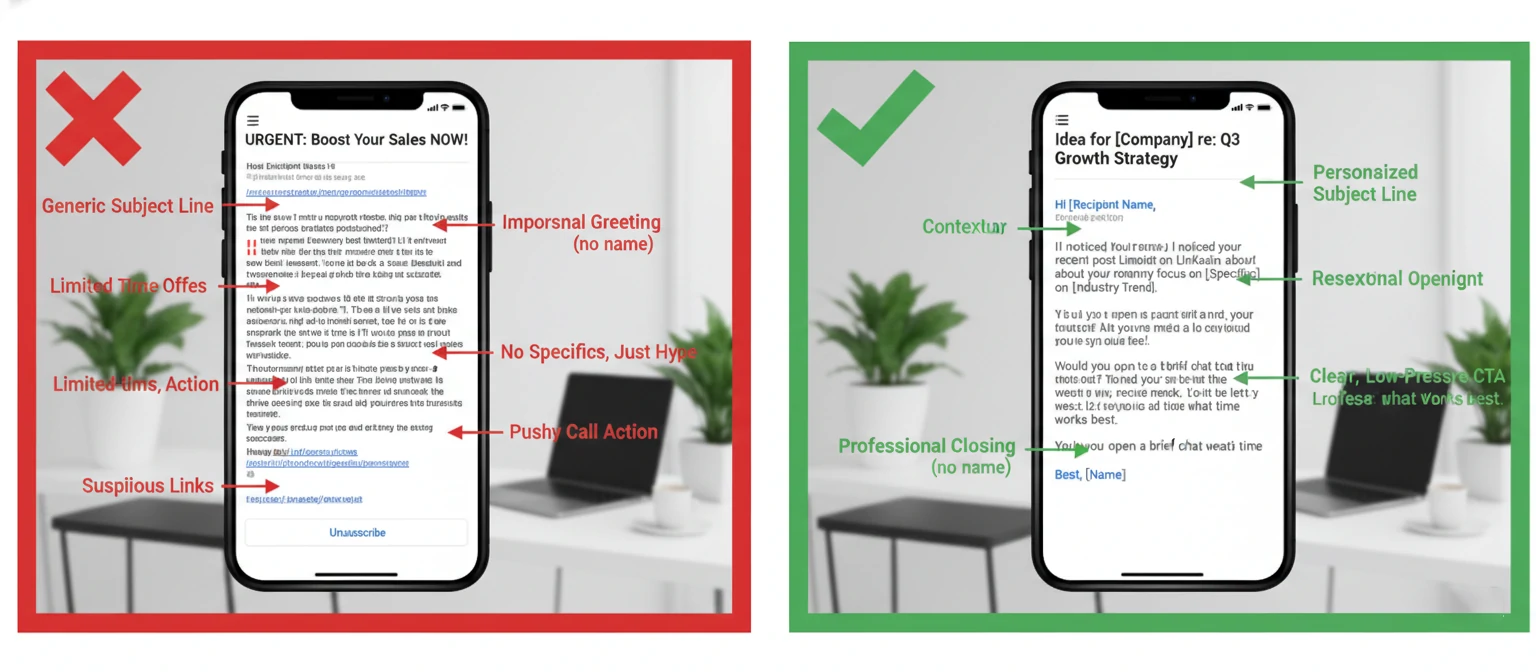
The most effective outbound approach combines all channels in a coordinated sequence. Before sending a cold email, run targeted ads to the account so your brand is already familiar. Send a LinkedIn connection request with a genuine, non-salesy note a few days before the email. Then follow up the email with a brief phone call. This multi-touch approach increases response rates by 40 to 60 percent compared to single-channel outreach.
One critical rule that I enforce with every team I advise: never send an outbound message you would be embarrassed to receive yourself. Read every email, every LinkedIn message, and every call script through the eyes of a busy executive who gets dozens of pitches daily. If it sounds like every other pitch they receive, start over.
5. Content Strategy for Complex B2B Buyers
B2B content strategy is not about publishing a blog post every week and hoping for the best. It is about creating a library of resources that guides specific buyers through their entire decision-making journey, from the moment they realize they have a problem to the moment they choose your solution over every alternative on the table.
The biggest content mistake I see is companies that produce only top-of-funnel awareness content. They have plenty of articles about industry trends and general best practices, but nothing for the buyer who is actively comparing vendors, evaluating pricing, or trying to build an internal business case to get budget approved. Those middle and bottom-of-funnel gaps are exactly where deals are won and lost.

🎨 Content Mapped to the Buyer Journey
🔴 Awareness: "I think we have a problem"
Industry trend reports, thought leadership articles, original research data, educational webinars. Focus on naming and framing the problem without pitching your solution. Build trust first.
🟠 Consideration: "What solutions exist?"
Buyer guides, solution comparison pages, how-to guides, expert webinars. Help buyers understand the category and what to look for. Position your approach as one valid option among several.
🟢 Decision: "Which solution is right for us?"
Case studies with specific ROI metrics, product demos, free trials, transparent pricing, implementation timelines, competitor comparison pages. Make it as easy as possible for them to say yes.
Here is a counterintuitive truth about B2B content: the content that generates the most leads is rarely the content that generates the most traffic. A blog post about a trending topic might attract 10,000 visitors with a 0.1 percent conversion rate, producing 10 leads. A detailed comparison page might attract only 200 visitors but convert at 15 percent, producing 30 higher-quality leads. Smart companies invest in both types but recognize that bottom-of-funnel content often delivers far higher return on investment.
6. Lead Scoring and Qualification Frameworks
Lead scoring is the bridge between marketing and sales, and getting it right is one of the highest-leverage activities in B2B. A good scoring system ensures your sales team spends time on prospects likely to buy rather than chasing people who were just casually browsing your blog during their lunch break.
The most effective scoring models combine two dimensions: fit score and engagement score. Fit measures how closely a lead matches your ICP. Engagement measures how actively they are interacting with your brand. A lead needs to score high on both dimensions to be worth a sales conversation.
🎯 Fit Score Factors
- Company size and revenue match
- Industry alignment with ICP
- Job title and seniority level
- Technology stack compatibility
- Geographic location fit
- Budget and buying authority signals
📈 Engagement Score Factors
- Website visits and pages viewed
- Content downloads and form fills
- Email opens and click-throughs
- Webinar and event attendance
- Pricing page visits (high signal)
- Demo or trial requests (highest signal)
⚠️ Common Scoring Mistake
Do not assign high scores to content downloads alone. Someone who downloads every whitepaper you publish might be a researcher, a student, or a competitor. The most predictive engagement signals are pricing page visits, demo requests, and high-intent search queries. Weight these far more heavily in your model than generic content consumption.
Start simple and iterate. Your first scoring model will not be perfect, and that is completely fine. Review it quarterly with your sales team. Ask them which leads were genuinely ready for a conversation and which were premature. Adjust your scoring thresholds based on real conversion data, not assumptions or wishful thinking.
7. Nurturing Leads Through Long Sales Cycles
Here is a truth that impatient marketers struggle with: in B2B, most leads are not ready to buy when they first enter your pipeline. The average B2B sales cycle runs three to nine months, and for enterprise deals it can stretch to eighteen months or longer. Nurturing is what keeps you relevant and top-of-mind during that extended decision-making process.
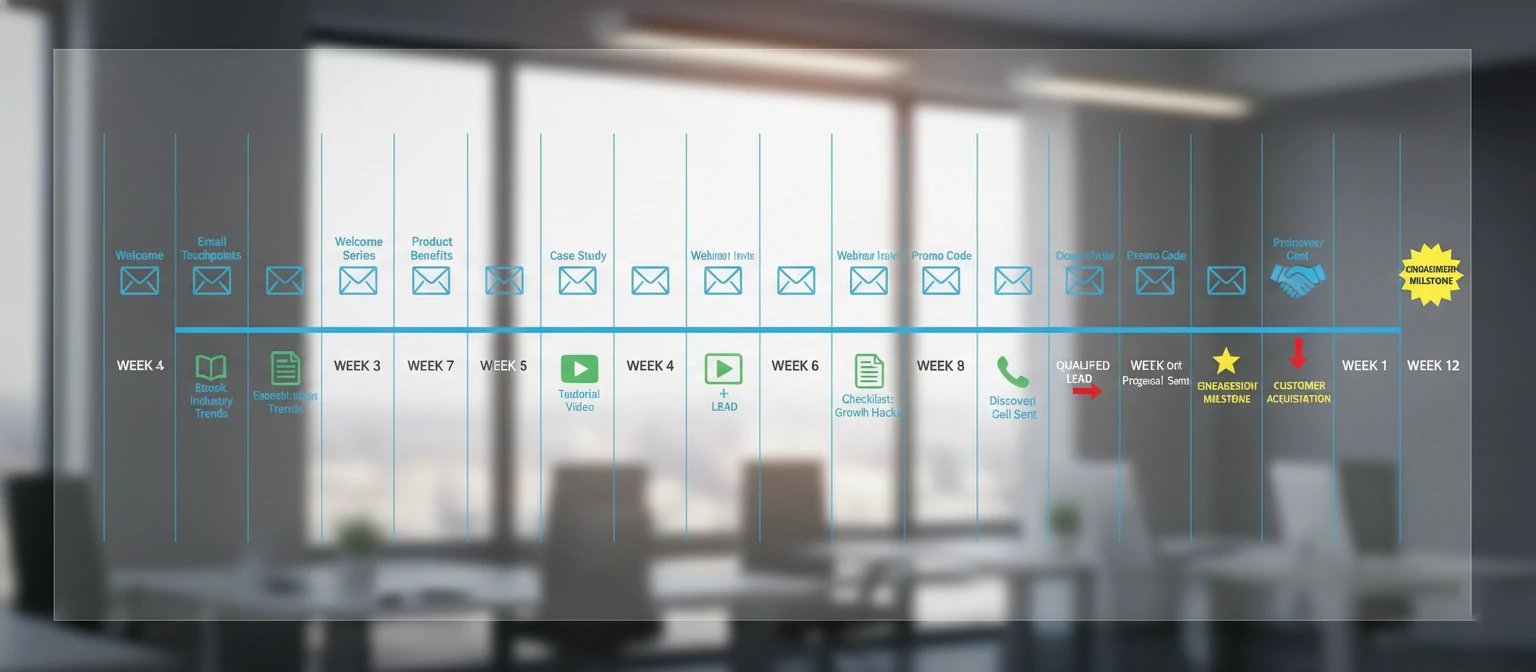
Effective nurturing is not just sending a weekly newsletter and hoping for the best. It is a deliberate sequence of value-driven touchpoints that gradually build trust, demonstrate expertise, and address the specific concerns that keep buyers from moving forward.
📧 The Nurture Sequence Blueprint
Week 1: Welcome and Educate
Deliver the promised content, introduce your brand story authentically, and share one genuinely useful insight that sets the tone for the entire relationship ahead.
Weeks 2-4: Deepen Understanding
Share case studies, original research, and expert perspectives that address the specific pain point that brought them to you. No pitching. Just proving you understand their world.
Weeks 5-8: Introduce Solutions
Start connecting their problem to solution categories. Share comparison guides, buyer checklists, and evaluation frameworks. Position your approach naturally alongside alternatives.
Weeks 9-12: Enable the Decision
Provide ROI calculators, implementation timelines, and internal business case templates. Make it easy for your champion to sell the idea internally to their leadership team.
Ongoing: Stay Valuable Long-Term
For leads not ready yet, shift to a monthly cadence of genuinely useful content. Industry benchmarks, new research, and relevant insights keep you top-of-mind without being annoying.
The most important nurturing principle: every single touchpoint should provide value whether or not the recipient ever buys from you. If your nurture emails are only useful to people who become customers, you are doing it wrong. Generosity builds trust. Trust shortens sales cycles. And shorter sales cycles mean more revenue with less effort.
8. Technology Stack for Modern Lead Generation
You do not need twenty tools to generate B2B leads effectively. In fact, too many tools often create more problems than they solve, with data scattered across platforms, integrations constantly breaking, and nobody fully utilizing any single tool. Here is a practical, prioritized stack.

CRM Platform
Your single source of truth for every prospect and customer interaction. Without this working properly, nothing else matters.
Salesforce, HubSpot CRM, Pipedrive
Marketing Automation
Handles email nurturing, lead scoring, and behavior tracking so your team can focus on strategy instead of repetitive manual work.
HubSpot, Marketo, ActiveCampaign
Intent Data and Enrichment
Identifies companies actively researching solutions like yours and enriches lead profiles with firmographic and contact data.
Bombora, ZoomInfo, Clearbit, Apollo
Analytics and Attribution
Connects marketing activities to pipeline and revenue so you know what is actually working and can invest more where it counts.
GA4, Dreamdata, HockeyStack
Start with CRM and marketing automation. Get those working beautifully before adding anything else. The companies I see wasting the most money on technology are invariably the ones that bought intent data platforms and ABM tools before they had basic lead tracking and nurturing functioning properly. Walk before you run. Master the fundamentals before chasing the shiny new tools.
9. Metrics That Matter (And Ones That Lie to You)
After fifteen years in B2B marketing, I have developed a strong opinion about metrics: most teams track too many things and understand too few of them. Here is the framework I use for measuring what actually matters.
Cost Per Lead by channel and quality tier
Conversion rate from marketing to sales qualified
Win rate from opportunity to closed revenue
Customer Acquisition Cost vs. lifetime value
🚨 Metrics That Lie to You
Total leads generated means nothing without quality context. Website traffic is meaningless if visitors are not your target buyers. Email open rates are increasingly unreliable due to privacy features. Social media followers do not correlate with pipeline. Focus relentlessly on metrics that connect directly to revenue, not activity metrics that make dashboards look impressive in weekly meetings.
The single most important metric I track is pipeline velocity: how fast a lead moves from first touch to closed deal, and how much revenue it represents. If your pipeline velocity is increasing, almost everything else is working. If it is decreasing despite more activity, something fundamental is broken and needs immediate attention.
10. Common Mistakes and How to Avoid Them
I have made most of these mistakes myself and watched hundreds of other companies make them too. If you can avoid even half of these pitfalls, you will be ahead of 90 percent of B2B companies in your space.
⚠️ Prioritizing Quantity Over Quality
Generating 10,000 leads that nobody can sell to is worse than generating 100 leads that convert at 30 percent. Align your entire team around quality metrics from day one and resist the temptation to game volume numbers for impressive-looking reports.
⚠️ Ignoring Sales Team Feedback
Your sales reps know which leads are real and which are junk. If you are not having weekly conversations with sales about lead quality, you are flying blind. The best marketing teams I have seen sit in on sales calls regularly and use that feedback to refine targeting constantly.
⚠️ Giving Up Too Early
B2B lead generation compounds over time. SEO content takes six to twelve months to gain real traction. Nurture sequences need data to optimize. Outbound messaging requires iteration. Companies that quit after three months never see the exponential returns that arrive at month nine or twelve.
⚠️ Treating All Buyers the Same
Sending the same email to a CTO and a procurement manager is a missed opportunity. Each persona on the buying committee has different concerns, different language, and different success metrics. Build separate content paths and messaging for each decision-maker type.
⚠️ Neglecting Your Website Experience
You can drive all the traffic in the world, but if your website is slow, confusing, or does not clearly communicate what you do within five seconds, those visitors will leave without a trace. Fix your site conversion before increasing your advertising spend.
❓ Frequently Asked Questions
How long does it take to see results from B2B lead generation?
Outbound campaigns can generate initial conversations within weeks. Inbound strategies like SEO and content marketing typically take three to six months to gain meaningful traction. A comprehensive program combining both channels usually starts showing clear ROI within six to nine months, with compounding returns accelerating after that initial period.
What is a good cost per lead in B2B?
It depends entirely on your average deal size and conversion rates. A lead costing $500 is expensive if your product sells for $5,000 but incredibly cheap if your average contract is $200,000. Focus on cost per qualified opportunity and customer acquisition cost relative to lifetime value rather than raw cost per lead, which is a misleading metric in isolation.
Should we focus on inbound or outbound lead generation?
Both, but the balance depends on your stage and resources. Early-stage companies often need outbound to generate immediate pipeline while building inbound assets. Mature companies with established brand recognition can lean more heavily on inbound. The best programs use outbound to target specific high-value accounts while inbound captures broader organic demand.
How many leads do we need to hit our revenue target?
Work backwards from revenue. If you need $2 million in new business, your average deal is $50,000, and your win rate from SQL is 25 percent, you need 160 SQLs. If 30 percent of MQLs become SQLs, you need roughly 530 MQLs. These conversion rates at each stage are your most critical planning inputs.
What is the biggest mistake companies make with B2B leads?
Treating lead generation as a marketing-only activity. The most successful B2B companies align sales, marketing, product, and customer success around a shared understanding of who the ideal customer is and what journey they go through. When these teams operate in silos, leads fall through the cracks and revenue suffers dramatically.
The Bottom Line: Leads Are People, Not Data Points
After fifteen years of building B2B pipelines across every industry imaginable, the most important lesson I have learned is deceptively simple: behind every lead is a real person with a real problem, trying to make the best decision for their organization and their career. The companies that remember this fundamental truth consistently outperform those that treat lead generation as a numbers game.
Build your ICP with precision. Create content that genuinely helps people even if they never buy. Reach out with relevance and respect. Score and nurture with patience. Measure what connects to revenue. And never forget that the goal is not to generate leads. The goal is to start relationships that create lasting value for both sides of the table.
Start with one section of this guide. Implement it well before moving to the next. Consistency beats complexity every single time. Your future pipeline will thank you for the discipline.