
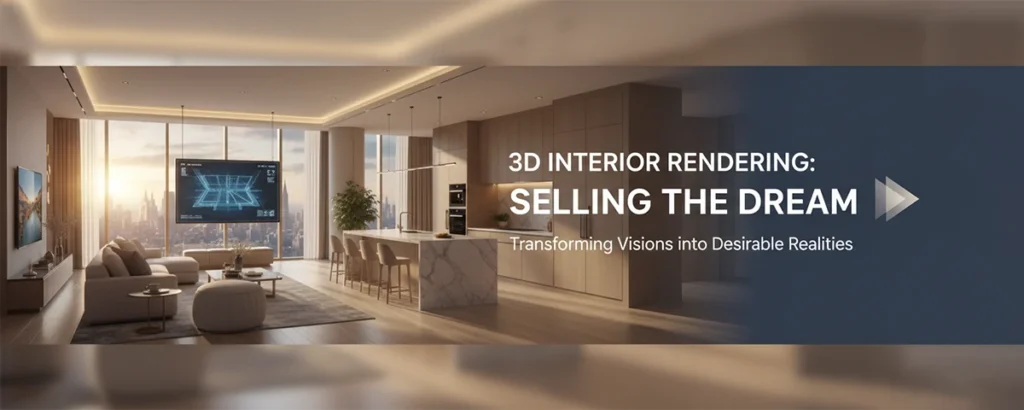
Before a single brick is laid, you can walk through the hallway. Discover how CGI is replacing photography and why "Pre-Selling" is the new standard in real estate.
Imagine trying to sell a penthouse for $5 million. But there is a problem: the penthouse doesn't exist yet. It's currently a dusty construction site filled with scaffolding and yelling workers.
Twenty years ago, you walked clients through the dust and pointed at empty air, saying, "Imagine a beautiful kitchen here." Today, that doesn't fly. Today, we have 3D Interior Rendering.
These aren't "cartoons." Modern CGI (Computer Generated Imagery) is so mathematically precise that 90% of the images in the IKEA catalog are 3D renders, not photos. In this guide, we'll explain how this tech works, what it costs, and why it's the most powerful sales tool in the modern world.
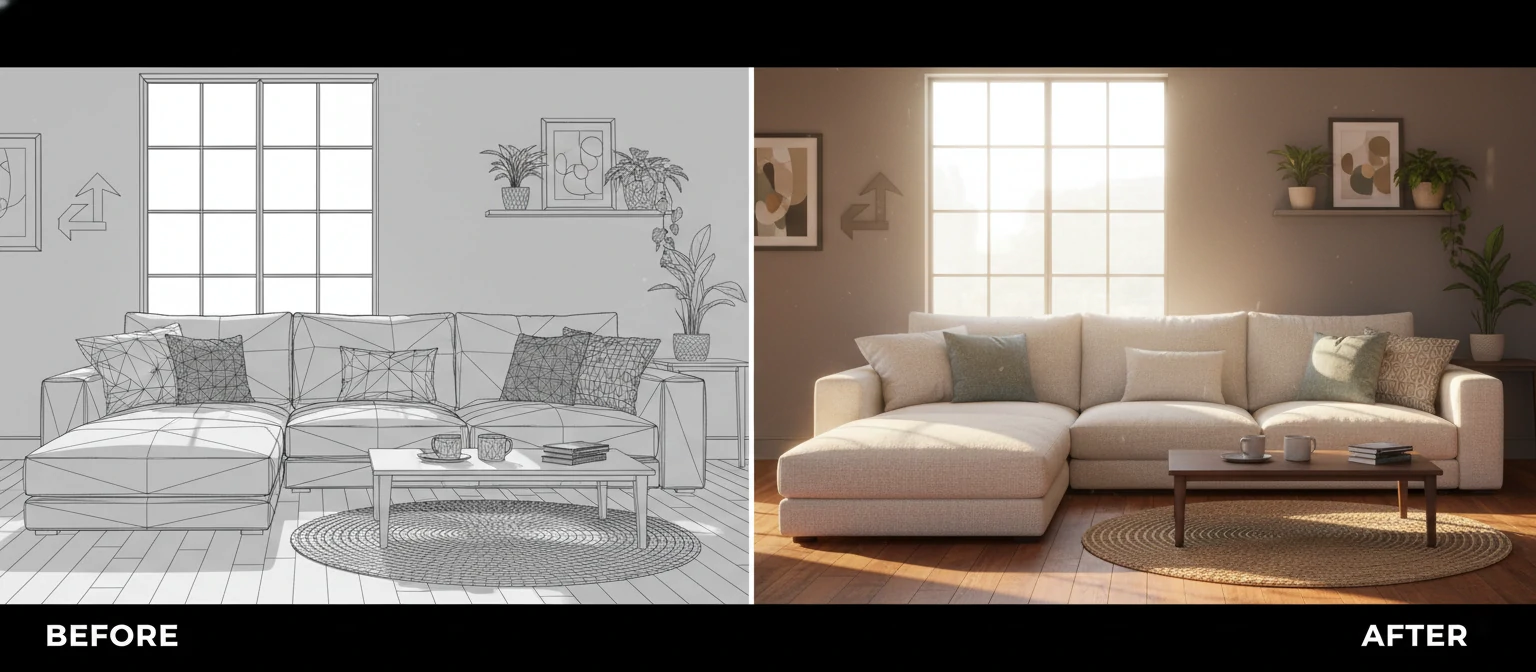
Photography vs. CGI: The Death Match
Conventional Staging 🚫
- Costly physical furniture rental ($5k/mo)
- Requires a finished building
- Dependent on weather/lighting
- Once shot, cannot change style
3D Rendering ✅
- Infinite furniture library (Free)
- Can be done from blueprints
- Perfect "Golden Hour" sun always
- Change floors from wood to marble in 1 click
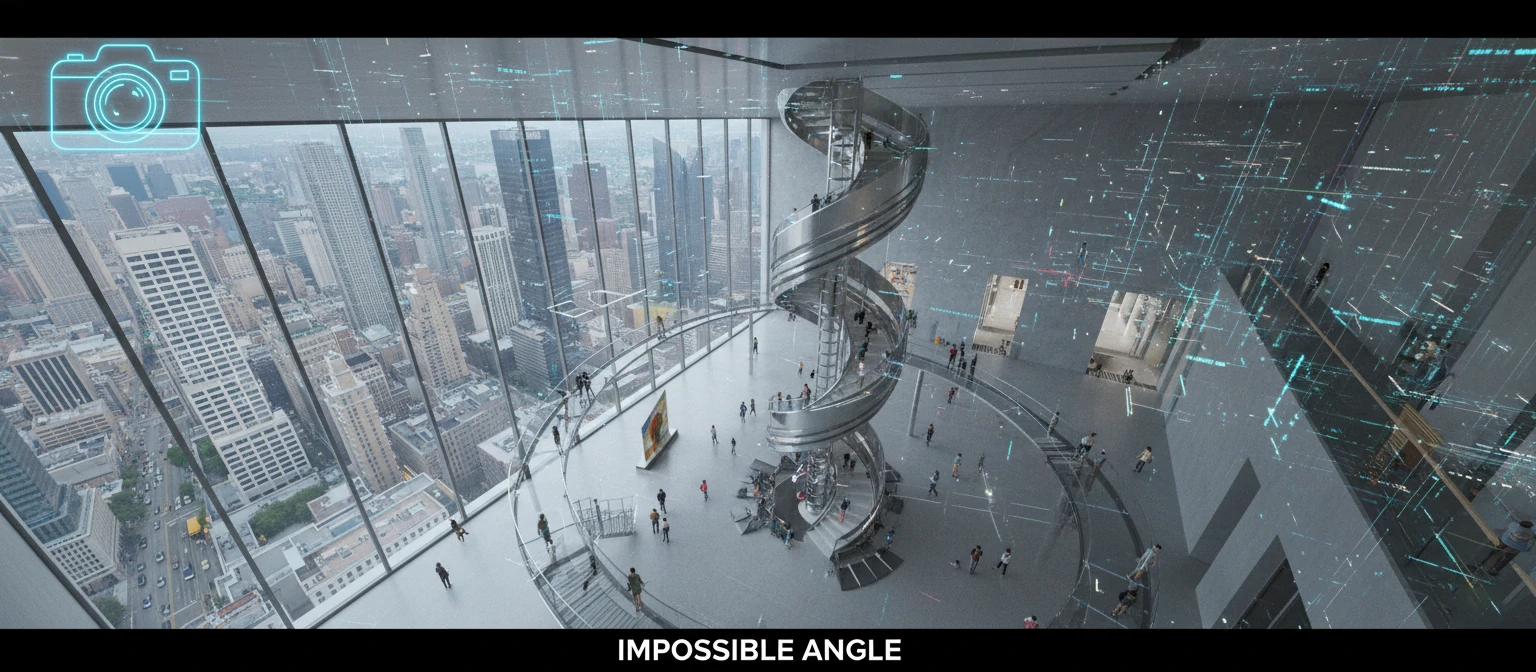
The 3 Tiers of Visualization
Static Photorealism
High-resolution JPEG/TIFF images. Used for brochures, Zillow listings, and billboards. The goal is to make the viewer ask, "Is this real?"
360° Panoramas
Interactive images where the user can spin the camera. Essential for understanding the flow of a room. Viewed on iPads or VR headsets.
Virtual Staging
Taking a photo of an empty, real room and putting 3D furniture inside it. Much cheaper than full 3D rendering because the "shell" is real.

The Workflow (How to not hate your artist)
Clients often think they can just say "Make it pop!" and get a masterpiece. Here is the actual process required for success.
Step 1: The Brief
You send floor plans (CAD/PDF) and a "Mood Board" (Pinterest links) for the style. Be specific: "Scandi-Minimalist" or "Industrial Chic"?
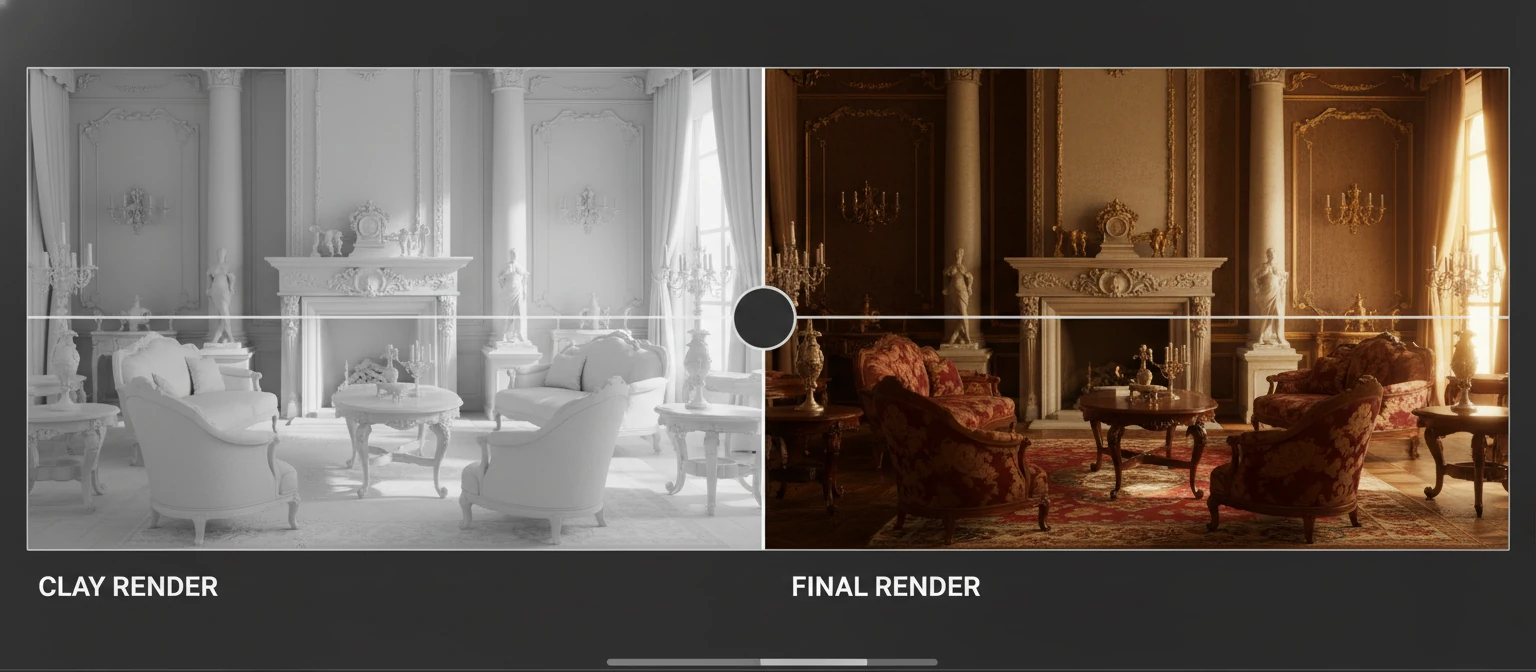
Step 2: Clay Model
You get a grey, uncolored image. Check the camera angle and furniture layout. DO NOT check colors yet.
Step 3: Materials & Light
Artist adds textures (wood grain, velvet) and lighting. This is the first color draft.
Step 4: Post-Production
Color grading in Photoshop. Adding "human elements" like coffee steam or a blurred cat.
Why does it cost $500 or $5,000?
Rendering pricing is notorious for being all over the place. Here is the math.
- ⬇️ Cheap ($200-$400): Outsourced to content farms. Stock furniture. "Good enough" lighting. Flat look.
- ⬆️ High-End ($1,500+): Custom modeling (building your specific custom sofa). "Imperfection" (adding dust, wrinkles to rugs). Art direction by an architect.