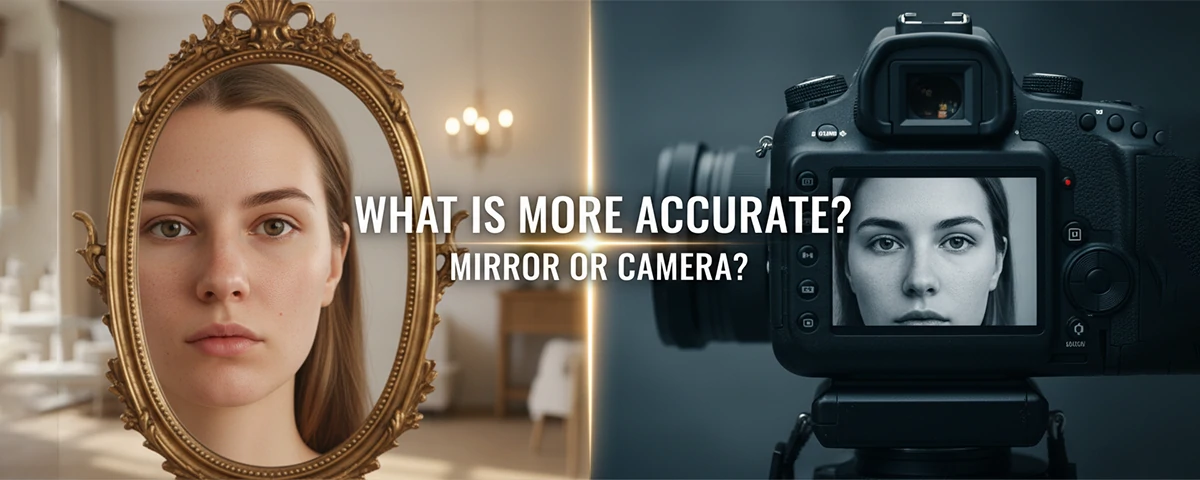
What's More Accurate: Mirror or Camera?
The surprising truth about why you look different in photos versus mirrors, and which one actually shows your real appearance to others.
 Pro Pixel Agency

The surprising truth about why you look different in photos versus mirrors, and which one actually shows your real appearance to others.
The Science
Psychology
Photo Tips
Mirror
Horizontally Reversed
Camera
What Others See
Real-Time View
Mirrors show you exactly what you're doing in the moment, with no delay or processing between what you see and how you look.
Third-Person View
Cameras show what everyone else sees when they look at you - no mirror reversal or familiar orientation to confuse things.
Familiarity Effect
You've seen your mirror reflection thousands of times, making it feel more "normal" than photos even when they're actually more accurate.
Technical Differences
Each uses different optical principles - mirrors reflect light directly while cameras capture and process light into an image.
The Science Behind Mirror vs Camera Accuracy
Understanding the physics of reflection and photography helps explain why these two ways of seeing yourself produce such different results.
How Mirrors Actually Work
A mirror is essentially a piece of glass with a reflective coating on the back. When you look into a mirror, light bounces off the reflective surface and travels directly to your eyes. There's no processing, no interpretation - just light reflecting off a surface. This is why mirrors are technically "accurate" in the sense that they capture light exactly as it exists. However, here's the catch: mirrors flip your image horizontally, creating a reversed version that only you ever see.
How Cameras Capture Your Image
A camera captures light through a lens and records it on a sensor or film. The lens focuses light rays, and the sensor converts them into an image. This process involves several transformations - light passes through glass, gets focused, gets digitized or chemically recorded, and then is displayed. Each step can slightly alter how the final image appears compared to what the mirror shows. But crucially, cameras don't flip your image - they show you as others see you.
The Key Difference Explained
The mirror shows you the light that bounces off your face in real-time. A camera captures a frozen moment and presents it to you later. More importantly, mirrors show a horizontally reversed version of you - which is why your left side looks like your right side in photos but not in the mirror. This fundamental difference is why the comparison matters so much for understanding how you really look.
Why You Look Better in Mirrors
The psychology behind the mirror illusion
The feeling that you look better in the mirror than in photos is almost universal, and it stems from several psychological and physical factors that work together to create this perception gap.
The Familiarity Bias Effect
You've seen your mirror reflection thousands of times every single day. Your brain has literally encoded this view as "you." The unfamiliar orientation in photos makes them feel wrong even when they're actually showing what everyone else sees. This is called the mere exposure effect - we prefer things we're familiar with, and your mirror image has had decades of exposure.
The Reverse Image Effect
Mirrors flip your image horizontally. When you see a photo, it's not flipped - it's what everyone else sees when looking at you. Your brain isn't used to this view and interprets it as strange or different from what it expects. The asymmetry of your face becomes noticeable because you're seeing it from an angle you've never consciously observed before.
Lighting Differences Matter
When you pose for a photo, the lighting is often different from bathroom or bedroom mirror lighting. Camera flashes, studio lights, and natural sunlight from different angles all create different effects than the consistent light you see in mirrors. The direction, intensity, and color of light can dramatically change how your features appear, making photos look foreign even when the lighting seems similar to your eye.
Which One Actually Shows The Real You?
The answer might surprise you - technically, neither is completely accurate, but one is closer to what others actually see in person.
Cameras Are More Accurate
Surprisingly, cameras generally show what other people see when they look at you. The photo isn't flipped like a mirror, and it captures the same light that reaches other people's eyes from your face. This is why friends often say "that's exactly what you look like!" about photos you hate - they're seeing their familiar view of you.
- No horizontal reversal like mirrors
- Objective third-person perspective
- Matches what friends and family see
Mirrors Show Your Familiar View
While the mirror is technically accurate in terms of light reflection, it's not the version of yourself that anyone else sees. The familiar reversed image feels more "correct" to your brain, but it's actually a different perspective than what you present to the world. No one else has ever seen the version of you that you see in the mirror.
- Horizontally reversed from reality
- Only you see this version of yourself
- Creates false expectation of appearance
The Psychology of Self-Perception
Why our brains trick us into preferring mirrors
The difference between mirror and camera perception goes beyond optics - it's deeply rooted in how our brains process visual information and create our sense of self.
Self-Familiarity Effect
Your brain has seen your mirror reflection exponentially more times than any photo. This creates a powerful preference for the "familiar" version, even if it's not accurate. Studies show we find familiar faces more attractive - this is why many people feel their photos look "wrong." The brain essentially develops a comfort zone with the mirror image.
Insight: Your friends don't see the mirror version - they see the photo version, and that's what they're used to!
Self-Criticism Bias
When we see a photo, we notice every flaw because we're looking for them deliberately. In the mirror, we see our face during normal activities and accept it as-is. Photos force us to examine a static image, which triggers more critical evaluation than we're used to applying. It's like reading a detailed critique of your appearance.
Insight: Everyone looks better in person than their photos - it's not just you!
Negative Bias in Photos
We tend to focus on the unflattering aspects in photos because we're analyzing them deliberately. In real life, your expressions are dynamic, your smile is natural, and people see the whole you - not a frozen split-second moment that might catch you mid-blink or in an awkward expression. Photos capture a single, static moment that may not represent you well.
Insight: Motion pictures (video) often look more like the "real you" than still photos!
Technical Factors That Affect How You Look in Photos
While cameras show a more accurate version of what others see, various technical factors can make photos look different than reality.
Focal Length Distortion
The lens focal length dramatically affects how your face appears. Wide-angle lenses (typical in phones at around 24mm) can make your nose look larger and distort facial proportions. Professional portrait photographers typically use 50-85mm lenses for more natural-looking results that match human visual perception.
- Phone cameras: wider angle, more distortion
- 50mm: matches human eye perspective
- 85mm: flattering compression for portraits
Lighting Effects on Appearance
The direction and quality of light can dramatically change how you look. Harsh overhead lighting can create unflattering shadows under your eyes and nose. Soft, diffused lighting from the side is typically most flattering. Indoor vs outdoor lighting also affects skin appearance dramatically - even the color temperature of light matters.
- Natural window light: often most flattering
- Flash can wash out skin tone and create harsh shadows
- Golden hour: warm, soft, universally flattering
Camera Angle and Distance
The camera angle dramatically changes perception. Shooting from above (common with selfie cameras held up) creates a foreshortening effect that can make your face look wider and flatter. Holding the camera at eye level provides the most accurate representation of how others see you. Distance also matters - being too close causes distortion.
- Eye-level: most accurate representation
- Higher angle: can look unflattering
- Distance affects facial proportions significantly
Common Questions Answered
Clear answers to frequently asked questions
Why do I look better in the mirror than in photos?
You're simply more familiar with your mirror image. The mirror shows you the horizontally reversed version you've seen thousands of times. Photos show the non-reversed version everyone else sees, which feels unfamiliar. Additionally, photos are static - they capture one moment while we're used to seeing our dynamic expressions in motion. The combination of unfamiliar orientation and static pose creates that "that doesn't look like me" feeling.
Which is more accurate - mirror or camera?
A camera is technically more accurate in showing what others see, because mirrors reverse your image horizontally. However, cameras introduce their own distortions through lens choice, lighting, and angle. For the most accurate representation, use a proper camera at eye level with a 50mm lens in good lighting. The camera version represents what you're actually presenting to the world.
Why do photos make me look worse than I actually look?
They don't - photos show what others see. The disconnect comes from unfamiliarity with how you actually look to others. Additionally, unflattering expressions get frozen in photos, bad lighting can distort features, and phone camera wide-angle lenses create distortion. In reality, you're more like your video calls than your photos. Video provides motion and expression that still photos cannot capture, making it a more accurate representation.
Do mirrors show your true reflection?
Mirrors show you accurately in terms of light reflection, but show a horizontally reversed version of your face that nobody else sees. So while they're "accurate" physically, they're not representative of how you appear to others. In that sense, photos are actually more "true" to your social appearance - the face you present to the world that other people interact with.
Why does my phone make me look worse than a real camera?
Smartphone cameras typically use wide-angle lenses (24mm or less) to fit more into the frame. This wide angle causes perspective distortion that makes features closer to the camera (like your nose) appear larger than they actually are. Additionally, the front-facing cameras on phones are often lower quality and may have different processing algorithms. Professional cameras with proper portrait lenses (50-85mm) will give more flattering, accurate results.
How to Look Better in Photos
Now that you understand the science, here's how to use this knowledge to look better in photos.
Trust Your Friends
When friends tell you a photo looks like you, believe them. They're seeing the same version of you they always see - which is what the camera captures. Your brain's preference for the mirror image is an illusion of familiarity, not a true reflection of how you appear to others.
Video Is More Accurate
Video calls and moving video show you more accurately than still photos. This is because we're used to seeing people move and speak, and the motion creates a more holistic impression than a frozen pose. If you want to see what you really look like, video is better than photos.
Lighting Matters Most
Good lighting can make anyone look great in photos. Window light, overcast days, and golden hour provide soft, flattering illumination. Avoid harsh overhead lights and direct flash for portraits. Position your face to face the light source for the most even, flattering look.
Accept Your Real Face
The face you see in photos is what everyone else sees - it's not less accurate than the mirror. Learning to accept your "photo face" can boost confidence and reduce the shock you feel when you see yourself in pictures. Remember, everyone looks different in photos - it's not just you.
Evolution of Self-Image in the Digital Age
How technology changed how we see ourselves
The disconnect between mirror and camera perception is a relatively modern phenomenon, driven by our increased exposure to photographs and video in the smartphone era.
Pre-Photography Era
People rarely saw their reflection outside of occasional mirrors, making the mirror reflection the primary and essentially only self-image they ever saw.
Camera Invention
The first photos introduced the concept of seeing yourself as others see you, but few people had personal photos taken regularly.
Smartphone Era
Now we see our "camera face" constantly - in selfies, video calls, and social media. This creates more conflict with mirror expectations.
Future Adjustment
As we become more accustomed to our camera face, the "shock" of seeing photos may diminish for younger generations.
Pro Tip: The more photos and videos you see of yourself, the more natural they'll look. This is why celebrities and public figures often seem more comfortable in photos - they've simply seen more images of themselves!
The Complete Verdict: Mirror vs Camera
Putting it all together, here's the definitive answer to whether mirrors or cameras are more accurate.
The Mirror Shows
A horizontally reversed version of your face that you've seen since childhood. It's accurate in terms of light but shows a perspective only you ever see. It's your "familiar" face, which is why it feels more "normal" even though it's not what others see. Think of it as your "private" face that no one else has ever witnessed.
The Camera Shows
What everyone else sees - a non-reversed view of your face. While cameras introduce some technical distortions (lens, lighting, angle), the perspective is fundamentally more accurate to how others perceive you. This is your "social" face - the one you present to the world.
Cultural Perspectives on Self-Image
How different cultures view mirror vs camera
The way people perceive their reflection varies significantly across cultures, influenced by historical, social, and technological factors unique to each society.
Western Self-Consciousness
In Western cultures, the widespread availability of smartphones and social media has created unprecedented exposure to one's own image. This has led to increased self-awareness and sometimes anxiety about how we appear to others. The "selfie" has become a cultural phenomenon.
Impact: The "selfie generation" has fundamentally changed how young people relate to their own appearance.
Eastern Philosophical Views
In many Eastern philosophies, the concept of self is viewed more holistically. The attachment to specific visual representations of self may be less emphasized compared to Western cultures that prioritize individual appearance and self-presentation.
Insight: Some cultures historically used mirrors primarily for practical purposes rather than self-admiration.
Social Media Influence
Globally, social media platforms have created a new culture of self-presentation. The quantity of photos shared daily has normalized seeing oneself in images, gradually reducing the "strange" feeling many people get when viewing photos of themselves.
Trend: Gen Z is now more accustomed to their camera face than previous generations due to constant exposure.
Practical Tips for Taking Better Photos
Use these actionable tips to look your best in photos, whether taken by others or yourself.
Expression Matters Most
A genuine smile changes your entire facial structure. Your eyes crinkle, your cheeks lift, and you appear more approachable. Practice a natural expression rather than a forced smile. Think of a happy memory while the photo is taken for a more authentic expression.
Technique: Think of something genuinely funny or a happy memory for natural-looking smiles.
Angle and Positioning
Slightly turning your face (not full profile) is universally flattering. It creates depth and dimension while avoiding the flat look of a direct front-facing shot. Turn about 15-30 degrees from the camera for the most flattering angle.
Pro Tip: Raise your chin slightly and extend your neck for a more defined jawline.
Confidence is Key
The most photogenic people aren't necessarily the most objectively attractive. They're comfortable being photographed and project confidence through relaxed body language. Practice being in front of the camera to build comfort and naturalness.
Secret: Confidence comes from practice - take more photos to get comfortable!
Building a Positive Body Image
Learning to accept your true appearance
Understanding how mirrors and cameras work differently is the first step toward building a healthier relationship with your appearance in photographs.
Challenge Your Perceptions
When you see a photo you don't like, remember it's just one moment captured out of millions. Your appearance varies constantly based on lighting, angle, expression, and mood. One photo doesn't define you any more than one frame of a movie defines an actor.
Action: Look at photos of people you admire - you'll often find unflattering ones too!
Focus on Connection
When you see yourself in photos, remember that people connect with you through your expressions, energy, and personality - not technical perfection. The "imperfections" you notice often aren't noticeable to others at all.
Reminder: People remember how you made them feel, not how you looked in photos.
Practice Self-Compassion
Treat yourself with the same kindness you'd give a friend who felt insecure about a photo. Most of us are our own harshest critics, but that criticism isn't based in reality. Be gentle with yourself when viewing photos.
Challenge: Delete photos that make you feel bad about yourself - you don't need that energy!
Final Summary and Key Takeaways
Here's everything you need to remember about mirror vs camera accuracy.
Camera Accuracy
Cameras show what others see - the non-reversed version of your face. This makes them more accurate in representing your social appearance.
Mirror Familiarity
Mirrors show a reversed version you're used to seeing. The familiarity creates preference, not accuracy. Your brain simply prefers what it knows.
Technical Factors
Lens choice, lighting, and angle all affect photo appearance. For accuracy, use 50mm lens, good lighting, and eye-level positioning.
Accept Your True Face
The photo version IS your real face - the one everyone else sees. Learning to accept it builds confidence and reduces photo anxiety.
The Mirror vs Camera Debate in History
How this question evolved over time
The tension between how we see ourselves in mirrors versus photographs is a relatively recent phenomenon in human history, emerging primarily in the age of personal photography.
Ancient Mirror Usage
Throughout most of human history, mirrors were rare and expensive. Most people went their entire lives without seeing their own reflection clearly. The concept of a "mirror image" as identity simply didn't exist for most humans.
Historical Note: Ancient cultures used polished bronze, copper, and even obsidian as mirrors - none provided clear reflections.
Daguerreotype Era
When photography emerged in the 1830s, people were shocked by their photographs. The first daguerreotypes showed people as others saw them, creating widespread confusion about personal identity. Many refused to believe the images were accurate.
Interesting Fact: Early photographers often used longer exposure times, resulting in stiff, formal portraits that didn't capture natural expressions.
Smartphone Revolution
The smartphone camera fundamentally changed our relationship with self-images. Now millions of people take selfies daily, creating unprecedented exposure to one's own image. This has gradually reduced the "shock" many felt when seeing photos of themselves.
Modern Impact: Gen Z has grown up seeing themselves in photos constantly, making them more accustomed to their "camera face" than older generations.
The Role of Social Media in Self-Perception
How platforms like Instagram and TikTok have transformed our relationship with self-images.
The Filter Effect
Photo editing apps and filters have created unrealistic standards that distort how people perceive themselves. Many users now expect to look like their filtered, edited photos, making unfiltered images feel "wrong."
Warning: Excessive filter use can lead to body dysmorphia and unhealthy self-comparison.
The Validation Loop
Social media creates a cycle where self-worth becomes tied to likes and comments on photos. This can amplify the distress people feel when they see unedited photos of themselves. The constant feedback on appearance affects self-esteem significantly.
Solution: Take breaks from social media and remember that curated posts don't represent reality.
Authentic Content Rise
There's a growing movement toward unfiltered, authentic content on social media. This shift helps normalize natural appearances and reduces the pressure to look perfect in every photo. More influencers are sharing behind-the-scenes content without filters.
Positive Trend: The "no-filter" movement is helping people accept their natural appearance more readily.
Understanding Facial Asymmetry
Why you look different on each side
One of the biggest shocks when seeing photos is noticing facial asymmetry - the fact that our faces aren't perfectly balanced on both sides.
Everyone Has It
Facial asymmetry is completely normal and universal. No one has a perfectly symmetrical face. The question isn't whether you have asymmetry, but how much. This is why photos can look surprising - you're seeing a different angle of asymmetry than your mirror shows.
Science: Studies show even "beautiful" faces have significant asymmetry that becomes more noticeable in photos.
Mirror vs Photo Difference
The mirror shows your left side on the left and right side on the right. Photos show the opposite - your left side appears on the right side of the image (and vice versa). Since asymmetry is normal, seeing it from the "other side" feels unfamiliar and can be jarring.
Key Insight: Your friends see both sides of your face equally in real life - neither is more "real" than the other.
Embrace Your Uniqueness
Your facial asymmetry is part of what makes you uniquely you. It's not a flaw to be fixed - it's a characteristic that distinguishes your face from everyone else's. The "imperfections" you notice are often what make faces interesting and memorable.
Reframe: Instead of seeing asymmetry as a problem, view it as part of your authentic appearance.
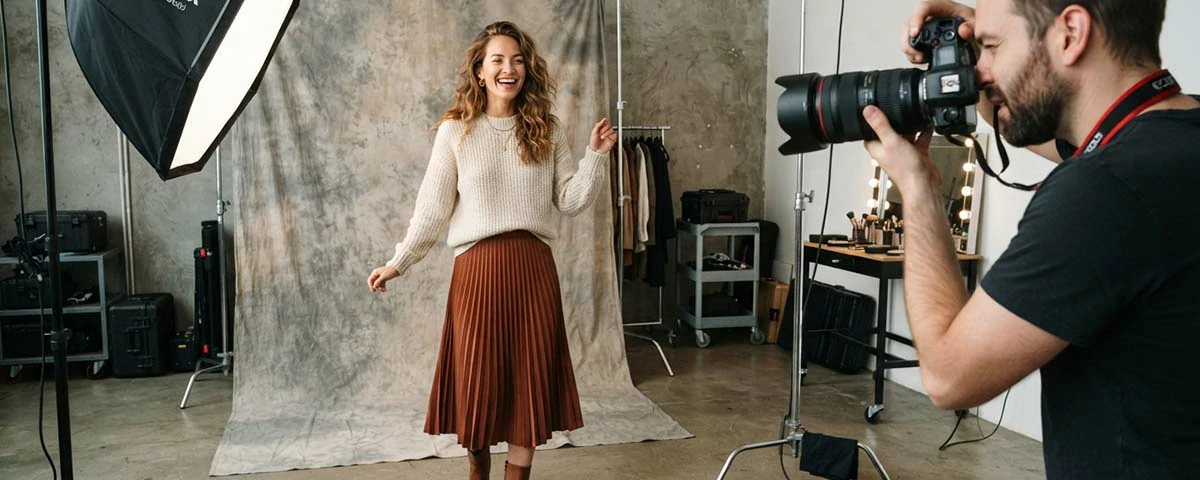
Professional Photography Tips for Accurate Results
How professional photographers capture more accurate representations of their subjects.
Optimal Lens Selection
Professional portrait photographers typically use lenses between 50mm and 85mm for headshots. These focal lengths closely match human visual perception and minimize distortion. Wider lenses (like those in smartphones) cause facial features to appear stretched.
Recommendation: If using a smartphone, hold it at arm's length and slightly above eye level for more accurate results.
Lighting Setup
Professionals use various lighting setups to create flattering but accurate images. The most common approach is slightly off-center key light that illuminates the face without creating harsh shadows. Window light facing the subject (45-degree angle) works well for natural-looking portraits.
DIY Tip: Position yourself next to a large window for natural, professional-quality lighting.
Camera Positioning
The camera should be at approximately the same height as your eyes for the most accurate representation. Shooting from above (common in selfies) makes the forehead appear larger and can create unflattering angles. Shooting from below makes the face appear wider.
Remember: Eye-level is the gold standard for accurate, flattering portraits.
Where to go next
- Shoot More. Edit Less. We Handle the Post.
- Expert Bokeh Effect Services
- Meet the Artists Behind Your Perfect Photos
More useful paths
Use these paths to continue with the closest practical topic, service, or decision guide.
Spotted something wrong? Report an error on this page. We correct on the page and say what changed.