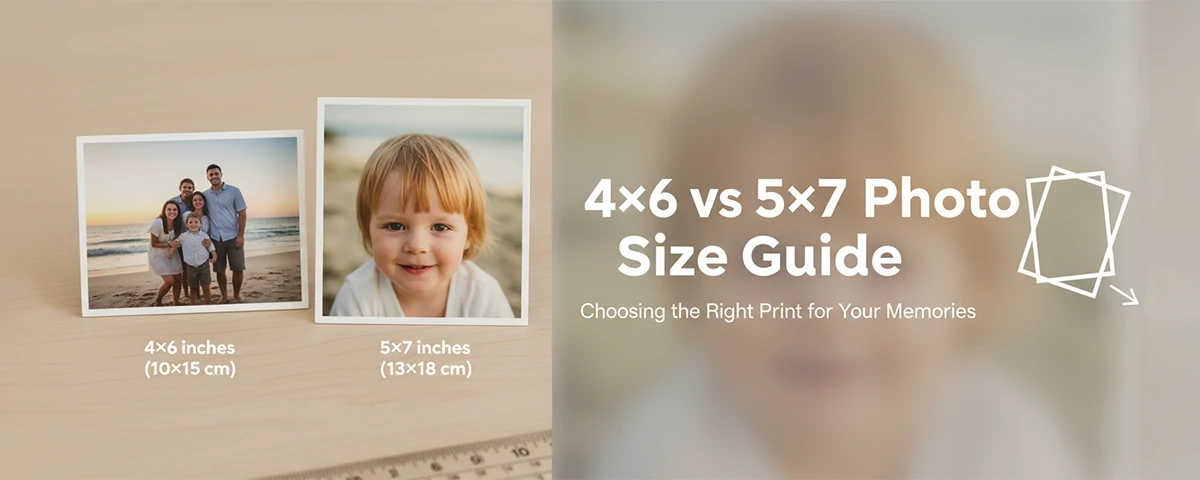
What Does 4x6 Look Like?
The 4x6 photo size is the most recognizable and widely used photo dimension in the world. Whether you're printing family photos, ordering prints from a lab, or framing snapshots, understanding what a…
 Pro Pixel Agency

The 4x6 photo size is the most recognizable and widely used photo dimension in the world. Whether you're printing family photos, ordering prints from a lab, or framing snapshots, understanding what a 4x6 looks like helps you make better decisions about your photographs. This comprehensive guide explores everything about the classic 4x6 format, from its exact dimensions to practical applications, so you can confidently work with this timeless photo size.
The Basics of 4x6 Size
The 4x6 photo is a rectangular format that measures 4 inches by 6 inches, or approximately 10.2 centimeters by 15.2 centimeters. This aspect ratio of 3:2 has been the standard for photographic prints since the early days of film photography, and it remains the most common print size today.
When you look at a 4x6 photo, you see a horizontal rectangle that's slightly wider than it is tall. The longer side runs 6 inches while the shorter side runs 4 inches. This landscape orientation works perfectly for most subjects, from group photos and landscapes to everyday snapshots. The proportions feel natural to the human eye, which explains why this size has remained so popular for over a century.
Understanding these basic measurements helps when you're planning photo projects, ordering prints, or choosing frames. A 4x6 print fits comfortably in your hand, making it ideal for sharing, gifting, and displaying in various settings.
Understanding the Dimensions
Let's break down the exact measurements and what they mean in practical terms.
Inches and Centimeters
In imperial measurements, a 4x6 photo is exactly 4 inches tall and 6 inches wide. In metric terms, this translates to approximately 10.16 centimeters by 15.24 centimeters. Both measurements are used depending on your location and the printing service you use.
4 inches
Short side (height)
6 inches
Long side (width)
3:2
Aspect ratio
24 sq inches
Total area
Pixels at Different Resolutions
Digital photos destined for printing need sufficient resolution to look sharp. For standard quality 4x6 prints, you'll need at least 600 x 400 pixels. For higher quality prints suitable for framing, 1200 x 800 pixels provides excellent detail. Professional printing often requires 1800 x 1200 pixels for the best results.
The 3:2 Aspect Ratio
The 4x6 format follows a 3:2 aspect ratio, meaning for every 3 units of height, there are 2 units of width. This ratio matches the classic 35mm film frame, which is why so many photos naturally fit this format. Most digital cameras default to this ratio, making 4x6 prints the most compatible with standard photography.
Comparing 4x6 to Other Sizes
Understanding how 4x6 compares to other common photo sizes helps you choose the right format for your needs.
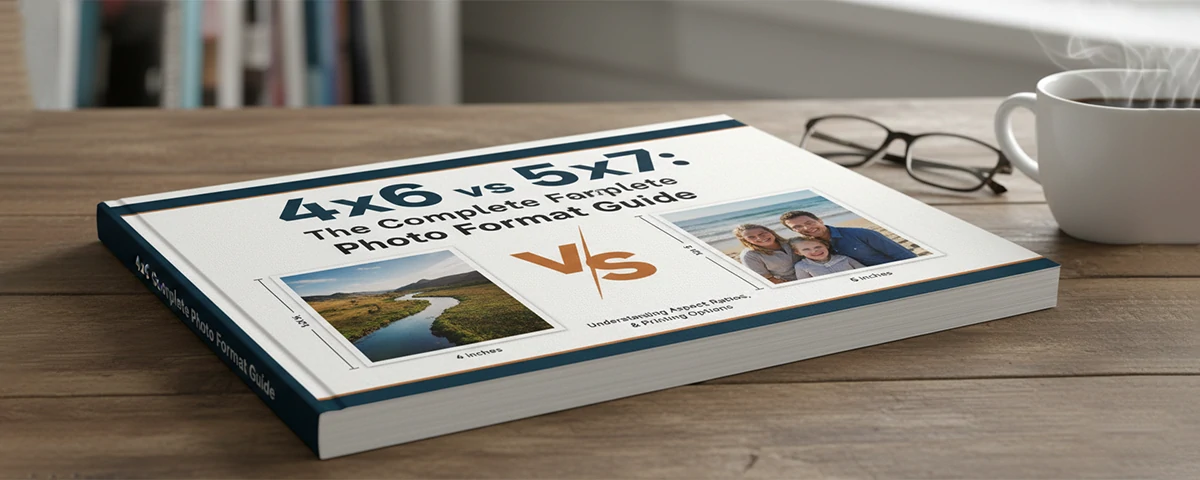
4x6 vs 5x7
The 5x7 size is slightly larger and provides a more square appearance. It works well for portraits and specific framing situations, but it's less universally compatible with casual snapshots. If you need something slightly more prominent than 4x6 but not as large as 8x10, 5x7 offers a nice middle ground.
4x6 vs 8x10
The 8x10 is significantly larger and ideal for featuring a single subject prominently or creating statement wall displays. However, it requires much higher resolution images and costs more to print and frame. For everyday photo sharing and albums, 4x6 remains far more practical.
4x6 vs 4x4 (Square)
Square formats like 4x4 have gained popularity through social media platforms like Instagram. While visually striking for certain subjects, squares require different composition approaches than the landscape 4x6 format. If you're switching between formats, cropping becomes necessary.
4x6 vs A6 (International)
The international A6 size is very close to 4x6, measuring 105 x 148mm compared to the US 4 x 6 inches. For international printing or when sending photos abroad, understanding this slight variation prevents sizing issues. Most US labs produce true 4x6 prints.
Common Uses for 4x6 Photos
This versatile size works for countless applications, from personal to professional.
Photo Albums and Scrapbooking
The 4x6 size fits perfectly in standard photo album pages and scrapbook layouts. Most album designs accommodate this size without special modifications. The manageable dimensions make it easy to arrange multiple photos on pages, creating visually appealing collections of memories.
Framed Displays
While 4x6 is smaller than typical framed photos, it works beautifully on desk stands, small gallery walls, and built-in shelving displays. The compact size allows you to showcase more photos in limited space. Many ready-made frames come in 4x6, making framing straightforward.
Gifting and Sharing
4x6 prints are perfectly sized for sharing with friends and family. They're large enough to appreciate but small enough to include in cards, letters, and care packages. Many people keep a supply of 4x6 prints for spontaneous gifting opportunities.
Professional Applications
Photographers frequently use 4x6 for proof sheets, client previews, and portfolio samples. The size provides enough detail for evaluation while remaining economical for large quantities. It's also common for headshot prints and identification photos.
Printing 4x6 Photos
Getting the best results from your 4x6 prints requires understanding printing requirements and options.
Resolution Requirements
For decent quality 4x6 prints, your image needs at least 600 x 400 pixels. This produces acceptable results for casual viewing. For sharper, more detailed prints suitable for close inspection, aim for 1200 x 800 pixels or higher. Remember that you cannot improve image quality by upscaling—a low-resolution image enlarged will still look blurry.
Print Quality Settings
When printing at home, select the highest quality setting for photo paper. Use photo-quality inkjet paper rather than standard copy paper for better results. The paper type significantly affects how your colors appear and how long the print lasts.
Online Printing Services
Online photo services make ordering 4x6 prints easy and affordable. Upload your images, select quantity, and receive quality prints by mail. Many services offer various paper finishes including matte, glossy, and luster. Compare prices and turnaround times to find the best option for your needs.
Cropping Considerations
If your original image has a different aspect ratio, you'll need to decide how to handle the difference. You can crop to fit, which may remove important parts of the image. Alternatively, you can add white borders to maintain the full original image. Most printing services offer both options.
Digital Photo Considerations
Working with digital photos requires understanding how they relate to print dimensions.
Camera Default Settings
Most digital cameras, including smartphones, default to the 3:2 aspect ratio, matching the 4x6 print format. This means photos you take will naturally fit 4x6 prints without cropping. Check your camera settings to confirm the default aspect ratio if you're planning to print at this size.
Social Media Conversions
Instagram, Facebook, and other platforms often crop images to square or different aspect ratios. If you plan to use social media photos for prints, you may need to find the original uncropped version. Many platforms compress images, reducing quality for print reproduction.
Storage and Organization
Keep your original high-resolution files backed up in multiple locations. Use descriptive file names that include the date and event. Create folders specifically for photos you plan to print at 4x6. This organization makes it easy to find and prepare images for printing.
Backup Importance
Always maintain backups of photos you value. Use cloud storage services, external hard drives, or both. If you only have one copy of important photos, they're vulnerable to loss through device failure, theft, or accident. Regular backups protect your memories.
Framing 4x6 Photos
Framing transforms your 4x6 prints into polished displays suitable for any environment.
Frame Options
4x6 frames are widely available in various styles, from simple plastic options to elaborate wooden or metal designs. You can find frames at craft stores, home improvement centers, and online retailers. Consider your decor style when selecting frames—modern, classic, and rustic options are all readily available.
Matting Considerations
Adding a mat between the photo and frame adds visual interest and professional appearance. Mats come in various colors and widths. A white or cream mat works well with most photos, while colored mats can complement specific images or room decor.
Display Ideas
Group multiple 4x6 frames together for impact. Create a gallery wall with varied frames in similar styles. Use clip-style holders for flexible, casual displays. Desk frames work well for personal workspaces. Consider using shadow box frames for a three-dimensional effect.
Hanging Solutions
Small frames can hang with adhesive hooks, small nails, or picture hanging strips. Measure carefully before hanging to ensure proper spacing. Use a level to keep frames straight. For gallery arrangements, create a template on paper first to plan your layout.
Frequently Asked Questions
What does a 4x6 photo look like visually?
A 4x6 photo is a horizontal rectangle, wider than it is tall. The 4-inch side runs top to bottom, while the 6-inch side runs left to right. It has an aspect ratio of 3:2, which matches the classic 35mm film frame.
Is 4x6 the same as 6x4?
Yes, 4x6 and 6x4 refer to the same dimensions—4 inches by 6 inches. The convention is to list the shorter dimension first, followed by the longer dimension. Both terms describe a horizontal photo format.
How big is a 4x6 photo in pixels?
For standard quality prints, you need at least 600 x 400 pixels. For high-quality prints suitable for framing, 1200 x 800 pixels or more provides better results. Professional printing often requires 1800 x 1200 pixels for the finest detail.
What aspect ratio is 4x6?
The 4x6 format has an aspect ratio of 3:2. This means for every 3 units of height, there are 2 units of width. This ratio is identical to 35mm film and matches most digital camera sensor ratios.
Can I print any photo as 4x6?
Any digital photo can be printed at 4x6, but images with different aspect ratios will require cropping or will have white borders. Photos taken on most cameras will naturally fit the 4x6 ratio without cropping.
How many 4x6 photos fit on a page?
With standard letter-size paper (8.5 x 11 inches), you can typically fit two 4x6 photos on one page in landscape orientation, or four if you rotate the orientation. Actual layout depends on margins and your printing setup.
What is the best resolution for 4x6 prints?
300 pixels per inch (ppi) is the standard resolution for quality photo prints. At 4x6 inches, this translates to 1200 x 1800 pixels. Higher resolutions don't significantly improve print quality for this size, but lower resolutions result in visible quality loss.
Is 4x6 the most popular photo size?
Yes, 4x6 remains the most popular and widely used photo print size worldwide. Its compatibility with the 3:2 aspect ratio of most cameras, reasonable cost, and versatile display options make it the go-to choice for everyday photo printing.
Historical Context
Understanding why 4x6 became so popular provides insight into its enduring relevance.
Film Era Origins
The 4x6 size emerged from the 35mm film format. When you exposed a 35mm frame and printed it, the standard contact print measured 4x6 inches. This dimension became the default because it faithfully reproduced the 3:2 aspect ratio of the film frame without waste.
Digital Transition
When digital photography emerged, camera manufacturers maintained the 3:2 aspect ratio, ensuring compatibility with existing print sizes and equipment. Even as camera technology evolved, the 4x6 print remained the standard output format.
Modern Relevance
Despite the rise of digital photo sharing and viewing, printed photos remain popular. The 4x6 size continues to dominate because it's practical, affordable, and universally compatible with photography workflows. It will likely remain the standard for generations to come.
Conclusion
The 4x6 photo size is much more than just a number—it's a practical standard that has served photographers well for over a century. Now that you understand what a 4x6 looks like, its dimensions, and its many uses, you're equipped to make the most of this versatile format.
Whether you're printing family photos, creating albums, or framing favorite shots, the 4x6 size offers the perfect balance of visibility and practicality. Its 3:2 aspect ratio matches most camera outputs, making it the natural choice for preserving your memories in physical form.
The next time you need to print photos, consider the classic 4x6 format. It's reliable, universally available, and perfectly suited for the vast majority of photographs you might want to hold in your hands and share with others.
Cost Considerations
Understanding the economics of 4x6 printing helps you plan projects within budget.
Home Printing Costs
Printing 4x6 photos at home involves paper costs, ink consumption, and printer maintenance. Photo paper runs about 10-20 cents per sheet for decent quality. Ink costs vary significantly between printers. For large quantities, professional printing often proves more economical.
Professional Printing Value
Online photo services typically charge 9-15 cents per 4x6 print with free shipping on larger orders. The quality often exceeds home printers, especially for color accuracy and longevity. Bulk orders reduce per-print costs significantly.
Long-term Investment
Quality photo prints last decades with proper storage, making them worthwhile investments. Unlike digital files that can become corrupted or obsolete, physical photos remain viewable regardless of technology changes.
Photo Organization Tips
Keeping your 4x6 prints organized makes them more accessible and enjoyable.
Album Strategies
Organize photo albums chronologically, by event, or by theme. Write notes on album pages to preserve context. Include dates and descriptions of people and places. This documentation adds value beyond the images themselves.
Storage Solutions
Store prints in acid-free boxes or albums to prevent deterioration. Keep them away from direct sunlight and extreme temperatures. Avoid rubber bands or paper clips that can damage photos over time.
Digital Index System
Create a simple index system that relates digital backups to physical prints. Number your prints and maintain a spreadsheet that tracks what's in each box or album. This makes finding specific photos much easier.
Preservation Guidelines
Ensuring your 4x6 prints last for generations requires proper preservation techniques.
Environmental Factors
Heat, humidity, and light cause photo deterioration. Store prints in cool, dry, dark locations. Basements and attics often have problematic temperature fluctuations. Interior closets typically provide stable conditions.
Material Considerations
Use archival-quality materials for long-term storage. Acid-free boxes, polypropylene sleeves, and cotton-based albums protect prints from chemical degradation. Avoid PVC plastic sleeves that can emit harmful gases.
Handling Best Practices
Handle photos by edges only to prevent oils from damaging surfaces. Wash hands before handling to remove contaminants. Never stack prints without protective barriers between them.
Gift Ideas with 4x6 Photos
4x6 prints make thoughtful, personal gifts for any occasion.
Photo Book Creations
Compile themed photo books for birthdays, anniversaries, or holidays. Add captions and decorative elements. Services like Shutterfly and Mixbook make creating professional-looking books easy.
Frame Collections
Group several 4x6 photos in matching frames for impactful wall displays. Create themed collections featuring family, travel, or special events. Mixed-frame galleries add visual interest while maintaining cohesion.
Scrapbook Projects
Combine 4x6 prints with decorative papers, stickers, and journaling for personalized scrapbooks. These handmade gifts carry sentimental value that mass-produced items cannot match.
Professional Uses
The 4x6 format serves professional photographers and businesses well.
Client Proofing
Professionals use 4x6 prints for client proofing sessions. The size allows easy comparison of multiple shots. Clients can see details clearly without overwhelming them with large prints during selection.
Portfolio Presentations
Physical portfolios featuring 4x6 prints remain effective for in-person meetings. The tangible format demonstrates print quality to potential clients. Many photographers maintain both digital and physical portfolios.
Marketing Materials
Real estate agents, wedding photographers, and other professionals use 4x6 prints for marketing. Leave-behind samples help prospects remember services. Trade shows and networking events benefit from portable print materials.
Digital-Physical Bridge
Combining digital workflows with physical prints creates optimal results.
Backup Strategy
Physical prints serve as permanent backups of digital files. Print important photos to ensure you always have access regardless of technology changes. This redundancy protects against data loss.
Quality Verification
Test prints help evaluate digital image quality before large-scale printing. A single 4x6 proof reveals issues that might not appear on screen. Use proof prints to finalize editing before full production.
Hybrid Archives
Modern archive strategies combine digital storage with physical prints. Keep high-resolution digital files backed up online while maintaining printed copies for viewing and security.
Final Recommendations
Getting the most from your 4x6 photo experience involves smart choices and practices.
Always use high-resolution images for printing—don't rely on low-quality social media downloads. Test with a single print before ordering large quantities. Keep backups of important images in multiple locations.
Invest in proper storage materials to protect your prints over time. Consider creating printed albums for significant events rather than relying solely on digital collections.
The 4x6 format's enduring popularity reflects its practical versatility. Whether for personal memories or professional applications, this size delivers reliable, satisfying results for photographers at every level.
Where to go next
- Perfect ElementIsolation &Manipulation
- Modern, natural Dynamic Background Blurring that feels human
- Look professional.Stay private.Focus on the moment.
More useful paths
Use these paths to continue with the closest practical topic, service, or decision guide.
Spotted something wrong? Report an error on this page. We correct on the page and say what changed.