How Big Is an 8x10 Photo? Standard Print Sizes Explained
A complete guide to 8x10 photo dimensions in inches, centimeters, millimeters, and pixels including resolution requirements, aspect ratio considerations, common uses for wall display and professional…
 Pro Pixel Agency

A complete guide to 8x10 photo dimensions in inches, centimeters, millimeters, and pixels including resolution requirements, aspect ratio considerations, common uses for wall display and professional portraits, framing and matting options, paper choices, and everything you need to know about this classic display print size
Photo Sizes
Printing Guide
Wall Display
A hero banner featuring an 8x10 photo held in both hands showing its substantial size relative to the person, with a ruler placed alongside for precise measurement reference. Include a split collage showing an 8x10 print in a classic wood frame displayed on a living room wall, an 8x10 print next to a 5x7 and 4x6 print showing the size progression, a professional portrait photographer presenting an 8x10 print to a client, and a close-up of an 8x10 print surface showing fine detail and paper texture. Use a deep navy blue gradient with blue accent icons including a large frame icon, a wall display icon, a ruler measurement icon, a portfolio case icon, a mat cutter icon, and a gallery wall icon arranged around the edges suggesting the display-oriented nature of this classic print format.
📏 Exact Dimensions of an 8x10 Photo
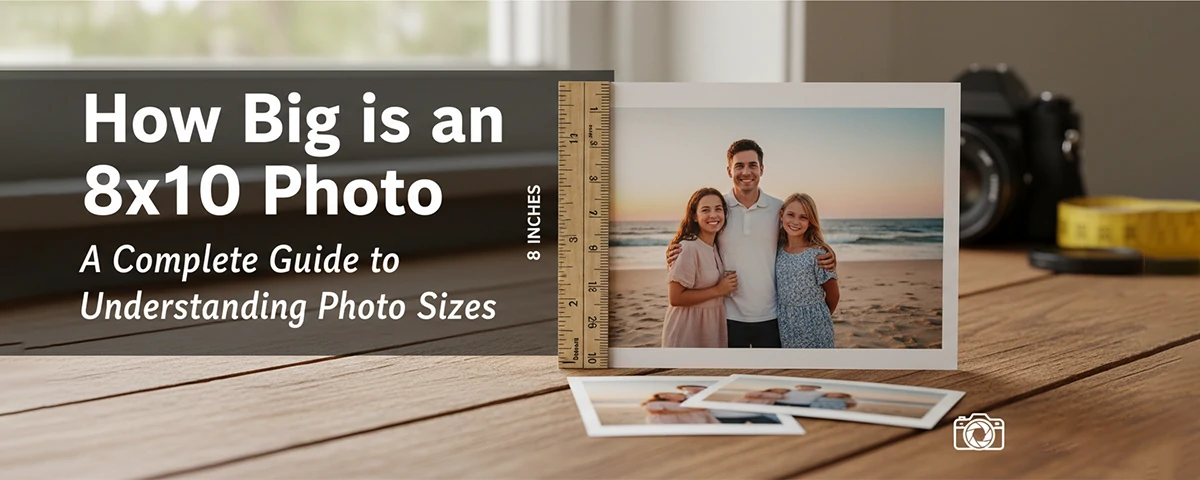
The 8x10 photo is one of the most recognizable and widely used print sizes in photography, particularly for framed display and professional portraiture. The name 8x10 describes the dimensions in inches with 8 inches being the shorter side and 10 inches being the longer side. In portrait orientation, an 8x10 print measures 8 inches wide by 10 inches tall and in landscape orientation, it measures 10 inches wide by 8 inches tall. The 8x10 print offers 80 square inches of surface area which is more than double the 35 square inches of a 5x7 print and more than three times the 24 square inches of a 4x6 print. This substantial size makes the 8x10 the standard choice for wall display and formal presentation where the image needs to command attention and deliver impact.
In centimeters, an 8x10 photo measures 20.32 centimeters by 25.4 centimeters. To calculate these metric dimensions, multiply each inch measurement by 2.54 which is the number of centimeters in one inch. Eight inches multiplied by 2.54 equals 20.32 centimeters and ten inches multiplied by 2.54 equals 25.4 centimeters. In millimeters, the same 8x10 photo measures 203.2 millimeters by 254 millimeters. These metric equivalents are important when ordering frames, mats, or display products from international suppliers or when working with printing services that use the metric system. The 8x10 size is close to the A4 paper size which measures 21.0 by 29.7 centimeters but the 8x10 is slightly narrower and shorter than A4 which is an important distinction when designing albums or presentation materials that combine photos with standard paper sizes.
In pixels at the standard high-quality print resolution of 300 pixels per inch, an 8x10 print requires a digital image that is 2400 pixels by 3000 pixels. This is calculated by multiplying each inch dimension by 300 which gives 8 inches times 300 equals 2400 pixels and 10 inches times 300 equals 3000 pixels. The total pixel count at 300 PPI is 7.2 million pixels or approximately 7.2 megapixels. At a good quality resolution of 240 PPI, the requirement drops to 1920 pixels by 2400 pixels totaling approximately 4.6 megapixels. At an acceptable resolution of 200 PPI, you need 1600 pixels by 2000 pixels totaling 3.2 megapixels. While many modern cameras exceed these requirements, it is important to verify that your images have sufficient resolution for 8x10 printing especially if you are using older cameras, cropping images heavily, or working with smartphone photos that may have lower effective resolution than their megapixel rating suggests.
The aspect ratio of an 8x10 photo is 4:5 which is significantly different from the 2:3 aspect ratio of most DSLR and mirrorless camera sensors and the 5:7 aspect ratio of a 5x7 print. The 4:5 aspect ratio means that the image is more square than the standard camera frame and approximately 17 percent of the longer dimension of a standard camera image must be cropped to fit the 8x10 format. This cropping requirement is an important consideration for photographers who regularly produce 8x10 prints because it affects how they compose their images. Professional portrait photographers who deliver 8x10 prints often compose their images with the 4:5 crop in mind, leaving extra headroom and space at the sides of the frame to ensure that important elements are not lost during cropping. Many cameras and editing software allow you to set a 4:5 crop guide overlay in the viewfinder or on the screen which helps you compose with the 8x10 format in mind during shooting rather than relying on post-processing crops.
A detailed dimension diagram showing an 8x10 photo with all measurements clearly labeled in inches, centimeters, and millimeters with measurement lines, arrows, and numerical values on each edge and the surface area displayed in the center. Include a three-way resolution comparison showing the same image prepared at 300 PPI with 2400 by 3000 pixels showing excellent sharpness, 240 PPI with 1920 by 2400 pixels showing good quality, and 200 PPI with 1600 by 2000 pixels showing acceptable quality with each sample shown at actual 8x10 print size and a magnified crop inset revealing the pixel structure with annotations explaining the minimum resolution requirements for professional-quality 8x10 prints. Show a size progression visual with an 8x10 print flanked by a 5x7 print on one side and a 4x6 print on the other with each size shown in correct proportion and the surface area difference labeled as percentages with a human hand shown for scale reference. Include an aspect ratio crop diagram showing a standard 2:3 camera image with the 8x10 4:5 crop area outlined and the cropped-off portions shaded demonstrating the significant cropping required with percentage annotations showing that approximately 17 percent of the original image width is lost and annotations explaining how professional photographers compose with this crop in mind.
📦 The 8x10 in Professional Portraiture
The 8x10 print has been the standard size for professional portrait photography for over a century and it remains the most requested size for formal portraits, senior portraits, family portraits, and corporate headshots. The dominance of the 8x10 in professional portraiture is rooted in its ideal proportions for displaying the human face and figure. The 4:5 aspect ratio of the 8x10 closely matches the proportions of a traditional painted portrait and it provides a natural and flattering frame for the human subject. When you place a well-composed portrait in an 8x10 format, the proportions feel inherently right and the viewer's eye is drawn naturally to the subject without the distraction of excessive negative space or the cramped feeling of a smaller format.
Professional portrait photographers structure their pricing and package offerings around the 8x10 print as the flagship product. Most portrait packages include one or more 8x10 prints as the primary deliverable with smaller sizes like 5x7 and 4x6 offered as supplementary options for wallets, gifts, and albums. The 8x10 print is large enough to display prominently in a home or office and it commands a price that reflects its value as a heirloom-quality product. Professional photographers typically charge between 25 and 100 dollars for a single 8x10 print depending on their market, experience, and the level of retouching and finishing included. The 8x10 print represents the core of the portrait photographer's product line and the quality of the 8x10 presentation often determines the client's overall satisfaction with their portrait experience.
The 8x10 format requires careful attention to composition, posing, and framing because the more square aspect ratio demands that the subject be positioned thoughtfully within the frame. Portrait photographers use several specific composition techniques for the 8x10 format including centering the subject with headroom above and space below for a classic formal look, placing the subject slightly off-center for a more dynamic modern composition, and using the full height of the frame for full-length or three-quarter length portraits where the subject's entire body fills the vertical space. The 8x10 format is less forgiving of compositional errors than smaller print sizes because the larger surface area makes any compositional weakness more visible. Professional portrait photographers typically shoot with the 8x10 crop in mind, composing their images within the 4:5 aspect ratio during the shoot rather than relying on post-processing adjustments to fit the format.
The finishing and presentation of 8x10 portrait prints is an important part of the professional photography experience. Most professional portrait photographers present their 8x10 prints mounted on backing board and packaged in a protective sleeve or portfolio case. Many photographers offer optional texture sprays, UV protective coatings, and custom matting as add-on services that enhance the durability and appearance of the print. The 8x10 print that is properly finished and presented feels like a premium product that justifies its price and creates a lasting impression on the client. The presentation quality of the 8x10 print is a reflection of the photographer's professionalism and attention to detail and it directly affects the client's perception of the value they received from their portrait session.
A professional portrait studio scene showing a photographer presenting an 8x10 print to a client with the print displayed in a presentation folio or matted mount showing the professional finishing that distinguishes studio portrait prints from consumer prints with annotations explaining the elements of professional print presentation including mounting, protective sleeves, and signature markings. Include a composition guide for 8x10 portraits showing three different portrait compositions within the 4:5 aspect ratio including a classic centered head and shoulders portrait with balanced headroom, a modern off-center portrait with the subject placed on a rule of thirds intersection, and a full-length portrait using the vertical height of the format with the subject positioned dynamically within the frame with each composition shown with grid overlays and annotations explaining the posing and framing techniques used. Show a portrait package comparison with the typical print sizes included in professional portrait packages including an 8x10 as the flagship wall print, 5x7 prints for family gifts, 4x6 prints for wallets and social media sharing, and mini prints for holiday cards with each size shown with its typical price point and quantity in a standard package with annotations explaining how photographers structure their pricing around the 8x10 as the primary product. Include a finishing options guide showing an 8x10 print with different finishing treatments including a standard print on luster paper, a print with a protective UV spray coating, a print mounted on archival backing board, and a print with a custom mat ready for framing with each finishing option labeled with its cost and benefits and annotations explaining the value that professional finishing adds to the portrait product.
🎨 Framing and Matting Your 8x10 Prints
Framing and matting are especially important considerations for 8x10 prints because this size is primarily intended for wall display and the quality of the presentation directly affects how the image is perceived and enjoyed. The 8x10 format offers a wide range of framing and matting options that can enhance the visual impact of your photograph and integrate it seamlessly into your home or office decor. Understanding these options helps you present your 8x10 prints in the most flattering and professional way possible whether you are a photographer delivering prints to clients or an individual displaying your own photography.
Standard 8x10 frames are widely available and they offer the simplest and most affordable framing option for this print size. An 8x10 frame holds the print directly without matting and the frame itself is typically designed to display the print edge-to-edge. Standard 8x10 frames are available in a vast range of styles from simple modern metal frames to ornate traditional wood frames and they can be found at every price point from budget-friendly options at discount stores to high-end frames from specialty retailers. The main advantage of a standard 8x10 frame is its simplicity and affordability but the edge-to-edge presentation means that any imperfections at the print edges are visible and the image lacks the visual breathing room that a mat provides.
Matting an 8x10 print within a larger frame is the preferred presentation choice for professional photographers and serious enthusiasts because the mat adds visual depth, provides breathing room around the image, and creates a more finished and gallery-like appearance. The most common matting configuration for an 8x10 print is to place it in an 11x14 or 16x20 frame with a mat that has a cutout opening sized for 8x10. The mat border around the print should be wider at the bottom than at the top and sides to compensate for the visual illusion that makes centered images appear lower than center which is a standard practice in professional framing known as bottom-weighting. The color of the mat should complement the image without competing with it and white, cream, black, and gray are the most popular and versatile mat colors for photographic prints.
Custom framing offers unlimited possibilities for presenting your 8x10 prints in a way that perfectly suits both the image and the space where it will be displayed. Custom framing allows you to choose the frame profile, material, color, and finish, the mat color, width, and number of mats, and the glazing type including standard glass, non-glare museum glass, UV-protective glass, and acrylic. Custom framing is significantly more expensive than standard frames but the investment is justified for important images that will be displayed prominently for many years. Professional custom framers can advise on the best framing choices for your specific image and setting and they have the tools and expertise to create a finished product that protects your print and presents it at its absolute best. For photographers selling 8x10 prints to clients, offering custom framing as an optional upgrade can add significant value to the purchase and provide clients with a complete display-ready product that they can hang and enjoy immediately.
A framing comparison showing the same 8x10 print presented in three different configurations including a standard 8x10 frame without matting showing the print edge-to-edge, a matted presentation with the 8x10 print in an 11x14 frame with a single white mat, and a double-matted presentation with the print in a 16x20 frame with two mats an outer neutral mat and an inner colored mat that accents the image with each configuration shown with dimensions labeled and annotations explaining the visual effect and cost of each option. Include a mat width and color guide showing the same 8x10 print with different mat configurations including a narrow mat, a standard mat, and a wide mat with the visual effect of each width demonstrated and a selection of mat colors including white, off-white, cream, gray, black, and a color pulled from the image with each color shown with annotations explaining the effect on the presentation and the principles of mat color selection. Show a gallery wall layout featuring multiple 8x10 prints arranged on a wall with consistent spacing and alignment with the frame positions marked with measurements and annotations explaining the principles of creating a cohesive gallery wall display including proper spacing, visual balance, and thematic connection between images. Include a custom framing options guide showing the choices available in custom framing for 8x10 prints including frame profiles from simple modern to ornate traditional, mat options from single to triple mats with v-grooves and fillets, and glazing options including standard glass, non-glare glass, UV-protective glass, and museum-grade acrylic with each option shown with its visual effect and price range and annotations explaining when each level of custom framing investment is appropriate for different types of images and display settings.
🏷 Paper Choices for 8x10 Prints
The choice of paper for your 8x10 prints is especially important because the larger surface area makes paper characteristics like texture, finish, and weight more noticeable and more influential on the overall appearance of the print. An 8x10 print on premium paper feels and looks like a quality product while the same image on low-quality paper can appear cheap and unimpressive regardless of the image quality. Understanding the paper options available for 8x10 printing helps you choose the right paper for each image and purpose ensuring that your prints make the best possible impression.
Professional luster paper is the most popular choice for 8x10 prints among professional photographers and it is the standard paper for portrait studios and wedding photographers. Luster paper has a subtle semi-gloss sheen that provides excellent color reproduction and contrast while having minimal glare and good resistance to fingerprints. The surface texture of luster paper is fine and smooth with a slight tooth that gives the print a tactile quality and reduces the appearance of surface imperfections. Luster paper is an excellent all-purpose choice that works well for portraits, landscapes, fine art, and virtually any photographic subject. Most professional photography labs offer luster paper as their default option and it is widely available in a range of weights from standard 240 GSM to premium 300 GSM.
Metallic paper is a premium option that produces exceptionally vibrant colors, deep blacks, and a distinctive pearlescent sheen that gives images a luminous three-dimensional quality. Metallic paper is created by coating the paper base with a metallic layer that reflects light from beneath the image creating a depth and brilliance that no other paper can match. Metallic paper is particularly effective for images with rich colors, high contrast, and reflective subjects like water, metal, glass, and landscapes with dramatic skies. The metallic finish adds a level of visual impact that makes 8x10 prints on this paper truly stand out. However, metallic paper is more expensive than luster or gloss and it requires careful handling because the surface can show fingerprints and it is more susceptible to scratching.
Fine art paper is an excellent choice for 8x10 prints that will be displayed as art or sold as limited edition prints. Fine art papers are made from high-quality materials like cotton rag, alpha-cellulose, or bamboo and they are typically acid-free and lignin-free for archival permanence. Fine art papers have a natural, textured surface that gives prints a painterly quality and a tactile richness that enhances the viewing experience. The matte finish of fine art paper eliminates glare and provides a wide color gamut with excellent detail in both highlights and shadows. Fine art papers are available in a range of textures from smooth to rough and in weights from 280 GSM to 500 GSM or more. The natural white or cream tone of fine art paper adds warmth to images and complements both color and black and white photography. For photographers selling 8x10 prints as art, fine art paper is the gold standard that collectors expect and value.
A paper comparison showing the same image printed at 8x10 on three different paper types including luster showing balanced color and contrast with a subtle sheen, metallic showing exceptionally vibrant colors with a pearlescent glow and deep blacks, and fine art matte showing a natural textured surface with warm tones and a painterly quality with each paper type shown with a macro crop of the surface texture and annotations explaining the characteristics, best use, and price point for each paper option. Include a paper weight demonstration showing three 8x10 prints on different weight papers held to demonstrate rigidity including lightweight 200 GSM paper that bends and flexes easily, standard 260 GSM paper with moderate rigidity, and heavy 300 GSM or higher paper that is thick and stiff with annotations explaining how paper weight affects the perceived quality and handling of the print and the recommended weight for different display applications including framed display, portfolio presentation, and matted framing. Show a surface texture macro comparison with extreme close-up images of each paper surface including luster showing a fine pebbled texture, metallic showing a smooth reflective surface with metallic particles visible at high magnification, and fine art showing visible fiber texture with a natural irregular surface with each surface shown at high magnification with annotations explaining how the surface texture affects light reflection, color appearance, and the tactile experience of viewing the print. Include an archival quality comparison showing the expected lifespan of 8x10 prints on different paper types under normal display conditions including standard consumer paper lasting 20 to 50 years, professional luster paper lasting 50 to 100 years, and fine art archival paper lasting 100 to 200 years or more with annotations explaining the factors that affect print longevity including paper quality, ink type, UV exposure, humidity, and storage conditions.
📷 Comparing 8x10 with Other Standard Print Sizes
Understanding how the 8x10 print size compares with other standard photo sizes helps you appreciate its unique position in the range of available print formats and make informed decisions about which size to use for different applications. The 8x10 is the largest of the standard consumer print sizes that are commonly offered by retail printing services and it serves as the bridge between casual snapshot printing and professional fine art printing. Its size and proportions give it a presence that smaller formats cannot match while still being manageable and affordable for everyday use.
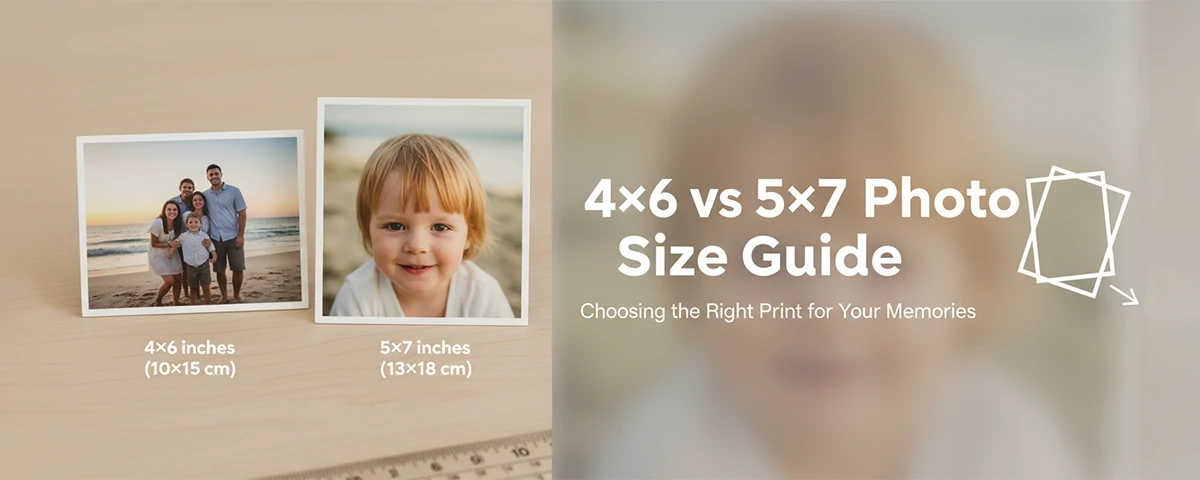
Compared to the 5x7 print, the 8x10 offers approximately 129 percent more surface area. A 5x7 print has 35 square inches while an 8x10 has 80 square inches. This dramatic size difference makes the 8x10 feel substantially more significant and display-worthy. The 8x10 is large enough to serve as a primary wall display while the 5x7 is better suited for tabletop frames, albums, and smaller spaces. The 8x10 also has a different aspect ratio 4:5 compared to the 5x7's 5:7 which means images must be cropped differently for each format. The 8x10's 4:5 aspect ratio is more square than the 5x7 and it is the traditional format for professional portraiture because the proportions are well-suited to framing the human figure.
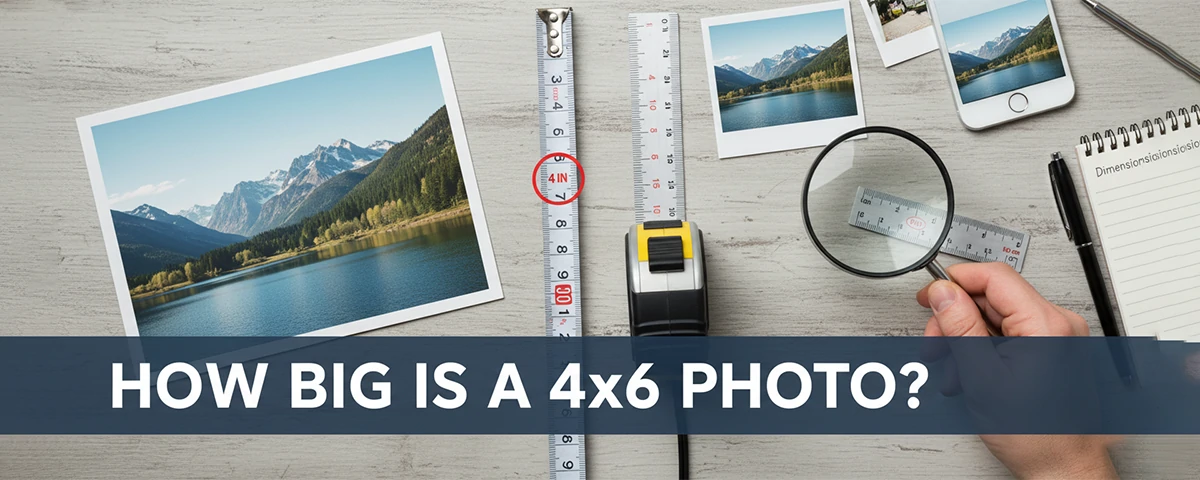
Compared to the 4x6 snapshot size, the 8x10 is dramatically larger with more than three times the surface area. A 4x6 print has 24 square inches while an 8x10 has 80 square inches or 233 percent more area. The 8x10 and 4x6 also have different aspect ratios with the 8x10 at 4:5 and the 4x6 at 2:3 which is the native aspect ratio of most camera sensors. This means that images from standard cameras fit the 4x6 format without cropping but require significant cropping to fit the 8x10 format. The 4x6 is the standard for casual snapshots, albums, and photo boxes while the 8x10 is the standard for wall display, formal portraits, and professional presentations. The two sizes serve completely different purposes and most photographers use both sizes regularly for different applications.
For photographers and artists who produce work for exhibition and sale, the 8x10 print is the entry point into the fine art print market. Limited edition photographic prints are commonly offered in 8x10 size along with larger formats like 11x14, 16x20, and 20x24. The 8x10 is the most affordable option for buyers who want to collect photographic art and it is the size most commonly used for portfolio presentations and gallery submissions. The 8x10 print on fine art paper with a carefully chosen frame and mat can command prices from 50 to 500 dollars or more depending on the photographer's reputation and the exclusivity of the edition. For photographers beginning to sell their work, the 8x10 print is the ideal size to start with because it offers a professional presentation at a price point that is accessible to a broad range of buyers.
A comprehensive size comparison chart showing all standard photo print sizes arranged in ascending order from 4x6 through 8x10, 11x14, 16x20, 20x24, and 24x36 with each size shown as a proportional rectangle in correct relative scale with the 8x10 highlighted and its dimensions labeled in inches and centimeters with the surface area shown in square inches within each rectangle. Include a surface area bar chart with each print size represented as a horizontal bar with the square inch area labeled and the 8x10 bar highlighted showing the dramatic size increase from 4x6 and 5x7 with the percentage difference labeled on each bar. Show a practical use comparison with the same image printed at 4x6, 5x7, and 8x10 displayed in realistic settings including the 4x6 in a photo album, the 5x7 in a tabletop frame, and the 8x10 on a wall with each setting shown to the same scale demonstrating how the print size affects the viewing experience and the appropriate display context. Include a fine art print pricing guide showing typical price ranges for 8x10 limited edition prints compared to larger sizes with the 8x10 shown as the entry-level size for art buyers and annotations explaining how photographers price their work based on size, edition size, paper choice, and market positioning with the 8x10 highlighted as the most accessible size for new collectors.
🗄 Storing and Preserving 8x10 Prints
Proper storage and preservation are essential for 8x10 prints because their larger size makes them more susceptible to physical damage and their value as display pieces and professional products justifies the investment in proper care. Whether you are a photographer storing client prints or an individual preserving family photographs, understanding the best practices for storing and preserving 8x10 prints ensures that they remain in excellent condition for years or even decades to come.
Flat storage in archival boxes is the recommended method for storing 8x10 prints that are not currently on display. Archival storage boxes designed specifically for 8x10 prints are available from photo supply companies and they provide protection from light, dust, and physical damage. These boxes are made from acid-free and lignin-free materials that will not transfer harmful chemicals to your prints over time. When storing multiple 8x10 prints in a box, place archival interleaving paper between each print to prevent them from sticking together or transferring surface texture. Do not overfill the box because tight packing can cause prints to bend or become difficult to remove without damage. Store the box flat rather than on its edge to prevent prints from sliding and bending and place the box in a cool, dry, dark location with stable environmental conditions.
Portfolio boxes and presentation cases offer a more refined storage solution for 8x10 prints that are regularly accessed for client review, portfolio presentation, or exhibition. Professional portfolio boxes are available in materials like leather, linen, and archival board and they typically include a ribbon or strap closure that keeps the contents secure. The interior of a quality portfolio box is lined with archival materials and may include pages or sleeves that hold individual prints. Presentation cases are designed for photographers who regularly show their work to clients and they provide a professional and impressive way to present 8x10 prints during consultations and sales appointments. A well-made portfolio box or presentation case not only protects your prints but also enhances the perception of quality and professionalism when you present your work to others.
Environmental conditions are critical for the long-term preservation of 8x10 prints. The ideal storage environment maintains a stable temperature between 65 and 70 degrees Fahrenheit and relative humidity between 30 and 50 percent. Fluctuations in temperature and humidity cause expansion and contraction of the paper and emulsion layers which can lead to cracking, curling, or separation over time. High humidity encourages the growth of mold and mildew which causes irreversible staining and deterioration of the print surface. Low humidity can cause the paper to become brittle and prone to cracking. Direct sunlight and UV radiation cause fading and discoloration of photographic dyes and pigments and even indirect sunlight can cause cumulative damage over time. Store your 8x10 prints in a dark, climate-controlled environment away from exterior walls, windows, heat sources, and areas prone to moisture like basements and bathrooms. For prints that are framed and displayed, use UV-protective glass or acrylic to minimize light damage and rotate displayed prints periodically to ensure even exposure.
A storage solutions guide showing different methods for storing and preserving 8x10 prints including an archival flat storage box with a lid and label area with prints organized with interleaving paper between each print visible inside, a professional portfolio case made of leather or linen with a ribbon closure and interior sleeves holding 8x10 prints for client presentation, and a display storage solution showing framed 8x10 prints on a wall with UV-protective glass and a note indicating the recommended rotation schedule with each storage method shown with annotations explaining the capacity, advantages, and best use for each option. Include an environmental monitoring guide showing a storage area with a thermometer and hygrometer visible displaying the recommended temperature and humidity ranges with a checklist of ideal storage conditions including darkness, stable temperature between 65 and 70 degrees Fahrenheit, relative humidity between 30 and 50 percent, protection from pollutants, and protection from physical damage with annotations explaining how to monitor and maintain proper storage conditions and the warning signs of environmental problems like mold growth, paper curling, or color fading. Show a handling guide with a person demonstrating proper techniques for handling 8x10 prints including holding the print by the edges with clean dry hands, wearing cotton gloves for archival handling, supporting the print with both hands when moving it, and never touching the print surface with annotations explaining how improper handling can cause damage including fingerprints, oils, scratches, and bending and the best practices for safe handling of valuable prints. Include a digitization guide showing the process of scanning 8x10 prints for digital backup including a large format flatbed scanner with an 8x10 print positioned on the scanning bed, the scanner software interface showing recommended settings for archival scanning including 300 to 600 DPI resolution, 48-bit color depth, and TIFF file format with the resulting digital file shown being saved to multiple backup locations including an external hard drive, cloud storage, and a secondary off-site backup with annotations explaining the recommended scanning parameters and the importance of maintaining multiple backup copies of irreplaceable prints.
💰 Cost of 8x10 Printing
The cost of printing 8x10 photos varies widely depending on the printing method, the service provider, the paper quality, and the quantity ordered. As the largest standard consumer print size, the 8x10 commands a higher price per print than smaller formats and understanding the cost structure helps you make informed decisions about where to print and how to get the best value. The 8x10 print typically costs two to four times as much as a 5x7 print and four to eight times as much as a 4x6 print reflecting the larger paper size and the greater ink or chemistry required to produce the print.
Consumer printing services like retail stores and online budget printers typically charge between 1 and 3 dollars per 8x10 print for standard glossy paper with the price decreasing for bulk orders. At budget-friendly services, you can often find 8x10 prints for as low as 99 cents each when you order in quantity or take advantage of promotional offers. These consumer services provide acceptable quality for everyday use and they are the most affordable option for printing large quantities of 8x10 prints for events, gifts, or casual display. However, the quality and consistency of consumer printing can vary significantly between different locations and print runs and the paper and finishing options are typically limited to basic glossy or matte. For prints that will be framed and displayed prominently, the cost savings of consumer printing may not be worth the risk of inconsistent quality or color inaccuracy.
Professional photography labs charge between 3 and 15 dollars per 8x10 print depending on the paper type, finish, and the level of color correction and quality control included. Professional labs use calibrated industrial printers that produce consistent results across thousands of prints and they offer a wide range of paper options including luster, metallic, fine art, and specialty papers that are not available at consumer services. Professional labs also provide color management services including custom ICC profiles and soft proofing that help ensure accurate color reproduction. Many professional labs offer retouching and enhancement services that can improve the quality of your images before printing. For photographers delivering 8x10 prints to clients, selling prints as art, or creating prints for exhibition, the higher cost of professional lab printing is justified by the superior quality, consistency, and range of options.
Home printing of 8x10 photos gives you complete control over the printing process but the cost per print can be higher than consumer lab services especially when you factor in the cost of paper and ink. A single 8x10 print printed at home on quality photo paper can cost between 1.50 and 4 dollars depending on your printer model, the paper you use, and the ink coverage of your image. The cost of ink is particularly significant for 8x10 prints because the larger surface area requires more ink per print and the ink cartridges for consumer photo printers are expensive relative to their capacity. However, home printing offers the advantages of immediate turnaround, unlimited control over color and quality, and the ability to print a single copy without minimum quantity requirements. For photographers who print 8x10 prints frequently and value complete control over the output, home printing can be a viable option especially when using a printer with low ink costs and refillable or third-party ink systems.
A cost comparison chart showing the price per 8x10 print at three different printing options including consumer retail services with a price range of 99 cents to 3 dollars, professional photography labs with a price range of 3 to 15 dollars, and home printing with an estimated cost of 1.50 to 4 dollars per print including paper and ink with each option shown with a sample 8x10 print and annotations explaining the quality level, turnaround time, paper options, and best use case for each printing option. Include a bulk pricing comparison table showing the per-print cost at different quantity levels for 8x10 prints including single prints, 5 prints, 10 prints, 25 prints, and 50 prints at both consumer and professional services with the price breaks clearly shown and the quantity where the best value is achieved highlighted with annotations explaining how to maximize value by ordering appropriate quantities and how to take advantage of promotional offers and discounts. Show a quality versus cost matrix with four quadrants including high cost low quality, high cost high quality, low cost low quality, and low cost high quality with the different printing options plotted on the matrix and the recommended option for different printing purposes highlighted with annotations explaining how to balance quality and cost for different types of 8x10 prints including casual display, client delivery, fine art sale, and exhibition. Include a long-term cost analysis showing the total cost of printing 100 8x10 prints at each option over one year including the per-print cost, any membership or subscription fees, and shipping costs for lab printing versus paper and ink costs for home printing with the total cost for each option displayed and the most economical option for different usage levels identified with annotations explaining how to calculate your true printing costs and choose the most cost-effective option for your specific printing volume and quality requirements.
💡 Creative Uses for 8x10 Prints Beyond the Frame
While framed display is the most common use for 8x10 prints, this versatile size can be used in many creative ways that go beyond traditional framing. Thinking creatively about how to use 8x10 prints opens up new possibilities for incorporating your photography into your daily life, creating unique gifts, and exploring new presentation formats. The substantial size and reasonable cost of 8x10 printing make it practical for a variety of creative projects that would be less effective with smaller or larger formats.
Gallery wraps and canvas prints are a popular alternative to traditional framing for 8x10 images. A gallery wrap involves printing the image on canvas material and stretching it over a wooden frame so that the image wraps around the edges of the frame creating a finished piece that does not require additional framing. The 8x10 size is ideal for canvas wraps because it is large enough to make an impact while being small enough to be affordable and easy to hang. Canvas wraps give photographs a painterly, artistic quality that complements many subjects and decor styles and they can be displayed without the added expense and weight of a traditional frame. Many online printing services offer 8x10 canvas wraps as a standard product option and they are a popular choice for creating a cohesive gallery wall with a consistent presentation style.
Photo blocks and acrylic prints offer a modern, contemporary presentation for 8x10 images. Photo blocks are made by mounting a print onto a solid block of material like wood, acrylic, or aluminum and the result is a dimensional display piece that floats the image above the surface creating depth and visual interest. Acrylic prints involve mounting the print behind a clear acrylic sheet which gives the image exceptional depth, clarity, and brilliance. The 8x10 size is particularly effective for these modern presentation formats because the image is large enough to show detail and impact while the contemporary materials complement the moderate scale. These presentation options are more expensive than traditional framing but they offer a distinctive and modern look that appeals to collectors and clients who want something beyond the standard framed print.
Custom calendars, notebooks, and stationery featuring 8x10 images are thoughtful and personal gifts that combine practical utility with meaningful photography. An 8x10 wall calendar with a different image for each month creates a year-long display of your photography that the recipient will see and appreciate every day. A custom notebook or journal with an 8x10 image on the cover makes a distinctive and personal gift for friends, family, or clients. Thank you cards, note cards, and holiday cards featuring 8x10 images offer a premium and memorable alternative to standard greeting cards. The 8x10 format provides enough space for the image to make an impact while leaving room for text, design elements, and personal messages. These creative applications of 8x10 prints extend the value and enjoyment of your photography beyond the wall and into everyday life.
A creative display collage showing alternative presentation formats for 8x10 prints including a canvas gallery wrap with the image wrapping around the edges of a wooden frame hanging on a wall, an acrylic face-mount print with the image displayed behind a clear acrylic sheet with visible depth and a mounting system on the back, a photo block with the print mounted on a wooden or aluminum block creating a dimensional display piece that sits on a shelf or desk, and a custom calendar showing a different 8x10 image for each month with the calendar grid printed below the image and the spiral binding visible with each creative format shown with annotations explaining the materials, process, cost, and best use for each option. Include a photo block material comparison showing three different mounting substrates for 8x10 prints including natural wood with a visible wood grain background, white acrylic with a clean modern appearance, and brushed aluminum with a metallic sheen with each substrate shown with the same image mounted on it and annotations explaining the visual effect and appropriate decor style for each material. Show a custom stationery collection with an 8x10 image used on a notebook cover, a set of note cards, and a wall calendar all featuring the same photographic series demonstrating how a cohesive collection of products can be created from a single body of work with annotations explaining how photographers and artists can extend their brand and revenue by offering product lines featuring their images in different formats. Include a gift presentation guide showing an 8x10 canvas wrap being wrapped in tissue paper and placed in a gift bag with a handwritten card attached showing how to present creative 8x10 products as thoughtful and impressive gifts with annotations explaining the importance of presentation in gift-giving and how to package and present photographic products for maximum impact and appreciation.
💻 Printing 8x10 at Home vs Professional Lab
Printing 8x10 photos at home versus sending them to a professional lab is an important decision that affects quality, cost, convenience, and your overall satisfaction with the final product. The 8x10 size is large enough that print quality differences between home and lab printing become readily apparent and understanding the trade-offs helps you choose the right approach for each project. Many photographers use a combination of home and lab printing to get the best of both worlds depending on the specific requirements of each print job.
Home printing of 8x10 photos offers the advantages of immediate turnaround, complete control over the printing process, and the ability to make test prints and adjustments in real time. When you print at home, you can adjust colors, contrast, and brightness interactively, printing multiple test versions until the result matches your vision exactly. This level of control is particularly valuable for fine art printing where the final print must match the photographer's creative intent precisely. Home printing also allows you to print a single 8x10 print at any time without meeting minimum quantity requirements or waiting for shipping. The main disadvantages of home printing are the higher per-print cost when you factor in paper and ink, the limited range of paper options compared to professional labs, and the need to maintain your printer and manage ink supplies. For photographers who print 8x10 prints infrequently, the ongoing cost of printer maintenance and ink expiration can make home printing uneconomical compared to using a professional lab.
Professional lab printing offers superior consistency, a much wider range of paper and finish options, and generally lower per-print costs for larger quantities. Professional labs use industrial-grade printers that are calibrated and maintained to produce consistent results across thousands of prints. They offer paper options including archival-grade, metallic, fine art textured, pearlescent, and specialty papers that are simply not available for home printers. Professional labs also provide color management expertise and can help you achieve accurate color reproduction through custom ICC profiles and soft proofing services. The main disadvantages of lab printing are the turnaround time which typically ranges from a few days to a week plus shipping, the minimum order quantities that some labs require, and the reduced control over the final output since you must trust the lab's quality control processes. For photographers delivering 8x10 prints to clients or producing prints for sale, the consistency and quality of professional lab printing usually justifies the higher per-print cost and longer turnaround time.
A hybrid approach using both home and lab printing gives you the maximum flexibility for 8x10 printing. You can use home printing for proofs, test prints, and last-minute needs while relying on professional labs for client deliveries, exhibition prints, and products that require specialty papers. The key to successful hybrid printing is maintaining consistent color management between your home setup and your chosen lab which requires a calibrated monitor, soft proofing using the lab's ICC profile, and an understanding of how each output device reproduces color. Many photographers use their home printer to produce a proof print, make adjustments based on the proof, and then send the final file to the lab with confidence that the lab print will match their expectations. This hybrid workflow combines the control of home printing with the quality and consistency of professional lab production.
A comparison showing a home printing workspace with a professional photo printer, ink cartridge set, and a stack of 8x10 photo paper on a desk with a freshly printed test print being examined versus a professional lab environment with large industrial printers, color calibration stations, and quality control inspectors examining prints under controlled lighting with each setup shown with annotations explaining the advantages and limitations of each approach including cost per print, turnaround time, paper options, color consistency, and quality control. Include a cost analysis chart comparing the per-print cost of home printing versus lab printing for 8x10 at different quantities including 1 print, 5 prints, 10 prints, 25 prints, and 50 prints with the break-even point where lab printing becomes more economical clearly marked and annotations explaining how to calculate true costs including paper, ink, and printer depreciation for home printing versus print cost and shipping for lab printing. Show a hybrid workflow diagram showing a typical photographer's workflow for 8x10 printing including image editing on a calibrated monitor, soft proofing using the lab's ICC profile, printing a proof at home for evaluation and client approval, making final adjustments, and then sending the approved file to the professional lab for final production with annotations explaining the steps where each approach is used and how to maintain color consistency between home proofs and lab output. Include a paper options comparison table showing the papers available for home printing versus professional lab printing for 8x10 including standard glossy and matte available for both, and specialty papers like metallic, fine art textured, canvas, and pearl available primarily through professional labs with each paper type shown with a sample swatch and annotations explaining the visual characteristics and best use for each paper option.
💒 Choosing the Right 8x10 Print for Your Wall
Selecting the right 8x10 print for wall display involves more than just choosing your favorite image. The print you select for prominent display on your wall will be seen every day by you, your family, and your guests and it should be an image that rewards repeated viewing and complements the space where it hangs. Taking a thoughtful approach to selecting and preparing your 8x10 wall print ensures that you will enjoy it for years to come and that it makes a positive contribution to your home or office environment.
Consider the viewing distance when selecting an image for 8x10 wall display. An 8x10 print is typically viewed from a distance of two to six feet depending on where it is placed. Images with strong composition, clear subject matter, and good contrast work best at this viewing distance because they communicate their content effectively without requiring close inspection. Images with fine detail that is only visible up close may not be the best choice for wall display because that detail will be lost at typical viewing distances. Portraits, landscapes, and well-composed scenes generally work well as 8x10 wall prints because their subject matter is easily understood from a distance and their compositional strength draws the viewer in for closer inspection. Test your image by viewing it at the distance it will be displayed before committing to the print to ensure it works effectively at that scale.
The color palette of your 8x10 print should complement the room where it will be displayed. Consider the dominant colors of the walls, furniture, and decor in the room and choose an image whose colors harmonize with or thoughtfully contrast against the existing palette. A print with colors that clash with the room will feel jarring and uncomfortable while a print whose colors harmonize with the space will feel intentional and satisfying. Black and white photography offers maximum flexibility for wall display because monochrome images complement virtually any color scheme and they add a classic, timeless quality to any space. If you are creating a gallery wall with multiple 8x10 prints, consider the color relationships between the prints as well as their relationship to the room and aim for a cohesive palette that ties the collection together while allowing each individual image to shine.
The lighting conditions where your 8x10 print will hang should influence your choice of paper finish and framing. Prints displayed in bright rooms with direct or indirect sunlight benefit from matte or luster finishes that minimize glare and reflections. Prints displayed in rooms with controlled lighting where glare can be managed can take advantage of glossy or metallic finishes that offer enhanced color vibrancy and contrast. Prints displayed opposite windows or light sources may be subject to fading over time and should be printed on archival papers with UV-protective coatings and framed with UV-protective glass or acrylic. Consider the direction and intensity of light at different times of day and how it will affect the appearance of your print before making final decisions about paper, finish, and framing. A print that looks beautiful at noon may look completely different in evening light and understanding these lighting dynamics helps you make choices that ensure your print looks its best at all times.
A room setting showing an 8x10 print displayed on a wall in a well-decorated living room with the print properly framed and positioned at eye level with the surrounding decor including furniture, colors, and lighting shown in context with annotations explaining how the print complements the room design and the factors that were considered in selecting and displaying the print. Include a viewing distance guide showing the same 8x10 print as it appears at different viewing distances from three feet where the image is clearly visible and engaging to six feet where the composition and subject remain clear but fine detail becomes less visible with annotations explaining the relationship between viewing distance and image content and how to select images that work well at the expected viewing distance for the display location. Show a color harmony guide with the same room setting showing three different 8x10 print options on the wall including a warm-toned image that complements warm room colors, a cool-toned image that creates an intentional contrast with warm room colors, and a black and white image that harmonizes with any color scheme with each option shown and annotations explaining the color principles that guide the selection and the visual effect of each choice. Include a lighting condition demonstration showing the same 8x10 print under different lighting conditions including bright sunlight showing glare on a glossy finish, soft ambient light showing the print at its best on a luster finish, and evening warm light showing how the print's color temperature interacts with the ambient light with annotations explaining how to choose paper finish and framing based on the lighting conditions of the display location and how to use lighting to enhance the appearance of your displayed prints.
💬 Frequently Asked Questions
What are the exact dimensions of an 8x10 photo?
An 8x10 photo measures exactly 8 inches by 10 inches which converts to 20.32 centimeters by 25.4 centimeters or 203.2 millimeters by 254 millimeters. In pixels at standard 300 PPI print resolution, it measures 2400 pixels by 3000 pixels for a total of 7.2 million pixels.
What aspect ratio is an 8x10 photo?
An 8x10 photo has a 4:5 aspect ratio which is more square than the 2:3 aspect ratio of standard camera sensors. Images from most cameras must be cropped to fit the 8x10 format and approximately 17 percent of the image width is lost in the cropping process.
How many pixels do I need for a good quality 8x10 print?
For excellent quality 8x10 prints at 300 PPI, you need 2400 by 3000 pixels or 7.2 megapixels. For good quality at 240 PPI, you need 1920 by 2400 pixels or 4.6 megapixels. For acceptable quality at 200 PPI, you need 1600 by 2000 pixels or 3.2 megapixels.
Is 8x10 bigger than A4 paper?
No, A4 paper is slightly larger than 8x10. A4 measures 8.27 by 11.69 inches while 8x10 measures 8 by 10 inches. The 8x10 is slightly narrower and shorter than A4 which is an important distinction when designing albums or presentations that combine photos with standard paper sizes.
What is the best paper for 8x10 prints?
The best paper depends on your use. Professional luster paper is the most popular all-purpose choice offering excellent color reproduction with minimal glare. Metallic paper provides exceptional vibrancy and depth for images that benefit from extra visual impact. Fine art matte paper offers archival quality and a painterly texture that is ideal for limited edition prints and gallery display.
Can I print an 8x10 photo from my phone?
Yes, but you need to ensure your phone's camera has sufficient resolution. Most modern smartphones with 12 megapixel cameras or higher can produce acceptable 8x10 prints. However, the phone's native aspect ratio is usually different from 4:5 so you will need to crop your image to fit the 8x10 format. Use a photo editing app to crop to 8x10 proportions before ordering or printing.
How do I crop my photos for 8x10 printing?
Set your photo editing software's crop tool to a 4:5 aspect ratio which is the same as 8x10. Adjust the crop frame over your image to preserve the most important elements. Since approximately 17 percent of the image will be cropped from the longer dimension, be sure to leave extra space at the edges when composing your original shot if you plan to print at 8x10.
What size frame do I need for an 8x10 photo?
You need a frame designed for an 8x10 print. Standard 8x10 frames are widely available at all price points. For a matted presentation, you can place an 8x10 print in an 11x14 or 16x20 frame with a mat that has an 8x10 opening. This creates a more finished gallery-style presentation that adds visual depth and breathing room around the image.
How much does an 8x10 print cost?
Consumer printing services typically charge between 1 and 3 dollars per 8x10 print with discounts for bulk orders. Professional photography labs charge between 3 and 15 dollars depending on paper type and services. Home printing costs between 1.50 and 4 dollars per print including paper and ink costs.
What is the difference between 8x10 and 8R?
8x10 and 8R refer to the same print size. 8R is the international designation used in many countries including Japan, India, and parts of Europe while 8x10 is the designation most commonly used in the United States and Canada. Both describe a print measuring 8 inches by 10 inches.
🏠 Conclusion
The 8x10 photo print is a classic format that has earned its place as the standard for professional portraiture, wall display, and fine art presentation. Its substantial size, elegant 4:5 proportions, and versatility make it the ideal choice for images that deserve to be seen and appreciated in a format that does justice to their quality and significance. Understanding the dimensions, resolution requirements, paper options, framing choices, and best practices for working with this format empowers you to create prints that look professional, last for generations, and bring lasting enjoyment to everyone who sees them.
Whether you are a professional photographer delivering portraits to clients, an artist selling limited edition prints, or someone who simply wants to display your best photographs in a format that shows them at their finest, the 8x10 print delivers results that smaller formats cannot match. The technical knowledge of pixel dimensions, aspect ratios, color management, and paper selection provides the foundation for producing consistently excellent 8x10 prints but the true value of any print lies in the image itself and the memories, emotions, and beauty it captures.
The 8x10 print connects us to the long tradition of photographic portraiture and display that has been bringing people closer to their cherished images for over a century. When you hold an 8x10 print, you are holding a piece of photographic history in your hands and continuing a tradition of preserving and sharing important moments through the medium of the physical print. Print your best images at 8x10, display them with pride, and enjoy the way this classic format elevates your photography to the level it deserves.
Display Your Photography at 8x10
The 8x10 print is the gold standard for displaying your most important photographs with the quality, presence, and impact they deserve. Large enough to command attention, versatile enough for any setting, and timeless in its appeal. Choose 8x10 for your best images and experience the difference that the right print format makes.
Print at 8x10
Frame It Well
Enjoy Every Day
This article was created to help photographers, designers, and anyone who works with photographs understand the 8x10 print format in comprehensive detail. All dimensions, specifications, and recommendations are based on industry standards and best practices. Print quality, paper options, and pricing may vary between printing services and geographic regions. Always consult your specific printing service for detailed information about their products and requirements.
Where to go next
Spotted something wrong? Report an error on this page. We correct on the page and say what changed.