


A Comprehensive Guide to YouTube Earnings and Monetization
🚀 Introduction
YouTube has revolutionized the way we consume content and, more importantly, how creators can monetize their passion. What started as a simple video-sharing platform has evolved into a massive ecosystem where content creators can build sustainable careers, reach global audiences, and generate substantial income.
The allure of becoming a YouTuber is undeniable. The platform offers unprecedented creative freedom, the potential for viral success, and multiple revenue streams that can transform a hobby into a lucrative business. From teenagers in their bedrooms to established media companies, millions of creators are vying for viewers' attention and, ultimately, their wallets.
But how much do YouTubers actually make? The answer isn't straightforward. YouTube earnings vary dramatically based on numerous factors including audience size, content niche, engagement rates, and monetization strategies. Some creators earn millions annually, while others struggle to make minimum wage despite having substantial followings.
This comprehensive guide will explore the various income streams available to YouTubers, examine the factors that influence earnings, debunk common misconceptions, and provide real-world examples of creator earnings. Whether you're an aspiring YouTuber or simply curious about the economics of online content creation, this guide will give you a clear understanding of the YouTube monetization landscape.
💡 Understanding YouTube Monetization
YouTube Partner Program Requirements
✓ 1,000+ subscribers
✓ 4,000+ watch hours (12 months)
✓ Follow community guidelines
✓ Live in eligible country
YouTube monetization is the process by which content creators earn money from their videos through various revenue streams provided by the platform. The foundation of YouTube monetization lies in the YouTube Partner Program (YPP), which allows eligible creators to earn money from advertisements displayed on their content.
To join the YPP, creators must meet specific eligibility requirements that ensure they're producing quality content and have built a genuine audience. These requirements serve as a quality filter and help YouTube maintain advertiser confidence in the platform.
Once accepted into the YPP, creators earn money primarily through ad revenue. This system operates on two key metrics: CPM (Cost Per Mille) and RPM (Revenue Per Mille). CPM represents how much advertisers pay for 1,000 ad impressions, while RPM shows how much revenue creators earn per 1,000 video views after YouTube takes its share.
YouTube typically keeps 45% of ad revenue, with creators receiving 55%. However, this split can vary depending on the type of content and advertising format. The actual earnings depend on factors like audience demographics, content category, seasonal advertising trends, and viewer engagement with ads.
Understanding these fundamentals is crucial for creators looking to maximize their YouTube earnings. The platform's algorithm favors content that keeps viewers engaged, which directly impacts both view counts and ad revenue potential.
YouTube Monetization Process
📹
Create Content
👥
Build Audience
✅
Meet YPP Requirements
💰
Earn Revenue
💸 Different Income Sources for YouTubers
📺
Ad Revenue
Primary income from YouTube's advertising program
🤝
Sponsorships
Brand partnerships and sponsored content deals
👕
Merchandise
Branded products sold to fans and followers
❤️
Crowdfunding
Patreon, memberships, and fan donations
🔗
Affiliate Marketing
Commission from product recommendations
⭐
Other Revenue
Courses, consulting, speaking engagements
Ad Revenue: The Foundation
Ad revenue remains the primary income source for most YouTubers. The platform serves various ad formats including pre-roll, mid-roll, display, and overlay ads. Earnings depend heavily on audience engagement - viewers who watch ads completely generate more revenue than those who skip them. Geographic location also plays a crucial role, with viewers from countries like the United States, Canada, and Australia generating higher CPM rates.
Sponsorships: The Big Money Maker
Brand sponsorships often represent the largest income source for successful YouTubers. Companies pay creators to feature their products or services, with rates typically ranging from $1,000 to $50,000+ per 100,000 views, depending on the niche and audience engagement. Tech reviewers, beauty influencers, and gaming channels often command premium sponsorship rates due to their highly engaged audiences and purchasing power.
Merchandise: Building a Brand
Successful YouTubers leverage their personal brand to sell merchandise ranging from t-shirts and hoodies to specialized products related to their content niche. Creators like MrBeast have built multi-million dollar merchandise empires, while others use platforms like Teespring or Shopify to sell branded items with profit margins of 20-50%.
Crowdfunding: Direct Fan Support
Platforms like Patreon allow creators to receive recurring monthly payments from fans in exchange for exclusive content, early access, or other perks. YouTube's own membership feature and Super Chat donations during live streams provide additional crowdfunding opportunities. Some creators earn thousands monthly through these direct fan contributions.
Affiliate Marketing: Earning Through Recommendations
Affiliate marketing involves promoting products and earning commissions on sales generated through unique tracking links. Amazon Associates, software partnerships, and course promotions can generate substantial passive income. Tech channels reviewing gadgets or educational channels promoting online courses often see significant affiliate earnings, sometimes matching or exceeding their ad revenue.
📊 Factors Influencing YouTube Earnings
🌍 Geographic CPM Rates
🇺🇸 United States --------> $3-5 CPM
🇬🇧 United Kingdom --------> $2-4 CPM
🇩🇪 Germany --------> $1.5-3 CPM
🇮🇳 India --------> $0.5-1 CPM
Audience Size: The Subscriber Myth
While subscriber count is important, it's not the only factor determining earnings. A channel with 100,000 highly engaged subscribers can often out-earn a channel with 1 million passive subscribers. View count, watch time, and audience retention are equally crucial metrics that directly impact ad revenue and sponsorship opportunities.
Content Niche: Not All Views Are Equal
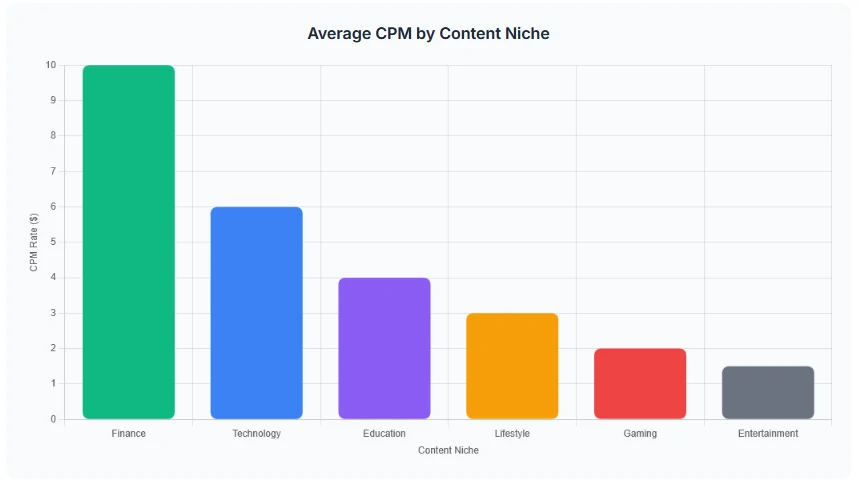
Different content categories command vastly different CPM rates. Finance and business content typically has the highest CPM ($8-12), followed by technology ($4-8), while entertainment and gaming content often sees lower rates ($1-3). This is because advertisers pay premium rates to reach audiences more likely to make purchasing decisions.
Engagement Rates: Quality Over Quantity
YouTube's algorithm heavily favors content with high engagement rates. Videos with strong like-to-view ratios, extensive comments, and high watch time percentages are promoted more frequently, leading to increased views and higher earnings. Creators who build genuine communities around their content often see better monetization results than those focused solely on view counts.
Understanding these factors allows creators to make strategic decisions about their content, target audience, and monetization approach. Success on YouTube isn't just about creating viral content—it's about building a sustainable, engaged community that provides value to both viewers and advertisers.
🌟 Real-Life Examples of YouTuber Earnings
👑 Top Tier Creator
10M+ subscribers
| Ad Revenue: | $500K-2M/year |
| Sponsorships: | $2M-10M/year |
| Merchandise: | $1M-5M/year |
| Total: | $3.5M-17M/year |
📈 Mid-Tier Creator
100K-1M subscribers
| Ad Revenue: | $12K-60K/year |
| Sponsorships: | $24K-120K/year |
| Other Sources: | $6K-30K/year |
| Total: | $42K-210K/year |
🌱 Small Creator
10K-100K subscribers
| Ad Revenue: | $600-6K/year |
| Sponsorships: | $1.2K-12K/year |
| Other Sources: | $300-3K/year |
| Total: | $2.1K-21K/year |
The diversity in YouTuber earnings is staggering. At the top tier, creators like MrBeast, PewDiePie, and Ryan Kaji earn tens of millions annually through diversified revenue streams. These creators have built media empires that extend far beyond YouTube, including merchandise lines, mobile apps, and traditional media deals.
Mid-tier creators with 100,000 to 1 million subscribers often earn enough to make YouTube their full-time career. These creators typically focus on specific niches like tech reviews, cooking, or educational content, building loyal audiences that attract premium sponsorship deals.
However, the reality for most YouTubers is more modest. Creators with smaller audiences often struggle to earn significant income from the platform alone. Many supplement their YouTube earnings with other income sources like freelancing, consulting, or traditional employment while building their channels.
It's important to note that these figures represent gross earnings before expenses like equipment, editing software, taxes, and the significant time investment required to create quality content consistently. Success on YouTube requires treating it as a business, with proper planning, investment, and realistic expectations about income potential.
🚫 Common Misconceptions About YouTube Earnings
❌ Myth: All YouTubers Are Rich
Reality: Only a tiny percentage of creators earn substantial income. Most struggle to make minimum wage despite having thousands of subscribers.
❌ Myth: More Subscribers = More Money
Reality: Engagement and niche matter more than subscriber count. A smaller, engaged audience often generates more revenue.
❌ Myth: YouTube Success Happens Overnight
Reality: Most successful creators spent years building their audience and refining their content before seeing significant earnings.
❌ Myth: Ad Revenue Is Stable Income
Reality: YouTube earnings fluctuate dramatically based on algorithm changes, seasonal trends, and external factors.
Perhaps the biggest misconception about YouTube is that it's an easy path to wealth. Social media often showcases the success stories while ignoring the countless creators who struggle to monetize their content effectively. The platform's algorithm changes, increasing competition, and evolving advertiser preferences make consistent earnings challenging.
Another common myth is that viral videos guarantee financial success. While viral content can provide temporary income spikes, sustainable YouTube earnings come from consistent content creation, audience building, and diversified revenue streams. Many one-hit wonders struggle to replicate their initial success.
The reality is that successful YouTube monetization requires business acumen, marketing skills, content creation abilities, and significant time investment. It's not just about making videos—it's about building a brand, understanding your audience, and adapting to an ever-changing digital landscape.
🎯 Conclusion
YouTube offers unprecedented opportunities for content creators to monetize their passion and build sustainable careers. However, success requires understanding the platform's complex ecosystem, from ad revenue mechanics to audience engagement strategies. The most successful creators diversify their income streams, treat their channels as businesses, and focus on providing genuine value to their audiences.
While the potential for significant earnings exists, aspiring YouTubers should approach the platform with realistic expectations. Building a profitable channel takes time, consistency, and often significant upfront investment in equipment, software, and marketing. The creators who thrive are those who combine creative talent with business acumen and persistence.
The YouTube landscape continues evolving, with new monetization features, changing algorithms, and shifting viewer preferences. Successful creators adapt to these changes while maintaining their authentic voice and connection with their audience. Whether you're looking to supplement your income or build a full-time career, understanding the financial realities of YouTube is crucial for making informed decisions about your content strategy.
Remember, behind every successful YouTuber is countless hours of planning, creating, editing, and promoting content. The financial rewards can be substantial, but they come to those who approach YouTube as a serious business venture rather than a get-rich-quick scheme.
Ready to Start Your YouTube Journey?
Success comes to those who combine passion with strategy. Focus on creating value, building genuine connections, and treating your channel as a business.