

Discover the top podcast hosting platforms that will grow your audience, simplify your workflow, and help you create remarkable audio content that people love.

What You'll Learn
Table of contents
- What You'll Learn
- Introduction to Podcast Platforms
- Why Podcast Hosting Matters
- Types of Podcast Platforms
- Top 10 Podcast Platforms in 2026
- Essential Features to Evaluate
- Pricing Comparison
- How to Choose the Right Platform
- Switching Podcast Platforms
- Maximizing Your Distribution
- Monetization Options
- Analytics and Growth Strategies
- Platform Success Tips
- Common Mistakes to Avoid
- Frequently Asked Questions
- Advanced Platform Features
- Podcast SEO Optimization
- Podcast Analytics Deep Dive
- Managing Multiple Podcasts
- Final Thoughts: Your Podcast Journey Starts Now
Introduction to Podcast Platforms
You've decided to start a podcast. You've got your microphone, your ideas, your unique voice ready to share with the world. But here's the thing that many aspiring podcasters overlook: your recording setup is only half the battle. Where you host your podcast can literally make or break your show's success.
Podcast platforms—also called podcast hosting services—are the engines that power your show. They store your audio files, generate your RSS feed (the magic string of code that tells Apple Podcasts and Spotify about new episodes), and distribute your content to over 70 different directories worldwide. Without a reliable host, your brilliant conversations would have nowhere to live.
But here's what makes choosing the right podcast platform genuinely tricky: they're not all created equal. Some excel at monetization, offering built-in listener support and premium content options. Others prioritize distribution, getting your show in front of audiences on every possible platform. Some are perfect for beginners with generous free tiers, while others cater to professional broadcasters with advanced analytics and team collaboration features.
In this guide, we'll explore everything you need to know about podcast hosting platforms. We'll compare the top contenders, explain the features that matter most, help you understand pricing structures, and guide you toward the platform that fits your unique needs. Whether you're launching your first show or considering switching hosts, this guide will give you the clarity you need to make an confident decision.
Why This Matters
The podcast hosting market generates over $2 billion annually, with over 400 million podcast listeners worldwide. Your choice of platform affects everything from discoverability to revenue potential. This isn't just a technical decision—it's a business decision that will shape your podcast's future.
Why Podcast Hosting Matters
More than just storage
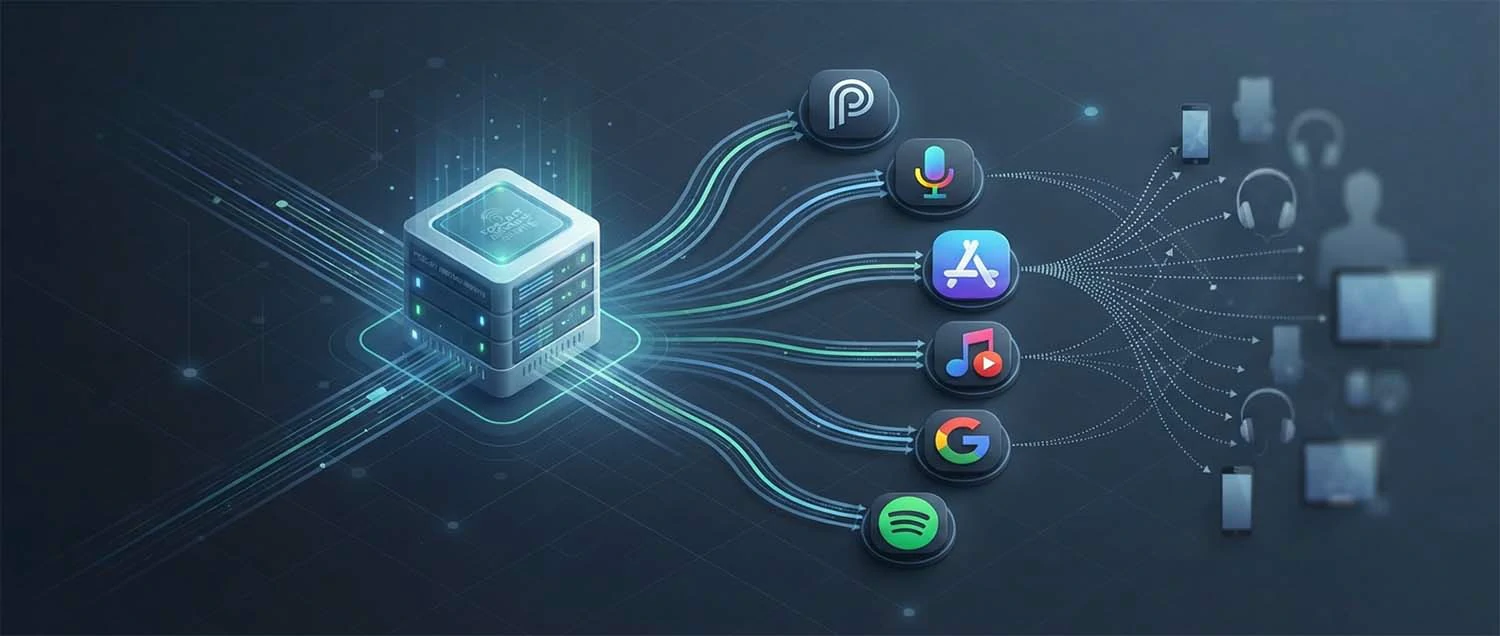
Think of your podcast host as your show's home base. It's where all your episodes live, where your subscriber data lives, and where the technical infrastructure lives that makes everything work. When Apple Podcasts, Spotify, or any other directory wants to check for new episodes, they don't call you directly—they check your host's RSS feed.
The RSS Feed: Your Podcast's Lifeline
The Really Simple Syndication (RSS) feed is the backbone of podcasting. It's an XML file that contains information about every episode you've published—title, description, audio file URL, duration, artwork, and more. When you publish a new episode, your host automatically updates this feed, which then notifies all the directories that subscribe to it.
This is crucial because it means you only upload your episode once—to your host. From there, it's automatically distributed everywhere. If your host's servers go down, your podcast goes down with it. If your host doesn't support certain features, you can't use them. The RSS feed is yours, but it lives on your host's infrastructure.
Distribution and Discoverability
Different hosts offer different levels of directory integration. Some make it easy to submit to dozens of platforms with a single click. Others focus on a handful of major directories and leave the rest to you. Some hosts have exclusive partnerships that might get your show additional prominence.
Beyond basic distribution, your host affects discoverability through features like show notes optimization, chapter markers, searchable transcripts, and enhanced podcast data. These features help listeners find exactly what they're looking for and keep them engaged once they start listening.
Key Takeaway
Your podcast host is infrastructure, not just storage. The reliability, features, and distribution capabilities of your host directly impact your show's growth potential and listener experience.
Types of Podcast Platforms
Finding your category
Not all podcast hosting platforms are designed for the same audiences or use cases. Understanding the different categories helps you narrow down your options based on your specific needs, budget, and goals.
Beginner-Friendly Platforms
These platforms prioritize simplicity and accessibility. They offer free tiers generous enough for new podcasters to start without any financial investment, intuitive interfaces that don't require technical knowledge, and built-in recording capabilities for those who don't yet have external software. If you're launching your first show, these options remove barriers to entry.
The tradeoff is that free tiers typically come with storage limits, bandwidth restrictions, and fewer advanced features. As your show grows, you may find yourself needing to upgrade or switch to a more robust platform.
Professional and Business Platforms
Built for serious podcasters and businesses, these platforms offer unlimited storage and bandwidth, advanced analytics that provide actionable insights, team collaboration features for multi-host shows, and professional distribution with priority in directories. They often include monetization tools, dynamic content insertion for ads, and custom podcast websites.
The monthly costs are higher, but the features justify the investment for podcasters who are treating their show as a serious business endeavor or content marketing channel.
Audio-First Creative Platforms
These newer entrants focus on the creative and community aspects of podcasting. They often include social features, listener interaction tools, exclusive content capabilities, and direct fan support mechanisms. They're designed for creators who want to build deeper relationships with their audiences beyond traditional broadcasting.
Some of these platforms operate as both hosting and discovery platforms, potentially helping new shows find audiences they might not reach on traditional directories.
Enterprise and Network Solutions
For podcast networks, media companies, and organizations managing multiple shows, enterprise platforms offer centralized management, cross-show analytics, White Label options for branded networks, and advanced advertising and sponsorship management tools. These solutions are typically priced custom and require dedicated support and onboarding.
If you're planning to launch multiple podcasts or need to manage a podcast network, these platforms provide the infrastructure and tools necessary to scale efficiently.
Audio-First Platforms
Anchor, Pocket Casts, Speaker
Professional Hosts
Transistor, Captivate, Podbean Pro
Enterprise Solutions
Art19, Omny Studio, Soundcloud
Community Platforms
Clubhouse, Twitter Spaces, Discord
Top 10 Podcast Platforms in 2026
Comprehensive comparison of the best hosts
Transistor
Best for: Businesses & Teams
Transistor has emerged as a favorite for serious podcasters who need professional features without enterprise complexity. Their clean interface, unlimited podcasts on paid plans, and excellent analytics make them ideal for businesses using podcasting as a content marketing channel.
Buzzsprout
Best for: Beginners & Solopoders
Buzzsprout makes podcasting accessible with one of the most generous free tiers available. Their automatic optimization, magic mastering for audio quality, and straightforward workflow have helped thousands of new podcasters launch successfully.
Captivate
Best for: Growth-Focused Creators
Captivate positions itself as a growth platform for podcasters serious about building their audience. Their features focus heavily on listener engagement, lead generation, and monetization opportunities that help creators turn listeners into customers.
Podbean
Best for: All-in-One Solution
Podbean offers one of the most complete ecosystems for podcasters, combining hosting, distribution, monetization, and even a built-in podcasting app. Their unlimited plans provide exceptional value for high-volume podcasters.
Anchor (by Spotify)
Best for: Absolute Beginners
Completely free and owned by Spotify, Anchor offers the easiest possible entry into podcasting. Their mobile app allows recording, editing, and publishing directly from your phone. Integration with Spotify provides built-in discoverability advantages.
Honorable Mentions
Libsyn
The original podcast host. Extremely reliable with decades of experience. Lacks some modern features but unmatched in stability.
Simplecast
Professional-grade hosting with beautiful player embeds and excellent distribution. Great for media companies and networks.
Spreaker
Owned by iHeartMedia, offering unique opportunities for podcasters interested in potential broadcast exposure.
Riverside
Specializes in remote recording with local audio/video files for highest quality. Perfect for interview shows.
Essential Features to Evaluate
What actually matters for your success

Storage and Bandwidth
How much audio can you store, and how many times can listeners download it? Some platforms offer unlimited storage but cap bandwidth. Others do the opposite. If you're publishing multiple long-form episodes weekly, you'll need generous limits. Consider not just your current needs but your planned growth over the next year.
Distribution Reach
How many directories does the platform automatically submit to? Most will cover the essentials—Apple Podcasts, Spotify, Google Podcasts, Amazon Music, and Stitcher. But some go beyond, submitting to 70+ platforms including regional and international directories. If you want maximum reach, distribution breadth matters.
Analytics and Insights
Understanding your audience is crucial for growth. Basic analytics show downloads per episode. Advanced analytics reveal listener demographics, geolocation data, listener retention graphs (showing where people stop listening), and trends over time. Some platforms integrate with Google Analytics for even deeper insights.
Monetization Tools
If you plan to earn money from your podcast, built-in monetization can simplify things. Options include listener donations and memberships, premium content subscriptions, dynamic ad insertion for sponsorships, and affiliate link tracking. Some platforms take a percentage of your earnings; others don't.
Website and Player Customization
Most hosts provide a podcast website where listeners can stream episodes. The quality and customization options vary significantly. Some offer drag-and-drop builders; others provide basic templates. Consider whether you need embedded players, subscribe buttons, transcripts, and whether you can use your own domain.
Collaborations and Team Features
If you have co-hosts, a production team, or multiple shows, you'll want good collaboration features. Can you assign different permission levels? Can multiple people access analytics? Can you schedule episodes for future publication? These workflow features can save significant time as your operation grows.
Feature Priority Guide
For Beginners:
Free tier, ease of use, good documentation, automatic distribution
For Growth:
Advanced analytics, monetization options, marketing tools, team features
For Business:
Private podcasts, lead generation, CRM integration, detailed reporting
For Networks:
Multi-show management, advertising tools, white label options, API access
Pricing Comparison
Understanding the true cost
Tier Breakdown
Free Tiers ($0/month)
Anchor offers genuinely unlimited free hosting. Others limit episodes, storage, or bandwidth. Great for testing and casual podcasters, but limitations eventually become problematic for serious shows.
Starter Plans ($5-$15/month)
Typically include unlimited episodes, basic analytics, and standard distribution. Storage limits usually range from 50-100 hours. Ideal for new podcasters ready to commit seriously to their show.
Professional Plans ($20-$50/month)
Larger storage limits, advanced analytics, monetization tools, team features, and priority support. Many platforms offer unlimited everything at this tier. Best value for serious podcasters with growing audiences.
Business/Network Plans ($75-$300+/month)
Enterprise features including multiple shows, extensive analytics, advertising management, white labeling, and dedicated support. Custom pricing available for large-scale operations.
Hidden Costs to Consider
- Platform fees on monetization (typically 5-15% of earnings)
- Premium plugins or add-ons not included in base plans
- Transcription costs if not included
- Migration fees if switching hosts later
- Custom domain costs if not included
- Storage overages if you exceed your limit
How to Choose the Right Platform
A decision framework that works
There's no universally "best" podcast platform—only the best one for your specific situation. Here's a framework to guide your decision:
Step 1: Define Your Goals
Are you podcasting for personal expression, building an audience, generating income, establishing authority in your industry, or marketing a business? Your goals determine which features matter most. A hobbyist has different needs than someone trying to build a media business.
Step 2: Assess Your Technical Comfort
Some platforms require more technical knowledge than others. If you're comfortable with audio editing and prefer maximum control, a professional host with advanced features might suit you. If you want everything handled simply, look for platforms with built-in recording and one-click publishing.
Step 3: Consider Your Growth Trajectory
Where do you want to be in one year? If you're just starting and unsure if you'll stick with it, begin with a free tier and upgrade as needed. If you're launching with serious commitment and don't want migration hassles later, invest in a professional platform from day one.
Step 4: Evaluate Your Budget
Podcast hosting is relatively inexpensive compared to other business investments. Consider what you can realistically afford while understanding the value of professional features. Sometimes paying more for better analytics or monetization tools generates positive ROI through improved performance.
Step 5: Test Before Committing
Most paid platforms offer free trials. Use them. Actually upload an episode, play with the interface, check the analytics, and see how distribution works. Your experience during the trial period is usually indicative of day-to-day reality.
Try Anchor, Buzzsprout free, or Soundcloud free
Try Transistor, Captivate, or Podbean Pro
Try Art19, Omny Studio, or Simplecast
Switching Podcast Platforms
How to change hosts without losing your audience
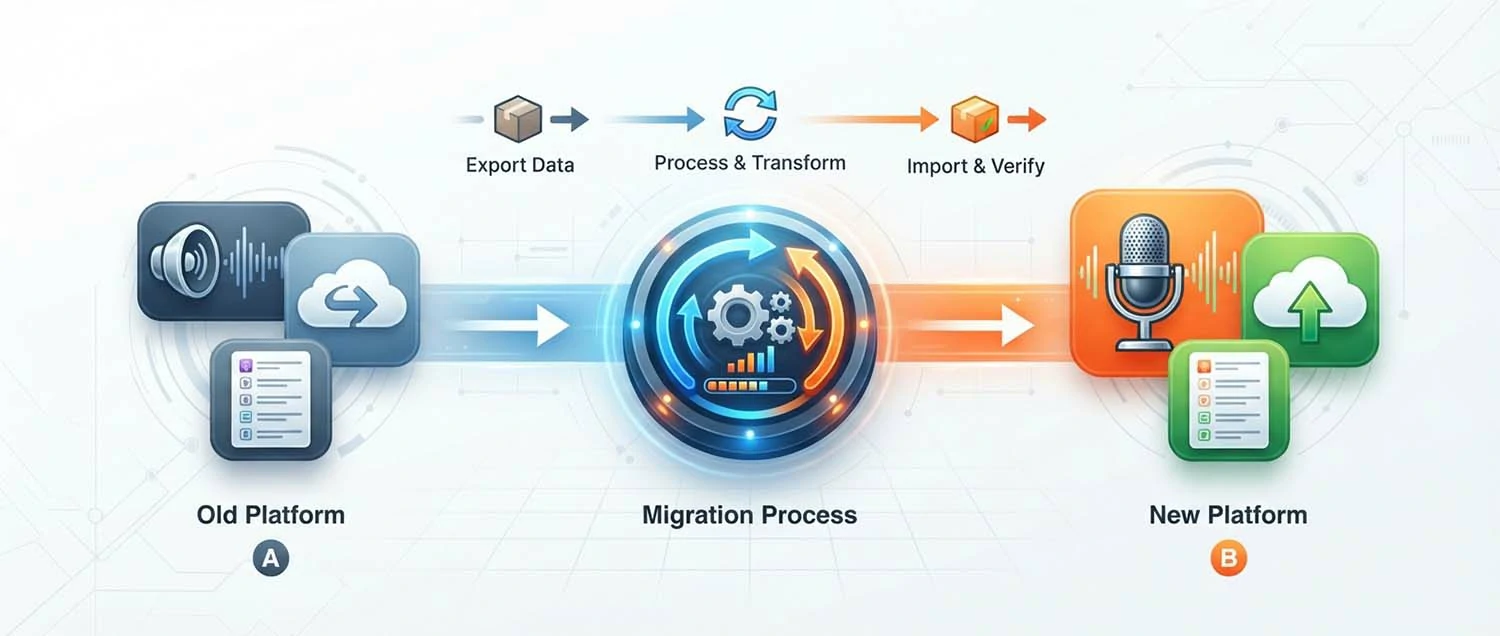
Switching podcast hosts gets a bad reputation, but it's actually straightforward if you understand how RSS feeds work. Your podcast's identity lives in the feed URL and the Apple/Spotify listings that point to it. As long as you maintain the same feed URL, listeners won't notice a thing.
The Migration Process
Step 1: Export from your old host. Download your existing episodes, show notes, subscriber count (if available), and any other data you want to preserve.
Step 2: Choose your new host. Select the platform that best fits your needs, keeping your goals from the previous section in mind.
Step 3: Import everything. Most modern platforms offer import tools that pull your feed URL and automatically download all episodes. This can take anywhere from minutes to days depending on how many episodes you have.
Step 4: Verify the new feed. Check that all episodes transferred correctly, artwork displays properly, and episode information is intact.
Step 5: Update your Apple/Spotify listings (if needed). If you're getting a new feed URL, you'll need to submit a feed update through your podcast hosting dashboard. Most platforms guide you through this.
Pro Tips for Smooth Migration
- Some hosts offer free migrations as a customer acquisition tool—take advantage of these
- Keep your old host active for 2-4 weeks after migration as backup
- Check all episode links, show notes, and chapter markers after import
- Monitor your analytics for any download drops post-migration
- Notify your email list about the switch (they won't automatically know)
Maximizing Your Distribution
Getting your podcast everywhere listeners are
Your podcast host handles distribution automatically, but there's more you can do to ensure maximum reach. Let's talk about directory optimization and promotion strategies.
The Major Directories
Apple Podcasts remains the largest podcast directory, especially for iOS users. Your Apple Podcasts listing affects Siri discoverability and is crucial for reach in North America and Europe.
Spotify has grown rapidly and now rivals Apple in many markets. Their recommendation algorithms surface podcasts based on listening habits, potentially reaching new audiences organically.
Amazon Music and Audible combine music streaming with podcast listening, reaching audiences who might not otherwise discover your show.
YouTube has emerged as a major podcast discovery platform. Converting audio to video with static images or waveform animations captures this audience. If you are exploring where else to publish, our roundup of video social media sites and sites like YouTube covers additional platforms worth considering.
Directory Optimization
Your podcast title, description, categories, and artwork affect discoverability significantly. Use relevant keywords naturally in your title and description. Choose specific categories rather than broad ones. Your artwork should be legible at tiny sizes in search results.
Submit to 15+ Directories
Beyond Apple and Spotify: Pocket Casts, Overcast, Castro, Player FM, and others
Create a Podcast Website
Your own domain serves as the hub that platforms can't control
Embeddable Players
Use player embeds on your site and in guest bios for easy listening
RSS Aggregators
Services like Feedburner help listeners subscribe even if directories miss your show
Monetization Options
Turning listeners into revenue
One of the beautiful things about podcasting is the multiple monetization pathways available. Your hosting platform can enable some of these, while others require external tools or relationships.
Listener Support and Memberships
Platforms like Patreon have made creator memberships mainstream. Some podcast hosts integrate similar functionality directly, allowing you to offer bonus episodes, ad-free listening, early access, or community access to supporters. This creates recurring revenue from your most dedicated fans.
Dynamic Ad Insertion
Dynamic ad insertion allows you to serve different ads to different listeners based on their location, device, or listening history. It also enables podcast networks to serve targeted ads across multiple shows. Some hosts offer built-in dynamic insertion; others integrate with specialized services like Simplestream or Acast.
Premium Content
Create a paid tier for your podcast with bonus episodes, extended interviews, or full ad-free versions of every show. Some platforms support this natively with private RSS feeds; others require integration with external platforms like Supercast or Glow.fm.
Affiliate Marketing
Promote products or services relevant to your audience and earn commissions on sales. Include affiliate links in your show notes. Platforms with link tracking help you measure which recommendations generate the most revenue.
Realistic Revenue Expectations
Most podcasters don't become rich from podcasting alone. However, podcasting can generate meaningful income:
- 1,000 downloads/episode: Potential for direct sponsors ($200-500/episode avg)
- 5,000 downloads/episode: Full episode sponsors ($1,000-3,000/episode)
- 10,000+ downloads/episode: Premium sponsors and multiple revenue streams viable
Analytics and Growth Strategies
Understanding and growing your audience
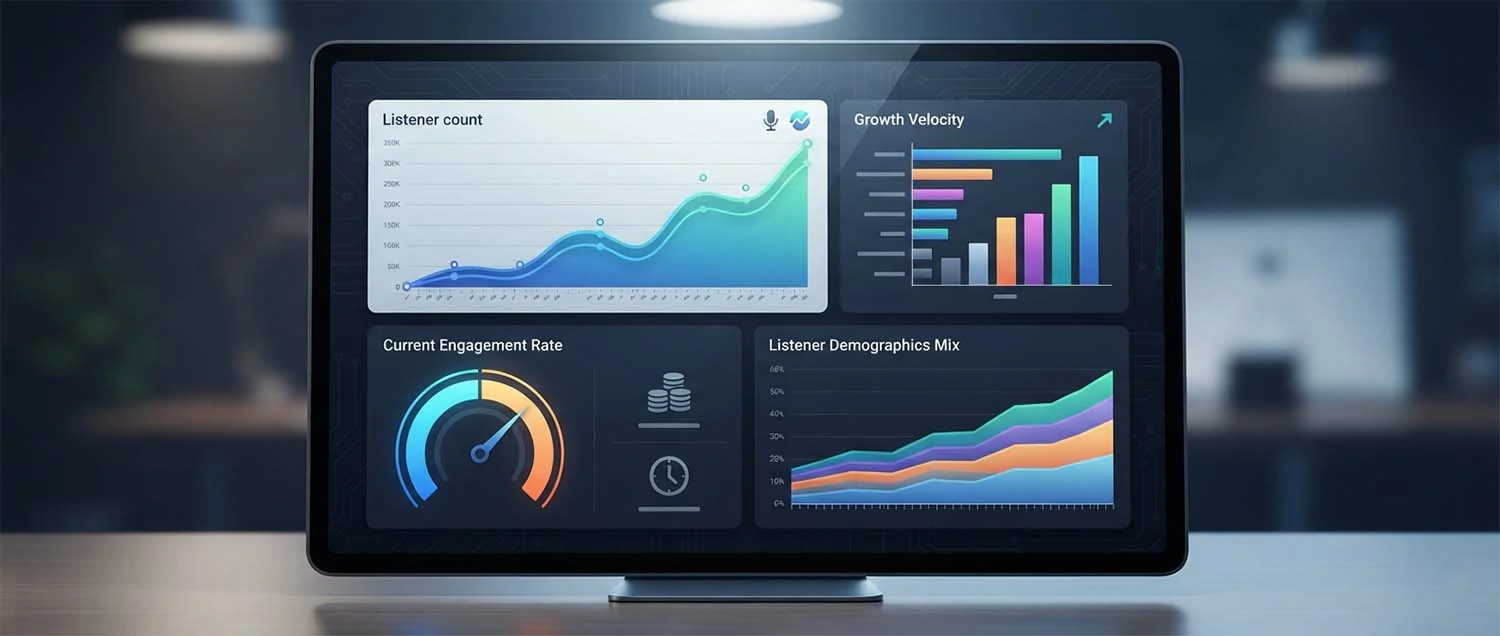
Key Metrics to Track
Downloads vs. Listeners: Downloads measure total downloads; unique listeners estimate distinct individuals. Both matter, but for growth, unique listeners show reach better.
Listener Retention: Where do people stop listening? High drop-off points might indicate pacing issues, rambling intros, or content that doesn't match your title's promise.
Subscriber Ratio: What percentage of your downloads come from subscribers versus casual discovery? Higher subscriber ratios indicate a more engaged, loyal audience.
Growth Rate: Are you growing, shrinking, or plateauing? Compare month-over-month and year-over-year trends to understand trajectory.
Growth Tactics
Guest appearances: Appear on other podcasts to reach new audiences. Most hosts are happy to return the favor.
Cross-promotion: Partner with podcasters in adjacent niches for mutually beneficial promotions.
Show notes optimization: Include detailed, keyword-rich show notes that improve searchability and provide value.
Consistency: Publish on a reliable schedule. Audiences who know when to expect new content develop listening habits.
Platform Success Tips
Make the most of your chosen platform
Use All Available Features
Chapter markers help listeners navigate long episodes. Transcripts improve accessibility and SEO. Clips features let fans share specific moments. The more features you use, the better your listeners' experience.
Schedule Smartly
Most platforms allow scheduling ahead. Batch-record episodes and schedule them in advance. This ensures consistent release schedules even during busy periods or travel.
Monitor Your Feed Health
Regularly validate your RSS feed using tools like Podbase or Cast Feed Validator. Broken feeds can cause episodes to disappear from directories without warning.
Back Up Everything
Download your audio files regularly to local storage. Platforms can change policies, get acquired, or occasionally experience outages. Your content is your asset—protect it.
Stay Updated
Podcast hosting evolves rapidly. New features, integrations, and platform changes happen frequently. Stay informed about what's available to maintain competitive advantage.
Common Mistakes to Avoid
Learn from others' errors
Ignoring Audio Quality
No platform can fix bad audio. Invest in a quality microphone and learn basic editing. Listeners will leave within seconds of poor sound.
Choosing Based on Price Alone
The cheapest option isn't always the best value. Consider features, reliability, and growth potential when evaluating cost.
Skipping the Free Trial
Never commit without testing. Your experience during the trial period reflects everyday reality. If it's confusing or frustrating then, it won't improve later.
Not Backing Up Content
Always maintain local copies of your audio files. Platforms can fail, change policies, or get acquired.
Ignoring Analytics
Your platform's analytics reveal audience insights. Ignoring them means missing opportunities to improve content and grow faster.
Changing Platforms Too Often
Migration has risks and costs. Choose thoughtfully and commit for at least 6-12 months before considering switches.
Frequently Asked Questions
Quick answers to common questions
Do I need a podcast host to start?
Yes. You need somewhere to store your audio files and generate your RSS feed. You cannot simply upload audio to a website and call it a podcast. Podcast directories need a valid RSS feed to pull your episodes.
Can I switch hosts without losing subscribers?
If you maintain the same RSS feed URL, subscribers won't notice a thing. If your new host generates a new feed URL, you need to update your Apple/Spotify listings. This causes a brief disruption but doesn't permanently lose subscribers.
Is the free tier from Anchor really unlimited?
Yes, Anchor's free tier genuinely offers unlimited episodes and storage. However, they keep some monetization features exclusive to paid plans and have limited analytics. For serious podcasters, the limitations eventually become problematic.
What happens if my host goes out of business?
If you have local backups, you can migrate to another host. Without backups, your content could be lost. Always maintain your own copies of audio files. This is why reputable hosts with stable financials matter.
Which platform is best for beginners?
Anchor offers the easiest entry with 100% free unlimited hosting and built-in recording. Buzzsprout offers generous free tiers with better analytics. For first-time podcasters wanting simplicity, Anchor is hard to beat. For those wanting to grow seriously, Buzzsprout or Transistor might be better starting points.
How much storage do I need?
A typical 30-minute episode in MP3 format uses about 30-50MB. 100 hours of storage accommodates roughly 200 episodes of this length. Most podcasters never exceed these limits unless they publish very long episodes daily.
Can I host video podcasts on audio platforms?
Most audio-first hosts don't natively support video. YouTube remains the primary video podcast platform. Some hosts like Podbean and Spotify support video, but audio directories like Apple Podcasts don't. For video podcasts, YouTube is usually the better choice.
Advanced Platform Features
Leveraging professional capabilities
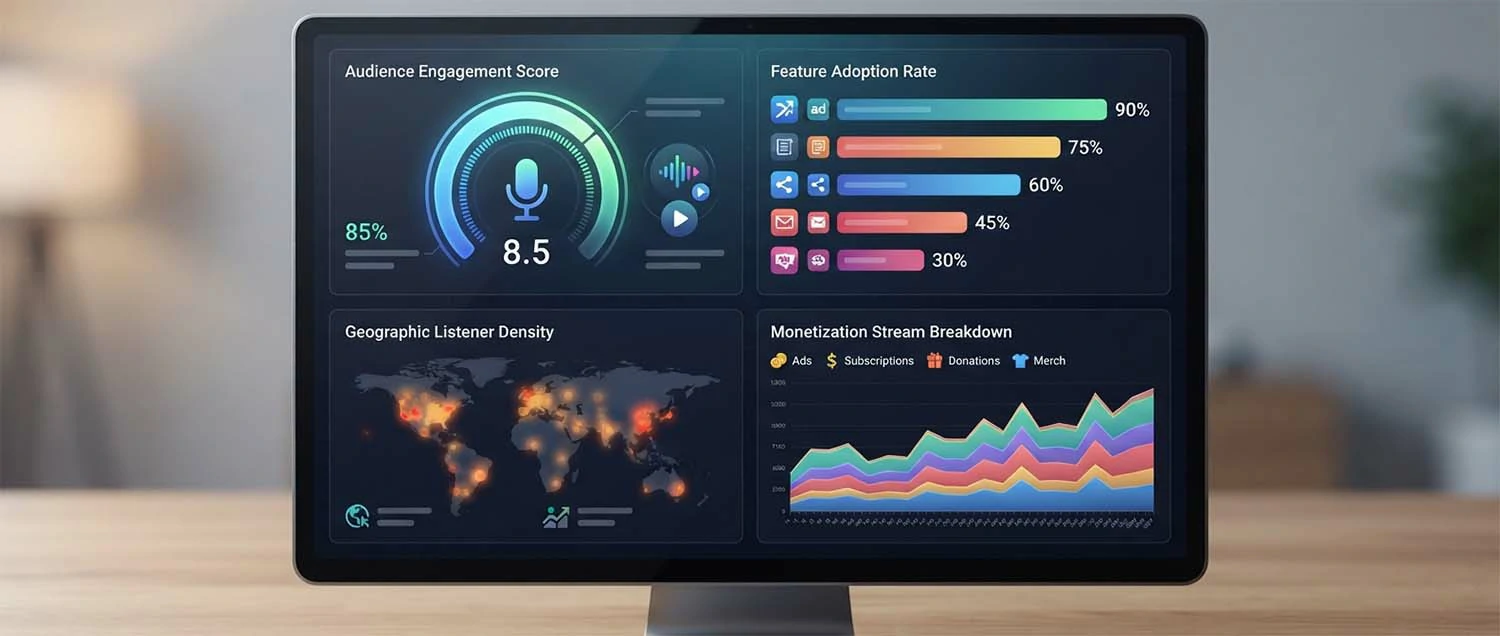
As your podcast grows, advanced features become essential for professional operation. Understanding what's available helps you select platforms that support your evolution and avoid limitations that constrain growth.
Dynamic Content Insertion
Dynamic content insertion (DCI) allows you to serve different audio content to different listeners at the same playback point. This technology enables targeted advertising, location-based messaging, and membership tier differentiation. Networks use DCI to serve network-wide ad reads while individual shows maintain unique content.
Some hosts include DCI natively, while others integrate with specialized services like Simplestream, Acast, or Spotify Ad Analytics. Implementation complexity varies—native solutions offer easier setup while third-party services provide more flexibility.
Private Podcasts
Private RSS feeds create password-protected podcast content invisible to public directories. Applications include corporate training, membership programs, educational courses, and internal communications. Some hosts support private podcasts directly; others require workarounds or external services.
Use cases range from delivering bonus content to paying supporters to providing training materials for employees. Private podcasts require managing access—creating and revoking credentials as members join and leave programs.
Transcription and Accessibility
Automatic transcription converts speech to text, improving accessibility and SEO simultaneously. Some platforms offer built-in transcription; others integrate with services like Rev, Temi, or Descript. Accuracy varies—human transcription remains the gold standard for quality. Many shows also hand this step to a specialist; see our guide to services that edit podcasts and current podcast editing prices.
Transcripts enable searchable show notes, improve listener comprehension, and reach audiences who prefer reading. Some directories including Google Podcasts index transcript content, improving discoverability for transcribed episodes.
Custom RSS Domains
Use your own domain for feeds instead of host subdomain
Multi-User Access
Collaborate with co-hosts and production teams
API Access
Integrate with custom tools and automation systems
Webhooks
Trigger actions when episodes publish or update
Podcast SEO Optimization
Getting discovered through search
Podcast SEO ensures your show appears in search results when potential listeners look for content in your niche. Unlike traditional websites, podcast directories index show names, descriptions, episode titles, and transcripts. Optimizing these elements dramatically improves discoverability.
Title and Description Optimization
Your podcast title should clearly communicate who the show is for and what value it provides. Include your niche if it's not already obvious from your name. Episode titles should be descriptive and include relevant keywords without becoming unreadable walls of text.
Descriptions face competition in search results. Front-load the most important information—your unique angle and key topics covered. Include relevant keywords naturally throughout, but prioritize readability over keyword stuffing.
Show Notes Optimization
Detailed show notes serve both listeners and search engines. Include comprehensive episode summaries, guest bios with links, timestamps for key topics, and relevant resources. These elements improve user experience while giving search engines more content to index.
Structure show notes with headers and bullet points for scannability. Include links to everything mentioned—guests, products, resources. This comprehensive approach serves listeners while maximizing SEO value.
SEO Checklist
- Keyword research to identify search terms your audience uses
- Optimized podcast title with niche and value proposition
- Keyword-rich description with front-loaded important information
- Episode titles that are descriptive and include target keywords
- Comprehensive show notes with timestamps and links
- Transcripts for improved indexing and accessibility
Podcast Analytics Deep Dive
Understanding what your numbers tell you

Surface-level download numbers don't tell the full story. Deep analytics reveal audience behavior, preferences, and trends that inform content decisions. Understanding what metrics matter—and what they actually measure—transforms data into actionable insights.
Understanding Download Metrics
Downloads measure how many times your audio file was requested. However, not all downloads equal listeners. Some listeners sample but don't complete. Others subscribe but never listen. Understanding true audience requires looking beyond download counts.
Some platforms measure "unique listeners" to estimate distinct individuals rather than total downloads. Others track " listens" as another variation. These metrics help but still don't capture complete picture of audience engagement.
Listener Retention Analysis
Where do listeners stop? Retention graphs reveal drop-off points within episodes. High early drop-off suggests misleading titles or slow starts. Late drop-off might indicate content dragging or listeners reaching their destination within episodes.
Compare retention across episodes to identify patterns. Topics that maintain listeners suggest formats and subjects that resonate. High drop-off episodes reveal content that fails to deliver on promises or expectations.
Geographic Data
Where your listeners are located helps with scheduling and content planning
- Schedule releases for peak times in major markets
- Consider regional topics and guests
- Plan live events in high-density areas
Device Intelligence
Understanding how listeners access your content guides technical decisions
- Mobile versus desktop listening ratios
- App preferences (Apple vs Spotify vs others)
- Playback speed preferences
Managing Multiple Podcasts
Scaling your podcast operation
Many podcasters eventually expand beyond a single show. Whether launching spin-off podcasts, creating network offerings, or podcasting for multiple clients, multi-show management requires different workflows and platform capabilities.
Platform Considerations for Multiple Shows
Some hosts charge per show, making multi-show operations expensive. Others offer unlimited shows at fixed prices. Evaluate pricing models carefully—some per-show costs seem reasonable until you scale to five, ten, or more shows.
Centralized analytics become essential for multi-show operations. Understanding cross-show performance, identifying patterns across networks, and managing inventory across programs requires consolidated data views that not all platforms provide.
Workflow Efficiency
Batch production workflows save significant time when managing multiple shows. Record multiple episodes in single sessions. Edit during consistent focus periods. Schedule all shows for the week ahead on a single planning day. These efficiencies multiply with scale.
Consider team roles when operations grow beyond personal capacity. Audio editors, show note writers, social media managers, and production coordinators each contribute specialized value. Platform features supporting team collaboration become increasingly important.
Multi-Show Management Tools
- Centralized publishing calendar across all shows
- Shared guest management and booking system
- Cross-show sponsorship inventory management
- Unified analytics dashboard for network overview
- Template-based episode creation for consistency
Final Thoughts: Your Podcast Journey Starts Now
Choosing a podcast platform isn't a decision you'll need to revisit frequently, but it's an important one. Your host is the foundation your show is built on. A reliable platform with features matching your goals makes everything else easier.
Remember that there's no universally perfect platform. The best host for someone else might be wrong for you. Your goals, budget, technical comfort, and growth plans all factor into the equation. Use this guide to evaluate your options systematically, test thoroughly before committing, and choose with confidence.
Most importantly, don't let the platform selection process prevent you from starting. Your first episode doesn't need to be perfect—it just needs to exist. Start somewhere, learn as you go, and adjust your infrastructure as your show evolves. Some of the most successful podcasts today started with borrowed microphones and free hosting accounts.
The podcasting ecosystem offers incredible opportunities for creators and listeners alike. With the right platform supporting your work, you're equipped to join this vibrant community and share your voice with the world. Now go make something people want to hear.
Ready to Launch Your Podcast?
With over 400 million podcast listeners worldwide and growing, there's never been a better time to share your voice. Choose your platform, press record, and start building your audience today.
Your audience is waiting to hear what you have to say.