

Separating myth from reality, understanding what these tools actually do, and discovering what really works for building quality backlinks in today's SEO landscape.
Let me guess why you're here. You've heard that backlinks are crucial for SEO success. You've seen the prices agencies charge for link building — sometimes thousands of dollars per month. Then you stumbled across "backlink generator" tools promising hundreds or even thousands of backlinks with just one click. Sounds too good to be true, right? After fifteen years in SEO, including two years as a Google Search Quality Rater, I'm going to give you the unfiltered truth about these tools — what they actually do, why most of them can hurt your website, and what legitimate alternatives exist for building real link equity.

What Is a Backlink Generator, Really?
Before we dive into the weeds, let's establish exactly what we're talking about. A backlink generator is any tool or software that claims to automatically create backlinks pointing to your website. The promise is seductive: enter your URL, click a button, and watch as links appear from dozens, hundreds, or even thousands of websites.
These tools have existed almost as long as search engines have used links as a ranking factor. Back in the early 2000s, they actually worked reasonably well — search algorithms were primitive, and any link was generally helpful. Google has evolved dramatically since then, but the appeal of automated link building has never gone away. If anything, it's grown stronger as businesses realize how expensive and time-consuming legitimate link building has become.
I understand the temptation completely. When I started in SEO back in 2009, I used these tools myself. I watched my rankings climb initially, then crash spectacularly when Google's Penguin update rolled out. That painful lesson taught me something crucial: there are no shortcuts that don't eventually catch up with you.
⚖ The Core Promise vs. Reality
What They Promise
Instant backlinks, improved rankings, more traffic, minimal effort, low cost
What You Actually Get
Low-quality links, potential penalties, wasted time, possible ranking drops, long-term damage

How These Tools Actually Work
Understanding the mechanics behind backlink generators helps you see why they're problematic. Most of these tools operate using one or more of the following methods, and none of them produce the kind of links that actually help your rankings.
Website Statistics and Whois Queries
The most common type of "backlink generator" simply submits your URL to website analysis tools — services that display your site's statistics, WHOIS information, or SEO metrics. When these tools analyze your site, they create a results page with your URL on it. Technically, that's a backlink.
Here's the catch: these pages are typically noindex (meaning Google doesn't include them in search results), nofollow (meaning they pass no ranking value), or simply too low-quality for Google to care about. You might see 500 new "backlinks" in some tools, but they provide zero actual SEO benefit. It's like collecting IOUs written on napkins — technically paper, practically worthless.
Blog Comment Automation
Some tools automatically post comments on blogs and forums, leaving a link back to your site. This was moderately effective fifteen years ago when most comment sections were unmoderated and links were followed. Today, virtually all legitimate blogs use nofollow on comment links, employ spam filters, or require manual approval. The comments that do get through are obviously spammy and hurt your brand reputation.
Directory Submissions
Automated directory submission tools blast your site information to hundreds of web directories. While there was a time when directories mattered for SEO, most are now either completely ignored by Google or actually harmful if they're known spam repositories. The few legitimate directories that still carry some weight (like specific industry directories or your local chamber of commerce) require manual, verified submissions anyway.
Social Bookmarking Submissions
These tools submit your URL to social bookmarking sites like Reddit, Mix, or various smaller platforms. The problem? Most of these platforms use nofollow links, require account verification, or have active moderators who remove obviously promotional content. Automated submissions typically get flagged and removed within hours, if they're accepted at all.
Types of Backlink Generators
Not all backlink generators are created equal — though to be clear, most should be avoided regardless. Understanding the different categories helps you identify them in the wild and make informed decisions about any tool claiming to help with link building.
Free Online Generators
HIGH RISK - Avoid Completely
These are the "enter your URL and click submit" tools you find all over the web. They claim to create hundreds of backlinks instantly, but they're essentially just pinging low-quality statistics sites. The links have no value, and using these tools signals to Google that you're trying to manipulate rankings. Some of these sites even harvest your contact information for spam purposes.
Automated Outreach Software
MEDIUM RISK - Use With Extreme Caution
These are more sophisticated tools that automate email outreach to website owners, requesting links or guest post opportunities. While automation itself isn't inherently bad, purely automated outreach typically produces terrible results. The emails are obviously templated, they spam people who never asked to be contacted, and they damage your brand reputation. Some can be useful for managing outreach at scale, but they require significant personalization and human oversight.
Private Blog Network (PBN) Tools
EXTREME RISK - Against Google Guidelines
PBN tools help you create or manage networks of websites solely for the purpose of linking to your main site. This is an explicit violation of Google's Webmaster Guidelines and one of the fastest ways to get your site deindexed. Google has become remarkably good at detecting PBNs through footprint analysis, hosting patterns, and link graph anomalies. I've seen businesses completely destroyed by PBN penalties.
Link Prospecting & Analysis Tools
LOW RISK - Legitimate When Used Properly
These tools don't actually generate backlinks — they help you find link opportunities and analyze your backlink profile. Tools like Ahrefs, SEMrush, Moz, and Majestic fall into this category. They're essential for modern SEO because they help you understand your competitive landscape, identify promising outreach targets, and monitor your link health. The key difference: the actual link building still requires human effort and relationship building.

The Real Risks You Need to Know
I want to be very clear about the risks involved with automated backlink generators. This isn't fear-mongering — these are real consequences I've witnessed clients suffer, sometimes with devastating effects on their businesses.
⚠ Manual Actions and Algorithmic Penalties
Google can penalize your site in two ways: through manual actions (a human reviewer flags your site) or algorithmic penalties (automated systems detect manipulation). Backlink generators often trigger both. Manual actions appear in Google Search Console with explicit warnings. Algorithmic penalties are sneakier — you simply notice your rankings dropping without any notification. Both can take months or years to recover from, and some sites never fully recover.
💰 Wasted Resources
Even if you somehow avoid penalties, you've wasted time and potentially money on activity that produces no results. That same effort invested in legitimate link building — creating great content, building relationships, or doing genuine outreach — would actually move the needle. The opportunity cost of chasing automated shortcuts is enormous.
☣ Toxic Backlink Profile
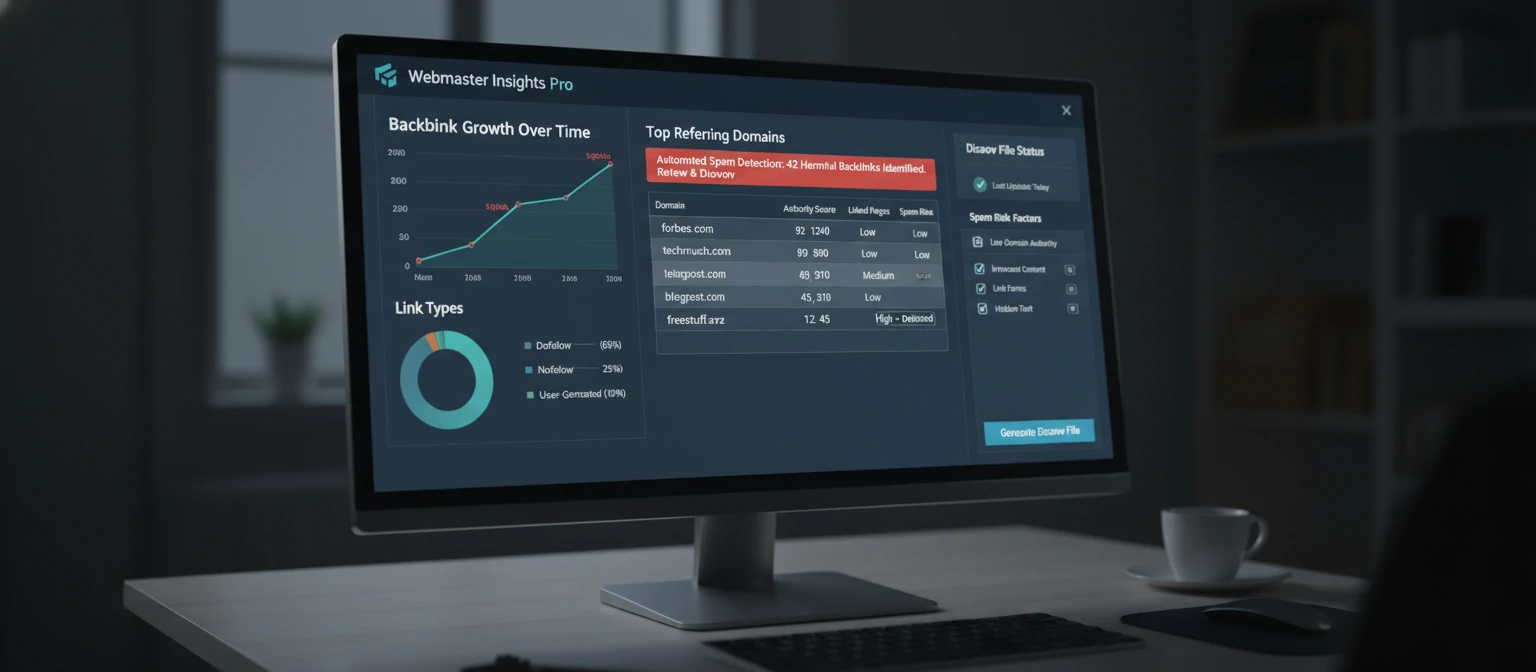
Backlink generators create links from the worst neighborhoods on the internet. These toxic links don't just fail to help — they can actively harm your rankings. Cleaning up a toxic backlink profile through Google's disavow tool is tedious, time-consuming work. You'll spend hours identifying bad links, compiling disavow files, and waiting months to see if your efforts worked. Prevention is infinitely better than cure.
💼 Brand Reputation Damage
When your brand appears on spam sites, adult content pages, or gambling directories (common destinations for automated links), it reflects poorly on your business. Potential customers who happen to see these associations may question your legitimacy. Your competitors can screenshot these associations and use them against you. The brand damage can outlast the SEO damage.
I had a client come to me after using a backlink generator service for six months. They had "built" over 10,000 backlinks. When we analyzed their profile, 97% of those links were from spam sites, many in languages they didn't even operate in. They had received a manual action from Google and lost 80% of their organic traffic. It took us 14 months of cleanup and legitimate link building to recover — and their traffic never fully returned to pre-penalty levels.
— A real case from my consulting practice, 2022
What Google Actually Says
Let me share some direct quotes from Google's official documentation and public statements. There's no ambiguity here — Google is explicitly clear about their position on automated link schemes.
From Google's Link Spam Documentation:
"Any links that are intended to manipulate rankings in Google Search results may be considered link spam. This includes any behavior that manipulates links to your site or outgoing links from your site."
Google specifically lists as violations:
- Buying or selling links for ranking purposes
- Excessive link exchanges
- Using automated programs to create links to your site
- Text advertisements or links that pass PageRank
- Low-quality directory or bookmark site links
Notice that third point? "Using automated programs to create links to your site" is explicitly called out. Backlink generators are not some gray area that Google might or might not care about — they're specifically identified as a violation.
Google's John Mueller has also repeatedly addressed this topic in office hours and on Twitter. His consistent message: focus on creating content that naturally earns links rather than trying to manufacture them artificially. The algorithm continues to get better at identifying artificial link patterns, making automation increasingly risky over time.
Legitimate Link Building Strategies
Now that we've thoroughly covered what doesn't work, let's talk about what does. These strategies require more effort than clicking a button, but they produce real results that compound over time rather than creating liabilities.
Create Linkable Assets
The foundation of sustainable link building is creating content worth linking to. This means original research, comprehensive guides, useful tools, compelling infographics, or unique data. When you publish something genuinely valuable, links come more naturally. Ask yourself: "Would a journalist, blogger, or industry professional want to reference this?" If not, you need better content before you need more link building.
Strategic Guest Posting
Writing quality articles for relevant, authoritative websites in your industry can earn valuable backlinks. The key words are "quality" and "relevant." One thoughtful piece on a respected industry publication is worth more than a hundred articles on generic guest post farms. Focus on sites you'd be proud to be associated with, and ensure your content genuinely serves their audience.
Broken Link Building
This technique involves finding broken links on other websites and offering your content as a replacement. It's a win-win: you help webmasters fix their sites while earning a link. Tools like Ahrefs can help you find broken links on relevant pages. The outreach email writes itself: "Hey, I noticed this link on your page is broken. I have a resource that might be a good replacement." Most webmasters appreciate the help.
Digital PR and Media Outreach
Getting mentioned in news articles, industry publications, and relevant media outlets earns high-authority backlinks. This requires newsworthy angles, original data, expert commentary, or compelling stories. Services like HARO (Help a Reporter Out) connect experts with journalists seeking sources. One mention in a major publication can be worth hundreds of low-quality links.
Resource Link Building
Many websites maintain resource pages linking to helpful content in their industry. If you have a genuinely useful resource, reaching out to these curators can earn quality backlinks. The key is ensuring your resource actually deserves to be listed — not just that you want a link. Research the existing resources on their page and ensure yours adds unique value.
Relationship Building
The most sustainable link building comes from genuine relationships within your industry. Engage with other professionals on social media, attend conferences, participate in communities, and be genuinely helpful. When you have real relationships, link opportunities emerge naturally. Someone will mention you in a roundup, invite you to contribute, or reference your work. These organic links are the most valuable and longest-lasting.

Tools That Are Actually Worth Using
While backlink generators themselves should be avoided, there are legitimate tools that support effective link building. These tools help you research, analyze, and manage link building campaigns — the actual work still falls on you, which is exactly how it should be.
★ My Tool Stack Recommendation
For most businesses, I recommend starting with one major analysis tool (Ahrefs or SEMrush), one outreach management tool (BuzzStream or a simple spreadsheet), and HARO for media opportunities. You can accomplish a lot of effective link building with just these three. Add more specialized tools only as your needs grow and your processes mature.
Building Backlinks the Right Way
Let me leave you with a framework for approaching link building that will serve you well for years to come. This isn't a quick fix — it's a sustainable approach that builds real value.
The Foundation: Content Worth Linking To
Before you spend a single minute on outreach, ensure you have content that deserves links. Conduct original research in your industry. Create comprehensive guides that genuinely help people. Build tools that solve real problems. Publish perspectives that add to the conversation. Without this foundation, all your link building efforts will struggle.
The Process: Quality Over Quantity
One high-quality link from a respected industry publication is worth more than a thousand links from random directories. Focus your efforts on earning links from sites you'd be proud to be associated with. If you wouldn't tell your clients or colleagues about a link, it probably isn't worth pursuing.
The Mindset: Building Relationships, Not Just Links
The best link builders don't think of themselves as link builders — they think of themselves as relationship builders. Every outreach email is an opportunity to start a professional relationship. Be helpful, be genuine, and think long-term. The people you connect with today might become partners, collaborators, or advocates for years to come.
The Timeline: Patience and Consistency
Legitimate link building is a marathon, not a sprint. Set realistic expectations — even with solid effort, building a strong backlink profile takes months or years. The good news? The links you earn through legitimate means tend to last, compound over time, and won't put you at risk of penalties. Slow and steady really does win this race.
☑ Your Link Building Health Check
- ✓ Do I have content that genuinely deserves links?
- ✓ Am I targeting sites I'd be proud to be associated with?
- ✓ Would my outreach emails impress a colleague if they saw them?
- ✓ Am I building relationships, not just asking for links?
- ✓ Would I be comfortable if Google saw my entire link building strategy?
- ✓ Am I being patient and thinking long-term?
The Bottom Line
Backlink generators promise a shortcut that doesn't exist. In the best case, they waste your time on links that provide no value. In the worst case, they saddle you with penalties that can take years to recover from. The tools that promise the fastest results are usually the ones most likely to damage your site.
The path to a strong backlink profile isn't mysterious — it's just not easy. Create exceptional content. Build real relationships. Earn links through value and merit. Use legitimate tools to support your efforts, not to replace them. This approach takes longer, but it builds assets that appreciate over time rather than liabilities that can explode at any moment.
I've seen too many businesses hurt by the allure of automated link building. Don't let yours be one of them. Take the road that's harder in the short term but safer and more rewarding in the long term. Your future self — and your future rankings — will thank you.
📚 Key Takeaways
- ➤Backlink generators create low-quality links that provide no SEO value and can trigger Google penalties
- ➤Google explicitly identifies automated link building as a violation of their guidelines
- ➤Free online generators, PBN tools, and aggressive automation should be avoided entirely
- ➤Legitimate link building starts with creating content genuinely worth linking to
- ➤Effective strategies include guest posting, broken link building, digital PR, and relationship building
- ➤Analysis tools like Ahrefs and SEMrush support legitimate link building — they don't replace the work
- ➤Quality always beats quantity — one great link outweighs thousands of low-quality ones
📖 Further Reading
Google's Link Spam Documentation
Official guidelines on what Google considers manipulative link practices
Ahrefs' Link Building Guide
Comprehensive resource on legitimate link building strategies and tactics
Moz's Beginner's Guide to Link Building
Excellent starting point for understanding link building fundamentals
Google Search Console Help
Learn how to monitor your backlinks and address manual actions
About David Mitchell
David has been working in SEO since 2009 and spent two years as a Google Search Quality Rater before moving into consulting. He now helps mid-to-large businesses build sustainable organic search strategies that don't rely on shortcuts. When he's not auditing backlink profiles, he's probably explaining to someone why their $99 "SEO package" was a mistake.