
Discover how professional architectural drafting bridges the gap between creative design concepts and buildable construction documents, ensuring your project moves from imagination to foundation.
Table of contents
- Key Takeaways
- What Are Architectural Drafting Services?
- Types of Architectural Drawings
- The Architectural Drafting Process
- Technology and Tools in Modern Drafting
- Residential Drafting Services
- Commercial and Industrial Drafting
- Benefits of Professional Drafting Services
- Choosing the Right Drafting Provider
- Cost Factors and Pricing Models
- Future Trends in Architectural Drafting
- Frequently Asked Questions
- Building on Solid Documentation
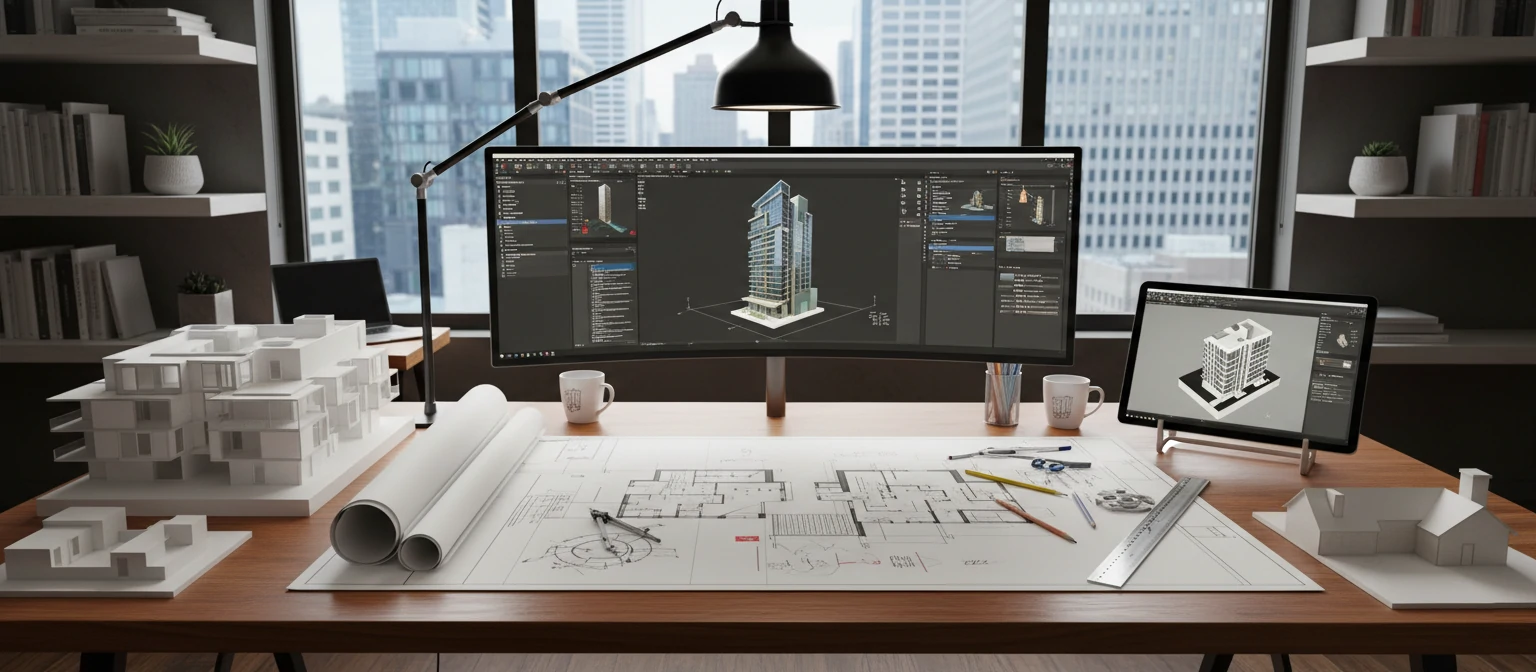
Behind every building that rises from the ground—whether a family home, a soaring office tower, or an industrial complex—lies a set of meticulously prepared documents that guided its construction. These aren't simply drawings; they're the translation of architectural vision into a language that contractors, engineers, and building officials can understand and execute. This is the essential work of architectural drafting services.
The drafting process bridges two worlds: the creative realm where architects envision spaces, and the practical world where builders need exact dimensions, specifications, and details. Without this bridge, even the most brilliant design remains an abstraction. With it, ideas become steel, concrete, glass, and wood—structures that shelter, inspire, and endure.
Whether you're planning a home renovation, developing a commercial property, or simply curious about how buildings come to be, understanding architectural drafting services reveals a crucial yet often overlooked aspect of the construction industry. This guide explores what drafting involves, why it matters, and how to navigate selecting and working with drafting professionals.
Key Takeaways
- ✓ Architectural drafting transforms design concepts into precise, buildable construction documents
- ✓ Modern CAD and BIM technologies have revolutionized drafting accuracy and collaboration
- ✓ Quality drafting reduces construction errors, change orders, and project delays
- ✓ Complete drawing sets include plans, elevations, sections, and detailed specifications
- ✓ Outsourced drafting services offer cost-effective alternatives to in-house teams
What Are Architectural Drafting Services?
Architectural drafting services encompass the technical drawing and documentation required to communicate how a building should be constructed. These services translate an architect's design intent into standardized drawings that builders, engineers, and regulatory authorities can interpret consistently. Think of drafting as the detailed instruction manual for constructing a building.
What Drafting Services Deliver
Technical Drawings
Precise plans, elevations, and sections
Specifications
Material and construction requirements
Schedules
Door, window, and finish inventories
Details
Enlarged views of complex assemblies
Professional drafting differs from conceptual design sketches in its precision and comprehensiveness. While a design sketch might show a building's general form and character, construction drawings specify exact dimensions to fractions of an inch, indicate specific materials and their installation methods, show how different building systems interact, and provide the information needed for permit applications and inspections.
"A building is only as good as its drawings. Precise drafting prevents the costly misunderstandings that plague construction projects and ensures the architect's vision survives the journey from concept to completion."
Drafting services may be provided by architectural firms as part of their design services, by specialized drafting companies, or by individual drafting professionals. The choice depends on project complexity, budget considerations, and whether design services are also needed.
Types of Architectural Drawings
A complete set of construction documents contains multiple drawing types, each serving specific communication purposes. Understanding these categories helps clients appreciate what they're receiving and ensures nothing critical is omitted from their project documentation.
Floor Plans
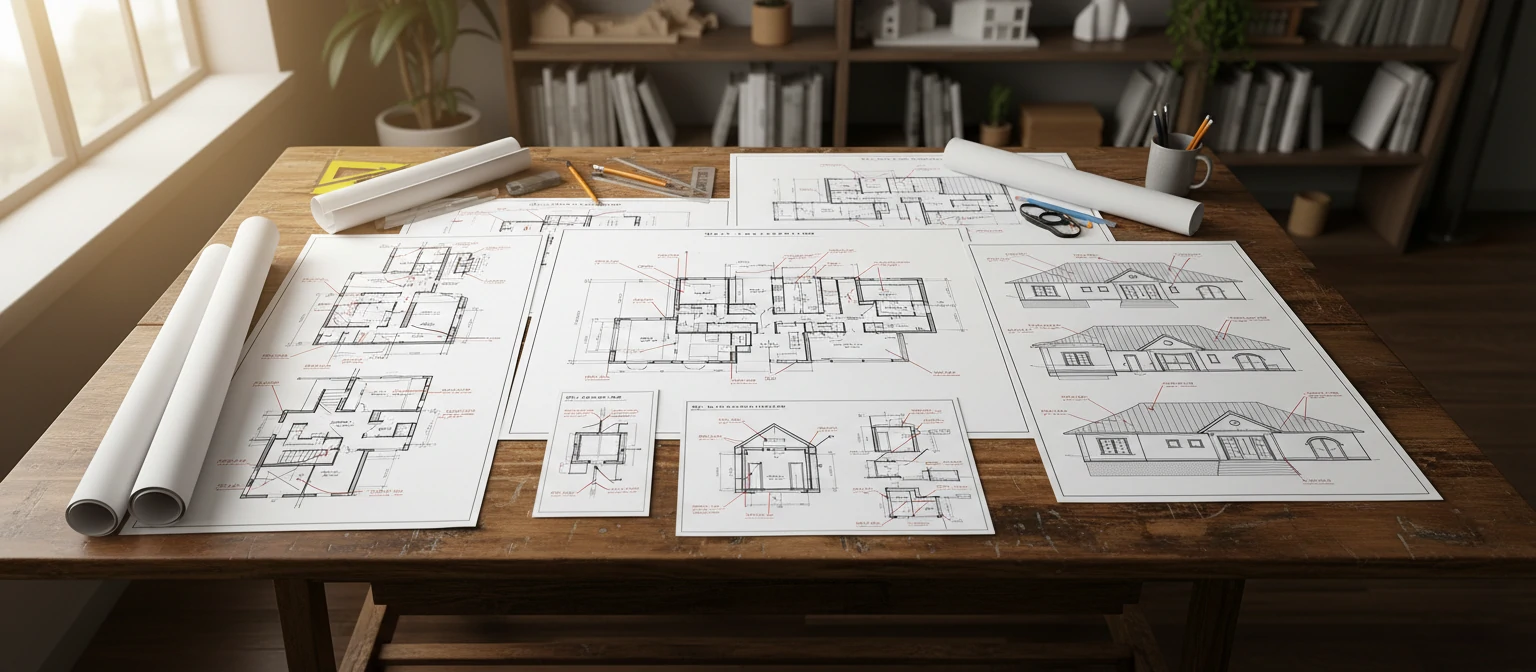
Floor plans are horizontal cuts through the building, typically at about four feet above each floor level. They show wall locations, room configurations, door and window placements, and dimensional relationships. Floor plans serve as the primary orientation drawings—the maps that everyone references to understand the building's layout.
Essential Drawing Types
Elevations and Sections
Elevations show the building's exterior faces as viewed straight-on from each direction—typically north, south, east, and west. They communicate the building's vertical proportions, window and door arrangements, and exterior material applications. Building officials review elevations to assess neighborhood compatibility and compliance with height restrictions.
Sections slice vertically through the building, revealing floor-to-floor heights, roof construction, foundation depth, and the relationship between interior spaces. Strategic section cuts show complex areas like stairs, multi-story spaces, or where the building meets the ground. These drawings are essential for understanding three-dimensional relationships that plans and elevations alone cannot convey.
Construction Details
Enlarged drawings showing how materials come together at critical points—wall assemblies, roof edges, window installations, and structural connections.
Schedules
Tabular information listing doors, windows, room finishes, and fixtures with their specifications—sizes, materials, hardware, and other characteristics.
The Architectural Drafting Process
Architectural drafting follows a structured progression from initial concepts to construction-ready documents. Understanding this process helps clients set appropriate expectations and participate effectively in project development.
Phases of Documentation Development
Schematic Design
Initial drawings establish overall concept, basic floor layouts, and building massing. These preliminary documents facilitate client feedback and design direction decisions before investing in detailed documentation.
Design Development
Drawings become more refined, showing specific materials, preliminary structural systems, and major building systems. Dimensions become more precise, and key details begin development.
Construction Documents
The most detailed phase produces drawings comprehensive enough for permit applications, contractor bidding, and actual construction. Every element receives precise documentation.
As-Built Documentation
Post-construction drawings incorporate field changes, documenting the building as actually constructed. These records prove invaluable for future renovations and maintenance.
Quality Control and Coordination
Professional drafting services implement rigorous quality control throughout the documentation process. Drawing reviews check dimensional accuracy, cross-reference consistency between sheets, code compliance, and constructability. Coordination with structural, mechanical, electrical, and plumbing engineers ensures all building systems fit together without conflicts.
Modern coordination increasingly relies on clash detection software that identifies conflicts between different building systems before construction begins. This digital coordination prevents the costly field discoveries that historically plagued construction projects—finding that a duct runs through a beam location or that plumbing can't route as drawn.
Technology and Tools in Modern Drafting
The evolution from hand drafting to computer-aided design fundamentally transformed architectural documentation. Today's drafting professionals work with sophisticated software tools that enhance accuracy, enable collaboration, and produce drawings that would have been impossibly time-consuming just decades ago.
CAD Software
Computer-Aided Design (CAD) software replaced drafting boards in most architectural offices during the 1990s. Programs like AutoCAD became industry standards, offering precise drawing tools, easy editing capabilities, and efficient reproduction. CAD drawings can be scaled infinitely, copied across projects, and modified without starting from scratch—advantages impossible with hand drafting.
AutoCAD
Industry-standard 2D drafting with extensive tool libraries and universal file compatibility. The foundation of most drafting workflows.
Revit
Building Information Modeling platform where changes propagate across all views automatically. Increasingly required for complex projects.
SketchUp
Intuitive 3D modeling for design visualization. Popular for presentations and preliminary design exploration.
ArchiCAD
Comprehensive BIM solution with strong documentation capabilities. Preferred by many architectural practices globally.
Building Information Modeling (BIM)
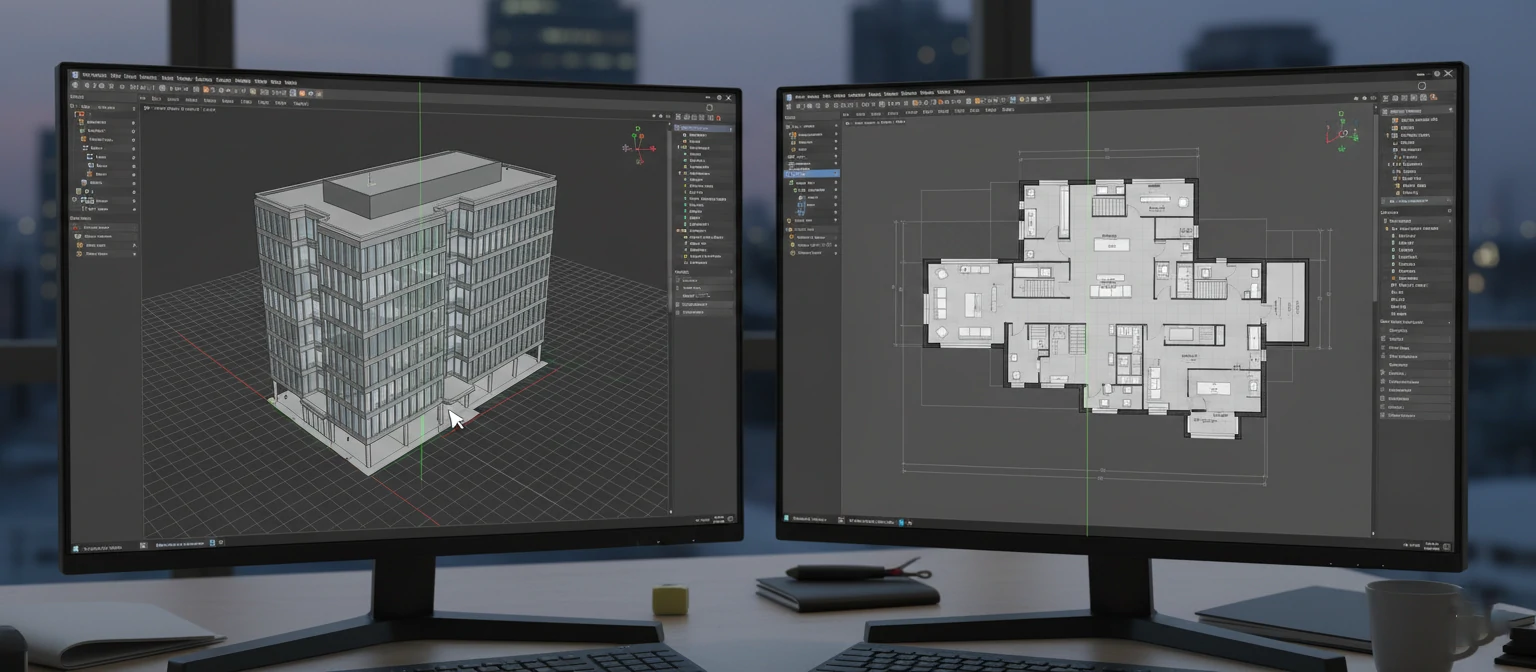
BIM represents the next evolution beyond traditional CAD. Rather than creating separate 2D drawings, BIM software constructs a virtual 3D model of the entire building. All drawings—plans, sections, elevations, details—are generated from this single coordinated model. When changes occur, they update everywhere automatically, eliminating the coordination errors that plague traditional drafting.
BIM Benefits: Studies indicate BIM adoption reduces drawing errors by up to 40% and decreases RFIs (Requests for Information) during construction by 60%. The upfront investment in model development pays dividends throughout the project lifecycle.
Beyond drafting efficiency, BIM models contain rich data about building components—materials, specifications, costs, and performance characteristics. This information supports quantity takeoffs for estimation, energy analysis, maintenance planning, and facility management long after construction completes.
Residential Drafting Services
Residential projects—from modest renovations to custom estates—require drafting services scaled to their specific needs. Homeowners often underestimate the documentation required even for seemingly simple projects, leading to permit delays and construction complications.
Custom Home Design
Custom homes demand comprehensive documentation addressing every aspect of construction. Working from architectural concepts, drafters develop complete drawing sets including site plans showing the home's placement, floor plans for each level, all exterior elevations, building sections revealing structural systems, roof plans with drainage patterns, foundation plans, and extensive details for custom elements.
Residential Drafting Services
New Construction
Complete documentation for custom and spec homes
Additions
Expanding existing homes seamlessly
Renovations
Kitchen, bath, and whole-house remodels
ADUs
Accessory dwelling units and guest houses
Garages & Outbuildings
Detached structures and workshops
Deck & Patio
Outdoor living space documentation
Renovation and Addition Projects
Renovations present unique drafting challenges. Documentation must accurately represent existing conditions before showing proposed changes. This often requires field measuring existing structures—a service many drafting firms provide or coordinate. The drawings must clearly distinguish between existing elements to remain, elements to be removed, and new construction.
Permit requirements for residential projects vary significantly by jurisdiction. Some municipalities accept relatively simple drawings for minor work, while others require detailed documentation regardless of project scope. Experienced residential drafters understand local requirements and produce documents calibrated to achieve permit approval efficiently.
Commercial and Industrial Drafting
Commercial and industrial projects introduce complexities absent from residential work. Larger scales, sophisticated building systems, stringent code requirements, and multiple stakeholder coordination demand drafting services with specialized experience and capabilities.
Office and Retail Buildings
Commercial buildings require documentation addressing tenant flexibility, accessibility compliance, fire and life safety systems, and complex mechanical systems. Base building drawings show core structure and systems, while tenant improvement drawings address individual space buildouts. This layered documentation approach accommodates the reality that commercial spaces change occupants and configurations throughout their lifespan.
🏢 Office Buildings
Core/shell documentation, tenant improvement packages, parking structures, and common area specifications. Flexibility for future tenant changes is essential.
🛒 Retail Spaces
Storefront details, display requirements, accessibility pathways, and brand-specific documentation for franchise and chain operations.
🏭 Industrial Facilities
Manufacturing layouts, loading dock specifications, crane systems, and specialized utility requirements for production processes.
🏥 Healthcare Facilities
Specialized environments requiring documentation of infection control, medical gas systems, radiation shielding, and regulatory compliance.
Multi-Discipline Coordination
Commercial projects involve extensive coordination between architectural drawings and engineering disciplines. Structural drawings show building framework. Mechanical drawings detail HVAC systems. Electrical drawings document power and lighting. Plumbing drawings address water supply and drainage. Fire protection drawings show sprinkler systems. Each discipline produces its own drawing set, all requiring coordination to ensure everything fits together.
"In commercial construction, the architect's drawings are just one part of a larger documentation ecosystem. Success depends on seamless coordination between all disciplines—and that coordination is increasingly digital."
Benefits of Professional Drafting Services
Investing in quality drafting services yields returns throughout the construction process and beyond. While cutting corners on documentation might seem economical initially, the downstream costs of inadequate drawings typically far exceed the savings.
Value of Professional Drafting
📄
Fewer Change Orders
Complete documentation prevents costly field revisions
⚡
Faster Permits
Complete submissions avoid review cycles
💰
Accurate Bids
Clear drawings enable precise contractor pricing
🎯
Design Intent
Vision translates accurately to construction
Risk Reduction
Thorough documentation reduces construction risk for all parties. Clear drawings minimize disputes between owners and contractors over scope. Detailed specifications reduce substitution conflicts. Comprehensive coordination prevents field conflicts that delay schedules and inflate costs. The investment in quality drafting functions as project insurance.
Professional drafting services also ensure regulatory compliance. Building codes, zoning ordinances, accessibility requirements, and energy standards all require specific documentation. Experienced drafters understand these requirements and incorporate compliance into their work, preventing permit rejections and inspection failures.
Choosing the Right Drafting Provider
Selecting appropriate drafting services requires evaluating provider capabilities against project needs. The right choice depends on project type, complexity, timeline, and budget. Several factors warrant consideration during the selection process.
Evaluation Criteria
Relevant Experience
Review portfolios for projects similar to yours in type and scale. A firm excellent at commercial high-rises may lack residential renovation expertise. Ask specifically about experience with your building type and local permit requirements.
Technical Capabilities
Confirm the provider uses appropriate software for your project requirements. If BIM deliverables are needed, ensure they have Revit or ArchiCAD proficiency. Verify their output formats match contractor and consultant needs.
Communication Quality
Drafting requires ongoing communication to clarify design intent and resolve questions. Evaluate responsiveness during the proposal phase as an indicator of project-phase communication. Time zone alignment matters for international providers.
Quality Assurance
Understand their review processes. Who checks drawings before delivery? How are errors handled? Professional firms have systematic QA procedures rather than relying solely on individual drafter accuracy.
In-House vs. Outsourced Services
Architectural firms must decide whether to maintain in-house drafting staff or outsource to specialized providers. In-house teams offer immediate availability and deep project knowledge but require ongoing salary and training investment. Outsourced services provide scalability—adding capacity for deadline crunches without permanent overhead—but require careful management to maintain quality and confidentiality.

Cost Factors and Pricing Models
Drafting service pricing reflects project complexity, deliverable requirements, and provider expertise. Understanding pricing structures helps clients budget appropriately and evaluate proposals fairly.
Common Pricing Approaches
🕑 Hourly Rates
Common for undefined scopes or projects likely to evolve. Rates typically range from $50-150/hour depending on expertise level and geographic market.
Best for: Renovations with unknown existing conditions
💳 Fixed Fee
Predetermined price for defined scope of work. Provides budget certainty but requires clear scope definition upfront to avoid disputes.
Best for: Well-defined projects with clear deliverables
📏 Per Square Foot
Pricing based on building area. Simple to understand and compare. Rates vary significantly by building type and complexity.
Best for: Standard building types with typical complexity
📃 Per Sheet
Pricing by drawing sheet count. Requires agreement on drawing content and level of detail per sheet to be meaningful.
Best for: Production drafting with defined standards
Factors Affecting Cost
Project complexity significantly impacts drafting costs. A straightforward rectangular building costs less to document than one with curved walls, complex rooflines, and custom details. Tight deadlines increase costs as resources must be concentrated. Revision rounds beyond initial scope add expense—clear initial direction reduces revision costs.
Budget Consideration: Drafting typically represents 5-15% of total design fees, which themselves are typically 8-15% of construction cost. For a $500,000 project, expect drafting costs ranging from $2,000 to $11,000 depending on project complexity and local market rates.
Future Trends in Architectural Drafting
Architectural drafting continues evolving as technology advances. Understanding emerging trends helps clients and practitioners prepare for changes that will reshape how buildings are documented and constructed.
Artificial Intelligence Integration
AI tools increasingly assist drafting workflows. Generative design algorithms can produce multiple layout options meeting specified criteria. Pattern recognition helps automate repetitive documentation tasks. AI-powered checking tools identify code violations and coordination conflicts. These technologies augment human drafters rather than replacing them, handling routine tasks while people focus on judgment-intensive work.
🤖 AI-Assisted Drafting
Machine learning accelerates routine documentation tasks while drafters focus on complex design challenges and quality control.
☁ Cloud Collaboration
Real-time multi-user editing enables distributed teams to work simultaneously on shared models, improving coordination and reducing delays.
👓 VR/AR Integration
Virtual and augmented reality tools allow clients and builders to experience designs before construction, improving communication and decision-making.
🌐 Digital Twins
BIM models evolve into living digital twins that track building performance and support facility management throughout the building lifecycle.
Evolving Deliverables
The traditional printed drawing set is giving way to digital-native deliverables. Interactive models replace static sheets for many purposes. Tablets on construction sites display drawings with real-time updates. QR codes on drawings link to specifications, submittals, and coordination notes. This shift toward digital delivery changes how drafters structure and organize their work.
"The future of architectural drafting isn't about producing more drawings faster—it's about creating richer, more connected information that serves the entire building lifecycle from design through decades of operation."
Frequently Asked Questions
Do I need an architect or can I just use drafting services?
It depends on project scope and local regulations. Many jurisdictions require licensed architect involvement for commercial projects or residential projects above certain sizes. Drafting services can work from an architect's design or, for simpler projects, may be sufficient alone. Check local requirements before deciding.
How long does it take to produce construction drawings?
Timeline varies significantly by project size and complexity. A simple residential addition might take 2-4 weeks. A custom home typically requires 6-12 weeks. Commercial projects can span months. Rush services are available at premium rates, but quality suffers under extreme compression.
What information do drafters need to start a project?
At minimum: site survey or existing building plans, design sketches or concepts, program requirements (room sizes, counts, relationships), and applicable code information. The more complete the input information, the more efficient the drafting process. Unclear or incomplete direction leads to assumptions that may require revision.
Can drafting services help with permit applications?
Many drafting services understand permit requirements and produce documents specifically formatted for submission. Some offer permit expediting as an additional service. However, the permit applicant is typically the property owner or their authorized agent, and professional stamping may require licensed architect involvement.
What file formats will I receive?
Standard deliverables typically include PDFs for general distribution and native CAD files (DWG) or BIM files (RVT) for those who need to work with the documents. Discuss format requirements upfront, as some proprietary formats require specific software to access.
Building on Solid Documentation
Architectural drafting services represent the critical translation layer between design imagination and built reality. Without this disciplined documentation, even the most inspired architectural vision cannot survive the construction process intact. With it, buildings emerge as intended—functional, beautiful, and built to last.
Whether you're planning a modest home renovation or a complex commercial development, understanding drafting services helps you make informed decisions about your project's documentation needs. The investment in quality drafting pays dividends throughout construction and beyond, reducing errors, accelerating permits, and ensuring your building reflects your vision.
As technology continues advancing, drafting services evolve in capability while their fundamental purpose remains constant: transforming architectural ideas into the precise instructions that make buildings possible. This essential service, often invisible to building occupants, represents the careful craft that underpins every structure we inhabit.
Jonathan Mercer, AIA
Licensed Architect & Technical Documentation Specialist
Jonathan brings over 20 years of experience spanning architectural design and construction documentation. After practicing at internationally recognized firms, he founded a consultancy specializing in technical documentation excellence. He has overseen drawing production for projects ranging from residential renovations to commercial towers exceeding 40 stories. Jonathan holds a Master of Architecture from Yale University and maintains active licensure in multiple states. He lectures regularly on documentation best practices and emerging BIM technologies.