
Everything you need to know about building a successful online store
Table of contents
- Introduction to Ecommerce Website Development Services
- Benefits of Professional Ecommerce Website Development Services
- Key Features of Modern Ecommerce Websites
- Technologies Powering Ecommerce Websites
- The Ecommerce Website Development Process
- Choosing the Right Ecommerce Development Provider
- Ecommerce Success Stories
- Frequently Asked Questions
- Wrapping It Up: Your Ecommerce Journey Starts Here
Introduction to Ecommerce Website Development Services
Hey there! If you're reading this, chances are you're thinking about taking your business online or maybe giving your current online store a much-needed upgrade. Welcome to the exciting world of ecommerce website development services. As someone who's helped countless businesses make this leap, I can tell you it's not just about slapping some products on a website—it's about creating an experience that turns visitors into loyal customers.
Picture this: It's late at night, and you're browsing for that perfect pair of shoes. You find a site that's easy to navigate, loads quickly, and makes buying feel effortless. That's the magic of a well-crafted ecommerce site. But behind that seamless experience is a ton of expertise in design, technology, and user psychology.
Ecommerce website development services cover everything from the initial concept to the final launch and beyond. We're talking about custom coding, responsive design, payment integration, and all the bells and whistles that make online shopping a joy rather than a chore. Whether you're a small boutique owner dreaming of global reach or a big brand looking to optimize conversions, these services are your ticket to ecommerce success.
In this guide, I'll walk you through everything you need to know. We'll explore why ecommerce is booming (spoiler: it's huge!), the benefits of professional development, key features to look for, the technologies powering modern online stores, and how to choose the right development partner. Plus, I'll share some real-world case studies to inspire you.
So, grab your favorite beverage, get comfortable, and let's dive into the world of ecommerce website development. By the end of this, you'll have a clear roadmap for creating an online store that not only looks great but actually drives sales. Ready? Let's go!
Benefits of Professional Ecommerce Website Development Services
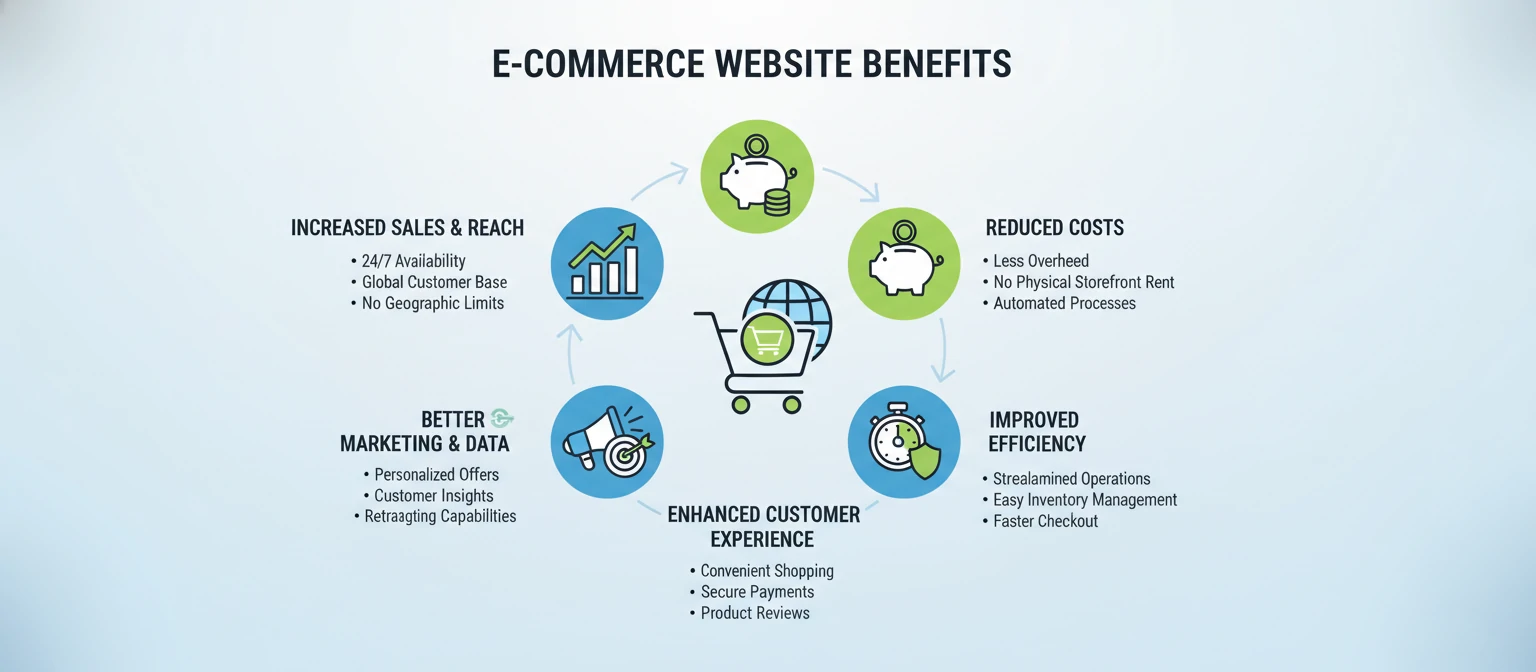
Okay, let's talk turkey. Why should you invest in professional ecommerce website development services instead of trying to DIY it or using a cheap template? The benefits are substantial and can make or break your online business. Let me break it down for you.
1. Skyrocket Your Sales and Revenue
Imagine your website as a 24/7 salesperson that never sleeps. Professional developers optimize every element for conversions—from the product images to the checkout flow. Studies show that even a one-second delay can cost you 7% in conversions. With expert development, you're not just building a site; you're building a money-making machine.
2. Reach Customers Worldwide
Gone are the days when your business was limited by geography. A well-developed ecommerce site opens doors to global markets. With features like multi-language support and international shipping calculators, you can turn local shoppers into international fans.
3. Build Trust and Credibility
First impressions matter, and your website is often the first interaction customers have with your brand. Professional design, secure payment gateways, and clear policies build trust. Customers are more likely to buy from sites that look polished and professional.
4. Scale with Your Business
As your business grows, your website needs to keep up. Professional development ensures your site can handle increased traffic, more products, and complex features without breaking a sweat. It's like having a foundation that supports a skyscraper.
5. Gain a Competitive Edge
In the crowded ecommerce space, standing out is crucial. Custom features, personalized experiences, and cutting-edge technology can set you apart from competitors using off-the-shelf solutions. It's your chance to wow customers and create brand loyalty.
Key Features of Modern Ecommerce Websites
When it comes to ecommerce, features aren't just nice-to-haves—they're must-haves. Let's explore the essential features that make an ecommerce site not just functional, but fantastic.
Responsive Design
Your site needs to look and work perfectly on all devices. Mobile commerce is booming, so responsive design isn't optional—it's essential.
Secure Payment Gateways
Security is paramount. Multiple payment options, SSL encryption, and PCI compliance keep customer data safe and build trust.
Advanced Search and Filtering
Help customers find what they want quickly with smart search, filters, and sorting options. No one likes digging through endless products.
Inventory Management
Real-time stock tracking, automated alerts, and seamless integration with your warehouse or suppliers keep everything running smoothly.
Customer Reviews /Ratings
Social proof is powerful. Allow customers to leave reviews and ratings to help others make informed decisions.
Personalization
Use data to show personalized recommendations, emails, and experiences. Make each customer feel like the site was built just for them.
Technologies Powering Ecommerce Websites
Behind every great ecommerce site is a stack of powerful technologies working in harmony. Let's peek under the hood and see what's making modern online stores tick.
Frontend Technologies
HTML5, CSS3, and JavaScript frameworks like React or Vue.js create beautiful, interactive user interfaces. These technologies ensure your site looks great and performs smoothly across all devices.
Backend Technologies
Powerful server-side languages like Node.js, PHP, or Python, combined with databases like MySQL or MongoDB, handle the heavy lifting behind the scenes. They manage user data, process orders, and keep everything secure.
Ecommerce Platforms
Platforms like Shopify, WooCommerce, Magento, or BigCommerce provide the foundation for your store. They offer built-in features, themes, and integrations that speed up development and reduce costs.
Cloud Services and APIs
Services like AWS, Google Cloud, or Azure provide scalable hosting. APIs from payment processors (Stripe, PayPal), shipping companies, and marketing tools integrate seamlessly to create a cohesive ecosystem.
The Ecommerce Website Development Process
Building an ecommerce site isn't a one-and-done deal. It's a collaborative process that requires planning, creativity, and technical expertise. Here's how it typically unfolds.
Discovery and Planning
We start by understanding your business goals, target audience, and requirements. This phase includes market research, competitor analysis, and creating a detailed project roadmap.
Design and User Experience
Wireframes and mockups bring your vision to life. We focus on creating intuitive navigation, compelling visuals, and a seamless user journey from browsing to checkout.
Development and Integration
The coding begins! We build the frontend and backend, integrate payment systems, and ensure everything works together perfectly. This is where the magic happens.
Testing and Quality Assurance
Rigorous testing ensures your site is bug-free, secure, and performs well under load. We test on multiple devices and browsers to guarantee a flawless user experience.
Launch and Optimization
Your site goes live! But the work doesn't stop there. We monitor performance, gather user feedback, and continuously optimize to improve conversions and user satisfaction.
Choosing the Right Ecommerce Development Provider
Picking the right development partner can make or break your ecommerce project. With so many options out there, how do you choose? Let's break it down.
Experience and Portfolio
Look for agencies with a proven track record in ecommerce. Check their portfolio for similar projects and client testimonials.
Technical Expertise
Ensure they stay current with the latest technologies and best practices. Ask about their tech stack and development methodologies.
Communication and Collaboration
Choose a partner who communicates clearly and involves you in the process. Regular updates and transparency are key.
Support and Maintenance
Your relationship doesn't end at launch. Look for providers offering ongoing support, updates, and maintenance services.
Cost and Value
While cost matters, focus on value. The cheapest option might not give you the best results. Get detailed quotes and understand what's included.
Cultural Fit
Work with people you enjoy collaborating with. A good cultural fit leads to better communication and results.
Ecommerce Success Stories
Nothing inspires like real-world success. Here are a few examples of businesses that transformed their fortunes with professional ecommerce development.
From Local Boutique to Global Brand
Sarah's handmade jewelry business was struggling in a small town. With a custom ecommerce site featuring high-quality product photography, personalized recommendations, and seamless checkout, her sales tripled in the first year. Now she ships worldwide and has expanded her product line.
"The new site didn't just increase sales—it changed how customers perceive my brand. It's professional, beautiful, and so easy to use." - Sarah, Jewelry Entrepreneur
Tech Startup Scales Rapidly
A SaaS company needed an ecommerce platform for their software subscriptions. The development team created a site with advanced features like usage-based billing, automated renewals, and detailed analytics. Within six months, their MRR (Monthly Recurring Revenue) increased by 400%.
"The custom integrations and scalable architecture allowed us to grow without technical limitations. It's been a game-changer." - Mike, CTO
Traditional Retailer Goes Digital
A family-owned sporting goods store was losing market share to online competitors. Their new ecommerce site included virtual try-on features, size recommendations, and integration with their physical stores. Online sales now account for 60% of their revenue.
"We were skeptical about going online, but the results speak for themselves. Our customers love the convenience, and we've actually seen foot traffic increase too." - Tom, Store Owner
Frequently Asked Questions
How long does it take to develop an ecommerce website?
Development time varies based on complexity, but most projects take 3-6 months from planning to launch. Simple sites might be ready in 4-6 weeks, while complex platforms with custom features can take 6-12 months.
How much does ecommerce development cost?
Costs range from $5,000 for basic sites to $100,000+ for complex platforms. Factors include features, design complexity, integrations, and the development team's location and expertise.
Do I need technical skills to manage my ecommerce site?
Not necessarily! Many platforms offer user-friendly admin panels. However, understanding basic concepts like SEO, analytics, and marketing will help you get the most out of your site.
How do I ensure my ecommerce site is secure?
Choose reputable hosting, use SSL certificates, implement secure payment gateways, keep software updated, and follow PCI compliance standards. Regular security audits are also recommended.
Can I integrate my ecommerce site with other business tools?
Absolutely! Modern ecommerce platforms support integrations with CRM systems, email marketing tools, accounting software, inventory management systems, and more through APIs.
Wrapping It Up: Your Ecommerce Journey Starts Here
Whew! We've covered a lot of ground in this guide to ecommerce website development services. From understanding the basics to exploring cutting-edge technologies and real-world success stories, you now have a comprehensive view of what's possible in the world of online retail.
Remember, your ecommerce site isn't just a digital storefront—it's the heart of your online business. Investing in professional development services gives you a platform that can grow with your ambitions, delight your customers, and drive real results.
Whether you're just starting out or looking to level up your existing store, the key is to approach this with intention. Define your goals, understand your audience, and partner with experts who share your vision. With the right foundation, your ecommerce dreams can become reality.
So, what are you waiting for? Take that first step towards ecommerce success. Research your options, reach out to potential partners, and start planning your digital future. The online world is waiting, and with a great ecommerce site, the possibilities are endless.
Ready to Start Your Ecommerce Journey?
Let's chat about bringing your online store vision to life! Contact Us