


Unlock the Power of Salesforce: Everything You Need to Know About Implementation Experts
Table of contents
- Introduction
- What is a Salesforce Implementation Consultant?
- Roles and Responsibilities of a Salesforce Implementation Consultant
- Essential Skills and Qualifications
- Benefits of Hiring a Salesforce Implementation Consultant
- Challenges in Salesforce Implementation and How to Overcome Them
- How to Choose the Right Salesforce Implementation Consultant
- Real-World Case Studies
- Common Mistakes to Avoid in Salesforce Implementation
- Client Testimonials
- The Future of Salesforce Consulting
- How to Get Started with Salesforce Implementation
- Conclusion
- Frequently Asked Questions
Introduction
Hey there! In the fast-paced world of business today, staying ahead means harnessing the best tools available. Salesforce, the undisputed leader in customer relationship management (CRM), has revolutionized how companies connect with their customers. But implementing Salesforce isn't just about clicking 'sign up'—it's about getting it right from the start. That's where a Salesforce Implementation Consultant steps in as your trusted guide.
Imagine you're a business owner eager to streamline your sales processes, boost customer engagement, and supercharge overall efficiency. You've heard all about Salesforce, but the idea of setting it up yourself feels daunting. Enter the Salesforce Implementation Consultant: your expert navigator through the maze of customization, integration, and optimization.
This ultimate guide will walk you through everything you need to know about these specialists. Whether you're thinking about hiring one for your company or considering a career in this exciting field, you'll find valuable insights here. We'll dive into their roles, essential skills, benefits, challenges, and so much more. By the end, you'll have a crystal-clear understanding of how these pros can transform your Salesforce journey.

Ready to dive in? Let's explore how a skilled consultant can turn your Salesforce investment into a game-changer for your business growth.
What is a Salesforce Implementation Consultant?
A Salesforce Implementation Consultant is that expert who helps organizations deploy, configure, and optimize Salesforce solutions. They're the masterminds behind successful Salesforce rollouts, ensuring the platform fits perfectly with your business needs.
Think of them as the perfect bridge between Salesforce's amazing capabilities and your company's unique requirements. They don't just install the software; they tailor it to your workflows, connect it with existing systems, and train your team to use it like pros.
These consultants usually work on a project basis, guiding companies through the entire implementation lifecycle—from initial planning to post-launch support. Their expertise covers various Salesforce products, like Sales Cloud, Service Cloud, Marketing Cloud, and beyond.

In a nutshell, a Salesforce Implementation Consultant transforms generic Salesforce into a customized powerhouse that drives real business value.
Roles and Responsibilities of a Salesforce Implementation Consultant
The role of a Salesforce Implementation Consultant is dynamic and multifaceted. They juggle many hats throughout the implementation process, acting as strategists, technicians, trainers, and problem-solvers.
One of their key responsibilities is conducting thorough business analysis. This means diving deep into your current processes, spotting pain points, and figuring out how Salesforce can solve them. They'll ask insightful questions about your sales cycles, customer interactions, and data management to ensure everything aligns with your goals.
Once the analysis is done, consultants move into the design phase. Here, they create detailed blueprints for your Salesforce org, including custom objects, fields, workflows, and integrations. This is where their technical wizardry shines, as they configure the platform to mirror your business logic.
Data migration is another crucial task. Consultants help transfer your existing data into Salesforce, ensuring it's accurate and secure. This often involves cleaning up data, mapping fields, and testing the process to avoid any hiccups.
Training and change management are also big parts of their job. A great consultant doesn't just set up the system; they make sure your team can use it effectively. This includes creating training materials, running workshops, and developing strategies to overcome resistance to change.

Throughout the journey, consultants provide ongoing support, troubleshooting issues and making adjustments as needed. They also keep up with Salesforce updates and best practices to keep your implementation current and optimized.
Essential Skills and Qualifications
To excel as a Salesforce Implementation Consultant, you need a mix of technical know-how, business savvy, and people skills. Let's break down the key qualifications that make these professionals so invaluable.
Technical skills are a must. Consultants should be proficient in Salesforce administration, like creating custom objects, fields, and workflows. Knowledge of Apex (Salesforce's programming language) and Visualforce is often essential for complex customizations. Familiarity with integration tools like MuleSoft or Zapier is also key for connecting Salesforce with other systems.
Business analysis skills are just as important. Consultants need to understand different industries and how Salesforce applies to various business models. This requires strong analytical thinking and the ability to translate business needs into technical solutions.
Communication skills can't be overstated. Consultants must explain complex tech concepts to non-tech stakeholders and facilitate discussions with diverse teams. Excellent speaking and writing skills ensure everyone stays on the same page.
Problem-solving abilities are crucial. When challenges arise—and they will—consultants need to think creatively and troubleshoot effectively. This might involve debugging code, optimizing performance, or redesigning processes.

Most consultants hold Salesforce certifications, such as Salesforce Certified Administrator or Salesforce Certified Consultant. These credentials showcase their expertise and commitment to staying current with platform updates.
Benefits of Hiring a Salesforce Implementation Consultant
While some organizations try to implement Salesforce on their own, hiring a consultant offers huge advantages that can mean the difference between success and struggle.
Expertise is the biggest perk. Consultants bring deep knowledge of Salesforce best practices and common pitfalls, helping you dodge costly mistakes. They've likely worked on dozens of implementations across various industries, giving them insights you might not have.
Time savings is another major benefit. Implementation can be time-intensive, and your internal team might not have the bandwidth. A consultant handles the heavy lifting, freeing your staff to focus on core tasks.
Customization is where consultants truly excel. They can tailor Salesforce to fit your unique processes, creating a solution that's truly yours instead of a one-size-fits-all setup.
Risk mitigation is essential. Consultants spot potential issues before they become problems, ensuring a smoother rollout and better user adoption.

Ultimately, a good consultant pays for themselves through improved efficiency, stronger customer relationships, and increased revenue.
Challenges in Salesforce Implementation and How to Overcome Them
Despite its benefits, Salesforce implementation isn't always smooth sailing. Understanding these challenges and how to tackle them is key to a successful project.
Data quality issues often pop up during migration. Inaccurate or incomplete data can lead to poor decisions. Consultants tackle this by implementing data cleansing and validation rules.
User adoption is another common hurdle. Even the best system is useless if people don't use it. Change management strategies, comprehensive training, and ongoing support help drive adoption.
Integration complexities can be tricky, especially with multiple systems. Consultants use middleware and APIs to create seamless connections.
Scope creep—when projects expand beyond the original plan—is a frequent issue. Clear project management and regular check-ins keep implementations on track.

By anticipating these challenges and having mitigation plans, consultants ensure smoother implementations.
How to Choose the Right Salesforce Implementation Consultant
Picking the right consultant can make or break your Salesforce project. Here are some tips to help you choose wisely.
First, check their experience. Look for consultants who've worked in your industry and with companies similar to yours. Ask for case studies or references.
Certifications matter. Make sure they hold relevant Salesforce certifications and stay updated with platform changes.
Communication style is important. You want someone who explains complex ideas clearly and works well with your team.
Project management approach should match yours. Some prefer agile methods, while others use traditional approaches.

Don't forget to discuss pricing, timelines, and ongoing support before committing.
Real-World Case Studies
Let's look at some real examples of successful Salesforce implementations to see consultants in action.
A mid-sized manufacturing company was struggling with disconnected sales and inventory systems. Their consultant integrated Salesforce with their ERP, boosting sales efficiency by 30%.
A healthcare provider wanted to improve patient engagement. The consultant customized Service Cloud, leading to better scheduling and higher patient satisfaction scores.
A retail chain aimed to personalize marketing. Marketing Cloud implementation boosted email open rates by 40%.
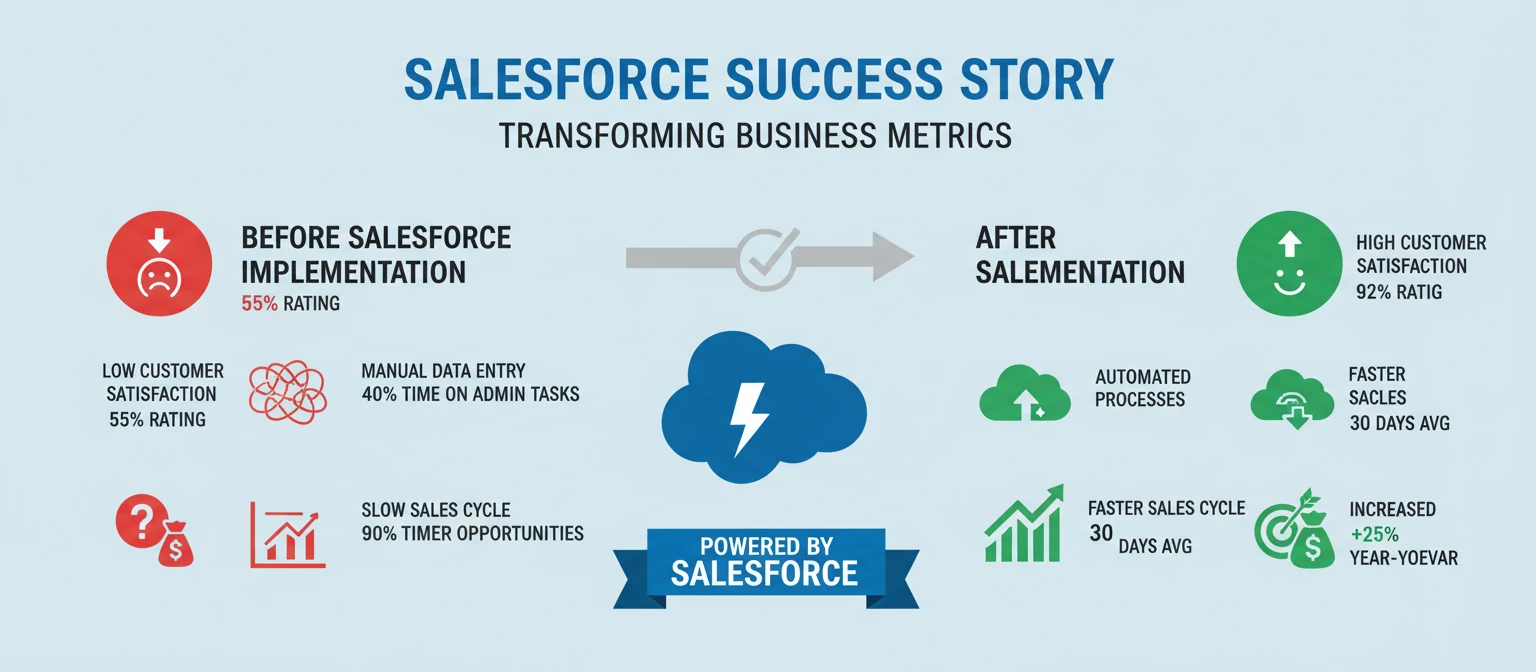
These stories show how the right consultant can deliver tangible business results.
Common Mistakes to Avoid in Salesforce Implementation
Even experienced teams can make mistakes during Salesforce implementation. Here are some common pitfalls and how to steer clear of them.
One big mistake is rushing the planning phase. Skipping thorough requirements gathering leads to misconfigurations. Take time to map out your processes before diving in.
Not involving end-users early enough is another error. Users who feel left out may resist the new system. Include them in the process from the start.
Underestimating training needs can doom your implementation. Comprehensive training is essential for adoption. Plan for multiple sessions and ongoing support.
Ignoring data quality during migration causes headaches later. Clean and validate your data before importing it.

Avoiding these mistakes sets you up for a smoother, more successful implementation.
Client Testimonials
Don't just take our word for it—hear from businesses who've worked with Salesforce Implementation Consultants.
"Our consultant transformed our chaotic sales process into a streamlined machine. Revenue up 25% in six months!" - Sarah J., Sales Director
"The team's expertise in customization saved us countless hours. Highly recommend!" - Mike T., IT Manager
"From training to support, they were with us every step. Our team loves Salesforce now." - Lisa R., Operations Lead
These testimonials highlight the real impact consultants can have on your business.
The Future of Salesforce Consulting
As Salesforce evolves, so does the role of implementation consultants. AI and machine learning integrations are becoming the norm, requiring consultants to stay ahead of tech trends.
Cloud adoption is accelerating, with more businesses moving to multi-cloud setups. Consultants will need skills in integrating Salesforce with AWS, Azure, and Google Cloud.
Sustainability and ethical AI will play bigger roles, as companies seek responsible tech solutions.

The demand for skilled consultants is set to grow as more companies realize the value of CRM platforms.
How to Get Started with Salesforce Implementation
Ready to embark on your Salesforce journey? Here's a step-by-step guide to get you started.
First, assess your current processes and identify pain points. What challenges are you facing that Salesforce could solve?
Next, define your goals. What do you want to achieve with Salesforce? Increased sales, better customer service, improved efficiency?
Research and select a consultant. Use the tips from earlier in this guide to find the right fit for your business.
Plan your budget and timeline. Be realistic about costs and how long implementation might take.
Finally, prepare your team. Communicate the changes and get everyone excited about the new system.
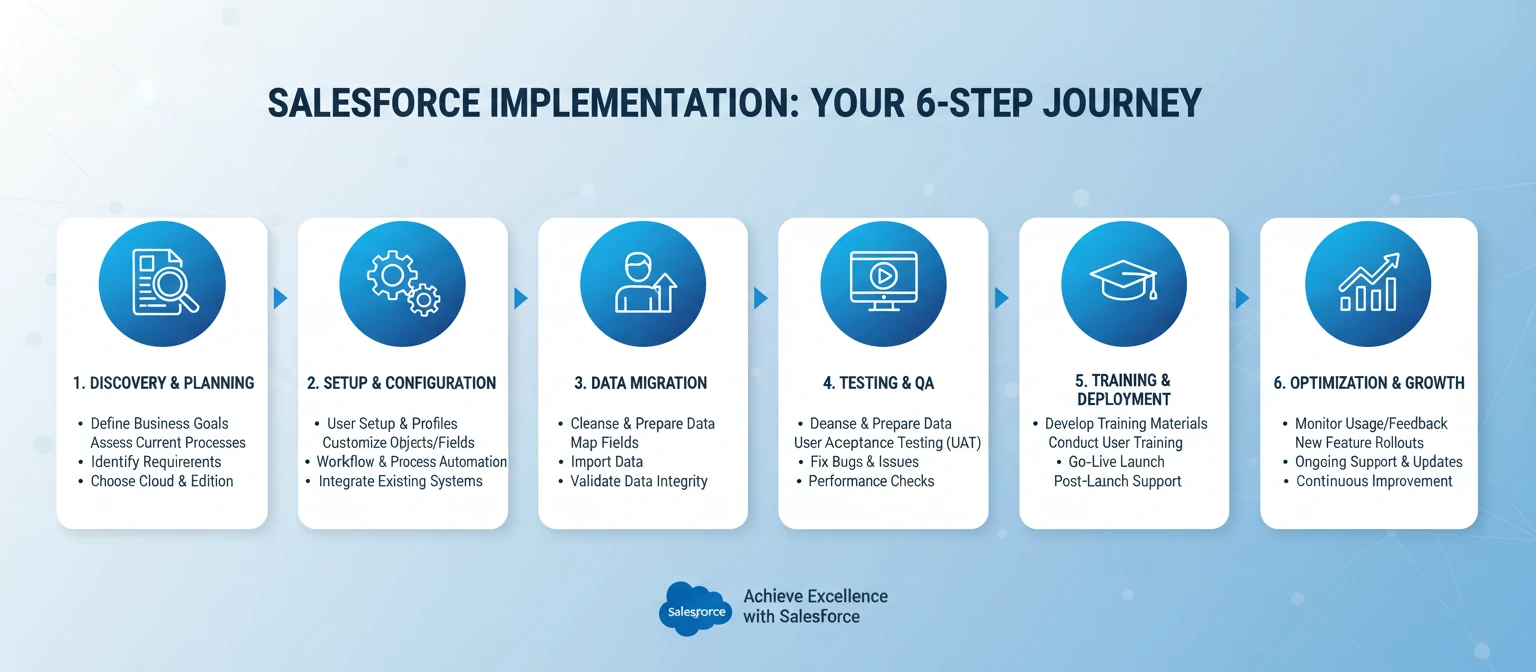
With these steps, you'll be well on your way to a successful Salesforce implementation.
Conclusion
Salesforce Implementation Consultants are the unsung heroes of digital transformation. Their expertise ensures your Salesforce investment delivers maximum returns.
Whether you're a business leader considering implementation or a professional exploring this career, understanding the role is crucial. Remember, the right consultant doesn't just implement software—they transform your business.
If you're ready to unlock the power of Salesforce, reach out to a qualified implementation consultant today. Your future self will thank you.

Frequently Asked Questions
Implementation timelines vary, but most projects take 3-12 months depending on complexity and scope.
Salesforce Certified Administrator, Consultant, and Platform Developer are key certifications.
Costs range from $100-$300 per hour, depending on experience and location.