
In a digital world flooded with generic templates, learn how a custom web development partner can build the scalable, secure, and unique foundation your business needs to dominate.
Your website is no longer just a digital brochure; it is the operating system of your business. It's where first impressions are formed, where transactions happen, and where your brand lives. Yet, millions of businesses settle for the same cookie-cutter templates, wondering why they can't scale, why their site loads slowly, or why they look exactly like their competitors.
Enter the Custom Web Development Company. Unlike agencies that just install a WordPress theme and change the colors, a custom development partner architects a solution from the ground up, tailored specifically to your business logic, your customer's journey, and your long-term goals.
This comprehensive guide will explore the world of high-end web engineering. We'll dismantle the myths of "cheap and fast," explore the technical advantages of custom code, and give you the blueprint for finding a technical partner who doesn't just write code, but builds assets.

What Does "Custom" Actually Mean?
Architecture, Not Installation
We aren't installing plugins. We are writing clean, efficient code (React, Vue, Node, Python) designed to perform specific functions without the bloat of generic software.
Security by Design
Generic platforms like WordPress are targets for 90% of web attacks. Custom code is obscure, harder to hack, and built with specific security protocols for your data.
Deep Integrations
Your website needs to talk to your CRM, your inventory system, and your mobile app. Custom APIs bridge these gaps seamlessly without relying on third-party connectors.
A custom web development company is a team of full-stack engineers, UX designers, and system architects who solve business problems with code, rather than just "making things pretty."
Why Fortune 500s Don't Use Templates
When scalability and brand integrity are on the line, "good enough" isn't an option. Here is the ROI of going custom.
Performance is Money
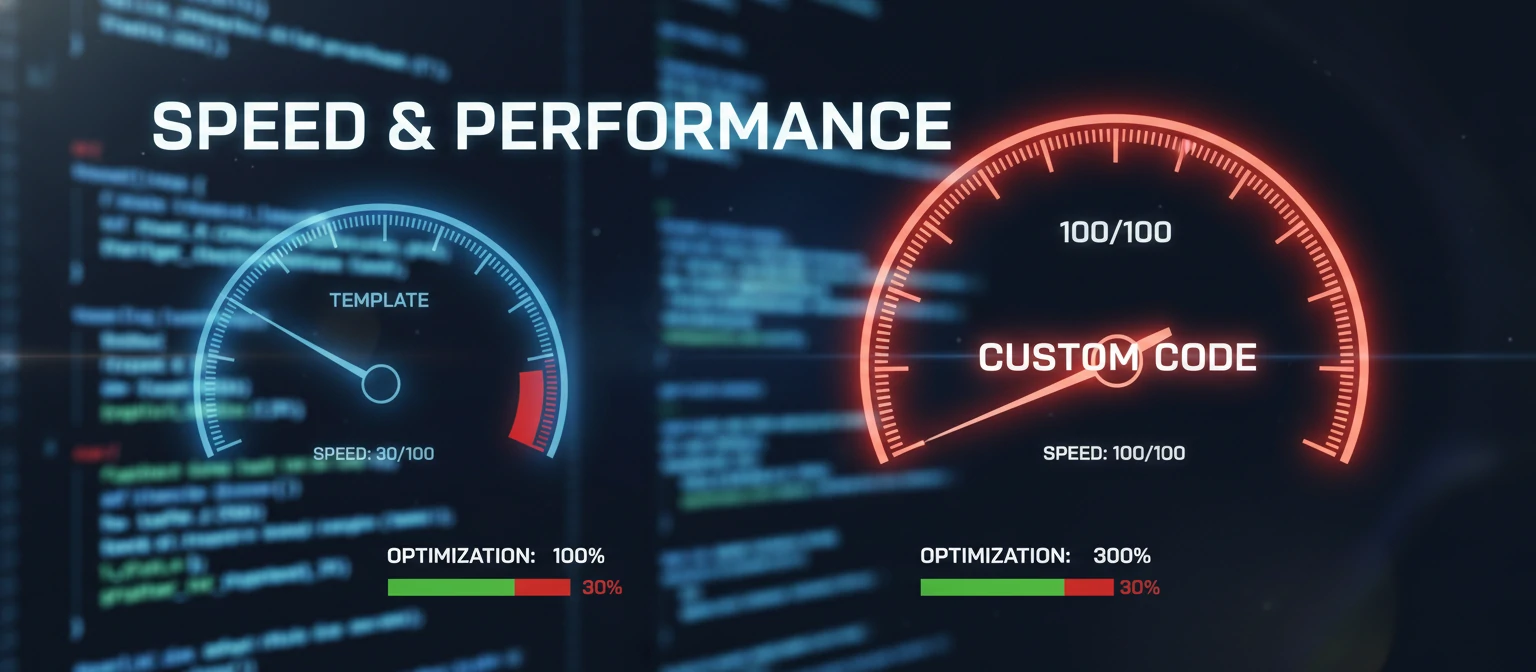
Templates load hundreds of scripts you don't need. Custom sites load only what is necessary, achieving 99/100 Google PageSpeed scores. Amazon found that every 100ms of latency cost them 1% in sales.
Unlimited Scalability
What happens when you go from 1,000 visitors to 1,000,000? A template crashes. A custom AWS or Azure cloud architecture scales automatically, handling traffic spikes without breaking a sweat.
Owning Your Intellectual Property
When you build on Wix or Shopify, you are renting. When you hire a custom dev shop, you typically own the code. It is a business asset that adds value to your company valuation.
The Engineering Lifecycle
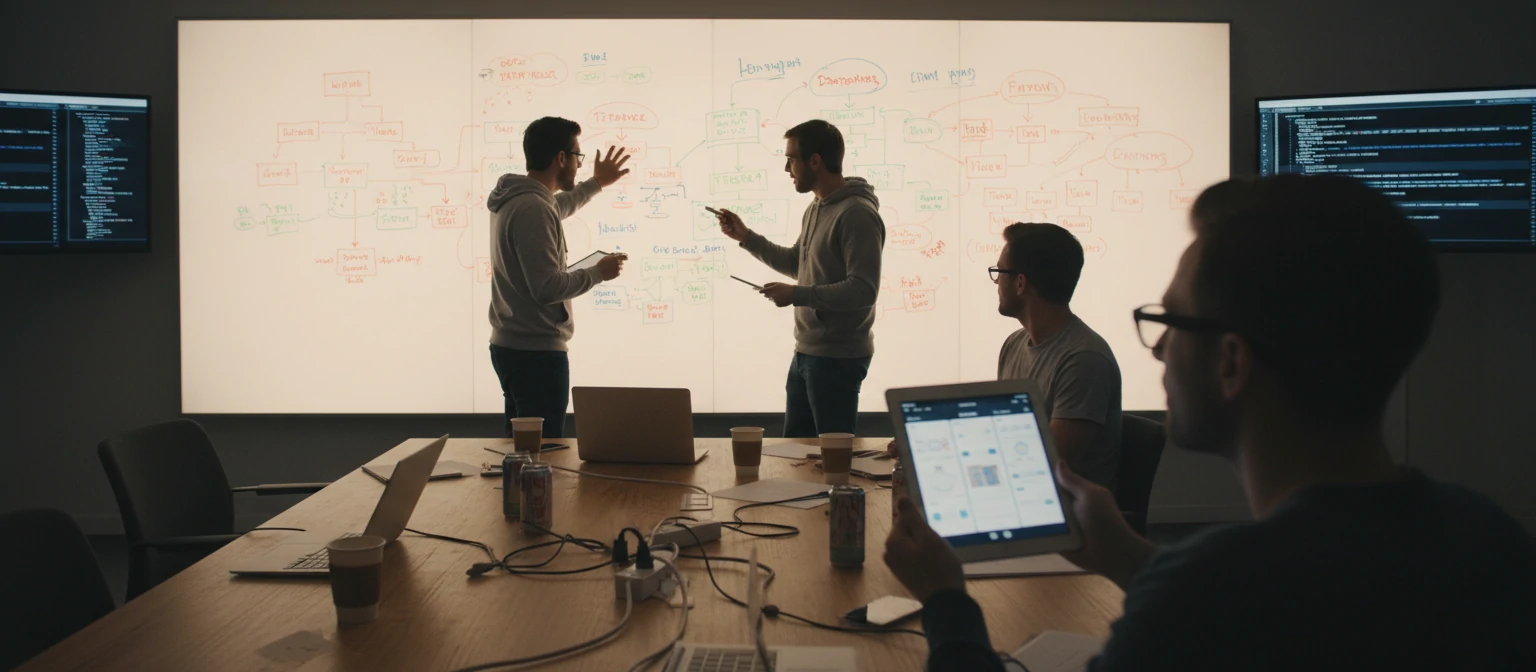
Working with a professional firm is vastly different from hiring a freelancer. It follows a rigorous Software Development Life Cycle (SDLC).
1. Discovery & Strategy
No code is written yet. We define user personas, map out technical requirements, choose the tech stack (e.g., React vs. Angular), and create a roadmap. This is the "Blueprint Phase."
2. UX/UI Design
Designers create high-fidelity wireframes and interactive prototypes. This isn't just about colors; it's about "Information Architecture"—how a user flows through your application to achieve a goal.
3. Full-Stack Development
Frontend engineers build the interface, while Backend engineers build the database and server logic. This is where the heavy lifting happens, typically in 2-week "Sprints" following Agile methodology.
4. QA & Deployment
We break the site on purpose to ensure your users can't. Automated testing, load testing, and security audits precede the final launch to production servers.
The Toolkit: What Pros Use
You don't need to be a coder, but you should know the menu. Professional custom shops usually specialize in a "Stack."
MERN Stack
MongoDB, Express, React, Node
The modern standard for dynamic web apps. Fast, JavaScript-based everywhere, and massive community support.
Python / Django
Python, Django Framework
The choice for data-heavy apps, AI integration, and fintech. Known for its "batteries included" security.
PHP / Laravel
PHP, Laravel Framework
Robust, mature, and excellent for enterprise-grade applications. It powers vast portions of the enterprise web.


How to Vet Your Development Partner
The market is saturated. Here are the red flags to avoid and the green flags to look for.
🚩 Red Flags
- "We can do everything (SEO, App, Web, Video, Print)." (Specialists > Generalists)
- Prices that seem too good to be true ($500 for a custom site).
- No GitHub or code samples available.
- They say "Yes" to everything instantly without asking "Why?"
✅ Green Flags
- They challenge your ideas and suggest better technical alternatives.
- They have a clearly defined QA (Quality Assurance) process.
- They offer a post-launch maintenance agreement (SLA).
- They focus on business outcomes, not just code features.