
Everything you need to know about choosing, vetting, and working with local video production companies in your area
Table of contents
- Key Takeaways
- 1. Why Choose a Local Production Company?
- 2. Services to Expect
- 3. How to Find Local Companies
- 4. Evaluating Portfolios
- 5. Questions to Ask Potential Partners
- 6. Understanding Pricing
- 7. Red Flags to Avoid
- 8. The Production Process
- 9. Building a Long-Term Relationship
- 10. DIY vs. Professional Production
- Frequently Asked Questions
You've decided your business needs professional video content. Maybe it's a commercial for local TV, a series of social media videos, a corporate training program, or a documentary about your company's journey. Whatever the project, you're searching for a "video production company near me" — and that search has probably led you to dozens of options with varying portfolios, prices, and promises.
After 15 years helping businesses connect with the right production partners and running my own production company, I've seen what makes these relationships succeed and what causes them to fail. The difference often comes down to how well you vet potential partners before signing contracts — and whether the company you choose truly understands your local market.
This guide will walk you through everything you need to know about finding, evaluating, and working with video production companies in your area. We'll cover what services to expect, how pricing works, red flags to avoid, and how to build a relationship that delivers outstanding results for years to come.
Key Takeaways
- ▶ Local production companies offer valuable advantages: market knowledge, easier communication, and lower travel costs
- ▶ Always review portfolios for work similar to your project — not just impressive showreels
- ▶ Professional video production typically ranges from $1,500 to $50,000+ depending on scope and complexity
- ▶ Clear communication and detailed contracts protect both parties and ensure project success
- ▶ Building a long-term partnership with one company often delivers better results than project-hopping
1. Why Choose a Local Production Company?
In an age where remote collaboration is common and files transfer instantly across the globe, you might wonder why geographic proximity matters. After all, couldn't a production company in Los Angeles serve a business in Boston just as effectively? In some cases, yes. But for most projects, local production partners offer significant advantages.
Advantages of Working Locally
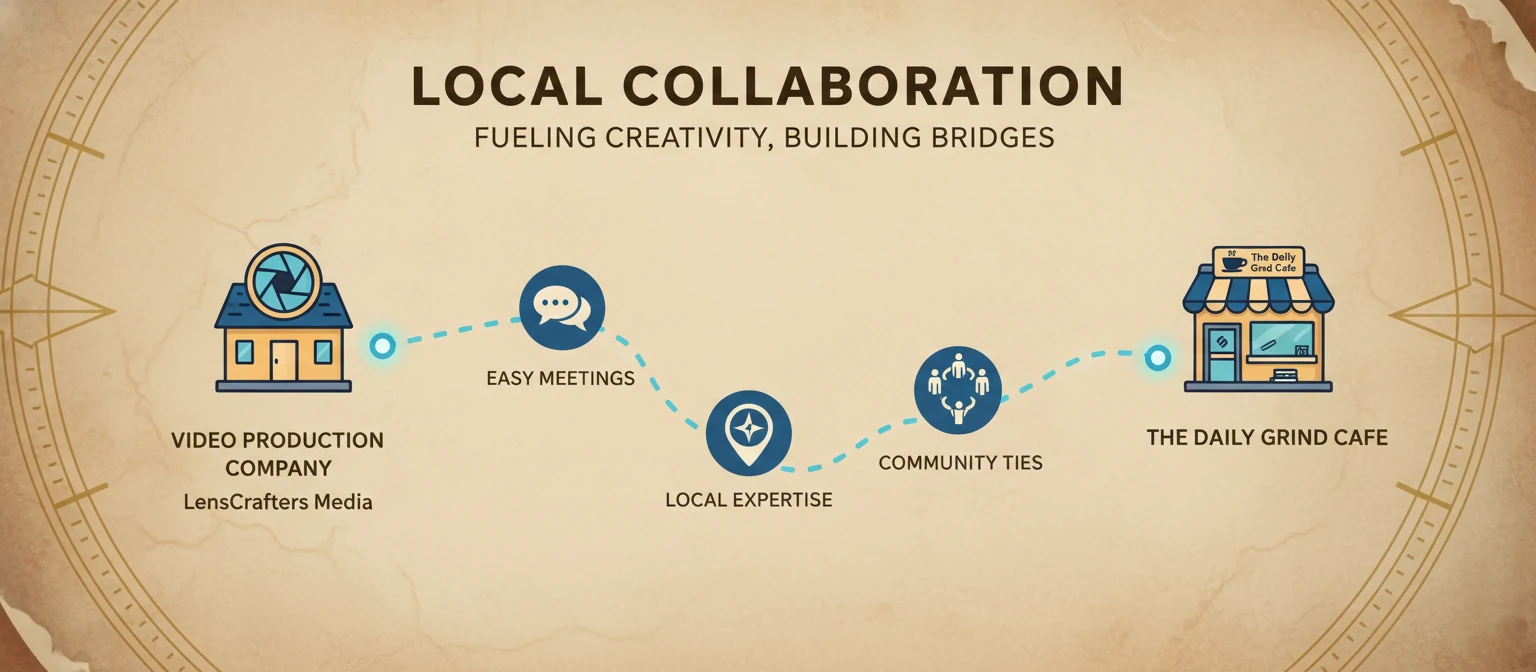
Local Market Knowledge
They understand your audience, local culture, landmarks, and what resonates with community members
Reduced Travel Costs
No flights, hotels, or per diems eating into your budget for crew travel
Face-to-Face Meetings
In-person collaboration for planning, shoots, and reviews improves communication
Quick Response Time
Same time zone, quick site visits, and faster turnaround for urgent projects
Location Expertise
Knowledge of permits, best shooting locations, and local vendor relationships
Accountability
Their reputation in the community means they're invested in your satisfaction
A local production company knows that the best light for outdoor shoots happens at different times throughout the year. They know which permits you'll need for filming downtown, which locations are overused (and which hidden gems exist), and how local businesses have successfully used video in the past. This institutional knowledge saves time, money, and frustration.
Perhaps most importantly, local companies have skin in the game. Their reputation in your community matters to them. A production company from another state might disappear after delivering subpar work; a local partner sees you at networking events, knows your business neighbors, and understands that word of mouth can make or break them.
2. Services to Expect
Video production companies vary widely in their service offerings. Some are full-service agencies handling everything from concept to distribution, while others specialize in specific aspects like filming or post-production. Understanding what services exist helps you find the right match.
Common Video Production Services
Pre-Production Services
Concept development, scriptwriting, storyboarding, location scouting, casting, scheduling, and project planning. This phase determines whether your project succeeds or struggles.
Production (Filming)
Camera operation, lighting, sound recording, directing talent, and on-set coordination. Professional crews bring cinema-grade equipment and technical expertise.
Post-Production
Video editing, color correction/grading, motion graphics, visual effects, sound design, music licensing, and final delivery in required formats.
Specialty Services
Drone/aerial footage, live streaming, 360-degree video, animation, VR/AR content, and documentary filmmaking require specialized skills and equipment.
Types of Video Content
Different production companies may specialize in specific content types:
| Video Type | Purpose | Typical Length |
|---|---|---|
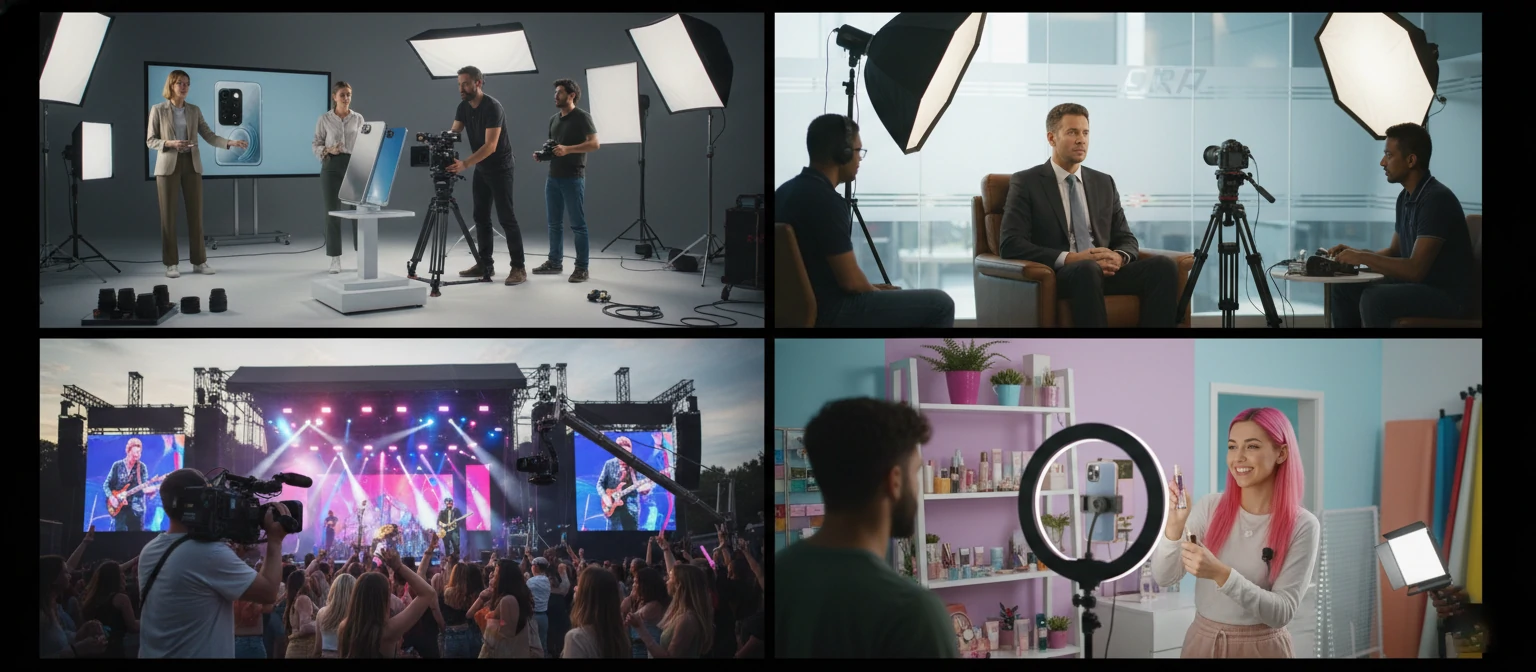
| Commercial/Advertisement | Promote products/services for broadcast or digital | 15-60 seconds |
| Brand Story | Share company history, values, and mission | 2-5 minutes |
| Testimonial | Feature satisfied customers sharing experiences | 1-3 minutes |
| Training/Educational | Teach skills or explain processes | 5-30 minutes |
| Social Media Content | Engage audiences on platforms like Instagram, TikTok | 15-90 seconds |
| Event Coverage | Capture conferences, galas, product launches | 3-10 minutes (highlight) |
3. How to Find Local Companies
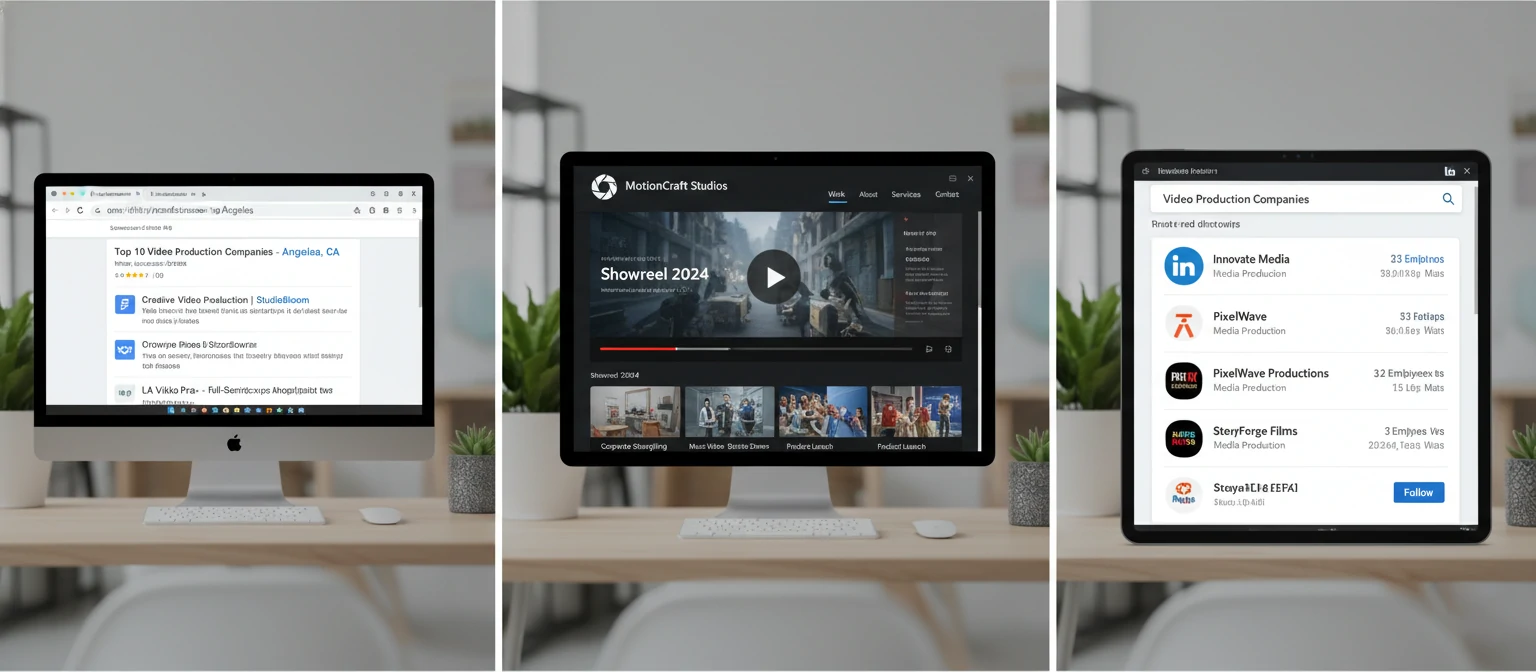
Your search for a "video production company near me" will yield many options. The challenge isn't finding companies — it's finding the right ones. Here are the most effective ways to discover quality local production partners.
Google Search Strategies
Beyond the obvious "video production company near me," try more specific searches that match your needs: "corporate video production [your city]," "commercial filmmaker [your area]," or "event videographer [your region]." Check Google Business profiles for reviews, photos of their work, and response rates to inquiries.
Best Methods for Finding Quality Producers
Ask other local businesses who created their videos. Personal recommendations come with built-in vetting.
ProductionHUB, Mandy.com, and local film commission directories list vetted professionals.
Chamber of Commerce, industry associations, and BNI groups often include video professionals.
Vimeo and Behance showcase professional work — search by location to find local talent.
Search for video producers in your area and check mutual connections who might provide references.
Reverse Engineering Competitors' Videos
Look at video content from successful businesses in your industry or area. Who produced their videos? Production credits often appear at the end, or you can simply ask. If a company creates content you admire for businesses similar to yours, they already understand your market.
4. Evaluating Portfolios
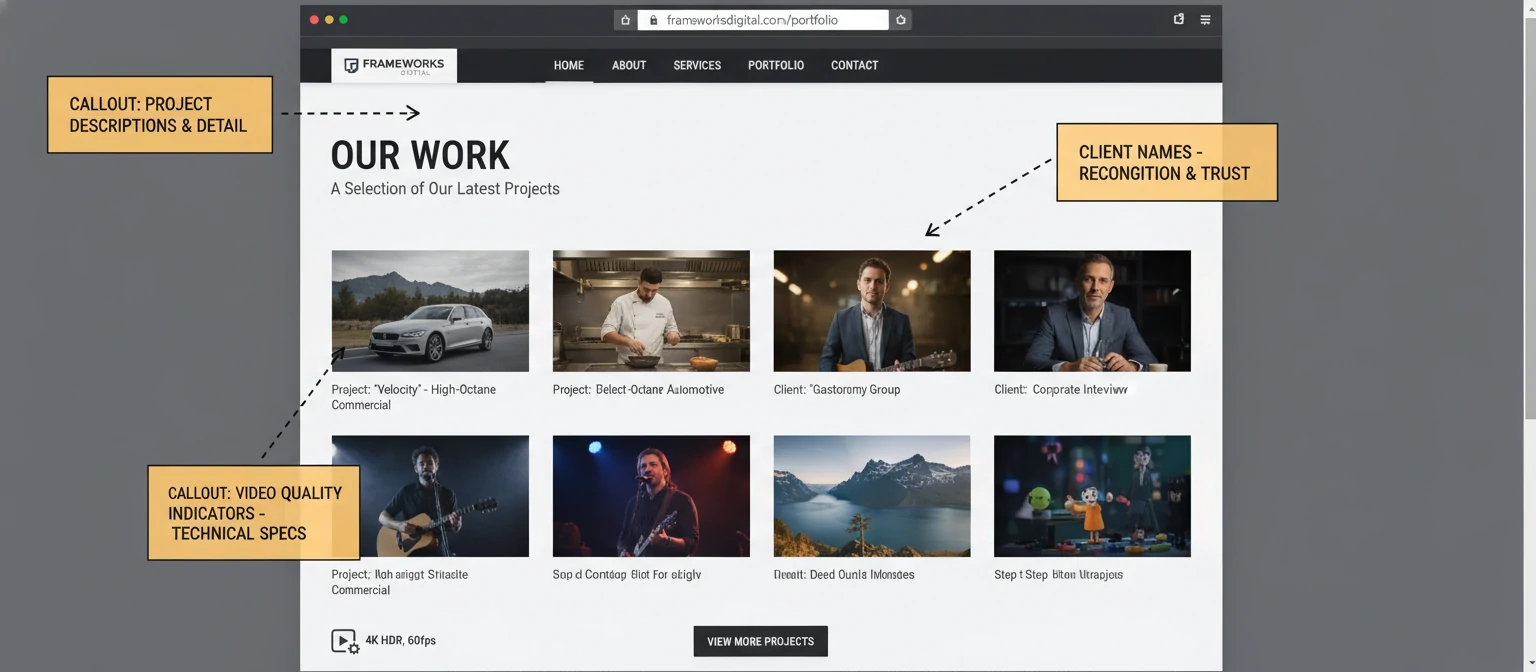
A production company's portfolio is their calling card, but you need to look beyond surface impressions. Beautiful showreels can be deceiving; what matters is whether they can execute work relevant to your specific needs.
What to Look For
✓ Relevant Work
Look for projects similar to yours in style, industry, and scope. A wedding videographer's gorgeous work doesn't prove they can produce corporate training.
✓ Technical Quality
Assess lighting, audio clarity, color grading, and editing rhythm. Technical excellence should be consistent across projects.
✓ Storytelling Ability
Does the video hold attention? Is there a clear narrative arc? Technical skill means nothing without compelling storytelling.
✓ Variety & Range
Can they adapt their style to different clients, or does every video look the same regardless of brand?
Portfolio Red Flags
- Only showing sizzle reels: Where are the complete, individual projects?
- Outdated work: If the newest piece is from 2019, what have they been doing?
- No client information: Legitimate projects have identifiable clients
- Inconsistent quality: One great video among mediocre ones suggests luck, not skill
- Stock footage heavy: If most shots are stock, what are you actually paying for?
Beyond the Portfolio
Ask for case studies or client references for projects similar to yours. A portfolio shows what they made; references tell you what they were like to work with. Were they on budget? On schedule? Responsive to feedback? These factors matter as much as creative ability.
5. Questions to Ask Potential Partners
The discovery call or initial meeting reveals more than any website can. Come prepared with questions that help you understand their process, capabilities, and whether they're the right fit for your project.
Essential Questions for Your First Meeting
About Their Experience
- "Have you worked on projects similar to ours? Can you share examples?"
- "What industries or video types do you specialize in?"
- "How long have you been in business, and who are some of your long-term clients?"
About Their Process
- "Walk me through your typical production process from start to finish."
- "Who will be our main point of contact throughout the project?"
- "How do you handle revisions and feedback?"
About Logistics
- "What's your typical timeline for a project of this scope?"
- "What do you need from us to make this project successful?"
- "What happens if the project goes over budget or schedule?"
About Deliverables
- "What file formats will we receive, and are we getting the raw footage?"
- "What's included in your pricing, and what would be extra?"
- "Who owns the final video and underlying assets?"
Pay Attention to How They Listen
The best production companies ask more questions than they answer in initial meetings. They should be curious about your goals, audience, brand, and what success looks like. If they're already pitching creative ideas before understanding your needs, that's a concerning sign — they may be more interested in their vision than yours.

6. Understanding Pricing
Video production pricing is notoriously opaque. "How much does a video cost?" is like asking "How much does a house cost?" — it depends entirely on what you want. Understanding pricing structures helps you compare quotes meaningfully and avoid sticker shock.
Basic Production
$1,500 - $5,000
- Simple interview or testimonial
- Single location, minimal crew
- Basic editing and graphics
- 1-3 minute final video
Mid-Range Production
$5,000 - $20,000
- Scripted commercial or brand video
- Multiple locations, larger crew
- Professional talent/actors
- Motion graphics and licensed music
Premium Production
$20,000 - $50,000+
- High-end commercial campaigns
- Multiple shoot days, full crew
- Advanced VFX or animation
- Broadcast-quality finishing
Pricing Models Explained
Project-Based Pricing: A flat fee for the complete project. This is most common and provides budget certainty. Make sure the scope is clearly defined so you're comparing apples to apples between quotes.
Day Rates: Payment per day of filming or editing. Common for ongoing relationships or projects where scope is uncertain. Typical day rates range from $1,500-$5,000+ depending on crew size and equipment.
Hourly Rates: Less common for production, but sometimes used for editing-only or consulting work. Expect $75-$250/hour depending on expertise level.
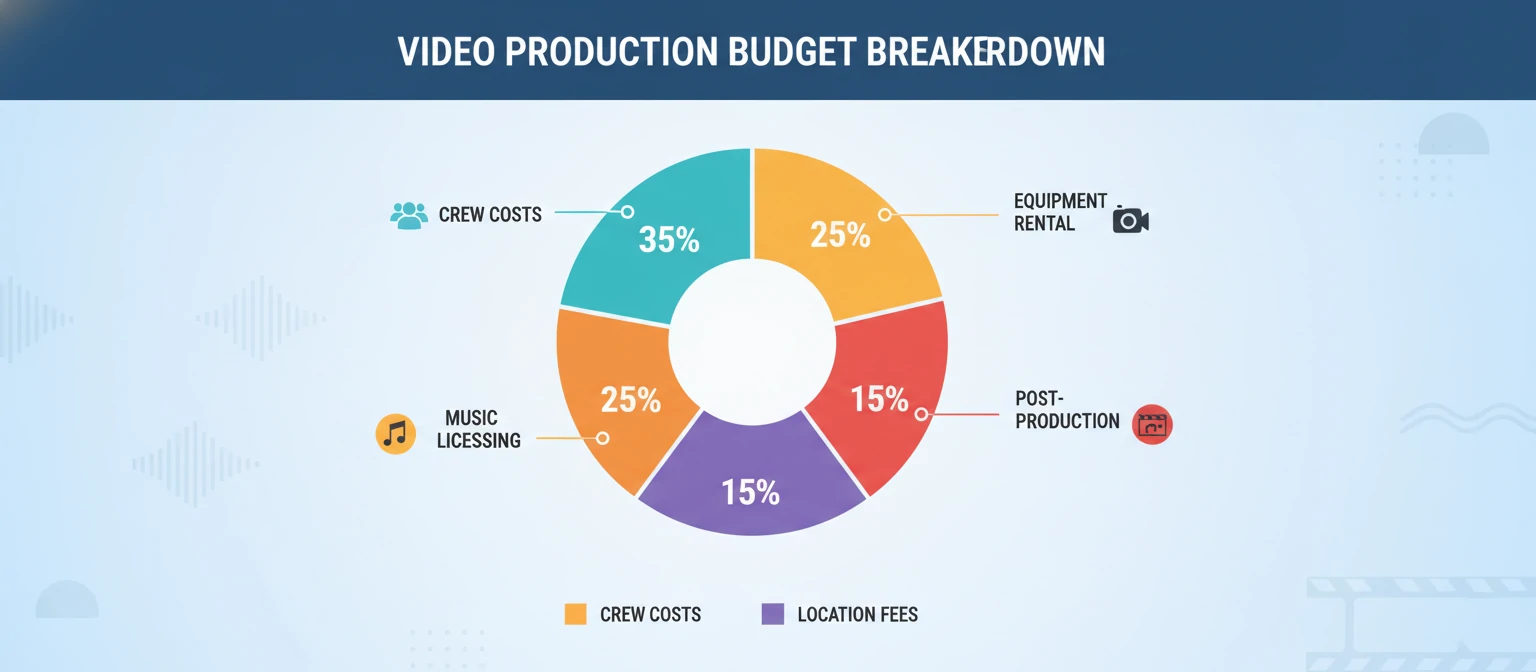
What Impacts Video Production Costs
Video Length
Shoot Days
Crew Size
Talent/Actors
Locations
Special Effects
7. Red Flags to Avoid
Not all video production companies deliver on their promises. Recognizing warning signs early saves you from costly mistakes, missed deadlines, and subpar results. Here's what should give you pause.
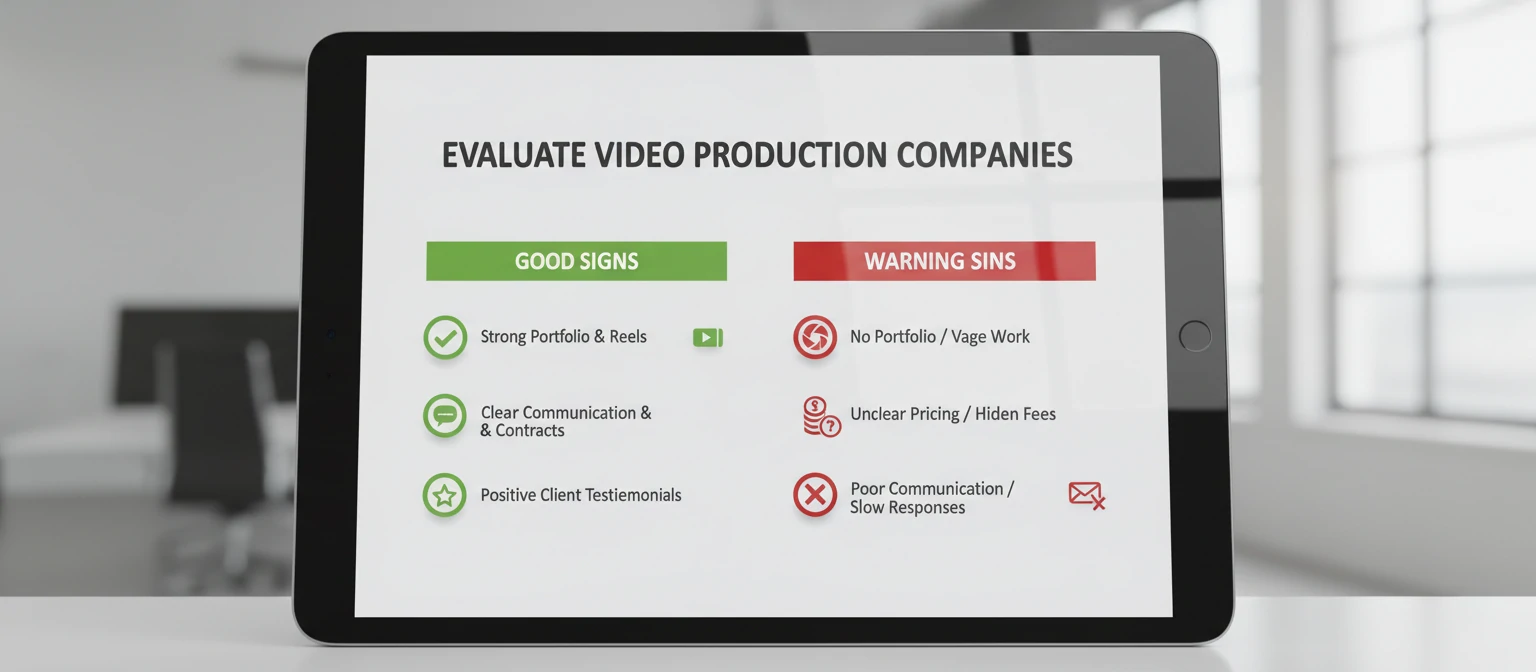
Warning Signs to Watch For
No Written Contract or Vague Terms
Legitimate companies provide detailed contracts specifying deliverables, timelines, payment terms, revision policies, and ownership rights. Handshake deals invite disputes.
Prices Dramatically Below Market Rate
If a quote is 70% less than competitors, something's wrong. They may be inexperienced, use poor equipment, or plan to upsell extensively later.
Poor Communication During Inquiry
If they take a week to respond to your initial inquiry, imagine how frustrating they'll be during production. Responsiveness in sales reflects operational habits.
Unwilling to Provide References
Established companies have satisfied clients happy to vouch for them. Reluctance to share references suggests those conversations wouldn't go well.
No Clear Process or Timeline
Professional production follows structured phases. If they can't explain their process clearly, they may be winging it — at your expense.
Demanding Full Payment Upfront
Standard practice is 50% upfront, 50% on delivery (or thirds for larger projects). 100% upfront removes all leverage if problems arise.
Trust Your Instincts
Beyond specific red flags, pay attention to your gut feeling. Do you feel heard and respected? Are they enthusiastic about your project? Do they seem genuinely interested in your success, or just in getting your signature? The relationship between client and production company requires trust and collaboration — if that foundation feels shaky from the start, it rarely improves.
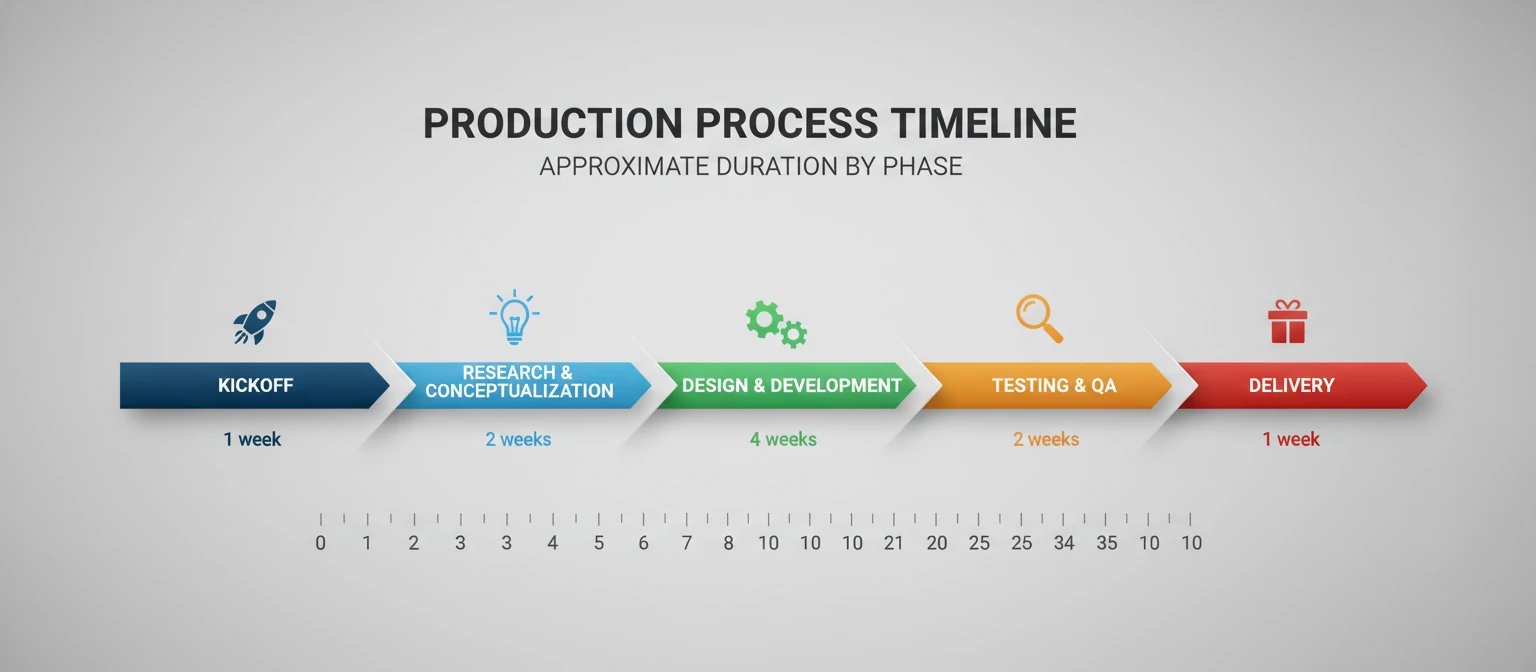
8. The Production Process
Understanding what happens after you sign the contract helps you participate effectively and ensures smooth collaboration. Here's what to expect in a professional video production workflow.
The Production Pipeline
Discovery & Creative Brief
Define goals, target audience, key messages, brand guidelines, and success metrics. This alignment prevents costly misunderstandings later.
Concept & Script Development
The production team develops creative concepts, writes scripts, and presents options for your approval. Expect collaboration and revisions.
Pre-Production Planning
Storyboarding, location scouting, casting, scheduling, equipment planning, and logistics coordination. This phase determines shoot-day success.
Production (The Shoot)
Filming days! The crew captures all necessary footage according to the storyboard. Your involvement may range from on-set presence to simple availability for questions.
Post-Production Editing
Editing, color grading, graphics, sound design, and music. You'll receive rough cuts for feedback before finalization.
Review, Revisions & Delivery
Final revisions based on your feedback, then delivery in all required formats for your intended platforms.
Your Role in the Process
Successful projects require client engagement. You'll need to provide timely feedback, make decisions on creative directions, ensure stakeholder availability for approvals, and communicate any changes in scope or requirements promptly. The production company drives the work, but you steer the direction.
9. Building a Long-Term Relationship
The best client-production company relationships grow over time. When a video partner understands your brand deeply, they produce better work faster — and you avoid the overhead of constantly onboarding new vendors.
Benefits of Long-Term Production Partners
They learn your voice, style, values, and what resonates with your audience.
Less time spent on briefs, fewer revisions, faster turnaround with each project.
Long-term clients often receive preferred scheduling and rush accommodations.
Same team members, same quality standards, same look across all content.
How to Nurture the Partnership
Pay on time: Nothing damages relationships faster than delayed payments. Respect their cash flow needs as you'd want yours respected.
Provide clear, timely feedback: Vague or delayed feedback causes frustration and delays. Be specific about what works and what doesn't.
Share results: Let them know how videos performed. This data helps them optimize future work and shows you value their contribution to your success.
Refer them business: If you're happy with their work, referrals are the best thank-you — and they may reciprocate with loyalty pricing or priority service.
Include them in planning: Bring them into conversations early. Annual content planning sessions with your production partner lead to smarter strategies and better budget allocation.

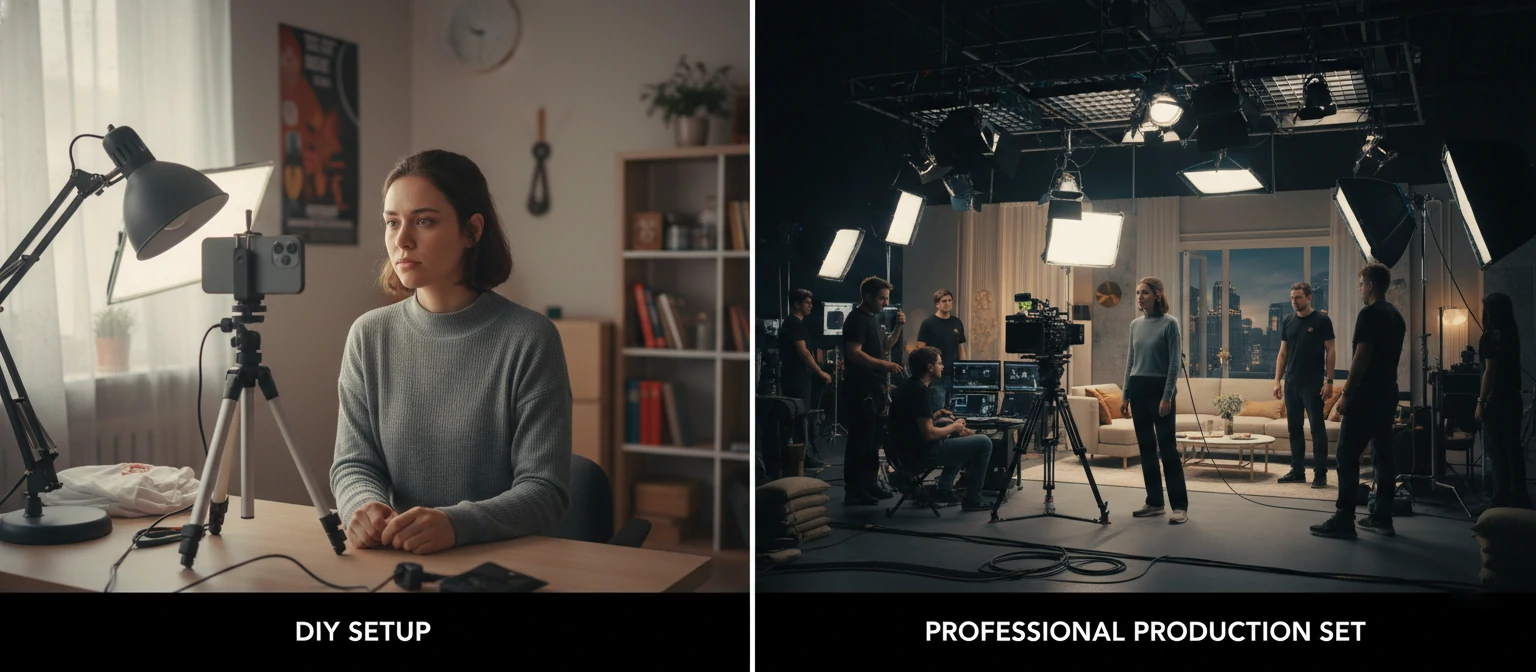
10. DIY vs. Professional Production
With smartphones shooting 4K video and editing apps available to anyone, you might wonder whether hiring a production company is worth the investment. The answer depends on your specific situation, goals, and resources.
When DIY Works
- Casual social media content where authenticity matters more than polish
- Internal communications where production value is less critical
- Quick updates, behind-the-scenes content, or personal vlogs
- Limited budget with no revenue-generating purpose
- You have genuinely skilled team members with time available
When to Hire Professionals
- Customer-facing content that represents your brand
- Advertising and marketing where ROI depends on quality
- Complex productions requiring scripting, talent, or multiple locations
- Content competing with professionally-produced competitor videos
- Any video tied directly to sales, fundraising, or reputation
The Hidden Costs of DIY
DIY video production often appears cheaper than it actually is. Consider the true costs: staff time diverted from their core responsibilities, learning curve for equipment and software, multiple takes and reshoots due to inexperience, and the opportunity cost of producing mediocre content that fails to convert. Sometimes "saving money" costs more than paying professionals.
DIY vs. Professional: Quick Comparison
| Factor | DIY | Professional |
|---|---|---|
| Upfront Cost | Low | Higher |
| Time Investment | High | Low |
| Quality Consistency | Variable | Reliable |
| Creative Direction | Limited | Expert |
| Scalability | Difficult | Easy |
Frequently Asked Questions
How far in advance should I book a video production company?
For major projects, book 4-8 weeks in advance to allow time for pre-production. Smaller projects might work with 2-3 weeks notice. Peak seasons (holidays, major events) require more lead time. Quality companies stay busy — last-minute bookings often mean compromising on your first choice.
Should I get multiple quotes before choosing?
Yes, getting 3-4 quotes helps you understand market rates and compare approaches. But don't just choose the cheapest — evaluate based on portfolio quality, communication style, relevant experience, and overall fit. The best value often isn't the lowest price.
What should be included in a video production contract?
Essential elements include: detailed scope of work, deliverable specifications (length, format, versions), timeline with milestones, payment schedule, revision policies, usage rights and ownership, cancellation terms, and confidentiality provisions. Never proceed without a written agreement.
How many revisions should I expect?
Most contracts include 2-3 rounds of revisions. Major structural changes may count differently than minor tweaks. Ask upfront what constitutes a "revision" and what additional changes cost. Clear communication during rough cut review minimizes the need for extensive revisions.
Do I own the video after it's completed?
Ownership terms vary by contract. Most commercial work transfers ownership to the client upon final payment. However, production companies may retain rights to use excerpts in their portfolio. Raw footage ownership should be specified — some companies retain raw footage, others include it in deliverables. Clarify this before signing.
About Marcus Chen
Marcus Chen is a video production consultant and former production company owner with 15 years of industry experience. He has helped hundreds of businesses navigate the process of finding and working with video production partners, and has produced award-winning content for Fortune 500 companies and local businesses alike. Marcus now consults independently, helping organizations maximize the impact of their video investments.