
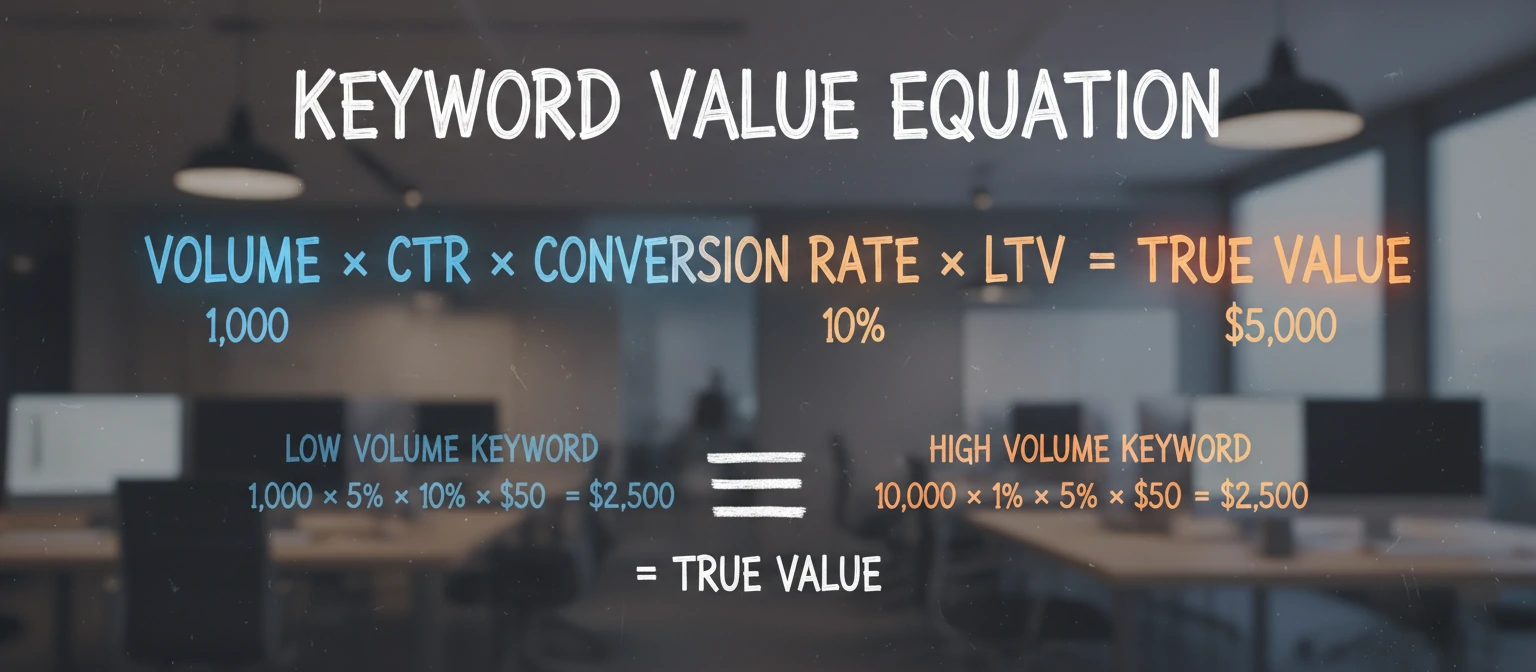
Keyword volume is vanity. Conversion is sanity. Learn how to run live experiments on your keywords to discover what truly drives revenue, not just traffic.
Most marketers select keywords based on a "hunch" and a monthly search volume number they found in a free tool. They see "Best Running Shoes" has 100,000 searches, so they spend six months writing content for it.
Six months later, they rank. Traffic floods in. And... zero sales. Why? Because they guessed the intent.
Keywords Testing is the antidote to this failure. It is the process of using small budgets (PPC) and controlled experiments to validate a keyword's profitability before you invest massive resources into ranking for it organically. In this guide, we will move from "Keyword Research" to "Keyword Science."

The 3-Step Testing Framework
Stop writing 3,000-word articles for unproven keywords. Use this cycle instead.
1. The PPC Probe
Theory: You can't wait 6 months for SEO to tell you if a keyword converts.
Action: Buy the traffic. Set up a Google Ads campaign for "Exact Match" on your target keyword. Spend $100. If 100 people click and nobody buys, the keyword is a dud. You just saved yourself 6 months of SEO work for $100.
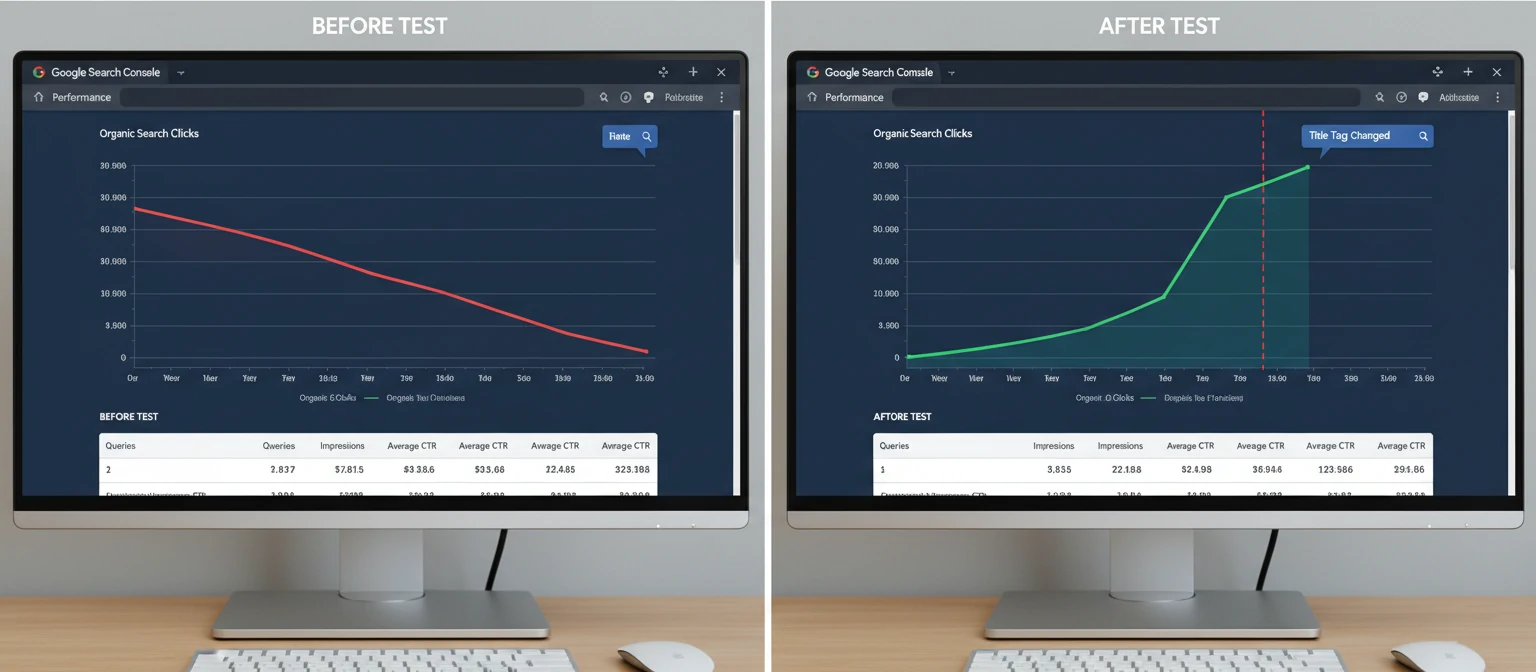
2. The "Title Tag" A/B Test
Theory: High rankings mean nothing if nobody clicks (CTR).
Action: Use tools that
rotate your page title daily.
Week 1: "Best CRM Software for Small
Business"
Week 2: "Affordable CRM Tools (Comparison)"
See which one gets more
clicks from the same ranking position.
3. The Intent Verification
Theory: Does the user want to buy or learn?
Action: Analyze the dwell time. If people search "CRM Software," land on your sales page, and bounce in 5 seconds, you failed the intent test. They probably wanted a blog post guide, not a purchase page.
Broad Match: The Data Mine
One of the most powerful testing strategies is "Mining Broad Match."
In Google Ads, if you bid on the broad match keyword +running +shoes, Google will show your ad for thousands of variations you never thought of: "red velcro running shoes," "running shoes for bad knees," "cheap running shoes near me."
The Test: Run a broad match campaign for 2 weeks. Download the "Search Terms Report." Look for the unexpected long-tail keywords that got conversions. These are your "Hidden Gems" that your competitors missed because they only looked at standard keyword tools.
> search_term_report.csv
- [KW] nike running shoes (High CPC, Low Conv)
- [KW] best running shoes (High CPC, Low Conv)
- [KW] running shoes for shin splints (Low CPA! WINNER)
- [KW] wide toe box sneakers (Low CPA! WINNER)

The Testing Lab: Essential Tools
Google Search Console
Free. Great for seeing what you already rank for but didn't optimize. Look for high impressions, low clicks.
Google Ads
Paid. The only way to get instant data. Essential for the "PPC Probe" method.
SEOTesting.com
Specialized. Software that tracks SEO experiments. "If I change the H1 tag, does traffic go up?"
The Scorecard
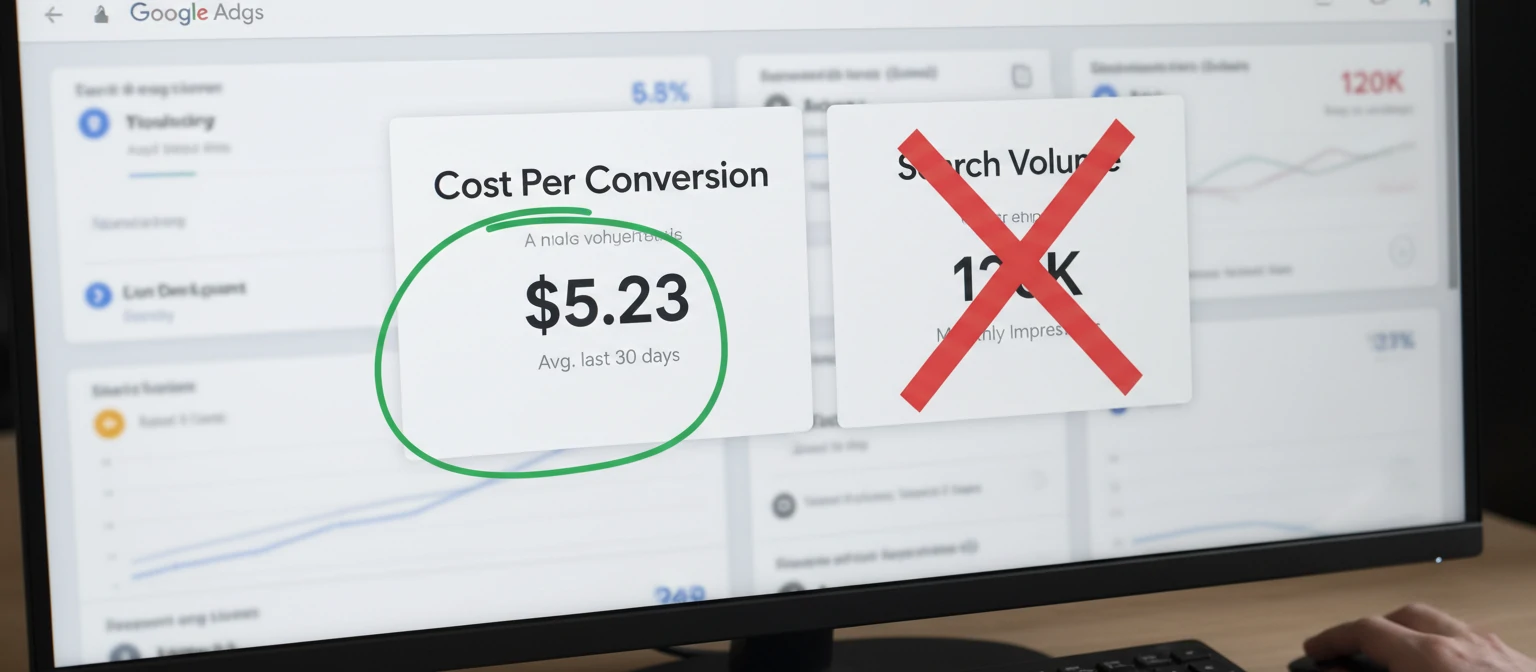
When testing keywords, ignore "Search Volume." Focus on these instead.
Keyword Testing in the AI Era
With AI Overview (SGE) taking over Google, testing is even more critical. "Zero-click searches" are rising.
The New Frontier: Testing for questions. People are asking longer, more complex questions to AI. Use your keyword testing to find "Question Keywords" (e.g., "How to fix X without replacing Y") and structure your content to answer them directly. This wins you the "Featured Snippet" spot, which is the only spot that matters in an AI world.