
Discover the artistry, skills, and technology that music producers use to shape the sounds that define our culture and move millions of listeners.
Table of contents
- 🎚️ Key Takeaways
- What Does a Music Producer Do?
- Types of Music Producers
- Essential Producer Skills
- Studio Equipment & Software
- How to Become a Music Producer
- The Production Process
- Working with a Music Producer
- The Business of Music Production
- Legendary Producers Who Shaped Music
- The Future of Music Production
- Frequently Asked Questions
When you hear your favorite song on the radio, streaming through your headphones, or pulsing through a club's speakers, you're experiencing the vision of a music producer. These are the architects of sound—the creative minds who transform raw musical ideas into polished productions that resonate with millions of listeners worldwide.
But what exactly does a music producer do? The role is often misunderstood, sometimes confused with DJs, sound engineers, or beat makers. In reality, a producer can be all of these things—and much more. They're part creative director, part technical wizard, part psychologist, and part business strategist, all wrapped into one essential role in the music industry.
I've spent 14 years producing music across genres—from hip-hop to indie rock, electronic to orchestral scores. I've worked in bedroom studios and million-dollar facilities, with unknown artists and Grammy winners. In this guide, I'm sharing everything I've learned about what it really means to be a music producer in today's rapidly evolving industry.
What Does a Music Producer Do?
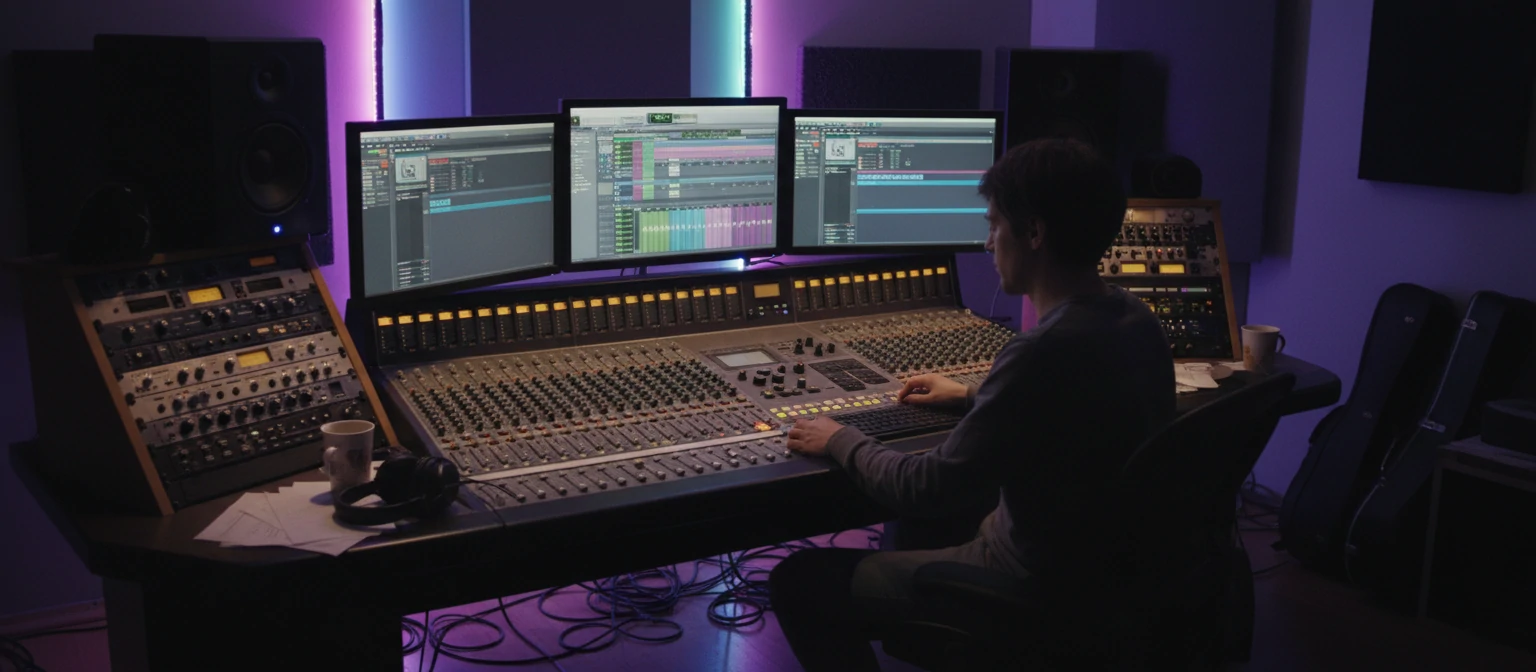
A music producer is the creative and technical leader of a recording project. Think of them as the director of a film—they have a vision for the final product and guide everyone involved toward realizing that vision. But unlike film directors, producers often get their hands dirty, playing instruments, programming beats, and tweaking every sonic detail.
The producer's responsibilities can vary dramatically depending on the genre, the artist's needs, and the project's scope. Some producers compose entire tracks from scratch; others focus on refining an artist's existing songs. Some are deeply technical, engineering every session; others are pure creative visionaries who hire engineers for the technical work.
Core Producer Responsibilities
Pre-Production
Song selection, arrangement, planning
Recording
Capturing performances, directing sessions
Mixing
Balancing, EQ, effects, sonic polish
Post-Production
Mastering, final delivery, quality control
At its core, the producer's job is to serve the song. Every decision—from the tempo to the reverb on the vocals—should enhance the emotional impact of the music. Great producers have an almost obsessive attention to detail while never losing sight of the big picture.
Types of Music Producers
The term "music producer" encompasses a wide range of roles with very different responsibilities. Understanding these distinctions helps you find the right producer for your project—or define what kind of producer you want to become.
Beat Maker / Track Producer
Creates the instrumental foundations—beats, melodies, and arrangements—that artists write and perform over. Dominant in hip-hop, pop, and electronic music. Often sells or licenses beats to multiple artists.
Examples: Metro Boomin, Murda Beatz, Tay Keith
Studio / Record Producer
Oversees entire recording sessions, guiding artists through performances, making creative decisions, and shaping the final sound. Works closely with artists throughout the entire project.
Examples: Rick Rubin, Max Martin, Dr. Dre
Executive Producer
Oversees the project from a business and creative perspective—budgeting, scheduling, hiring other producers, and ensuring the project's overall vision is realized. Less hands-on with technical production.
Examples: Diddy, DJ Khaled, Kanye West
Artist-Producer
Artists who produce their own music, maintaining complete creative control. Increasingly common with accessible technology. They write, perform, record, and produce their own work.
Examples: Billie Eilish & Finneas, Kevin Parker (Tame Impala), Jacob Collier
Electronic / DJ Producer
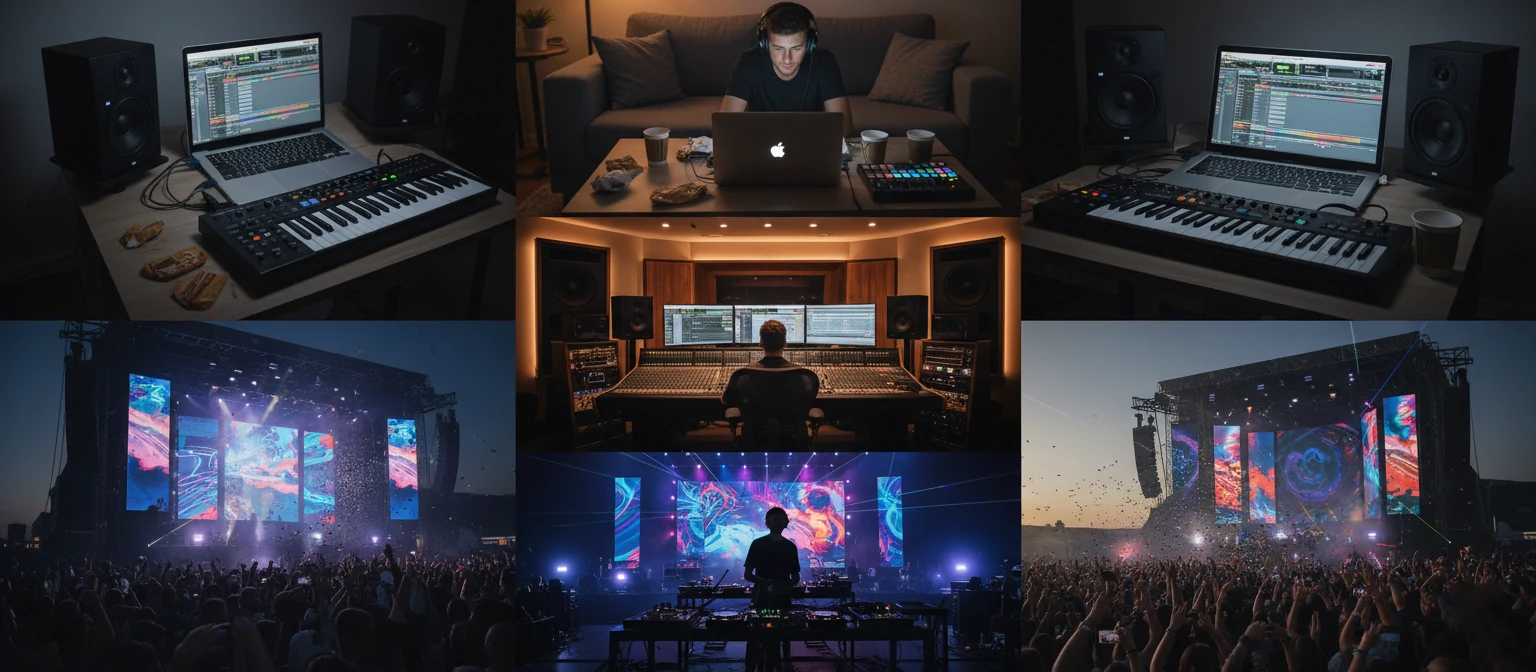
Creates electronic music, often performing as a DJ as well. The producer and performer are often the same person. Creates tracks for clubs, festivals, and streaming platforms.
Examples: Calvin Harris, Skrillex, Deadmau5
Essential Producer Skills
Great producers combine artistic sensibility with technical expertise and strong interpersonal abilities. Here are the core skills that separate successful producers from hobbyists.
🔧 Technical Skills
- → DAW proficiency (Pro Tools, Logic, Ableton, FL Studio)
- → Audio engineering fundamentals
- → Mixing and mastering basics
- → Sound design and synthesis
- → MIDI programming and sampling
🎵 Musical Skills
- → Music theory fundamentals
- → Instrument proficiency (keys, guitar, etc.)
- → Arrangement and song structure
- → Ear training and pitch recognition
- → Genre knowledge and versatility
💡 Soft Skills
- → Communication and collaboration
- → Leadership and decision-making
- → Artist psychology and motivation
- → Time and project management
- → Networking and business acumen
💡 Reality Check: You don't need to master every skill to start producing. Many successful producers are strongest in one or two areas and collaborate with others to fill gaps. The key is continuous learning and a genuine passion for making music better.
Studio Equipment & Software
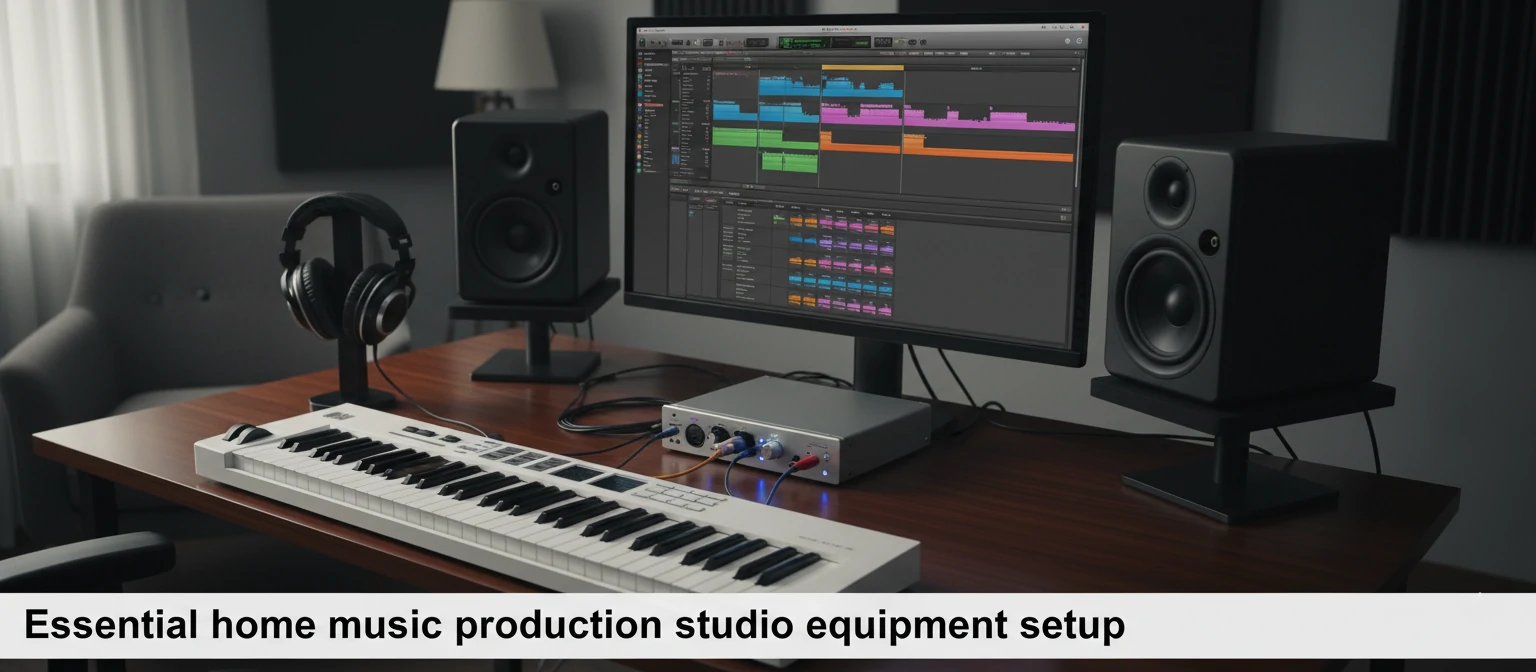
The barriers to entry for music production have never been lower. While million-dollar studios still exist, hit records are regularly made on laptops in bedrooms. Here's what you need to get started—and what you might want as you progress.
Essential Gear for Beginners
Popular DAWs (Digital Audio Workstations)
Ableton Live
Best for electronic, live performance
FL Studio
Popular for hip-hop, EDM beats
Logic Pro
Mac-only, great all-rounder
Pro Tools
Industry standard for recording
How to Become a Music Producer
There's no single path to becoming a music producer. Some attend prestigious audio engineering schools; others are entirely self-taught using YouTube tutorials. What matters is developing your skills and building a body of work. Here's a roadmap to get you started.
Learn the Fundamentals
Choose a DAW and learn it deeply. Study music theory basics—scales, chords, rhythm. Watch tutorials, take online courses, and most importantly, practice daily. Aim for at least an hour a day of hands-on production.
Study Your Favorite Music
Analyze songs you love. How are they structured? What makes the drums hit hard? Why does the chorus feel bigger? Try to recreate elements from professional tracks—not to copy, but to understand the techniques.
Make a Lot of Music
Quantity leads to quality. Your first 50 beats will probably be rough—that's okay. Finish projects rather than endlessly tweaking. Each completed track teaches you something. Aim to finish at least one project per week.
Collaborate and Get Feedback
Work with artists, other producers, songwriters. Join online communities (Reddit, Discord, forums). Share your work and genuinely listen to criticism. Collaboration accelerates learning and opens doors.
Build Your Brand and Portfolio
Create profiles on SoundCloud, Spotify, YouTube. Share your work on social media. Build relationships with artists who match your style. Your reputation grows through consistent quality output and genuine connections.
The Production Process
Every producer has their own workflow, but most productions follow a similar arc from initial idea to final master. Understanding this process helps you work more efficiently and communicate better with collaborators.
Ideation
Finding inspiration, sketching ideas, experimenting with sounds and concepts. This is pure creative exploration—chasing a vibe, melody, or rhythm that sparks something.
Arrangement
Building the song structure—verse, chorus, bridge. Deciding what happens when, creating tension and release, ensuring the track has a compelling journey.
Recording
Capturing performances—vocals, instruments, any live elements. Getting the best takes, directing performers, ensuring technical quality in every recording.
Editing
Comping takes, timing corrections, pitch fixes, cutting and arranging clips. The tedious but essential work that makes performances sound polished and professional.
Mixing
Balancing all elements, applying EQ, compression, effects. Creating space, depth, and clarity. This is where the sonic character really comes together.
Mastering
Final polish and preparation for distribution. Optimizing loudness, frequency balance, and ensuring the track sounds great on all playback systems.
Working with a Music Producer
Whether you're an artist seeking a producer or a producer learning to work with artists, the collaboration dynamic is crucial. The best producer-artist relationships are true partnerships built on trust, communication, and shared vision.
🎤 Tips for Artists
- → Come prepared with references—songs that capture the vibe you want
- → Be open to the producer's ideas, even if they differ from yours
- → Communicate clearly about what you like and don't like
- → Understand business terms—splits, rights, payments—before starting
- → Trust the process—great songs often emerge from unexpected directions
🎹 Tips for Producers
- → Listen more than you talk—understand the artist's vision first
- → Create a comfortable, judgment-free environment
- → Know when to push artists and when to support them
- → Be transparent about your process, timeline, and pricing
- → Serve the song above your ego—the artist's success is your success
The Business of Music Production
Making great music is only half the battle. Successful producers also understand the business side—pricing, contracts, royalties, and building sustainable careers.
Producer Revenue Streams
Upfront payment for creating tracks
Ongoing income from songwriting credits
Licensing instrumentals to multiple artists
Full rights transfer to one artist
Percentage of recording revenue
💰 Business Tip: Always get agreements in writing before starting work. Specify payment terms, ownership splits, credit requirements, and revision limits. Handshake deals lead to disputes; contracts protect everyone.
Legendary Producers Who Shaped Music
The history of recorded music is inseparable from the producers who shaped its sound. These visionaries didn't just make hits—they defined eras and invented techniques still used today.
Quincy Jones
Pop, R&B, Jazz Legend
Produced Michael Jackson's Thriller—the best-selling album ever. 80 Grammy nominations, 28 wins. Defined pop production excellence.
Dr. Dre
Hip-Hop Innovator
Created G-funk, launched careers of Snoop, Eminem, 50 Cent, Kendrick. His sonic signature shaped West Coast hip-hop for decades.
Max Martin
Pop Hit Machine
25 Billboard #1 hits—more than anyone except Lennon/McCartney. From Backstreet Boys to Taylor Swift, he defined modern pop hooks.
Rick Rubin
Genre-Spanning Minimalist
From Run-DMC to Johnny Cash, Slayer to Adele. Known for stripping songs to their essence and drawing out authentic performances.
The Future of Music Production
Music production is evolving faster than ever. AI, spatial audio, new distribution models, and changing listener habits are reshaping what producers do and how they do it.
🎯 The Bottom Line: Technology changes how we make music, but the fundamentals remain: storytelling, emotional connection, and the indefinable magic of a great song. The producers who thrive will be those who embrace new tools while staying true to their artistic vision.
Frequently Asked Questions
How much do music producers make?
Income varies wildly. Beginners might earn $0-$500 per beat. Established producers charge $1,000-$10,000+ per track. Top producers earn millions through royalties. Most producers build income gradually over years, often supplementing with teaching, mixing, or other music services early in their careers.
Do I need a music degree to be a producer?
No. Many successful producers are self-taught. While formal education can accelerate learning and provide networking opportunities, the music industry cares about your output, not your credentials. Skills, creativity, and portfolio matter far more than diplomas.
What's the difference between a producer and an engineer?
Producers focus on creative decisions—song selection, arrangement, vibe, artist direction. Engineers handle technical execution—microphone placement, recording, mixing. Many producers do both, but they're distinct roles. Think of it as director vs. cinematographer in film.
How long does it take to become a good producer?
With consistent practice, you can make decent music in 1-2 years. Professional-quality production typically takes 3-5+ years of serious effort. But "good" is subjective—some producers find their voice quickly, others take decades. The key is consistent practice and never stopping the learning process.
Will AI replace music producers?
AI will change production, not replace producers. AI excels at pattern recognition and can generate content, but music is about human emotion and connection. The producers who embrace AI as a tool while maintaining artistic vision will thrive. Those who only do what AI can do may struggle.
Jordan Blake
Music Producer & Audio Engineer
Jordan has been producing music for 14 years, working across hip-hop, electronic, indie rock, and film scores. With credits on platinum records and compositions heard in major films and TV shows, he now mentors emerging producers and writes about the craft and business of music production. When not in the studio, he teaches at Berklee Online and speaks at music industry conferences.