
Your comprehensive guide to finding, evaluating, and partnering with visualization studios that bring architectural visions to life
Table of contents
- Key Takeaways
- What Rendering Companies Actually Do
- Why Firms Outsource Visualization
- Types of Rendering Companies
- Core Services Explained
- Evaluating Portfolio Quality
- Understanding Pricing Models
- The Collaboration Process
- Questions to Ask Before Hiring
- Red Flags and Warning Signs
- Maximizing Your Partnership
- Frequently Asked Questions
The rendering changed everything. I still remember watching our client's face as we unveiled the visualization of their mixed-use development—a project that had lived only in blueprints and imagination for two years. Within those photorealistic images, they finally saw their vision: morning light streaming through the lobby, people gathered on the rooftop terrace, the building nestled into its urban context. They approved the design that same afternoon.
That moment captures why choosing the right architectural rendering company matters so profoundly. The visualization wasn't just pretty pictures—it was the communication tool that unlocked a $200 million project. And the studio we partnered with understood something crucial: their job wasn't merely technical execution. It was translation—turning architectural intent into images that resonate emotionally while remaining architecturally accurate.
After fifteen years connecting architects with visualization studios, I've witnessed the full spectrum of outcomes. Brilliant partnerships that elevated careers and won international competitions. Disastrous mismatches that wasted budgets and missed deadlines. The difference rarely comes down to who has the fanciest software—it's about finding a company whose capabilities, communication style, and creative sensibilities align with your specific needs.
This guide distills everything I've learned about finding that perfect match. Whether you're an architect seeking your first external rendering partner, a developer evaluating marketing visualization options, or a project manager building a vendor roster, you'll find practical guidance for making decisions that lead to successful outcomes.
What Rendering Companies Actually Do
An architectural rendering company transforms design data—drawings, models, sketches, and concepts—into visual representations that communicate architectural ideas to various audiences. This might sound simple, but the process involves a sophisticated blend of technical skill, artistic judgment, and architectural understanding that takes years to master.
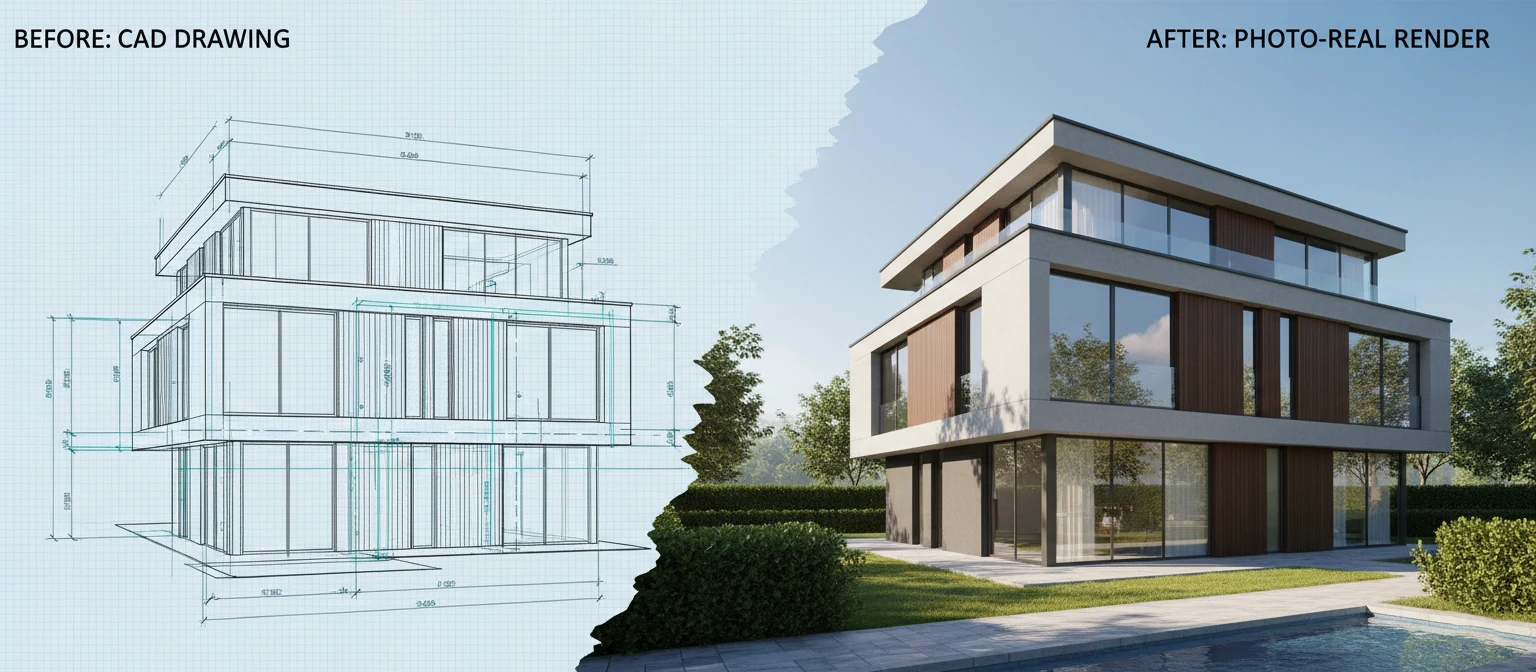
The core deliverable is typically still images—exterior views showing buildings in context, interior perspectives capturing spatial quality, aerial renders revealing massing and site relationships. But modern rendering companies often provide much more: animations that walk through spaces, 360-degree panoramas for virtual tours, real-time interactive experiences, and augmented reality applications.
What distinguishes architectural visualization from general 3D rendering is domain expertise. Understanding how buildings work—how light enters spaces, how materials age and weather, how people actually use environments—enables rendering artists to create images that feel architecturally authentic rather than generically pretty. The best companies employ artists with architectural backgrounds or extensive experience in the field.
Still Imagery
Hero renders, marketing images, competition boards
Animation
Flythroughs, walkthroughs, cinematic presentations
360° Panoramas
Virtual tours, immersive web experiences
VR/AR
Immersive presentations, on-site visualization
Beyond technical production, rendering companies provide creative services: camera angle selection, lighting design, environmental storytelling, and styling decisions that shape how architecture is perceived. A thoughtful rendering company contributes creatively to the presentation of your work, not just executing specifications mechanically.
Why Firms Outsource Visualization
Many architecture firms maintain some in-house visualization capability, yet the majority still outsource significant work to specialized rendering companies. Understanding why illuminates how to use external partners most effectively.
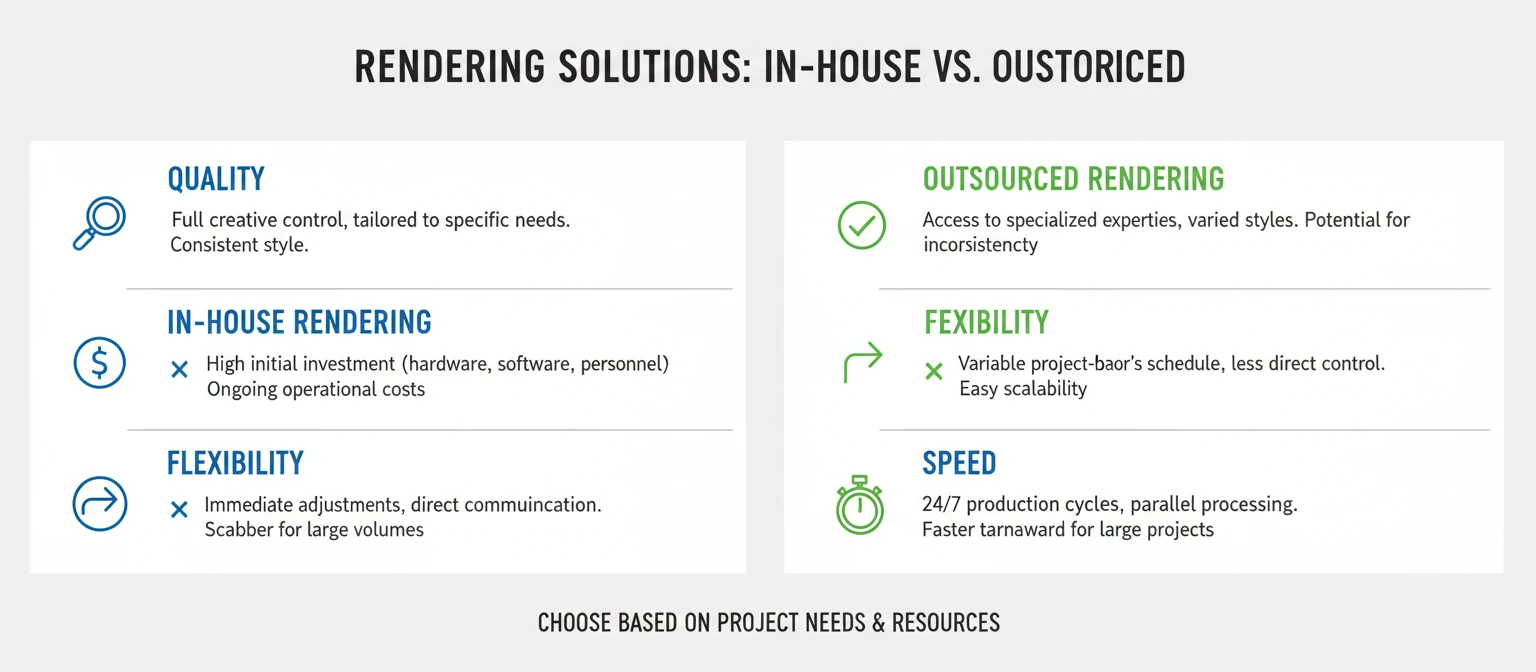
Quality Differential
Specialized rendering companies achieve quality levels that most in-house teams cannot match. Their artists work on visualization full-time, developing expertise through repetition across diverse projects. They invest in the latest software, hardware, and training because visualization is their entire business. For competition entries, marketing campaigns, and high-stakes presentations, this quality gap matters enormously.
Capacity Flexibility
Architectural workloads fluctuate unpredictably. Competitions arrive with two-week deadlines. Multiple clients want presentations simultaneously. Outsourcing provides elastic capacity—scale up instantly for crunch periods, scale down when quiet. Maintaining in-house staff for peak demand means paying salaries during valleys.
Benefits of Outsourcing Visualization
Access to Specialists
Dedicated artists with years of focused experience
Latest Technology
Studios invest continuously in tools and hardware
Scalable Capacity
Scale up for deadlines, scale down when quiet
Fresh Perspective
External eyes see presentation opportunities
Economic Reality
Hiring skilled visualization artists is expensive. Salaries, benefits, software licenses, powerful workstations, and training add up quickly. For many firms, outsourcing provides better economics—paying only for output needed, when needed, without carrying fixed overhead.
Focus on Core Competency
Architecture firms exist to design buildings, not produce images of them. Outsourcing visualization lets architects focus on architecture while specialists handle presentation. The most successful firms view rendering partners as an extension of their team—not just vendors but collaborators who enhance their capabilities.
Types of Rendering Companies
The architectural visualization market includes diverse company types, each with distinct characteristics, strengths, and ideal use cases. Understanding these categories helps you match partners to project requirements.
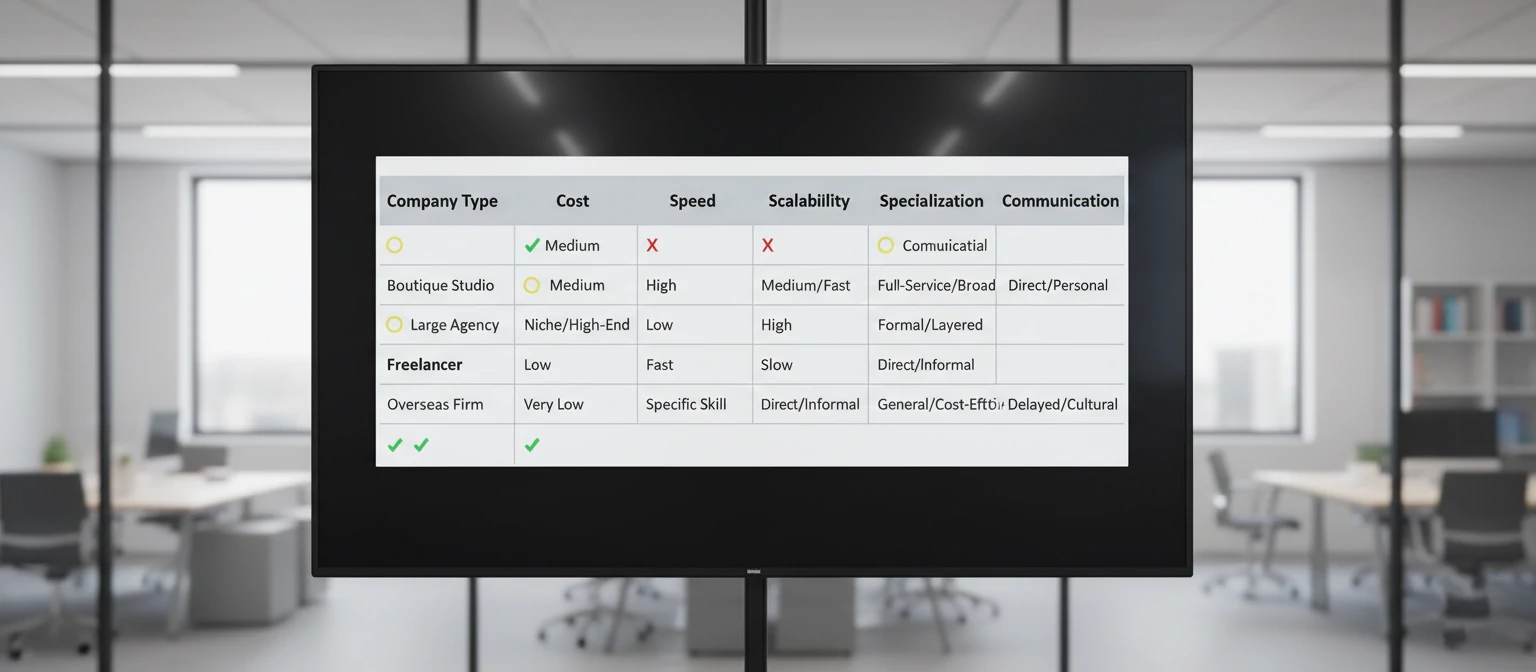
Boutique Studios
Small teams (3-15 people) focused on quality over volume. Often founded by artists from larger firms or architecture backgrounds. Personal attention, consistent quality, but limited capacity.
Best for: High-profile projects, competition imagery, clients valuing relationships
Large Agencies
Major operations with dozens or hundreds of artists, often multinational. Handle large volumes, tight deadlines, and comprehensive services. Account management layers may distance you from artists.
Best for: Large developers, ongoing volume needs, full-service requirements
Freelance Artists
Individual professionals working independently. Wide quality range—from exceptional specialists to inexperienced newcomers. Direct communication but single-point-of-failure risk.
Best for: Budget-conscious projects, specific style needs, smaller scope work
Offshore Operations
Studios in lower-cost regions (Eastern Europe, Asia, South America) offering competitive pricing. Quality varies widely. Time zones and communication can challenge collaboration.
Best for: Budget-driven projects, high volume needs, less complex visualization
Specialty Considerations
Some companies specialize further within architectural visualization. Interior specialists excel at residential staging and hospitality. Others focus on large-scale urban planning or infrastructure projects. Some specialize in specific building types—healthcare, education, sports venues. Matching specialization to project type typically yields better results than choosing generalists.
The best choice depends on your specific situation. A boutique studio might be perfect for a competition but wrong for a developer needing hundreds of unit renders. A large agency's resources might be overkill for a small firm's occasional needs. Consider not just the current project but your likely ongoing relationship.
Core Services Explained
Rendering companies offer various service types at different price points and complexity levels. Understanding these categories helps you specify requirements accurately and budget appropriately.
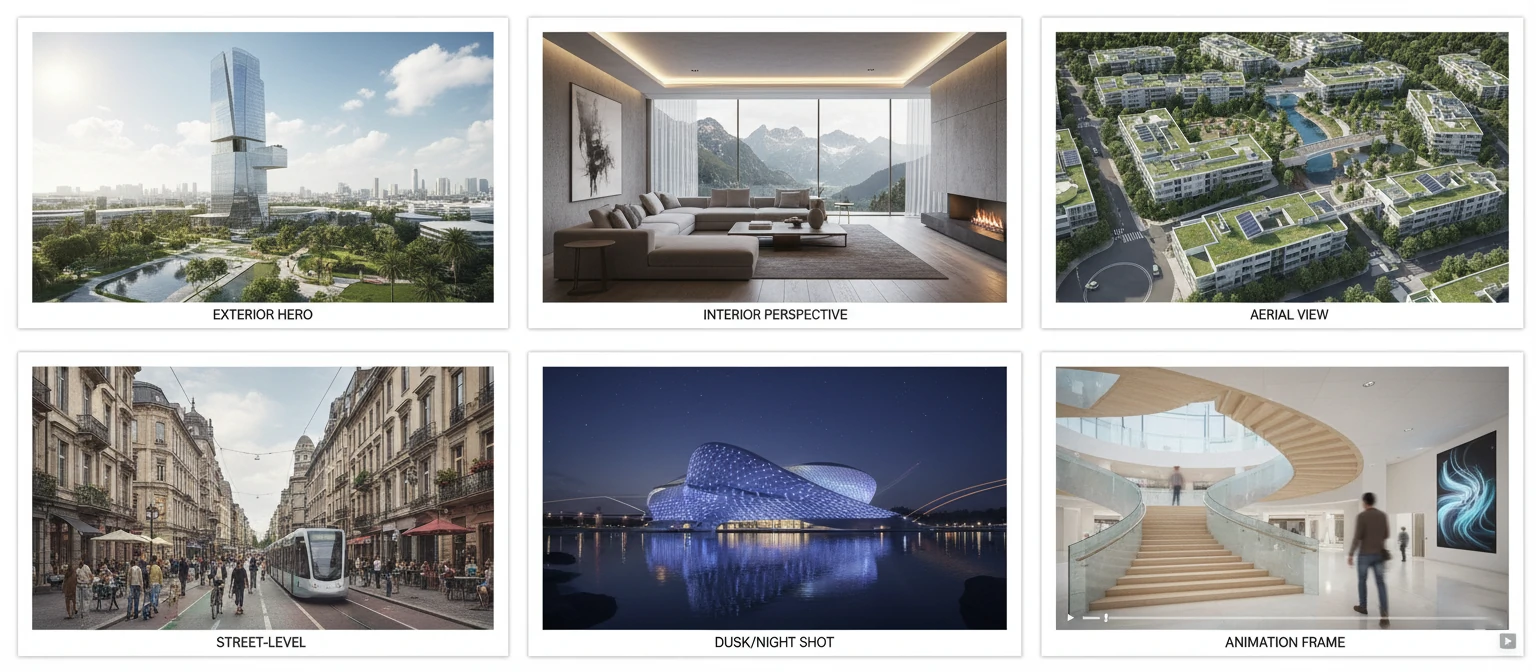
Exterior Visualization
The most common service—showing buildings from outside. Ranges from simple white-background product shots to complex environmental scenes with landscaping, vehicles, people, and atmospheric effects. Hero exterior images often become the defining representation of a project, used across all marketing materials.
Interior Visualization
Capturing spatial quality, material finishes, lighting conditions, and atmosphere within buildings. Interior renders require extensive detailing—furniture, décor, fixtures, and styling that bring spaces to life. More labor-intensive per image than exteriors due to this detail requirement.
| Service Type | Typical Use | Complexity | Price Range |
|---|---|---|---|
| Exterior Hero Image | Marketing, competitions | High | $2,500 - $8,000+ |
| Standard Exterior | Planning, client review | Medium | $800 - $2,500 |
| Interior Perspective | Sales, design presentation | High | $1,500 - $5,000+ |
| Aerial/Bird's Eye | Masterplanning, context | Medium-High | $2,000 - $6,000 |
| Animation (per minute) | Video marketing, tours | Very High | $8,000 - $30,000+ |
Animation Services
Animated content—flythroughs, walkthroughs, cinematic presentations—multiplies both impact and cost. Animation requires rendering many frames (typically 25-30 per second) plus choreography, timing, and often sound design. Reserve animation for high-value applications where the investment justifies the cost.
Virtual Reality Experiences
Immersive VR allows clients to experience spaces at full scale before construction. Particularly valuable for interior-focused projects, complex spatial sequences, or clients who struggle to read traditional drawings. Requires real-time rendering technology and specialized development beyond standard visualization.
Evaluating Portfolio Quality
A rendering company's portfolio reveals far more than technical capability. Learning to read portfolios critically helps you predict what they'll deliver for your project and whether their sensibilities match your needs.
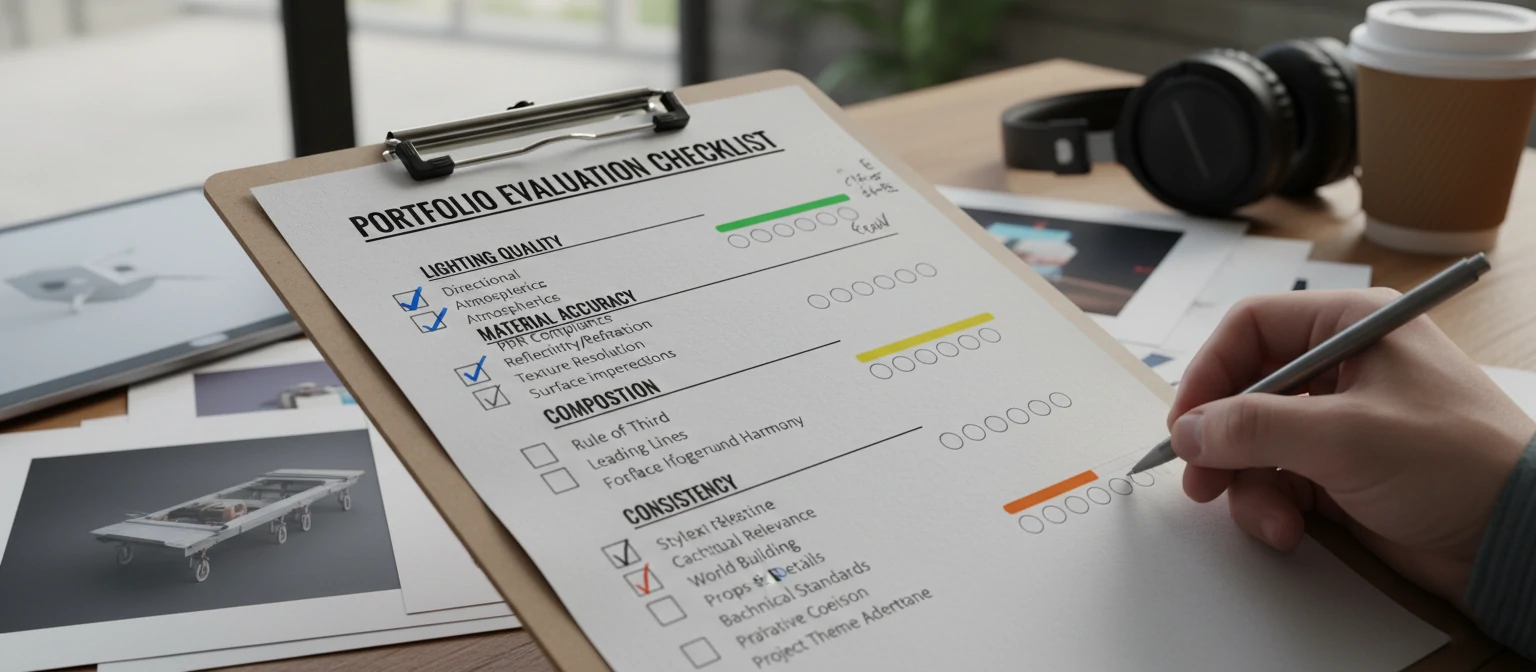
Technical Quality Markers
Look beyond first impressions. Examine images at full resolution for rendering artifacts, visible seams, or unconvincing materials. Assess lighting—does it feel natural and architecturally appropriate, or generic and flat? Check material quality: does wood look like wood? Does glass behave like glass? Technical competence shows in details.
Lighting
Natural behavior, appropriate mood, architectural sensitivity, time-of-day accuracy
Materials
Convincing surfaces, appropriate scale, realistic weathering and imperfection
Composition
Thoughtful camera placement, balanced framing, architectural emphasis
Environment
Convincing context, appropriate entourage, site integration quality
Artistic Sensibility
Technical competence is table stakes. What distinguishes great rendering companies is artistic vision—the ability to create images that communicate mood, tell stories, and evoke emotional responses. Look for evidence of creative thinking: unusual camera angles, atmospheric effects, narrative elements that bring scenes to life.
Consistency Assessment
Don't just evaluate the best images. Look for consistency across the portfolio. Any company can produce occasional stunning work. What matters for your project is their reliable baseline quality. Companies that show only five carefully curated images might struggle with the consistent output your project needs.
Style Range vs. Specialization
Consider whether their aesthetic matches your needs. Some companies have distinctive signature styles—consistently moody, minimal, hyper-realistic, or editorial. Others demonstrate range across styles. Neither is inherently better; it depends on whether their aesthetic aligns with what you want for your project.
Understanding Pricing Models
Rendering pricing confuses many clients because costs vary so dramatically. Understanding what drives pricing helps you budget realistically and compare quotes fairly.
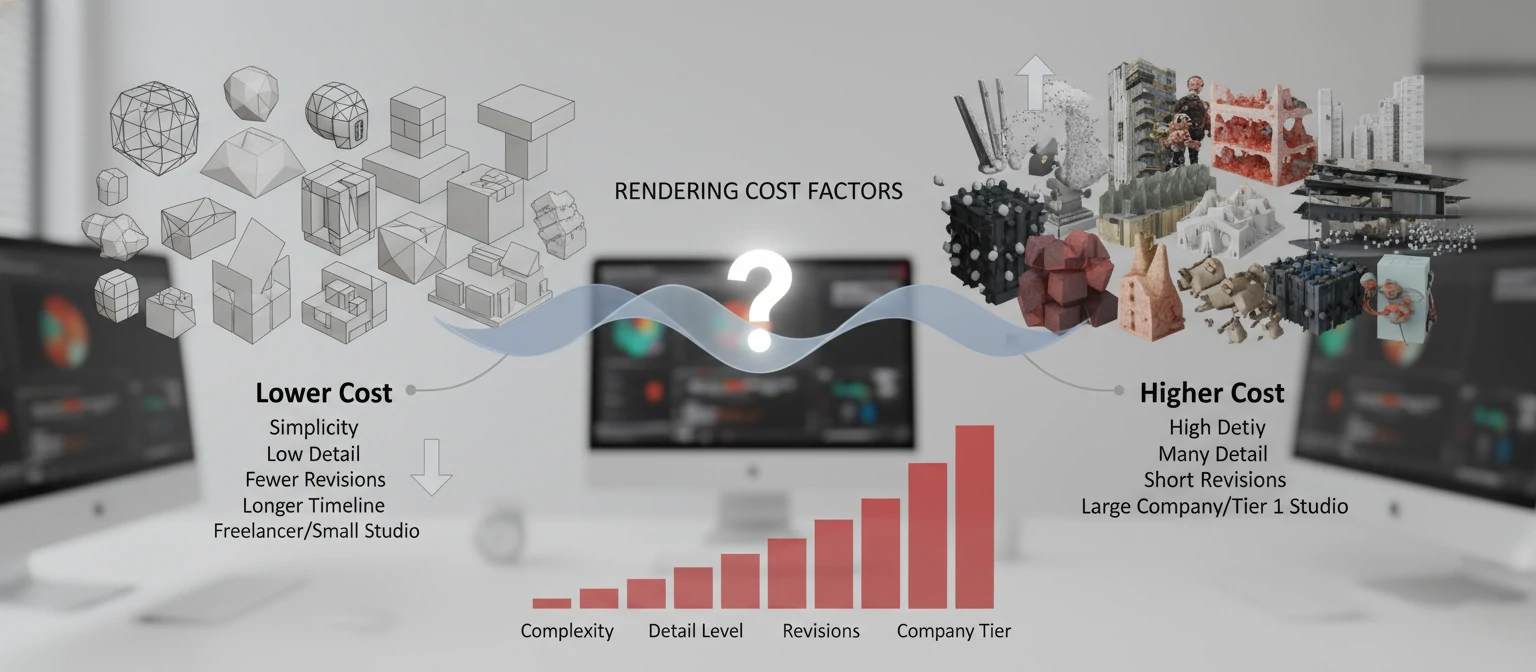
Per-Image Pricing
Most common for still imagery. You pay a fixed price per render, with rates varying by image type and complexity. This model provides budget predictability—you know exactly what each image costs before starting. However, scope definition matters: what counts as one "image" and how many revisions are included.
Hourly/Day Rates
Sometimes used for complex or evolving projects where scope is difficult to define upfront. Provides flexibility but requires trust—you're paying for time regardless of output. Best with established partners where you understand their efficiency and can monitor progress effectively.
Factors Affecting Price
Image Complexity
Simple massing vs. detailed environment
Model Quality Provided
Clean BIM vs. rough sketches
Revision Rounds
Limited vs. unlimited changes
Timeline
Rush premiums add 25-100%
Company Tier
Premium studios charge premium prices
Rights & Usage
Exclusive vs. portfolio use allowed
Package Pricing
Some companies offer packages—"marketing suite" including specific exterior views, interior shots, and perhaps an animation—at bundled rates. Packages provide budget clarity for standard project types but may not fit unusual requirements.
What's Included?
Always clarify what's included in quoted prices. How many revision rounds? What resolution deliverables? Who provides entourage (people, cars, landscaping)? Are there licensing fees for assets used? Hidden costs can dramatically exceed initial quotes. Detailed scope documents prevent budget surprises.
The Collaboration Process
Successful rendering projects follow predictable patterns. Understanding the typical workflow helps you prepare appropriate materials and participate effectively in the process.
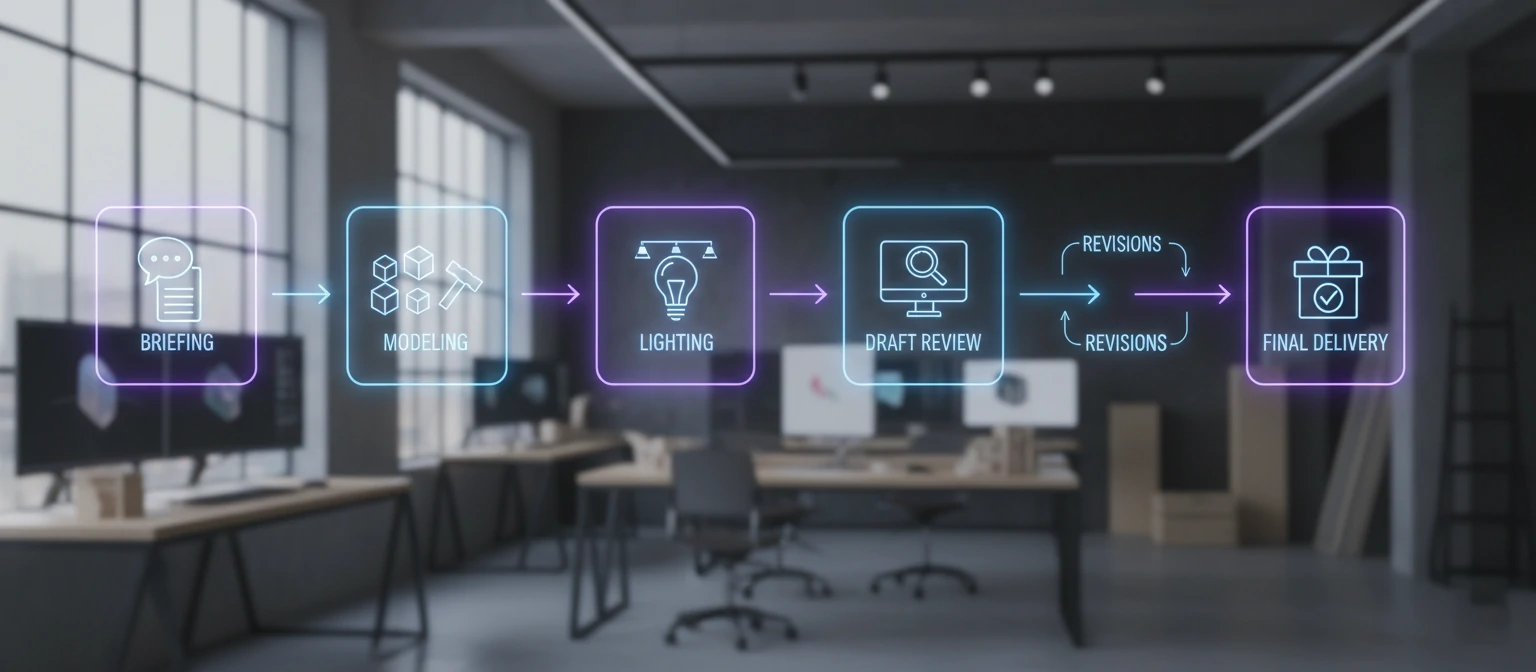
Briefing & Asset Handover
You provide 3D models, drawings, reference images, and project context. The better your inputs, the faster and more accurate the process. Include mood references showing desired style and atmosphere.
Camera Setup & Approval
The studio proposes camera angles, usually showing low-resolution clay renders. This stage determines what you'll see—approve thoughtfully. Changing camera angles late is expensive.
Draft Renders
Initial renders show overall direction—materials, lighting, environment. Review carefully and provide consolidated feedback. Catching issues here prevents costly late changes.
Revisions & Refinement
Iterative rounds address feedback. Most contracts include 2-3 revision rounds. Beyond included rounds, changes typically cost extra. Consolidate stakeholder feedback to use revisions efficiently.
Final Delivery
Approved images are rendered at final resolution and delivered in required formats. Specify needs upfront—print requires different specs than web. Archiving project files enables future modifications.
Timeline varies by complexity. Simple images might complete in a week. Complex hero renders can take three to four weeks. Animation projects span months. Discuss realistic timelines during scoping—rushing compromises quality.
Questions to Ask Before Hiring
The right questions during the selection process reveal crucial information about how partnerships will unfold. Don't just discuss the project—probe process, policies, and potential problems.
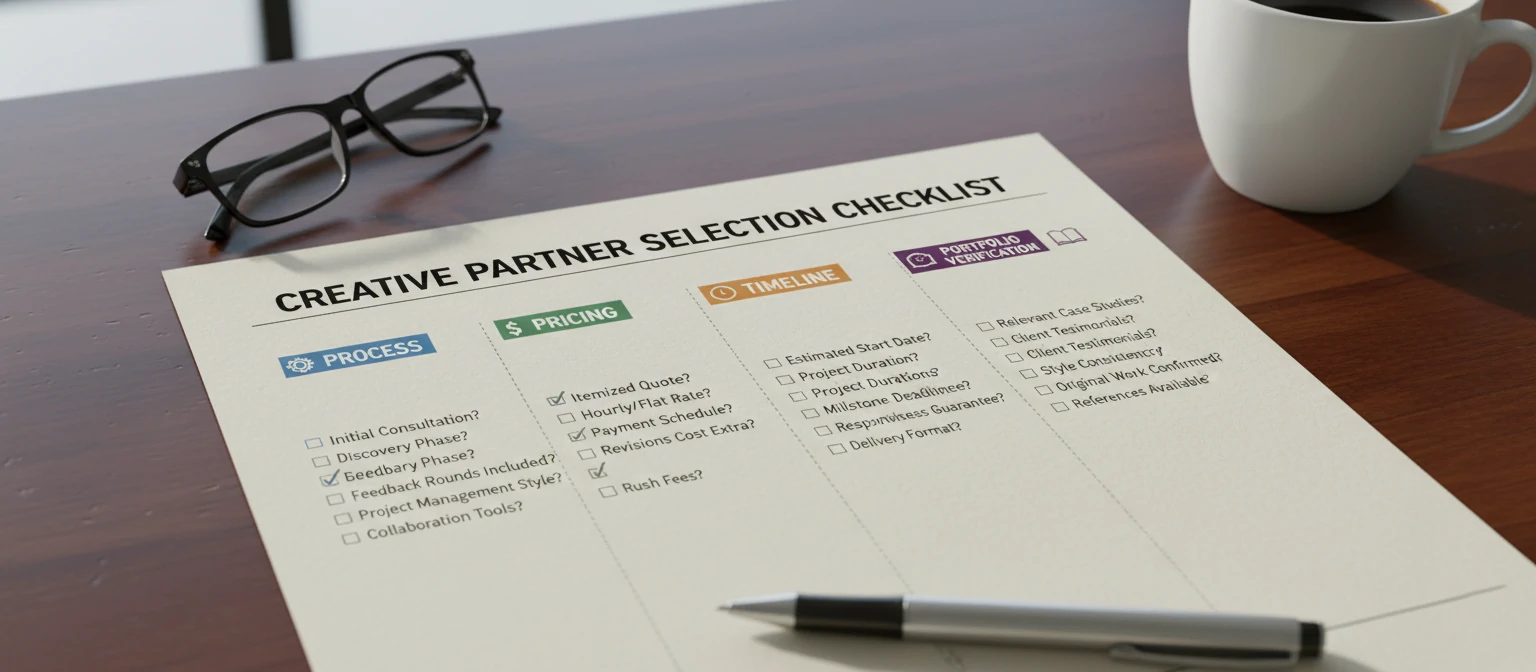
Essential Questions Checklist
Portfolio Verification
Ask if portfolio images were created by current team members. Staff turnover is common—images might represent departed artists. Request to see work by the specific people who would handle your project. Some companies show aspirational portfolios that don't represent typical output.
Communication Expectations
Understand how communication will work. Who's your point of contact? How quickly can you expect responses? What time zone are they in? For overseas companies especially, clarify how feedback will be handled across time differences.
Problem Resolution
Ask what happens when things go wrong—because sometimes they will. How do they handle missed deadlines? Dissatisfied clients? Scope disputes? Companies with clear policies for problems have likely encountered and learned from them. Vague answers suggest inexperience or unwillingness to take responsibility.
Red Flags and Warning Signs
Experience teaches pattern recognition. Certain warning signs reliably predict problems. Recognizing these early helps you avoid partnerships that lead to frustration, wasted budget, and missed deadlines.
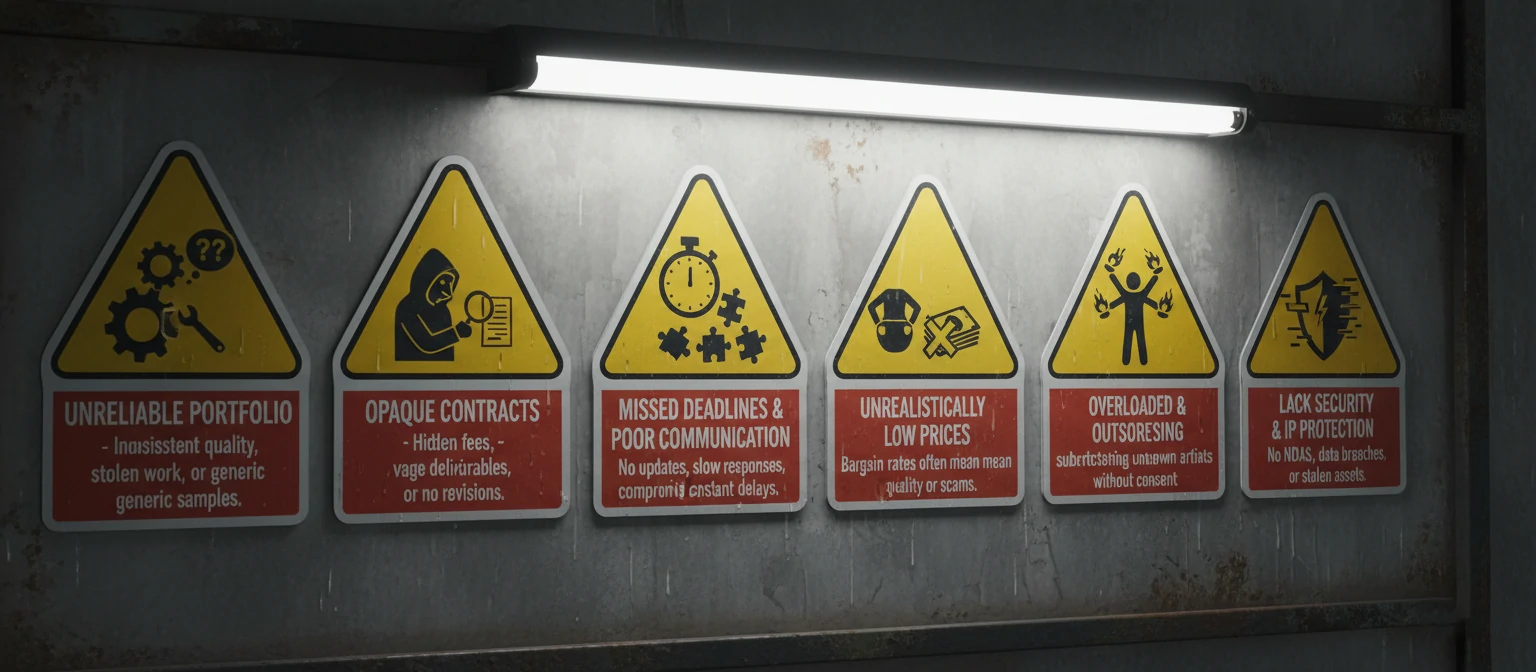
Prices Too Good to Be True
Quality rendering requires skilled labor and significant compute resources. Quotes dramatically below market rates indicate inexperience, overseas subcontracting with communication challenges, or bait-and-switch tactics.
Vague Scope Definitions
Companies that won't clearly define what's included set up scope creep disputes. Insist on detailed specifications: revision limits, deliverable formats, included elements, excluded items.
Slow Response During Sales
If they're slow to respond when trying to win your business, imagine their responsiveness during production. Companies that value clients communicate promptly throughout relationships.
No References Available
Established companies have satisfied clients willing to vouch for them. Inability to provide references suggests either newness to the market or unhappy past clients—neither is encouraging.
Portfolio Inconsistency
Wild quality swings across portfolio images suggest inconsistent team capabilities or heavy reliance on occasional exceptional work. Your project might get either version—a risky gamble.
Promising Everything
Companies that never push back on scope, timeline, or budget are either naive about what your project requires or planning to underdeliver. Experienced partners set realistic expectations.
Trust Your Instincts
Beyond specific red flags, pay attention to general impressions. Does communication feel professional? Do they ask intelligent questions about your project? Do they seem genuinely interested in understanding your needs, or just closing a sale? Rendering partnerships involve significant collaboration—working with people who feel wrong from the start rarely improves.
Maximizing Your Partnership
Finding a good rendering company is just the beginning. How you work together determines actual outcomes. These practices consistently produce better results, smoother processes, and stronger long-term relationships.
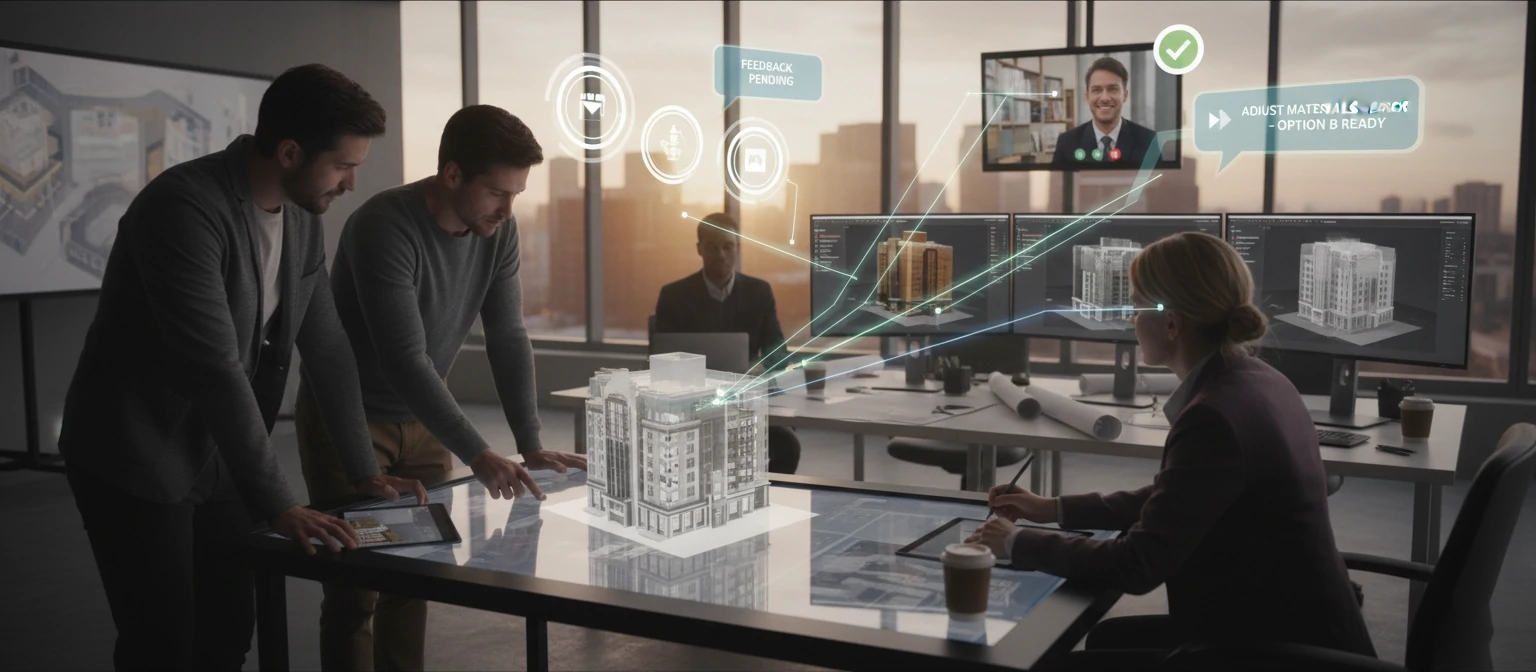
Invest in Clear Briefs
Time spent on comprehensive project briefs pays dividends throughout production. Include not just technical information but context: who's the audience? What decisions will these images support? What emotional response should they evoke? The better studios understand your goals, the better they can achieve them.
Consolidate Feedback
Nothing wastes revision rounds faster than fragmented feedback. Collect input from all stakeholders before responding to drafts. Contradictory notes from different team members create confusion and wasted effort. Designate a single point of contact who synthesizes internal feedback into clear direction.
Partnership Success Factors
Clear Communication
Specific, actionable feedback with visual references
Timely Responses
Quick approvals keep projects on schedule
Realistic Expectations
Understanding what's achievable within budget
Long-term Thinking
Building relationships beyond single projects
Provide Quality Inputs
Garbage in, garbage out applies to rendering. Clean 3D models, organized file structures, and accurate material specifications enable better work faster. Time your rendering team spends deciphering messy files is time not spent making images beautiful.
Build Long-Term Relationships
The best outcomes emerge from ongoing partnerships rather than one-off projects. Studios learn your preferences, anticipate your needs, and prioritize your work. They understand your firm's style and standards. This accumulated knowledge produces better results with less friction over time. Treat good rendering partners as valuable relationships worth nurturing.
Frequently Asked Questions
How much should I budget for architectural rendering?
Budget varies significantly by image type and quality level. Standard exterior renders range $800-2,500. Hero marketing images run $2,500-8,000+. Interior renders cost $1,500-5,000+. Animation ranges $8,000-30,000+ per minute. Quality, complexity, studio tier, and timeline all affect pricing. Get detailed quotes for your specific requirements.
How long does a typical rendering project take?
Simple images can complete in one to two weeks. Complex hero renders typically need three to four weeks. Multi-image projects span four to eight weeks. Animation projects require two to four months. Rush timelines are possible for premium pricing. Client feedback timing often determines actual duration more than production speed.
Should I use a local or overseas rendering company?
Both can work well depending on your needs. Local studios offer easier communication and cultural alignment but higher prices. Overseas studios provide cost savings but may have language barriers and time zone challenges. Many firms use a mix—overseas for volume work, local for high-stakes projects requiring close collaboration.
What files should I provide to a rendering company?
Ideally, provide 3D models (Revit, SketchUp, Rhino, or similar), material specifications, reference images for style direction, and project context. CAD drawings help if 3D isn't available. Better inputs produce better outputs faster—investing time in comprehensive handover pays dividends in final quality.
How many revision rounds should be included?
Standard contracts typically include two to three revision rounds. More rounds cost extra. Use revisions strategically—consolidate feedback, catch issues early when changes are cheap, and avoid scope creep. Clear briefs and thorough early approval reduce the need for extensive revisions.