
Navigate the confusing world of SEO packages with confidence—understand what's included, what it costs, and how to choose the right package for your business goals.
Written by Sarah Lin
Digital Marketing Consultant | 11 years helping businesses select and maximize SEO investments | Former agency account director
My phone rings at least twice a week with the same question: "I'm looking at three different SEO packages and I have no idea how to compare them." Last month, a restaurant owner showed me proposals ranging from $299 to $4,500 per month—all claiming to offer "comprehensive SEO." The pricing chaos isn't your imagination. The SEO industry has a transparency problem, and business owners are left confused about what they're actually buying. After eleven years on both sides of the table—selling packages as an agency director and now helping clients evaluate them—I've learned exactly what separates valuable SEO packages from expensive disappointments. Let me share that knowledge with you.

Understanding SEO Packages
Before we dive into specifics, let's clarify what an SEO package actually is. An SEO package is a bundled set of services offered at a fixed monthly or project price. Agencies create packages to standardize their offerings, make pricing clearer, and help clients understand what they're purchasing.
The challenge is that "SEO package" can mean vastly different things from one agency to another. One agency's "basic" package might include more than another's "premium" offering. This inconsistency makes comparison shopping incredibly difficult.
A marketing director once told me she'd received five proposals, all for "full-service SEO," with prices ranging from $800 to $6,000 monthly. When we broke down what each actually included, we discovered one $800 package offered more valuable services than a $3,500 competitor. The expensive option spent heavily on fancy reporting dashboards but did minimal actual optimization work.
— A real comparison I conducted last year
Why Agencies Use Packages
Understanding why agencies package their services helps you evaluate them better:
- Efficiency: Standardized packages allow agencies to systematize their processes and deliver consistent results
- Pricing clarity: Fixed packages eliminate the uncertainty of hourly billing or scope creep
- Scalability: Agencies can serve more clients with predictable resource allocation
- Client expectations: Packages set clear expectations about what's included and what isn't
However, the downside is that standardized packages may not perfectly fit your unique situation. That's why understanding package components is essential—so you can identify what matters for your specific goals.
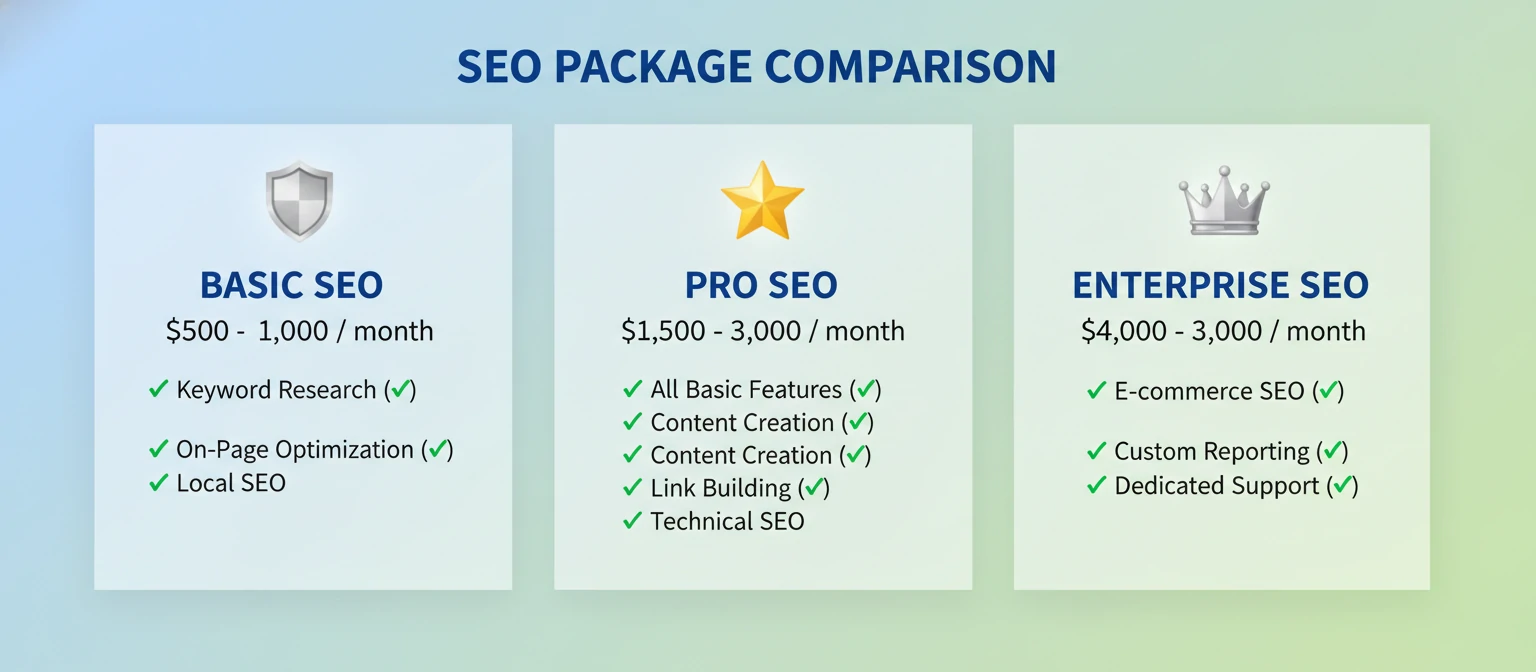
Common Package Types & What's Included
Let me walk you through the most common SEO package structures you'll encounter. Understanding these categories helps you compare apples to apples when evaluating proposals.
- ✓ 5-10 target keywords
- ✓ Basic on-page optimization
- ✓ Google Business Profile setup
- ✓ Monthly performance report
- ✓ Technical SEO audit (initial)
- ✗ Content creation
- ✗ Link building
- ✗ Competitor analysis
- ✓ 20-30 target keywords
- ✓ Comprehensive on-page SEO
- ✓ 2-4 blog posts per month
- ✓ Active link building (5-10/mo)
- ✓ Technical SEO maintenance
- ✓ Competitor monitoring
- ✓ Monthly strategy calls
- ✓ Detailed analytics reporting
- ✓ 50+ target keywords
- ✓ Full content strategy
- ✓ 6-10 content pieces/month
- ✓ Premium link acquisition
- ✓ Advanced technical SEO
- ✓ Dedicated strategist
- ✓ Custom reporting dashboard
- ✓ Weekly communication
Local SEO Packages
If you're a local business serving a specific geographic area, you may encounter specialized local SEO packages:
📍 Local SEO Package Components
Local SEO packages focus on geographic visibility and typically include:
- Google Business Profile optimization and management
- Local citation building and cleanup (50-100+ directories)
- Review generation and management strategy
- Local keyword targeting and optimization
- NAP (Name, Address, Phone) consistency auditing
- Local link building from community sources
- Google Maps optimization
E-commerce SEO Packages
🛒 E-commerce SEO Package Components
Online stores have unique SEO needs that require specialized approaches:
- Product page optimization at scale
- Category page structure and optimization
- Schema markup for products (pricing, availability, reviews)
- Faceted navigation and filter page management
- Internal linking optimization for product discovery
- Duplicate content management
- Site speed optimization for large catalogs
Price Ranges and What to Expect
Let me give you a realistic breakdown of what different investment levels can accomplish. These ranges reflect my observations across hundreds of SEO engagements.
| Monthly Investment | Best For | Realistic Expectations |
|---|---|---|
| $300-$500 | Very small local businesses, basic maintenance | Limited impact; suitable only for low-competition markets or maintaining existing rankings |
| $500-$1,000 | Local businesses, new websites, tight budgets | Foundation building; modest improvements over 6-12 months in low-medium competition |
| $1,000-$2,500 | Growing SMBs, regional businesses | Meaningful progress; consistent content and link building; measurable results in 6-9 months |
| $2,500-$5,000 | Established businesses, competitive markets | Comprehensive SEO; significant traffic growth; strong ROI potential within 6-12 months |
| $5,000-$10,000 | Mid-market companies, multiple locations | Aggressive growth; dedicated team resources; compete in challenging verticals |
| $10,000+ | Enterprise, highly competitive industries | Full-service with senior expertise; market leadership positioning; national/international reach |
💡 The Investment Reality Check
A common mistake is choosing a package based solely on budget constraints. If you're in a competitive industry and can only afford $500/month, you're likely better off investing that money elsewhere—or saving until you can afford an investment level that will actually move the needle. Underfunded SEO creates frustration without results.
What Drives Price Differences
Understanding why packages cost what they do helps you evaluate whether you're getting fair value:
- Labor hours: More comprehensive packages require more monthly hours from strategists, writers, and specialists
- Content volume: Quality content creation is expensive; packages with more content cost more
- Link building approach: Premium link acquisition from authoritative sites costs significantly more than basic directory submissions
- Experience level: Senior strategists command higher rates than junior staff
- Tools and technology: Enterprise-level SEO tools cost agencies thousands monthly
- Agency overhead: Location, team size, and operational costs affect pricing
Essential Package Components
Regardless of price point, effective SEO packages should include certain core elements. Here's what to look for and why each matters:
🔧 Technical SEO Audit & Fixes
The foundation everything else builds on. Without solid technical SEO, content and links won't perform optimally.
- Site crawlability analysis
- Core Web Vitals assessment
- Mobile usability review
- Indexation issue identification
- Site architecture evaluation
- Ongoing technical monitoring
🔑 Keyword Research & Strategy
The strategic foundation that determines which opportunities you pursue and how you prioritize efforts.
- Initial keyword opportunity analysis
- Competitor keyword gap analysis
- Search intent mapping
- Priority and difficulty assessment
- Ongoing keyword expansion
📝 On-Page Optimization
Ensuring your existing pages are properly optimized for target keywords and user experience.
- Title tag and meta description optimization
- Header structure improvements
- Content optimization recommendations
- Internal linking strategy
- Schema markup implementation
✍️ Content Creation
Fresh, high-quality content that targets new keywords and provides value to your audience.
- Blog posts and articles
- Landing page content
- Resource guides and how-to content
- Content refresh and updates
🔗 Link Building
Earning backlinks from other websites to build your site's authority and improve rankings.
- Link opportunity research
- Outreach and relationship building
- Guest posting (quality publications)
- Resource link acquisition
- Broken link building
📈 Reporting & Analysis
Regular insights into performance, progress, and strategic recommendations.
- Ranking tracking and trends
- Traffic and conversion analysis
- Competitive positioning updates
- Action item recommendations
- ROI tracking where possible

Red Flags to Watch For
In my years of reviewing SEO proposals, I've identified warning signs that consistently predict poor outcomes. Avoid packages with these characteristics:
🚩 Guaranteed Rankings
"We guarantee first page rankings" or "100% ranking guarantee" should end the conversation immediately. No one can guarantee rankings—Google's algorithm is outside anyone's control. Agencies making such promises are either lying or planning to use risky tactics.
🚩 Vague Deliverables
"We optimize your website" without specifics on what that means. Quality packages clearly state: "We will optimize 10 pages per month" or "We will create 4 blog posts of 1,500+ words." Vagueness often hides minimal actual work.
🚩 No Contract Flexibility
Requiring 12-month commitments with no exit clause. While SEO takes time, you should have options if the agency isn't performing. Look for month-to-month after an initial 3-6 month period, or performance-based exit clauses.
🚩 Secret Strategies
"We can't share our methods—they're proprietary." Legitimate agencies are happy to explain their approach. Secrecy often hides outdated or risky techniques that could get your site penalized.
🚩 Too-Good-to-Be-True Pricing
Full-service SEO for $199/month is not realistic. These "packages" typically deliver automated reports, low-quality content, or spammy links that can harm your site. Quality SEO requires significant human expertise.
🚩 No Onboarding or Discovery
Agencies that don't ask about your business, goals, and competitive situation before proposing a package are selling solutions before understanding problems. One-size-fits-all rarely fits anyone well.
What Quality Agencies Do Instead
- Conduct discovery calls to understand your business before proposing solutions
- Provide detailed, specific deliverables in their proposals
- Offer realistic timelines and set appropriate expectations
- Share case studies from similar businesses
- Explain their methodology transparently
- Provide references you can actually contact
- Start with audits to understand your specific situation
Choosing the Right Package
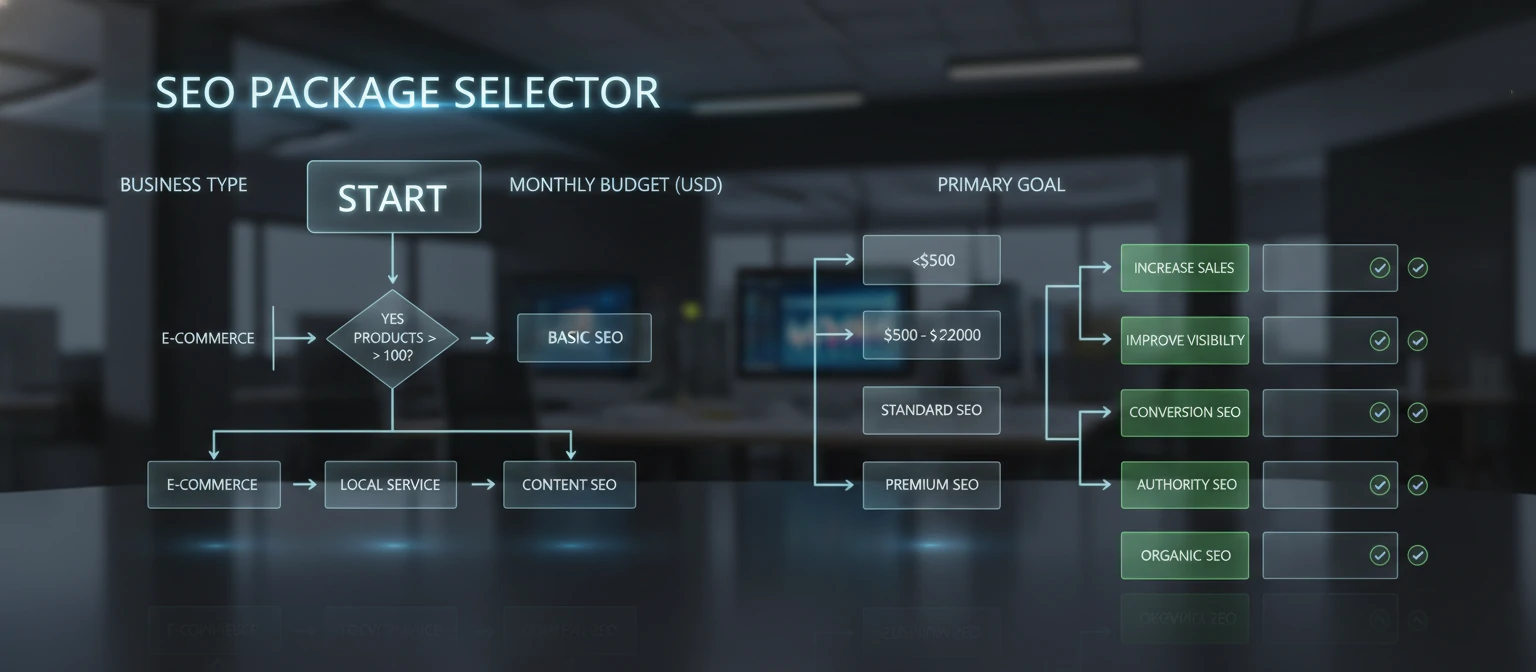
Selecting the right SEO package isn't about finding the "best" one—it's about finding the right fit for your specific situation. Here's a framework to guide your decision:
🏪 Local Business, Single Location
You serve customers within a specific geographic area—a restaurant, law firm, dental practice, or retail store.
🛍️ E-commerce Business
You sell products online and need to rank for product and category searches.
🏢 B2B Service Company
You provide services to other businesses with longer sales cycles and higher customer values.
🚀 Startup or New Website
You're launching a new business or website with minimal existing authority.
🏆 Established Company, Competitive Market
You're an established player but facing stiff competition in search results.
Questions to Ask Before Choosing
- ✅ What are my primary business goals for the next 12 months?
- ✅ How competitive is my industry for organic search?
- ✅ Do I have resources to supplement agency work (content, internal links, etc.)?
- ✅ What is a realistic budget I can sustain for 12+ months?
- ✅ How important is speed vs. sustainable growth?
- ✅ Do I need local, national, or international reach?
- ✅ What ROI would make this investment worthwhile?
Customization vs. Standard Packages
A common question I receive: should you choose a standard package or request custom pricing? Both approaches have merits.
When Standard Packages Work Well
- Your needs align closely with a predefined package
- You prefer pricing predictability
- You're working with a limited budget
- You want a proven, systematized approach
- You're newer to SEO and don't know exactly what you need
When Customization Makes Sense
- You have unique technical requirements
- You're in a highly specialized industry
- You have internal resources that can handle some elements
- Your goals don't fit neatly into standard categories
- You have a significant budget and need comprehensive strategy
🔄 The Hybrid Approach
Many of my clients start with a standard package and customize from there. "I want your Professional package, but I don't need content because we have internal writers—can you add more link building instead?" This approach gives you package efficiency with tailored fit.
Negotiating Package Modifications
Most agencies are willing to adjust standard packages. Reasonable requests include:
- Swapping services of equivalent value
- Adding specific services for an additional fee
- Reducing services to meet budget constraints
- Adjusting reporting frequency or format
- Including specific priorities you care about
Maximizing Your Package Value
Getting the most from your SEO package isn't just about choosing the right one—it's about how you engage with the process. Here's how to maximize your investment:
Be an Active Participant
SEO works best as a partnership, not a vendor relationship. Your involvement dramatically impacts results:
- Respond promptly to requests for information, approvals, and feedback
- Provide industry insights that outside agencies can't know
- Share business changes that affect SEO (new products, location changes, promotions)
- Implement recommendations that require internal action
- Review reports and come prepared with questions
I managed two accounts with identical $3,000/month packages. One client responded to emails within hours, provided extensive product knowledge, and implemented technical recommendations quickly. The other took weeks to respond and rarely implemented suggestions. After 12 months, Client A had 340% traffic growth; Client B had 45%. Same package, dramatically different results based on client engagement.
— A lesson from my agency days
Set Clear Expectations
- Document your goals before starting—what does success look like?
- Understand realistic timelines (6-12 months for meaningful results)
- Agree on KPIs that matter to your business
- Establish communication cadence and preferred channels
- Know what's included and what costs extra
Monitor Progress Without Micromanaging
Trust your agency's expertise while staying informed:
- Focus on trend lines, not daily fluctuations
- Use monthly reports as conversation starters, not just data dumps
- Ask about strategy adjustments, not just activity reports
- Raise concerns early rather than letting frustration build
Know When to Scale Up or Move On
After 6-12 months, evaluate honestly:
- If results are strong: Consider scaling up your investment to accelerate growth
- If results are modest but improving: Continue with possible adjustments
- If results are poor despite good communication: Consider changing agencies
- If you're not sure: Get an independent audit of the work being done
🎯 Key Takeaways
- ✓ SEO packages vary wildly—a $1,000 package might include more value than a $3,000 one
- ✓ Focus on specific deliverables, not vague promises or impressive-sounding guarantees
- ✓ Match your package choice to your business type, competitive landscape, and realistic budget
- ✓ Avoid packages with guaranteed rankings, secret methods, or suspiciously low pricing
- ✓ Technical SEO, keyword strategy, on-page optimization, content, link building, and reporting are essential components
- ✓ Your active participation dramatically affects the results you'll achieve
- ✓ Plan for 6-12 months before expecting meaningful results
- ✓ Start with standard packages and customize as needed—don't overcomplicate initially
📚 Additional Resources
Package Comparison Template
Spreadsheet for comparing SEO packages from multiple agencies on equal terms.
Questions Checklist
50 questions to ask any SEO agency before signing a contract.
ROI Calculator
Tool to estimate potential returns from different SEO investment levels.
Onboarding Guide
How to start your SEO engagement right for maximum results.

About Sarah Lin
Sarah has spent over a decade in digital marketing, including seven years as an account director at agencies serving clients from startups to Fortune 500 companies. She now runs an independent consulting practice helping businesses evaluate and select the right digital marketing partners. Her approach emphasizes transparency, realistic expectations, and measurable outcomes.