
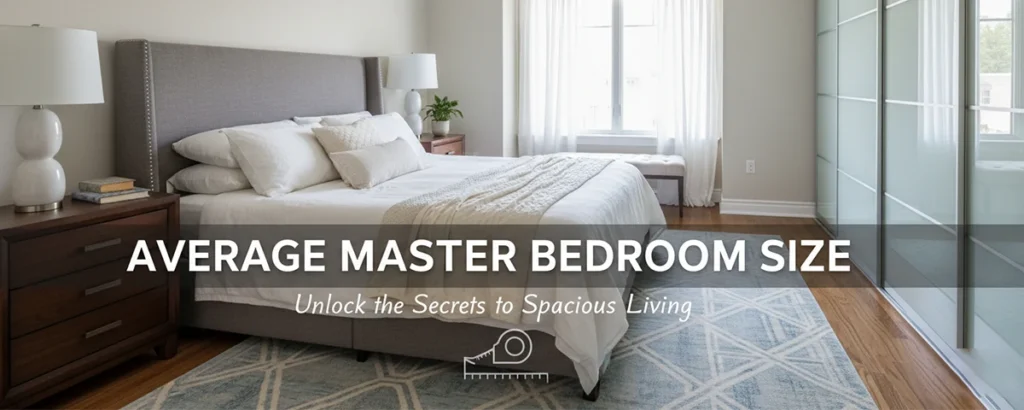
Your Complete Guide to Understanding, Measuring, and Optimizing Master Bedroom Dimensions for the Perfect Living Space
Welcome to Your Master Bedroom Size Guide
Whether you're planning a new home, renovating your current space, or simply curious about bedroom standards, understanding average master bedroom sizes is crucial for creating the perfect sanctuary. This comprehensive guide will walk you through everything you need to know about master bedroom dimensions, from industry standards to optimization strategies.
Master bedroom size significantly impacts your daily comfort, furniture placement options, and overall home value. With the right knowledge, you can make informed decisions that enhance both functionality and aesthetics in your personal retreat.
Quick Stats
What You'll Learn:
- Standard master bedroom dimensions across different home types
- How to measure and assess your current space
- Expert tips for maximizing bedroom functionality
- Solutions to common space challenges
Getting Started with Master Bedroom Measurement
Essential Tools and Requirements
Interactive Measurement Guide
Step 4: Calculate Total Area
Multiply length × width to get your total square footage.
Detailed Measurement Process
1. Prepare Your Space
Clear the room of any obstacles that might interfere with measurement. Remove furniture from walls if possible, or note their positions for later reference.
2. Measure Wall to Wall
Measure from the inside edge of one wall to the inside edge of the opposite wall. Do this for both length and width. Always measure at floor level for the most accurate dimensions.
3. Note Architectural Features
Record the location and dimensions of doors, windows, closets, and any built-in features. These will affect furniture placement and overall room functionality.
4. Create a Simple Floor Plan
Sketch a basic floor plan with your measurements. This doesn't need to be perfect - just accurate enough to help with furniture planning and space optimization.
Common Measurement Mistakes to Avoid
❌ What NOT to Do:
- Measuring over furniture or obstacles
- Including trim and baseboards in measurements
- Measuring at different heights on different walls
- Forgetting to account for door swings
✅ Best Practices:
- Measure twice, record once
- Use consistent measurement points
- Have someone help hold the tape measure
- Double-check all measurements
Optimizing Your Master Bedroom Space
Smart Layout Strategies
Floating Bed Layout
Position bed away from walls for better flow
Corner Optimization
Maximize corner spaces with smart furniture
Activity Zones
Create distinct areas for different functions
Position your bed away from walls to create better flow and make the room feel larger.
Benefits:
- • Creates visual breathing room
- • Easier to make the bed
- • Better air circulation
- • More flexible furniture arrangement
Best For:
- • Rooms 14' × 16' or larger
- • Square or rectangular layouts
- • When you have adequate wall space
- • Modern, minimalist styles
Furniture Arrangement Calculator
Enter your room dimensions to get personalized furniture recommendations:
Industry Best Practices
Space Planning Rules
Design Principles
Maximizing Storage in Average-Sized Bedrooms
Vertical Storage
Use wall-mounted shelves and tall furniture to maximize vertical space
Under-Bed Storage
Utilize space under the bed with storage boxes or bed frames with built-in drawers
Multi-Purpose Furniture
Choose ottomans, benches, and nightstands with hidden storage compartments