

Welcome to Your Ultimate Lens Selection Guide
Welcome to the definitive guide for real estate photographers seeking to elevate their property photography game! In today's competitive real estate market, stunning visuals can make the difference between a property that sits on the market and one that sells quickly. The right lens choice is absolutely crucial for capturing the essence, space, and appeal of any property.
Selecting the perfect lens for real estate photography goes beyond just technical specifications—it's about understanding how different focal lengths, apertures, and optical qualities can transform ordinary spaces into compelling visual narratives. The 5 Best Sony Lenses for Real Estate Photography in 2026 represent the pinnacle of optical engineering, designed to help you capture properties in their most flattering light while maintaining the technical excellence that clients expect.
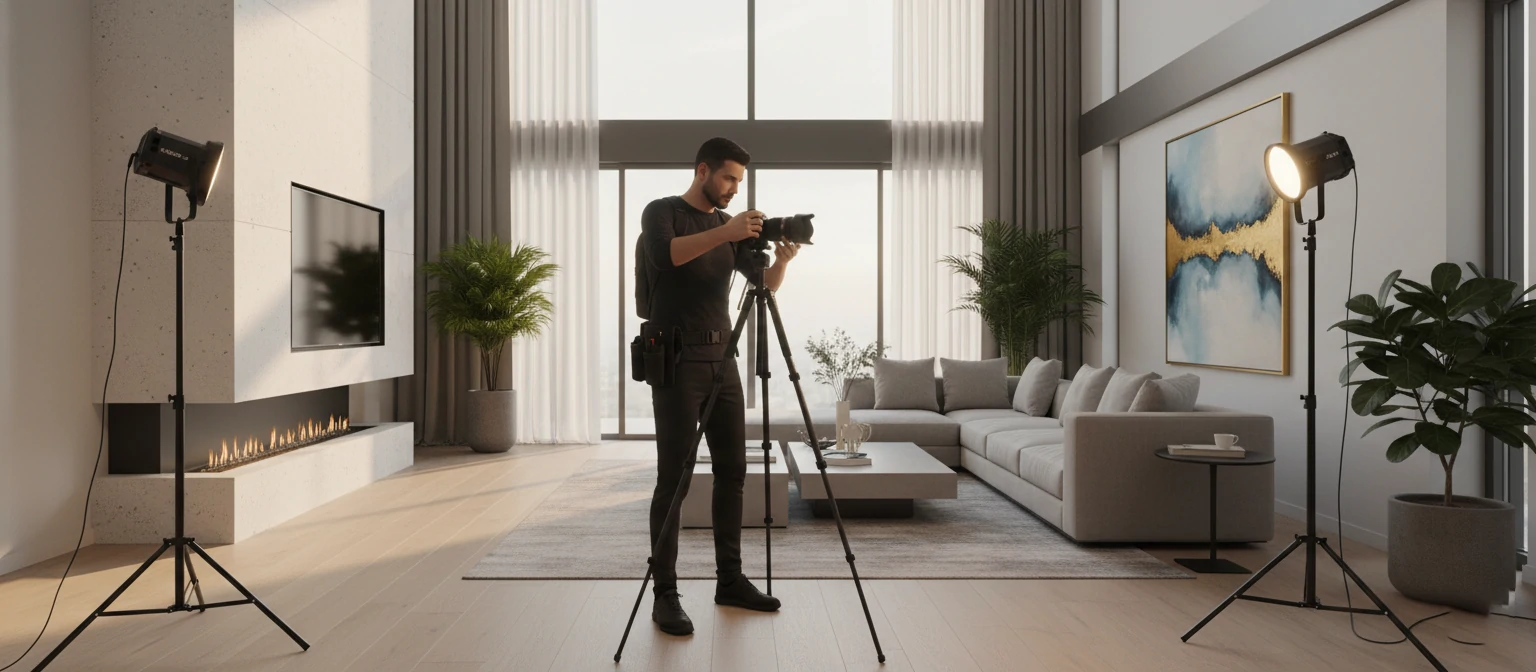
Whether you're a seasoned professional looking to upgrade your gear or a newcomer to real estate photography, this comprehensive guide will provide you with the insights, techniques, and practical knowledge needed to make informed decisions about your lens investments. We'll explore not just which lenses to choose, but how to use them effectively to create images that sell properties and build your reputation as a skilled real estate photographer.
Understanding the 5 Best Sony Lenses for Real Estate Photography in 2026
Real estate photography demands specific optical characteristics that set it apart from other genres. The 5 Best Sony Lenses for Real Estate Photography in 2026 were chosen for their ability to capture wide spaces, minimize distortion, maintain corner-to-corner sharpness, and handle both interior and exterior work.
What Makes These Lenses Essential?
These lenses excel in wide coverage, low distortion, strong edge sharpness, and flexibility for mixed lighting and tight rooms.
Sony FE 16-35mm f/2.8 GM II
Flagship wide zoom with exceptional edge sharpness and low distortion—great for full-room coverage and dramatic exteriors.
Pros
- Outstanding sharpness
- Fast f/2.8
- Weather sealed
Cons
- High price
- Heavier than f/4 options
Sony FE 12-24mm f/2.8 GM
Covers the tightest bathrooms and hallways while keeping verticals manageable; great for dramatic perspective.
Pros
- Extreme width
- Constant f/2.8
- Premium build
Cons
- Expensive
- Composition demands care
Sony FE 20mm f/1.8 G
Compact prime that excels at twilight exteriors and dim interiors without adding bulk to your kit.
Pros
- Strong low-light ability
- Lightweight
- Great value
Cons
- Fixed focal length
- Less flexible than zooms
Sony FE 16-35mm f/4 PZ
Power zoom makes it smooth for video tours; lighter and more affordable without sacrificing sharpness stopped down.
Pros
- Lower cost
- Smooth power zoom
- Compact
Cons
- Slower f/4
- Less premium feel
Sony FE 14mm f/1.8 GM
Ultra-wide prime that combines dramatic field of view with fast aperture for night exteriors and tight interiors.
Pros
- Extreme width
- Fast f/1.8
- Top-tier optics
Cons
- Very costly
- Takes practice to compose
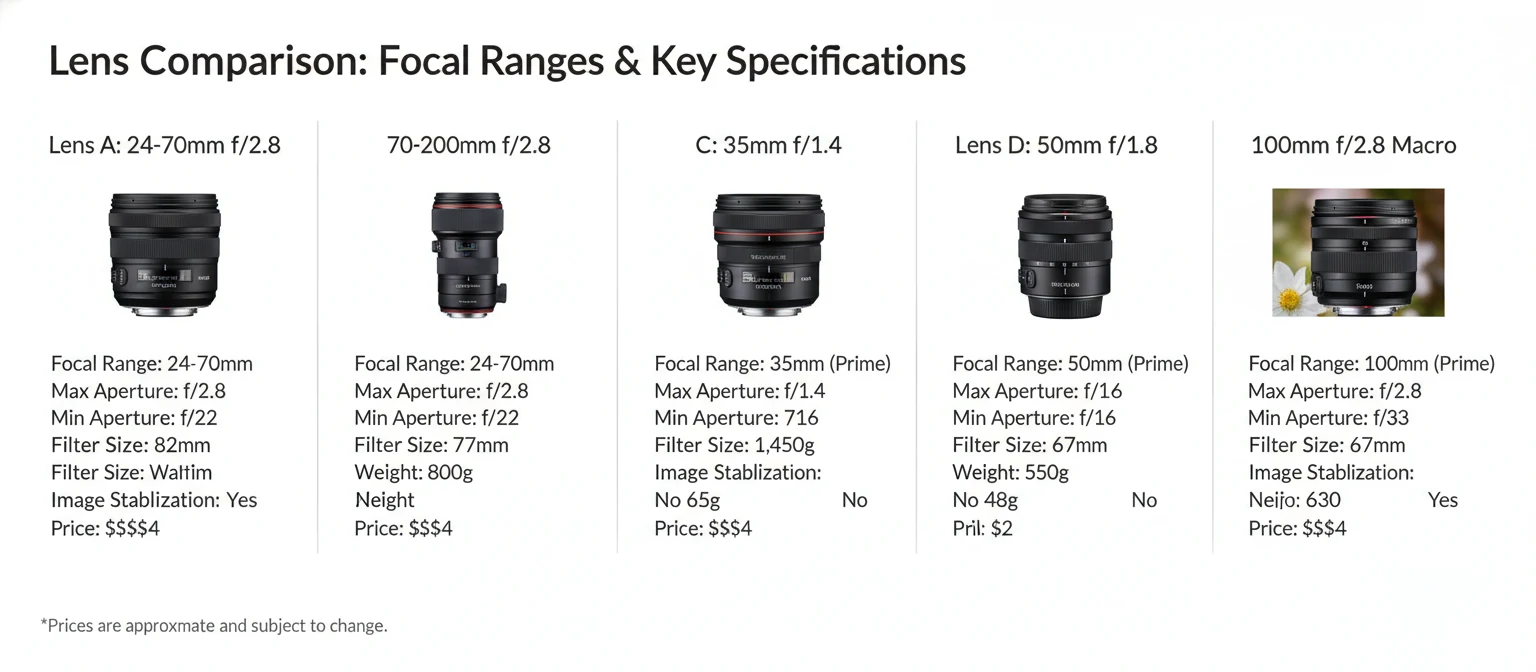
Common Applications in Real Estate Photography
- Interior Room Shots: Whole-room coverage with minimal distortion
- Exterior Property Views: Capture landscaping and architecture together
- Twilight Photography: Balance ambient and artificial light at dusk
- Detail Shots: Highlight premium finishes and architectural features
- Virtual Tours: Wide coverage for 360/VR capture
Getting Started with the 5 Best Sony Lenses for Real Estate Photography in 2026
Successfully integrating these lenses into your real estate workflow means pairing technical know-how with practical shooting habits. Use this quick-start guide to set up with confidence.
Essential Requirements and Setup
Choose Your Primary Lens
Begin with the Sony FE 16-35mm f/2.8 GM II; it covers ~90% of jobs and reduces position changes.
Invest in a Sturdy Tripod
A solid tripod with a ball head keeps horizons level and prevents keystoning in wide shots.
Master Your Camera Settings
Use Aperture Priority (A/Av); f/8–f/11 for edge-to-edge sharpness; ISO 100–400; IBIS on.
Learn Lens Correction Techniques
Enable lens corrections in-camera or in post to tame barrel distortion and vignetting.
Practice Composition Techniques
Use the “two-wall rule” to show depth; keep the camera level to avoid converging lines.
💡 Pro Tip: Lens Selection Strategy
Start with the 16-35mm f/2.8 GM II, add the 12-24mm f/2.8 GM for tight spaces, then add primes for specialties. Pace your investment as your bookings grow.
Step-by-Step Shooting Workflow
Pre-Shoot Preparation
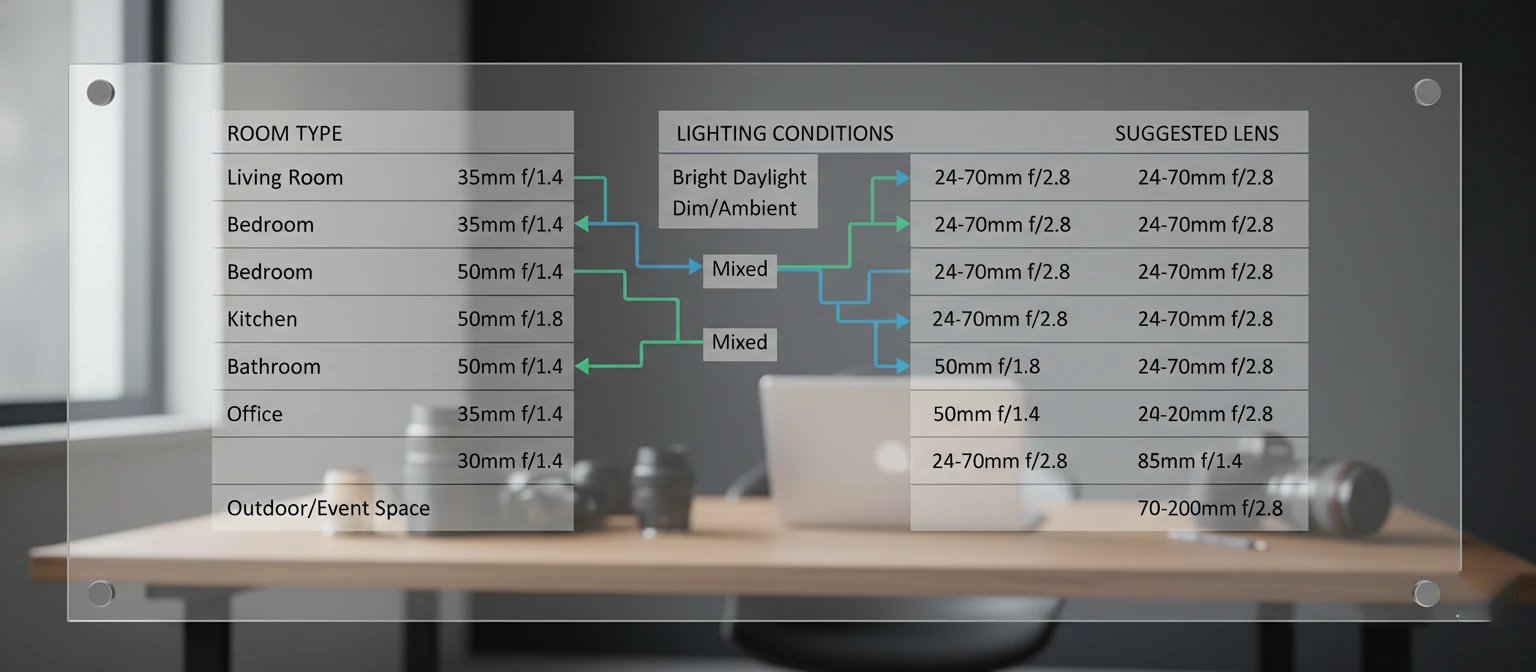
Scout angles and light; note rooms that may need 12-24mm versus 16-35mm.
Lighting Assessment
Plan shoots for mid-morning interiors and golden hour exteriors; pick lenses based on light levels.
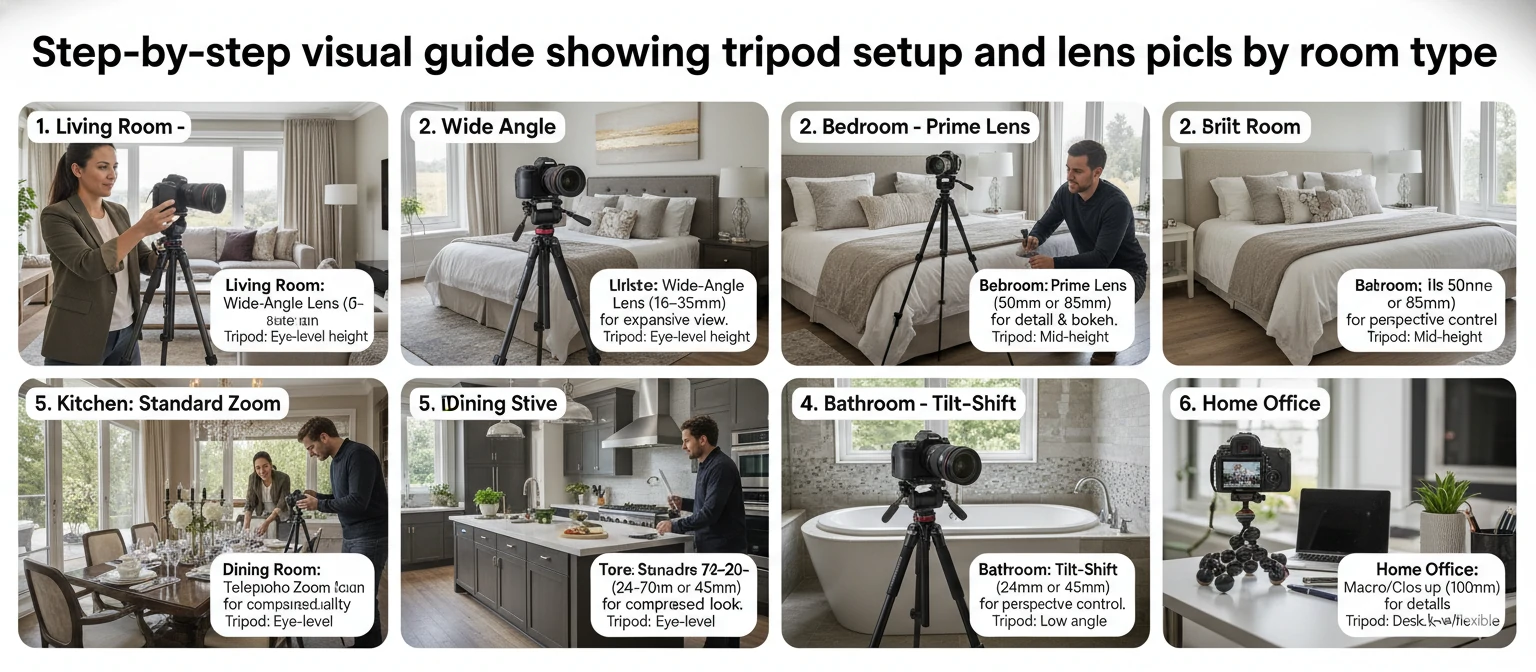
Room-by-Room Strategy
Large rooms: 16–20mm on 16-35mm. Tight spaces: 12-24mm at 12–14mm. Exteriors: 16-35mm for flexibility.
Bracketing and HDR
Shoot 3–5 bracketed exposures when windows are in-frame to balance interior/exterior light.
Quality Control Check
Review exposure, focus, level horizons, and corner sharpness before moving on.
Optimizing the 5 Best Sony Lenses for Real Estate Photography in 2026 for Best Results
Get the most from each lens by applying targeted techniques that amplify strengths and minimize weaknesses.
Technical Optimization Strategies
🔧 Aperture Sweet Spot Mastery
GM lenses thrive at f/8–f/11 for sharpness, depth, and low diffraction. Avoid shooting wide open unless you need shallow depth of field or are in very low light.
Lens-Specific Optimization Tips
Sony FE 16-35mm f/2.8 GM II Optimization
- Best Aperture: f/8–f/11 for max sharpness
- Focal Length Strategy: 16mm for big rooms; 24–35mm for tighter framing
- Distortion Control: Enable lens corrections in-camera/Lightroom
- Focus Technique: Single-point AF on far wall ~1/3 into the room
Sony FE 12-24mm f/2.8 GM Optimization
- Composition Care: Keep foregrounds clean at 12mm
- Height Positioning: Chest height to limit floor/ceiling distortion
- Corner Sharpness: Stop down to f/8+
- Perspective Control: Keep the camera level to avoid keystoning
Advanced Techniques for Professional Results
Focus Stacking for Ultimate Sharpness
Stack multiple focus points and blend to keep everything tack sharp—especially useful with ultra-wide shots.
Perspective Correction Workflow
Use Lightroom Transform or Photoshop Perspective Warp to fix converging verticals; essential for pro-grade interiors.
HDR Bracketing Strategy
Capture 5 exposures at 1-stop intervals to balance bright windows with darker interiors.
Color Temperature Consistency
Set custom WB or correct in RAW; keep color temperature consistent across the full set.
Maintenance and Care Best Practices
- Regular Cleaning: Clean front/rear elements before each shoot
- Filter Protection: Use quality UV/clear filters, especially on front elements
- Storage Conditions: Dry storage with silica gel to prevent fungus
- Transportation Safety: Padded cases; avoid extreme temps
- Regular Calibration: Check AF accuracy periodically
💰 Investment Protection Strategy
Insure your lenses against theft/damage; keep serials and receipts for claims. It can save thousands on premium glass.
Common Challenges and Solutions
Even with top-tier Sony glass, real estate shooters hit recurring issues. Use these fixes to keep results pro-grade.
Technical Challenges and Solutions
⚠️ Challenge: Extreme Barrel Distortion at Ultra-Wide Focal Lengths
Problem: At 12mm, straight lines curve noticeably at the edges.
Solution: Enable auto lens corrections, shoot RAW, and apply profile fixes; for tough cases, use manual distortion sliders or Photoshop Adaptive Wide Angle.
⚠️ Challenge: Uneven Lighting Between Interior and Exterior
Problem: Windows blow out while interiors stay dark.
Solution: Use 5-shot HDR brackets across ~4 stops; blend in Lightroom/Aurora. Add flash or continuous light to lift interiors when needed.
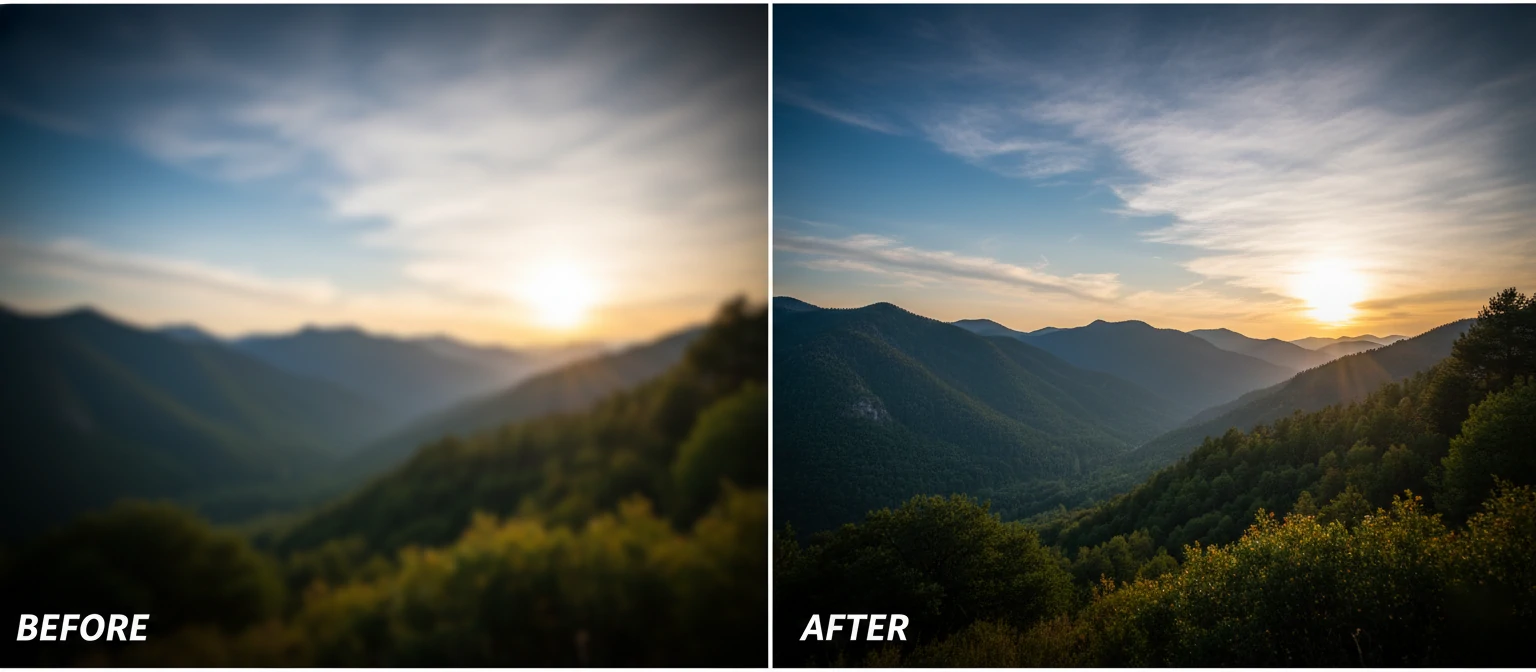
⚠️ Challenge: Soft Corners with Wide-Angle Lenses
Problem: Corners soften when shot wide open.
Solution: Stop down to f/8+; if you need speed, raise ISO before opening aperture. Modern Sony bodies handle ISO 1600–3200 well.
Compositional and Creative Challenges
⚠️ Challenge: Making Small Spaces Look Spacious Without Distortion
Problem: Tight rooms need space without obvious warping.
Solution: Shoot 14–16mm instead of 12mm; position in doorways/corners; chest-height, level camera; use verticals for hallways.
⚠️ Challenge: Avoiding the "Fisheye Effect" in Marketing Images
Problem: Ultra-wide perspective can look unnatural.
Solution: Favor 16–20mm on the 16-35mm; when at 12–14mm, keep edges clear of people/furniture and apply lens corrections in post.
Equipment and Workflow Challenges
⚠️ Challenge: Managing Multiple Lens Changes During Shoots
Problem: Frequent swaps slow you down and risk dust.
Solution: Shoot large rooms first with 16-35mm, then tight spaces with 12-24mm; if possible, use two bodies with different lenses.
⚠️ Challenge: Justifying the High Cost of Premium Lenses
Problem: Premium lens sets are expensive for newer shooters.
Solution: Start with 16-35mm f/2.8 GM II, expand gradually; calculate cost per shoot over lifespan—better glass holds value and commands higher fees.
🎯 Troubleshooting Quick Reference
Blurry corners: f/8–f/11
Blown windows: HDR bracket
Curved lines: Enable corrections
Unnatural perspective: Chest height, level camera
Slow AF: Single-point AF, add light
Conclusion and Next Steps
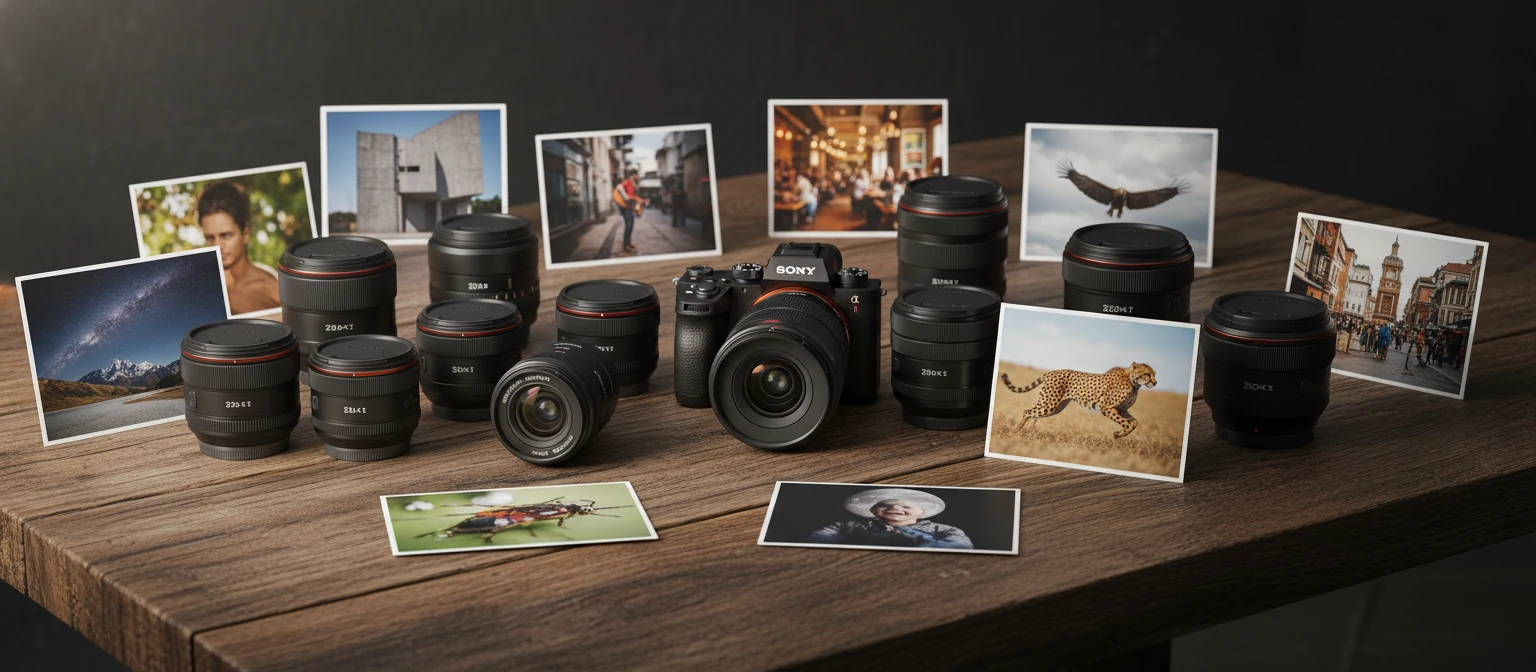
The 5 Best Sony Lenses for Real Estate Photography in 2026 form a complete toolkit: versatile zooms for most jobs and specialized glass for tight or dramatic spaces.
Key Takeaways
- Start Smart: Lead with the 16-35mm f/2.8 GM II—covers ~90% of needs
- Understand Your Tools: Use each lens where it shines; know optimal settings
- Invest in Quality: Better glass yields higher-fee images and client trust
- Practice Technique: Gear shines when composition and execution are solid
- Plan Your Growth: Expand your kit strategically as bookings grow
Ready to Transform Your Real Estate Photography?
The right lens separates amateur shots from images that sell quickly. Upgrade deliberately and shoot with intent.
Your Next Steps
Assess Your Current Needs
Identify gaps; most start with a quality wide zoom.
Try Before You Buy
Rent/borrow to learn each lens’s rendering and handling.
Develop Your Skills
Study composition, lighting, and post-processing alongside gear.
Build Your Portfolio
Showcase improved work to attract better clients and fees.
Network and Market
Share with agents and property managers; consistent quality builds trust.
Additional Resources for Continued Learning
- Sony Alpha Universe: Official tutorials and tips
- Real Estate Photography Forums: Peer lessons and feedback
- YouTube Channels: Specialists to follow for ongoing education
- Local Photography Groups: Meetups and workshops
- Online Courses: Comprehensive real estate photo training
🚀 Final Pro Tip
The best lens is the one that consistently sells the space. Invest wisely, practice relentlessly, and keep client needs first.
Mastery is ongoing. With the right tools, techniques, and steady refinement, you’ll create images that showcase properties beautifully and propel your business forward.