

Elevating Your Online Presence in the Digital Age
1. Introduction
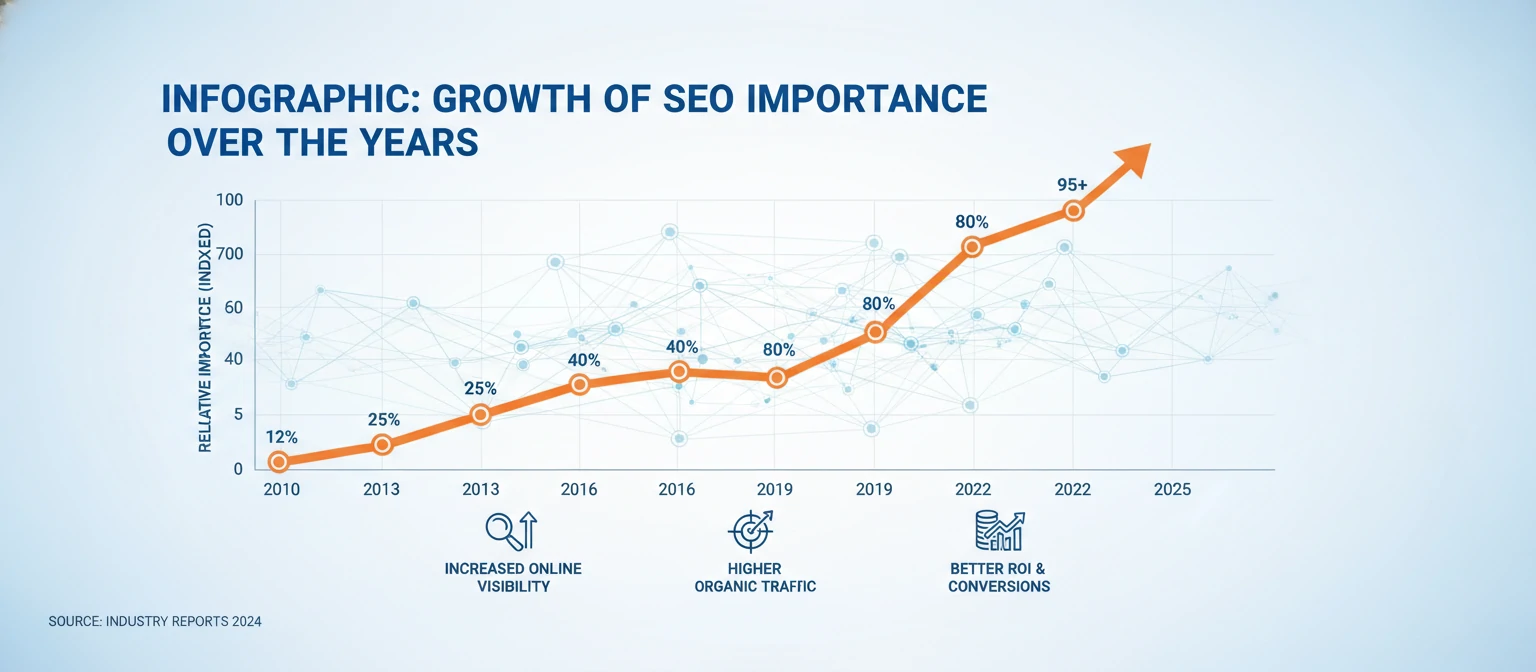
In today's hyper-competitive digital landscape, having a strong online presence isn't just an advantage—it's a necessity. An SEO agency serves as your strategic partner in navigating the complex world of search engine optimization, helping businesses climb the ranks of search results and capture the attention of their target audience.
A professional SEO agency is a specialized firm that focuses exclusively on improving your website's visibility in search engine results pages (SERPs). These agencies combine technical expertise, creative content strategies, and data-driven insights to help businesses achieve sustainable organic growth. Unlike general marketing agencies that offer SEO as one of many services, dedicated SEO agencies live and breathe search optimization, staying current with algorithm updates and industry best practices.
The importance of SEO in today's digital ecosystem cannot be overstated. With over 8.5 billion searches conducted on Google daily, search engines have become the primary gateway through which consumers discover products, services, and information. Studies consistently show that the first page of Google captures over 90% of all search traffic, with the top three results alone accounting for more than 60% of all clicks. This makes SEO not just a marketing tactic, but a fundamental business strategy.
SEO agencies typically offer a comprehensive suite of services designed to address every aspect of search optimization. These include technical SEO audits to ensure your website meets search engine requirements, keyword research and strategy development, content creation and optimization, link building campaigns, local SEO for businesses with physical locations, and ongoing analytics and reporting to track progress and ROI.
What sets professional SEO agencies apart is their ability to see the bigger picture while managing intricate details. They understand that effective SEO isn't just about ranking for keywords—it's about creating a holistic digital experience that serves both search engines and human users, ultimately driving qualified traffic that converts into customers and revenue.
2. Understanding SEO
Search Engine Optimization (SEO) is the practice of optimizing websites and content to improve their visibility and ranking in search engine results pages. At its core, SEO is about understanding how search engines work and what users are looking for, then aligning your digital presence to meet both sets of requirements.
Modern SEO encompasses three fundamental pillars: technical optimization, content quality, and authority building. Technical optimization ensures that search engines can effectively crawl, index, and understand your website. Content quality focuses on creating valuable, relevant information that answers user queries and satisfies search intent. Authority building involves establishing your website's credibility and trustworthiness through various signals, including backlinks from reputable sources.
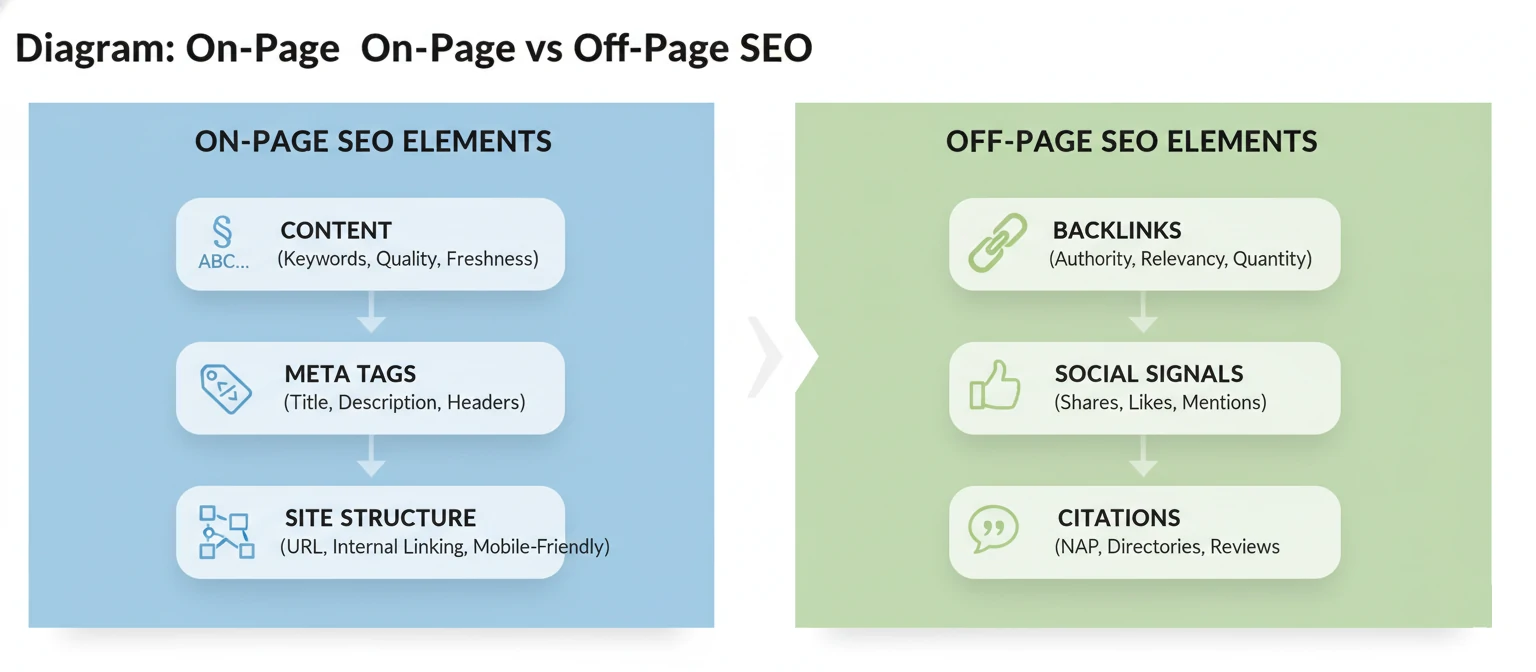
On-Page SEO vs Off-Page SEO
On-Page SEO
- Title tags and meta descriptions
- Header structure (H1, H2, H3)
- Content optimization and keyword usage
- Internal linking structure
- Image optimization and alt text
- URL structure and site architecture
- Page loading speed and mobile responsiveness
Off-Page SEO
- Backlink acquisition and quality
- Social media signals and engagement
- Online reviews and reputation management
- Local citations and directory listings
- Brand mentions and co-citations
- Guest posting and content marketing
- Influencer partnerships and collaborations
The effectiveness of SEO is backed by compelling statistics. Research indicates that organic search drives 53% of all website traffic, making it the largest source of trackable website visitors. Furthermore, SEO leads have a 14.6% close rate, compared to just 1.7% for outbound leads like direct mail or print advertising. This higher conversion rate stems from the fact that SEO targets users who are actively searching for products or services, indicating higher purchase intent.
of website traffic comes from organic search
close rate for SEO leads
of traffic goes to first page result
Understanding SEO also means recognizing its long-term nature. Unlike paid advertising, which stops generating traffic the moment you stop paying, SEO builds cumulative value over time. Well-optimized content can continue attracting visitors and generating leads for months or even years after publication. This compound effect makes SEO one of the most cost-effective marketing strategies available to businesses of all sizes.
However, SEO is also increasingly complex, with search engines using sophisticated algorithms that consider hundreds of ranking factors. Google alone makes thousands of algorithm updates each year, requiring constant adaptation and expertise to maintain and improve rankings. This complexity is precisely why many businesses turn to specialized SEO agencies rather than attempting to manage optimization efforts in-house.
3. Why Hire an SEO Agency?
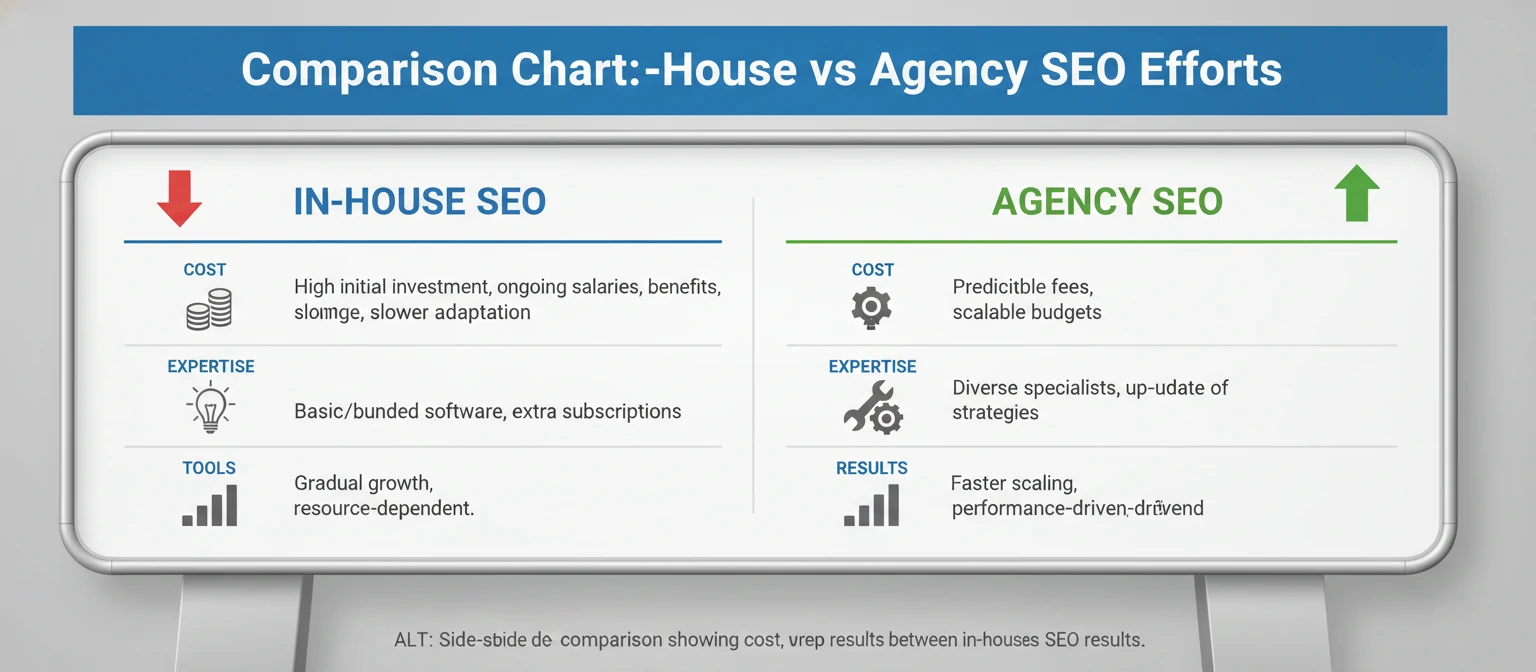
The decision to hire an SEO agency versus handling optimization in-house is one of the most critical choices businesses face in their digital marketing strategy. While the DIY approach might seem cost-effective initially, the reality is that professional SEO agencies bring a level of expertise, resources, and strategic thinking that's difficult to replicate internally.
Expertise and Specialization
SEO agencies employ specialists who dedicate their entire careers to understanding search algorithms, user behavior, and optimization techniques. These professionals have worked across multiple industries, giving them insights into what works and what doesn't across different market segments. They've seen algorithm updates come and go, learned from countless campaigns, and developed proven methodologies that deliver results.
In contrast, an in-house marketing team member who handles SEO alongside other responsibilities simply cannot match this level of specialization. They may understand your business better, but they lack the breadth of experience and deep technical knowledge that comes from working exclusively in SEO across multiple clients and industries.
Access to Premium Tools and Technologies
Professional SEO agencies invest heavily in premium tools and software that can cost thousands of dollars per month. These tools provide insights into competitor strategies, keyword opportunities, technical issues, and performance metrics that are simply not available through free alternatives. Tools like Ahrefs, SEMrush, Screaming Frog, and enterprise-level analytics platforms give agencies a significant advantage in identifying opportunities and tracking progress.
Common DIY SEO Pitfalls
- Keyword Stuffing: Over-optimizing content with keywords, leading to penalties
- Ignoring Technical SEO: Missing critical technical issues that prevent proper indexing
- Poor Link Building: Acquiring low-quality or spammy backlinks that harm rankings
- Inconsistent Effort: Treating SEO as a one-time project rather than ongoing optimization
- Chasing Algorithm Updates: Making reactive changes without understanding the bigger picture
- Neglecting User Experience: Focusing solely on search engines while ignoring user needs
Scalability and Resource Allocation
SEO requires consistent, ongoing effort across multiple areas simultaneously. An agency can scale resources up or down based on your needs, deploying specialists in technical SEO, content creation, link building, and analytics as required. This flexibility is particularly valuable for businesses with seasonal fluctuations or those launching new products or services.
Additionally, agencies can often deliver results faster because they can dedicate more resources to your project initially. While an in-house team member might spend a few hours per week on SEO, an agency can assign multiple specialists to work on different aspects of your optimization simultaneously.
Objective Perspective and Fresh Ideas
Sometimes being too close to your business can be a disadvantage. Internal teams may have blind spots or be too invested in existing approaches to see new opportunities. SEO agencies bring an outside perspective, often identifying opportunities that internal teams miss. They can also benchmark your performance against competitors and industry standards, providing valuable context for your SEO strategy.
Agencies also stay current with industry trends and best practices by working with multiple clients and attending industry conferences and training sessions. This exposure to diverse challenges and solutions means they can bring innovative approaches to your specific situation.
While hiring an SEO agency requires investment, the return on that investment typically far exceeds the cost when you factor in the expertise, tools, time savings, and results that professional agencies deliver. The key is choosing the right agency that aligns with your business goals and values—a topic we'll explore in detail in the following sections.
4. Services Offered by SEO Agencies

Professional SEO agencies offer a comprehensive suite of services designed to address every aspect of search engine optimization. Understanding these services helps businesses make informed decisions about which agency can best meet their specific needs and goals.
Keyword Research & Strategy
Comprehensive keyword research forms the foundation of any successful SEO campaign. Agencies use advanced tools to identify high-value keywords that your target audience is searching for, analyzing search volume, competition levels, and commercial intent.
- Competitor keyword analysis
- Long-tail keyword identification
- Search intent mapping
- Keyword difficulty assessment
Technical SEO
Technical SEO ensures that search engines can effectively crawl, index, and understand your website. This includes optimizing site architecture, improving page speed, fixing crawl errors, and implementing structured data markup.
- Site speed optimization
- Mobile responsiveness
- XML sitemap creation
- Schema markup implementation
Content Creation & Optimization
High-quality, optimized content is crucial for SEO success. Agencies create and optimize content that serves both search engines and users, ensuring it's valuable, relevant, and properly structured for maximum visibility.
- Blog post creation
- On-page optimization
- Content gap analysis
- Meta tag optimization
Link Building
Quality backlinks remain one of the most important ranking factors. Agencies develop strategic link building campaigns that acquire high-authority, relevant links through various white-hat techniques.
- Guest posting campaigns
- Digital PR and outreach
- Broken link building
- Resource page link acquisition
Local SEO
For businesses with physical locations, local SEO is essential. Agencies optimize Google My Business profiles, manage local citations, and implement location-based optimization strategies.
- Google My Business optimization
- Local citation building
- Review management
- Local keyword targeting
Analytics & Reporting
Comprehensive tracking and reporting ensure that SEO efforts are delivering measurable results. Agencies provide detailed analytics, performance reports, and actionable insights for continuous improvement.
- Ranking tracking
- Traffic analysis
- Conversion tracking
- ROI measurement
Integrated Approach
The most effective SEO agencies don't treat these services as isolated activities but rather as interconnected components of a comprehensive strategy. For example, keyword research informs content creation, which supports link building efforts, while technical SEO ensures that all content can be properly indexed and ranked.
Many agencies also offer additional services that complement SEO efforts, such as pay-per-click (PPC) advertising, social media marketing, and conversion rate optimization. This integrated approach ensures that all digital marketing efforts work together synergistically to maximize results.
When evaluating SEO agencies, it's important to understand not just what services they offer, but how they integrate these services into a cohesive strategy tailored to your specific business goals and market conditions. The best agencies will customize their service mix based on your unique needs rather than offering a one-size-fits-all package.
5. How to Choose the Right SEO Agency

Selecting the right SEO agency is a critical decision that can significantly impact your business's online success. With countless agencies claiming to deliver results, it's essential to have a systematic approach to evaluation that goes beyond marketing promises and focuses on proven capabilities and alignment with your business goals.
Essential Evaluation Criteria
Key Questions to Ask Potential Agencies
- Can you provide case studies with specific, measurable results?
- What is your approach to keyword research and competitive analysis?
- How do you handle algorithm updates and changes?
- What tools and technologies do you use for SEO?
- How do you measure and report on success?
- What is your typical timeline for seeing results?
- How do you approach link building and content creation?
- Can you provide references from current or past clients?
1. Track Record and Case Studies
A reputable SEO agency should be able to provide detailed case studies demonstrating their ability to deliver results. Look for case studies that include specific metrics such as organic traffic growth, keyword ranking improvements, and conversion rate increases. Pay particular attention to case studies from businesses similar to yours in size, industry, or target market.
2. Transparency and Communication
The best SEO agencies are transparent about their methods and maintain regular communication with clients. They should be willing to explain their strategies in plain language and provide regular updates on progress. Avoid agencies that are secretive about their methods or promise "proprietary techniques" that they can't explain.
3. Industry Experience and Specialization
While SEO principles are universal, different industries have unique challenges and opportunities. An agency with experience in your industry will understand your target audience, competitive landscape, and regulatory considerations. They'll also be familiar with industry-specific keywords and content strategies that resonate with your potential customers.
Red Flags to Watch Out For
- Guaranteed Rankings: No agency can guarantee specific rankings due to algorithm complexity
- Extremely Low Prices: Quality SEO requires significant time and expertise
- Black Hat Techniques: Avoid agencies that use spammy or manipulative tactics
- Lack of Reporting: Agencies should provide regular, detailed progress reports
- One-Size-Fits-All Packages: Effective SEO requires customized strategies
- Poor Communication: Difficulty reaching the agency or getting clear answers
- No Local Presence: Offshore agencies may not understand local market nuances
4. Team Expertise and Certifications
Inquire about the qualifications and experience of the team members who will be working on your account. Look for agencies whose team members hold relevant certifications from Google, have speaking experience at industry conferences, or contribute to respected SEO publications. This demonstrates their commitment to staying current with industry best practices.
5. Technology and Tool Access
Professional SEO requires access to premium tools and technologies. Ask potential agencies about the tools they use for keyword research, competitive analysis, technical audits, and performance tracking. Agencies that invest in quality tools are more likely to deliver comprehensive and effective optimization strategies.
6. Contract Terms and Flexibility
Review contract terms carefully, paying attention to commitment periods, cancellation policies, and what happens to your assets (content, accounts, etc.) if you decide to end the relationship. The best agencies are confident in their ability to deliver results and offer reasonable contract terms that protect both parties.
Making the Final Decision
After evaluating potential agencies against these criteria, consider scheduling consultations with your top candidates. A good agency will take time to understand your business, ask thoughtful questions about your goals, and provide insights about your current SEO situation even during the initial consultation.
Remember that the cheapest option is rarely the best value in SEO. Focus on finding an agency that demonstrates expertise, transparency, and a genuine interest in your business success. The right agency will become a valuable long-term partner in your digital marketing efforts, helping you achieve sustainable growth and competitive advantage in your market.
6. Measuring SEO Success
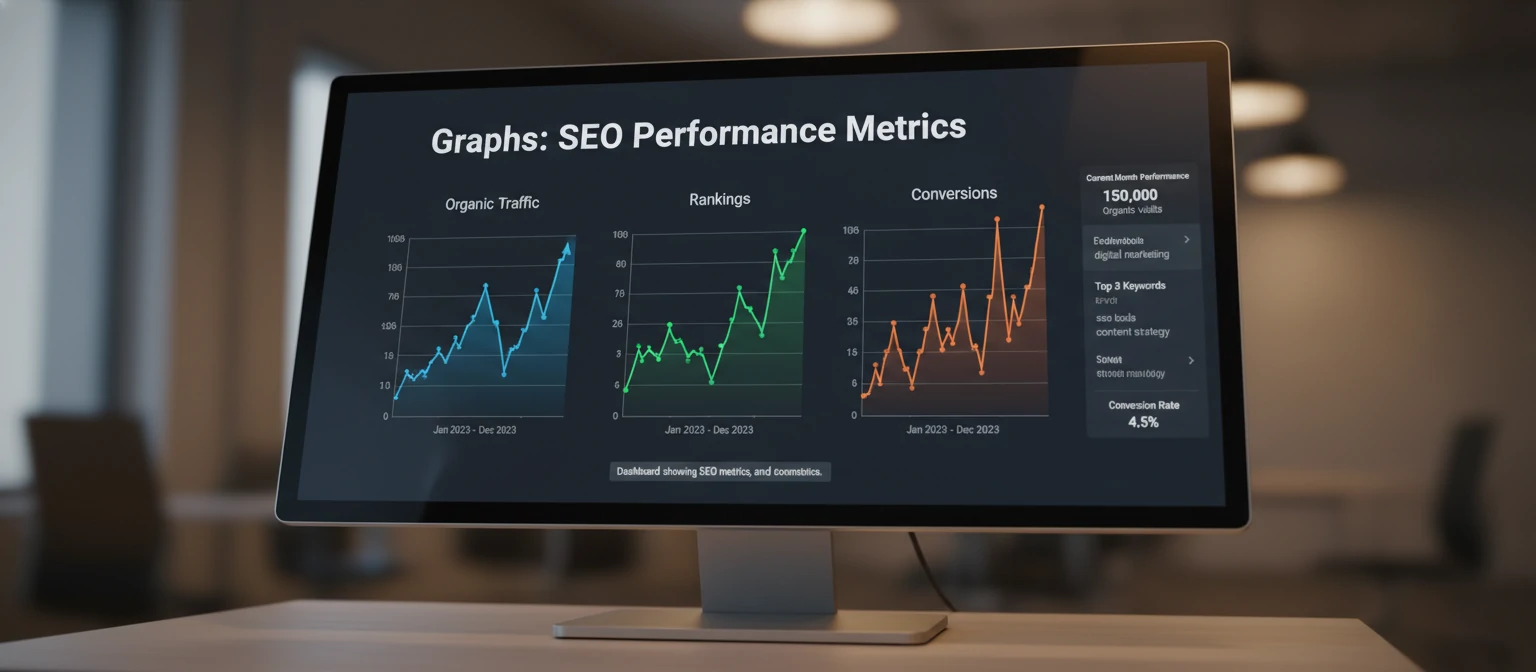
Measuring SEO success requires a comprehensive understanding of key performance indicators (KPIs) that align with your business objectives. Effective measurement goes beyond simple ranking improvements to encompass the full customer journey from search to conversion, providing insights that drive strategic decision-making and continuous optimization.
Primary SEO KPIs
Traffic Metrics
- Organic Traffic Growth: Total visitors from search engines
- Organic Sessions: Number of sessions initiated from organic search
- Pages per Session: Engagement depth of organic visitors
- Bounce Rate: Percentage of single-page sessions
- Session Duration: Average time spent on site
Ranking Metrics
- Keyword Rankings: Position for target keywords
- Ranking Distribution: Keywords in top 3, 10, and 50 positions
- Featured Snippets: Number of featured snippet captures
- Local Pack Rankings: Visibility in local search results
- SERP Features: Presence in various search features
Conversion Metrics
- Organic Conversion Rate: Percentage of organic visitors who convert
- Goal Completions: Specific actions taken by organic visitors
- Revenue Attribution: Revenue generated from organic traffic
- Cost per Acquisition: SEO investment per conversion
- Customer Lifetime Value: Long-term value of organic customers
Technical Metrics
- Page Load Speed: Site performance and user experience
- Core Web Vitals: Google's user experience metrics
- Crawl Errors: Technical issues preventing indexing
- Index Coverage: Percentage of pages successfully indexed
- Mobile Usability: Mobile-friendliness scores
Essential Tools and Methodologies
Professional SEO measurement requires a combination of tools and platforms to capture comprehensive performance data. Google Analytics 4 serves as the foundation for traffic and conversion tracking, while Google Search Console provides insights into search performance, indexing status, and technical issues. These free tools should be supplemented with premium platforms like SEMrush, Ahrefs, or Moz for competitive analysis and advanced keyword tracking.
Advanced measurement also involves setting up proper attribution models to understand the customer journey. Many conversions involve multiple touchpoints, and organic search often plays a crucial role in the awareness and consideration phases even when the final conversion occurs through another channel. Multi-touch attribution helps provide a more accurate picture of SEO's contribution to business results.
Reporting Best Practices
Effective SEO reporting should be tailored to different stakeholders within your organization. Executive reports should focus on high-level metrics like organic traffic growth, revenue attribution, and ROI, while operational reports for marketing teams can include more detailed metrics like individual keyword performance and technical optimization progress.
Sample Monthly SEO Report Structure
- Executive Summary: Key achievements and challenges
- Traffic Performance: Organic traffic trends and analysis
- Ranking Progress: Keyword position changes and opportunities
- Conversion Impact: Goals, revenue, and ROI metrics
- Technical Health: Site performance and indexing status
- Competitive Analysis: Market position and competitor insights
- Next Month's Focus: Planned activities and expected outcomes
Success Story Examples
Successful SEO campaigns demonstrate measurable improvements across multiple KPIs. For example, a B2B software company might see a 150% increase in organic traffic over 12 months, accompanied by a 40% improvement in conversion rate and a 200% increase in qualified leads from organic search. These results typically emerge from comprehensive optimization efforts including technical improvements, content expansion, and strategic link building.
Another success pattern involves local businesses achieving dominant visibility in their geographic markets. A dental practice might increase local search visibility by 300%, resulting in a 75% increase in appointment bookings and a significant improvement in patient acquisition costs compared to traditional advertising methods.
The key to measuring SEO success lies in establishing clear baselines, setting realistic expectations for timeline and results, and maintaining consistent tracking across all relevant metrics. Regular analysis and reporting enable continuous optimization and demonstrate the value of SEO investment to stakeholders throughout your organization.
7 . Future Trends in SEO
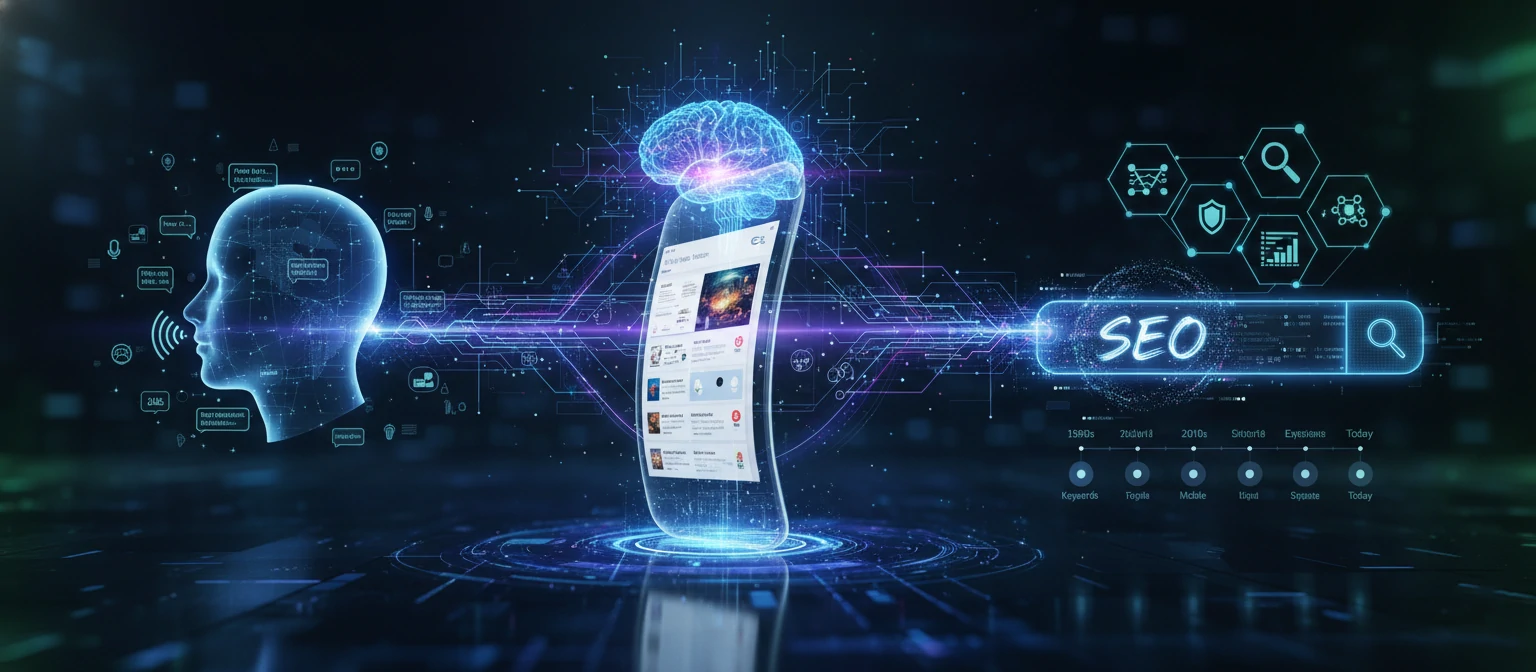
The SEO landscape continues to evolve rapidly, driven by technological advances, changing user behaviors, and search engine algorithm improvements. Understanding these emerging trends is crucial for businesses and SEO agencies to maintain competitive advantage and prepare for the future of search optimization.
Artificial Intelligence and Machine Learning
AI is revolutionizing SEO in multiple ways. Google's AI algorithms, including RankBrain and BERT, are becoming increasingly sophisticated at understanding user intent and content context. This shift means that SEO agencies must focus more on creating genuinely helpful, comprehensive content rather than trying to game algorithmic signals.
AI-powered SEO tools are also transforming how agencies conduct research and optimization. These tools can analyze vast amounts of data to identify patterns, predict trends, and automate routine tasks like technical audits and content optimization suggestions. Forward-thinking agencies are integrating AI tools into their workflows to deliver more efficient and effective services.
Voice Search Optimization
With the proliferation of smart speakers and voice assistants, voice search is becoming increasingly important. Voice queries tend to be longer, more conversational, and often local in nature. SEO agencies are adapting by optimizing for natural language patterns, focusing on featured snippets (which are often read aloud), and ensuring strong local SEO foundations.
Voice Search Optimization Strategies
- Optimizing for question-based queries and conversational keywords
- Creating FAQ sections that address common voice search queries
- Focusing on local SEO for "near me" voice searches
- Improving page speed and mobile experience for voice search users
- Structuring content to capture featured snippets
Mobile-First and Core Web Vitals
Google's mobile-first indexing means that the mobile version of your website is now the primary version used for ranking. Additionally, Core Web Vitals have become official ranking factors, emphasizing the importance of user experience metrics like loading speed, interactivity, and visual stability.
SEO agencies are increasingly focusing on technical optimization to meet these requirements, including implementing advanced caching strategies, optimizing images and videos, and ensuring seamless mobile experiences. This trend represents a shift toward more holistic optimization that considers both search engines and user experience equally.
Entity-Based SEO and Semantic Search
Search engines are moving beyond keyword matching to understand entities (people, places, things, concepts) and their relationships. This evolution toward semantic search means that SEO agencies must think about topical authority and entity relationships when developing content strategies.
Successful agencies are creating comprehensive content hubs that establish expertise around specific topics and entities, using structured data to help search engines understand content relationships, and building topical authority through consistent, high-quality content creation.
Privacy and Cookieless Future
With increasing privacy regulations and the phase-out of third-party cookies, SEO agencies are adapting their measurement and optimization strategies. This shift is actually beneficial for SEO, as organic search provides first-party data and doesn't rely on cookies for attribution.
Forward-thinking agencies are helping clients build stronger first-party data collection strategies, implement server-side tracking solutions, and focus more heavily on SEO as a privacy-compliant marketing channel that provides sustainable, long-term results without relying on invasive tracking technologies.
8. Conclusion
In today's digital-first business environment, partnering with a professional SEO agency isn't just an option—it's a strategic necessity for sustainable growth and competitive advantage. The complexity of modern search optimization, combined with the ever-evolving nature of search algorithms and user behaviors, makes professional expertise more valuable than ever.
Throughout this comprehensive guide, we've explored the multifaceted world of SEO agencies, from understanding their core services to evaluating their effectiveness and preparing for future trends. The evidence is clear: businesses that invest in professional SEO services consistently outperform those that attempt to manage optimization efforts internally or neglect SEO altogether.
The benefits of working with a qualified SEO agency extend far beyond improved search rankings. Professional agencies bring specialized expertise, advanced tools, strategic thinking, and the ability to adapt quickly to industry changes. They provide objective perspectives, scalable resources, and measurable results that directly impact your bottom line.
As we've seen, the ROI of professional SEO services typically far exceeds the investment when you consider the long-term value of organic traffic, the compound effect of optimization efforts, and the competitive advantages that come from strong search visibility. Unlike paid advertising, which stops generating results the moment you stop paying, SEO builds lasting value that continues to deliver returns over time.
The key to success lies in choosing the right agency partner—one that demonstrates proven expertise, maintains transparent communication, and aligns with your business goals and values. Take time to evaluate potential agencies thoroughly, ask the right questions, and look for evidence of real results rather than empty promises.
As you consider your SEO needs, remember that the digital landscape will continue to evolve, but the fundamental importance of search visibility will only grow. By partnering with a professional SEO agency now, you're not just improving your current search performance—you're building a foundation for long-term digital success and sustainable business growth.